Glencoe Math Course 2 Volume 1 Common Core Chapter 4 Rational Numbers
Glencoe Math Course 2 Volume 1 Chapter 4 Exercise 4.1 Solutions Page 264 Exercise 1 Problem 1
Given:
\(\frac{3}{10}\)To find – Write each fraction or mixed number as a decimal.
We know that
\(\frac{3}{10}\)Use place value to write the equivalent decimal.
\(\frac{3}{10}\) = 0.3
So,\(\frac{3}{10}\) = 0.3
As a decimal, Each fraction or mixed number is \(\frac{3}{10}\) = 0.3
Read and Learn More Glencoe Math Course 2 Volume 1 Common Core Student Edition Solutions
Given:
\(\frac{3}{25}\)To find- Write each fraction or mixed number as a decimal.
We know that
\(\frac{3}{25}\)Use place value to write the equivalent decimal.
\(\frac{3}{25}\)\(=\frac{3 \times 4}{25 \times 4}\)
⇒ \(\frac{12}{100}\)
⇒ 0.12
So, \(\frac{3}{25}\) = 0.12
As a decimal, Each fraction or mixed number is \(\frac{3}{25}\) = 0.12
Glencoe Math Course 2 Volume 1 Common Core Chapter 4 Rational Numbers
Given:
− 6\(\frac{1}{2}\)
To find- Write each fraction or mixed number as a decimal.
We know that
−6\(\frac{1}{2}\)
−6\(\frac{1}{2}\) = −6+ \(\frac{1}{2}\)
⇒ −6 + 0.5
⇒ −5.5
So, -6\(\frac{1}{2}\) =−5.5
As a decimal, Each fraction or mixed number is −6\(\frac{1}{2}\) =−5.5
Given:
−\(\frac{7}{8}\)
To find- Write each fraction or mixed number as a decimal.
We know that −\(\frac{7}{8}\)
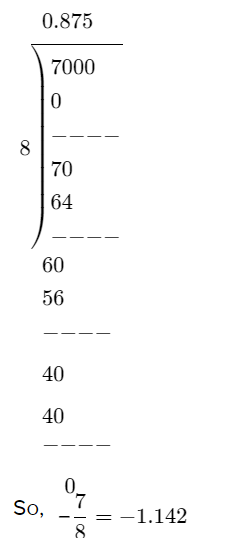
Then using long division for 7 divided by 8 and rounding Decimal Places gives us −1.142
Glencoe Math Course 2 Volume 1 Common Core Chapter 4 Rational Numbers
Given:
2\(\frac{1}{8}\)
To find- Write each fraction or mixed number as a decimal.
We know that
2\(\frac{1}{8}\)
= 2 + \(\frac{1}{8}\)
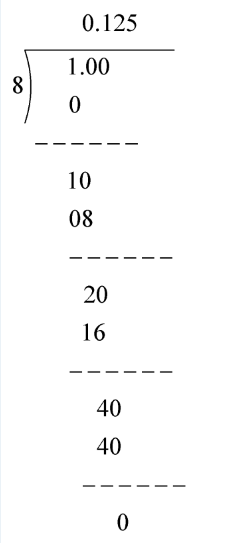
= 2 +0.125
= 2.125
2\(\frac{1}{8}\) = 2.125
Then using long division for 2\(\frac{1}{8}\) and rounding Decimal Places gives us 2.125
Given:
− \(\frac{3}{11}\)
To find- Write each fraction or mixed number as a decimal.
We know that
−\(\frac{3}{11}\)
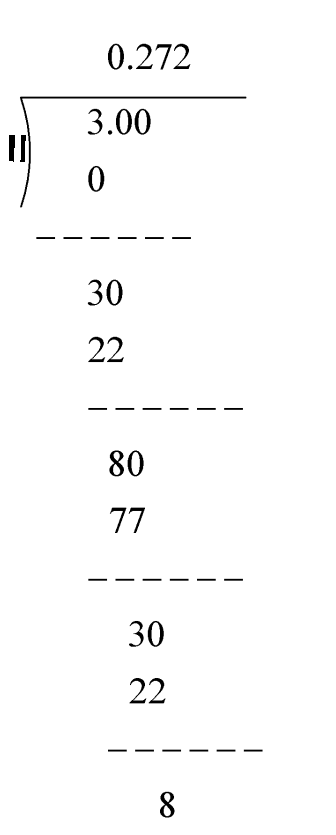
So, −\(\frac{3}{11}\) = 0.273
Then using long division for –\(\frac{3}{11}\) and rounding Decimal Places gives us 0.273.
Glencoe Math Course 2 Volume 1 Common Core Chapter 4 Rational Numbers
Given:
8\(\frac{1}{3}\)
To find- Write each fraction or mixed number as a decimal.
We know that
8\(\frac{1}{3}\)
= 8 + \(\frac{1}{3}\)
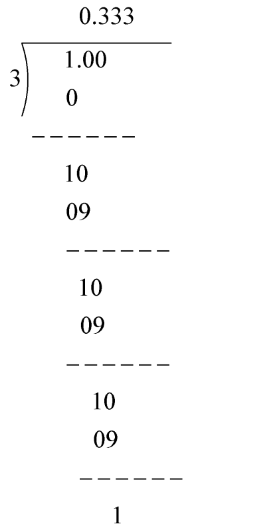
= 8 + 0.333 = 8.333
8\(\frac{1}{3}\) = 8.333
Then using long division for 8\(\frac{1}{3}\) and rounding Decimal Places gives us 8.333
Given: Molly 0.2.
To find- Write in simplest form
We know that
0.2
0.2 = \(\frac{2}{10}\)
= \(\frac{2}{10}\)
= \(\frac{1}{5}\)
So, \(\frac{1}{5}\) of the fish are Molly
Glencoe Math Course 2 Volume 1 Common Core Chapter 4 Rational Numbers
Given: Guppy 0.25
To find- Write in simplest form
We know that
0.25
0.25 = \(\frac{25}{100}\)
= \(\frac{1}{4}\)
So , \(\frac{1}{4}\) of the fish are Guppy
Given:
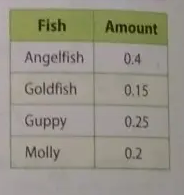
Divide 0.4 by 10 as it is in tenth place, then write in simplest form.
We know that
0.4
0.4 = \(\frac{4}{10}\)
= \(\frac{2}{5}\)
The fraction of the aquarium made up by Angelfish is \(\frac{2}{5}\)
Glencoe Math Course 2 Volume 1 Common Core Chapter 4 Page 266 Exercise 1 Problem 2
Given: \(\frac{2}{5}\)
To find- Write each fraction or mixed number as a decimal.
We know that
\(\frac{2}{5}\)
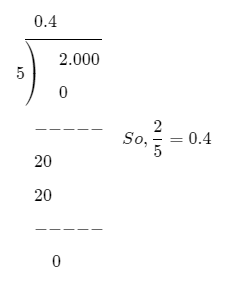
Then using long division for \(\frac{2}{5}\) and rounding Decimal Places gives us 0.4.
Step-By-Step Guide For Exercise 4.1 Chapter 4 Rational Numbers In Glencoe Math Course 2 Page 266 Exercise 2 Problem 3
Given: − \(\frac{9}{10}\)
To find:- Write each fraction or mixed number as a decimal.
We know that
−\(\frac{9}{10}\)
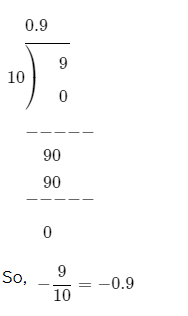
Then using long division for −\(\frac{9}{10}\) and rounding Decimal Places gives us −0.9.
Glencoe Math Course 2 Volume 1 Common Core Chapter 4 Page 266 Exercise 3 Problem 4
Given:
\(\frac{5}{9}\)To find – Write each fraction or mixed number as a decimal.
We know that
\(\frac{5}{9}\)
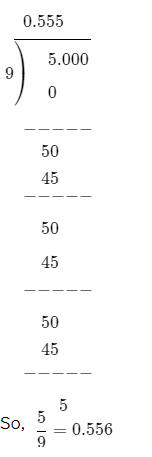
Then using long division for \(\frac{5}{9}\) and rounding Decimal Places gives us 0.556.
Exercise 4.1 Solutions For Chapter 4 Rational Numbers Glencoe Math Course 2 Volume 1 Page 266 Exercise 4 Problem 5
Given: During a hockey game, an ice resurfacer travels 0.75 miles.
To find – The fraction which represents this distance.
We know that
0.75
0.75=\(\frac{75}{100}\)
So, 0.75 = \(\frac{3}{4}\)
Finally, we concluded 0.75 = \(\frac{3}{4}\) fraction represents this distance.
Glencoe Math Course 2 Volume 1 Common Core Chapter 4 Page 267 Exercise 1 Problem 6
Given: \(\frac{1}{2}\)
To find- Write each fraction or mixed number as a decimal.
We know that
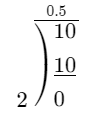
So, \(\frac{1}{2}\) = 0.5
Then using long division for 1 divided by 2 and rounding Decimal Places gives us 0.5
Examples of problems from Exercise 4.1 Chapter 4 Rational Numbers in Glencoe Math Course 2 Page 267 Exercise 2 Problem 7
Given: − 4\(\frac{4}{25}\)=
To find- Write each fraction or mixed number as a decimal.
We know that
−4\(\frac{4}{25}\)
−4\(\frac{4}{25}\) = −4+\(\frac{4}{25}\)
= −4 + 0.16
= − 4.16
So, −4\(\frac{4}{25}\) = − 4.16
Because we know that 25 equals 100 (think quarters to a dollar), converting this fraction to a decimal in the hundredth place will be simple. 4 Times 25 is multiplied by 100 (again, 4 quarters make a dollar).
This means we’d have to multiply 4 by 4 to get \(\frac{16}{100}\)
The decimal for \(\frac{16}{100}\) is 0.16 As a result, 4 equals \(\frac{4}{25}\) − 4.16
Finally, The decimal for \(\frac{16}{100}\) As a result, 4 and equals −4.16.
Glencoe Math Course 2 Volume 1 Common Core Chapter 4 Page 267 Exercise 3 Problem 8
Given: \(\frac{1}{8}\)
To find- Write each fraction or mixed number as a decimal.
We know that
\(\frac{1}{8}\)
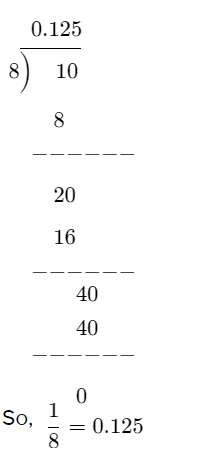
Then using long division for 1 divided by 8 and rounding Decimal Places gives us 0.125.
Common Core Exercise 4.1 Chapter 4 Rational Numbers detailed solutions Glencoe Math Course 2 Page 267 Exercise 4 Problem 9
Given: \(\frac{3}{16}\)
To find- Write each fraction or mixed number as a decimal.
We know that
\(\frac{3}{16}\)
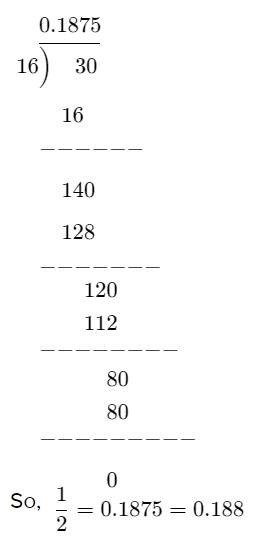
Then using long division for 3 divided by 16 and rounding Decimal Places gives us 0.188
Glencoe Math Course 2 Volume 1 Common Core Chapter 4 Page 267 Exercise 5 Problem 10
Given: −\(\frac{33}{50}\)
To find- Write each fraction or mixed number as a decimal.
We know that –\(\frac{33}{50}\)
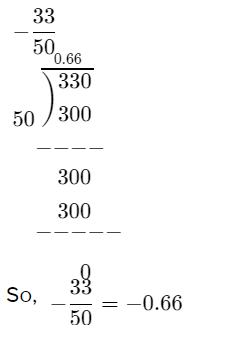
Then using long division for −\(\frac{33}{50}\) and rounding Decimal Places gives us−0.66.
Student Edition Glencoe Math Course 2 Chapter 4 Rational Numbers Exercise 4.1 solutions guide Page 267 Exercise 6 Problem 11
Given: − \(\frac{17}{40}\)
To find- Write each fraction or mixed number as a decimal.
We know that −\(\frac{17}{40}\)
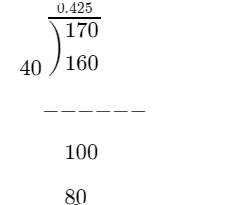
Then using long division for − \(\frac{17}{40}\) and rounding Decimal Places gives us 0.425
Glencoe Math Course 2 Volume 1 Common Core Chapter 4 Page 267 Exercise 7 Problem 12
Given: 5\(\frac{7}{8}\)
To find- Write each fraction or mixed number as a decimal.
We know that
5\(\frac{7}{8}\)
Multiply the denominator by the whole number 8 × 5 = 40
Add the answer to the numerator 5\(\frac{7}{8}\)
40 + 7 = 47
\(\frac{47}{8}\)Simplified solution
\(=\frac{8 \times 5+7}{8}\)= \(\frac{47}{8}\)
= 5.875
So,5\(\frac{7}{8}\)= 5.875
Then using long division for 5\(\frac{7}{8}\) and rounding Decimal Places gives us 5.875.
Step-by-step answers for Exercise 4.1 Chapter 4 Rational Numbers in Glencoe Math Course 2 Volume 1 Page 267 Exercise 8 Problem 13
Given: 9\(\frac{3}{8}\)
To find- Write each fraction or mixed number as a decimal.
We know that
9\(\frac{3}{8}\)
9\(\frac{3}{8}\) = 9 + \(\frac{3}{8}\)
= 9.375
So, 9\(\frac{3}{8}\) = 9.37
Then using long division for 9\(\frac{3}{8}\) and rounding Decimal Places gives us 9.37.
Glencoe Math Course 2 Volume 1 Common Core Chapter 4 Page 267 Exercise 9 Problem 14
Given: −\(\frac{8}{9}\)
We know that
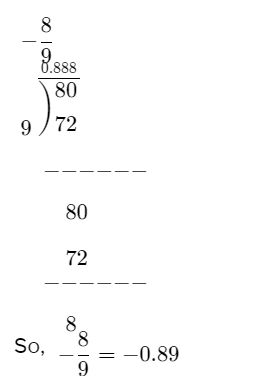
Then using long division for −\(\frac{8}{9}\) and rounding Decimal Places gives us−0.89.
Page 267 Exercise 10 Problem 15
Given: − \(\frac{1}{6}\)
To find – Using long division write each fraction or mixed number as a decimal.
Given
−\(\frac{1}{6}\)
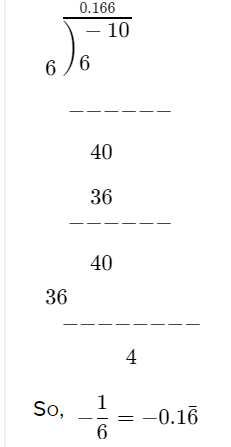
The decimal form of −\(\frac{1}{6}\) = − 0.1666
Glencoe Math Course 2 Volume 1 Common Core Chapter 4 Page 267 Exercise 11 Problem 16
Given: −\(\frac{8}{11}\)
To find- Write each fraction or mixed number as a decimal.
We know that
\(\frac{8}{11}\)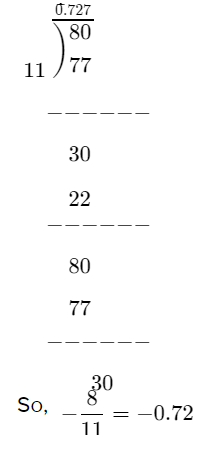
Then using long division for −\(\frac{8}{11}\)and rounding Decimal Places gives us −0.72.
Page 267 Exercise 12 Problem 17
Given: 2\(\frac{6}{11}\)
To find – Write each fraction or mixed number as a decimal.
We know that
2\(\frac{6}{11}\)
2\(\frac{6}{11}\) = 2 + \(\frac{6}{11}\)
= 2 + 0.5454
= 2.5454
So, 2\(\frac{6}{11}\) = 2.545
Then using long division for 2\(\frac{6}{11}\) and rounding Decimal Places gives us 2.545.
Glencoe Math Course 2 Volume 1 Common Core Chapter 4 Page 267 Exercise 13 Problem 18
Given:−0.2
To find- Write each decimal as a fraction or mixed number in simplest form.
We know that
−0.2
Remove the negative sign from the positive decimal value, convert it to a positive fraction, and then apply the negative sign to the fraction response.
Rewrite the decimal number as a fraction with 1 in the denominator
0.2 = \(\frac{0.2}{1}\)
Multiply to remove 1 decimal place. Here, you multiply top and bottom by 101 = 10
\(\frac{0.2}{1}\) × \(\frac{10}{10}\)
= \(\frac{2}{10}\)
Find the Greatest Common Factor (GCF) of 2 and 10, if it exists, and reduce the fraction by dividing both the numerator and denominator by GCF = 2
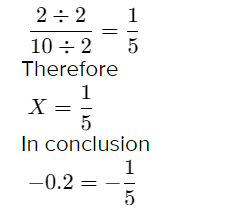
Here, we concluded the mixed fraction in simplest form is −0.2 = − \(\frac{1}{5}\)
Page 267 Exercise 14 Problem 19
Given: 0.55
To find- Write each decimal as a fraction or mixed number in simplest form.
We know that0.55 Rewrite the decimal number as a fraction within the denominator
0.55 = \(\frac{0.55}{1}\)
Multiply to remove 2 decimal places. Here, you multiply the top and bottom by 102
= 1000\(\frac{0.55}{1}\)× \(\frac{100}{100}\) = \(\frac{55}{100}\)
Find the Greatest Common Factor (GCF) of 55 and 100, if it exists, and reduce the fraction by dividing both numerator and denominator by GCF = 5
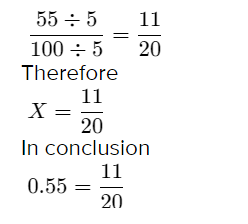
Here, we concluded the mixed fraction in simplest form is 0.55 =\(\frac{11}{20}\)
Glencoe Math Course 2 Volume 1 Common Core Chapter 4 Page 267 Exercise 15 Problem 20
Given: 5.96
To find- Write each decimal as a fraction or mixed number in simplest form.
We know that
5.96
Rewrite the decimal number as a fraction with 1 in the denominator
5.96 = \(\frac{5.96}{1}\)
Multiply to remove 2 decimal places. Here, you multiply top and bottom by 102 = 100\(\frac{5.96}{1}\)×\(\frac{100}{100}\)=\(\frac{596}{100}\)
Find the Greatest Common Factor (GCF) of 596 and 100, if it exists, and reduce the fraction by dividing both numerator and denominator by GCF = 4
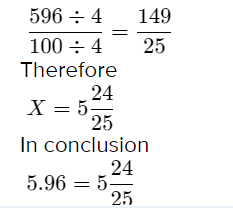
Here, we concluded the mixed fraction in simplest form is 5.96 = 5\(\frac{24}{25}\)
Page 267 Exercise 17 Problem 21
Given: A Praying mantis is an interesting insect that can rotate its head 180 degrees.
Suppose the praying mantis at the right is 10.5 centimeters long.
To find- The mixed number that represents this length.
We know that
Now think about the length you’ve been given 10.5
10.5 = 10 + 0.5
Because 10 is an integer, all we have to do now is convert 0.5 to fractional form to get a mixed number.
0.5 = \(\frac{5}{10}\)=\(\frac{1}{2}\)
Thus, the number is
10 + 0.5 = 10 + \(\frac{1}{2}\)
⇒ 10 \(\frac{1}{2}\)
As a result, the needed mixed number is 10\(\frac{1}{2}\).
Finally, 10\(\frac{1}{2}\)mixed number represents this length.
Glencoe Math Course 2 Volume 1 Common Core Chapter 4 Page 268 Exercise 18 Problem 22
Given: Suppose you buy a 1.25− pound package of ham at $5.20 per pound. Find the fraction of the pound bought that is find the portion purchased
\(\frac{\text { Number of pounds}}{\text {1 pound }}\)⇒ \(\frac{1.25}{1}\)
⇒ \(\frac{125}{100}\)
⇒ \(\frac{5}{4}\)
Finally, \(\frac{5}{4}\) fraction of a pound did you buy.
Given: Suppose you buy a 1.25− pound package of ham at $5.20 per pound.
To find – How much money did you spend?
We know that
The amount of ham purchased in pounds = 1.25
We have a Ham of 1 pound = $5.20
The amount spent on ham = The fraction of a pound bought × Price per pound
⇒ \(\frac{5}{4}\) × 5.20
⇒ 5 × 1.3
⇒ $6.5.
Finally, $6.5 amount is spend on ham.
Glencoe Math Course 2 Volume 1 Common Core Chapter 4 Page 268 Exercise 19 Problem 23
Given: Write a fraction that is equivalent to a terminating decimal between 0.5and0.75.
To find- Write a fraction
We have Because both 0.5 and 0.75 are at two places after decimals, we know they are terminating.
Finding the average of a number that is between these two can be done by adding it and then dividing by two.
Adding both value =0.5 + 0.75 = 1.25
When you divide it by two, you get = 1.25 by 2 = 0.625
When we convert it to a fraction, we obtain
⇒ \(\frac{0.625}{1}\)
⇒ \(\frac{625}{1000}\)
⇒ \(\frac{5}{8}\)
Finally, \(\frac{5}{8}\) is the terminating decimal.
Page 268 Exercise 20 Problem 24
Given Fractions in the simplest form that have denominators of2,4,8,16 and 32produce terminating decimals.
Fractions with denominators of 6,12,18, and 24 produce repeating decimals.
To find – The causes of difference.
As you can see, the denominator in 2,4,8,16,32 is of the kind 21,22,23,24,25. As a result, the decimal comes to an end.
Consider fractions with denominators of 6,12,18,24.
Now, among all of these
6 = 2.3
12 = 2.2.3
18 = 2.3.3
24 = 2.2.2.3
All of these integers’ prime factors include a factor other than 2, namely 3.
As previously stated, if the denominator is not in the form of 2m or 5n or 2m⋅5 the decimal is non-terminating.
Glencoe Math Course 2 Volume 1 Common Core Chapter 4 Page 268 Exercise 21 Problem 25
Given The value of pi (π) is 3.1415926…. The mathematician Archimedes believed that π was between 3 \(\frac{1}{7}\) and 3\(\frac{10}{71}\)
Convert the mixed fraction to improper fraction and solve further
Then check whether Archimedes is correct
We know that
π = 3.1415927
3 \(\frac{1}{7}\)
3 \(\frac{1}{7}\) = 3 + \(\frac{1}{7}\)
We know that
\(\frac{1}{7}\)Is the same as 1 ÷ 7
Therefore, 3\(\frac{1}{7}\) = 3 + (1÷7)
3 + 0.143 = 3.143
3 \(\frac{10}{71}\)= 3 + \(\frac{10}{71}\)
We know that\(\frac{10}{71}\) Is the same as 10 ÷ 71
Then
3 + \(\frac{10}{71}\)= 3+(10÷71)
3 + 0.141 = 3.141
π = 3.1415927
π value has been rounded to seven decimal digits.
3\(\frac{1}{7}\) = 3.1428571
Compare these numbers to ensure that pi is contained within the mixed fractions.
3\(\frac{10}{71}\) = 3.1408451
= 3.1408451
It is in this instance.
Finally, we concluded the Archimedes’ statement is correct.
Glencoe Math Course 2 Volume 1 Common Core Chapter 4 Page 268 Exercise 22 Problem 26
Given:
Tanya drew a model for the fraction\(\frac{4}{6}\)
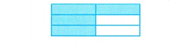
Which of the following decimals is equal to \(\frac{4}{6}\)
A. 0.666
B. 0.6
C. 0.667
D. 0.66777
To find – The decimals.
\(\frac{4}{6}\) = 0.666
Finally, we can conclude that the answer is options A and B.
Page 269 Exercise 23 Problem 27
Given: \(\frac{4}{5}\)
To find- Write each decimal as a fraction or mixed number in simplest form.
We know that
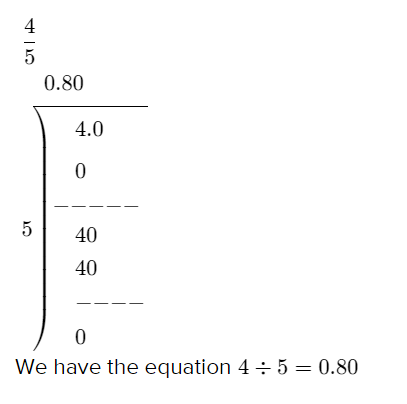
We have the equation 4÷5 = 0.80
Then using long division for 4 divided by 5 and rounding Decimal Places gives us 0.80.
Glencoe Math Course 2 Volume 1 Common Core Chapter 4 Page 269 Exercise 25 Problem 28
Given: − \(\frac{4}{9}\)
To find− Using long division write each fraction or mixed number as a decimal.
We know that
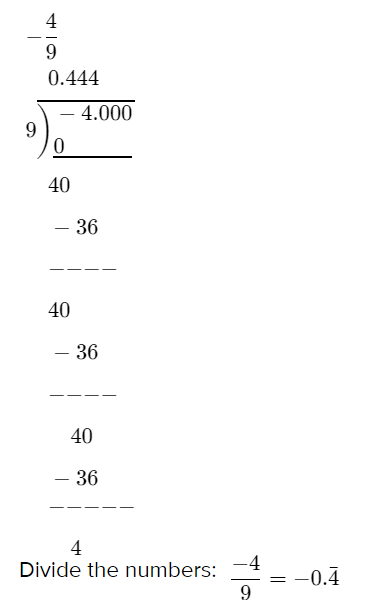
The decimal form of − \(\frac{4}{9}\) is − 0.4444
Page 269 Exercise 26 Problem 29
Given: 5\(\frac{1}{3}\)
To find – Write each decimal as a fraction or mixed number in simplest form.
We know that
Multiply the denominator by the whole number 3 × 5 = 15
Add the answer to the numerator 15 + 1 = 16
Write the answer over the denominator = \(\frac{16}{3}\)
Simplified Solution
⇒ \(\frac{3×5+1}{3}\) = \(\frac{16}{3}\)
⇒ 5.33
Then using long division for 5\(\frac{1}{3}\) rounding Decimal Places gives us 5.33.
Glencoe Math Course 2 Volume 1 Common Core Chapter 4 Page 269 Exercise 27 Problem 30
Given: The fraction of a dime that is made up of copper is \(\frac{12}{16}\)
To find- Write this fraction as a decimal
We know that
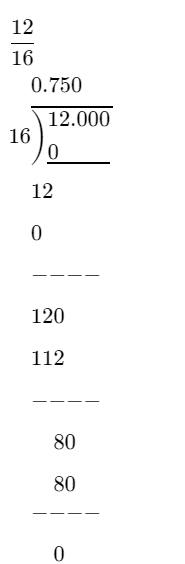
We have the equation 16 ÷ 12 = 0.750
Then using long division for \(\frac{12}{16}\) ,rounding Decimal Places gives us 0.750.
Page 269 Exercise 28 Problem 31
Given:
−0.9
To find- Decimal to a fraction or mixed fraction
Here −0.9
Rewrite the decimal number as a fraction with1 in the denominator
0.9 = \(\frac{0.9}{1}\)
Multiply to remove 1 decimal place. Here, you multiply top and bottom by 101 = 10
\(\frac{0.9}{1}\)×\(\frac{10}{10}\) = \(\frac{9}{10}\)
⇒ −0.9 = −\(\frac{9}{10}\)
Finally, we concluded the value in decimal to fraction −0.9 = −\(\frac{9}{10}\)
Glencoe Math Course 2 Volume 1 Common Core Chapter 4 Page 269 Exercise 29 Problem 32
Given:
0.34
To find- Decimal to a fraction or mixed fraction
Here it is given that 0.34
Rewrite the decimal number as a fraction with 1 in the denominator
0.34 = \(\frac{0.34}{1}\)
Multiply to remove 2 decimal places. Here, you multiply top and bottom by 102 = 100
\(\frac{0.34}{1}\) × \(\frac{100}{100}\)
=\(\frac{34}{100}\)
Find the Greatest Common Factor (GCF) of 34 and 100, if it exists, reduce the fraction by dividing both numerator and denominator by GCF = 2
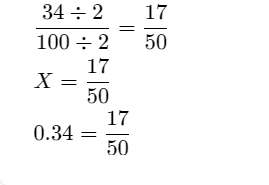
Finally, we concluded the value in decimal to fraction 0.34 = \(\frac{17}{50}\)
Page 269 Exercise 30 Problem 33
Given:
2.66
To find- Decimal to a fraction or mixed fraction
Here it is given that
2.66
Rewrite the decimal number as a fraction with 1 in the denominator
2.66 = \(\frac{2.66}{1}\)
Multiply to remove 2 decimal places. Here, you multiply the top and bottom by 102
\(\frac{2.66}{1}\)×\(\frac{100}{100}\)
= \(\frac{266}{100}\)
Find the Greatest Common Factor (GCF) of 266 and 100, if it exists, reduce the fraction by dividing both numerator and denominator by GCF= 2
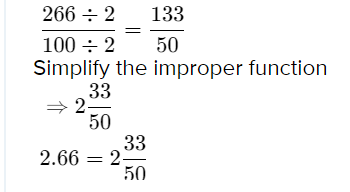
Finally, we concluded the value in decimal to fraction 2.66= 2 \(\frac{33}{50}\)
Glencoe Math Course 2 Volume 1 Common Core Chapter 4 Page 269 Exercise 31 Problem 34
Here an integer is given to us.
−13
We have to convert this into an improper fraction.
Any natural number which has to be converted into a fraction we divided by 1. So now −13 is converted −\(\frac{13}{1}\)
Therefore, −\(\frac{13}{1}\)is the final answer.
Page 269 Exercise 32 Problem 35
We are given a mixed fraction.
7 \(\frac{1}{3}\)
We have to convert it into an improper fraction.
To convert 7\(\frac{1}{3}\)into an improper fraction
We multiply 7 with 3 and add 1 to the product.
(7 × 3) + 1 = 22
Therefore, 22 is the numerator.
So, the improper fraction is \(\frac{22}{3}\)
Finally, we conclude the value in an improper fraction \(\frac{22}{3}\)
Glencoe Math Course 2 Volume 1 Common Core Chapter 4 Page 269 Exercise 33 Problem 36
We are given a negative decimal value
−3.2.
We have to convert it into a negative improper fraction.
Take the decimal −3.2.
Multiply and divide the decimal by 10.
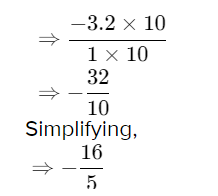
Finally, we conclude, the value of the final answer is − \(\frac{16}{5}\)
Page 269 Exercise 34 Problem 37
Here we are given the time in hours and minutes.
We have to convert it into a decimal.
We are given Nicholas’ time playing the cello as 2 hours and 18 minutes.
First, we convert hours into minutes by multiplying by 60.
2 × 60 = 120 minutes.
Now adding it with the 18-minute
We get 138 minutes.
Now dividing by 60
⇒ \(\frac{138}{60}\)
⇒ \(\frac{23}{10}\)
2.3 Hour
Nicholas has been playing the cello for 2.3 hours.
Glencoe Math Course 2 Volume 1 Common Core Chapter 4 Page 270 Exercise 35 Problem 38
Given and Find:
We are given fraction and their recurring decimals.
We have to find out which fraction corresponds to 0.88888.
Take option A
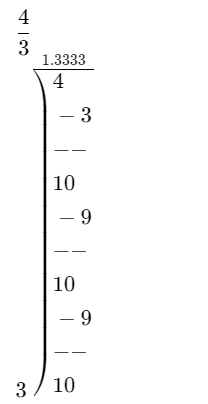
1.333333 is not the required answer.
Take option B
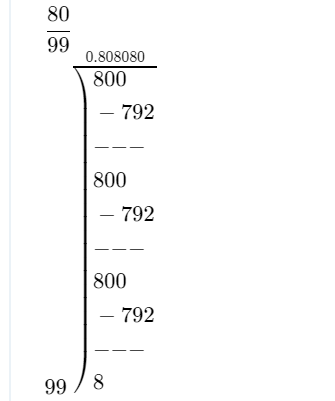
0.808080 is not the required answer.
Take option C
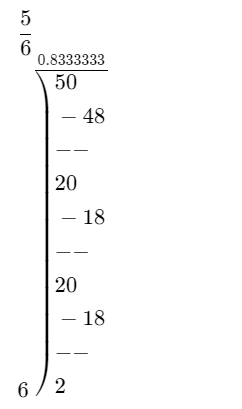
0.83333 is not the required answer.
Take option D
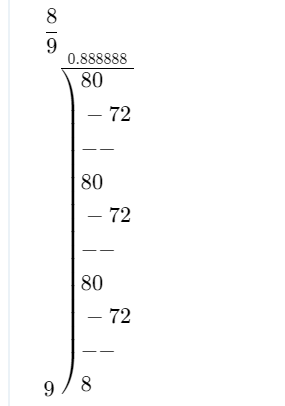
0.8888 is the required answer.
The required answer is option D.
Glencoe Math Course 2 Volume 1 Common Core Chapter 4 Page 270 Exercise 37 Problem 39
Given:
We are given Zoe’s total bill.
We have to find out which mixed fraction corresponds to the decimal given.
Solution:
We take that
12\(\frac{1}{20}\)
To convert it into improper fractions we multiply 20 with 12 and add 1 to the product.
The improper fraction:
\(\frac{241}{20}\)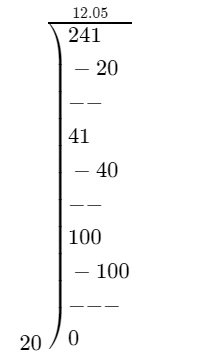
12.05 is the required answer.
Therefore the correct answer is 12.05
Page 270 Exercise 38 Problem 40
Given:
We are given a decimal. 5.69
We have to convert it into the nearest tenths place.
We take the decimal 5.69
We look at 9, which is greater than 5.
So we increase the next number by 1.
Now the decimal is rounded off to 5.7
This has been rounded off to the tenths place.
The rounded-off decimal is 5.7
Glencoe Math Course 2 Volume 1 Common Core Chapter 4 Page 270 Exercise 39 Problem 41
Given:
We are given a decimal. 0.05
We have to convert it into the nearest tenths place.
We take the decimal 0.05
We look at 5, which is greater or equal than 5.
So we increase the next number by 1.
Now the decimal is rounded off to 0.1.
This has been rounded off to the tenths place.
The rounded-off decimal is 0.1.
Page 270 Exercise 40 Problem 42
Given:
We are given a decimal.
98.99
We have to convert it into the nearest tenths place.
We take the decimal 98.99
We look at 9, which is greater or equal than 5.
So we increase the next number by 1.
Now the decimal is rounded off to This has been rounded off to the tenths place 99.0.
The rounded-off decimal is 99.0.
Glencoe Math Course 2 Volume 1 Common Core Chapter 4 Page 270 Exercise 41 Problem 43
Given and Find:
We are given 3 fractions
\(\frac{1}{2}\)We have to convert them into decimals and put them onto a number line.
We are given the fraction as \(\frac{1}{2}\)
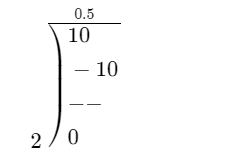
0.5 is decimal.
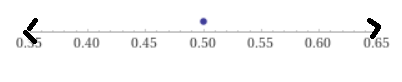
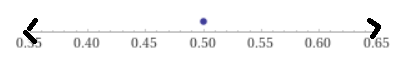
Therefore we have shown it on the number line
Page 270 Exercise 42 Problem 44
Given and Find:
We are given 3 fractions
\(\frac{3}{4}\)Solution:
We are given the fraction as \(\frac{3}{4}\)
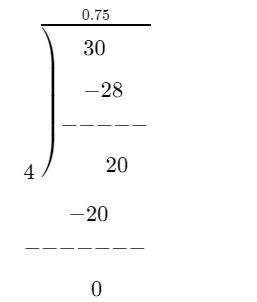
0.75 is a decimal.
Plot these decimals on the number line.

Therefore we have shown it on the number line

Glencoe Math Course 2 Volume 1 Common Core Chapter 4 Page 270 Exercise 43 Problem 45
Given and Find:
We are given 3 fractions
\(\frac{2}{3}\)We have to convert them into decimals and put them onto a number line.
We are given the fraction as \(\frac{2}{3}\)
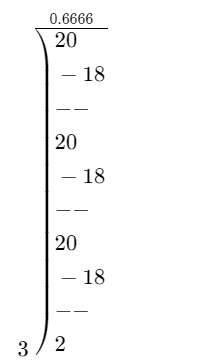
0.66 is given as the fraction.
Plot these decimals on the number line.

Therefore we have shown it on the number line
