
Geometry Student Text 2nd Edition Chapter 3 Perimeter and Area
Carnegie Learning Geometry Student Text 2nd Edition Chapter 3 Exercise 3.2 Solution Page 148 Problem 1 Answer
Area of parallelogram=Base×Height
Area of rectangle=length×width
We have to explain how we can create a rectangle from the parallelogram shown so that the rectangle and the parallelogram have the same area.

We can decompose and rearrange a parallelogram to form a rectangle.
Here are three ways:

We can enclose the parallelogram and then subtract the area of the two triangles in the corner.
Area of parallelogram=4×3=12
Area of rectangle=6×2=12
Hence, we see that a rectangle can create from the parallelogram and area is equal.
Read and learn More Carnegie Learning Geometry Student Text 2nd Edition Solutions
Carnegie Learning Geometry Chapter 3 Page 148 Problem 2 Answer
We have to find the area of the rectangle.
length of the rectangle=6 unit
width of the rectangle=3 unit
Area of the rectangle=6×3=18
Hence, area of rectangle is 18 sq. unit.
Page 148 Problem 3 Answer
We have to find the area of the rug.
Count the number of square and then add all the square to get the total area of the rug.
Base of the parallelogram=4 square
Height of the parallelogram=3 square
Area of the rug=4×3=12
Hence, area of the rug=12 sq. unit
Carnegie Learning Geometry Chapter 3 Page 150 Problem 4 Answer
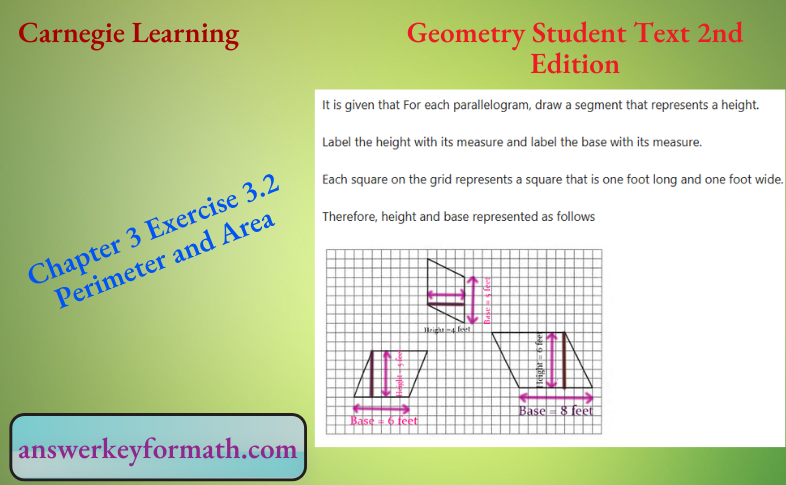
Page 151 Problem 5 Answer
We have to write a formula for the area of a parallelogram.
Use b for the base of the parallelogram,h for the height, and A for the area.
Area of parallelogram=Base×Height
A=b×h
Carnegie Learning Geometry Chapter 3 Page 151 Problem 6 Answer
The objective of the problem is to find the area for the given parallelogram.
Given:
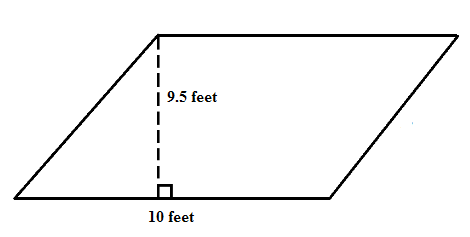
By observing the given figure,
b=10 feet
h=9.5 feet
So, the required area of a parallelogram is,
A=bh
=9.5×10
=95 feet2
Hence, the required area of a parallelogram is 95 feet2.
Solutions For Perimeter And Area Exercise 3.2 In Carnegie Learning Geometry Page 151 Problem 7 Answer
The objective of the problem is to find the height for the given parallelogram.
Given:
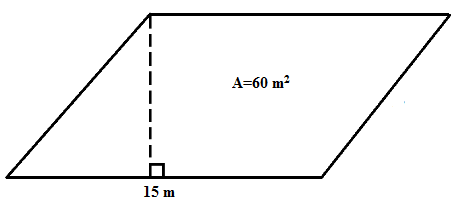
By observing the figure,
A=60m2
b=15 m
Therefore, the required width of height is,
A=bh
60=15⋅h
h=60/15
h=4 m
Hence, the required width of the parallelogram is 4 m.
Carnegie Learning Geometry Chapter 3 Page 151 Problem 8 Answer
The objective of the problem is to find the base length of a parallelogram,
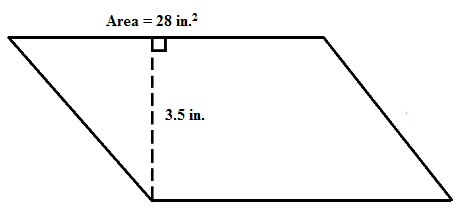
By observing the figure,
A=28in2
h=3.5 in.
Therefore, the required base length is,
A=bh
b=A/h
b=28/3.5
b=8 in.
Hence, the required base length is 8 in.
Carnegie Learning Geometry Chapter 3 Page 151 Problem 9 Answer
The objective of the problem is to find the total cost for the rugs.
Given: For rectangular-shaped rug:
l=6 ft
w=4 ft
For parallelogram-shaped rug:
b=8 ft
h=3 ft
Area of rectangular shaped rug:
A=lw
A=6⋅4
A=24 ft2
Now, per square foot, the charge is $20, for 24 ft2
rectangular rug, the charge is:
$20⋅24
=$480
Area of parallelogram-shaped rug:
A=bh
A=8⋅3
A=24 ft2
So, the charge for 24 ft2 of parallelogram-shaped rug:
$20⋅24
=$480
Therefore, the total charge is a sum of each cost:
$480+$480=$960
Hence, the total cost for the rugs is $960.
Carnegie Learning Geometry Chapter 3 Page 152 Problem 10 Answer
Given diagram:
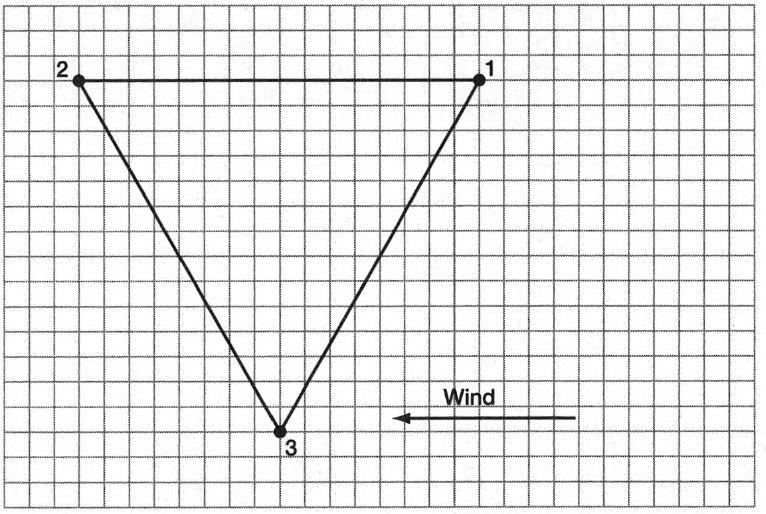
Given, each grid square is one-tenth kilometer wide and one-tenth kilometer long.
We have to find the number of grid squares in a row that creates an area that is one kilometer long and one-tenth of a kilometer wide.
As the length and width of each square on the grid is one-tenth kilometer.i.e 0.1 kilometer.
Since the length of 10 squares in a row=10×0.1=1 kilometer
So 10 squares in a row make the area which is one kilometer long and one-tenth of a kilometer wide.
10 squares in a row make the area which is one kilometer long and one-tenth of a kilometer wide.
Carnegie Learning Geometry Chapter 3 Page 152 Problem 11 Answer
Given diagram:
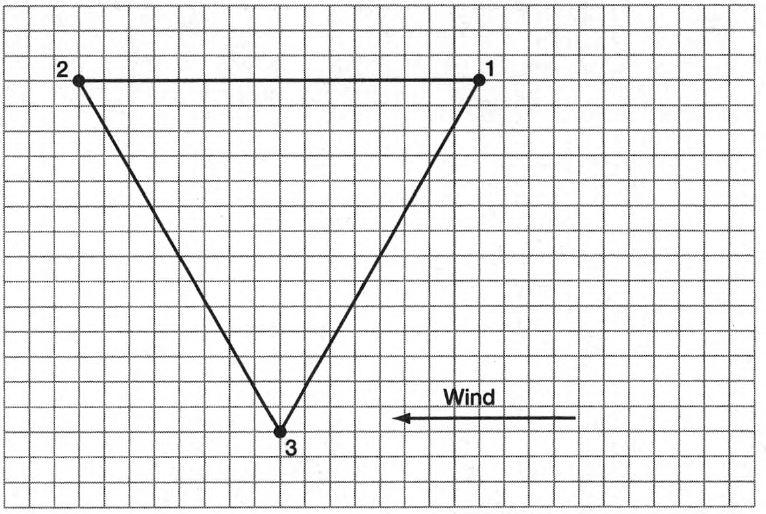
Given, each grid square is one-tenth kilometer wide and one-tenth kilometer long.
We have to find the number of grid squares in a row that creates an area that is one kilometer long and one kilometer wide.
As the length and width of each square on the grid is one-tenth kilometer.i.e 0.1 kilometer.
Since the length of 10 squares is 10×0.1=1kilometer
Similarly, the width of 10 squares is 10×0.1=1kilometers
Hence the total number of squares creates an area that is one kilometer long and one kilometer wide=10×10=100
100 squares create an area that is one kilometer long and one kilometer wide.
Carnegie Learning Geometry 2nd Edition Exercise 3.2 Solutions Page 153 Problem 12 Answer
Given diagram:
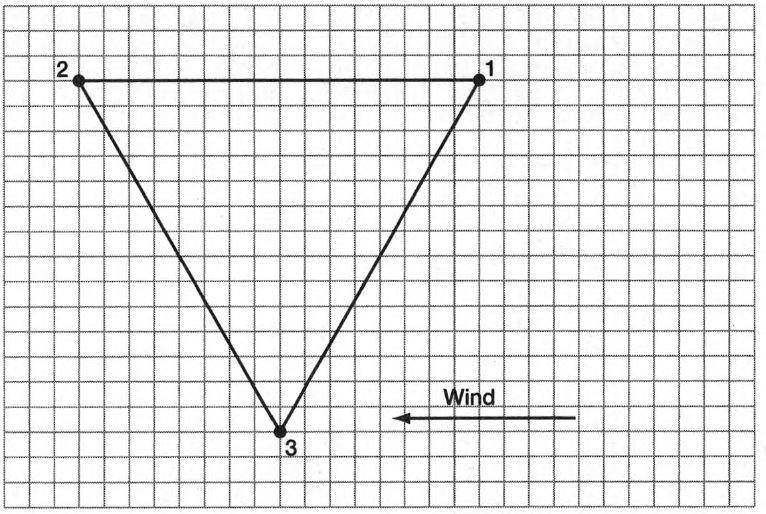
Given, each grid square is one-tenth kilometer wide and one-tenth kilometer long.
we have to estimate the area enclosed by the course
As the length and width of each square on the grid is one-tenth kilometer.i.e 0.1 kilometer. and course is triangular shaped
Hence we need base and height for this triangle.
Count the squares on the grid and find the base and height to the base by multiplying the number of squares with 0.1
The base of the triangle is from point 2 to point 3 and total of 16 squares between these points
so the length of base is 16×0.1=1.6 kilometers
Similarly, there are 14 squares lies the perpendicular height to the base from vertex 3
So the height of the triangle is 14×0.1=1.4 kilometers.
Use the formula of the triangle and calculate the required area of the course.
base:b=1.6 kilometers
height: h=1.4 kilometers
Now the area:A=1/2×1.6×1.4
=1.12
The area of the course is 1.12 square kilometers
The area of the course is 1.12 square kilometers
Carnegie Learning Geometry Chapter 3 Page 153 Problem 13 Answer
Refer to answer of problem 3
Yes, the calculated area in problem 3 is exact, because we have counted the grids very carefully.
Yes, the calculated area in problem 3 is exact.
Page 153 Problem 14 Answer
Given diagram:
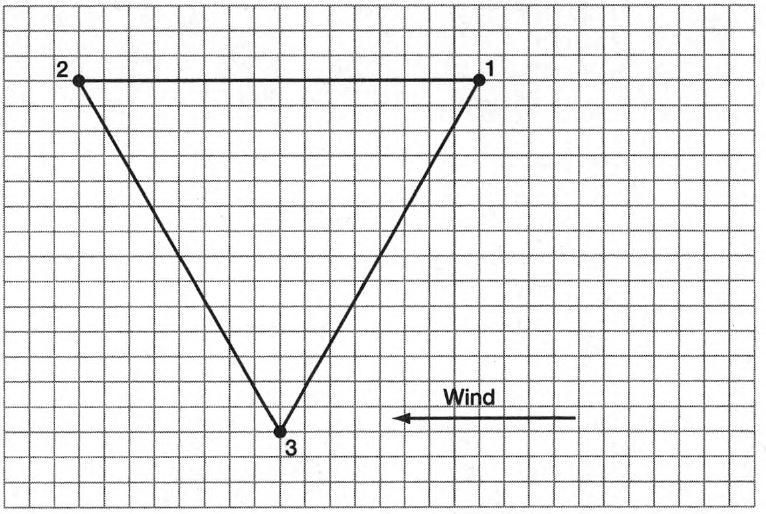
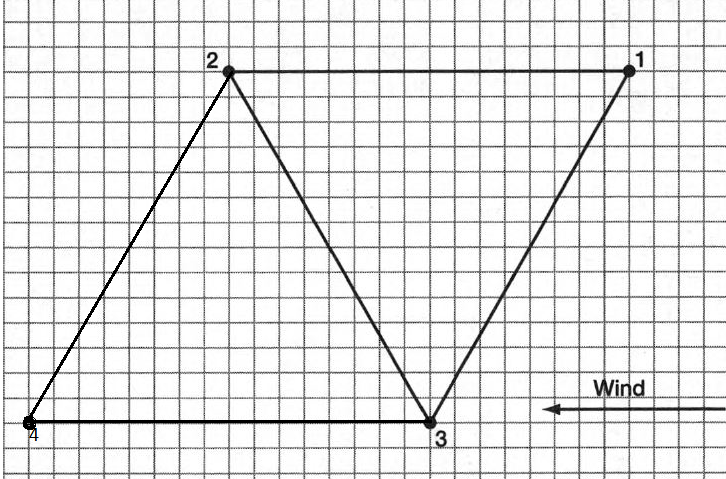
We have to draw a parallelogram by using two sides of the triangle.
Take any two sides of the shown triangle in the diagram and draw the parallel lines having the same length to make a parallelogram.
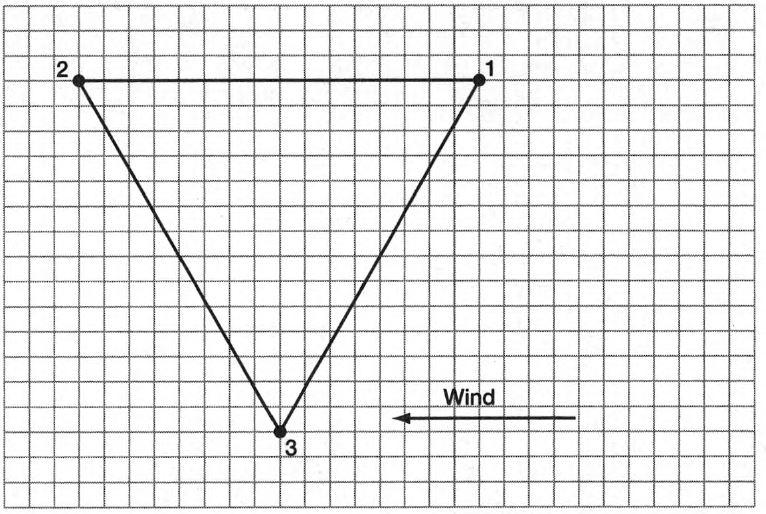
We take one side from vertex 1 to vertex 2 and another side from vertex 1 to vertex 3.
Draw parallel lines opposite to these considered lines and make a parallelogram.
The parallelogram :
Carnegie Learning Geometry Chapter 3 Page 153 Problem 15 Answer
Refer to answer to problem 5
The diagram of parallelogram:
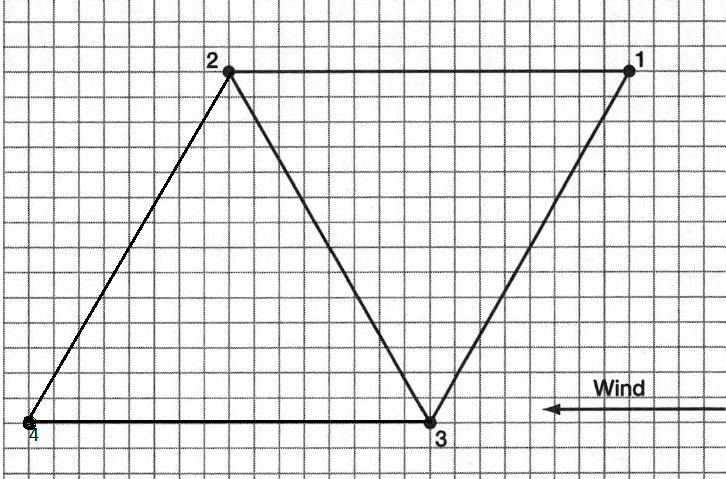
We have to find the area of this parallelogram.
As the length and width of each square on the grid is one-tenth kilometer.i.e 0.1 kilometer.
Take base from vertex 3 to 4, there are 16 squares between this vertex
The length of the base is 16×0.1=1.6 kilometers
There are 14 squares between the base and its opposite vertex.
So the height is 14×0.1=1.4 kilometers
Use the formula of the area of the parallelogram and evaluate the area.
The base of parallelogram=1.6 km
Height to the base=1.4 km
Hence, the area of parallelogram is 1.6×1.4=2.24 square kilometers
The area of the parallelogram is 2.24 square kilometers.
Carnegie Learning Geometry Chapter 3 Page 153 Problem 16 Answer
Refer to problem (5)
Given diagram of traingle and parallelogram is :
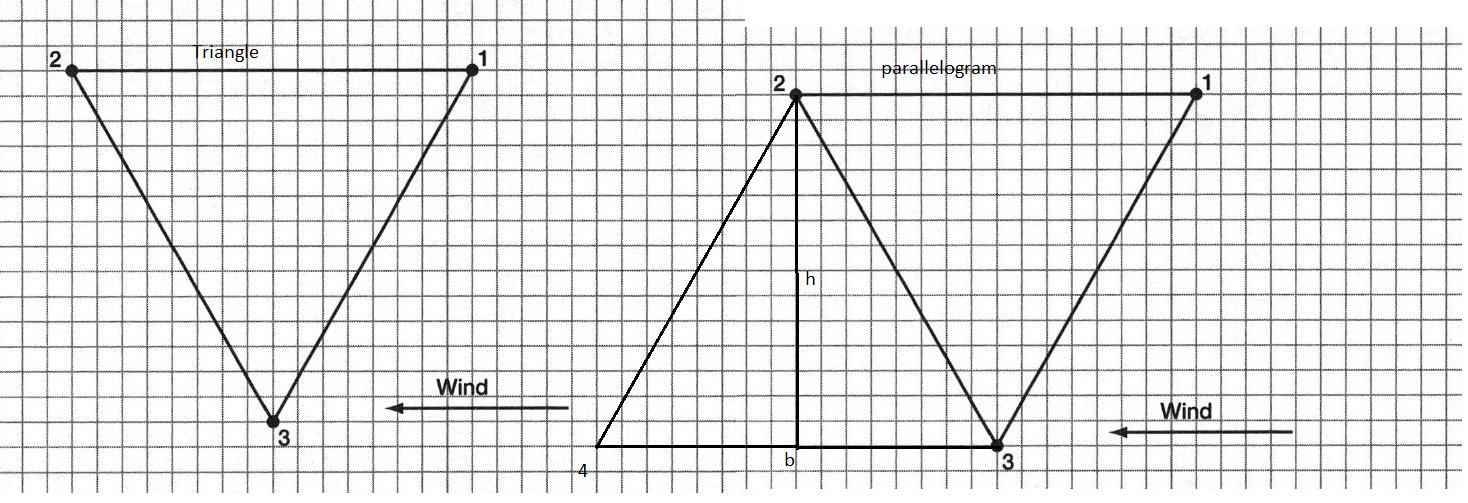
in this diagram we can see that the parallelogram is made up of two inverted given traingle.
So the area of the parallelogram is twice the are of the triangle.
Hence we can calculate the exact area of triangle if the area of the parallelogram is known to us.
Yes, we can calculate the exact area of the triangle by using the area of the parallelogram, because parallelogram is made up of two inverted given traingle.
Perimeter And Area Solutions Chapter 3 Exercise 3.2 Carnegie Learning Geometry Page 148 Problem 17 Answer
Refer to problem 5 and 6
The given diagram:
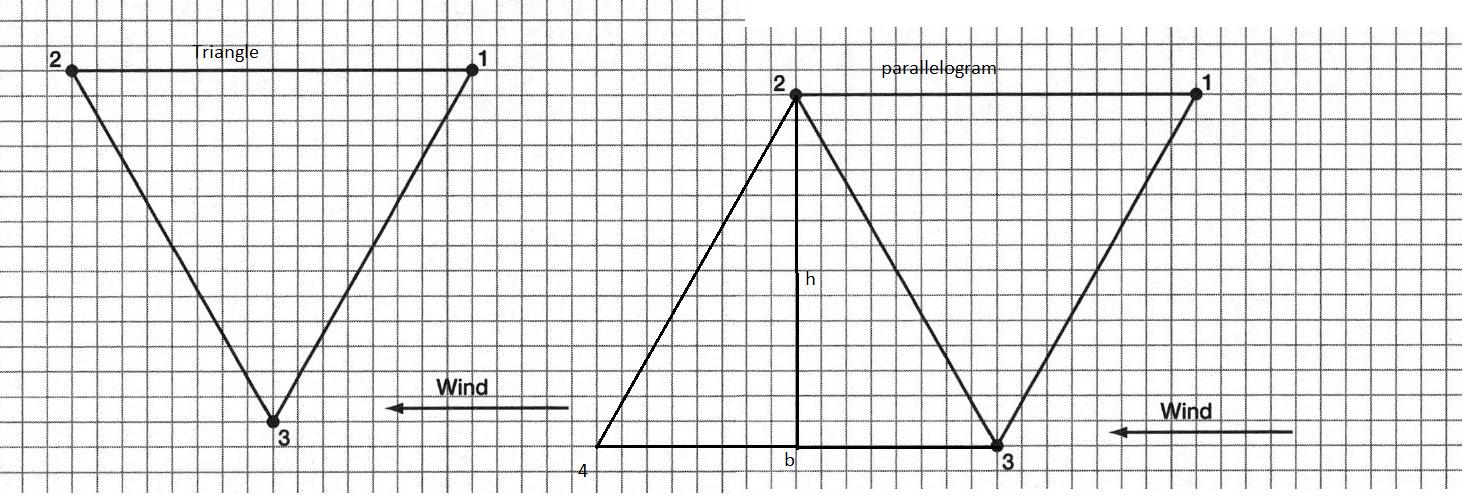
The calculated area of parallelogram in problem 6 is 2.24 square kilometers
The area of the traingle is half of the area of the parallelogram calculated in problem 6
The exact area of the triangle=1/2 (area of parallelogram)
=1/2×2.24
=1.12
The exact area of the triangle is 1.12 square kilometers
The exact area of the triangle is 1.12 square kilometers
Step-By-Step Solutions For Carnegie Learning Geometry Chapter 3 Exercise 3.2 Page 154 Problem 18 Answer
The given triangle is
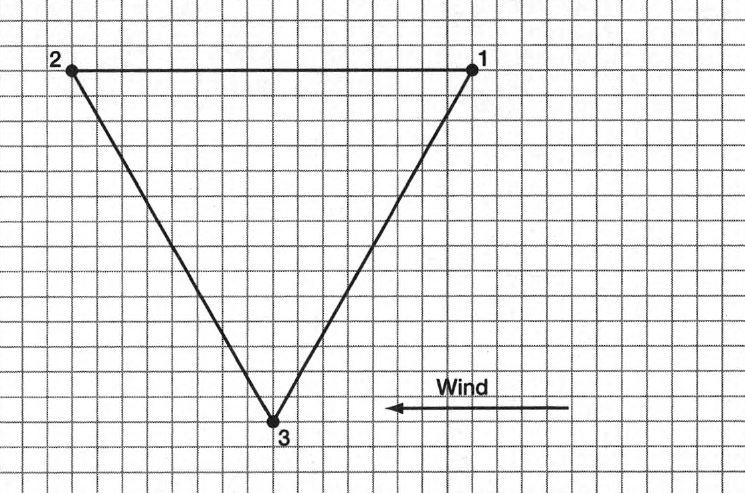
The base of this triangle is 16 blocks and length of one block is 0.1 kilometers
Hence the base will be 16×0.1=1.6 kilometers
Similarly, the perpendicular height to this base is 14 blocks
hence the height is 14×0.1=1.4 kilometers
Use the formula of the area of the triangle and calculate it.
Given b=1.6
h=1.4
hence the area of the triangle is A=1/2×1.6×1.4
=1.12
The area of the triangle is 1.12 square kilometers
The exact area is same as the estimated area of the triangle.
The area of the triangle is 1.12 square kilometers
The exact area is the same as the estimated area of the triangle.
Carnegie Learning Geometry Chapter 3 Page 154 Problem 19 Answer
Given diagram:
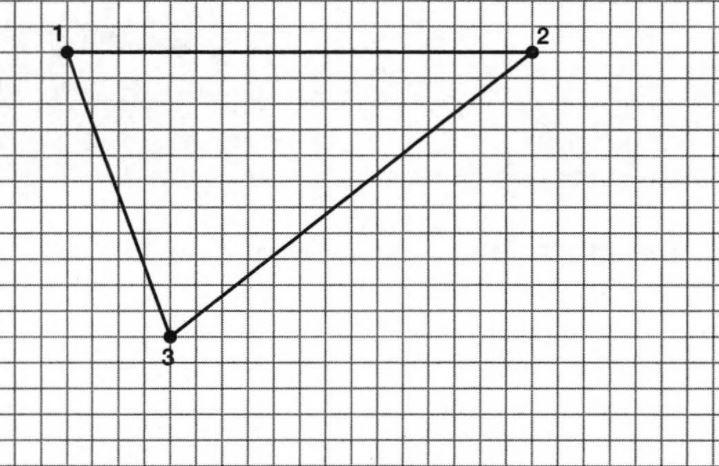
Given, Each square on the grid represents a square that is one-tenth of a kilometer long and one tenth of kilometer wide.i.e. 0.1 kilometer length and width of each grid
We have to find the area of this triangle.
Cout the grid and find the base and perpendicular height to the base of the given triangle.
Choose a base of the triangle from vertex 1 to vertex 2 So the length of the base is 18 grid :18×0.1
=1.8 kilometers
So the perpendicular height to this base from vertex 3 is :11×0.1=1.1 kilometers
Calculate area of the triangle by using formula.
b=1.8
h=1.1
The area of this triangle is
A=1/2×1.8×1.1
=0.99
The area enclosed by the course is 0.99 square kilometers.
The area enclosed by the course is 0.99 square kilometers.
Carnegie Learning Geometry Chapter 3 Exercise 3.2 Free Solutions Page 155 Problem 20 Answer
Refer to exercise 11
What information about the triangle did you need to calculate the area in Question 11
In exercise 11 we have seen that we need a base and perpendicular to this base from the opposite vertex of the triangle.to calculate the area of the triangle.
In exercise 11 we have seen that we need a base and perpendicular to this base from the opposite vertex of the triangle.to calculate the area of the triangle.
Carnegie Learning Geometry Chapter 3 Page 155 Problem 21 Answer
Given the base of the triangle is b
height of the triangle is h
The area of the triangle is A
so the formula for the area of this triangle is
A=1/2bh
The formula of area of triangle is A=1/2bh
Page 156 Problem 22 Answer
Given triangles:
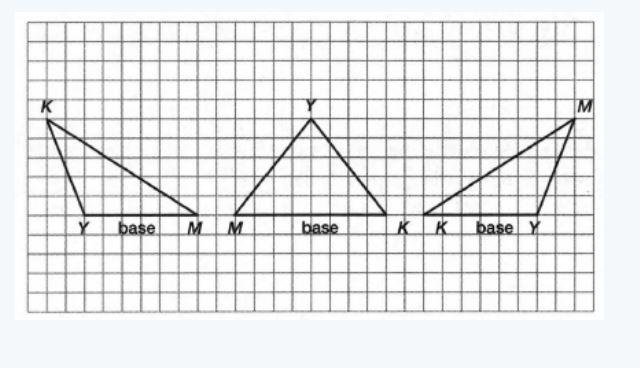
Given, Each square on the grid represents a square that is one-tenth of a kilometer long and one tenth of kilometer wide.i.e. 0.1 kilometer length and width of each grid
We have to determine the base and height of triangles KYM, MYK, KMY and then have to calculate the area of each triangle.
count the grid for each triangle and find the base and perpendicular height to the base.
calculate area of the triangles using the formula.
For the first triangle KYM
The base is YM:6×0.1=0.6
kilometers
Height is :5×0.1=0.5
kilometers
The area of triangle KYM is
1/2×0.6×0.5
=0.15
For the 2nd triangle MYK
The base is MK:8×0.1=0.8 kilometers
The height is 5×0.1 kilometers area is 1/2×0.8×0.5=0.2
For the 3rd triangle KYM
The base is KY:6×0.1=0.6 kilometers
the height is 5×0.1=0.5 kilometers
area is:1/2×0.6×0.5=0.15
For the first triangle KYM: base is 0.6 kilometers, height is 0.5 kilometers and the area is 0.15 square kilometers.
For the second triangle YMK: base is 0.8 kilometers, height is 0.5 kilometers and the area is 0.2 square kilometers.For the third triangle MKY: base is 0.6 kilometers, height is 0.5 kilometers and the area is 0.15 square kilometers
Carnegie Learning Geometry Chapter 3 Page 156 Problem 23 Answer
We have to check the effect of changing the length of the base on the height of the triangle when the area remains the same.
Let the base and height of the first triangle are b1 and h1 respectively
Similarly, the base and the height of the second triangle are b2 and h2 respectively.
According to the formula of the area of a triangle,
The area of the first triangle is 1/2b1h1
The area of the second triangle is 1/2b2h2
Since it has given that the area of both triangles is the same
Hence, 1/2b1h1=1/2b2h2
b1h1=b2h2
Here the product of base and height of both triangles is constant hence increase in base results decrease in height of the triangle and vice-versa.
If the area of two triangles is the same then increases in the base of a triangle will result to decrease in the height and vice-versa
Carnegie Learning Geometry Exercise 3.2 Student Solutions Page 156 Problem 24 Answer
Given:
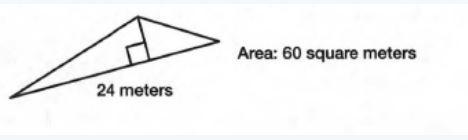
In the given triangle
The base is 24 meters
The area is 60 square meters
We have to calculate the height for this triangle
Use the formula of the area of the triangle and calculate the height.
Let the height of the triangle is hmeters
Area of triangle =60 square meters
1/2×24×h=60
h=60/12
h=5
The height i of the triangle is 5 meters
The height of the triangle is 5 meters
Carnegie Learning Geometry Chapter 3 Page 156 Problem 25 Answer
Given diagram:
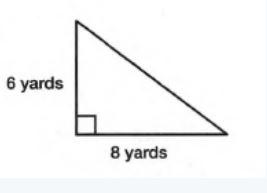
In the given triangle
The base is 8 yards
The height is 6 yards
We have to calculate the area of this triangle
Use the formula of the area of the triangle and calculate the area.
Area:1/2×8×6
=24
The area of this triangle is 24 square yards
The area of this triangle is 24 square yards
Page 156 Problem 26 Answer
Given triangle is:
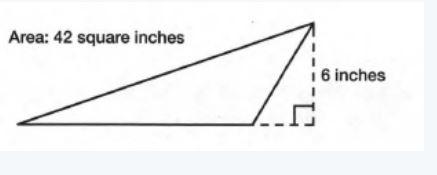
In the given triangle
The height is 6 inches
The area of the triangle is 42 square inches.
We have to calculate the base of this triangle
Use the formula of the area of the triangle and calculate the base.
Let the base is b inches
Since, the area of the triangle =42
Hence, 1/2×b×6=42
b=42/3
b=14
The base of the triangle is 14 inches.
The base of the triangle is 14 inches.
Carnegie Learning Geometry Chapter 3 Page 157 Problem 27 Answer
Refer to problem 17
The geometrical name given to the measurement of the distance to travel in the race is the perimeter.
The geometrical name given to the measurement of the distance to travel in the race is the perimeter.
Page 158 Problem 28 Answer
The original race course is shown as:
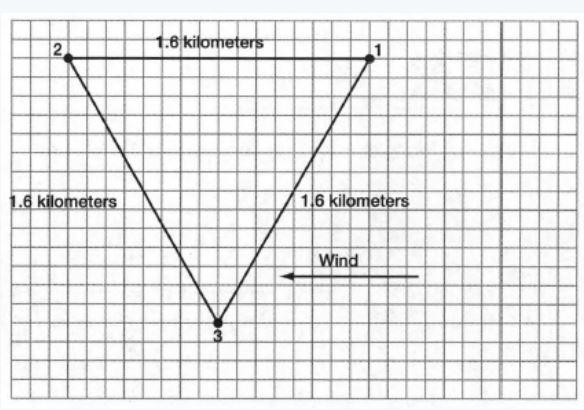
Given, it is common for a boat to have to go around a course more than once or revisit a leg of the course more than once and to
complete the race, a boat must sail to the marks in the following order: 1, 2, 3, 1, 3, 1, 2, 3, 1, 3.
We have to calculate the distance traveled in this race.
Look at the leg between each node and add the length of the legs of the race.
When boat sail from 1 to 2, length=1.6 kilometers
When boat sail from 2 to 3, length=1.6 kilometers
When boat sail from 3 to 1, length=1.6 kilometers
When boat sail from 1 to 3, length=1.6 kilometers
When boat sail from 3 to 1, length=1.6 kilometers
When boat sail from 1 to 2, length=1.6 kilometers
When boat sail from 2 to 3, length=1.6 kilometers
When boat sail from 3 to 1, length=1.6 kilometers
When boat sail from 1 to 3, length=1.6 kilometers
So total distance traveled by boat in this race is
1.6+1.6+1.6+1.6+1.6+1.6+1.6+1.6+1.6+1.6=16
Total distance traveled by boat in this race is 16 kilometers
Total distance traveled by boat in this race is 16 kilometers
Carnegie Learning Geometry Chapter 3 Page 158 Problem 29 Answer
Refer to problems 17 and 19
The race length in problem 17 is 4.8 kilometers
The race length in problem 19 is 16 kilometers
We have to compare the race length in both problems
Since 4.8<16
Hence If a boat is competing in a race, then the boat will travel less than the race length calculated in Question 19.
If a boat is competing in a race, then the boat will travel less than the race length calculated in Question 19.
Perimeter And Area Exercise 3.2 Carnegie Learning 2nd Edition Answers Page 158 Problem 30 Answer
Given diagram :
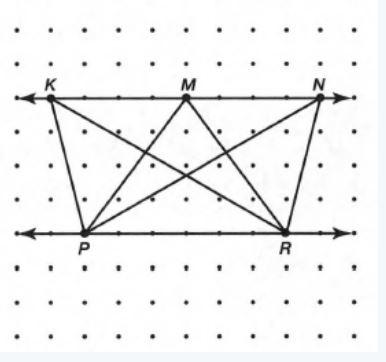
We have to find the area of triangle KPR in the given diagram
Let the distance between two points in the grid is 1 unit.
Find the base PR and perpendicular height to the base opposite of K by counting the grid.
Then use the formula of the area of the triangle to evaluate the area.
The base of the triangle KPR is PR=6 units
height =4 units
The area of triangle KPR =1/2×6×4=12
The area of triangle KPR is 12 square units.
The area of triangle KPR is 12 square units.
Carnegie Learning Geometry Chapter 3 Page 158 Problem 31 Answer
Consider the below updated figure for triangle MPR:
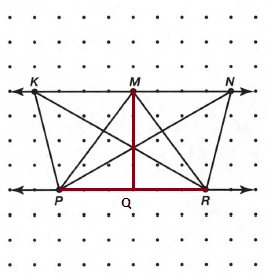
For triangle MPR,
MQ=4
PR=6
Therefore, the required required area is,
A=1/2bh
A=1/2⋅6⋅4
A=12 unit
Hence, the required solution is 12 unit.
Page 158 Problem 32 Answer
The objective of the problem is to find out the area of NPR.
Consider the given figure in book as reference of solution.
To find the required area let first take perpendicular from the point N:
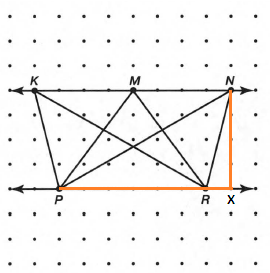
So, the required area is,
area of △NPX−△NRX
Therefore,
1/2⋅7⋅4−1/2⋅1⋅4
=14−2
=12 unit
Hence, the required solution is 12 unit.
Carnegie Learning Geometry Chapter 3 Page 158 Problem 33 Answer
Area of MPR:
A=1/2bh
A=1/2⋅6⋅4
A=12 unit
Area of KPR:
1/2⋅6⋅4
=12 unit
The area of NPR:
1/2⋅6⋅4
=12 unit
As it is seen that all three areas are same.
Hence, it is seen that all three area values are same in measure.
Perimeter And Area Exercise 3.2 Carnegie Learning 2nd Edition Answers Page 158 Problem 34 Answer
The objective of the problem is to compare the base of given three triangle.
Given:
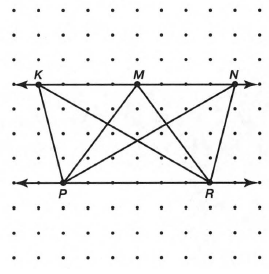
By analyzing the figure given as reference, base for three triangle is PR. As for all three triangle, base is same.
Therefore, these three triangles is sharing same base.
Hence, it is concluded that all three triangles are sharing same base.
Carnegie Learning Geometry Chapter 3 Page 158 Problem 35 Answer
The objective of the problem is to compare the height of all three triangle.
Consider the given figure:
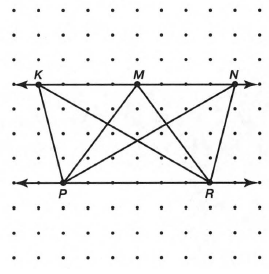
By analyzing the figure given, one can see that height is distance of triangle is distance between the two parallel lines.
As distance between two parallel lines is 4 units for all three triangle.
Therefore, it is concluded that height of all three triangles is same.
Hence, it is concluded that height of all three triangle is same.
Page 158 Problem 36 Answer
The objective of the problem is to compare the base of given three triangle.
Given:
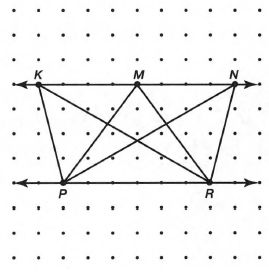
By analyzing the figure given as reference, base for three triangle is PR. as for all three triangle, base is same.
Therefore, these three triangles is sharing same base.
Hence, it is concluded that all three triangles are sharing same base.
Carnegie Learning Geometry Chapter 3 Page 160 Problem 37 Answer
Given :

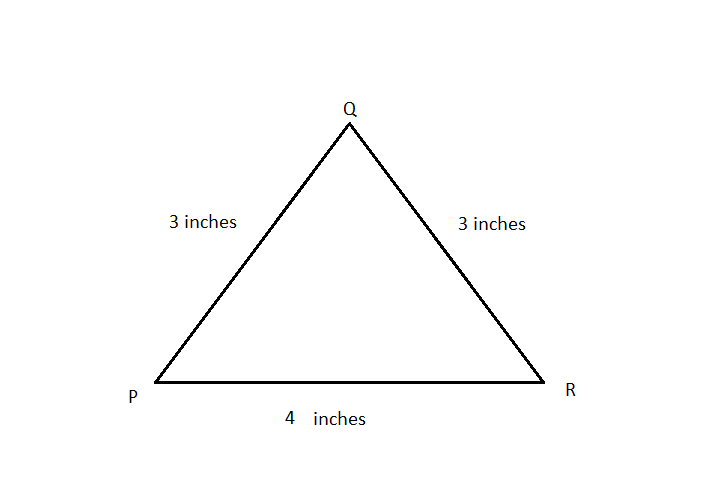
We have to construct an isosceles triangle whose perimeter is of the given length of AB
Measure the length of Line AB with help of measuring scale and divide that length into 3 parts such that 2 parts have the same length and the third has a different.
Draw a triangle using the divided length which is an isosceles triangle.
The length of line AB is 10 inch
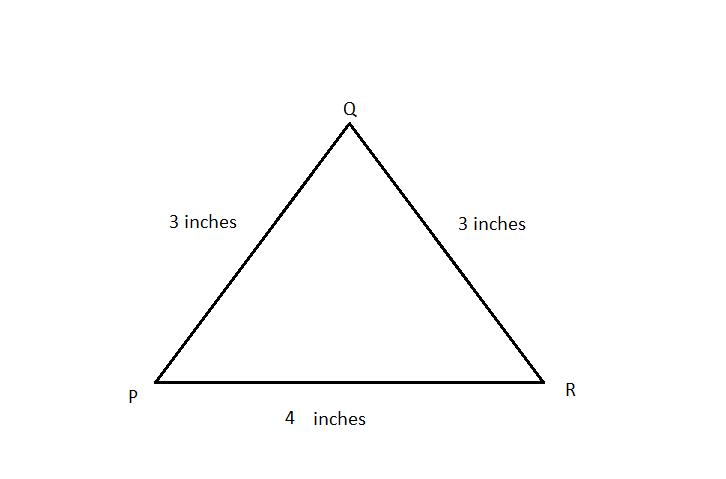
Hence, the length of sides of isosceles will be 3 inches, 3 inches, and 4 inches
Now the isosceles triangle can be drawn a
The isosceles triangle can be drawn as
Perimeter And Area Exercise 3.2 Carnegie Learning 2nd Edition Answers Page 160 Problem 38 Answer
Refer to problem 1
No, all my classmates do not construct the same isosceles triangle like me.
No, all my classmates do not construct the same isosceles triangle like me.