Subrings, Ideals, Quotient Rings & Euclidean Rings Ring Of Endomorphisms Of Abelian Solved Problems

Subrings, Ideals, Quotient Rings & Euclidean Rings Subrings Solved Problems

Example. 1. Prove that S1 = {0, 3}, S2 ={0,2, 4}  are subrings of Z6 = {0,1, 2,3,4 5} with respect to addition and multiplication of residue classes.

Solution. Since (Z6,+,•) is a ring, from the property R4  of the ring we have -0 = 6,-2 = 4,-3 = 3, -4 = 2. ={ 0, 3.} is a non-empty subset of Z6

   +0-3
003
330


    •03
000
303


From the above tables a,b ∈ S1 =>a-b∈ S1 and a.’b ∈ S1

By the theorem (1), S1 is a subring of Z6.

S2 = {0, 2, 4} is a non-empty subset of Z6

    +0-2-4
0044
2200
4420


      •024
0000
2042
4024


From the above tables ; a,b ∈ S2 =>a-b ∈ S2 and a.b ∈ S2

S2 is a subring of Z6

We can see that S1 ∩S2 = { 6 } is the trivial subring. But \(S_1 \cup S_2=\{\overline{0}, \overline{2},\overline{3}, \overline{4}\} \text { is not a }\)

subring of Z6, because 2,3\( S_1 \cup S_2 \Rightarrow \overline{2}+\overline{3}=\overline{5} \& S_1 \cup S_2 \)

Subrings And Ideals In Ring Of Endomorphisms Of Abelian Groups

Example. 2. Show that the set of matrices \(\left(\begin{array}{ll}
a & b \\
d & c
\end{array}\right)\)
 is a subring of the ring of 2×2 matrices whose elements are integers

Solution. Let R = \(\left\{\left(\begin{array}{ll}
a & b \\
d & c
\end{array}\right) \mid a, b, c, d \in Z\right\}\) be the ring of 2×2 matrices and

S = \(\left\{\left(\begin{array}{ll}
a & b \\
0 & c
\end{array}\right) \mid 0, a, b, c \in Z\right\}\) Then 5 # <|) and S cR .

Let A, B eS so that A= \(\left(\begin{array}{ll}
a_1 & b_1 \\
0 & c_1
\end{array}\right), B=\left(\begin{array}{cc}
a_2 & b_2 \\
0 & c_2
\end{array}\right)\) where 0, ah by, c{, a2, b2i c2 e Z.

∴ \(A-B=\left(\begin{array}{cc}
a_1-a_2 & b_1-b_2 \\
0 & c_1-c_2
\end{array}\right) \text { and } A B=\left(\begin{array}{cc}
a_1 a_2 & a_1 b_2+b_1 c_2 \\
0 & c_1 c_2
\end{array}\right) \text {. }\)

Sincea \(1-a_2, b_1-b_2, c_1-c_2, a_1 a_2, a_1 b_2+b_1 c_2, c_1 c_2 \in Z\)

Note: If R is a commutative ring then S is an ideal of R.

Understanding Euclidean Rings And Endomorphism Rings

Example. 3. Let R be a ring and a ∈ R be a fixed element. Then prove that S =(x  ∈ R | ax = 0} [is a subring of R.

Solution. If 0 ∈R is the zero element of r and a ∈ R, we have a0 = 0 => 0 ∈ S

S ≠ Φ and S⊂ R

Let x,y∈ S . Then x, y e R and ax = 0, ay= 0.

Now a(x-y) = ax-ay = 0- 0 = x-y ∈ S.

Also a (xy) = (ax)y = 0y = 0 => xy ∈ S. Hence S is a subring of R.

Notation. Let R be a ring and a∈ R be a fixed element. The intersection of the family of subrings containing ‘a’ is a subring of R. This subring is denoted by Ra and is called the subring of R generated by ‘a’.

Example. 4. If R is a ring and C (R) = (x € R \ xa — ax ∀ a∈ R] then prove that C (R) is a subring of R.

Solution.  For 0 ∈ R, the zero element of the ring, we have 0a = a0 ∀ a ∈R.

By the definition of C (R), 0 ∈C (R). C(R)≠ Φ and C (R)⊂R

Let x,y ∈ C(R)

Then x,y ∈ R and xa = ax, ya = a y V a ∈R

∀a∈R, a(x-y)-ax-ay =xa-ya =(x-y) a

Also, ∀ a ∈R,a(xy) = (ax)y = (xa)y = x (ay) = x (ya) = (xy) a …. (1)

∴ By \(R_{5},(1)\) therefore x, y in C(R)

⇒ x-y, x y in C(R)

Hence C(R)is a subring of R.

Note. The subring C(R) is called the center of the ring R.

Applications Of Endomorphism Rings In Algebraic Structures

Example. 5. If D is an integral domain with unity element T prove that {n .1|n ∈Z} is K a subdomain of D.

Solution.

Let D1 = {n.1 |n ∈ Z  }  the set of all integral multiples of unity element T in D

For 0 ∈ Z, 0.1 =0 ∈ D is the zero element in)

Let a,b e D1 so that a =1. 1, b = m. 1 where l,m ∈ Z.

a-b =l A-m A =(l-m)A- p 1 where p =1-m∈ Z.

Also ab =(1.l)(m. 1) = 1 = where q=lm ∈ Z.

Hence ∈ is a subring of D.

For a,b e D] we have a b = (l. 1) (m. 1) =  P  1 = (m . 1) (1. 1) = ba

D1 is commutative.

For 1 ∈ Z we have 1.1 = 1 ∈D1 and hence D1 contains unity element.

For a,b∈Dab = 0=> (1.1) (m.1) = 0 => (Im) .1= 0 => 1m = 0

=>1 = 0 or m = 0 (l, m ∈Z) => 1. 1 = 0 or m.1 = 0 => a = 0 or b = Q

D1 has no zero divisors.

Note. Since every subdomain of D contains a unity element, and D1 = {n .1 | n∈Z} D1 is contained in every subdomain.

Rings, Integral Domains & Fields Examples

Rings, Integral Domains And Fields

Examples Of Rings In Mathematics With Solutions

The ring is the second algebraic system of the subject of Modern Algebra. The abstract concept of rings has its origin from the set of integers. Even though integers, real numbers, integers modulo − n, and Matrices are endowed with two binary operations, when dealt them in Groups we have considered only one binary operation ignoring the other.

The concept of Ring will take into account both addition and multiplication. The algebra of rings will follow the pattern already laid out for groups.

Definition. (Ring.) Let R be a non-empty set and +, · be two binary operations in R. (R, +, ·) is said to be a ring if, for a,b,c ∈ R;

R1 · a + b = b + a

R2· (a + b) + c = a + (b + c)

R3. there exists 0 ∈ R such that a + 0 = a for a ∈ R.

R4. there exists −a ∈ R such that a + (−a) = 0 for a ∈ R.

R5· (a · b) · c = a · (b · c) and

R6· a · (b + c) = a · b + a · c and (b + c) · a = b · a + c · a.

Note

1. The operation ’+’ is called the addition and the operation ’ · ’ is called the multiplication in the ring (R, +, •).

2. The ring (R, +, ·) is also called the ring R.

3. We write a.b as ab.

4. The properties R1,R2,R3,R4 merely state that (R, +) is a commutative group. Thus (R, +) is called the additive group of the ring R.

5. The identity element ’ 0 ’ in (R, +) is called the zero of the ring R. The zero of a ring should not be confused with the zero of the numbers.

6. By R3, 0 + 0 = 0 for 0 ∈ R.

7. The properties R5, and R6 may be respectively called the Associative and Distributive laws.

In view of Note (4) and Note (7) a ring may also be defined as follows:

Definition. (Ring.) Le t.R be a non-empty set and +, · b e two binary operations in R.(R, +, ·) is said to be a ring, if

(1) (R, +) is a commutative group,

(2) (R, ·) is a semigroup and

(3) Distributive laws hold.

Definition. (Unity Element.) In a ring (R, +, ·) if there exists 1 ∈ R such that a.1 = 1. a = a for every a ∈ R then we say that R is a ring with unity element or identity element.

Note 1. If R is a ring with identity element, by R4, we have −1 ∈ R so that

1 + (−1) = 0.

2. A ring with unity element contains at least two elements 0 and 1 if R 6= {0}.

Definition. In a ring (R, +, ·) if a.b = b.a for a, b ∈ R then we say that R is a commutative ring.

Imp. A ring R (1) need not be commutative under multiplication and (2) need not have an identity (unity) element under multiplication, unless or otherwise stated.

Example. 1. Let R = {0} and +, · be the operations defined by 0 + 0 = 0 and 0 · 0 = 0. Then (R, +, ·) is clearly a ring called the Null ring or Zero ring.

Integral Domains Definition And Examples Step-By-Step

Example 2. The set Z of integers w.r.t. usual addition and multiplication is a commutative ring with unity element.

For (1) (Z, +) is a commutative group (2) Multiplication is associative in Z and (3) Multiplication is distributive over addition.

Example. 3. The set N of natural numbers is not a ring w.r.t. usual addition and multiplication, because, (N, +) is not a group.

Example. 4. The sets Q, R, and C are rings under the usual addition and multiplication of numbers.

Example 5. The set of integers mod under the addition and multiplication mode is a ring.

Example. 6. The set of irrational numbers under addition and multiplication is not a ring as there is no zero element.

Let (R, +, ·) be a commutative ring with unity element. Then (R, +) is a commutative group and (R, ·) is a semi-group with identity. element 1. So we have the following results which are obvious from the theory of groups.

1. The zero element of R is unique and a + 0 = a for every element ’ a ’ in R.

2. For a ∈ R the additive inverse −a ∈ R is unique and a + (−a) = 0.

3. The identity element 1 ∈ R is unique and a · 1 = 1.a = a for every a ∈ R.

4. For a ∈ R, −(−a) = a. 5. For 0 ∈ R, −0 = 0. 6. For a, b ∈ R, −(a + b) = −a − b.

5. For a, b, c ∈ R, a + b = a + c ⇒ b = c and b + a = c + a ⇒ b = c

6. For a, b, x ∈ R, the equations a+x = b and x+a = b have unique solutions.

7. For 1 ∈ R, the identity element, −(−1) = 1.

8. For a, b1, b2, . . . . . . .bn ∈ R, from R6, we have a (b1 + b2 + . . . .. + bn) = ab1 + ab2 + . . . + abn and (b1 + b2 + . . . .. + bn) a = b1a + b2a + . . . . + bna.

Notation. 1. If R is a ring and a, b ∈ R then a + (−b) ∈ R, a + (−b) is written as a − b.

9. If R is a ring and a ∈ R then a + a ∈ R and a + a is written as 2a.

10. If R is a ring and a ∈ R then a · a ∈ R and a · a is written as a2.

Rings, Integral Domains, And Fields Some Basic Properties Of Rings

Theorem 1. If R is a ring and 0, a, b ∈ R, then

  1. 0a = a0 = 0,
  2. a(−b) = (−a)b = −(ab)
  3. (−a)(−b) = ab
  4. a(b − c) = ab − ac. )

Proof. (1) 0a = (0 + 0)a ⇒ 0 + 0a = 0a + 0a (By R3, R6)

∴ 0 = 0a (By right cancellation law of (R, +) )

Similarly, we can prove that a0 = 0. Hence 0a = a0 = 0

(2) To prove that a(−b) = −(ab) we have to show that a(−b) + (ab) = 0.

a(−b) + ab = a{(−b) + b} = a0 = 0 ( By R6, R4) ⇒ a(−b) = −(ab)

Similarly, we can prove that (−a)b = −(ab).

Hence, a(−b) = (−a)b =−(ab).

(3) (−a)(−b) = −{(−a)b} = −{−(ab)} = ab ( by (2 ))[ ∵ (R, +) is a group ]

(4) a(b − c) = a[b + (−c)] = ab + a(−c) = ab − ac (By R6 ) [By theorem (1), (2)]

Similarly, we can prove that (b − c)a = ba − ca.

Solved Problems On Rings, Integral Domains, And Fields

Theorem. 2. If (R, +, ·) is a ring with unity then this unity 1 is the only multiplicative identity.

Proof. Suppose that there exist 1, 10 ∈ R such that 1.x = x.1 = x and 10 · x = x · 10 = x∀x ∈ R

Regarding 1 as identity, 1.10 = 10. Regarding 10 as identity, 1.10 = 1

Thus 10 = 1.10 = 1. ∴ 1 is the only multiplicative identity.

Theorem, 3. If R is a ring with unity element 1 and a ∈ R then

  1. (−1)a = −a
  2. (−1)(−1) = 1

Proof. (1) (−1)a+a = (−1)a+1a = {(−1)+1}a = 0a = 0 ( ∵ a = 1a, R6, R4)

∴ (−1)a = −a

(2) For a ∈ R we have (−1)a = −a. . Taking a = −1, (−1)(−1) = −(−1) =1

Rings, Integral Domains, And Fields Boolean Ring

Definition. In a ring R if a2 = a∀a ∈ R then R is called a Boolean ring.

Theorem 1. If R is a Boolean ring then (1) a + a = 0∀a ∈ R (2) a + b = 0 ⇒ a = b and (3) R is commutative under multiplication. Or, Every Boolean ring is abelian.

Proof. (1) a ∈ R ⇒ a + a ∈ R.

Since a2 = a∀a ∈ R, we have (a + a)2 = a + a ⇒ (a + a)(a + a) = a + a ⇒ a(a + a) + a(a + a) = a + a ⇒ a2 + a2 + a2 + a2 = a + a (By R6) ⇒

(a+a)+(a+a) = a+a ( ∵ R is Boolean ) ⇒ (a+a)+(a+a) = (a+a)+0 (By R3 ) ⇒ a + a = 0 [By left cancellation law of group (R, +)]

(2) For a, b ∈ R, a + b = 0 ⇒ a + b = a + a ⇒ b = a [By (1)]

(3) a, b ∈ R ⇒ a + b˙ ∈ R ⇒ (a + b)2 = a + b

(∵ R is Boolean) ⇒ (a + b)(a + b) = a + b ⇒ a(a + b) + b(a + b) = a + b (By R6) ⇒ a2 + ab + ba + b2 = a + b (By R6 ) ⇒ (a + ab) + (ba + b) =

a + b. (∵ R is Boolean) ⇒ (a + b) + (ab + ba) = a + b [ ∵ (R, +) is a group ] ⇒ (a + b) + (ab + ba) = (a + b) + 0 ⇒ ab + ba = 0 ⇒ ab = ba (By (2))

Rings, Integral Domains And Fields Solved Problems

Example. 1. If R is a ring with identity element 1 and 1 = 0 then R = {0}.

Solution. x ∈ R ⇒ x = 1x ⇒ x = 0x ⇒ x = 0

[By Theorem 1(1)]

∴ R = {0}

Thus a ring R with unity has at least two elements if R6 = {0}.

Rings And Their Properties With Detailed Examples

Example. 2. Prove that the set of even integers is a ring, commutative without unity under the usual addition and multiplication of integers.

Solution. Let R = the set of even integers. Then R = {2x | x ∈ Z}.

a, b, c ∈ R ⇒ a = 2m, b = 2n, c = 2p where m, n, p ∈ Z.

(R, +) is a commutative group. (see ex. in groups)

a · b = (2m)(2n) = 2l where l = 2mn ∈ Z

∴ Multiplication ( · of integers is a binary operation in R.

(a · b) · c = (2m · 2n) · 2p = 8mnp and a · (b · c) = 2m · (−2n · 2p) = 8mnp

∴ (a.b).c = a.(b.c) ⇒ Multiplication (•) is associative in R.

a. (b + c) = 2m(2n + 2p) = 2m · 2n + 2m · 2p = a · b + a · c

Similarly, (b + c) · a = b · a + c · a

∴ Distributive laws hold in R. Hence (R, +, ·) is a ring.

Since ’ 1 ’ is not an even integer; 1 ∈/ R and hence R has no unity element.

Example. 3. (R, +) is an abelian group. Show that (R, +, ·) is a ring if multiplication (·) is defined as a.b=0 ∀a, b ∈ R.

Solution. To prove that (R, +, ·) is a ring we have to show that (R, ·) is semigroup and distributive laws hold.

∀a, b ∈ R, a.b = 0 where 0 ∈ R is the zero element in the group.

∴ multiplication ‘0 ’ is a binary operation in R.

Let a, b, c ∈ R. Then (a · b) · c = 0.c = 0; a.(b · c) = a · 0 = 0 (By Def.)

∴ (a · b) · c = a · (b, c)∀a, b, c ∈ R ∴ (R, ·) is a semi group.

Let a, b, c ∈ R. a ∈ R, b + c ∈ R ⇒ a · (b + c) = 0

a ∈ R, b ∈ R ⇒ ab = 0; a ∈ R, c ∈ R ⇒ ac = 0 ⇒ ab + ac = 0 + 0 = 0.

Hence a · (b + c) = a · b + a · c

Similarly, we can prove that (b + c) · a = b · a + c· a.

∴ Distributive laws hold.

Example. 4. Prove that Z m  = {0, 1, 2, . . . ., m− 1} is a ring with respect to addition and multiplication modulo m.

Solution. We denote addition modulo m by +m and multiplication modulo m by × m

We also know that a+m b = a + b(modm) = r where r is the remainder when a + b is divided by m. a × m b = ab(modm) = s where s is the remainder when ab is divided by m.

Let a, b, c ∈ Zm. a+m  b = a + b( mod m) ∈ Zm ⇒ +m  is a binary operation in Zm . a +m b = a + b(modm) = b + a(modm) = b +m a ⇒ +m  is commutative in Zm

(a+m b) + mc = (a + b) + c(modm) = a + (b + c)(modm) = a +m (b +m  c)

∴ +m is associative in Zm

There exists 0 ∈ Zm

such that 0 +m a = 0 + a(modm) = a(modm) = a.

⇒ 0 is the zero element.

For 0 ∈ Zm , we have 0 +m 0 = 0(modm) ⇒ additive inverse of 0 = 0.

For a 6= 0 ∈ Zm we have 0 < a < m ⇒ 0 < m − a < m ⇒ m − a ∈ Zm

a +m (m − a) = a + (m − a)(modm) = m(modm) = 0(modm)

∴ inverse of a 6= 0 ∈ Zm is m − a ∈ Zm

Hence ( Zm, +) is an abelian group.

Let a, b, c ∈ Zm. a× m b = ab(modm) ∈ Zm ⇒ × m is a binary operation in Zm

(a × m b) × m c = (ab)c(modm) = a(bc)(modm) = a × m (b × m c)

∴ × m  is associative in Zm.

a× m (b+m c) = a(b+ c)( mod m) = ab+ ac( mod m) = (a × m b)+m (a × m c) and (b +m c) × m a = (b × m a) +m (c × m a) so that distributive laws hold.

∴ ( Zm ,+m, × m ) is a ring.

Note. Put m = 6 in the above proof to prove that Z6  is a ring.

Applications Of Rings, Integral Domains, And Fields In Mathematics

Example. 5. Prove that the set R = {a, b} with addition ( +) and multiplication (·) defined as follows is a ring

+ab
aab
bba


and

       .ab
aaa
bab


Solution. From the above tables, clearly +,· are binary operations in R.

1. (a + a) + b = a + b = b; a + (a + b) = a + b = b ⇒ (a + a) + b = a + (a + b) (a + b) + a = b + a = b; a + (b + a) = a + b = b ⇒ (a + b) + a = a + (b + a), etc,

∴ Associativity is true.

2. a ∈ R is the zero element because a + a = a, b + a = b

3. a + b = b = b + a ⇒ commutativity is true.

4. a + a = a ⇒ additive inverse of a = a and b + b = a ⇒ additive inverse of b = b.

5. a · (a · b) = a · a = a; (a · a) · b = a · b = a ⇒ a · (a · b) = (a · a) · b, etc

∴ Associativity is true.

6. a · (b + a) = a · b = a; a · b + a · a = a + a = a ⇒ a · (b + a) = a · b + a · a (b + a) · a = b · a = a; b · a + a · a = a + a = a ⇒ (b + a) · a = b · a + a · a, etc.

∴ Distributive laws are true.

Hence (R, +, ·) is a ring.

Example. 6. If R is a ring and a, b, c, d ∈ R then prove that

  1. (a + b)(c + d) = ac + ad + bc + bd, and
  2. a + b = c + d ⇔ a − c = d − b

Solution.

(1) (a + b)(c + d) = a(c + d) + b(c + d) = ac + ad + bc + bd ( By R6)

(2) a + b = c + d ⇔ (a + b) + (−b) = (c + d) + (−b)

⇔ a + (b + (−b)) = (c + d) + (−b)

⇔ a + 0 = (c + d) + (−b)

⇔ a + (−c) = (−c) + {(c + d) + (−b)}

⇔ a − c = ((−c) + c) + {d + (−b)}

⇔ a − c = 0 + (d − b) ⇔ a − c = d − b (By R4 )

Rings, Integral Domains And Fields Exercise 1

1( a )
1. If R is a ring and a, b, c ∈ R prove that (a − b) − c = (a-c) − b

2. If R is a ring and a, b ∈ R then prove that the equation a + x = b has unique solution in R.

3. In a ring R if ’ a ’ commutes with ’ b ’ prove that ’ a ’ commutes with ’ −b0 ’ where a, b ∈ R.

4. If R is a ring with unity element ’ 1 ’ and R6= {0} prove that 1 6= 0 where 0 ∈ R is the zero element.

5. R is a Boolean ring and for a ∈ R, 2a = 0 ⇒ a = 0 then prove that R = {0}. 6. If R is a commutative ring prove that (a + b)2 = a2 + 2ab + b2∀a, b ∈ R.

6. If R is a ring and a, b, c, d ∈ R evaluate (a − b)(c − d).

7. If R = {a√2 | a ∈ Q} is (R, +, ·) under ordinary addition and multiplication, a ring ?

8. Is the set of all pure imaginary numbers = {iy | y ∈ R} a ring with respect to addition and multiplication of complex numbers?

9. If Z = the set of all integers. and ’ n ’ is a fixed integer prove that the set nZ = {nx | x ∈ Z} is a ring under ordinary addition and multiplication of integers.

Answers

2. b − a 7. ac + bd − ad − bc 8. Not a ring 9. Not a ring

Rings, Integral Domains, And Fields Zero Divisors Of A Ring

Though rings are a generalisation of the number system some algebraic properties of the number system need not hold in general rings.

The product of two numbers can only be zero if at least one of them is zero, whereas in any ring it may not be true.

For example, in the ring (Z6, +, ·) of modulo −6, we have 2.3 = 0 with neither 2 = 0 nor 3 = 0.

Definition. (Zero Divisors). Two non-zero elements a, and b of a ring R are said to be zero divisors (divisors of zero) if ab = 0, where 0 ∈ R is the zero element.

In particular,’ a ’ is the left zero divisor, and ’ b ’ is the right zero divisor.

Definition. (Zero Divisor). a 6= 0 ∈ R is a zero divisor if there exists b 6= 0 ∈ R such that ab = 0.

Note. 1. In a commutative ring there is no distinction between left and right zero divisors.

2. A ring R has no zero divisors ⇔ a, b ∈ R and ab = 0 ⇒ a = 0 or b = 0

Example.1. The ring of integers Z has no zero divisors.

Step-By-Step Guide To Understanding Rings, Integral Domains, Fields

Example. 2. In the ring (Z12, +, ·), the elements 2, 3, 4, 6, 8, 9, 10 are zero divisors.

For 2 · 6 = 0, 3 : 4 = 0, 3 · 8 = 0, 4 · 6 = 0, 4 · 9 = 0, 6 · 10 = 0

Observe that the G. C. D of any of {2, 3, 4, 6, 8, 9, 10} and 12 6= 1.

Example3. The ring (M2, +, ·) of 2 × 2 matrices whose elements are in Z, has zero divisors.

For, we have A = 10006= O, B =  00106= O, where O is a zero matrix, such that AB = O.

Example 4. The ring (Z3, +, ·) of modulo −3 has no zero divisors.

Example 5. The ring Z × Z = {(a, b) | a, b ∈ Z} has zero divisors.

For, (0, 1), (1, 0) ∈ Z × Z ⇒ (0, 1) · (1, 0) = (0, 0) = zero element in Z × Z.

Imp. In the ring of integers Z, all the solutions of x2 − 4x + 3 = 0 are obtained by factoring as x2 − 4x + 3 = (x − 1)(x − 3) and equating each factor to zero. While doing so, we are using the fact that Z is an Integral Domain, so that it has no zero divisors.

But if we want to find all solutions of an equation in a ring R which has zero divisors, we can do so, by trying every element in the Ring by substitution in the product (x − 1)(x − 3) for zero.

Example 6. In the ring Z of integers, the equation x2 +2x+4 = 0 i.e. (x+1) 2 +3 = 0 has no solution as (x + 1)2 + 3 ≥ 3∀x ∈ Z.

But, in the ring Z6 = {0, 1, 2, 3, 4, 5}, (x+1)2 +3 takes respectively the values 4, 1, 0, 1, 4, 3 for x = 0, 1, 2, 3, 4, 5 ∈ Z6.

∴ x2 + 2x + 4 = 0 has 2 ∈ Z6 as solution.

Rings, Integral Domains, And Fields Cancellation Laws In A Ring

If (R, +, ·) is a ring, then (R, +) is an abelian group. So, cancellation laws with respect to addition are true in R. Now, we are concerned about the cancellation laws in R, namely ab = ac ⇒ b = c, ba = ca ⇒ b = c for a, b, c ∈ R with respect to multiplication.

Definition. (Cancellation laws). In a ring R, for a, b, c ∈ R if a6 = 0, ab = ac ⇒ b = c and a6 = 0, ba = ca ⇒ b = c then we say that cancellation laws hold in R.

Theorem. A ring R has no zero divisors if and only if the cancellation laws hold in R.

Proof. Let the ring have zero divisors. We prove that cancellation laws hold in R.

a, b, c ∈ R and a6 = 0, ab = ac ⇒ ab − ac = 0

⇒ a(b − c) = 0 ⇒ b − c = 0 ( ∵ a6 = 0) ⇒ b = c

Similarly we can prove a6 = 0, ba = ca ⇒ b = c

Conversely, let the cancellation laws hold in R. We prove that R has no zero divisors. If possible, suppose that there exist a, b ∈ R such that a6 = 0, b6 = 0, and ab = 0.

ab = 0 ⇒ ab = a0 ⇒ b = 0 (By cancellation law)

This is a contradiction.

∴ a6= 0, b6 = 0 and ab = 0 is not true in R.

∴ R has no zero divisors.

Note. The importance of having no zero divisors in a ring R, is, that an equation ax = b where a6 = 0, b ∈ R can have at most one solution in R.

For x1, x2 ∈ R if ax1 = b and ax2 = b then ax1 = ax2 ⇒ x1 = x2 (By cancellation law)

If a6 = 0 ∈ R has a multiplicative inverse, say, a− 1 ∈ R then the solution is a− 1b ∈ R.

Rings, Integral Domains, And Fields Solved Problems

Example. 1. Find the zero-divisors of Z12, the ring of residue classes modulo – 12.

Solution. Z12 = {0, 1, . . . . . . .11}.

For a¯ 6= 0 ∈ Z12 there should exist ¯b ∈ Z12 such that a¯ × ¯b ≡ 0(mod12)

We have 2 × 6 = 0, 3 × 4 = 0, 4 × 3 = 0, 6 × 2 = 0, 8 × 3 = 0, 8 × 6 = 0, 8 × 9 = 0, 10 × 6 = 0

∴ 2, 3, 4, 6, 8, 9, 10 are zero divisors.

Worked Examples Of Integral Domains In Abstract Algebra

Example. 2. Solve the equation x2 − 5x + 6 = 0 in the ring Z12.

Solution.

Given

x2 − 5x + 6 = 0

In the ring of integers Z, which has no zero divisors, x2 − 5x + 6 = 0 ≡ (x − 2)(x − 3) = 0 has two solutions 2, 3 ∈ Z.

But in Z12; for x = 6, (x − 2)(x − 3) = (4)(3) = 12 = 0 and for x = 11, (x − 2)(x − 3) = (9)(8) = 72 = 0.

∴ the given equation has 4 solutions, namely, 2,3,6, and 11 in the ring Z12.

Example. 3. In the ring Zn, show that the zero divisors are precisely those elements that are not relatively prime to n. (or) show that every non-zero element of Zn is a unit or zero divisor:

Solution. Let m ∈ Zn = {0, 1, 2, . . . , n − 1} and m 6= 0. Let m be not relatively prime to n.

Then G. C.D of m, n = (m, n) 6= 1.

Let (m, n) = d.

We have (m, n) = d ⇒ md , nd  = 1 ⇒ md , nd ∈ Zn and md 6= 0, nd 6= 0

∴ m nd  = md  n = 0(modn). Thus m 6= 0, nd 6= 0 ⇒ m nd  = 0

⇒ m is a zero divisor.

∴ Every m ∈ Zn which is not relatively prime to n is a zero divisor.

Let m ∈ Zn be relatively prime to n.

Then (m, n) = 1

∴ Let mr = 0 for some r ∈ Zn.

We have mr = 0(modn) ⇒ n| mr ⇒ n| r ( ∵ (m, n) = 1) ⇒ r = 0 (0 ≤ r < n − 1)

∴ If m ∈ Zn is relatively prime to n then m is not a zero divisor.

Note. If p is a prime, then Zp ring has no zero divisors.

Theorems And Properties Of Rings And Fields With Examples

1. (g) Some Special Types Of Rings

Definition.  (Integral Domain)

A commutative ring with unity containing no zero divisors is an Integral Domain.

Note. 1. Some authors define integral domain without a unity element.

2. For “Integral Domain” we simply use the word “Domain” and denote by the symbol D. Imp. D is an integral domain ⇔

  1. D is a ring,
  2. D is commutative,
  3. D has a unity element and
  4. D has no zero divisors.

Example 1. The ring of integers Z is naturally an integral domain.

1 ∈ Z is the unity element and ∀a, b ∈ Z we have ab = ba (commutativity) and ab = 0 ⇒ a = 0 or b = 0 (no zero divisors).

Example 2. (Z6, +, ·) where Z6 = {0, 1, 2, 3, 4, 5}, the set of integers under the modulo −6 system, is a ring. 1 ∈ Z6 is the unity element and ∀a, b ∈ Z6 we have ab(mod6) = ba(mod6)( commutative ) But, for 2 6= 0, 3 6= 0(mod6), 2.3 = 6(mod6) = 0 and hence Z6 has zero divisors. Therefore, Z6 is not an integral domain.

Example. 3. If Q = the set of all rational numbers and R = the set of all real numbers then (Q, +, ·) and (R, +, ·) are integral domains.

Example 4. -7 = {0, 1, 2, 3, 4, 5, 6}, the set of all integers under modulo −7 is an integral domain with respect to addition and multiplication modulo −7.

Example 5. The ring (M2, +, ·) of 2× 2 matrices is not an integral domain because it is not commutative and has zero divisors.

Example 6. Z × Z = {(a, b) | a, b ∈ Z} is not an Integral Domain under the addition and multiplication of components.

Theorem. 1. In an integral domain, cancellation laws hold.(Write the proof of (1) part of a theorem in Art. 1.6)

Theorem. 2. A commutative ring with unity is an integral domain if and only if the cancellation laws hold. (Write the proof of a theorem in Art. 1.6)

Definition. (Multiplicative Inverse). Let R be a ring with the unity element ’

1 ’. A non-zero element a ∈ R˙ is said to be invertible under multiplication, if there exists b ∈ R such that ab = ba = 1, b ∈ R is called the multiplicative inverse of a ∈ R.

From the theory of groups, the multiplicative inverse of a 6= 0 ∈ R, if exists, is unique. It is denoted by a − 1. Also aa− 1 = a− 1a = 1.

Definition. (Unit of a Ring). Let R be a ring with unity. An element u ∈ R is said to be a unit of R if it has a multiplicative inverse in R.

Note.

1. The zero element of a ring is not a unit.

2. The unity element of a ring and the unit of a ring R is different. The unity element is the multiplicative identity while a unit of a ring is an element of the ring having a multiplicative inverse in the ring. Of course, the unity element is a unit.

Integral Domains And Fields Classification With Solved Examples

Theorem. 3. In a ring R with unity, if a (6= 0) ∈ R has a multiplicative inverse, then it is unique.

Proof. Suppose that there exist b, b0 ∈ R such that ab = ba = 1 and ab0 = b0a = 1.

Then ab = ab0 = 1.

By the definition of cancellation law, b = b0.

Example 1. It is a ring with a unity element = 1. We have 1.1 = 1 and (−1)(−1) = 1 for −1, 1 ∈ Z.

If a 6= ±1 ∈ Z then there exists no b ∈ Z such that ab = ba = 1.

Therefore, −1;1 are the only units in the ring Z.

Observe that any element is also a unit.

Example 2. Consider the ring Z7 = {0, 1, 2, 3, 4, 5, 6} under addition and multiplication modulo −7.

It has a unity element = 1 which is also a unit.

Further 24 = 4.2 = 1(mod7), 3.5 = 5.3 = 1(mod7) and 6.6 = 1(mod7). Thus every non-zero element is a unit.

Example 3. Consider the ring Z × Z = {(m, n); m, n ∈ Z}.

The unity element = (1, 1) which is also a unit: Also, (1, −1)(1, −1) = (1.1, (−1)(−1)) = (1, 1); (−1, 1)(−1, 1) = (1, 1) and (−1, −1)(−1, −1) = (1, 1)

Thus (1, 1), (1, −1), (−1, 1) and (−1, −1) are units in Z × Z.

Definition. (Division Ring or Skew Field) Let R be a ring with a unity element.

If every non-zero element of R is a unit then R is a Division Ring.  (R, +,)isaDivisionring ⇔ (1)R is a ring, (2) R has a unity element and (3) every non-zero element in R is invertible under multiplication.

Example 1. ( Z, +,) is not a division ring, for, 2 6= 0 ∈ Z has no multiplicative inverse in Z.

Example 2. (Q, +, ·) and (R, +, ·) are division rings.

Example 3. The ring (M2, +, ·) of non-singular 2 × 2 matrices is a division ring.

Definition. (Field) Let R be a commutative ring with a unity element. If every nonzero element of R is invertible under multiplication then R is a field.

Another Definition. A commutative ring with unity is called a field if every nonzero element is a unit.

(R, +, ·) is a field ⇔ (1)R is a ring, (2) R is commutative (3) R has a unity element and (4) every non-zero element of R is a unit. Usually, a field is denoted by the symbol F.

Note. 1 . A division ring which is also commutative is a field.

2. In a field, the zero element and the unity element are different. Therefore, a field has at least two elements.

Example 1. We know that (Q, +) where Q = the set of all rational numbers is an additive group and (Q − {0}, ·) is a multiplicative group. Further distributive laws hold. Therefore (Q, +, ·) is a field.

Example  2. (Z, +, ·) where Z = the set of all integers is not a field, because all non-zero elements of Z are not units.

Example  3. (Z7, +, ·) where Z7 = the set of integers under modulo −7 is a field.

Theorem. 4. A field has no zero – divisors.

Proof. Let (F, +, ·) be a field.

Let a, b ∈ F and a6= 0.

a6= 0 ∈ F, F is a field ⇒ there exists a−1 ∈ F such that aa−1 = a−1a = 1.

ab = 0. ⇒ a−1(ab) = a−10 ⇒ a−1a b = 0 ⇒ 1b = 0 ⇒ b = 0

Thus a, b ∈ R, a6 = 0 and ab = 0 ⇒ b = 0.

Similarly, we can prove that, a, b ∈ R, b6 = 0 and ab = 0 ⇒ a = 0.

∴ F has no zero divisors.

Note. A division ring has no zero divisors. (Write the proof of the theorem (3))

Theorem. 5. Every field is an integral domain.

Proof. Let (F, +, ·) be a field. Then the ring F is a commutative ring with unity and having every non-zero element as a unit.

But an integral domain is a commutative ring with unity and having no zero divisors. So, we have to prove that F has no zero divisors. (Write the proof of the above Theorem (3))

Note. The converse of the above theorem need not be true. However, an integral domain with a finite number of elements can become a field.

Theorem 6. Every finite integral domain is a field.

Proof. Let 0, 1, a1, a2, . . . . . . , an be all the elements of the integral domain D.

Then D has n + 2 elements which is finite. Integral domain D is a commutative ring with unity and having no zero divisors.

So, we have to prove that every non-zero element of D has a multiplicative inverse in D.

Let a ∈ D and a6 = 0

Now consider the n + 1 products a1, aa1, aa2 , . . . ., aan.

If possible, suppose that aai = aaj for i 6= j.

Since a6 = 0, by cancellation law, we have ai = aj.

This is a contradiction since i 6= j.

Therefore a1, aa1, aa2, . . . . . . . . . , aan are (n + 1) distinct elements in D.

Since D has no zero divisors, none of these (n +1) elements is zero element.

Hence, by counting ;

a1, aa1, aa2, . . . . . . .., aan are the (n+1) elements 1, a1, a2, . . . . . . , an in some order.

∴ a1 = 1 or a = 1 or aai = 1 for some i.

For a6 = 0 ∈ D there exists b = ai ∈ D such that ab. = 1

⇒ a6 = 0 ∈ D has a multiplicative inverse in D.

∴ D is a field.

Theorem 7. If p is a prime then Zp, the ring of integers modulo p, is a field.

Proof. In Example 4 on page 191, we proved that (Zp, +, ·) is a ring.

Since Z

p = {0, 1, 2, . . . . . . , p − 1} has p distinct elements, and Zp is a finite ring.

We prove now that Zp is an integral domain.

Clearly, 1 ∈ Zp is the unity element.

For a, b ∈ Zp, ab(modp) ≡ ba(modp) ⇒ ab = ba and hence Zp is commutative.

For a, b ∈ Zp and ab = 0 ⇒ ab ≡ 0(modp) ⇒ p|ab ⇒ p|a or p | b ( ∵ p is prime)

⇒ a ≡ 0(modp) or b ≡ 0(modp) ⇒ a = 0 or b = 0.

∴ Zp has no zero divisors. Thus (Zp, +, ·) is a finite integral domain .

∴ Zp is a field.

Theorem. 8. If (Zn, +, ·) is a field then n is a prime number.

Proof. If possible let m be a divisor of n.

∴ there exists q ∈ Z such that n = mq. Clearly 1 ≤ m, q ≤ n.

mq = n ⇒ mq ≡ 0(modn). Since Zn is a field, Zn has no zero divisors.

∴ mq ≡ 0(modn) ⇒ m = 0(modn) or q = 0(modn)

⇒ m = n or q = n ⇒ m = n or m = 1( ∵ mq = n). ∴ n is a prime number.

Theorem. 9. Z p = {0, 1, 2, . . . , p − 1} is a field if and only if p is a prime number.

Proof. Write the proofs of Theorem 7 and Theorem 8.

Note. In the field Zp= {0, 1, 2, . . . . . . , p − 1} where p is a prime, 1 and p − 1

are the only elements that are their own multiplicative inverses.

Rings, Integral Domains, And Fields Solved Problems

Example. 4. Find all solutions of x2 − x + 2 = 0 over Z3[1].

Solutions.

Given

x2 − x + 2 = 0

We have Z3 = {0, 1, 2} under modulo – 3 system. Z3[1] = {a + ib | a, b ∈ Z3 and i2 = −1 = {0, 1, 2, i, 1 + i, 2 + i, 2i, 1 + 2i, 2 + 2i}, containing 9 elements.

Let P(x) = x2 − x+2. Then P(0) 6= 0, P(1) 6= 0, P(2) 6= 0, P(i) = −1− i+2 6= 0

P(1 + i) = (1 − 1 + 2i) − 1 − i + 2 6= 0, P(2 + i) = (4 − 1 + 4i) − (2 + i) + 2 6= 0, P(2i) = −4 6= 0

P(1+2i) = (1−4+4i)−(1+2i)+2 6= 0, P(2+2i) = (4−4+8i)−(2+2i)+2 6= 0

∴ x2 − x + 2 = 0 has no solution over Z3[1].

Example. 5. Show that 1, p − 1 are the only elements of the field Zp, p is prime, that are their own multiplicative inverses.

Solution. Observe that, in the Zp field, x2 − 1 = 0 has only two solutions.

x2 − 1 = 0 ⇒ x2 = 1 ⇒ x = 1 ⇒ Multiplicate inverse of x = x.

So, we have to prove that 1, p − 1 are solutions of x2 − 1 = 0 in Zp.

1 ∈ Z

p ⇒ 12 − 1 = 1 − 1 = 0

p − 1 ∈ Zp ⇒ (p − 1) 2 − 1 = p2 − 2p + 1 − 1 = p2 − 2p

= p(p − 2) = 0(p − 2) = 0 ( ∵ p = 0(modp))

Example. 6. In a ring R with unity if a ∈ R has multiplicative inverse then a ∈ R is not a zero divisor.

Solution. a ∈ R has multiplicative inverse

⇒ There exists a−1 ∈ R, such that aa−1 = a−1a = 1, where 1 ∈ R is the unity element, To prove that a ∈ R is not a zero divisor we have to prove that

for b ∈ R so that ab = 0 or ba = 0 ⇒ b = 0 only.

ab = 0 ⇒ a−1(ab) = a−10 ⇒ 1b = 0 ⇒ b = 0; ba = 0 ⇒ (ba)a−1 = 0a−1 ⇒ b1 = 0 ⇒ b = 0

∴ a ∈ R is not a zero divisor.

Example. 7. Construct a field of two elements.

Solution. Let F = {0, 1} and addition ( +), multiplication ( ) in F be defined as follows :

+01
001
110


.01
000
101


Clearly, + and – are binary operations in F.

We have 0 + 1 = 1 + 0 and 0.1 = 1.0 and hence +, · are commutative.

The two operations are associative.

0 ∈ F is the zero elements and 1 ∈ F is the unity element.

Clearly, distributivity is also true.

Additive inverse of 0 = 0, additive inverse of 1 = 1.

The multiplicative inverse of 16= 0 ∈ F is 1 .

Hence ({0, 1}, +, ·) is a field.

Example. 8. Show that the set R of all real-valued continuous functions defined on [0, 1] is a commutative ring with unity, with respect to addition (+) and multiplication ( •) of functions defined as (f + g)(x) = f(x) + g(x) and (f · g)(x) = f(x) · g(x)∀x ∈ [0, 1] and f, g ∈ R.

Solution. f, g are real-valued continuous functions on [0, 1] ⇒ (1)f + g and f.g are real-valued continuous functions on [0, 1] and (2) f(x), g(x) are real numbers for x ∈ [0, 1].

∴ The addition and multiplication of functions are binary operations in R.

Let f, g, h ∈ R ∀x ∈ [0, 1], ((f + g) + h)(x) = (f + g)(x) + h(x) = (f(x) + g(x)) + h(x)

= f(x) + (g(x) + h(x)) = f(x) + (g + h)(x) = (f + (g + h))(x)

∴ (f + g) + h = f + (g + h)∀f, g, h ∈ R

If O(x) = 0∀x ∈ [0, 1] then O is a real-valued continuous function.

Therefore there exists O ∈ R so that (f + O)(x) = f(x) + O(x) = f(x)∀x ∈ [0, 1] and f ∈ R.

If f is a real-valued continuous function on [0, 1] then ’ −f0 ’ is also a real-valued continuous function so that (−f)(x) = −f(x)∀x ∈ [0, 1].

Therefore for f ∈ R there exists −f ∈ R so that (f + (−f))(x) = f(x) − f(x) = 0 = 0(x)∀x ∈ [0, 1]

That is, additive inverse exists ∀f ∈ R. ∴ (R, +) is a commutative group.

∀x ∈ [0, 1]; ((fg)h)(x) = (fg)(x)h(x) = (f(x)g(x))h(x) = f(x)(g(x)h(x)) = f(x)(gh)(x) = (f(gh))(x)

∴ (fg)h˙ = f(gh)∀f, g, h ∈ R

∀x ∈ [0, 1]; (f(g + h))(x) = f(x)(g + h)(x) = f(x)(g(x) + h(x)) = f(x)g(x) + f(x)h(x) = (fg)(x) + (fh)(x) = (fg + fh)(x)

∴ f(g + h) = fg + fh∀f, g, h ∈ R

Similarly (g + h)f = gf + hf ∀f, g, h ∈ R. Hence (R, +, ·) is a ring.

∀x ∈ [0, 1], (fg)(x) = f(x)g(x) = g(x)f(x) = (gf)(x)

∴ fg = gf∀f, g ∈ R.

∴ R is a commutative ring.

The constant function e(x) = 1∀x ∈ [0, 1] is real-valued and continuous.

Also e ∈ R is such that (ef)(x) = e(x)f(x) = f(x)∀x ∈ [0, 1]

∴ e ∈ R defined as above is the unity element.

Example 9. Prove that the set Z[1] = a + bi | a, b ∈ Z, i 2 = −1 of Gaussian integers is an integral domain with respect to the addition and multiplication of numbers. Is it a field?

Solution. Let Z(1) = {a + bi | a,b ∈ Z}.

Let x, y ∈ Z (i) so that x = a + bi,y = c + di where a,b,c,d ∈ Z

x + y = (a + c) + (b + d)i = a1 + b1 i where a1 = a + c, b1 = b + d ∈ Z

x,y = (ac − bd) + (ad + bc)i = a2 + b2 i where a2 = ac − bd,b2 = ad + bc ∈ Z

∴ +, · are binary operations in Z(1).

Since the elements of Z (1) are complex numbers we have that

  1. Addition and multiplication are commutative in Z(1),
  2. Addition and multiplication are associative in Z (1) and
  3. Multiplication is distributive over addition in Z(1).

Clearly zero element = 0 + 0i = 0 and unity element = 1 + 0i = 1.

Further, for every x = a + ib ∈ Z(i) we have −x = (−a) + i(−b) ∈ Z(i) so that x + (−x) = {a + (−a)} + i{b + (−b)} = 0 + i0 = 0 ⇒ Additive inverse exists.

∴ Z(i) is a commutative ring with a unity element.

For x,y ∈ Z(i),x.y = 0 ⇒ x = 0 or y = 0 since x,y are complex numbers.

Hence Z(i) is an integral domain with a unity element.

For α = 3 + 4i 6= 0 ∈ Z(i) we have β = 253 − i 254 so that α · β˙ = 259 + 1625  + i −2512 + 1225  = 1 + i0 = 1. But β /∈ Z(i) as 253 , − 254 ∈/ Z.

So, every non-zero element of Z(i) is not invertible. ∴ Z(i) is not a field.

Example. 10. Prove that Q[√2] = {a + b√2 | a,b ∈ Q} is a field with respect to ordinary addition and multiplication of numbers.

Solution. Let x,y,z ∈ Q[√2] so that

x = (a1 + b1)√2,y = (a2 + b2)√2,z = (a3 + b3)√2 where a1,b1,a2,b2,a3,b3 ∈ Q

x+y = (a1 + a2)+(b1 + b2) √2 = a+b√2 where a1 +a2 = a,b1 +b2 = b ∈ Q

x · y = (a1a2 + 2b1b2)+(a1b2 + a2b1) √2 = c+d√2 where c = a1a2 +2b1b2 ∈ Q and d = a1b2 + a2b1 ∈ Q

∴ Addition (+) and multiplication ( ) of numbers are binary operations in Q[√2].

x + y = (a1 + a2) + (b1 + b2) √2 = (a2 + a1) + (b2 + b1) √2 = (a2 + b2)√2+ (a1 + b1)√2 = y + x ⇒ Addition is commutative.

(x + y) + z = (a1 + a2 + a3) + (b1 + b2 + b3) √2 and x + (y + z) = (a1 + a2 + a3) + (b1 + b2 + b3) √2 ⇒ (x + y) + z = x + (y + z) ⇒ Addition is associative.

For 0 ∈ Q we have 0 + 0√2 = 0 ∈ Q[√2] so that x + 0 = x for x ∈ Q[√2] ⇒ 0 ∈ Q[√2] is the zero element.

For x = (a1 + b1)√2 ∈ Q[√2] we have −x = (−a1) + (−b1) √2 ∈ Q[√2] so that x + (−x) = 0 ⇒ Additive inverse exists.

∴ (Q[√2], +) is a commutative group.

x · y = (a1 + b1)√2 · (a2 + b2)√2 = (a1a2 + 2b1b2) + (a1b2 + a2b1) √2  = (a2a1 + 2b2b1)+(a2b1 + b2a1) √2 = y·x ⇒ Multiplication is commutative.

(x · y) · z = (a1a2 + 2b1b2 + a1b2 + a2b1)√2 · (a3 + b3)√2 = (a1a2a3 + 2b1b2 a3 + 2a1b2b3 + 2a3b1b3)+(a1a2b3 + 2b1b2b3 + a1a3b2 + a2a3b1) √2 and x · (y · z)

= (a1 + b1)√2 (a2a3 + 2b2b3 + a2b3 + a3b2)√2 = (a1a2a3 + 2a1b2b3 + 2a2b1b3 + 2a 3b1b2)+(a1a2b3 + a1a3b2 + a2a3b1 + 2b1b2b3) √2

∴ (x, y), z = x.(y, z) ⇒ Multiplication is associative.

x · (y + z) = (a1 + b2)√2 (a2 + a3 + b2 + b3)√2 = (a1a2 + a1a3 + 2b1b2 + 2b1b3) + (a1b2 + a1b3 + a2b1 + a3b1) √2 and x·y+x, z = (a1a2 + 2b1b2 + a1b2 + a2b1)√2 +(a1a3 + 2b1b3 + a1b3 + a3b1)√2 = (a1a2 + 2b1b2 + a1a3 + 2b1b3) + (a1b2 + a2b1 + a1b 3 + a3b1) √2

∴ x · (y + z) = x · y + x · z ⇒ Distributivity is true.

Hence (Q[√2], +, ·) is a ring.

1 = 1 + 0√2 ∈ Q[√2] so that x1 = (a1 + b1)√2 (1 + 0√2) = x∀x ∈ Q[√2].

∴ Q[√2] is a commutative ring with a unity element.

To show that Q[√2] is a field we have to prove further every non-zero element in Q[√2] has a multiplicative inverse.

Let a + b√2 ∈ Q[√2] and a 6= 0 or b 6= 0

⇒ Then \(\frac{1}{a+b \sqrt{2}}=\frac{a-b \sqrt{2}}{a^2-2 b^2}=\left(\frac{a}{a^2-2 b^2}\right)+\left(\frac{-b}{a^2-2 b^2}\right) \sqrt{2}\)

⇒ since \(a^2-2 b^2 \neq 0 for a \neq 0 or b \neq 0. a, b \in Q \Rightarrow \frac{a}{a^2-2 b^2}, \frac{-b}{a^2-2 b^2} \in Q\)

⇒ For \(a+b \sqrt{2} \neq 0 \in Q[\sqrt{2}]\)

there exists \(\left(\frac{a}{a^2-2 b^2}\right)+\left(\frac{-b}{a^2-2 b^2}\right) \sqrt{2} \in Q[\sqrt{2}]\)

⇒ such \(t(a+b \sqrt{2})\left[\left(\frac{a}{a^2-2 b^2}\right)+\left(\frac{-b}{a^2-2 b^2}\right) \sqrt{2}\right]=1=1+0 \sqrt{2}\)

∴ Every non-zero element of Q[√2] is invertible.

Hence Q[√2] is a field. Ex.

Example11. If Z = the set of integers then prove that the set z × z = {(m, n) | m, n ∈ z} with respect to addition (+) and multiplication (•) defined as  (m1, n1) + (m2, n2) = (m1 + m2, n1 + n2) and (m1, n1) · (m2, n2) = (m1m2, n1n2) ∀ (m1, n1) , (m2, n2) ∈ z × z is a ring and not an integral domain.
Solution.

Let x = (m1, n1) , y = (m2, n2) , z = (m3, n3) ∈ z×z so that m1, n1, m2, n2, m3, n3 ∈ Z

(1) x + y = (m1, n1) + (m2 + n2) = (m1 + m2, n1 + n2) ∈ z × z x · y = (m1, n1) · (m2, n2) = (m1m2, n1n2) ∈ z × z as m1 + m2, n1 + n2, m1m2, n1n2 ∈ z

∴ + and · are binary operations in z × z

(2) x + y = (m1 + m2, n1 + n2) = (m2 + m1, n2 + n1) = y + x and x.y = (m1m2, n1n2) = (m2m1, n2n1) = yx  ⇒ + and · are commutative.

(3) (x + y) + z = (m1 + m2, n1 + n2) + (m3, n3) = (m1 + m2 + m3, n1 + n2 + n3) = (m1 + m2 + m3, n1 + n2 + n3) = x + (y + z) (x · y) · z = (m1m2, n1n2) · (m3, n3) = ((m1m2) m3, (n1, n2) n3) = (m1 (m2m2) , n1 (n2n3)) = x.(y.z). ⇒ + and – are associative.

(4) x · (y + z) = (m1, n1) · (m2 + m3, n2 + n3) = (m1 (m2 + m3) , n1 (n2 + n3)) = (m1m2 + m1m3, n1n2 + n1n3) = (m1m2, n1n2) + (m1m3, n1n3) = x · y + x · z

Since multiplication is commutative, (y + z) · x = y · x + z · x

∴ Distributivity is true.

(5) For 0 ∈ z we have (0, 0) ∈ z×z and (m, n)+(0, 0) = (m+0, n+0) = (m, n)

∴ (0, 0) ∈ z × z is the zero elements.

(6) For 1 ∈ z we have (1, 1) ∈ z × z and (m, n).(1, 1) = (m · 1, n · 1) = (m, n)

∴ (1, 1) ∈ z × z is the unity element. Hence z × z is a commutative ring with unity.

But we have, (0, 1), (1, 0) ∈ z × z and (0, 1) 6= (0, 0), (1, 0) 6= (0, 0) such that (0, 1) · (1, 0) = (0 · 1, 1 · 0) = (0, 0)

∴ (0, 1), (1, 0) are zero divisors in z× z. Hence z× z is not an integral domain.

Rings, Integral Domains, And Fields Exercise 2

1. List all zero divisors in the ring Z20. Also, find the units in Z20. Is there any relationship between zero divisors and units?

2. Solve the equation 3x = 2 in (a) Z7 (b)Z23

3.

  1. Find all solutions of x3 − 2x2 − 3x = 0 in Z12.
  2. Find all solutions of x2 + x − 6 = 0 in Z14 .

4. Describe all units in (a) Z4 (b) Z5. Prove that Z2 × Z2  = {(0, 0), (0, 1), (1, 0), (1, 1)} under componentwise addition and multiplication is a Boolean ring.

5. Find all solutions of a2 + b2 = 0 inZ7.

6. Write the multiplication table for Z3[1] = {0, 1, 2,i, 1+i, 2+i, 2i, 1+2i, 2+ 2i}.

7. R is a set of real numbers. Show that R × R forms a field under addition and multiplication defined by (a,b) + (c,d) = (a + c,b + d) and (a,b) : (c,d) = (ac − bd,ad + bc) is a field. (Hint. R × R = C = a + ib | a,b ∈ R,i2 = −1 )

9. If Z is the set of all integers and addition ⊕, multiplication (x) is defined in Z as a ⊕ b = a + b − 1 and a × b = a + b − ab∀a,b ∈ Z then prove that (Z, ⊕, ×) is a commutative ring.

10. Let (R, +) be an abelian group. If multiplication (·) in R is defined as a · b = 0, 0000 is the zero element in R, ∀a,b ∈ R then prove that (R, +, ·) is a ring.

11. If R = {0, 1, 2, 3, 4} prove that (R, +5, x5) under addition and multiplication modulo – 5 is a field.

12. Give examples of (1) a commutative ring with unity (2) an integral domain and (3) a Division ring.

13. If R = the set of all even integers and (+) is ordinary addition and multiplication (∗) is defined as a ∗ b = ab2 ∀a,b ∈ R then prove that (R, +, ∗) is
a commutative ring.

14. S is a non-empty set containing n elements. Prove that P(S) forms finite Boolean ring w.r.t ’+’ and ’ ’ ’defined as A + B = (A ∩ B) − (A ∪ B) and
A · B = A ∩ B∀A, B ∈ P(S). Find addition and multiplication tables when S = {a,b}.

15. If R1, R2,……, Rn are rings, then prove that R1 × R2 × ……. Rn = {(r1,r2,……, rn) | ri ∈ Ri} forms a ring under componentwise addition and multiplication, that is, (a1,a2,……, an)+(b1,b2,……, bn) = (a1 + b1,a2 + b2,…, an + bn) and (a1,a2,……, an) · (b1,b2,……, bn) = (a1b1,a2b2,…., an bn)

Rings, Integral Domains & Fields Integral Multiples And Integral Powers Of An Element

Integral multiples: Let (R, +, ·) be a ring and a ∈ R. We define 0a = O where ’ 0 ’ is the integer and O is the zero element of the ring

If n ∈ N we define na = a + a + . . . + a, (n terms ).

If n is negative integer, na = (−a) + (−a) + . . . + (−a), (−n terms ).

(−n)a = (−a) + (−a) + . . . + (−a), n terms = n(−a) = −(na) where n ∈ N.

The set {na | n ∈ Z, a ∈ R} is called the set of integral multiples of an element ’ a ’. It may be noted that for n ∈ Z, a ∈ R we have na ∈ R. Theorem.

If m, n ∈ Z and a, b ∈ R, a ring, then (1)(m + n)a = ma + an, (2) m(na) = (mn)a, (3) m(a + b) = ma + mb and (iv)m(ab) = (ma)b. (Proof is left as an exercise )

Note 1. If the ring R has unity element then for n ∈ Z and a ∈ R we have na = (n1)a = (n1)a

2. If m, n ∈ Z and a, b ∈ R, a ring then we have (ma)(nb) = m{a(nb)} = m{(na)b} = m{n(ab)} = (mn)(ab).

Integral powers: Let (R, +, ) be a ring and a ∈ R.

For n ∈ N we write an = a.a . . . a(n times ).

It may be noted that an = an − 1.a.

Theorem. If m, n ∈ N and a, b ∈ R, a ring then

am · an = am +n and

(am)n = amn (Proof is left as an exercise )

Rings, Integral Domains, And Fields Idempotent Element And Nilpotent Element Of A Ring

Definition. In a ring R, if a 2 = a for a ∈ R then ’ a ’ is called an idempotent element of R with respect to multiplication.

Theorem. 1. If a 6= 0 is an idempotent element of an integral domain with unity then a = 1.
Proof. Let (R, +, ·) be an integral domain.

a6 = 0 ∈ R is an idempotent element ⇒ a 2 = a

∵ a2 = a1 ( ∵ al = a)

⇒ a2 − a1 = 0 ⇒ a(a − 1) = 0 (’ 0 ’ is the zero element)

⇒ a − 1 = 0 since R has no zero divisors ⇒ a = 1.

Note. 1. An integral domain with unity contains only two idempotent elements ’ 0 ’ and ’1’.

2. A division ring contains exactly two idempotent elements.

3. The product of two idempotent elements in a commutative ring R is idempotent.

For, (ab)2 = (ab)(ab) = a(ba)b = a(ab)b = (aa)(bb) = a2b2 = ab for a, b ∈ R which are idempotent:

Definition. Let R be a ring and a 6= 0 ∈ R. If there exists n ∈ N such that an = 0 then ’ a ’ is called a nilpotent element of R.

Theorem. 2. An integral domain has no nilpotent element other than zero.

Proof. Let R be an integral domain and a6 = 0 ∈ R.

we have a 1 = a6 = 0, a2 = a · a6 = 0 since R has no zero divisors.

Let an ≠ 0 for n ∈ N.

Then an +1 = an. a6 = 0, since R has no zero divisors.

∴ By induction, a6 = 0 for every n ∈ N.

Hence a6 = 0 ∈ R is not a nilpotent element.

Example1. In the ring (Z6, +, ·), 3 and 4 and idempotent elements, for 32 = 3 and 42 = 4.

Example 2. In the ring (Z8, +, ·), there are no idempotent elements.

Example 3. In the ring (Z8, +, ·), 2 and 4 are nilpotent elements, for 23 = 0 and 42 = 0.

Example 4. In the ring Z6, +˙, there are no nilpotent elements.

Example. 1. If a,b are nilpotent elements in a commutative ring R then prove that a + b, a · b are also nilpotent elements.

Solution.

Given

a,b are nilpotent elements in a commutative ring R

a,b ∈ R are nilpotent elements

⇒ there exists m,n ∈ N such that am = 0,bn = 0. We have

⇒ (a + b)m+n = am+n + (m + n)C1 · am+n−1 · b + … + (m + n)Cn · am · bn + … + … + bm+n = am an + (m + n)C1an−1 · b + (m + n)C2 · an−2 · b2 + … + (m + n)Cn · bn + (m + n)Cn+1 · am−1 · b + (m + n)Cn+2 · am−2 · b2 + … + bm bn = 0 ( ∵ am = 0 = bn.)

Also, (ab)mn = amn · bmn = (am)n (bn)m = 0 ( ∵ R is commutative ).

∴ a + b and a · b are nilpotent elements.

Rings, Integral Domains And Fields Characteristic Of A Ring

Definition. The characteristic of a ring R is defined as the least positive integer p such that pa = 0 for all a ∈ R. In case such a positive integer p does not exist then we say that the characteristic of R is zero or infinite.

Note.

1. If R is a ring and Z = {n ∈ N | na = 0∀a ∈ R} 6= φ then the least element in Z is the characteristic of R.

2. If the ring R has characteristic zero then ma = 0 ’ where a 6= 0 can hold only if m = 0.

3. If the characteristic of a ring R is not zero then we say that the characteristic of R is finite.

4. As the integral domain, division ring and field are also ring characteristics that have meaning for these structures. Imp. If for some a ∈ R, pa 6= 0 then characteristic of R 6= p. Characteristic of a ring R = p ⇒ pa = 0∀a ∈ R.

Example 1 . R = {0, 1, 2, 3, 4, 5, 6} = Z7 is a ring under addition and multiplication modulo 7. Zero element of R = 0.

∀a ∈ R we have 7a ≡ 0(mod7) ⇒ 7a = 0∀a ∈ R. Further for 1 ∈ R, p(1) = p 6= 0 where p 6= 0 and 0 < p < 7.

∴ 7 is the least positive integer so that 7a = 0∀a ∈ R ⇒ Characteristic of R = 7.

Example. 2. The characteristic of the ring (Z, +, ·) is zero. For, there is no positive integer n so na = 0 for all a ∈ Z.

Example3. If R 6= {0} and the characteristic of R is not zero then the characteristic of R > 1.

Characteristic of R = 1 ⇒ 1a = 0∀a ∈ R ⇒ a = 0∀a ∈ R ⇒ R = {0}.

Example 4. For any element x ∈ Z3[1] ring, we have 3x = 0∀x ∈ Z3[1] ⇒ characteristic of Z3[i] = 3.

Example. 5. In the ring, R = {0, 3, 6, 9} ⊂ Z12, 4x = 0∀x ∈ R, and ’ 4 ’ is the least positive integer.

∴ Characteristic of R = {0, 3, 6, 9} = 0

Theorem 1. If R is a ring with a unity element, then R has characteristic p > 0 if and only if p is the least positive integer such that p1 = 0.
Proof.

Let characteristic of R = p(> 0)

By definition, pa = 0∀a ∈ R. In particular p1 = 0.

Conversely, let p be the least positive integer such that p1 = 0.

∴ q < p and q ∈ N ⇒ q1 6= 0. Then for any a ∈ R we have

p · a = a + a + . . . + a(p terms ) = a(1 + 1 + . . . + 1) = a(p1) = a0 = 0.

∴ p is the least positive integer so that p.a = 0∀a ∈ R. ∴ Characteristic of R = p.

Theorem 2. The characteristic of a ring with a unity element is the order of the unity element regarded as a member of the additive group.

Proof. Let (R, +, ·) be a ring so that (R, +) is its additive group.

Case 1. Let O(1) = 0 when the unity, element 1 is regarded as an element of (R, +). By the definition of the order of an element in a group, there exists no positive integer n so that n1 = 0.

∴ Characteristic of R = 0.

Case 2. Let O(1) = p(6= 0).

By the definition of the order of elements in a group, p is the least positive integer,

so p1 = 0. For any a ∈ R, pa = p(1a) = (pl)a = 0a = 0

∴ Characteristic of R = p.

For example., For the commutative ring Z× Z, the zero element = (0, 0) and the unity element = (1, 1). By the definition of the order of an element in the additive group Z × Z, there exists no positive integer m such that m(1, 1) = (m, m) = (0, 0).

Therefore, the characteristic of Z × Z is zero.

Theorem 3. The characteristic of an integral domain is either a prime or zero. 

Proof. Let (R, +, ·) be an integral domain. Let the characteristic of R = p(6= 0).

If possible, suppose that p is not a prime.

Then p = mn where 1 < m, n < p. a 6= 0 ∈ R ⇒ a · a = a2 ∈ R and a2 6= 0 ( ∵ R is integral domain )

pa 2 = 0 ⇒ (mn)a 2 = 0 ⇒ (ma)(na) = 0 ⇒ ma = 0 or na = 0 ( ∵ R is integral domain )

Let ma = 0. For any x ∈ R, (ma)x = 0 ⇒ a(mx) = 0 ⇒ mx = 0 ( ∵ a 6= 0)

This is absurd, as 1 < m < p and characteristic of R = p.

∴ ma 6= 0. Similarly, we can prove that na 6= 0.

This is a contradiction and hence p is a prime.

Theorem 4. The characteristic of a field is either a prime or zero.

Proof. Since every field is an integral domain, by the above theorem the characteristic of a field is either a prime or zero.

Note.

1. The characteristic of a division ring is either a prime or zero.
2. The characteristic of Z p, where p is a prime, is p.

Rings, Integral Domains & Fields Solved Problems

Example. 2. The characteristic of an integral domain ( R, +, ·) is zero or a positive integer according as the order of any non-zero element of R regarded as a member of the group ( R, +).

Solution. Let a ∈ R and a 6= 0.

Case (1). Let O(a) = 0 when ’ a ’ is regarded as a member of (R, +).

By the definition of order, there exists no positive integer n so that na = 0.

∴ Characteristic of R = 0.

Case (2). Let O(a) = p.

By the definition of order, p is the least positive integer, so that pa = 0.

For any x ∈ R, pa = 0 ⇒ (pa)x = 0x ⇒ a(px) = 0 ⇒ px = 0 since a 6= 0.

∴ p is the least positive integer so that px = 0∀x ∈ R.

Hence characteristic of R = p.

Example. 3. If R is a non-zero ring so that a 2 = a∀a ∈ R proves that the characteristic of R = 2 or proves that the characteristic of a Boolean ring is 2.

Solution. Since a2 = a∀a ∈ R, we have (a + a)2 = a + a

⇒ (a + a)(a + a) = a + a ⇒ a(a + a) + a(a + a) = a + a

⇒ a2 + a2 + a2 + a2 = a + a ⇒ (a + a) + (a + a) = (a + a) + 0 ⇒ a + a = 0 ⇒ 2a = 0.

∴ for every a ∈ R, we have 2a = 0. Further for a 6= 0, 1a = a 6= 0.

∴ 2 is the least positive integer so 2a = 0∀a ∈ R.

Hence characteristic of R = 2.

Example. 4. Find the characteristic of the ring Z3 × Z4.
Solution.

The characteristic of the ring Z3 × Z4

We have Z3 = {0, 1, 2}, Z4 = {0, 1, 2, 3} Z3 × Z4= {(0, 0), (0, 1), (0, 2), (0, 3), (1, 0), (1, 1), (1, 2), (1, 3), (2, 0), (2, 1), (2, 2), (2, 3)} contains 12 ordered pairs as elements. Zero element (0, 0) and unity element = (1, 1)

We have, 1(1, 1) = (1, 1) ≠ (0, 0); 2(1, 1) = (2, 2) ≠ (0, 0);

3(1, 1) = (3, 3) = (0, 3)≠  (0, 0); 4(1, 1) = (4, 4) = (1, 0) ≠  (0, 0);

5(1, 1) = (5, 5) = (2, 1)≠ (0, 0); 6(1, 1) = (6, 6) = (0, 2) ≠  (0, 0);

7(1, 1) = (7, 7) = (1, 3) ≠  (0, 0); 8(1, 1) = (8, 8) = (2, 0)≠  (0, 0);

9(1, 1) = (9, 9) = (0, 1)≠  (0, 0); 10(1, 1) = (10, 10) = (1, 2)≠  (0, 0);

11(1, 1) = (11, 11) = (2, 3) ≠  (0, 0); 12(1, 1) = (12, 12) = (0, 0);

L Least positive integer = 12. Hence characteristic of Z3 × Z4 = 12.

Also, G. C. D of 3, 4 = (3, 4) = 1 ⇒ the additive group Z3 × Z4 is isomorphic with Z12

∴ Characteristic of Z3 × Z4 = Characteristic of Z12 = 12.

 Example. 5. If the characteristic of a ring is 2 and the elements a, b of the ring commute prove that (a + b)2 = a2 + b2 = (a − b)2.

Solution. Since characteristic of the ring R = 2 ⇒ 2x = 0∀x ∈ R.

a, b ∈ R commute ⇒ ab = ba.

(a+ b)2 = (a+ b)(a+ b) = a(a+ b)+ b(a+ b) = a2 + ab+ ba+ b2 = a2 +2ab+ b2

a, b ∈ R ⇒ ab ∈ R and 2(ab) = 0. ( ∵ characteristic of R = 2)

(a + b)2 = a2 + 0 + b2 = a2 + b2.

Similarly, we can prove that (a − b)2 = a2+ b2.

Example. 6. If R is a commutative ring with unity of characteristic = 3 then prove that (a + b)3 = a3 + b3∀a, b ∈ R

Solution. R is a ring with characteristic = 3 ⇒ 3x = 0, zero elements of R∀x ∈ R.

Since R is a commutative ring, by Binomial Theorem, (a + b)3 = a3 +3a2b + 3ab2 + b3

a, b ∈ R ⇒ a2b, ab2 ∈ R ⇒ 3a2b = 0, 3ab2 = 0. ∴ (a + b)3 = a3 + b3.

Rings, Integral Domains, And Fields Exercise 3

1. Prove that the characteristic of the ring Zn = {0, 1, 2, . . . , n − 1} under addition and multiplication modulo n, is n.

2. Prove that the characteristic of a field is either prime or zero.

3. Prove that the characteristic of a finite integral domain is finite.

4. Prove that any two non-zero elements of an integral domain regarded as the members of its additive group are of the same order.

5. Give examples of a field with zero characteristics and a field with characteristics.

6. Find the characteristics of the rings (1) 2Z (2) Z × Z

7. If R is a commutative ring with unity of characteristic = 4 then simplify (a + b) 4 for all a, b ∈ R.

8. If R is a commutative ring with unity of characteristic = 3 compute and simplify (1)(x + y) 6(2)(x + y) 9∀x, y ∈ R

Answers

5. Zn ring, Z5 ring
6. (1) 0 (2) 0 7. a4 + a3b + ab3 + b4
7. (1)x6 + 2x3y3 + y6 (2) x9 + y9

Rings, Integral Domains & Fields Divisibility Units, Associates And Primes In A Ring.

Definition. (Divisor or Factor) Let R be a commutative ring and a 6= 0, b ∈ R. If there exists q ∈ R such that b = aq then a’ is said to divide ’ b ’.

Notation. ’ a ’ divides ’ b ’ is denoted by a | b and a ’ does not divide ’ b ’ is denoted by aχb.

Note.

1. If ’ a ’ divides ’ b ’ then we say that a ’ is a divisor or factor of ’ b ’.

2. For a6 = 0, 0 ∈ R we have a · 0 = 0 and hence every non-zero element of a ring R is a divisor of 0 ’ 0 ’ Zero element of R.

3. a6 = 0, b ∈ R and a | b ⇔ b = aq for some q ∈ R.

For example., 1. In the ring Z of integers, 3115 and 317.

For example., 2. In the ring Q of rational numbers, 3/7 because there exists (7/3) ∈ Q such that 7 = 3.(7/3),

For example., 3. In a field F, two non-zero elements are divisors to each other.

For example., 4. In the ring Z6, 4 | 2, In the ring Z8, 3 | 7 and in the ring Z15, 9 | 12.

For example., 5. The unit of a ring R divides every element of the ring if a ∈ R is a unit then aa −1 = a−1a = 1 where a−1 ∈ R.

For any b ∈ R we have b = 1b = aa−1b = a a−1b ⇒ a | b.

Theorem. 1. If R is a commutative ring with unity and a b, c ∈ R then

  1. a | a (2) a | b and b|c → a|c
  2. a|b → a|bx∀x ∈ R
  3. a | b and a|c ⇒ a|bx + cy∀x, y ∈ R.

Proof.

(1) If 1 ∈ R is the unity element in R then a = a.1 which implies that a | a.

(2) a | b ⇒ b = aq1 for some q1 ∈ R; b | c ⇒ c = bq2 for some q2 ∈ R.

Now c = bq2 = (aq1) q2 = a (q1 · q2) = aq where q = q1q2 ∈ R ⇒ a | c.

(3) a | b ⇒ b = aq for some q ∈ R.

Now bx = (aq)x = a(qx) = aq1 where q1 = qx ∈ R ⇒ a | bx.

(4) a|b ⇒ a|bx∀x ∈ R; a|c ⇒ a|cy∀y ∈ R

a | bx ⇒ bx = aq1 for some q1 ∈ R; a | cy ⇒ cy = aq2 for some q2 ∈ R.

∴ bx+cy = aq1+aq2 = a (q1 + q2) = aq where q = q1+q2 ∈ R ⇒ a | (bx+cy).

Note. a | b and a|c ⇒ a|b± c. Definition. (Greatest Common Divisor G.C.D)

Let R be a commutative ring and a, b ∈ R, d ∈ R is said to be the greatest common divisor of ’ a ’ and ’ b ’ if

  1. d | a and d | b and
  2. whenever c | a and c | b

where c ∈ R then c | d. Notation. If ’ d ’ is a greatest common divisor (G. C. D) of ’ a ’ and ’ b ’ then we write d = (a, b).

Definition. (Unit) Let R be a commutative ring with unity. An element a ∈ R is said to be a unit in R if there exists an element b ∈ R such that ab = 1 in R. However, the unity element ’ 1 ’ is also a unit because 1, 1 = 1.

2. In a ring, the unity element is unique, while, units may be more than one.

3. If ab = 1 then a− 1 = b. So, a unit in a ring R is an element of the ring so its multiplicative inverse is also in the ring. That is a ∈ R is a unit of R means that the element d a is invertible.

4. Units of a ring are in fact the two divisors of the unity element in the ring.

5. ’ a ’ is a unit in R ⇒ ab = 1 for some b ∈ R ⇒ ’ b ’ is also a unit of R. example. In a field F, every non-zero element has a multiplicative inverse. So, every non-zero element in a field is a unit.

Theorem 2. Let D be an integral domain. For a, b ∈ D, if both a | b and b | a are true then a = ub where u is a unit in D.

Proof. a | b ⇒ b = aq1 for some q1 ∈ D; b | a ⇒ a = bq2 for some q2 ∈ D.

b = aq1 = (bq2) q1 = b (q2q1) ⇒ 1 = q2q1, by using cancellation property in integral domain.

∴ q2q1 = 1 ⇒ q2 is a unit in D.

Hence a = bq2 where q2 is a unit in D.

Definition. (Associates) Let R be a commutative ring with unity. Two elements ’ a ’ and ’ b ’ in R are said to be associates if b = ua for some unit u in R.

Note. The relation of being associated in a ring R is an equivalence relation in R.

For example., 1. If ’ 1 ’ is the unity element in the ring R then ’ 1 ’ is a unit in R. For a(6= 0) ∈ R we have a = 1. a and a, a are associates in R.

For example., 2. In the ring Z of integers, the units are 1 and −1 only. For a6 = 0 ∈ Z, we have a = a : 1 and a = (−a)(−1) only. Therefore, a ∈ Z has only two associates, namely, a, −a.

For example., 3. In the ring Z6 = {0, 1, 2, 3, 4, 5} of integers modulo −6, the units are 1,5 only.

For 2 ∈ Z6 ; 2 ≡ 2.1(mod6) and 2 ≡ 4.5(mod6)

∴ 2 has two associates 2,4.

Theorem. 3. In an integral domain D, two non-zero elements a, b ∈ D are associates iff a | b and b | a.

Proof. From Theorem (2) we see that a | b and b | a

⇒ there exists unit u ∈ D such that a = ub ⇒ a, b are associates. a, b are associates in D ⇒ there exists unit u in D such that a = ub ⇒ b | a. u is unit in D ⇒ there exists unit v ∈ D such that uv = 1.

Now a = ub ⇒ va = v(ub) ⇒ va = (vu)b ⇒ va = (1) b ⇒ b = va ⇒ a | b.

Hence a | b and b | a.

Definition. (Trivial Divisors and Proper Divisors)

Let a 6= 0 be an element in the integral domain D. The units in D and the associates of ’ a ’ are divisors of ’ a ’. These divisors of ’ a ’ is called Trivial divisors of ’ a ’. The remaining divisors of ’ a ’ are called the proper divisors of ’ a ’.

For example., Consider the integral domain (Z, +, ·). The units in Z are 1 and −1 only.

For a6 = 0 ∈ Z, the trivial divisors are 1, −1, a, −a only. The remaining divisors of ’ a ’ are proper divisors.

3 ∈ Z has only trivial divisors ±1, ±3 and no proper divisors.

6 ∈ Z has trivial divisors ±1, ±6 and also proper divisors ±2, ±3.

Definition. (Prime and Composite elements)

Let ’ a ’ be a non-zero and non-unit element in an integral domain D. If ’ a ’ has no proper divisors in D then ’ a ’ is called a prime element in D. If ’ a ’ has proper divisors in D then ’ a ’ is called Composite element in D.

Note. a ∈ D is a prime element and a = bc then one of b or c is a unit in D.

For example., 1. In the integral domain (Z, +, ·);

5 ∈ Z is a prime element and 6 ∈ Z is a composite element.

For example., 2. In the integral domain (Q, +, ·); 6 ∈ Q is the prime element since all its divisors are units.

Rings, Integral Domains, And Fields Solved Problems

Example.1. Find all the units of Z12 the ring of residue classes modulo 12.
Solutions.

We have Z12  = {0, 1, 2, 3, 4, 5, 6, 7, 8, 9, 10, 11}.

Clearly, the unity element = 1 is a unit. a¯ ∈ Z12  is a unit if there exists ¯b ∈ Z12  such that a¯¯b = 1.

For ~a = even there is no ¯b so that a¯¯b ≡ 1(mod12), as a¯¯b, is even. So we have to verify for a¯ = odd.

For 5 ∈ Z12  we have 5 × 5 = 1; 7 ∈ Z12 we have 7 × 7 = 1 and 11 ∈ Z12 . we have 11 × 11 = 1. ∴ 1, 5, 7, and 11 are the units in Z12

Example.2. Prove that ±1, ±i are the only four units in the domain of Gaussian integers.

Solution. Z[1] =a + ib | a,b ∈ Z, i2 = −1 is the integral domain of Gaussian integers. 1 + 0i = 1 is the unity element. Let x + iy ∈ Z[i] be a unit. By the definition, there exists u + iv ∈ Z[1] such that (x + iy)(u + iv) = 1 ⇒ |(x + iy)(u + iv)| = 1 ⇒ x2 + y2 u2 + v2 = 1

⇒ x2 = 1,y2 = 0 or x2 = 0 or y2 = 1 ⇒ x = ±1,y = 0 or x = 0,y = ±1.

∴ ±1 + 0i, 0 ± 1 i i.e., ±1; ±i are the possible units.

Example.3. Find all the associates of (2 − i) in the ring of Gaussian integers. (N. U. 97).

Solution. We have 2 − i = (2 − i) · 1; 2 − i = (−2 + i) · (−1); (2 − i) = (−2i − 1) · I and 2 − i = (2i + 1) · (−i).

∴ 2 − i, −2 + i, −2i − 1 and 2i + 1 are the associates.

Example 4. In the domain of Gaussian integers, prove that the associates of a + ib are a + ib, −a − ib, ia − b, −i a + b.
Solution.

Since ±1 and ±i are the four units of Z[1], a + ib = (a + ib).1; a + ib = (−a − ib) · (−1); a + ib = (ia − b) · (−i) and a + ib = (−i a + b) · i

∴ a + ib, −a − ib, i a − b, and −i a + b are the associates of a + ib.

Example. 5. If D is an integral domain and U is a collection of units in D, Prove that (U, ·) is a group.
Solution. (Left to the reader)

Example. 6. Find all units of Z14.
Solution.

Z14 = {0, 1, 2, 3, 4, 5, 6, 7, 8, 9, 10, 11, 12, 13, 14} Unity element = 1 is a unit. Since 14 is even, the number in Z14 cannot be a unit.

For 3 ∈ Z14. we have 3.5 = 15 = 1 ⇒ 3, 5 are units.

For 9 ∈ Z14, we have 9.11 = 99 = 1 ⇒ 9, 11 are units.

For 13 ∈ Z14 we have 13.13 = 169 = 1 ⇒ 13 is a unit.

Example. 7. Find all the units in the matrix ring M2 (Z2
Solution.

We have Z2 = {0, 1} so that 0 + 0 = 0, 0 + 1 = 1 + 0 = 1 and 1 + 1 = 0.

⇒ \(\mathrm{M}_2\left(\mathrm{Z}_2\right)=\left(\begin{array}{ll}a & b \\ c & d\end{array}\right) where a, b, c, d \in\{0,1\}\)

⇒ Number of elements in \(M_2\left(Z_2\right)=2^4=16\)

⇒ Clearly \(\mathrm{I}_2=\left(\begin{array}{ll}1 & 0 \\ 0 & 1\end{array}\right)\) is the unity element and hence an unit.

A ∈ M2 (Z2) is a unit in M2 if there exists a B ∈ M2 such that AB = I2 the unity element. AB = I2 happens when A is non-singular and B = A−1.

Hence the · · · its of M2 (Z2) are all the non-singular matrices. Matrices having only one ’ 0 ’ and three ’ 1 ’s are :

⇒ \(\left(\begin{array}{ll}0 & 1 \\ 1 & 1\end{array}\right),\)

⇒ \(\left(\begin{array}{ll}1 & 0 \\ 1 & 1\end{array}\right),\)

⇒ \(\left(\begin{array}{ll}1 & 1 \\ 0 & 1\end{array}\right),\)

⇒ \(\left(\begin{array}{ll}1 & 1 \\ 1 & 0\end{array}\right)\)

which are non-singular Hence the above 4 matrices are units. Matrices having two ‘ 0 ‘s and two 1 “s are

⇒ \(\left(\begin{array}{ll}
1 & 1 \\
0 & 0
\end{array}\right),\)

⇒ \(\left(\begin{array}{ll}
0 & 0 \\
1 & 1
\end{array}\right),\)

⇒ \(\left(\begin{array}{ll}
1 & 0 \\
1 & 0
\end{array}\right),\)

⇒ \(\left(\begin{array}{ll}
0 & 1 \\
0 & 1
\end{array}\right),\)

⇒ \(\left(\begin{array}{ll}
1 & 0 \\
0 & 1
\end{array}\right),\)

⇒ \(\left(\begin{array}{ll}
0 & 1 \\
1 & 0
\end{array}\right)\)

Among the above six matrices of

⇒ \(\mathrm{M}_2 ;\left(\begin{array}{cc}1 & 0 \\ 0 & 1\end{array}\right)\)

⇒ \(\left(\begin{array}{cc}0 & 1 \\ 1 & 0\end{array}\right)\)

are only nonsingular. Hence these two matrices are units.

Matrices having three ‘0’s and one ‘1 are:

⇒ \(\left(\begin{array}{ll}1 & 0 \\ 0 & 0\end{array}\right),\)

⇒ \(\left(\begin{array}{ll}0 & 1 \\ 0 & 0\end{array}\right),\)

⇒ \(\left(\begin{array}{ll}0 & 0 \\ 1 & 0\end{array}\right),\)

⇒ \(\left(\begin{array}{ll}0 & 0 \\ 0 & 1\end{array}\right)\)

which are all singular.

The zero matrix

⇒ \(\mathrm{O}=\left(\begin{array}{ll}0 & 0 \\ 0 & 0\end{array}\right)\)

and the matrix having all ‘l’s

⇒ \(\left(\begin{array}{ll}1 & 1 \\ 1 & 1\end{array}\right)\)

are both singular. Hence the units of

⇒ \(\mathrm{M}_2\left(\mathrm{Z}_2\right) \)are

⇒ \(\left(\begin{array}{ll}0 & 1 \\ 1 & 1\end{array}\right),\)

⇒ \(\left(\begin{array}{ll}1 & 0 \\ 1 & 1\end{array}\right),\)

⇒ \(\left(\begin{array}{ll}1 & 1 \\ 0 & 1\end{array}\right),\)

⇒ \(\left(\begin{array}{ll}1 & 1 \\ 1 & 0\end{array}\right),\)

⇒ \(\left(\begin{array}{ll}1 & 0 \\ 0 & 1\end{array}\right)\)

⇒ \(\text { and }\left(\begin{array}{ll}
0 & 1 \\
1 & 0
\end{array}\right) \text { which are six in number. }\)

Rings, Integral Domains, And Fields Some Noncommutative Examples.

There are many rings that are not Commutative under multiplication. We study three non-commutative rings, namely, the ring of square matrices over a field, the ring of endomorphisms of an abelian group, and the Quaternions.

Rings, Integral Domains And Fields Solve Problems

Example 1. Prove that the set of all 2 × 2 matrices over the field of Complex numbers is a ring with unity under addition and multiplication of matrices.

Solution. Let \(R=\left\{\left[\begin{array}{ll}a & b \\ c & d\end{array}\right]: a, b, c, d \in \mathrm{C}\right\} be the set of 2 \times 2 matrices over \mathrm{C}\)
Let A=

⇒ \(\left[\begin{array}{ll}a_{11} & a_{12} \\ a_{21} & a_{22}\end{array}\right]=\left[a_{i j}\right]_{2 \times 2}, B=\left[\begin{array}{ll}b_{11} & b_{12} \\ b_{21} & b_{22}\end{array}\right]=\left[b_{i j}\right]_{2 \times 2} and C=\)

⇒ \([\left[\begin{array}{ll}
c_{11} & c_{12} \\
c_{21} & c_{22}
\end{array}\right]=\left[c_{i j}\right]_{2 \times 2} \)

be three elements in \mathrm{R}.

(1) A + B = [aij] 2× 2 + [bij] 2× 2 = [aij + bij] 2× 2 and

A + B = [bij + aij] 2× 2 = B + A ( ∵ aij,bij ∈ C)

∴ Addition is a binary operation and also Commutative. (2) (A + B) + C =  [aij + bij] 2× 2 + [cij] 2× 2 = [(aij + bij) + cij] 2× 2  = [aij + (bij + cij)] 2× 2 = A + (B + C) ( ∵ aij,bij,cij ∈ C)

∴ Addition is associative.

⇒ (3) We have O = \(\left[\begin{array}{ll}0 & 0 \\ 0 & 0\end{array}\right]=[0]_{2 \times 2} \in \mathrm{R} such that A+\mathrm{O}=\)

⇒ \(\left[a_{i j}+0\right]_{2 \times 2}= \left.a_{i j}\right]_{2 \times 2} = A\)

= Therefore  O = \(\left[\begin{array}{ll}0 & 0 \\ 0 & 0\end{array}\right]\) is the Zero element.

(4) For A − [aij] 2× 2 ,aij ∈ C ⇒ −aij ∈ C so that aij + (−aij) = o ∈ C.

∴ there exists −A = [−aij] 2× 2 ∈ R such that A+(−A) = [aij + (−aij)] 2× 2 = [0] 2× 2 = O.

∴ (R, +) is an abelian group.

(5) Let A = [aij] 2× 2 ,B = [bjk] 2× 2 ,C = [ckl] 2× 2 ∈ R.

From the definition of multiplication; AB = [aij] [bjk] = [uik] 2× 2 where uik = P2j=1 aij bjk = ai1b1k + ai2b2k ∈ C

∴ Multiplication is a binary operation.

(6) \((A B) C=\left[\sum_{j=1}^2 a_{i j} b_{j k}\right]_{2 \times 2}\left[c_{k l}\right]_{2 \times 2}\)

=\(\left[\sum_{k=1}^2\left(\sum_{j=1}^2 a_{i j} b_{j k}\right) c_{k l}\right]\)

=\(\left[\sum_{j=1}^2 a_{i j}\left(\sum_{k=1}^2 b_{j k} c_{k l}\right)\right]\)

=A(B C) therefore Multiplication is associative.

(7) \(A(B+C)=\left[a_{i j}\right]_{2 \times 2}\left[b_{j k}+c_{j k}\right]_{2 \times 2}\)

=\(\left[\sum_{j=1}^2 a_{i j}\left(b_{j k}+c_{j k}\right)\right]\)

= \(\left[\sum_{j=1}^2\left(a_{i j} b_{j k}+a_{i j} c_{j k}\right)\right]\)

= \(\left[\sum_{j=1}^2 a_{i j} b_{j k}\right]+\left[\sum_{j=1}^2 a_{i j} c_{j k}\right]=A B+A C\)

Similarly, we can prove that (B + C)A = BA + CA. ∴ Distributive laws hold.

Hence (R, +, ·) is a ring

⇒ \(\text { Since } 1 \in \mathrm{C}, I=\left[\begin{array}{ll}
1 & 0 \\
0 & 1
\end{array}\right] \in \mathbb{R} \text {. For } A\)

⇒ \(=\left[\begin{array}{ll}
a_{11} & a_{12} \\
a_{21} & a_{22}
\end{array}\right]_{2 \times 2}\)

⇒ \(A I=\left[\begin{array}{ll}
a_{11}+0 & 0+a_{12} \\
a_{21}+0 & 0+a_{22}
\end{array}\right]_{2 \times 2}=\left[\begin{array}{ll}
a_{11} & a_{12} \\
a_{21} & a_{22}
\end{array}\right] \) = A. Also IA = A.

⇒ \(\left[\begin{array}{ll}
1 & 0 \\
0 & 1
\end{array}\right] \)

⇒ \(
\text { Let } A=\left[\begin{array}{ll}
1 & 2 \\
3 & 4
\end{array}\right] \text { and } B=\left[\begin{array}{ll}
2 & 0 \\
0 & 1
\end{array}\right] \text {. }\) Then AB =

⇒ \(
\left[\begin{array}{ll}
2+0 & 0+2 \\
2+0 & 0+2
\end{array}\right]=\)

⇒ \(
\left[\begin{array}{ll}
2 & 2 \\
6 & 4
\end{array}\right]
\)

and BA =\(
\left[\begin{array}{ll}
2+0 & 4+0 \\
0+4 & 0+4
\end{array}\right]=\left[\begin{array}{ll}
2 & 4 \\
4 & 4
\end{array}\right] \)

so that AB 6= BA

Hence (R, +, ·) is not a commutative ring.

Notation. The ring of all 2 × 2 matrices over the field of complex numbers C is denoted by M2(C). If F is a field the ring of all n × n matrices over F is denoted M n( F). The zero element in Mn( F) is denoted by O·n× n and the unity element by I

Zero divisors in M2(C) : A =

⇒ \(
\left[\begin{array}{ll}
0 & 1 \\
0 & 0
\end{array}\right] \neq \mathrm{O} \text { and } B=\left[\begin{array}{ll}
0 & 0 \\
0 & 1
\end{array}\right] \neq \mathrm{O}\)

Then AB = \(
\left[\begin{array}{ll}
0 & 1 \\
0 & 0
\end{array}\right] \neq \mathrm{O} \text { and } B A=\left[\begin{array}{ll}
0 & 0 \\
0 & 0
\end{array}\right]=\mathrm{O}
\)

We observe that AB 6= BA and A6 = O, B6 = O ⇒ BA = O. Therefore there exist Zero divisors in M2(F) where F is a field.

Nilpotent element in M2(C) :

For A = \(
\left[\begin{array}{ll}
0 & 2 \\
0 & 0
\end{array}\right]
\)

we have A2 = \(
\left[\begin{array}{ll}
0 & 2 \\
0 & 0
\end{array}\right]\left[\begin{array}{ll}
0 & 2 \\
0 & 0
\end{array}\right]=\left[\begin{array}{ll}
0 & 0 \\
0 & 0
\end{array}\right]=\mathrm{O} \)

Therefore A is a nilpotent matrix in M2(C).

⇒ \( B=\left[\begin{array}{cc}
1 & 1 \\
-1 & -1
\end{array}\right]\) is also a nilpotent matrix element in M2(C).

Example.2. The set of 2 × 2 matrices of the form

⇒ \(
\left[\begin{array}{cc}
x & y \\
-\bar{y} & \bar{x}
\end{array}\right]
\)

where x, y are complex numbers and x,¯ y¯ denote the complex conjugates of xy; is a skew field for compositions of matrix addition and multiplication.

Solution. Let M =\(
\left\{\left[\begin{array}{cc}
\frac{x}{-y} & \bar{x}
\end{array}\right]: x=a+i b, y=c+i d ; a, b, c, d \in \mathrm{R}\right\} \) be the set
of 2 × 2 matrices.

⇒ \(
\text { Let } A=\left[\begin{array}{cc}
x_1 & y_1 \\
-y_1 & \bar{x}_1
\end{array}\right], B=\left[\begin{array}{cc}
x_2 & y_2 \\
-y_2 & \bar{x}_2
\end{array}\right], C=\left[\begin{array}{cc}
x_3 & y_3 \\
-y_3 & \overline{x_3}
\end{array}\right] \in \mathrm{M} \)

⇒ \(
\text { (1) } A+B=\left[\begin{array}{cc}
x_1+x_2 & y_1+y_2 \\
-\bar{y}_1-\bar{y}_2 & \overline{x_1}+\bar{x}_2
\end{array}\right]=\left[\begin{array}{cc}
x_1+x_2 & y_1+y_2 \\
-\overline{y_1+y_2} & \underline{x_1+x_2}
\end{array}\right] \in \mathrm{M} \text {, since }
\)

¯Z1 ± Z2 = Z¯1 ± Z¯2 for Z¯1, Z¯2 ∈ C

⇒ \(
\text { A. } B=\left[\begin{array}{ll}
x_1 & y_1 \\
-y_1 & \bar{x}_1
\end{array}\right]\left[\begin{array}{cc}
x_2 & y_2 \\
-y_2 & -x_2
\end{array}\right]=\left[\begin{array}{cc}
x_1 x_2-y_1 y_2 & x_1 y_2+y_1 x_2 \\
-y_1 x_2-x_1 y_2 & -y_1 y_2+x_1 x_2
\end{array}\right]\)

If u = x1x2 − y12 and ν = x1y2 + y12 then u = ¯x12 − y¯1y2 and v¯ = x¯12 + ¯y1x2

A,B =\(
\left[\begin{array}{cc}
u & v \\
-\bar{v} & \bar{u}
\end{array}\right] \in \mathrm{M}
\)

Hence addition ( + ) and multiplication

(1) are binary operations.

(2) Clearly A + B = B + A for any A,B ∈ M.

(3) Clearly (A + B) + C = A + (B + C) and (A,B) · C = A(B,C) for any A,B,C ∈ M because addition and multiplication of matrices are associative.

(4) There exists O =

⇒ \(
\left[\begin{array}{ll}
0 & 0 \\
0 & 0
\end{array}\right]=\left[\begin{array}{cc}
0+i 0 & 0+i 0 \\
-0+i 0 & 0+i 0
\end{array}\right] \in
\)

M so that A +O = A for any A ∈ M.

(5) For A =\(
\left[\begin{array}{ll}
x & y \\
-y & \bar{x}
\end{array}\right] \text { there exists }-A=\left[\begin{array}{ll}
-x & -y \\
\bar{y} & -x
\end{array}\right] \text { so that } A+(-A)=
\)

⇒ \(
\left[\begin{array}{ll}
0 & 0 \\
0 & 0
\end{array}\right]=0
\)

= 0 (Zero matrix)

(6) For any A,B,C ∈ M, distributive laws, namely, A· (B+C) = A·B+A·C

and (B + C) · A = B · A + C · A are clearly true. Hence (M, +, −) is a ring

⇒ \(
\text { (7) We have } I=\left[\begin{array}{ll}
1 & 0 \\
0 & 1
\end{array}\right]=\left[\begin{array}{cc}
1+i 0 & 0+i 0 \\
-0+i 0 & \frac{1+i \cdot 0}{1+}
\end{array}\right] \in \text { so that } A \cdot I=I \cdot A=A \text { for any } A \in \mathrm{M} \text {. }
\)

∴ the ring M has unity element I.

(8) Let A 6= 0 ∈ M so that A =\(
\left[\begin{array}{cc}
x & y \\
-y & \bar{x}
\end{array}\right]=\left[\begin{array}{cc}
a+i b & c+i d \\
-c+i d & a-i b
\end{array}\right]
\)

where a,b,c,d are not all zero.

Det A = (a + ib)(a − ib) − (c + id)(−c + id) = a2 + b2 + c2 + d2 6= 0

Since det A 6= 0, A 6= O is invertible. Hence (M, +, ·) is a skew field.

Note. The matrix  \(
\left[\begin{array}{cc}
x & y \\
-y & \bar{x}
\end{array}\right] \text { is also given as }\left[\begin{array}{cc}
a+i b & c+i d \\
-c+i d & a-i b
\end{array}\right]
\) in the problem.

Rings, Integral Domains & Fields Ring Of Quaternions

Example 3. Prove that the set of Quaternions is a skew field.

Solution. Let Q = R × R × R × R = {α0 + α1i + α2j + α3k | α0123 ∈ R} where i,j,k are quaternion units satisfying the relations :

i  = j = k   = i · jk = −1, ij = −ji = k, jk = −kj = i, ki = −ik = j. Let

X, Y, Z ∈ Q so that X = α0 + α1i + α2j + α3k, Y = β0 + β1i + β2j + β3k and Z = γ0 + γ1i + γ2j + γ3k where αt, βt, γt for t = 0, 1, 2, 3 are real numbers.

We define X = Y ⇔ αt = βt for t = 0, 1, 2, 3.

We define addition (+) as X + Y = (α0 + β0) + (α1 + β1) i + (α2 + β2) j +

3 + β3) k and multiplication (·) as X.Y = ( α0β0− α1β1 − α2β2 − α3β3) + (α0β1 + α1β0 + α2β3 − α3β2) i

+ (α0β2 + α2β0 + α3β1 − α1β3) j + (α0β3 + α3β0 + α1β2 − α2β1) k.

(1) ∀X, Y ∈ Q; X + Y = (α0+ β0) + (α1+ β1) i + (α2 + β2) j + (α3 + β3) k

As αt + βt for t = 0, 1, 2, 3 ∈ R, X + Y ∈ Q. ∴ addition (+) is a binary operation.

(2) ∀X, Y ∈ Q; X + Y = (α0+ β0) + (α1+ β1) i + (α2 + β2) j + (α3 + β3) k

= (β0 + α0) + (β1 + α1) i + (β2 + α2) j + (β3 + α3) k˙ = Y + X

∴ addition is commutative:

( ∵ αt + βt = βt + αt for t = 0, 1, 2, 3) .

(3) ∀X, Y, Z ∈ Q

(X + Y) + Z = {(α0 + β0) + (α1 + β1) i + (α2 + β2) j + (α3 + β3) k} + (γ0 + γ1i + γ2j + γ3k)

= [(α0 + β0) + γ0] + [(α1 + β1) + γ1] i + [(α2 + β2) + γ2] j + [(α3 + β3) + γ3] k

= [α0 + (β0 + γ0)] + [α1 + (β1 + γ1)] i + [α2 + (β2 + γ2)] j + [α3 + (β3 + γ3)] k

= X + (Y + Z). ( ∵ (αt + βt) + γt = αt + (βt + γt) for t = 0, 1, 2, 3) .

∴ addition is associative.

(4) For O = 0 + 0i + 0j + 0k ∈ Q and X = α0 + α1i + α2j + α3k we have

O + X = (0 + α0) + (0 + α1) i + (0 + α2) j + (0 + α3) k = α0 + α1i + α2j + α3k =

X = X + O

∴ O = 0 + 0i + 0j + 0k is the additive identity.

(5) For X = α0 + α1i + α2j + α3k there exists −X = (−α0) + (−α1) i +

(−α2) j + (−α3) k ∈ Q such that X + (−X) = [α0 + (−α0)] + [α1 + (−α1)] i +

2 + (−α2)] j + [α3 + (−α3)] k = 0 + 0i + 0j + 0k = 0, the additive identity.

∴ every element has an additive inverse.

Hence, from (1), (2), (3), (4) and (5) : (Q, +) is abelian group.

(6) X.Y = b0 + b1i + b2j + b3k where b0 = α0β0 − α1β1 − α2β2 − α3β3

b1 = α0β1 + α1β0 + α2β3 − α3β2, b2 = α0β2 + α2β0 + α3β1 − α1β3

and b3 = α0β3 + α3β0 + α1β2 − α2β1 are real numbers.

∴ multiplication (·) is a binary operation.

(7) (X : Y) · Z = (b0 + b1i + b2j + b3k) · (γ0 + γ1i + γ2j + γ3k)

= (b0γ0 − b1γ1 − b2γ2 − b3γ3) + (b0γ1 + b1γ0 + b2γ3 − b3γ2) i + (b0γ2 + b2γ0 + b3γ1 − b1γ3) j

+ (b0γ3 + b3γ0 + b1γ2 − b2γ1) k

Y.Z = c0 + c1i + c2j + c3k where c0 = β0γ0 − β1γ1 − β2γ2 − β3γ3,

c1 = β0γ1 + β1γ0 + β2γ3 − β3γ2,

c2 = β0γ2 + β2γ0 + β3γ1 − β1γ3,

c3 = β0γ3 + β3γ0 + β1γ2 − β2γ1.

X.(Y.Z) = (α0 + α1i + α2j + α3k) . (c0 + c1i + c2j + c3k)

= (α0c0 − α1c1 − α2c2 − α3c3) + (α0c1 + α1c0 + α2c3 − α3c2) i

+ (α0c2 + α2c0 + α3c1 − α1c3) j + (α0c3 + α3c0 + α1c2 − α2c1) k

Since the corresponding terms of (X.Y). Z and X.(Y, Z) are equal we have

∴ multiplication is associative.

(8) Both the distributive laws, namely, X.(Y + Z) = X.Y + X.Z and (Y + Z) · X = Y · X + Z · X can be proved to be true.

From the truth of the above 8 properties, we establish that (Q+, ·) is a ring.

(9) There exists 1 = 1 + 0i + 0j + 0k ∈ Q such that

∀X ∈ Q we have 1.X = (1 + 0i + 0j + 0k) · α0˙ + α1i + α2j + α3k

= (1.α0 − 0.α1 − 0.α2 − 0.α3) + (1.α1 + α0 · 0 + 0.α3 − 0.α2) i

+ (1.α2 + 0.α0 + 0.α1 − α1 · 0) j + (1 · α3 + 0.α0 + 0 · α2 − 0.α1) k

= α0 + α1i + α2j + α3k = X. Also X.1= X.

∴ 1 = 1 + 0i + 0j + 0k ∈ Q is the unity element.

(10) Let X 6= 0, the zero element. Then not all α0, α1, α2, α3 are zero ∈ R.

∴ α20 + α2 1+ α22 + α23 = ∆ ≠0 ∈ R.

For the real numbers α 0

⇒ \(
\frac{\alpha_0}{\Delta}, \frac{-\alpha_1}{\Delta}, \frac{-\alpha_2}{\Delta}, \frac{-\alpha_3}{\Delta}
\) there exists

⇒ \(
\mathrm{X}^1=\frac{\alpha_0}{\Delta}-\frac{\alpha_1}{\Delta} i-\frac{\alpha_2}{\Delta} j-\frac{\alpha_3}{\Delta} k \in \mathrm{Q} . \quad \text { Further } \mathrm{X} \cdot \mathrm{X}^1=\left(\frac{\alpha_0^2}{\Delta}+\frac{\alpha_1^2}{\Delta}+\frac{\alpha_2^2}{\Delta}+\frac{\alpha_3^2}{\Delta}\right)
\)

⇒ \(
+\left(\frac{-\alpha_0 \alpha_1}{\Delta}+\frac{\alpha_0 \alpha_1}{\Delta}-\frac{\alpha_2 \alpha_3}{\Delta}+\frac{\alpha_3 \alpha_2}{\Delta}\right) i+\left(\frac{-\alpha_0 \alpha_2}{\Delta}+\frac{\alpha_2 \alpha_0}{\Delta}-\frac{\alpha_3 \alpha_1}{\Delta}+\frac{\alpha_1 \alpha_3}{\Delta}\right) j
\)

⇒ \(
+\left(\frac{-\alpha_0 \alpha_3}{\Delta}+\frac{\alpha_3 \alpha_0}{\Delta}-\frac{\alpha_1 \alpha_2}{\Delta}+\frac{\alpha_2 \alpha_1}{\Delta}\right)
\)

k = 1 + 0i + 0j + 0k = 1, the unity element.

Similarly, we can prove that X1 · X = 1.

We have X.Y = (α0β0 − α1β1 − α2β2 − α3β3)+(α0β0 + α1β0 + α2β3 − α3β2) i

+ (α0β2 + α2β0 + α3β1 − α1β3) j + (α0β3 + α3β0 + α1β2 − α2β1) k

= b0 + b1i + b2j + b3k and

∴ every non-zero element of Q has a multiplicative inverse.

Y.X = (β0α0 − β1α1 − β2α2 − β3α3) + (β0α1 + β1α0 + β2α3 − β3α2) i

+ (β0α2 + β2α0 + β3α1 − β1α3) j + (β0α3 + β3α0 + β1α2 − β2α1) k = a0 + a1i + a2j + a3k.

we observe that  b 0 = a 0,b 1 ≠ a 1,b 2 ≠a 2,b 3 ≠a 3.

∴ multiplication is not commutative.

Hence (Q+, ·) is a Division ring or Skew field.

Note. We can take 1 = (1, 0, 0, 0),i = (0, 1, 0, 0),j = (0, 0, 1, 0) and k = (0, 0, 0, 1)

2. The set G = {±1, ±i, ±j, ±k} form a nonabelian group of order 8 under multiplication (·) defined as follows:

i 2  = j  2  = k  2  = i,k = −1,ij = −ji = k; jk = −kj = i and ki = −ik = j

Rings, Integral Domains, And Fields Ring Of Endomorphisms Of An Abelian Group.

Let G be an abelian group. A homomorphism of G into itself is an endomorphism of G. The set of all endomorphisms of G is denoted by Hom (G, G) or

Hom (G).

For f,g ∈ Hom(G, G) if we define addition (+) and multiplication (·) of two

endomorphisms as (f + g)(x) = f(x) + g(x) and (f,g)(x) = f(g(x))∀x ∈ G then < Hom(G, G), +, > is a ring.

Note. Hom (G, G) is not commutative as the composition of functions is not commutative.

Geometry, Homework Practice Workbook 1st Edition Chapter 1 Exercise 1.7 Points Lines and Planes

Geometry Homework Practice Workbook 1st Edition Chapter 1 Points Lines and Planes

Geometry Homework Practice Workbook 1st Edition Chapter 1 Exercise 1.7 Solution Page 13 Problem 1 Answer

The given shape is

Geometry, Homework Practice Workbook, 1st Edition, Chapter 1 Points, Lines, and Planes 1

We must determine the figure and which category it belongs to.

If all the sides are straight line then the figure is stated to be polyhedron.

The given figure is

Geometry, Homework Practice Workbook, 1st Edition, Chapter 1 Points, Lines, and Planes 1 1

Clearly, we can observe that the figure is a cuboid which is nothing but a three-dimensional projection of a rectangle.

As a result, the shape is a polyhedron in nature.

The following bases, edges, and vertices are as follows:

1 Vertex-

2 Edges-

Read and Learn More Geometry, Homework Practice Workbook 1st Edition Solutions

The shape is proved as polyhedron and it is identified as cuboid with :

1 Vertex- U, T, S, R, Y, X, W, V.

2 Edges-UT, TS, SR, RU, SX, XY, YR, YV, VW, WX, WT, VU.

Solutions For Points, Lines, And Planes Exercise 1.7 Page 13 Problem 2 Answer

The given shape is

Geometry, Homework Practice Workbook, 1st Edition, Chapter 1 Points, Lines, and Planes 2

We must determine the figure and which category it belongs to.

If all the sides are straight line then the figure is stated to be polyhedrons.

The given figure is

Geometry, Homework Practice Workbook 1st Edition Chapter 1 Exercise 1.7 Points Lines and Planes

Geometry Homework Practice Workbook Chapter 1 Page 13 Problem 3 Answer

The given figure is

Geometry, Homework Practice Workbook, 1st Edition, Chapter 1 Points, Lines, and Planes 3

We must find the slant height and radius in order to find the surface area.

After we find the slant height, we can calculate the surface area.

Given, l=6;r=3

Therefore,s=πr(l+r)

⇒ s=3.14×3×9

⇒ s=84.78 inches

The surface area is found to be 84.78≈84.8inches

Page 13 Problem 4 Answer

The given figure is

Geometry, Homework Practice Workbook, 1st Edition, Chapter 1 Points, Lines, and Planes 4

We must find the height and radius in order to find the surface area.

After we find the height and radius, we can calculate the surface area.

Given,r=3;h=8

Therefore,s=2πr(h+r)

⇒ s=2×3.14×3×11

⇒ s=207.24

The surface area is found to be 207.24≈and 207.2cm.

Geometry Workbook 1st Edition Exercise 1.7 Solutions Page 13 Problem 5 Answer

The given figure is

Geometry, Homework Practice Workbook, 1st Edition, Chapter 1 Points, Lines, and Planes 5

We must find the slant height and radius in order to find the surface area.

After we find the slant height, we can calculate the surface area.

Given, b = 4; h = 5

∴ s = b(b+4h)​

⇒ s=4(4+20)

⇒ s=4×24

⇒ s=96m

The surface area is found to be 96m.

Points, Lines, And Planes Solutions Chapter 1 Exercise 1.7 Geometry Workbook Page 13 Problem 6 Answer

Given

Geometry, Homework Practice Workbook, 1st Edition, Chapter 1 Points, Lines, and Planes 6

To find the volume of the solid.

The given solid is a cuboid and its volume is calculated by the formula Length(l)×Width(w)×Height(h).

Length(l) = 8yd.

Width(w) = 5yd.

Height(h) = 6yd.

The volume of the cuboid is Length(l) × Width(w) × Height(h) = 8 × 5 × 6= 240yd .

Hence we can conclude that the volume of the cuboid is 240y d3.

Step-By-Step Solutions for Geometry Homework Practice Workbook Chapter 1 Exercise 1.7 Page 13 Problem 7 Answer

Given

Geometry, Homework Practice Workbook, 1st Edition, Chapter 1 Points, Lines, and Planes 7

To find the volume of the solid.

The given diagram is of a cylinder and its volume is calculated by the formula V=Π×r2×h.

(where are the radius and height of the cylinder respectively)

Radius(r) = 2cm.

Height(h) = 10 cm.

The volume of the cylinder is Π × r × h = Π × 2 × 10 2 2

= 3.14 × 40

= 125.6cm.

Hence we can conclude that the volume of the cylinder is 125.6 cm2.

Page 14 Problem 8 Answer

Given

Geometry, Homework Practice Workbook, 1st Edition, Chapter 1 Points, Lines, and Planes 8

To determine whether the solid is a polyhedron.

Then identify the solid.

This solid is a trapezoid.

A polyhedron is a 3D shape that has flat faces, straight edges, and sharp vertices or corners.

The trapezoid has flat faces, straight edges, and sharp vertices; hence it is a polyhedron.

There are 8 vertices of the trapezoid and they are H,I,J,K,L,M,N,O.

There are 6 faces of the trapezoid and they are KLOH,​JMNI,​JKHI,​MLON,​ONIH,​JKLM.

There are 12 edges of the trapezoid and they are, JK, KH, HI, OH, NI, KL, JM, LO, LM, MN, NO.

Hence we can conclude that the given solid is a polyhedron. The polyhedron is a trapezoid.

Geometry Chapter 1 Exercise 1.7 Free Solutions Page 14 Problem 9 Answer

Given

Geometry, Homework Practice Workbook, 1st Edition, Chapter 1 Points, Lines, and Planes 9

To determine whether the solid is a polyhedron.

Then identify the solid.

This solid is a cylinder.

A polyhedron is a 3D shape that has flat faces, straight edges, and sharp vertices or corners.

A cylinder has a curved surface hence it is not a polyhedron.

Hence we can finally conclude that the given solid is not a polyhedron. The given solid is a cylinder.

Geometry Homework Practice Workbook Chapter 1 Page 14 Problem 10 Answer

Here given a cone that is

Geometry, Homework Practice Workbook, 1st Edition, Chapter 1 Points, Lines, and Planes 10

From the given solid we have to calculate the surface area and volume of this cone.

To calculate the Surface Area we will use the formula of surface area that is Surface Area=πrl+πr2 and to calculate the Volume the formula is Volume=1/3πr2h wherer=radius,l=Slant Height,h=height.

Given that from the above cone of the diagram, we can say radius(r)=9in.

And height(h)=12in.

So, we have to calculate the slant height of the cone by using the Pythagoras theorem

Geometry, Homework Practice Workbook, 1st Edition, Chapter 1 Points, Lines, and Planes 10 1

Slant Height(l)=√r2+h2

=√92+122in.

=√81+144in.

=√225in.

=15in.

Now to calculate the surface area of the cone we will replace the value of the radius, height, and slant height in the formula that is Surface Area=πrl+πr2.

So, Surface Area=(π×9×15+π×92)in2.

=216 πin2

=678.58 in2

And the volume of the cone will be Volume=1/3πr2h. Replacing the value of radius and height we will get

Volume=(1/3×π×92×12)in3.

=1017.876in3.

Hence, the surface area of the cone is 678.58 in 2 and the volume of the cone is 1017.876 in 3.

Geometry Homework Practice Workbook Exercise 1.7 Student Solutions Page 14 Problem 11 Answer

Given that,

Geometry, Homework Practice Workbook, 1st Edition, Chapter 1 Points, Lines, and Planes 11

Here the given solid is a cube and we have to calculate the Surface Area and Volume of the cuboid solid.

To calculate the Surface Area and Volume at first, we will calculate the perimeter of any side of the cube here the formula is Perimeter=2×(length+breadth) and the area of any side of the cube is Base = length × breadth Now the formula of Surface Area is Surface Area=Perimeter×height+2×Base and the formula of volume that is Volume=Base×Height.

Here given a cuboid-shaped solid

Geometry, Homework Practice Workbook, 1st Edition, Chapter 1 Points, Lines, and Planes 11 1

Now if we take a closer look at the diagram we can say that length=17m,breadth=15m,height=16m.

So if we replace the value of length and breadth in the formula that is Perimeter=2×(length+breadth) to calculate the perimeter of one side of the cube we will get

Perimeter=2×(17+15)m

=64m

And to calculate the area of one side the formula isBase=length×breadth

Base=(17×15)m2

=255m2

Now the perimeter base and height will be replaced by their value in the formula of Surface Area=Perimeter×height+2×Base

Surface Area=(64×16+2×255)m2

=1534m2

Replace base and height by their value in the formula Volume=Base×Height to calculate the volume of the cuboid and we will get

Volume=(255×16)m3

=4080m3.

Hence, the surface area of the cubic solid is 1534m2, and the volume of the cubic solid is 4080m3.

Points, Lines, and Planes Exercise 1.7 Geometry Workbook answers Page 14 Problem 12 Answer

Given that,

Geometry, Homework Practice Workbook, 1st Edition, Chapter 1 Points, Lines, and Planes 12

Here the given solid is a cylinder and we have to calculate the Surface Area and volume of the solid.

To calculate the surface Area

Geometry, Homework Practice Workbook, 1st Edition, Chapter 1 Points, Lines, and Planes 12 1

we will use2πrh+2πr2 and forVolume

we will useπr2h where r is the radius and h is the height of the solid cylinder.

Here given a cylindrical solid

If we give a closer look at the solid we can say the radius (r) is 5cm and height(h) is 7cm.

Now if we replace the value of r and h to calculate the surface area of the solid in the formula surface area(S)=2πrh+2πr2

we will get

S=(2×π×5×7+2×π×52)cm2

=376.99cm2

≈377.0cm2

And if we replace the value of r and h to calculate the volume of the solid in the formula Volume(V)=πr2h

we will get

V=(π×52×7)cm3

=549.77cm3

≈549.8cm3.

Hence, the surface area and volume of the cylindrical solid are 377.0 cm2 and 549.8 cm3 respectively.

Geometry Homework Practice Workbook Chapter 1 Page 14 Problem 13 Answer

Given that, boxes to hold a stack of 8.5inch by 11inch papers and volume of the box to be 500 Cubic inches.

Now we have to find out the height of the boxes.

The box is in cuboid shape so the box’s volume will be length × breadth × height.

Given that, boxes to hold a stack of 8.5inch by11 inch papers.

so the length of the box is 8.5 inches and the breadth of the box is 11 inches.

Now given that the volume of the box is 500 Cubic inches.

So to calculate the height of the cuboid, we will replace the above information in the formula Volume of the Cuboid=length×breadth×height

500=8.5×11×height or,height=8.5×11 /500inch

=5.34759358inch

≈5.35inch.

Hence, the height of the box should be 5.35 inches.

Geometry, Homework Practice Workbook 1st Edition Chapter 1 Exercise 1.6 Points Lines and Planes

Geometry Homework Practice Workbook 1st Edition Chapter 1 Points Lines and Planes

Geometry Homework Practice Workbook 1st Edition Chapter 1 Exercise 1.6 Solution Page 11 Problem 1 Answer

The given diagram is,

Geometry, Homework Practice Workbook, 1st Edition, Chapter 1 Points, Lines, and Planes 1

The polygon has 3 sides and a polygon with 3 sides is a triangle.

None of the lines containing the sides will have points in the interior of the polygon.

So, the polygon is convex.

All sides and all angles are equal in the polygon, so it is regular.

The polygon is a triangle, convex and regular.

Solutions For Points, Lines, And Planes Exercise 1.6 Page 11 Problem 2 Answer

The given diagram is,

Geometry, Homework Practice Workbook, 1st Edition, Chapter 1 Points, Lines, and Planes 2

The polygon has 5 sides and a polygon with 5 sides is a pentagon.

Some of the lines containing the sides will have points in the interior of the polygon.

So, the polygon is concave.
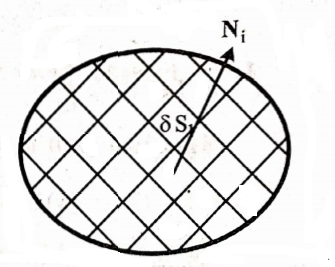
Read and Learn More Geometry, Homework Practice Workbook 1st Edition Solutions

Some angles and sides are not equal to each other in the polygon, hence it is irregular.

Therefore, the polygon is a pentagon. And it is concave and irregular.

Geometry Workbook 1st Edition Exercise 1.6 Solutions Page 11 Problem 3 Answer

The given diagram is,

Geometry, Homework Practice Workbook, 1st Edition, Chapter 1 Points, Lines, and Planes 3

To find the perimeter of the figure, we have to add all lengths of the sides.

So, the perimeter of the figure =(18+20+20+40)yd.=98 yd.

Therefore, the perimeter of the figure is 98 yd.

Points, Lines, And Planes Solutions Chapter 1 Exercise 1.6 Geometry Workbook Page 11 Problem 4 Answer

The given diagram is,

Geometry, Homework Practice Workbook 1st Edition Chapter 1 Exercise 1.6 Points Lines and Planes

Page 11 Problem 5 Answer

The given diagram is,

Geometry, Homework Practice Workbook, 1st Edition, Chapter 1 Points, Lines, and Planes 5

To find the circumference of the figure, we have to use the formula 2Πr where r is the radius of the figure.
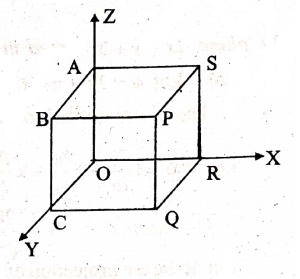
So the circumference of the figure =2×Π×11 m.

= 22×Π m.

Therefore, the circumference of the figure is 22×Π≈69.115.

Geometry Homework Practice Workbook Chapter 1 Page 11 Problem 6 Answer

The given diagram is,

Geometry, Homework Practice Workbook, 1st Edition, Chapter 1 Points, Lines, and Planes 6

The area of the circle =Π×r2sq.cm.

= Π×72 sq. cm.

= 49Π sq. cm.

The area of the figure is=49Π sq. cm.

≈153.93 sq. cm.

Step-By-Step Solutions For Geometry Homework Practice Workbook Chapter 1 Exercise 1.6 Page 11 Problem 7 Answer

The given diagram is,

Geometry, Homework Practice Workbook, 1st Edition, Chapter 1 Points, Lines, and Planes 7

In the figure, the height of the triangle is 14 ft.

and the base of the triangle is 16 ft.

The area of the triangle is =1/2×(height of the triangle)×(base of the triangle) square unit.

=1/2×14ft. × 16ft.

=7×16ft. 2

=112ft. 2

Therefore, the area of a triangle is 112 ft.2

Geometry Chapter 1 Exercise 1.6 Free Solutions Page 11 Problem 8 Answer

Four vertices are given, which are Q(−3,2),R(1,2),S(1,−4),T(−3,−4).

We need to graph each figure with the given vertices and identify the figure, and finally find the perimeter and area of the figure.

This can be found by plotting the points on a graph paper and joining them to find the area and perimeter of the figure formed.

The points have been plotted on the graph and then the points have been joined.

The graph looks like as follows

Geometry, Homework Practice Workbook, 1st Edition, Chapter 1 Points, Lines, and Planes 8

Here, the x-axis denotes the values of the x coordinate and the y-axis denotes the values of the y-coordinate.

The figure formed is a rectangle.

Length of the rectangle=y2−y1

= 2−(−4)

= 2+4

= 6

Breadth of the rectangle=x2−x1

=1−(−3)

=1+3

= 4

Hence, the perimeter of the rectangle will be,2×(length+width)

= 2×(6+4)

= 2×10

= 20units

Hence, the area of the rectangle will be, length × width

= 6×4

= 24unit2

The figure formed by joining the points is a rectangle. Its perimeter is 20 units and its area is 24 unit2.

Geometry Homework Practice Workbook Chapter 1 Page 11 Problem 9 Answer

We are given 3 different points.

We need to find the figure formed by joining the points given and finally find the area and perimeter of the figure.

This can be formed by plotting the given points on a graph paper and finding the area and perimeter of the figure formed by joining the points on the graph paper.

The given points are plotted on a graph paper and then joined to get the figure.

The graph is as follows.

Geometry, Homework Practice Workbook, 1st Edition, Chapter 1 Points, Lines, and Planes 9

The x-axis denotes the values of the x-coordinates and the y-axis denotes the values of the y-coordinate.

The figure formed is a triangle.

Length of the base of the triangle=4−(−4)=8units

Length of the height of the triangle=1−(−2)=3units

Length of the two sides of the triangle=√42+32,√42+32

(Applying Pythagoras theorem)=5units,5units

Hence, the area of the triangle=1/2×base×height

=1/2×8×3

=12unit2

Perimeter of the triangle=5+5+8=18units

The figure formed is a triangle.

The area of the triangle is 12 units 2 and its perimeter is 18 units.

Geometry Homework Practice Workbook Exercise 1.6 Student Solutions Page 11 Problem 10 Answer

We are given 4 different points.

We need to find the figure formed by joining the points given and finally find the area and perimeter of the figure.

This can be formed by plotting the given points on a graph paper and finding the area and perimeter of the figure formed by joining the points on the graph paper.

The given points are plotted on a graph paper and then joined to get the figure.

The graph is as follows.

Geometry, Homework Practice Workbook, 1st Edition, Chapter 1 Points, Lines, and Planes 10

The x-axis denotes the values of the x-coordinates and the y-axis denotes the values of the y-coordinates.

The figure formed is a parallelogram.

The figure formed is a parallelogram.

Page 12 Problem 11 Answer

A figure is given. We need to find that whether the given polygon is concave or convex or regular or irregular.

This can be found by considering the definitions of convex, concave, regular, irregular polygons and comparing that with the figure given.

The given polygon has an angle greater than180o. Hence, it is a concave polygon.

In the given polygon, all the sides or angles are not equal to each other. Hence, it is an irregular polygon.

The given polygon is an irregular, concave polygon.

Geometry Homework Practice Workbook Chapter 1 Page 12 Problem 12 Answer

A figure is given. We need to find the area and the perimeter of the given figure.

This can be found by using the formula to calculate the area and circumference of a circle.

The radius of the circle(r)=7mi

Circumference of the circle=2Πr

= 2×3.14×7

= 43.96mi

= 44mi (rounded to nearest tenth)

Area of the circle=Πr2

= 3.14×72

=153.86mi2

=153.9mi2(rounded to nearest tenth)

The perimeter of the circle is 44mi and the area of the circle is 153.9 mi2.

Points, Lines, And Planes Exercise 1.6 Geometry Workbook Answers Page 12 Problem 13 Answer

A figure is given. We need to find the perimeter and area of the given figure.

This can be found by using the formula to calculate the area and perimeter of a triangle

The length of two sides of the triangle=8.1mm

Length of the base of the triangle=8mm

Height of the triangle=7mm

Perimeter of the triangle=(8.1+8.1+8)

= 24.2mm

=20mm (rounded to nearest tenth)

Area of the triangle=1/2×8×7

= 28mm2

= 30mm2 (rounded to nearest tenth)

The perimeter of the triangle is 20mm and the area of the triangle is 30 mm2.

Geometry Homework Practice Workbook Chapter 1 Page 12 Problem 14 Answer

We are given 3 different points.

We need to find the figure formed by joining the points given and finally find the area and perimeter of the figure.

This can be formed by plotting the given points on a graph paper and finding the area and perimeter of the figure formed by joining the points on the graph paper.

The given points are plotted on a graph paper and then joined to get the figure.

The graph is as follows.

Geometry, Homework Practice Workbook, 1st Edition, Chapter 1 Points, Lines, and Planes 14

The base of the triangle=8−0=8units

Height of the triangle=0−(−2)=2units

The left side of the triangle =√22+32

= √4+9

= √13

=3.6units​

The right side of the triangle=√52+22

=√25+4

=√29

=5.38units​

The perimeter of the triangle =8+3.6+5.38

=16.98units​

Area of the triangle=1/2×base×height

=1/2×8×2

=8unit2

The figure formed is a triangle.

The perimeter of the triangle is 16.98 units and the area of the triangle is 8 unit 2.

Geometry Homework Practice Workbook Chapter 1 Page 12 Problem 15 Answer

The given rectangle is

Geometry, Homework Practice Workbook, 1st Edition, Chapter 1 Points, Lines, and Planes 15

We have to find find the relation between their perimeters if their dimensions are doubled.

We can find the relation between them using the ratio.

Initial PerimeterP=2(17+4) feets

Final Perimeterp=2(34+8) feets

∴P/p=2(17+4)/2(34+8)

⇒P/p

=2(17+4)/4(17+4)

⇒P/p

=1/2

⇒p=2P

We can clearly observe that if the dimensions are doubled then the perimeter is also doubled.

Page 12 Problem 16 Answer

The given rectangle is

Geometry, Homework Practice Workbook, 1st Edition, Chapter 1 Points, Lines, and Planes 16

We have to find find the relation between their areas if their dimensions are doubled.

We can find the relation between them using the ratio.

Initial area A=17×4 sq.feets

Final area a=34×8 sq.feets

∴A/a=17×4/34×8

⇒A/a=17×4/2(17×4)

⇒A/a=1/2

⇒a=2A

We can clearly observe that if the dimensions are doubled then the area is also doubled.

Geometry Homework Practice Workbook Chapter 1 Page 12 Problem 17 Answer

The given figure is

Geometry, Homework Practice Workbook, 1st Edition, Chapter 1 Points, Lines, and Planes 17

As jasmine wants to sew around the pillow, hence we must find the perimeter.

The perimeter can be calculated using C=2πr.

The perimeter is found to be

C=2πr

⇒C=2π(5)

⇒C=2×3.14×5

⇒C=31.4 inches

The amount of fringe Jasmine needs to use is 31.4 inches.

Geometry Homework Practice Workbook Chapter 1 Page 12 Problem 18 Answer

The new radius of the circle(r) is 2×5 in.=10 in.

Then the new area =Π×r2 sq. in.

=Π×(10)2sq. in.

= 100×Π sq.in.

Therefore, the new area of the pillow is 100Π sq. in. ≈ 314.159 sq. in.

Derivative of a Vector Function Scalar Variable Continuity of vector Solved Problems

Derivative of a Vector Function Solved Problems

Example. 1 . If r = a cos ti + a sin tj + at tan θk find \( \left|\frac{d r}{d t} \times \frac{d^2}{d t^2}\right| \text { and } \mid \frac{d r}{d t} \frac{d^2 t}{d t^2} \frac{d^2}{d t^2}\)

Solution.

Given

r = a cos ti + a sin tj + at tan θk ∴ dtr = −a sin ti + a cos tj + a tan θk

⇒ \(\frac{d^2 r}{d t^2}=-a \cos t \mathbf{i}-a \sin t \mathbf{j}+0 . \quad \cdots \frac{d^3 r}{d t^2}=a \sin t \mathbf{i}-a \cos t \mathbf{j}\)

∴ \(\frac{d r}{d t} \times \frac{d^2 r}{d t^2}\)

= \(\left|\begin{array}{ccc}\mathbf{i} & \mathbf{j} & \mathbf{k} \\-a \sin t & a \cos t & a \tan \theta \\-a \cos t & -a \sin t & 0
\end{array}\right|=a^2 \sin t \tan \theta \mathrm{i}-a^2 \cos t \tan \theta \mathbf{j}+a^2 \mathbf{k}\)

∴ \(\left|\frac{\mathbf{d r}}{d t} \times \frac{d^2 r}{d t^2}\right|\)

= \(a^2 \sqrt{\left(\sin ^2 t \tan ^2 \theta+\cos ^2 t \tan ^2 \theta+1\right)}=a^2 \sqrt{\left(\tan ^2 \theta+1\right)}\)

= \(d^2 \sec \theta \text { And }\left[\frac{d t}{d t} \frac{d^2 t}{d t^2} \frac{d^2 c}{d t^2}\right]= \)

⇒\(\left(\frac{d r}{d t} \times \frac{d^2 r}{d t^2}\right) \cdot \frac{d^2 r}{d t^3}\)

= (a2 sin t tan θi − a2 cos t tan θj + a2k) · (a sin ti− a cos tk) = a3 sin2 t tan θ+ a3 cos2 t tan θ = a3 tan θ

Derivative Of A Vector Function With Scalar Variable

Example. 2. If A = t2i−tj+(2t+1)k and B = (2t−3)i+j−tk find

(1) (A × B)0

(2) (| A + B|)0 · atit = 1

Solution.

Given A = t2i − tj + (2t + 1)k

⇒ \(\mathbf{A}^{\prime}=\frac{d \mathbf{A}}{d t}=2 t \mathbf{i}-\mathbf{j}+2 \mathbf{k} \text { and } \mathbf{B}=(2 t-3) \mathbf{i}+\mathbf{j}-t \mathbf{k}\)

⇒ \(\mathbf{B}^{\prime}=\frac{d \mathbf{B}}{d t}=2 \mathbf{i}-\mathbf{k} \text { at } t=1, \mathbf{A}=\mathbf{i}-\mathbf{j}+3 \mathbf{k}, \mathbf{B}=-\mathbf{i}+\mathbf{j}-\mathbf{k}\)

⇒ \(\frac{d \mathrm{~A}}{d t}=2 \mathrm{t}-\mathrm{j}+2 \mathrm{k}, \frac{d \mathrm{~B}}{d t}=2 \mathrm{i}-\mathrm{k}\)

∴ A × B’ = \(\left|\begin{array}{ccc} \mathrm{i} & \mathrm{j} & \mathrm{k} \\ 1 & -1 & 3 \\2 & 0 & -1\end{array}\right|\)

= \(\mathbf{i}+7 \mathbf{j}+2 \mathbf{k} \quad \mathbf{A}^{\prime} \times \mathbf{B}=\left|\begin{array}{ccc}\mathrm{i} & \mathrm{j} & \mathrm{k} \\2 & -1 & 2 \\-1 & 1 & -1\end{array}\right|= \)

−i + k

∴ (A × B)’ = (i + 7j + 2k) + (−i + k) = 7j + 3k (5)

A + B = t2 i − tj + (2t + 1)k + (2t − 3)i + j − tk

A + B = (t2 + 2t − 3) i + (1 − t)j + (t + 1)k

|A + B| = \(\sqrt{\left[\left(t^2+2 t-3\right)^2+(1-t)^2+(t+1)^2\right]}=\sqrt{\left(t^4+4 t^3-12 t+11\right)}\)

∴ \((|\mathbf{A}+\mathbf{B}|)^{\prime}=\frac{4 t^3+12 t-12}{2 \sqrt{\left(t^4+4 t^3-12 t+11\right)}} \quad ∴ \text { At } t=1,(|\mathbf{A}+\mathbf{B}|)^{\prime}=1\)

Example. 3. If r is a vector function, of the scalar t, whose modulus is r and a, b are constant vectors, differentiate the following with respect to t. \(\begin{array}{ll}\text { (1) } \frac{r}{r^2}+\frac{r b}{a \cdot r} & \text { (2) } r^3 r+a \times r\end{array}\)

Solution.

(1) \(\frac{d}{d t}\left[\frac{r}{r^2}+\frac{r \mathrm{~b}}{\mathrm{a}-\mathrm{r}}\right]=\frac{d}{d t}\left(\frac{r}{r^2}\right)+\mathrm{b} \frac{d}{d t}\left(\frac{r}{\mathrm{a} \cdot \mathrm{r}}\right)\)

⇒ \(\left.=\frac{r^2 \frac{d r}{d t}-\mathbf{r}(2 r) \frac{d r}{d t}}{r^4}+\frac{\mathbf{b}\left[(\mathbf{a} \cdot \mathbf{r}) \frac{d r}{d t}-r\left(\mathbf{a} \cdot \frac{d r}{d t}\right)\right]}{\left(\mathbf{a} \cdot \mathbf{r}^2\right.}\right)\)

⇒ \(=\frac{r^2 \mathbf{r}^{\prime}-2 r \mathbf{r}^{\prime}}{r^4}+\mathbf{b}\left[\frac{1}{(\mathbf{a} \cdot \mathbf{r})} \cdot \frac{d r}{d t}-\frac{r}{(\mathbf{a} \cdot \mathbf{r})^2}\left(\mathbf{a} \cdot \frac{d \mathbf{r}}{d t}\right)\right]=\)

⇒ \(=\frac{\mathbf{r}^{\prime}}{r^2}-\frac{2 r^{\prime} \mathbf{r}}{r^3}+\frac{\mathbf{b} r^{\prime}}{(\mathbf{a} \cdot \mathbf{r})}-\frac{\mathbf{b} r\left(\mathbf{a} \cdot \mathbf{r}^{\prime}\right)}{(\mathbf{a} \cdot \mathbf{r})^2}\)

(2) \(\frac{d}{d t}\left[r^3 \mathbf{r}+\mathbf{a} \times \mathbf{r}^{\prime}\right]=\frac{d}{d t}\left[r^3 \mathbf{r}\right]+\frac{d}{d t}\left(\mathbf{a} \times \mathbf{r}^{\prime}\right)\)

⇒ \(=r^3 \frac{d \mathbf{r}}{d t}+3 r^2 \frac{d t}{d t} \mathbf{r}+\mathbf{a} \times \frac{d(\mathbf{r})}{d t}=r^3 \mathbf{r}^{\prime}+3 r^2 r^{\prime} \mathbf{r}+\mathbf{a} \times \mathbf{r}^{\prime \prime}\)

Continuity Of Vector Functions Explained

Example. 4. If r = aeλt + be−λt where a and b are constant vectors show that\(\frac{d^2 \mathrm{r}}{d t^2}=\lambda^2 \mathrm{r}\)

Solution.

Given, r = aeλt + be−λt

Diffirentiating w.r.t. t, \(\frac{d r}{d t}=\lambda\left(a e^{\lambda t}-b e^{-\lambda t}\right) \cdots\)

⇒ \(\frac{d^2 r}{d t^2}=\lambda^2\left(a e^{i t}+b e^{-\lambda t}\right)=\lambda^2 r\)


Derivative of a Vector Function Solved Problems


Example. 5. Show that if r = acos wt + b sin wt, where a, b are constant vectors and w is a constant scalar, then \(\frac{d^2 r}{d d^2}=-w^2 \mathbf{r} \text { and } \mathbf{r} \times \frac{d r}{d t}=w(\mathbf{a} \times \mathbf{b}) \)

Solution.

Given r = acos wt + b sin wt, a, b are constant vectors and w is a constant scalar.

D. w.r.t t we get dr/dt = w(−asin wt + b cos wt)

⇒ \(\frac{d^2 \mathbf{r}}{d t^2}=\lambda^2\left(a e^{i t}+b e^{-\lambda t}\right)=\lambda^2 \mathbf{r}\)

⇒ \(\mathbf{r} \times \frac{d \mathbf{r}}{d t}=(\mathbf{a} \cos w t+\mathbf{b} \sin w t) \times w(-\mathbf{a} \sin w t+\mathbf{b} \cos w t)\)

= w (a × b cos2 wt − b × asin2 wt)

= w(a × b) (cos2 wt + sin2 wt) = w(a × b)

Example. 6. A particle moves so that its position vector is given by r = (cos ωt)i+(sin ωt)j, where ω is a constant scalar.

(1) Find the velocity of the particle and show that it is perpendicular to r.
(2) Find the acceleration and show that it is directed opposite to the direction of r.
(3) Show that the magnitude of the acceleration is proportional to the magnitude of r.

Solution.

Given r = (cos ωt)i + (sin ωt)j is the position vector of the particle.

D. W.r to t, we get dtr = [(− sin ωt)i + (cos ωt)j]ω

v = velocity = ω(− sin ωti + cos ωtj)

(1) r. v = ω[(cos ωti + sin ωtj) · (− sin ωti + cos νtj)

= ω(− sin ωt cos ωt + sin ωt cos ωt) = 0

(2) \(\frac{d^2 \mathrm{r}}{d t^2}=\omega^2(-\cos \omega t \mathrm{i}-\sin \omega t \mathrm{j})=-\omega^2 \bar{r}\)

acceleration = a = −ω²r, which has that it is the direction of opposite the direction of r.

(3) |a| = w²|r|

Example. 7. Suppose a particle P moves along a curve where parametric equations are x = t − sin t, y = 1 − cos t, z = 4sin(t/2), where t is time, (1) find the velocity and acceleration at time t = 0 (2) Find the magnitude of velocity and acceleration t = 0

Solution.

The position vector of the particle P is r = xi + yj + zk = (t − sin t)i + (1 − cos t)j + (4sin(t/2))k

D. w. r to t \(\frac{d \mathbf{r}}{d t}=(1-\cos t) \mathbf{i}+(\sin t) \mathbf{j}+\left(2 \cos \frac{t}{2}\right) \mathbf{k} \text { and } \frac{d^2 \mathbf{r}}{d t^2}=(\sin t) \mathbf{i}+(\cos t) \mathbf{j}+\left(-\sin \frac{t}{2}\right) \mathbf{k}\)

(1) The velocity v and acceleration a of P are, \(\mathbf{v}=\frac{d r}{d t}=(1-\cos t) \mathbf{i}+(\sin t) \mathbf{j}+\left(2 \cos \frac{t}{2}\right) \mathbf{k} ; \quad \mathbf{a}=\frac{d^2 \mathbf{r}}{d t^2}=(\sin t) \mathbf{i}+\cos t \mathbf{j}+ \)

(− sin t/2)k (b) at, t = 0, v = i + 2k, a = j

|v| = √1 + 4 = √5. | a| = 1

Examples Of Vector Function Scalar Variable Derivatives 

Example. 8. A particle moves along a curve whose parametric equations are x = e −t, y = 2cos3t, z = 2sin3t, where t is the time, determine its velocity and acceleration at any time.

Solution.

Given

A particle moves along a curve whose parametric equations are x = e −t, y = 2cos3t, z = 2sin3t, where t is the time

The position vector of the particle is r = xi + yj + zk = e −ti + (2cos3t)j + (2sin3t)k

D.W.R. to t

⇒ \(\frac{d \mathbf{r}}{d t}=\text { Velocity }=\mathbf{v}=-e^{-t^2} \mathbf{i}+(-6 \sin 3 t) \mathbf{j}+(6 \cos 3 t) \mathbf{k}\)

⇒ \(\mathbf{a}=\text { acceleration }=\frac{d^2 \mathbf{r}}{d t^2}=e^{-t} \mathbf{i}+(-18 \sin 3 t) \mathbf{j}+(-18 \cos 3 t) \mathbf{k} \)


Integration Of Vectors Examples And Solved Problems Exercises Of Line, Surface, Volume Integrals

Integration Of Vectors

Integration is the inverse operation of differentiation. Let F (t) be a differentiable vector function of a scalar variable t and

Let \(\frac{d}{d t} \mathbf{F}(t)\)=\(\mathbf{f}(t)\). Then \(\int \mathbf{f}(t) d t\)= F(t)

F (t) is called the primitive of f (t)

The set of all primitives of f (t), that is\(\int \mathbf{f}(t) d t\) = F (t) + C where C is any arbitrary constant vector, is called the indefinite integral of f (t).

Hence, the indefinite integral of F (t) is not unique.

 Note. If f(t)= f1(t)i + f2(t)j + f3(t)k , then

∫f(t)dt  =  i∫f1(t)dt +j∫f2(t)dt + k ∫f3(t)dt + C

Integration Of Vectors Examples And Solutions

Integration Of Vectors Definite Integral

Let  ∫f(t)dt  = F (t) . Then F (b)- F (a) is called the definite integral of F (t) between

The limits, t = a and t = b. This is denoted\(\int_a^b \mathbf{f}(t) dt \)=\([\mathbf{F}(t)]_a^b\) =F(b)-F(a)

This integral can also be defined as a limit of a sum in a manner analogous to that of elementary integral calculus.

Note. Let f(t)=f1(t)i + f2(t)j + f3(t)k .

Then \(\int_a^b \mathbf{f}(t) d t\)=\(\mathbf{i} \int_a^b f_1(t) d t+\mathbf{j} \int_a^b f_2(t) d t+\mathbf{k} \int_a^b f_3(t) d t\)

Standard Results

1. We have \(\frac{d}{d t}(\mathbf{r} \cdot \mathbf{s})\)=\(\frac{d \mathbf{r}}{d t} \cdot \mathbf{s}+\mathbf{r} \cdot \frac{d \mathbf{s}}{d t}\)

∴ \(\int\left(\frac{d \mathbf{r}}{d t} \cdot \mathbf{s}+\mathbf{r} \cdot \frac{d \mathbf{s}}{d t}\right) d t\) = r.s + c

Here c is a scalar constant, since the integrand is a scalar

We have \(\frac{d}{d t}\left(\mathbf{r}^2\right)\)=\(2 \mathbf{r} \cdot \frac{d \mathbf{r}}{d t}\)

∴ \(\int\left(2 \mathbf{r} \cdot \frac{d \mathbf{r}}{d t}\right) d t\) = r2+c

2.\(\frac{d}{d t}\left(\frac{d \mathbf{r}}{d t}\right)^2\)=\(2 \frac{d \mathbf{r}}{d t} \cdot \frac{d^2 \mathbf{r}}{d t^2}\)

∴\(\int\left(2 \frac{d \mathbf{r}}{d t} \cdot \frac{d^2 \mathbf{r}}{d t^2}\right) d t\)=\(\left(\frac{d \mathbf{r}}{d t}\right)^2+c\)

where c is a scalar constant

3.We have\(\frac{d}{d t}(\mathbf{r} \times \mathbf{s})\)=\(\frac{d \mathbf{r}}{d t} \times \mathbf{s}+\mathbf{r} \times \frac{d \mathbf{s}}{d t}\)

∴\(\int\left(\frac{d \mathbf{r}}{d t} \times \mathbf{s}+\mathbf{r} \times \frac{d \mathbf{s}}{d t}\right) d t\)=\(\mathbf{r} \times \mathbf{s}+\mathbf{c}\)

Here the constant c is a vector quantity since the integrand is also a vector quantity.

4. If an Inconstant vector, we have \(\frac{d}{d t}(\mathbf{a} \times \mathbf{r})\)=\(\mathbf{a} \times \frac{d \mathbf{r}}{d t}\)

∴  \(\int\left(\mathbf{a} \times \frac{d \mathbf{r}}{d t}\right) d t=\mathbf{a} \times \int \frac{d \mathbf{r}}{d t} d t\)=\(\mathbf{a} \times \mathbf{r}+\mathbf{c}\)

5. Now \(\frac{d}{d t}\left(\mathbf{r} \times \frac{d \mathbf{r}}{d t}\right)\)=\(\frac{d \mathbf{r}}{d t} \times \frac{d \mathbf{r}}{d t}+\mathbf{r} \times \frac{d^2 \mathbf{r}}{d t^2}\)=\(\mathbf{r} \times \frac{d^2 \mathbf{r}}{d t^2}\)

∴ \(\int\left(\mathbf{r} \times \frac{d^2 \mathbf{r}}{d t^2}\right) d t\)=\(\mathbf{r} \times \frac{d \mathbf{r}}{d t}+\mathbf{c}\)

6. Ifr = |r|, then \(\frac{d}{d t}\left(\frac{\mathbf{r}}{r}\right)\)=\(\frac{1}{r} \frac{d \mathbf{r}}{d t}-\frac{1}{\dot{r}^2} \frac{d r}{d t} \mathbf{r}\)

∴ \(\int\left(\frac{1}{r} \frac{d \mathbf{r}}{d t}-\frac{1}{r^2} \frac{d r}{d t} \mathbf{r}\right) d t\)=\(\frac{\mathbf{r}}{r}+\mathbf{c}\)

7. If c is a scalar constant then c is a scalar constant then∫ cr dt=c∫r dt

8. If r and s are any two vector functions of a scalar t, then ∫(r+s) dt= ∫r dt+ ∫ s dt

Integration Of Vectors Solved Problems

Exmple.1. Evaluate \(\int_0^1\left(e^t \mathbf{i}+e^{-2 t} \mathbf{j}+t \mathbf{k}\right) d t\)

Solution:

Given

\(\int_0^1\left(e^t \mathbf{i}+e^{-2 t} \mathbf{j}+t \mathbf{k}\right) d t\) \(\int_0^1\left(e^t \mathbf{i}+e^{-2 t} \mathbf{j}+t \mathbf{k}\right) d t=\mathbf{i} \int_0^1 e^t d t+\mathbf{j} \int_0^1 e^{-2 t} d t+\mathbf{k} \int_0^1 t d t\)

= \(\mathbf{i}\left[e^t\right]_0^1+\mathbf{j}\left[-\frac{1}{2} e^{-2 t}\right]_0^1+\mathbf{k}\left[\frac{t^2}{2}\right]_0^1=(e-1) \mathbf{i}-\frac{1}{2}\left(e^{-2}-1\right) \mathbf{j}+\frac{1}{2} \mathbf{k}\)

Solved Problems On Vector Integration Step-By-Step

Example. 2. Evaluate \(\int_2^3 \mathbf{f} \cdot \frac{d \mathbf{f}}{d t} d t\) if f(2) = 2i – i+2k and f(3)= 4i-2j+3k

Solution:

Given

\(\int_2^3 \mathbf{f} \cdot \frac{d \mathbf{f}}{d t} d t\)

(2) = 2i – i+2k and f(3)= 4i-2j+3k

We know that \(\int\left(2 \mathbf{f} \cdot \frac{d \mathbf{f}}{d t}\right) d t=\mathbf{f}^2+c\)

∴ \(\int_2^3(\mathrm{f} \cdot \frac{d \mathrm{f}}{d t}) d t=\frac{1}{2}[\mathrm{f}^2{ }_2^3=\frac{1}{2}[\mathrm{f}^2(3)-\mathrm{f}^2(2)]\)

= \(\frac{1}{2}\left[(4 \mathbf{i}-2 \mathbf{j}+3 \mathbf{k})^2-(2 \mathbf{i}-\mathbf{j}+2 \mathbf{k})^2\right]=\frac{1}{2}[(16+4+3)-(4+1+4)]=10\)

Example. 3. Find the value of \(\frac{d \mathbf{r}}{d t}\) by integrating \(\frac{d^2 \mathbf{r}}{d t^2}\) = -n2r

Solution:

The given equation is \(\frac{d^2 \mathbf{r}}{d t^2}=-n^2 \mathbf{r}\)

Taking the dot product with \(2 \frac{d \mathrm{r}}{d t}\) both sides

and integrating we have \(\int\left(2 \frac{d \mathbf{r}}{d t} \cdot \frac{d^2 \mathbf{r}}{d t^2}\right) d t=-n^2 \int\left(2 r \cdot \frac{d \mathbf{r}}{d t}\right) d t\)

⇒ \(\left(\frac{d \mathbf{r}}{d t}\right)^2=n^2 \mathbf{r}^2+\mathbf{c}\)

where c is any constant vector.

Exercises On Line, Surface, And Volume Integrals With Solutions

Example. 4. If f(t) =5t2 i+tj-t3k find \(\int_1^2\left(\bar{f} \times \frac{d^2 \tilde{f}}{d t^2}\right) d t\)

Solution: \(\int_1^2\left(\mathbf{f} \times \frac{d^2 \mathbf{f}}{d t^2}\right\} d t=\left[\mathbf{f} \times \frac{d \mathbf{f}}{d t}\right]_1^2\)

Given \(\mathbf{f}(t)=5 t^2 \mathbf{i}+t \mathbf{j}-t^3 \mathbf{k}\)

∴ \(\frac{d \mathbf{f}}{d t}=10 t \mathbf{i}+\mathbf{j}-3 t^2 \mathbf{k}\)

f x \(\frac{d \mathbf{f}}{d t}=\left|\begin{array}{ccc}
\mathbf{i} & \mathbf{j} & \mathbf{k} \\
5 t^2 & t & -t^3 \\
10 t & 1 & -3 t^2
\end{array}\right|\)

= \(-2 t^3 \mathbf{i}+5 t^4 \mathbf{j}-5 t^2 \mathbf{k}\)

∴ \(\left[\mathbf{f} \times \frac{d \mathbf{f}}{d t}\right]_1^2=\left[-2 t^3 \mathbf{i}+5 t^4 \mathbf{j}-5 t^2 \mathbf{k}\right]_1^2=-14 \mathbf{i}+75 \mathbf{j}-15 \mathbf{k}\)

∴ \(\int_1^2\left(\mathbf{f} \times \frac{d^2 \mathbf{f}}{d t^2}\right) d t=-14 \mathbf{i}+75 \mathbf{j}-15 \mathbf{k}\)

Integration Of Vectors Exercise 6(a)

1. If F(t) = (t-t2)i+2t3j-3k find \(\int_1^2 \mathbf{F}(t) d t\)
Solution:

Given

F(t) = (t-t2)i+2t3j-3k

⇒ \(\int_1^2\left[\left(t-t^2\right) \mathrm{i}+2 t^3 \mathrm{j}-3 \mathrm{k}\right] d t\)

= \(\left[\left(\frac{t^2}{2}-\frac{t^3}{3}\right) \mathrm{i}+\frac{2 t^4 \mathrm{j}}{4}-3 t \mathrm{k}\right]_1^2=-\frac{5}{6} \mathrm{i}+\frac{15}{2} \mathrm{j}-3 \mathrm{k}\)

Surface Integrals Of Vectors Examples And Solutions

2.If F(t) =ti+(t2-2t)j+(3t2+3t3)k find \(\int_0^1 f(t) d t\)
Solution:

Given

F(t) =ti+(t2-2t)j+(3t2+3t3)k

⇒ \(\int_0^1 f(t) d t=\int_0^1\left[t \mathbf{i}+\left(t^2-2 t\right) \mathbf{j}+\left(3 t^2+3 t^3\right) \mathbf{k}\right] d t\)

= \(\left[\frac{t^2}{2} \mathbf{i}+\left(\frac{t^3}{3}-t^2\right) \mathbf{j}+\left(t^3+\frac{3}{4} t^4\right) \mathbf{k}\right]_0^1=\frac{1}{2} \mathbf{i}-\frac{2}{3} \mathbf{j}+\frac{7}{4} \mathbf{k}\)

= \(\frac{1}{12}[6 \mathbf{i}-8 \mathbf{j}+21 \mathbf{k}]\)

3. If A=ti-t2j+(t-1)k and B= 2t2i+6tK find \(\int_1^2(\mathbf{A} \cdot \mathbf{B}) d t\)
Solution:

Given

A=ti-t2j+(t-1)k and B= 2t2i+6tK

A . B = \(t\left(2 t^3\right)+6 t(t-1)\)

∴ \(\int_0^2(\mathbf{A} \cdot \mathbf{B}) d t=\int_0^2\left(2 t^3+6 t^2-6 t\right) d t=12\)

4. If a=ti-3j+2tk : B= i-2j+2k : C= 3i+tj-k find
(1)\(\int_1^2[\mathbf{A B C}] d t\)
(2) \(\int_1^2[\mathrm{~A} \times(\mathrm{B} \times \mathrm{C})]dt\)
Solution:

Given

a=ti-3j+2tk : B= i-2j+2k : C= 3i+tj-k

(1) [А B C] = \(\left|\begin{array}{ccc}
t & -3 & 2 t \\
1 & -2 & 2 \\
3 & t & -1
\end{array}\right|\) =14 t-21

∴ \(\int_1^2[\mathbf{A ~ B ~ C}] d t=\int_1^2(14 t-21) d t=0\)

(2) Use \(\mathbf{A} \times(\mathbf{B} \times \mathbf{C})=(\mathbf{A} \cdot \mathbf{C}) \mathbf{B}-(\mathbf{A} \cdot \mathbf{B}) \mathbf{C}\) and then integrate.

5. If \(\frac{d^2 \mathbf{r}}{d t^2}\)=6ti-24t2j+4 sin tk find r given thatr= 2i+j and \(\frac{d \mathbf{r}}{d t}\)=-i-3k at t=0
Solution:

Given

\(\frac{d^2 \mathbf{r}}{d t^2}\)=6ti-24t2j+4 sin tk

∫ \(\frac{d^2 \mathbf{r}}{d t^2} \cdot d t=\int\left(6 t \mathbf{i}-24 t^2 \mathbf{j}+4 \sin t \mathbf{k}\right) d t\)

⇒ \(\frac{d \mathbf{r}}{d t}=3 t^2 \mathbf{i}-8 t^3 \mathbf{j}-4 \cos t \mathbf{k}+\mathbf{A}\) when t = \(0 \quad \frac{d \mathbf{r}}{d t}=-\mathbf{i}-3 \mathbf{k}\)

–\(\mathbf{i}-3 \mathbf{k}=-4 \mathbf{k}+\mathbf{A} \Rightarrow \mathbf{A}=-\mathbf{i}+\mathbf{k}\)

Hence \(\frac{d \mathrm{r}}{d t}=\left(3 t^2-1\right) \mathbf{i}-8 t^3 \mathbf{j}+(1-4 \cos t) \mathbf{k}\)

Again integrating \(\mathbf{r}=\int \frac{d \mathbf{r}}{d t} d t=\left(t^3-t\right) \mathbf{i}-2 t^4 \mathbf{j}+(t-4 \sin t) \mathbf{k}+\mathbf{B}\) when t=0,2 i+j=B

∴ \(\mathbf{r}=\left(t^2-t+2\right) \mathbf{i}+\left(1-2 t^4\right) \mathbf{j}+(t-4 \sin t) \mathbf{k}\)

Volume Integrals Solved Problems With Step-By-Step Explanations

6. Find F(t), given \(\frac{d \mathbf{F}}{d t}\) =12 cos 2ti-8 sin 2tj+2tk and F(0)=0
Solution:

F(t) = \(\int d \mathbf{F}=\int(12 \cos 2 t \mathbf{i}-8 \sin 2 t \mathbf{j}+2 t \mathbf{k}) d t\)

F(t) = \(6 \sin 2 t \mathbf{i}+4 \cos 2 t \mathbf{j}+t^2 \mathbf{k}+\mathbf{C}\)

Given \(\mathbf{F}(0)=0 \Rightarrow 4 \mathbf{j}+\mathbf{C}=0 \Rightarrow \mathbf{C}=-4 \mathbf{j}\)

∴ \(\mathrm{F}(t)=6 \sin 2 t \mathrm{i}+(4 \cos 2 t-4) \mathrm{j}+t^2 \mathrm{k}\)

7. If a,b, and n are constants and r= a cos nt+b sin nt. Show that \(\frac{d^2 \mathbf{r}}{d t^2}+n^2 \mathbf{r}\)=0
Solution:

Given

a,b, and n are constants and r= a cos nt+b sin nt

⇒ \(\frac{d \mathbf{r}}{d t}=-\mathbf{a} n \sin n t+\mathbf{b} n \cos n t\)

⇒ \(\frac{d^2 \mathbf{r}}{d t^2}=-\mathbf{a} n^2 \cos n t-\mathbf{b} n^2 \sin n t=-n^2 \mathbf{r}\)

∴ \(\frac{d^2 \mathbf{r}}{d t^2}+n^2 \mathbf{r}=0\)

Applications Of Vector Integration In Physics And Engineering

8. Given \(\frac{d^2 \mathbf{r}}{d t^2}\)=-k2r show that \(\left(\frac{d \mathbf{r}}{d t}\right)^2\)=c-k2r2
Solution:

The given equation is \(\frac{d^2 \mathbf{r}}{d t^2}=-n^2 \mathbf{r}\)

Taking the dot product with \(2 \frac{d \mathbf{r}}{d t}\) both sides and integrating we have \(\int\left(2 \frac{d \mathbf{r}}{d t} \cdot \frac{d^2 \mathbf{r}}{d t^2}\right) d t=-n^2 \int\left(2 r \cdot \frac{d \mathbf{r}}{d t}\right) d t \quad\left(\frac{d \mathbf{r}}{d t}\right)^2=n^2 \mathbf{r}^2+\mathbf{c}\)

where c is any constant vector.

Integration Of Vectors Line, Surface, Volume, Integrals Oriented Curve

Let C be a curve in space. A be the initial point and B be the terminal point of curve C . When the direction along C oriented
from A to B is positive then the direction B to A is then called the negative direction. If the two points coincide, curve C is called the closed curve.

Integration Of Vectors image1


Integration Of Vectors Smooth Curve

A curve r = F (t) is called a smooth curve if F (t) is continuously differentiable. A curve C is said to be piecewise smooth if it consists of a finite number of smooth curves. The curve of is composed of three smooth curves C1, C2, and C3.

Integration Of Vectors Line Integrals

Let r = f (t) define a smooth curve C joining points A and B. Let us be the differential of arc length at P e C.

Then \(\frac{d \mathbf{r}}{d s}\)=T, is the unit vector along the tangent to the curve C at P.

Let F (r) be a vector point, a function defined and continuous along C. The component of F (r) along the tangent at P is F (r). T.

The integral ∫F.Tds taken along the curve C is called the Linear integral of F along

C. This is written as\(\int_A^B \mathbf{F} \cdot \mathbf{T} d s\)=\(\int_C\left(\mathbf{F} \cdot \frac{d \mathbf{r}}{d s}\right) d s\)=\(\int_C \mathbf{F} \cdot d \mathbf{r}\)

This is also called the tangential line integral of F along C.

Note. The other types of line integrals are \(\int_C \mathbf{F} \times d \mathbf{r} \text { and } \int_C \phi d \mathbf{r}\)

where F is a continuous vector and Φ  a continuous scalar point function. In general, any integral which is to be evaluated along a curve is called a line integral. Such integrals can be defined in terms of limits of sums as are the integrals of elementary calculus.

Integration Of Vectors Circulation

Let C be a simple closed curve (i.e. a curve that does not intersect itself anywhere). The line integral of F along C is called the circulation of F along C. It is often denoted by

∴ \(\oint_{\mathrm{C}} \mathrm{F} \cdot d \bar{r}\)=\(\oint_{\mathrm{C}}\left(\mathrm{F}_1 d x+\mathrm{F}_2 d y+\mathrm{F}_3 d z\right)\)

Integration Of Vectors Cartesian Form

LetF(r) = F1i+F2j+F3k   (r) = xi+yj+zk

Then \(\oint_{\mathbf{C}} \mathbf{F} \cdot d \mathbf{r}\)=\(\oint_{\mathbf{C}}\left(\mathrm{F}_1 d x+\mathrm{F}_2 d y+\mathrm{F}_3 d z\right) \cdot(\mathbf{i} d x+\mathbf{j} d y+\mathbf{k} d z)\)

⇒ \(\oint_C\left(\mathrm{~F}_1 d x+\mathrm{F}_2 d y+\mathrm{F}_3 d z\right)\) is the line integral in cartesian form. If, x,y, and z are functions of t, then

⇒ \(\oint_{\mathbf{C}} \mathbf{F} \cdot d \mathbf{r}\)=\(\oint_{\mathbf{C}} \mathrm{F}_1 d x+\mathrm{F}_2 d y+\mathrm{F}_3 d z\)

= \(\oint_{\mathbf{C}}\left(\mathrm{F}_1 \frac{d x}{d t}+\mathrm{F}_2 \frac{d y}{d t}+\mathrm{F}_3 \frac{d z}{d t}\right) d t\)

Integration Of Vectors Work Done By A Force

If A is the force F acting on a particle moving along C, then \(\int_C \mathbf{A} d \mathbf{r}\) denotes the work done by the force.

Integration Of Vectors Solved  Problems

Example. 1. Find  \(\int_{\mathbf{C}} \mathbf{F} \cdot d \mathbf{r}\) where F= xyi+yzj+ zx+k and the curve C is r= ti+t2j+t3k , t varying from -1 to 1.

Solution:

Given \(\mathbf{r}=t \mathbf{i}+t^2 \mathbf{j}+t^3 \mathbf{k}\), for the curve \(\mathbf{C}\)

∴ \(\frac{d \mathbf{r}}{d t}=\mathbf{i}+2 t \mathbf{j}+3 t^2 \mathbf{k}\)

Also \(\mathbf{r}=x \mathbf{i}+y \mathbf{j}+z \mathbf{k}\)

∴ x=t, y=t^2, z = \(t^3\), is the curve C

Again F = \(x y \mathbf{i}+y z \mathbf{j}+z x \mathbf{k}\)

∴ F over the curve C is F = \(t\left(t^2\right) \mathbf{i}+\left(t^2\right)\left(t^3\right) \mathbf{j}+\left(t^3\right)(t) \mathbf{k}=t^3 \mathbf{i}+t^5 \mathbf{j}+t^4 \mathbf{k}\)

∴ \(\mathrm{F} \cdot \frac{d \mathrm{r}}{d t}=\left(t^3 \mathrm{i}+t^5 \mathrm{j}+t^4 \mathrm{k}\right) \cdot\left(\mathrm{i}+2 t \mathrm{j}+3 t^2 \mathrm{k}\right)=t^3+2 t^6+3 t^6=t^3+5 t^6\)

∴ \(\oint_{\mathrm{C}} \mathrm{F} \cdot d \mathrm{r}=\int_C\left(\mathrm{~F} \cdot \frac{d \mathrm{r}}{d t}\right) d t=\int_{t=-1}^1\left(t^3+5 t^6\right) d t=\left[\frac{t^4}{4}+\frac{5 t^7}{7}\right]_{-1}^1=\frac{10}{7}\)

Step-By-Step Guide To Vector Surface Integrals

Example.2. Evaluate \(\int_C \mathbf{A} d \mathbf{r}\)  where F= 3x2i=92xy-y)j=zk along the straight line C from (0,0,0) to (2,1,3)

Solution:

The equation to the line joining (0,0,0) and (2,1,3) is \(\frac{x}{2}=\frac{y}{1}=\frac{z}{3}=t\)

Then along the line C

x=2 t, y=t, z=3 t

Also \(\mathbf{r}=x \mathbf{i}+y \mathbf{j}+z \mathbf{k}=2 t \mathbf{i}+t \mathbf{j}+3 t \mathbf{k}\)

∴ \(d \mathbf{r}=(2 \mathbf{i}+\mathbf{j}+3 \mathbf{k}) d t\)

Given \(\mathrm{F}=3 x^2 \mathrm{i}+(2 x z-y) \mathrm{j}+z \mathrm{k}\)

And along C

F = \(3(2 t)^2 \mathbf{i}+[2(2 t)(3 t)-t] \mathbf{j}+3 t \mathbf{k}=12 t^2 \mathbf{i}+\left(12 t^2-t\right) \mathbf{i}+3 t \mathbf{k}\)

F. dr = \(\left[24 t^2+\left(12 t^2-t\right)+9 t\right] d t=\left(36 t^2+8 t\right) d t\)

At (0,0,0) and at (2,1,3), t=1.

∴ \(\int_{\mathbf{C}} \mathbf{F} . d \mathbf{r}=\int_{t=0}^1\left(36 t^2+8 t\right) d t=\left[12 t^3+4 t^2\right]_0^1=16\)

Example.3. If F= (3x2+6y)i-14yz j +20 xz2 k calculate \(\int_{\mathbf{C}} \mathbf{F} \cdot d \mathbf{r}\) along the lines from (0,0,0), to (1,0,0,) , then to (1,1,0) , and then to (1,1,1).

Solution:

Given F = \(\left(3 x^2+6 y\right) \mathrm{i}-14 y z \mathrm{j}+20 x z^2 \mathrm{k}\)

r = \(x \mathbf{i}+y \mathbf{j}+z \mathbf{k} \quad d \mathbf{r}=\mathbf{i} d x+\mathbf{j} d y+\mathbf{k} d z\)

∴ \(\int_{\mathbf{C}} \mathbf{F} \cdot d \mathbf{r}=\int_{\mathbf{C}}\left(3 x^2+6 y\right) d x-14 y z d y+20 x z^2 d z\)

1. Along the line from (0,0,0) to (1,0,0)

y = \(0, z=0 \Rightarrow \quad d y=0, d z=0\)

x varies from 0 to 1

The integral over this part of the path

∴ \(\int_{\mathrm{C}_1} \mathrm{~F} \cdot d \bar{r}=\int_{x=0}^1 3 x^2 d x=\left[x^3\right]_0=1\)

2. Along the line (1,0,0) to (1,1,0) x=1, z=0 ⇒ dx=0, dz=0

y varies from 0 to 1. The integral over this part of the path

∴ \(\int_{C_2} \mathbf{F} \cdot d \mathbf{r}=\int_{y=0}^1(0-0+0) d y=0\)

3. Along the line (1,1,0) to (1,1,1), x=1, y=1

dx=0, dy=0

z varies from 0 to 1

The integral over this part of the path

∴ \(\int_{\mathbf{C}_3} \mathbf{F} \cdot d \mathbf{r}=\int_{z=0}^1 20 z^2 d z=\left[\frac{20 z^3}{3}\right]_0^1=\frac{20}{3}\)

∴ Adding \(\int_{\mathbf{C}} \mathbf{F} \cdot d \mathbf{r}=1+0+\frac{20}{3}=\frac{23}{3}\)

Example.4. If F = 3xyi-y2j evaluates \(\int_{\mathbf{C}} \mathbf{F} \cdot d \mathbf{r}\) where C is curved y= 2x2 in xy plane from (0,0) to (1,2).

Solution:

Given

F = 3xyi-y2j

The equation of the curve C is y=\(2 x^2\)

dy = 4x d x

Given \(\mathbf{F}=3 x y \mathbf{i}-y^2 \mathbf{j}\)

Since the integration is performed in the xy plane (z=0) and x varies from 0 to 1.

∴ \(\int_{\mathbf{C}} \mathbf{F} . d \mathbf{r}=\int_{z=0}^1 \mathbf{F}_1 d x+\mathbf{F}_2 d y=\int_{\mathbf{C}} 3 x y d x-y^2 d y\)

= \(\int_{x=0}^1 3 x\left(2 x^2\right) d x-4 x^4(4 x) d x\)

= \(\int_0^1\left(6 x^3-16 x^5\right) d x=\left[\frac{6 x^4}{4}-\frac{16 x^6}{6}\right]_0^1=-\frac{7}{6}\)

Example.5 If F(x2+y2)i-2xyz evaluate \(\int_{\mathbf{C}} \mathbf{F} \cdot d \mathbf{r}\) where the curve C is the rectangle in the xy plane bounded by y=0, y=b, x=0, x=a

Solution:

Equation to the curve C \(x^2+y^2=1, z=0\) ∴ dz=0

In parametric form, \(x=\cos \theta, y=\sin \theta, z=0\)

The circulation of F = \(y \mathbf{i}+z \mathbf{j}+x \mathbf{k}\), along C is \(\oint_{\mathbf{C}} \mathbf{F} \cdot d \mathbf{r}=\oint_{\mathbf{C}} \mathbf{F}_1 d x+\mathbf{F}_2 d y+\mathbf{F}_3 d z=\oint_{\mathbf{C}} y d x+z d y+x d z=\oint_{\mathbf{C}} y d x\)

For the circle \(\theta\) varies from 0 to \(2 \pi\)

∴ \(\oint \mathbf{F} \cdot d \mathbf{r}=\int_0^{2 \pi} \sin \theta(-\sin \theta) d \theta=-4 \int_0^{\pi / 2} \sin ^2 \theta d \theta=-4\left(\frac{1}{2}\right) \frac{\pi}{2}=-\pi\)

Integration Of Vectors image 3

Worked Examples Of Vector Line And Volume Integrals

Example.6. If F=yi+ zj+xk find the circulation of f around the curve C where C is the circle x2+y2=1, z=0

Solution:

Equation to the curve C \(x^2+y^2=1, z=0\) ∴ dz=0

in parametric form, \(x=\cos \theta, y=\sin \theta, z=0\)

The circulation of \(\mathbf{F}=y \mathbf{i}+z \mathbf{j}+x \mathbf{k}\), along \(\mathbf{C}\) is \(\oint_{\mathbf{C}} \mathbf{F} \cdot d \mathbf{r}=\oint_{\mathbf{C}} \mathbf{F}_1 d x+\mathbf{F}_2 d y+\mathbf{F}_3 d z=\oint_{\mathbf{C}} y d x+z d y+x d z=\oint_{\mathbf{C}} y d x\)

For the circle \(\theta\) varies from 0 to \(2 \pi\)

∴ \(\oint \mathbf{F} . d \mathbf{r}=\int_0^{2 \pi} \sin \theta(-\sin \theta) d \theta=-4 \int_0^{\pi / 2} \sin ^2 \theta d \theta=-4\left(\frac{1}{2}\right) \frac{\pi}{2}=-\pi\)

Example.7. Find the work done in moving a particle force field F=3xi+(2xz-y)j+zk along the straight line form (0,0,0) to (2,1,3)

Solution:

Given curve is \(\mathbf{F}=3 x^2 \mathbf{i}+(2 x z-y) \mathbf{j}+z \mathbf{k}\)

Let \(\mathbf{r}=x \mathbf{i}+y \mathbf{j}+3 \mathbf{k} \Rightarrow d \mathbf{r}=d x \mathbf{i}+d y \mathbf{j}+d \mathbf{k}\)

F. \(d \mathbf{r}=3 x^2 d x+(2 x z-y) d y+z d z\)

The Cartesian equation of line through the points (0,0,0),(2,1,3) is \(\frac{x-0}{2-0}=\frac{y-0}{1-0}=\frac{z-0}{3-0}\) i.e. \(\frac{x}{2}=\frac{y}{1}=\frac{z}{3}=t\) (say)

The parametric equations are, x=2t, y=t, z=3t.

dx = 2 dt, dy=dt, dz=3 dt on C, t varies from 0 to 1.

The work done by particles in the force field is

= \(\int_C \mathbf{F} \cdot d \mathbf{r}=\int_{t=0}^1 3\left(2 t^2\right)^2 2 d t+(2.2 t .3 t-t) d t+(3 t) 3 d t\)

= \(\left.\left.\int_0^1\left(24 t^2+12 t^2-t+9 t\right) d t=\int_0^1\left(3 \dot{6} \dot{t}^2+8 t\right) d t\)

= \(36 \frac{t^3}{3}+\frac{8 t^2}{2}\right]_0^1=12 t^3+4 t^2\right]_0^1=1^7+4=16\)

Integration Of Vectors Exercise6 ( b )

1. Evaluate \(\int_{\mathbf{C}} \mathbf{F} \cdot d \mathbf{r}\)where F = x2y2i + yj and the curve C is y2 = 4x in the xy plane from (0,0) to (4,4).

Solution:

The equation of the curve C is \(4 x=y^2\) ∴4 dx=2y dy

Given F = \(x^2 y^2 \mathbf{i}+y \mathbf{j}\)

The integration is performed in xy – plane (z=0) and y varies from 0 to 4.

∴ \(\int_c \mathbf{F} . d \mathbf{r}=\int_c \mathbf{F}_1 d x+\mathbf{F}_2 d y=\int_c x^2 y^2 d x+y d y\)

= \(\int_{y=0}^4\left(\frac{y^2}{4}\right)^2 y^2\left(\frac{1}{2} y\right) d y+y d y=\int_0^4\left(\frac{y^7}{32}+y\right) d y=\left[\frac{y^8}{256}+\frac{y^2}{2}\right]_0^4=264\)

2. If F = (3x2 + 6y) i- 14yzj + 20xz2k evaluate ∫F.dr along the straight line joining (0,0,0) and (1,1,1).
Solution:

Equation to the line joining (0,0,0) and (1,1,1) is \(\frac{x}{1}=\frac{y}{1}=\frac{z}{1}=t\).

∴ \(\mathbf{r}=x \mathbf{i}+y \mathbf{j}+z \mathbf{k}=(\overline{\mathbf{i}}+\mathbf{j}+\mathbf{k}) t\)

d \(\mathbf{r}=(\mathbf{i}+\mathbf{j}+\mathbf{k}) d t\)

Given \(\mathrm{F}=\left(3 x^2+6 y\right) \mathbf{i}-14 y z \mathbf{j}+20 x z^2 \mathbf{k}\)

Along the straight line x=y=z=t

F = \(\left(3 t^2+6 t\right) \mathbf{i}-14 t^2 \mathbf{j}+20 t^3 \mathbf{k}\)

At (0,0,0), t=0 and at (1,1,1), t=1

⇒ \(\overline{\mathrm{F}} \cdot d \bar{r}=\left[\left(3 t^2+6 t\right)-14 t^2+20 t^3\right] d t\)

∴ \(\left.\int_C \overline{\mathrm{F}} \cdot d \bar{r}=3 t^2-\frac{11 t^3}{3}+5 t^4\right]_0^1=\frac{13}{3}\)

Examples Of Vector Integration In Electromagnetism

3. If F = 3xyi- 5zj+ l0xk evaluate ∫F.dr  along the curve x = t2+l, y=2t2, z = t3 from t=1 to t=2
Solution:

Given x = \(t^2+1, y=2 t^2, z=t^3\)

r = \(x \mathbf{i}+y \mathbf{j}+z \mathbf{k}=\left(t^2+1\right) \mathbf{i}+2 t^2 \mathbf{j}+t^3 \mathbf{k}\)

dr = \(\left(2 t \mathbf{i}+4 t \mathbf{j}+3 t^2\right) d t\)

Along the given curve C

4. If F = (2y + 3)i + xzj + (yz – x)k evaluate ∫F.dr along the curve C given x = t2, y = t, z =t3 from t = 0 to t = 1 (or) c is the line joining (0,0,0) and (2,1,1)
Solution:

F.dr = \([(2 y+3) \mathbf{i}+x z \mathbf{j}+(y z-x) \mathbf{k}] \cdot(\mathbf{i} d x+\mathbf{j} d y+\mathbf{k} d z)\)

= \((2 y+3) d x+x z d y+(y z-x) d x\)

= \((2 t+3)(4 t)+\left(2 t^2\right)\left(t^3\right)+\left[(t) t^3-2 t^2\right]\left(3 t^2\right)\)

= \(3 t^6+2 t^5-6 t^4+8 t^2+12 t\)

∴ \(\int_0^1 \mathbf{F} \cdot d \mathbf{r}=\int_0^1\left[3 t^6+2 t^5-6 t^4+8 t^2+12 t\right] d t\)

= \(\left[\frac{3}{7} \boldsymbol{t}^7+\frac{2}{6} \boldsymbol{t}^6-\frac{\mathbf{6}}{5} \boldsymbol{t}^5+\frac{8}{3} \boldsymbol{t}^3+\mathbf{6} t^2\right]_0^1=\frac{288}{35}\)

5. Find the line integral of the vector F = zi + xj+ yk over the curve C given by  x = a cost, y = a sin t,z = from z = t/2π  from z=0 to z = 1.

Solution:

F = \(z \mathbf{i}+x \mathbf{j}+y \mathbf{k}\)

Given x = \(a \cos t, y=a \sin t, z=\frac{t}{2 \pi}\)

∴ dx = \(-a \sin t d t, d y=a \cos t d t, d z=\frac{1}{2 \pi} d t\)

z = \(0 \Rightarrow t=0\) and \(z=1 \Rightarrow t=2 \pi\)

∴ \(\int \mathbf{F} \cdot d \mathbf{r}=\int z d x+x d y+y d z\)

= \(\frac{a}{2 \pi} \int_0^{2 \pi}\left(\frac{t}{2 \pi}(-a \sin t)+a \cos t-\sin t\right) t \cdot d t+a^2 \int_0^{2 \pi} \cos ^2 t \cdot d t\)

= \(\frac{a}{2 \pi}(t \sin t+\cos t)-\frac{a}{2 \pi}[-\cos t+\sin t]_0^{2 \pi}+4 a^2 \int_0^{2 \pi} \cos ^2 t \cdot d t\)

= \(\frac{a}{2 \pi}(2 \pi)-0+4 a^2=\left(\frac{1}{2} \cdot \frac{\pi}{2}\right)=a+\pi a^2\)

6. Evaluate \(\int_{\mathbf{C}}\)(x2 + xy) dx + (x2 + y2)dy where C is the square formed by the lines  x = ± 1, y = ± 1

Solution:

Given F. dr = \(\int\left(x^2+x y\right) d x+\left(x^2+y^2\right) d y\)

(1) Along \(\mathbf{A B}, y=1, d y=0\)

and x changes from 1 to -1.

∴ \(\int \mathbf{F} \cdot d \mathbf{r}=\int_1^{-1}\left(x^2+x\right) d x\)

= \(\left[\frac{x^3}{3}+\frac{x^2}{2}\right]_1^{-1}=-\frac{2}{3} .\)

Integration Of Vectors Exercises 6(b) Solution image 6

(2) Along B C, x=-1, d x=0, changes from 1 to -1

∴ \(\int \mathbf{F} \cdot d \mathbf{r}=\int_1^{-1}\left(1+y^2\right) d y=\left[y+\frac{y^3}{3}\right]_1^{-1}=-\frac{8}{3}\)

(3) Along CD, \(y=-1, d y=0\) and x changes from -1 to 1 .

∴ \(\int \mathbf{F} . d \mathrm{r}=\int_{-1}^1\left(x^2-x\right) d x=\left[\frac{x^3}{3}+\frac{y^2}{2}\right]_{-1}^1=\frac{2}{3}\)

(4) Along D A, \(x=1, d x=0\) and y changes from -1 to 1 .

∴ \(\int \mathbf{F} . d \mathbf{r}=\int_{-1}^1\left(1+y^2\right) d y=\left[y+\frac{y^3}{3}\right]_{-1}^1=\frac{8}{3}\)

∴ \(\int \mathbf{F} . d \mathbf{r}\) along \(x= \pm, y= \pm 1\) is \(\left[-\frac{2}{3}-\frac{8}{3}+\frac{2}{3}+\frac{8}{3}\right]=0\)

Properties Of Vector Integrals With Solved Problems

7. Find the circulation of F = (2x- y + 2z) i + (x + y- z) j + (3x- 2y- 5z)k along the circle x2+ y2 = 4, z = 0 . [Hint: Take x = 2 cos t, y = 2sint  and t from 0 to 2π ].

Solution:

The equation to the curve C \(x^3+y^3=4, z=0\)

In parametric form \(z=0, x=2 \cos \theta_1, y=2 \sin \theta\)

For the circle \(\theta\) varies from 0 to \(2 \pi\)

∴ The circulation of \(\mathbf{F}\) along C is \(\oint_C \mathbf{F} \cdot d \mathbf{r}=\oint_C \mathbf{F}_1 d x+\mathbf{F}_2 d y+\mathbf{F}_3 d z\)

= \(\oint_c(2 x-y+2 z) d x+(x+y-z) d y+(3 x-2 y-5 z) d z\)

= \(\int_0^{2 \pi}(4 \cos \theta-2 \sin \theta)(-2 \sin \theta) d \theta+(2 \cos \theta+2 \sin \theta) 2 \cos \theta\)

= \(\int_0^{2 \pi}(4-\sin 2 \theta) d \theta=4(2 \pi)-\int_0^{2 \pi} \sin \theta=8 \pi-0=8 \pi\)

8. Evaluate \(\int_{\mathbf{C}}\)F.dr along the line joining (0, 0, 0) to (2,1,4) where c F = yz i + (xz + 1) j + xy k .

Solution:

Equation to the line joining (1,0,0) to (2,1,4) is \(\frac{x-1}{1}=\frac{y}{1}=\frac{z}{4}=t\)

∴ \(x=t+1, y=t, z=4 t \Rightarrow d x=d t, d y=d t, d z=4 d t\)

t varies from 0 to 1

⇒ \(\mathbf{F} \cdot d \mathbf{r}=(y z \mathbf{i}+(x z+1) \mathbf{j}+x y \mathbf{k}) \cdot(\mathbf{i} d x+\mathbf{j} d y+\mathbf{k} d z)\)

= \(y z d x+(x z+1) d y+x y d z\)

∴ \(\int_C \mathbf{F} . d \mathbf{r}=\int_0^1 t(4 t) d t+[(t+1) 4 t+1] d t+(t+1) t(4 d t)\)

+ \(\int_0^1\left(12 t^2+8 t+1\right) d t=\left[4 t^3+4 t^2+t\right]=9\)

9. If F = (x- 3y)i + (y- 2x) j find\(\int_{\mathbf{C}}\)F.dr where C is the closed curve in the c xy plane, x = 2 cos t, y = 3 sin t from t = 0 to t = 2π .

Solution:

x = \(2 \cos t \Rightarrow d x=-2 \sin t . d t, \quad y=3 \sin t d t \Rightarrow d y=3 \cos t d t\)

F. dr = (x-3 y) d x+(y-2 x) d y

(2 cos t-9 sin t)(-2 sin t) d t+(3 sin t-4 cos t)(3 cos t) d t

= \(\left(\frac{5}{2} \sin 2 t+18 \sin ^2 t-12 \cos ^2 t\right) d t\)

= \(\left(\frac{5}{2} \sin 2 t-12 \cos 2 t+6 \sin ^2 t\right) d t\)

∴ \(\int_C \mathbf{F} . d \mathbf{r}=\int_0^{2 \pi}\left(6 \sin ^2 t+\frac{5}{2} \sin 2 t-12 \cos 2 t\right) d t\)

= \(6 \cdot \int_0^{2 \pi} \sin ^2 t+\int_0^{2 \pi}\left(+\frac{5}{2} \sin 2 t-12 \cos 2 t\right) d t\)

= \(6.4 \int_0^{\pi / 2} \sin ^2 t+0=6.4 \cdot \frac{1}{2} \frac{\pi}{2}=6 \pi\)

Integration Of Vectors Surface Integrals

A surface r = f (w, v) is called a smooth surface if f (u, V) is continuous and possesses partial derivatives. Let F (r) be a continuous vector point function,
defined over the smooth surface r = f (w, v) Let S be a region of the surface. Divide the region into m sub-regions of areas δS1 δS2, …, δSi… δSm. Let Pi be point of Si and Nj be the unit normal to δSi at  Pi.

Let δ  Ai be the vector area of δSi, then  Ai = Ni δ S1


Integration Of Vectors image 2

Now from the sum Im\(=\sum_{i=1}^m \mathbf{F}\left(\mathbf{r}_{\mathrm{i}}\right) \cdot \delta \mathbf{A}_{\mathrm{i}} \quad \text { or } \Sigma \mathbf{F}\left(\mathbf{r}_{\mathrm{i}}\right) \mathbf{N}_{\mathrm{i}} \delta \mathbf{S}_{\mathrm{i}}\)

Let m tend to infinity in such a way that each 8 Sj shrinks to a point. The limit of Im
if it exists, is called the normal surface integral of F (r) over the region S of the surface :

⇒ \(\bar{r}\)=\(\bar{f}(u, v)\)and is denoted by \(\int_S \mathrm{~F}(\bar{r}) \cdot d \mathrm{~A} \text { or } \int_S \mathbf{F} \cdot \mathbf{N} d \mathbf{S}\)

Note. The other types of surface integrals are \(\int_S \mathbf{F} \times d \mathbf{A}, \quad \int \phi d \mathbf{A}\)

where F is a continuous vector and  Φ  a continuous scalar point function.

Integration Of Vectors Flux

 Let S be a closed surface. Then the normal surface integral \(\int_S \mathbf{F} \cdot \mathbf{N} d \mathbf{S} \text { or } \int_S \mathbf{F} \cdot d \mathbf{A}\) called the flux of F over S.

Cartesian form

Let F(r) =F1i+ F2j+F3k where F1, F2, and F3 are continuous and differentiable functions of x, y, and z.

Let cosα, cos β, cos γ be the directions cosines of the unit normal N.

N = i cos α + j cos β + k cos γ and F . N = F1 cos α + F2 cos β + F3 cos γ

∴  \(\int_S \mathbf{F} \cdot \mathbf{N} d \mathbf{S}\)=\(\int_S\left(F_1 \cos \alpha+\mathrm{F}_2 \cos \beta+\mathrm{F}_3 \cos \gamma\right) d \mathbf{S}\)

But dScos α, dScosβ, and dScos γ  are the projections of dS on yz, zx and xy planes. If dx, dy, dz are the differentials along the axes then

dS cos α= dy dz, dS cos β= dz dx, dS cos ϒ = dx dy

∴ \(\int_S \mathbf{F} \cdot \mathbf{N} d \mathbf{S}=\iint_S\left(\mathrm{~F}_1 d y d z+\mathrm{F}_2 d z d x+\mathrm{F}_3 d x d y\right)\)

Note.  Let R1 be the projection of S on xy plane. then

⇒ \(\int_S \mathbf{F} \cdot \mathbf{N} d \mathbf{S}=\iint_{R_1} \mathbf{F} \cdot \mathbf{N} \frac{d x d y}{\cos \gamma}=\iint_{R_1} \mathrm{~F} \cdot \mathrm{N} \frac{d x d y}{|\mathrm{~N} \cdot \overline{\mathrm{K}}|}\)

Thus the surface integral S can be evaluated with the help of the double integral integrated over in R1 xy plane.

Similarly , \(\int_S \mathbf{F} \cdot \mathbf{N} d \mathbf{S}\)=\(\iint_{R_2} \mathbf{F} \cdot \mathbf{N} \frac{d y d z}{|\mathbf{N} \cdot \mathbf{i}|}\)=\(\iint_{R_3} \mathbf{F} \cdot \mathbf{N} \frac{d z d x}{|\mathbf{N} \cdot \mathbf{j}|}\)


Integration Of Vectors Solved problems

Example. 1. Evaluate \(\int_S\)F.Nds, where \(\int_S\)F=zi+xj-3y2zk and is the surface x2+y2=16 included in the first octant between z=0 and z=5.

Solution:

Given

\(\int_S\)F.Nds

Let \(\phi=x^2+y^2-16\)

∴ The normal to the surface \(\mathbf{S}\) is grad \(\phi\) (i.e. \(\nabla \phi\))

∴ normal = \(\nabla \phi=\mathbf{i} \frac{\partial \phi}{\partial x}+\mathbf{j} \frac{\partial \phi}{\partial y}+\mathbf{k} \frac{\partial \phi}{\partial z}=2 x \mathbf{i}+2 y \mathbf{j}\)

∴ Unit normal \(\mathbf{N}=\frac{2 x \mathbf{i}+2 y \mathbf{j}}{\sqrt{\left(4 x^2+4 y^2\right)}}=\frac{x \mathbf{i}+y \mathbf{j}}{\sqrt{\left(x^2+y^2\right)}}=\frac{x \mathbf{i}+y \mathbf{j}}{4}\) because \(x^2+y^2=16\) on S.

Let R be the projection of S on Y Z plane, then \(\iint_S \mathbf{F} \cdot \mathbf{N} d \mathbf{S}=\iint_S \mathbf{F} \cdot \mathbf{N} \frac{d y d z}{|\mathbf{N} \cdot \mathbf{i}|}\)

Given \(\mathbf{F}=z \mathbf{i}+x \mathbf{j}-3 y^2 z \mathbf{k}\)

∴ \(\mathbf{F} \cdot \mathbf{N}=\left(z \mathbf{i}+x \mathbf{j}-3 y^2 z \mathbf{k}\right) \cdot \frac{(x \mathbf{i}+y \mathbf{j})}{4}=\frac{1}{4}(x z+x y)\) and \(\mathbf{N} \cdot \mathbf{i}=\frac{1}{4}(x \mathbf{i}+y \mathbf{j}) \cdot \mathbf{i}=\frac{x}{4}\)

For the surface \(x^2+y^2=16\) in yz plane x=0 ⇒ y=4

Hence in first octant y varies from 0 to 4 z varies from 0 to 5

Then the surface integral \(\iint_R \mathbf{F} \cdot \mathbf{N} \frac{d y d z}{|\mathbf{N} \cdot \mathbf{i}|}=\iint_R\left(\frac{x z+x \dot{y}}{4}\right)\left(\frac{4}{x}\right) d y d z=\int_{y=0}^4 \int_{z=0}^5(y+z) d y d z\)

= \(\int_{y=0}^4 \int_0^5(y d y)^1 d z+\int_{y=0}^4 \int_{z=0}^5 d y(z d z)=\int_0^4 y d y \int_0^5 d z+\int_0^4 d y \int_0^5 z d z\)

= \({\left[\frac{y^2}{2}\right]_0^4[z]_0^5+[y]_0^4\left[\frac{z^2}{2}\right]_0^5=8 \cdot 5+4 \cdot \frac{25}{2}=90 }\)

Vector Integration Problems In Calculus And Physics

Example.2. Evaluate \(\int_S\)F.Nds where F= 18zi-12j+3yk and Sis the part of the plane 2x+3y+6z=12 located in the first octant

Solution:

Let \(\phi=2 x+3 y+6 z-12\)

∴ Normal to the plane \(\phi\) is \(\nabla \phi\)

⇒ \(\nabla \phi=\mathbf{i} \frac{\partial \phi}{\partial x}+\mathbf{j} \frac{\partial \phi}{\partial y}+\mathbf{k} \frac{\partial \phi}{\partial z} \quad=2 \mathbf{i}+3 \mathbf{j}+6 \mathbf{k}\)

∴ unit normal, \(\mathbf{N}=\frac{2 \mathbf{i}+3 \mathbf{j}+6 \mathbf{k}}{\sqrt{(4+9+36)}}=\frac{1}{7}(2 \mathbf{i}+3 \mathbf{j}+6 \mathbf{h}\) ।

Let R be the projection of S on X Y plane, then \(\int_S \mathbf{F} \cdot \mathbf{N} d \mathbf{S}=\iint_R \mathbf{F} \cdot \mathbf{N} \frac{d x d y}{|(\mathbf{N} \cdot \mathbf{k})|}\)

Given \(\mathbf{F}=18 z \mathbf{i}-12 \mathbf{j}+3 y \mathbf{k}\)

∴  \(\mathbf{F} \cdot \mathbf{N}=(8 z \mathbf{i}-12 \mathbf{j}+3 y \mathbf{k}) \cdot \frac{1}{7}(2 \mathbf{i}+3 \mathbf{j}+6 \mathbf{k})=\frac{1}{7}(36 z+36+18 y)=\frac{6}{7}(6 z-6+3 y)\)

⇒ \(\mathrm{N} \cdot \overline{\mathbf{k}} \cdot=\frac{1}{7}(2 \mathrm{i}+3 \mathrm{j}+6 \mathrm{k}) \cdot \mathbf{k}=\frac{6}{7}\)

Given surface S is 2 x+3 y+6 z=12 ∴ R of x y plane is 2 x+3 y=12

⇒ \(y=\frac{12-2 x}{3}\)

∴ y=0 ⇒ x=6

∴ x varies from 0 to 6 and y varies from 0 to \(\frac{12-2 x}{3}\)

The surface integral \(\iint_R \mathbf{F} \cdot \mathbf{N} \frac{d x d y}{|\mathbf{N} \cdot \mathbf{k}|}=\iint_R^6 \frac{7}{7}(6 z-6+3 y) \cdot \frac{7}{6} d x d y\)

= \(\iint_R(12-2 x-3 y-6+3 y) d x d y\) because 6 z=12-2 x-3 y

= \(\iint_R(6-2 x) d x d y=2 \int_0^6(3-x)\left[\int_0^{\frac{1}{3}(12-2 x)} d y d x\right.\)

= \(2 \int_0^6(3-x)[y]_0^{\frac{1}{3}(12-2 x)} d x=2 \int_0^6(3-x) \frac{1}{3}(12-2 x) d x\)

= \(\frac{4}{3} \int_0^6\left(18-9 x+x^2\right) d x=\frac{4}{3}\left[18 x-\frac{9}{2} x^2+\frac{1}{3} x^3\right]_0^6=24\)

Example.3.If f=4xzi-y2j+yzk, evaluate where S is the surface of the cube bounded by x=0,x=a,y=0,y=a,z=0,z=a.

Solution: Consider the cube surrounded by the following faces.

(1) For the face PQRS, i is the outward normal

∴ \(\mathbf{N}=\mathrm{i}, x=a, d \mathbf{S}=d y d z\)

∴ \(\int_0 \mathrm{~F} \cdot \mathrm{N} d \mathrm{~S}=\int_{y=0}^a \int_{z=0}^a\left(4 x z \mathrm{i}-y^2 \mathrm{j}+y z \mathrm{k}\right) \cdot \overline{\mathrm{i}} d y d z \)

= \(\int_{y=0}^a \int_{z=0}^a 4 x z d y d z=4 a \int_{y=0}^a d y \cdot \int_0^a z d z\)

because x = a on this face = \(4 a[y]_0^a\left[\frac{z^2}{2}\right]_0^a=2 a^4\)

Integration Of Vectors Example. 3 Solution image 3....

(2) For the face OABC, \(-\overline{\mathrm{i}}\) is the outward normal

∴ \(\mathbf{N}=-\mathrm{i}, x=0\), and \(d \mathbf{S}=d y d z\)

∴ \(\int_{R_2} \mathbf{F} \cdot \mathbf{N} d \mathbf{S}=\iint_{R_2}\left(4 x z \mathbf{i}-y^2 \mathbf{j}+y z \mathbf{k}\right) \cdot(-\mathbf{i}) d y d z=-\iint_{R_2} 4 x z d y d z=0\)

because x=0 on this face

(3) For the face BPQC, \(\bar{j}\) is the outward normal

∴ \(\mathrm{N}=\bar{j}, y=a\), and \(d \mathbf{S}=d x d z\)

∴ \(\int_{R_3} \mathrm{~F} \cdot \mathrm{N} d \mathrm{~S}=\iint_{R_3}\left(4 x z \mathrm{i}-y^2 \mathrm{j}+y z \mathrm{k}\right) \cdot \overline{\mathrm{j}} d x d z=-\iint_{R_3} y^2 d x d z\)

= \(-a^2 \int_{x=0}^a \int_{z=0}^a d y d z\) because y=a, on this face \(=-a^2[x]_0^a[z]_0^a=-a^4\)

(4) For the face ORSA, \(-\overline{\mathrm{j}}\) is the outward normal

∴ \(\mathrm{N}=-\overline{\mathrm{j}}, y=0\) and \(d \mathbf{S}=d x d z\)

F. \(\mathrm{N}=\left(4 x z \mathrm{i}-y^2 \mathrm{j}+y z \mathrm{k}\right) \cdot(-\mathrm{j})=y^2\)

∴ \(\int_{R_4} \mathbf{F} \cdot \mathbf{N} d \mathbf{S}=\iint_{R_4} y^2 d x d z=0\)

because y=0, on this face

(5) For the face ABPS; \(\overline{\mathrm{k}}\) is the outward normal

∴ \(\mathrm{N}=\overrightarrow{\mathrm{k}}, z=a\), and \(d \mathbf{S}=d x d y\)

F. \(\mathrm{N}=\left(4 x z \mathrm{i}-y^2 \mathrm{j}+y z \mathrm{k}\right) \cdot \overline{\mathrm{k}}=y z\)

∴ \(\int_{R_5} \mathbf{F} \cdot \mathbf{N} d \mathbf{S}=\iint_{R_5} y z d x d y=\int_{z=0}^a \int_{y=0}^a a y d x d y=a[x]_0^a \cdot\left[\frac{y^2}{2}\right]_0^a=\frac{a^4}{4}\)

(6) For the face OCQR,\(-\overline{\mathrm{k}}\) is the outward normal

∴ \(\mathrm{N}=-\overline{\mathrm{k}}, z=0\) and \(d \mathrm{~S}=d x d y\)

F . \(\mathrm{N}=\left(4 x z \mathrm{i}-y^2 \mathrm{j}+y z \mathrm{k}\right) \cdot(-\overline{\mathrm{k}})=-y z\)

∴ \(\int_{R_6} \mathbf{F} . \mathbf{N} d \mathbf{S}=-\iint_{R_6} y z d x d y=0\)

because z=0, on this face

Hence adding all we get \(\int_S \mathbf{F} \cdot \mathbf{N} d \mathbf{S}=2 a^4+0-a^4+0+\frac{1}{2} a^4+0=\frac{3}{2} a^4\).

Example.4. If F=(x+y2)i-2xj+2yzk evaluate  \(\int_S\)F.Nds where S is the surface of the plane  2x+y+2z=6 in the first octant.

Solution:

Let \(\phi=2 x+y+2 z-6\)

∴ The vector normal to surface \(\mathbf{S}\) is \(\nabla \phi\)

i.e. \(\nabla \phi=\mathbf{i} \frac{\partial \phi}{\partial x}+\mathbf{j} \frac{\partial \phi}{\partial y}+\mathbf{k} \frac{\partial \phi}{\partial z}=2 \mathbf{i}+\mathbf{j}+2 \mathbf{k}\)

∴ Unit normal, \(\mathbf{N}=\frac{2 \mathbf{i}+\mathbf{j}+2 \mathbf{k}}{\sqrt{(4+1+4)}}=\frac{1}{3}(2 \mathbf{i}+\mathbf{j}+2 \mathbf{k})\)

Let R be the projection of S over XY – plane. Now R is bounded by x-axis, y-axis, and the line 2 x+y=6, z=0.

we have \(\mathbf{F} \cdot \mathbf{N}=\left[\left(x+y^2\right) \mathbf{i}-2 x \mathbf{j}+2 y z \mathbf{k}\right] \cdot \frac{1}{3}(2 \mathbf{i}+\mathbf{j}+2 \mathbf{k})\)

= \(\frac{1}{3}\left[2 x+2 y^2-2 x+4 y z\right]=\frac{2}{3}\left(y^2+2 y z\right)\)

N \(\cdot \overline{\mathbf{k}}=\frac{1}{3}(2 \mathrm{i}+\mathrm{j}+2 \mathrm{k}) \cdot \mathbf{k}=\frac{2}{3}\)

∴ \(\int_S \mathbf{F} \cdot \mathbf{N} d \mathbf{S}=\iint_R \mathbf{F} \cdot \mathbf{N} \frac{d x d y}{|\mathbf{N} \cdot \mathbf{k}|}\)

= \(\iint_R^2 \frac{2}{3}\left(y^2+2 y z\right)\left(\frac{3}{2}\right) d x d y=\iint_R\left[y^2+2 y\left(\frac{6-2 x-y}{2}\right)\right] d x d y\)

= \(2 \iint_R y(3-x) d x d y\) because \(z=\frac{6-2 x-y}{2}\) on S

To evaluate the double integral keep x fixed and integrate with respect to y from y=0 to y=6-2x, then integrate y function from x=0 to x=3.

∴ The surface integral \(=2 \int_{x=0}^3 \int_{y=0}^{6-2 x} y(3-x) d x d y=\int_{x=0}^3\left[\int_{y=0}^{6-2 x} y d y\right](3-x) d x\)

= \(2 \int_0^3\left[\frac{y^2}{2}\right]_0^5(3-x) d x=\int_0^3(6-2 x)^2(3-x) d x=4 \int_0^3(3-x)^3 d x=4\left[\frac{(3-x)^4}{4}\right]_0^3=81\)

Integration Of Vectors Volume Integrals

Let V be a volume bounded by a surface r = f (w, v).F (r) be a vector point function defined over V .

Divide V into m sub-regions of volumes (δV1,δV2,….δVi,…δV,) let Pi (ri) be a point δVi  then form the sum Im =\(\sum_{i=1}^m \mathbf{F}\left(\mathbf{r}_{\mathrm{i}}\right) \delta \mathbf{V}_{\mathrm{i}}\)

Let m→ ∝ in such a way that δVi. Shrinks to a point. The limit of Im  if it exists, is called the volume integrals of F (r) in the region V and is denoted by\(\int_V \mathbf{F}(\mathbf{r}) d \mathbf{V} \text { or } \int_V \mathbf{F} d \mathbf{V}\)

Cartesian form

Let F (r) = F1i + F2 j + F3k where F1, F2 , F3 are functions of x,y,z

Also, we have dV= dx dy dz The volume integral is then given by

The volume integral is then given by\(\int_V \mathbf{F} d \mathbf{V}\)=\(\iiint\left(\mathbf{F}_1 \mathbf{i}+\mathbf{F}_2 \mathbf{j}+\mathbf{F}_3 \mathbf{k}\right) d x d y d z\)

= \(\mathbf{i} \iiint \mathbf{F}_1 d x d y d z+\mathbf{j} \iiint \mathbf{F}_2 d x d y d z+\mathbf{k} \iiint \mathbf{F}_3 d x d y d z\)

Integration Of Vectors Solved problems

Example.1. 2xzi-xj+y2k evaluate \(\int_V\)F.dv where V is the region bounded by the surfaces x=0,x=2,y=0,y=6,z=x2,z=4

Solution:

Given \(\mathbf{F}=2 x z \mathbf{i}-x \mathbf{j}+y^2 \mathbf{k}\)

∴ The volume integral is \(\int_V \mathrm{~F} . d \mathrm{~V}=\iiint_V\left(2 x z \mathrm{i}-x \mathrm{j}+y^2 \mathrm{k}\right) d x d y d z\)

= \(\mathbf{i} \int_{x=0}^2 \int_{y=0}^6 \int_{z=x^2}^4 2 x z d x d y d z-\mathbf{j} \iiint x d x d y d z+\mathbf{k} \iiint y^2 d x d y d z\)

= \(\mathbf{i} \int_{x=0}^2 \int_{y=0}^6 2 x\left[\frac{z^2}{2}\right]_{x^2}^4 d x d y-\mathbf{j} \int_{x=0}^2 \int_{y=0}^6 x\left[z \int_{x^2}^4 d x d y+\mathbf{k} \int_{x=0}^2 \int_{y=0}^6 y^2[z]_{x^2}^4 d x d y\right.\)

= \(\mathbf{i} \int_0^2 x\left(16-x^4\right) d x \int_0^6 d y-\mathbf{j} \int_0^2 x\left(4-x^2\right) d x \int_0^6 d y+\mathbf{k} \int_{x=0}^2\left(4-x^2\right) d x \int_0^6 y^2 d y\)

= \(\mathbf{i}\left[8 x^2-\frac{x^6}{6}\right]_0^2[y]_0^6-\mathbf{j}\left[2 x^2-\frac{x^4}{4}\right]_0^2[y]_0^6+\mathbf{k}\left[4 x-\frac{x^3}{3}\right]_0^2\left[\frac{y^3}{3}\right]_0^6=128 \mathbf{i}-24 \mathbf{j}+384 \mathbf{k}\)

Example.2.  If F = (2x2 – 3z)i- 2xyj- 4x k evaluate (1) \(\int_V\)∇F.dv and v (2)\(\int_V\)∇×F.dv where V is the closed region bounded by  x = 0, y = 0, z = 0,2x + 2y + z = 4.

Solution: (1) ∇. F =\(\left(\mathbf{i} \cdot \frac{\partial \mathbf{F}}{\partial x}+\mathbf{j} \cdot \frac{\partial \mathbf{F}}{\partial y}+\mathbf{k} \cdot \frac{\partial \mathbf{F}}{\partial z}\right)\) 4x-2x=2x

The limits are z=0 to z=4-2x-2y

y = 0 to \(\frac{4-2 x}{2}\) i.e. (2-x) x=0 to \(\frac{4}{2}\) i.e. 2

∴ \(\int_V \nabla . \overline{\mathrm{F}} d \mathrm{~V}=\int_{x=0}^2 \int_{y=0}^{2-x} \int_{z=0}^{4-2 x-2 y} 2 x d x d y d z\)

= \(\int_{x=0}^2 \int_{y=0}^{2-x} 2 x[z]_0^{4-2 x-2 y} d x d y\)

= \(\int_{x=0}^2 \int_{y=0}^{2-x} 2 x(4-2 x-2 y) d x d y=4 \int_{x=0}^2 \int_{y=0}^{2-x}\left(2 x-x^2-x y\right) d x d y\)

= \(4 \int_0^2\left[\left(2 x-x^2\right) y-x \frac{y^2}{2}\right]_0^{2-x} d x=4 \int_0^2\left[\left(2 x-x^2\right)(2-x)-\frac{x}{2}(2-x)^2\right] d x\)

= \(\int_0^2\left(2 x^3-8 x^2+8 x\right) d x=\left[\frac{x^4}{2}-\frac{8 x^3}{3}+4 x^2\right]_0^2=\frac{8}{3}\)

(2) \(\nabla \times \mathbf{F}=\left|\begin{array}{ccc}\mathbf{i} & \mathbf{j} & \mathbf{k} \\ \frac{\partial}{\partial x} & \frac{\partial}{\partial y} & \frac{\partial}{\partial z} \\ 2 x^2-3 z & -2 x y & -4 x\end{array}\right|=\mathbf{j}-2 y \mathbf{k}\)

∴ \(\int_V \nabla \times \mathbf{F} d \mathbf{V}=\iiint_V(\mathbf{j}-2 y \mathbf{k}) d x d y d z=\int_{x=0}^2 \int_{y=0}^{2-x} \int(\mathbf{j}-2 y \mathbf{k})[z]_0^{4-2 x-2 y} d x d y\)

= \(\int_{x=0}^2 \int_{y=0}^{2-x}(\mathbf{j}-2 y \mathbf{k})(4-2 x-2 y) d x d y\)

= \(\int_{x=0}^2 \mathbf{j}\left[(4-2 x) y-y^2\right]_0^{2-x} d x-\mathbf{k} \int_{x=0}^2\left[(4-2 x) y^2-\frac{4 y^3}{3}\right] d x\)

= \(\mathbf{j} \int_0^2(2-x)^2 d x-\mathbf{k} \int_0^2 \frac{2}{3}(2-x)^3 d x=\mathbf{j}\left[\frac{(2-x)^3}{3}\right]_0^2 \frac{-2 \mathbf{k}}{3}\left[\frac{(2-x)^4}{4}\right]_0^2=\frac{8}{3}(\mathbf{j}-\mathbf{k})\)


Integration Of Vectors Exercise 6(c)

1. Evaluate \(\int_{\mathbf{S}}\)F.NdS, where F = y i + 2xj-z k and S is the surface of the plane 2x + y = 6 in the first octant, cut off by the plane z = 4 .  [Take R the projection of S on yz plane].
Solution:

Let \(\phi=2 x+y-6\)

∴ The vector normal to the surface is \(\nabla \phi=2 \mathbf{i}+\mathbf{j}\)

∴ Unit normal N = \(\frac{2 \mathbf{i}+\mathbf{j}}{\sqrt{5}}\)

Let R be the projection of \(\mathbf{S}\) over the y z-plane. Here the surface S is \(\perp r\) to y – plane and hence cannot be projected on x y – plane.

∴ Now \(\mathbf{F} \cdot \mathbf{N}=(y \mathbf{i}+2 x \mathbf{j}-z \mathbf{k}) \cdot \frac{1}{\sqrt{5}}(2 \mathbf{i}+\mathbf{j})=\frac{2}{\sqrt{5}}(x+y)\)

∴ We have \(\oint_S \mathbf{F} . \mathbf{N} d \mathbf{S}=\int \oint_R \mathbf{F} \cdot \mathbf{N} \frac{d y d z}{|\mathbf{N} . i|}=\int \oint_R \frac{2}{\sqrt{5}}(x+y) \frac{\sqrt{5}}{2} d y d z\)

= \(\int \oint_R\left(\frac{6-y}{2}+y\right) d y d z\)…….. (because x=\(\frac{6-y}{2}\))

= \(\frac{1}{2} \int_{y=0}^6 \int_{y=0}^4(6+y) d y d z=\frac{1}{2} \int_{y=0}^6(6+y) d y \int_{y=0}^4 d z\)

= \(\frac{1}{2}\left[6 y+\frac{y^3}{2}\right]_0^6[z]_0^4=108\)

2. If F = 2yi- 3 j + x2k and S is the surface y2 = 8x in the first octant bounded by the planes y= 4 and z = 6, evaluate\(\int_{\mathbf{S}}\)F.NdS. [Take R by projecting S on yz plane]
Solution:

Let \(\phi=y^2-8 x\) be the surface S. Normal to S = \(\nabla \phi=-8 \mathbf{i}+2 y \mathbf{j}\)

∴ \(\mathbf{N}=\frac{-4 \mathbf{i}+y \mathbf{j}}{\sqrt{\left(16+y^2\right)}}\)

∴ \(\mathbf{N} . \mathbf{i}=\frac{-4}{\sqrt{16+y^2}}\)

∴ \(\mathrm{F} . \mathbf{N}=\frac{-8 y-3 y}{\sqrt{\left(16+y^2\right)}}=\frac{-11 y}{\sqrt{16+y^2}}\)

Let R be the projection of S over the y z-plane. Then

= \(\int_S \mathbf{F} \cdot \mathbf{N} d \mathbf{S} \iint_R \mathbf{F} \cdot \mathbf{N} \frac{d y d z}{|\mathbf{N} \cdot \mathbf{i}|}=\frac{11}{4} \iint_R y d y d z\)

= \(\frac{11}{4} \int_{y=0}^4 y d y \int_{z=0}^6 d z=132\)

3. Find \(\int_{\mathbf{S}}\)F.NdS over the entire surface of the region bounded by x2 + z2 = 9, x = 0, y = 0, z = 0 and y = 8 if F = 6zi + (2x + y)- xk .
Solution:

Let \(\varphi=x^2+z^2-9[/late] be the surface S.

Normal vector to S = [latex]\nabla \phi=2 x \mathbf{i}+2 z \mathbf{k}\)

∴ Unit normal \(\mathbf{N}=\frac{x \mathbf{i}+z \mathbf{k}}{\sqrt{x^3+z^3}}=\frac{1}{3}(x \mathbf{i}+z \mathbf{k})\)

Now \(\mathbf{N}=\frac{1}{3}(6 z x-z x)=\frac{5}{3} z x\)

Let R be the projection of S over the y z-plane. Then

= \(\int_S \mathbf{F} \cdot \mathbf{N} d \mathbf{S} \iint_R \mathbf{F} \cdot \mathbf{N} \frac{d y d z}{|\mathbf{N} \cdot \mathbf{i}|}=\frac{5}{3} \iint_R z x\left(\frac{3}{x}\right) d y d z\)

= \(5 \int_0^3 z d z \int_0^8 d y=180\)

4. If F = yz i + zx j + xy k evaluate \(\int_{\mathbf{S}}\)F.NdS over the surface of x2 + y2 + z2= 1 in the first octant.
Solution:

Let \(\phi=x^2+y^2+z^2-1\) be the surface S.

Normal vector to \(\mathrm{S}, \nabla \phi=2(x \mathbf{i}+y \mathbf{j}+\mathbf{z k})\)

∴ Unit normal \(\mathbf{N}=\frac{x \mathbf{i}+y \mathbf{j}+z \mathbf{k}}{\sqrt{x^3+y^3+z^3}}=\frac{x \mathbf{i}+y \mathbf{j}+z \mathbf{k}}{1}\)

∴ \(\mathbf{F} . \mathbf{N}=3 x y z, \mathbf{N} \cdot \mathbf{i}=x\)

Let R be the projection of S over the y z-plane. Then \(\int_S \mathbf{F} \cdot \mathbf{N} d \mathbf{S}=\iint_R \mathbf{F} \cdot \mathbf{N} \frac{d y d z}{|\mathbf{N} \cdot \mathbf{i}|}=\iint_R(3 x y z) \frac{d y d z}{x}\)

Now in the y z-plane x=0, hence the equation of the surface becomes \(x^2+y^2+z^2=1\)

∴ \(\int \mathbf{F} . \mathbf{N} d \mathbf{S}=3 \int_{y=0}^1 y \int_{z=0}^{\sqrt{1-y^2}} z d z d y\)

= \(\frac{3}{2} \int_0^1 y\left(1-y^2\right) d y=\frac{3}{2}\left[\frac{y^2}{2}-\frac{y^4}{4}\right]_0^1=\frac{3}{8}\)

5. Find ∫F.NdS Where F = 4xi- 2y2 j+ z2 k over the region bounded by x2 + y2 = 4, z = 0 and z = 3
Solution:

Let \(\phi=x^2+y^2-4, \mathbf{F}=4 x \mathbf{i}-2 y^2 \mathbf{j}+z^2 \mathbf{k}\)

Normal = \(\nabla \phi=2 x \mathbf{i}+2 y \mathbf{j}\)

∴ Unit normal \(\mathbf{N}=\frac{2 x \mathbf{i}+2 y \mathbf{j}}{\sqrt{4 x^2+4 y^2}}=\frac{1}{2}(x \mathbf{i}+y \mathbf{j})\)

Let R be the projection of S over the y z-plane. Then \(\int_S \mathbf{F} \cdot \mathbf{N} d \mathbf{S}=\iint_R \mathbf{F} \cdot \mathbf{N} \frac{d y d z}{|\mathbf{N} \cdot \mathbf{i}|}\)

Now \(\mathbf{F} \cdot \mathbf{N}=\left(4 x \mathbf{i}-2 y^2 \mathbf{j}+z^2 \mathbf{k}\right) \cdot \frac{1}{2}(x \mathbf{i}+y \mathbf{j})=2 x^2-y^3\) and \(\mathbf{N} \cdot \mathbf{i}=\frac{1}{2}(x \mathbf{i}+y \mathbf{j}) \cdot \mathbf{i}=\frac{x}{2}\)

For the surface \(x^2+y^2=4\) in y z-plane. x=0 ⇒ \(y= \pm 2\)

Hence y varies from -2 to 2.

z varies from 0 to 3

∴ The surface integral = \(\iint_R \mathbf{F} \cdot \mathbf{N} \frac{d y d z}{|\mathbf{N} \cdot \mathbf{i}|}=\iint_R\left(2 x^2-y^3\right)\left(\frac{2}{x}\right) d y d z\)

= \(\int_{y=-2}^2\left(4 x-\frac{2 y^3}{x}\right) d y \cdot \int_0^3 d z=3 \int_{y=-2}^2\left(4 \sqrt{4-y^2}-\frac{2 y^3}{\sqrt{4-y^2}}\right) d y\)

= \(12 \int_2^2 \sqrt{4-y^2} d y-6 \int_2^2 \frac{y^3}{\sqrt{4-y^2}} d y=24 \int_0^2 \sqrt{4-y^2} d y-0\)

Put \(y=2 \sin \theta, d y=2 \cos \theta, d \theta\)

6. If Φ  = 45x2,y evaluate \(\begin{equation}
\iiint_V \phi d \mathbf{V}\end{equation}\)where V is the closed region bounded by the planes 4x + 2y + z = 8, x = 0, y = 0, z = 0.
Solution:

The limits are

z=0 to z=8-4 x-2 y

y=0 to y=4-2 x

x=0 to x=2

∴ \(\iiint_V \phi d \mathrm{~V}=\int_{x=0}^2 \int_{y=0}^{4-2 x} \int_{z=0}^{8-4 x-2 y} 45 x^2 y d z d y d x\)

= \(45 \int_{x=0}^2 \int_{y=0}^{4-2 x} x^2 y[z]_0^{8-4 x-2 y} d y \cdot d x\)

= \(45 \int_{x=0}^2 \int_{y=0}^{4-2 x} x^2 y(8-4 x-2 y) d x d y\)

= \(45 \int_0^2 x^2\left[\frac{8 y^2}{2}-\frac{4 x y^2}{2}-\frac{2 y^3}{3}\right]_0^{4-2 x} d x\)


Differential Operators Theorems Proofs The Laplacian Operator∇2 Vector Identities

Differential Operators Theorems

Theorem1. If the vector f is expressible in terms of its  Cartesian components  f1,f2,f3 as f= f1i+f2j+f3k, Then ∇.f\(=\frac{\partial f_1}{\partial x}+\frac{\partial f_2}{\partial v}+\frac{\partial f_3}{\partial z}\)

Proof:

Given f=f1i+f2j+f3k

∴ div f =∇ .f\(=\mathbf{i} \cdot \frac{\partial \mathbf{f}}{\partial x}+\mathbf{j} \cdot \frac{\partial \mathbf{f}}{\partial v}+\mathbf{k} \cdot \frac{\partial \mathbf{f}}{\partial \mathbf{z}}\)

⇒ \(=\mathbf{i} \cdot\left(\mathbf{i} \frac{\partial f_1}{\partial x}+\mathbf{j} \frac{\partial f_2}{\partial x}+\mathbf{k} \frac{\partial f_3}{\partial x}\right)+\mathbf{j} \cdot\left(\mathbf{i} \frac{\partial f_1}{\partial y}+\mathbf{j} \frac{\partial f_2}{\partial y}+\mathbf{k} \frac{\partial f_3}{\partial y}\right)\)\(+\mathbf{k} \cdot\left(\mathbf{i} \frac{\partial f_1}{\partial z}+\mathbf{j} \frac{\partial f_2}{\partial z}+\mathbf{k} \cdot \frac{\partial f_3}{\partial z}\right)\)

=\(\frac{\partial f_1}{\partial x}+\frac{\partial f_2}{\partial y}+\frac{\partial f_3}{\partial z}\)

Theorem 2. Prove that \(\text{div}(\mathbf{f} \pm \mathbf{g})=\text{div} . \mathbf{f} \pm \text{div} . \mathbf{g}\)

Proof:

⇒ \(\text{div}(\mathbf{f} \pm \mathbf{g})=\Sigma \mathbf{i} \cdot \frac{\partial}{\partial x}(\mathbf{f} \pm \mathbf{g})=\Sigma \mathbf{i} \cdot\left(\frac{\partial \mathbf{f}}{\partial x} \pm \frac{\partial \mathbf{g}}{\partial x}\right)\)

= \(\Sigma \mathbf{i} \cdot \frac{\partial \mathbf{f}}{\partial x} \pm \Sigma \mathbf{i} \cdot \frac{\partial \mathbf{g}}{\partial x}=\text{div} \mathbf{f} \pm \text{div} \mathbf{g}\)

Differential Operator’s Theorems And Proofs

Differential Operators The Laplacian Operator∇2

⇒ \(\nabla . \nabla \phi=\Sigma i \cdot \frac{\partial}{\partial x}\left(i \frac{\partial \phi}{\partial x}+j \frac{\partial \phi}{\partial y}+k \frac{\partial \phi}{\partial z}\right)=\sum \frac{\partial^2 \phi}{\partial x^2}\)

= \(\frac{\partial^2 \phi}{\partial x^2}+\frac{\partial^2 \phi}{\partial y^2}+\frac{\partial^2 \phi}{\partial z^2}=\left(\frac{\partial^2}{\partial x^2}+\frac{\partial^2}{\partial y^2}+\frac{\partial^2}{\partial z^2}\right) \phi=\nabla^2 \phi\)

Thus the operator \(\nabla^2=\frac{\partial^2}{\partial x^2}+\frac{\partial^2}{\partial y^2}+\frac{\partial^2}{\partial z^2}\) is called the Laplacian operator.

Note: \(\nabla^2 \phi=0\) is called Laplacian equation.

Differential Operators Curl Of A Vector


Definition: Let \(\mathbf{f}\) be any continuously differentiable vector point function. Then the vector function defined by \(\mathbf{i} \times \frac{\partial \mathbf{f}}{\partial x}+\mathbf{j} \times \frac{\partial \mathbf{f}}{\partial y}+\mathbf{k} \times \frac{\partial \mathbf{f}}{\partial z}\) is called the Curl of \(\mathbf{f}\) and is denoted by \(\nabla \times \mathbf{f}\)

∴ Curl \(\mathbf{f}=\mathbf{i} \times \frac{\partial \mathbf{f}}{\partial x}+\mathbf{j} \times \frac{\partial \mathbf{f}}{\partial y}+\mathbf{k} \times \frac{\partial \mathbf{f}}{\partial z}=\left(\mathbf{i} \times \frac{\partial}{\partial x}+\mathbf{j} \times \frac{\partial}{\partial y}+\mathbf{k} \times \frac{\partial}{\partial z}\right) \mathbf{f}\)

= \(\left(\mathbf{i} \frac{\partial}{\partial x}+\mathbf{j} \frac{\partial}{\partial y}+\mathbf{k} \frac{\partial}{\partial z}\right) \times \mathbf{f}=\nabla \times \mathbf{f}\)

Theorem: If f is a differentiable vector point function given by f=f1i+f2j+f3k then, curl f 

Proof:

Curl \(\left.\mathbf{f}=\nabla \times \mathbf{f}=\sum \mathbf{i} \times \frac{\partial \mathbf{t}}{\partial x}=\sum \mathbf{i} \times \frac{\partial}{\partial x} f_1 \mathbf{i}+f_2 \mathbf{j}+f_3 \mathbf{k}\right)\)

= \(\sum\left(\frac{\partial f_2}{\partial x} \mathbf{k}-\frac{\partial f_3 \mathbf{j}}{\partial x}\right)=\left(\frac{\partial f_2}{\partial x} \mathbf{k}-\frac{\partial f_3}{\partial x} \mathbf{j}\right)+\left(\frac{\partial f_3}{\partial y} \mathbf{i}-\frac{\partial f_1}{\partial y} \mathbf{k}\right)+\left(\frac{\partial f_1}{\partial z} \mathbf{j}-\frac{\partial f_2}{\partial z} \mathbf{i}\right)\)

= \(\mathbf{i}\left(\frac{\partial f_3}{\partial y}-\frac{\partial f_2}{\partial z}\right)+\mathbf{j}\left(\frac{\partial f_1}{\partial z}-\frac{\partial f_3}{\partial x}\right)+\mathbf{k}\left(\frac{\partial f_2}{\partial x}-\frac{\partial f_1}{\partial y}\right)\)

Note 1. The expression for Curl f can be well remembered if we treat \(\nabla\) as an operative vector quantity that is Curl \(\mathbf{f}=\left|\begin{array}{lll}\mathbf{i} & \mathbf{j} & \mathbf{k} \\ \frac{\partial}{\partial x} & \frac{\partial}{\partial y} & \frac{\partial}{\partial z} \\ f_1 & f_2 & f_3\end{array}\right|\)

2. If f is a constant vector then \(\text{Curl} \mathbf{f}=\mathbf{0}\)

Laplacian Operator ∇² Vector Identities

Differential Operators Irrotational Vector


A vector point function f is said to be irrotational if. Curl f = 0 i.e. ∇x f = 0

Physical Interpretation of curl If w is the angular velocity of a rigid body rotating about a fixed axis and v is the velocity of any point P(x,y,z) on the body, then w =1/2 curl v . Thus the angular velocity of rotation at any point is equal to half the curl of the velocity vector. This justifies the use of the word “curl of a vector”.’

Theorem Prove that curl (A ± B) = curl A ± curl B

Proof: 

Curl \((\mathrm{A} \pm \mathrm{B})=\nabla \times(\mathrm{A} \pm \mathrm{B})=\sum \mathbf{i} \times \frac{\partial}{\partial x}(\mathrm{~A} \pm \mathrm{B})=\sum \mathbf{i} \times\left(\frac{\partial \mathrm{A}}{\partial x} \pm \frac{\partial \mathrm{B}}{\partial x}\right)\)

= \(\sum \mathbf{i} \times \frac{\partial \mathrm{A}}{\partial x} \pm \sum \mathbf{i} \times \frac{\partial \mathrm{B}}{\partial x}=\nabla \times \mathrm{A} \pm \nabla \times \mathrm{B}=\text{curl} \mathrm{A} \pm \text{curl} \mathrm{B}\)

Theorem: The differential operators’ grad, div, and curl are invariant with respect to any Cartesian coordinate frame.

Proof: Let P (x, y, z) be a point in the coordinate frame OXYZ and i, j, k be the right-handed unit vectors along the axes. Let (x’, y’,z’ ) be the coordinates of P.w.r. to the new coordinate frame O’ X’ Y’ Z’.

If \(\mathbf{i}^{\prime}, \mathbf{j}^{\prime}, \mathbf{k}^{\prime}\) are the right handed unit vectors along \(\overrightarrow{\mathrm{OX}^{\prime}}, \overrightarrow{\mathrm{OY}^{\prime}}, \overrightarrow{\mathrm{OZ}^{\prime}}\), then \(\overrightarrow{\mathrm{OP}}=\overrightarrow{\mathrm{OO}^{\prime}+} \overrightarrow{\mathrm{O}^{\prime} \mathrm{P}^{\prime}}\)

⇒ \(x \mathbf{i}+y \mathbf{j}+z \mathbf{k}=\overrightarrow{\mathrm{OO}^{\prime}}+x^{\prime} \mathbf{i}^{\prime}+y^{\prime} \mathbf{j}^{\prime}+z^{\prime} \mathbf{k}^{\prime}\)

As \(x^{\prime}, y^{\prime}, z^{\prime}\) are the functions of x y z differentiating partially with respect to x, y, z we get \(\mathbf{i}=\mathbf{i}^{\prime} \frac{\partial x^{\prime}}{\partial x}+\mathbf{j}^{\prime} \frac{\partial y^{\prime}}{\partial x}+\mathbf{k}^{\prime} \frac{\partial z^{\prime}}{\partial x}\)…..(1)

⇒ \(\mathbf{j}=\mathbf{i}^{\prime} \frac{\partial x^{\prime}}{\partial y}+\mathbf{j}^{\prime} \frac{\partial y^{\prime}}{\partial y}+\mathbf{k}^{\prime} \frac{\partial z^{\prime}}{\partial y}\)

⇒ \(\mathbf{k}=\mathbf{i}^{\prime} \frac{\partial x^{\prime}}{\partial z}+\mathbf{j}^{\prime} \frac{\partial y^{\prime}}{\partial z}+\mathbf{k}^{\prime} \frac{\partial z^{\prime}}{\partial z}\)

Now taking the dot product of (1), (2), (3) with \(\mathbf{i}^{\prime}, \mathbf{j}^{\prime}, \mathbf{k}^{\prime}\) we get \(\mathbf{i}. \mathbf{i}^{\prime}=\frac{\partial x^{\prime}}{\partial x}, \mathbf{i} . \mathbf{j}^{\prime} \frac{\partial y^{\prime}}{\partial x}, \mathbf{i} \cdot \mathbf{k}^{\prime} \frac{\partial z^{\prime}}{\partial x}\)

⇒ \(\mathbf{j} \cdot \mathbf{i}^{\prime}=\frac{\partial x^{\prime}}{\partial y}, \mathbf{j} \cdot \mathbf{j} \frac{\partial y^{\prime}}{\partial y}, \mathbf{j} \cdot \mathbf{k} \frac{\partial z^{\prime}}{\partial y}\)

⇒ \(\mathbf{k} \cdot \mathbf{i}^{\prime} \frac{\partial x^{\prime}}{\partial z}, \mathbf{k} \cdot \mathbf{j}^{\prime} \frac{\partial y^{\prime}}{\partial z}, \mathbf{k} \cdot \mathbf{k} \frac{\partial z^{\prime}}{\partial z}\)

Now by the principle of partial differentiation

1. \(\frac{\partial}{\partial y}=\frac{\partial}{\partial x^{\prime}} \frac{\partial x^{\prime}}{\partial x}+\frac{\partial}{\partial y^{\prime}} \frac{\partial y^{\prime}}{\partial x}+\frac{\partial}{\partial z^{\prime}} \frac{\partial z^{\prime}}{\partial x}=(i.i)\frac{\partial}{\partial x^{\prime}}+ (i. \left.\mathbf{j}^{\prime}\right) \frac{\partial}{\partial y^{\prime}}+(i. \left.\mathbf{k}^{\prime}\right) \frac{\partial}{\partial z^{\prime}} \quad\)……. from (4)

2. \(\frac{\partial}{\partial y}=\frac{\partial}{\partial x^{\prime}} \frac{\partial x^{\prime}}{\partial z}+\frac{\partial}{\partial y^{\prime}} \frac{\partial y^{\prime}}{\partial z}+\frac{\partial}{\partial z^{\prime}} \frac{\partial z^{\prime}}{\partial z}=\left(\mathbf{k} \cdot \mathbf{i}^{\prime}\right) \frac{\partial}{\partial x^2}+\left(\mathbf{j} \cdot \mathbf{j}^{\prime}\right) \frac{\partial}{\partial y^1}+\left(\mathbf{j} \cdot \mathbf{k}^{\prime}\right) \frac{\partial}{\partial z} \quad \cdots\) from (5)

3. \(\frac{\partial}{\partial z}=\frac{\partial}{\partial x^{\prime}} \frac{\partial x^{\prime}}{\partial z}+\frac{\partial}{\partial y^{\prime}} \frac{\partial y^{\prime}}{\partial z}+\frac{\partial}{\partial z^{\prime}} \frac{\partial z^{\prime}}{\partial z}=\left(\mathbf{k} \cdot \mathbf{i}^{\prime}\right) \frac{\partial}{\partial x^{\prime}}+(\mathbf{k} \cdot \mathbf{j}) \frac{\partial}{\partial y^{\prime}}+\left(\mathbf{k} \cdot \mathbf{k}^{\prime}\right) \frac{\partial}{\partial z^{\prime}} \ldots\) from (6)

Also, we know that \(\left.\begin{array}{l}
\mathbf{i}^{\prime}=\left(\mathbf{i}^{\prime} \cdot \mathbf{i}\right) \mathbf{i}+\left(\mathbf{i}^{\prime} \cdot \mathbf{j}\right) \mathbf{j}^{\prime}+\left(\mathbf{i}^{\prime} \cdot \mathbf{k}\right) \mathbf{k} \\
\mathbf{j}^{\prime}=\left(\mathbf{j}^{\prime} \cdot \mathbf{i}\right) \mathbf{i}+(\mathbf{j} \cdot \mathbf{j}) \mathbf{j}+(\mathbf{j} \cdot \mathbf{k}) \mathbf{k} \\
\mathbf{k}^{\prime}=\left(\mathbf{k}^{\prime} \cdot \mathbf{i}\right) \mathbf{i}+\left(\mathbf{k}^{\prime} \cdot \mathbf{j}\right) \mathbf{j}+\left(\mathbf{k}^{\prime} \cdot \mathbf{k}\right) \mathbf{k}
\end{array}\right\} \cdots\)….(A)

1. To Prove grad is invariant

Multiplying (1), (2) by \(\mathbf{i}, \mathbf{j}, \mathbf{k}\) and adding we get \(\mathbf{i} \frac{\partial}{\partial x}+\mathbf{j} \frac{\partial}{\partial y}+\mathbf{k} \frac{\partial}{\partial z}\)

= \(\left[\mathbf{i}\left(\mathbf{i} \cdot \mathbf{i}^{\prime}\right)+\mathbf{j}\left(\mathbf{j} \cdot \mathbf{i}^{\prime}\right)+\right. \left.\mathbf{k}\left(\mathbf{k} \cdot \mathbf{i}^{\prime}\right)\right] \frac{\partial}{\partial x^{\prime}}+\left[\mathbf{i}\left(\mathbf{i} \cdot \mathbf{j}^{\prime}\right)+\mathbf{j}\left(\mathbf{j} \cdot \mathbf{j}^{\prime}\right)+\mathbf{k}\left(\mathbf{k} \cdot \mathbf{j}^{\prime}\right)\right] \frac{\partial}{\partial y^{\prime}}\)

+ \(\left[\mathbf{i}\left(\mathbf{i} \cdot \mathbf{k}^{\prime}\right)+\mathbf{j}\left(\mathbf{j} \cdot \mathbf{k}^{\prime}\right)+\mathbf{k}\left(\mathbf{k} \cdot \mathbf{k}^{\prime}\right)\right] \frac{\partial}{\partial z^{\prime}}=\mathbf{i}^{\prime} \frac{\partial}{\partial x^{\prime}}+\mathbf{j}^{\prime} \frac{\partial}{\partial y^{\prime}}+\mathbf{k}^{\prime} \frac{\partial}{\partial z^{\prime}}\)

Therefore grad is invariant.

2. To prove div is invariant

Taking dot product of (4), (5), (6) with \(\mathbf{i}, \mathbf{j}, \mathbf{k}\)

Taking the cross product of (4), (5), (6) with \(\mathbf{i}, \mathbf{j}, \mathbf{k}\)

⇒ \(\mathbf{i} \times \frac{\partial}{\partial x}=\left(\mathbf{i} . \mathbf{i}^{\prime}\right) \mathbf{i} \times \frac{\partial}{\partial x^{\prime}}+\left(\mathbf{i} \cdot \mathbf{j}^{\prime}\right) \mathbf{i} \times \frac{\partial}{\partial y^{\prime}}+\left(\mathbf{i} \cdot \mathbf{k}^{\prime}\right) \mathbf{i} \times \frac{\partial}{\partial z^{\prime}}\)

⇒ \(\mathbf{j} \times \frac{\partial}{\partial y}=\left(\mathbf{j} \cdot \mathbf{i}^{\prime}\right) \mathbf{j} \times \frac{\partial}{\partial x^{\prime}}+\left(\mathbf{j} \cdot \mathbf{j}^{\prime}\right) \mathbf{j} \times \frac{\partial}{\partial y^{\prime}}+\left(\mathbf{j} \cdot \mathbf{k}^{\prime}\right) \mathbf{k} \times \frac{\partial}{\partial z^{\prime}}\)

⇒ \(\mathbf{k} \times \frac{\partial}{\partial z}=\left(\mathbf{k} \cdot \mathbf{i}^{\prime}\right) \mathbf{k} \times \frac{\partial}{\partial x^{\prime}}+\left(\mathbf{k} \cdot \mathbf{j}^{\prime}\right) \mathbf{k} \times \frac{\partial}{\partial y^{\prime}}+\left(\mathbf{k} \cdot \mathbf{k}^{\prime}\right) \mathbf{k} \times \frac{\partial}{\partial z^{\prime}}\)

Adding vertically and applying (A) \(\mathbf{i} \times \frac{\partial}{\partial x}+\mathbf{j} \times \frac{\partial}{\partial y}+\mathbf{k} \times \frac{\partial}{\partial z}=\mathbf{i}^{\prime} \times \frac{\partial}{\partial x^{\prime}}+\mathbf{j}^{\prime} \times \frac{\partial}{\partial y^{\prime}}+\mathbf{k}^{\prime} \times \frac{\partial}{\partial z^{\prime}} \text {. }\)

Thus curl is invariant.

Vector Calculus Identities Involving Laplacian Operator

Differential Operators Vector Identities


Theorem1. If A is a differential vector function and Φ is a differentiable scalar function, then prove that div ( Φ A)=(grade Φ).A+ Φdiv A or ∇. ( Φ A) + Φ (∇.A)

Proof: div\((\phi \mathbf{A})=\nabla \cdot \phi(\mathbf{A})=\Sigma \mathbf{i} \cdot \frac{\partial}{\partial x}(\phi \mathbf{A})=\sum \mathbf{i} \cdot\left(\frac{\partial \phi}{\partial x} \mathbf{A}+\phi \frac{\partial \mathbf{A}}{\partial x}\right)\)

= \(\sum\left(\mathbf{i} \frac{\partial \phi}{\partial x}\right) \cdot \mathbf{A}+\sum\left(\mathbf{i} \cdot \frac{\partial \mathbf{A}}{\partial x}\right) \phi\)

= \((\nabla \phi) \cdot \mathbf{A}+(\nabla \cdot \mathbf{A}) \phi\)

Theorem 2. Prove that curl (Φ A)=(gradeΦ) × A + Φ curl A or ∇× (Φ A)= (∇Φ) × A +Φ(∇ ×A)

Proof: curl\((\phi \mathbf{A})=\nabla \times(\phi \mathbf{A})=\Sigma \mathbf{i} \times \frac{\partial}{\partial x}(\phi \mathbf{A})\)

= \(\sum \mathbf{i} \times\left(\frac{\partial \phi}{\partial x} \mathbf{A}+\phi \frac{\partial \mathbf{A}}{\partial x}\right)=\sum\left(\mathbf{i} \frac{\partial \phi}{\partial x}\right) \times \mathbf{A}+\sum\left(\mathbf{i} \times \frac{\partial \mathbf{A}}{\partial x}\right) \phi=\nabla \phi \times \mathbf{A}+(\nabla \times \mathbf{A}) \phi\)

Theorem 3. Prove that grad(A.B) = (B .∇) A+(A.∇) B+B × curl A+A × curl B

Proof: Now \(\mathbf{A} \times \text{curl} \mathbf{B}=\mathbf{A} \times(\nabla \times \mathbf{B})\)

= \(\mathbf{A} \times \sum \mathbf{i} \times \frac{\partial \mathbf{B}}{\partial x}=\sum \mathbf{A} \times\left(\mathbf{i} \times \frac{\partial \mathbf{B}}{\partial x}\right)\)

= \(\sum\left\{\left(\mathbf{A} \cdot \frac{\partial \mathbf{B}}{\partial x}\right) \mathbf{i}-(\mathbf{A} \cdot \mathbf{i}) \frac{\partial \mathbf{B}}{\partial x}\right\}=\sum \mathbf{i}\left(\mathbf{A} \cdot \frac{\partial \mathbf{B}}{\partial x}\right)-\left(\mathbf{A} \cdot \sum \mathbf{i} \frac{\partial}{\partial x}\right) \mathbf{B}\)

∴ \(\mathbf{A} \times \text{curl} \mathbf{B}=\sum \mathbf{i}\left(\mathbf{A} \cdot \frac{\partial \mathbf{B}}{\partial x}\right)-(\mathbf{A} \cdot \nabla) \mathbf{B}\)

⇒ \(\mathbf{A} \times \text{curl} \mathbf{B}+(\mathbf{A} \cdot \nabla) \mathbf{B}=\sum \mathbf{i}\left(\mathbf{A} \cdot \frac{\partial \mathbf{B}}{\partial x}\right)\)

Similarly \(\mathbf{B} \times \text{curl} \mathbf{A}=\sum \mathbf{i}\left(\mathbf{B} \cdot \frac{\partial \mathbf{A}}{\partial x}\right)-(\mathbf{B} \cdot \nabla) \mathbf{A}\)

⇒ \(\mathbf{B} \times \text{curl} \mathbf{A}+(\mathbf{B} \cdot \nabla) \mathbf{A}=\sum \mathbf{i}\left(\mathbf{B} \cdot \frac{\partial \mathbf{A}}{\partial x}\right)\)

Adding (1) and (2) we have

∴ \(\mathbf{A} \times \text{curl} \mathbf{B}+(\mathbf{A} \cdot \nabla) \mathbf{B}+\mathbf{B} \times \text{curl} \mathbf{A}+(\mathbf{B} \cdot \nabla) \mathbf{A}\)

= \(\sum \mathbf{i}\left(\mathbf{A} \cdot \frac{\partial \mathbf{B}}{\partial x}\right)+\sum \mathbf{i}\left(\mathbf{B} \cdot \frac{\partial \mathbf{A}}{\partial x}\right)=\sum \mathbf{i}\left(\mathbf{A} \cdot \frac{\partial \mathbf{B}}{\partial x}+\frac{\partial \mathbf{A}}{\partial x} \cdot \mathbf{B}\right)\)

= \(\sum \mathbf{i} \frac{\partial}{\partial x}(\mathbf{A} \cdot \mathbf{B})=\nabla(\mathbf{A} \cdot \mathbf{B})=\text{grad}(\mathbf{A} \cdot \mathbf{B})\)

Theorems For Laplacian Operator In Scalar And Vector Fields

Theorem 4. Prove that div (A×B)= B.curlA-A, curl B ∇ . (A×B) =B.(∇×A) – A . (∇×B)

Proof: \(\text{div}(\mathbf{A} \times \mathbf{B})=\nabla \cdot(\mathbf{A} \times \mathbf{B})\)

= \(\sum \mathbf{i} \cdot \frac{\partial}{\partial x}(\mathbf{A} \times \mathbf{B})=\sum \mathbf{i} \cdot\left(\frac{\partial \mathbf{A}}{\partial x} \times \mathbf{B}+\mathbf{A} \times \frac{\partial \mathbf{B}}{\partial x}\right)\)

= \(\sum \mathbf{i} .\left(\frac{\partial \mathbf{A}}{\partial x} \times \mathbf{B}\right)+\sum \mathbf{i} .\left(\mathbf{A} \times \frac{\partial \mathbf{B}}{\partial x}\right)\)

= \(\sum\left(\mathbf{i} \times \frac{\partial \mathbf{A}}{\partial x}\right) \cdot \mathbf{B}-\left(\sum \mathbf{i} \times \frac{\partial \mathbf{B}}{\partial x}\right) \cdot \mathbf{A}\)

= \((\nabla \times \mathbf{A}) \cdot \mathbf{B}-(\nabla \times \mathbf{B}) \cdot \mathbf{A}=\mathbf{B} \cdot \text{curl} \mathbf{A}-\mathbf{A} \cdot \text{curl} \mathbf{B}\)

Note. If \(\overline{\mathrm{A}}\) and \(\overline{\mathrm{B}}\) are irrotational then \(\overline{\mathrm{A}} \times \overline{\mathrm{B}}\) is solenoidal.

⇒ \(\overline{\mathrm{A}}, \overline{\mathrm{B}}\) are irrotational.

⇒ \(\nabla \times \overline{\mathrm{A}}=\overline{0}, \nabla \times \overline{\mathrm{B}}=\overline{0}\) substituting in the theorem, \(\nabla(\overline{\mathrm{A}} \times \overline{\mathrm{B}})=\overline{\mathrm{B}} \cdot(\nabla \times \overline{\mathrm{A}})-\overline{\mathrm{A}} \cdot(\nabla \cdot \overline{\mathrm{B}})=0\)

∴ \(\overline{\mathrm{A}} \times \overline{\mathrm{B}}\) is solenoidal.

Theorem 5. Prove that curl(A×B) = Adiv B-B div A +(B.∇)A-(A.∇)B

Proof: curl\((\mathbf{A} \times \mathbf{B})=\nabla \times(\mathbf{A} \times \mathbf{B})\)

= \(\sum \mathbf{i} \times \frac{\partial}{\partial x}(\mathbf{A} \times \mathbf{B})=\sum \mathbf{i} \times\left(\frac{\partial \mathbf{A}}{\partial x} \times \mathbf{B}+\mathbf{A} \times \frac{\partial \mathbf{B}}{\partial x}\right)\)

= \(\sum \mathbf{i} \times\left(\frac{\partial \mathbf{A}}{\partial x} \times \mathbf{B}\right)+\sum \mathbf{i} \times\left(\mathbf{A} \times \frac{\partial \mathbf{B}}{\partial x}\right)\)

= \(\sum\left\{(\mathbf{i} \cdot \mathbf{B}) \frac{\partial \mathbf{A}}{\partial x}-\left(\mathbf{i} \cdot \frac{\partial \mathbf{A}}{\partial x}\right) \mathbf{B}\right\}+\sum\left\{\left(\mathbf{i} \cdot \frac{\partial \mathbf{B}}{\partial x}\right) \mathbf{A}-(\mathbf{i} \cdot \mathbf{A}) \frac{\partial \mathbf{B}}{\partial x}\right\}\)

= \(\sum(\mathbf{B} \cdot \mathbf{i}) \frac{\partial \mathbf{A}}{\partial x}-\sum\left(\mathbf{i} \cdot \frac{\partial \mathbf{A}}{\partial x}\right) \mathbf{B}+\sum\left(\mathbf{i} \cdot \frac{\partial \mathbf{B}}{\partial x}\right) \mathbf{A}-\sum(\mathbf{A} \cdot \mathbf{i}) \frac{\partial \mathbf{B}}{\partial x}\)

= \(\left(\mathbf{B} \cdot \sum i \frac{\partial}{\partial x}\right) \mathbf{A}-\left(\sum i \cdot \frac{\partial \mathbf{A}}{\partial x}\right) \mathbf{B}+\left(\sum i \cdot \frac{\partial \mathbf{B}}{\partial x}\right) \mathbf{A}-\left(\mathbf{A} \cdot \sum i \frac{\partial}{\partial x}\right) \mathbf{B}\)

= \((\mathbf{B} \cdot \nabla) \mathbf{A}-(\nabla \cdot \mathbf{A}) \mathbf{B}+(\nabla \cdot \mathbf{B}) \mathbf{A}-(\mathbf{A} \cdot \nabla) \mathbf{B}\)

= \(\mathbf{A} \text{div} \mathbf{B}-\mathbf{B} \text{div} \mathbf{A}+(\mathbf{B} \cdot \nabla) \mathbf{A}-(\mathbf{A} \cdot \nabla) \mathbf{B}\)

Theorem 6. Prove that curl grad Φ=0

Proof: \(\text{grad} \phi=\mathbf{i} \frac{\partial \phi}{\partial x}+\mathbf{j} \frac{\partial \phi}{\partial y}+\mathbf{k} \frac{\partial \phi}{\partial z}\)

curl\((\text{grad} \phi)=\left|\begin{array}{ccc}
\mathbf{i} & \mathbf{j} & \mathbf{k} \\
\frac{\partial}{\partial x} & \frac{\partial}{\partial y} & \frac{\partial}{\partial z} \\
\frac{\partial \phi}{\partial x} & \frac{\partial \phi}{\partial y} & \frac{\partial \phi}{\partial z}
\end{array}\right|\)

= \(\mathbf{i}\left(\frac{\partial^2 \phi}{\partial y \partial z}-\frac{\partial^2 \phi}{\partial z \partial y}\right)-\mathbf{j}\left(\frac{\partial^2 \phi}{\partial x \partial z}-\frac{\partial^2 \phi}{\partial z \partial x}\right)+\mathbf{k}\left(\frac{\partial^2 \phi}{\partial x \partial y}-\frac{\partial^2 \phi}{\partial y \partial x}\right)=0\)

Note : Since Curl \((\text{grad} \phi)=0\) grad \(\phi\) is always irrotational.

Understanding Theorems Involving ∇² In Differential Operators

Theorem 7. Prove that div. curl f=0

Proof:

Let \(\mathbf{f}=f_1 \mathbf{i}+f_2 \mathbf{j}+f_3 \mathbf{k}\)

∴ \(\text{curl}=\nabla \times \mathbf{f}=\left|\begin{array}{ccc}
\mathbf{i} & \mathbf{j} & \mathbf{k} \\
\frac{\partial}{\partial x} & \frac{\partial}{\partial y} & \frac{\partial}{\partial z} \\
f_1 & f_2 & f_3
\end{array}\right|\)

= \(\left(\frac{\partial f_3}{\partial y}-\frac{\partial f_2}{\partial z}\right) \mathbf{i}-\left(\frac{\partial f_3}{\partial x}-\frac{\partial f_1}{\partial z}\right) \mathbf{j}+\left(\frac{\partial f_2}{\partial x}-\frac{\partial f_1}{\partial y}\right) \mathbf{k}.\)

∴ \(\text{div}(\text{curl} \mathbf{f})=\nabla \cdot(\nabla \times \mathbf{f})\)

= \(\frac{\partial}{\partial x}\left(\frac{\partial f_3}{\partial y}-\frac{\partial f_2}{\partial z}\right)-\frac{\partial}{\partial y}\left(\frac{\partial f_3}{\partial x}-\frac{\partial f_1}{\partial z}\right)+\frac{\partial}{\partial z}\left(\frac{\partial f_2}{\partial x}-\frac{\partial f_1}{\partial y}\right)\)

= \(\frac{\partial^2 f_3}{\partial x \partial y}-\frac{\partial^2 f_2}{\partial x \partial z}-\frac{\partial^2 f_3}{\partial y \partial x}+\frac{\partial^2 f_1}{\partial y \partial z}+\frac{\partial^2 f_2}{\partial x \partial z}-\frac{\partial^2 f_1}{\partial z \partial y}=0\)

Note. Since div. (curl \(\mathbf{f})=0\), curl \(\mathbf{f}\) is always solenoidal.

Theorem 8. Prove that ∇× (∇×A)=∇(∇.A) − ∇2 A

Proof: \(\nabla \times(\nabla \times \mathbf{A})=\sum \mathbf{i} \times \frac{\partial}{\partial x}(\nabla \times \mathbf{A})\)

Now, \(\mathbf{i} \times \frac{\partial}{\partial x}(\nabla \times \mathbf{A})=\mathbf{i} \times \frac{\partial}{\partial x}\left(\mathbf{i} \times \frac{\partial \mathbf{A}}{\partial x}+\mathbf{j} \times \frac{\partial \mathbf{A}}{\partial y}+\mathbf{k} \times \frac{\partial \mathbf{A}}{\partial z}\right)\)

= \(\mathbf{i} \times\left(\mathbf{i} \times \frac{\partial^2 \mathbf{A}}{\partial x^2}+\mathbf{j} \times \frac{\partial^2 \mathbf{A}}{\partial x \partial y}+\mathbf{k} \times \frac{\partial^2 \mathbf{A}}{\partial x \partial z}\right)\)

= \(\mathbf{i} \times\left(\mathbf{i} \times \frac{\partial^2 \mathbf{A}}{\partial x^2}\right)+\mathbf{i} \times\left(\mathbf{j} \times \frac{\partial^2 \mathbf{A}}{\partial x \partial y}\right)+\mathbf{i} \times\left(\mathbf{k} \times \frac{\partial^2 \mathbf{A}}{\partial x \partial z}\right)\)

= \(\left(\mathbf{i} \cdot \frac{\partial^2 \mathbf{A}}{\partial x^2}\right) \mathbf{i}-\frac{\partial^2 \mathbf{A}}{\partial x^2}+\left(\mathbf{i} \cdot \frac{\partial^2 \mathbf{A}}{\partial x \partial y}\right) \mathbf{j}+\left(\mathbf{i} \cdot \frac{\partial^2 \mathbf{A}}{\partial x \partial z}\right) \mathbf{k}\)

Differential Operators Scalar Potential Of An Irritational Vector

Definition: a vector f is said to be irrotational if curl f=0 If f is irrotational, there will always exist a scalar function φ(x,y,z) such that f= grade Φ.This Φ is called the Scalar potential of f.
it is easy to prove that, if f= grad Φ, then curl f=0. Hence ∇× f=0  ⇔ there exists a scalar function Φ such that f=∇Φ.

Carnegie Learning Math Series Volume 1 4th Edition Chapter 2 Exercise 2.1 Linear Functions

Carnegie Learning Math Series Volume 14th Edition Chapter 2 Linear Functions

Carnegie Learning Math Series Volume 14th Edition Chapter 2 Exercise 2.1 Solution Page 41 Problem 1 Answer

Given: We have given that Animal trackers are experts at identifying animals by their footprints.

To find; here we have to guess that what animal made the tracks shown in the picture.

Animal Track Identification Guide. 1 Wolf Tracks.

They have four symmetrical toes on their front and back feet, and the front track will be a little bit longer and wider than the back. 2 Coyote Tracks. 3 Fox Tracks. 4 Dog Tracks. 5 Mountain Lion Tracks.

spotting animal tracks may pose a fun mystery to solve.

For others it may be a startling experience that rapidly turns frightening.

How you react can be a direct result of your ability to identify these paw prints.

A positive identification can put you at ease, or the unknown can bring on a sudden moment of terror.

Depending on the environment around your home, any number of animals may make a path through your back, front or side yard.

But how do you know if it’s a wild animal or just the neighbor’s cat? There are several factors you can look for to help identify the prints that are left behind.

Canine Tracks

Most of the time when you hear the word canine you immediately think of the family dog.

A coyote’s print measures between two and a half to three and a half inches long and it’s more narrow than that of a wolf.

We conclude that the coyote’s print measures between two and a half to three and a half inches long and it’s more narrow than that of a wolf.

Page 44 Problem 2 Answer

In Sequence B has figure which is closed and  bounded by the lines.

We require to find the third term in sequence  B.

The first term in the sequence B is closed and  bounded figure formed by three lines is triangle.

The Second term in the sequence B is closed and  bounded figure formed by four lines is square.

The third term in the sequence B is closed and  bounded figure formed by five lines is pentagon.

The third term in the sequence B is pentagon.

Page 44 Problem 3 Answer

Sequence C: A, B, C, D, E, F, G,…

This is the sequence of alphabetic order and the first term is A and the last term is Z ( i.e 26th term. ).

Require to find the twenty-fifth term in Sequence C.

The given sequence C is

Sequence C:A,B,C,D,E,F,G,…

From the above sequence, the first term is A.

The second term is B.

The third term is C.

Similarly, counting the alphabetic terms in the sequence, we will get the twenty-fifth term as Y.

The twenty-fifth term in sequence C is Y.

Page 44 Problem 4 Answer

Given:

Carnegie Learning Math Series, Volume 1, 4th Edition, Chapter 2 Linear Functions 4

sequence D consists of the following shapes

To find: The twelfth term in the given sequence D.

The given sequence D are

Carnegie Learning Math Series, Volume 1, 4th Edition, Chapter 2 Linear Functions 4 1

Since the above sequence is cyclic and members of the sequence are arrow symbols.

Also, it completed one cycle with every fourth term.

And, the fifth shape is the same as the shape of the first term. Here period of a cycle is 4.

Similarly, the twelfth shape is the second shape shown in the below figure.

Carnegie Learning Math Series, Volume 1, 4th Edition, Chapter 2 Linear Functions 4 2

Hence, the twelfth term in the sequence is the arrow facing up.

Twelfth shape in the sequence D is arrow facing up.

Carnegie Learning Math Series, Volume 1, 4th Edition, Chapter 2 Linear Functions 4 3

Solutions For Linear Functions Exercise 2.1 In Carnegie Learning Math Series Page 45 Problem 5 Answer

Make sure each term indicates the total number of beads on the necklace after Emily completes that step

Write the first six terms in the sequence that represents this situation.

She starts with one black bead and next, she places one green bead on each side of the black bead, then total beads in second step are 3

Then, she places two black beads on each side of the green beads,its means that four beads are add with three beads and total beads are 7

Then, she places three green beads on each side of the black beads, its means that, six beads add with seven and total beads are 13

She continues this pattern two more times, alternating between black and green sets of beads.

1

1 + 2 × 1 = 3

3 + 2 × 2 = 7

7 + 2 × 3 = 13

13 + 2 × 4 = 21

21 + 2 × 5 = 31

x0 = 1,

xn = 2n + xn−1. for n ≥ 1

Sequence {1, 3, 7, 13, 21, 31,…}

Page 46 Problem 6 Answer

He creates one house and then adds additional houses by adjoining them.

The first term should indicate the number of toothpicks used for one house.

The second term should indicate the total number of toothpicks needed for two houses, and so on.

construct a sequence of the first eight terms in the sequence that represents this situation.

Six toothpicks used for one house.

11 toothpicks used for two house, since one toothpick is common for both house. So only five more toothpicks is required to attached second house with first.

​He creates one house and then adds additional houses by adjoining them the he required five more  toothpicks for each additional houses.

The first term (indicate the number of toothpicks used for one house) =6

The second term (  indicate the total number of toothpicks needed for two houses) =6+5=11.

Similarly, we have

3rd  term =11+5=16

4th  term =16+5=21

5th  term=21+5=26

6th  term =25+5=31

7th  term =31+5=36

8th  term =36+5=41

The required sequence ={6,11,16,21,26,31,36,41,…}, this is an increasing sequence and common difference is 5.

Page 46 Problem 7 Answer

They ask us how is the number of toothpicks needed to build each house represented in the sequence.

Start with 6 add 5 more toothpicks for each additional houses.

Toothpicks= 5 × number of houses + 1 or, f(x) = 5x + 1 for all x ∈ N

Where f(x) is the Toothpicks and x is number of houses.

{f(1), f(2), f(3),…} or,{6, 11, 16,…}

Toothpicks= 5 × number of houses + 1

Carnegie Learning Math Series 4th Edition Exercise 2.1 Solutions Page 47 Problem 8 Answer

Given Picture, there are eight column and six row.

Total number of card on the table is 48.

Each turn, he collects all of the cards in the right-most column, and all the cards in the bottom row.

Construct the sequence to show the number of cards removed during each of the first five turns.

In the first turn, he collects all the cards from the first column from the right-most column and the first row from the bottom

We get,

Carnegie Learning Math Series, Volume 1, 4th Edition, Chapter 2 Linear Functions 8

The total number of cards removed in the first turn are 13.


In the second turn, he collects all the cards from the second column from the right-most column and the second row from the bottom.

We get,

Carnegie Learning Math Series, Volume 1, 4th Edition, Chapter 2 Linear Functions 8 1

The total number of cards removed in the second turn are 11.

Since, in the second turn, the remaining rightmost column and the bottom row has 11 cards which are less than in the first turn by 2.

13−2=11

In the third turn, he collects all the cards from the third column from the right-most column and the third row from the bottom.

We get,

Carnegie Learning Math Series, Volume 1, 4th Edition, Chapter 2 Linear Functions 8 3

The total number of cards removed in the second turn are 9.

Since, in the third turn, the remaining rightmost column and the bottom row has 9 cards which are less than in the previous turn by 2.

So, we can write

11−2=9

In the fourth turn, he collects all the cards from the fourth column from the right-most column and the fourth row from the bottom.

We get,

Carnegie Learning Math Series, Volume 1, 4th Edition, Chapter 2 Linear Functions 8 2

The total number of cards removed in the second turn are 7.

Since, in the fourth turn, the remaining rightmost column and the bottom row has 7 cards which are less than in the previous turn by 2.

So, we can write

9−2=7

In the fifth turn, he collects all the cards from the fifth column from the right-most column and the fifth row from the bottom.

We get,

Carnegie Learning Math Series, Volume 1, 4th Edition, Chapter 2 Linear Functions 8 4

The total number of cards removed in the second turn are 5.

Since, in the fourth turn, the remaining rightmost column and the bottom row  has 5 cards which are less than in the previous turn by 2.

So, we can write

7−2=5

Hence, the sequence is {13,11,9,7,5}, decreasing each term in the sequence by 2.

Sequence to show the number of cards removed during each of the first five turns is {13,11,9,7,5}.

Linear Functions Solutions Chapter 2 Exercise 2.1 Carnegie Learning Math Series Page 47 Problem 9 Answer

Given Picture, there are eight column and six row . Total number of card on the table is 48.

Each turn, he collects all of the cards in the right-most column, and all the cards in the bottom row.

Now we have to write the sequence to show the number of cards remaining after each of the first five turns.

In first turn he collects the cards in the first column  and also in the bottom row, so there will be  13 cards collected.

So after first turn the remaining number of cards is

48−13=35

Now one column and one row  are removed from the table.

In second turn, he collects the cards in the remaining right most column and also in the remaining bottom row, so there will be 11 cards collected.

So after second turn the remaining number of cards is 35−11=24

Now one column and one row  are removed from the table.

In the similar way, in the third turn there will be 9 cards collected.

So after third turn the remaining number of cards is, 24−9=15

In the forth turn there will be 7 cards collected.

So after forth turn the remaining number of cards is, 15−7=8

In the fifth turn there will be 5 cards collected.

So after fifth turn the remaining number of cards is, 8−5=3

The sequence is : {35,24,15,8,3}.

The sequence to show the number of cards remaining after each of the first five turns is {35,24,15,8,3}.

Page 47 Problem 10 Answer

Here we have to describe the pattern shown in the each sequence.

First sequence:{13,11,9,7,5}.

Second sequence: {35,24,15,8,3}.

Now consider the first sequence,

{13,11,9,7,5}

In this sequence, the pattern is decreased by 2.

For example, 13−11=2

11−9=2

9−7=2 and so on.

Now consider the second sequence, {35,24,15,8,3}

In this sequence, each term is decreased by the values which starts in the first sequence.

For example, 48−35=13

35−24=11

24−15=9 and so on.

In he first sequence, {13,11,9,7,5} the pattern is decreased by 2.

In the second sequence, {35,24,15,8,3}

each term is decreased by the values which starts in the first sequence.

Step-By-Step Solutions For Carnegie Learning Math Series Chapter 2 Exercise 2.1 Page 48 Problem 11 Answer

Given that Lenny is making arrangements with pennies.

He has made three penny arrangements and now he wants to make five more arrangements.

Each time he adds another arrangement, he needs to add one more row to the base than the previous row in the previous arrangement.

Here we have to write the first eight terms in the sequence that represents the given situation.

Each term should indicate the total number of pennies in each arrangement.

The first arrangement will have only 1 penny.

So the first term is 1.

In the second arrangement, Lenny has to add a new row, and this new row requires an additional penny.

So the second term is,

1+2=3

In the third arrangement, Lenny has to add a new row, and this new row requires an additional penny.

So the third term is,

3+3=6

In the forth arrangement, Lenny has to add a new row, and this new row requires an additional penny.

So the forth term is,

6+4=10

In the fifth arrangement, Lenny has to add a new row, and this new row requires an additional penny.

So the fifth term is,

10+5=15

In the sixth arrangement, Lenny has to add a new row, and this new row requires an additional penny.

So the sixth term is,

15+6=21

In the seventh arrangement, Lenny has to add a new row, and this new row requires an additional penny.

So the seventh term is,

21+7=28

In the eight arrangement, Lenny has to add a new row, and this new row requires an additional penny.

So the eight term is,

28+8=36

Hence the sequence is : {1,3,6,10,15,21,28,36}.

The first eight terms in the sequence that indicates the total number of pennies in each arrangement is {1,3,6,10,15,21,28,36}.

Carnegie Learning Math Series Chapter 2 Exercise 2.1 Free Solutions Page 48 Problem 12 Answer

Since, it is given that each time Lenny adds another arrangement, he needs to add one more row to the base than the previous row in the previous arrangement.

Also, in the first arrangement, we have only one penny, and in the second arrangement we have three pennies, and in the third arrangement, we have six pennies.

This means every time when we add one row in the bottom, it will increase by 1

penny from the previous row.

The three given arrangements which indicate the total number of pennies in each arrangement is

0+1=1

1+2=3

3+3=6

Similarly, the next five sequences that indicate the total number of pennies in each arrangement can be written as

6+4=10

10+5=15

15+6=21

21+7=28

28+8=36

The pattern does not increase by the same amount each time because in order to add one more row to the base than the previous row, in the previous arrangement we need one additional penny.

Hence, the patterns do not increase by the same amount each time because each row requires an additional penny as compared to the previous one.

Carnegie Learning Math Series Exercise 2.1 Student Solutions Page 49 Problem 13 Answer

Given that, Dawson is stacking cubes in configurations that look like stairs.

Each new configuration has one additional step.

Here we have to write the first five terms in the sequence that represents this situation.

Each term should indicate the number of faces shown from the cubes shown.

The bottom faces are not shown. Given that the first cube has 5 shown faces.

Given that the first cube has 5 faces, therefore the first term is 5.

In the second configurations there will be 2 additional cube in the bottom, which include 7

additional faces.

So the total number of faces after second arrangement is,

5+7=12

In the third configurations there will be 3 additional cube in the bottom, which include 9 additional faces.

So the total number of faces after third arrangement is,

12+9=21

In the forth configurations there will be 4 additional cube in the bottom, which include 11 additional faces.

So the total number of faces after forth arrangement is,

21+11=32

In the fifth configurations there will be 5 additional cube in the bottom, which include 13 additional faces.

So the total number of faces after fifth arrangement is,

32+13=45

Hence the first five terms in the sequence is : {5,12,21,32,45}.

The first five terms in the sequence which shows the number of faces of cubes in each arrangement is : {5,12,21,32,45}.

Page 49 Problem 14 Answer

Here we have to predict the number of shown faces in a stair configuration that is 7 cubes high.

From problem (1) we concluded that the first five terms in the sequence which shows the number of faces of cubes in each arrangement is : {5,12,21,32,45}.

In the sixth configurations there will be 6 additional cube in the bottom, which include 15 additional faces.

So the total number of faces after sixth arrangement is,

45+15=60

In the sixth configurations there will be 7 additional cube in the bottom, which include 17 additional faces

So the total number of faces after seventh arrangement is,

60+17=77

Therefore, the number of shown faces in a stair configuration that is 7 cubes high is 77.

The number of shown faces in a stair configuration that is 7 cubes high is 77.

Page 50 Problem 15 Answer

arrangements of the tables that have trapezoidal shape top.

The below diagram shows the total number of students who can fit around a table

Carnegie Learning Math Series, Volume 1, 4th Edition, Chapter 2 Linear Functions 15

And, the second diagram shows the arrangement of tables to make a long table

Carnegie Learning Math Series, Volume 1, 4th Edition, Chapter 2 Linear Functions 15 1

Here we have to write the first five terms in the sequence representing the total number of students that can sit around one, two, three, four, and five tables.

In the first table, it is given that 5 students can sit together.

So the first term is 5.

In the second arrangement, 2 tables will be joined together.

Since the tables are connected 3 more students can sit.

So the second term is,5+3=8

In the third arrangement, 3 tables will be joined together.

Since the tables are connected 3 more students can sit.

So the third term is,

8+3=11

In the forth arrangement, 4 tables will be joined together.

Since the tables are connected 3 more students can sit.

So the forth term is,

11+3=14

In the fifth arrangement, 5 tables will be joined together.

Since the tables are connected 3 more students can sit.

So the fifth term is,

14+3=17

Hence, the sequence is : {5,8,11,14,17}.

The first 5 terms in the sequence that represents the total number of students that can sit around one, two, three, four, and five tables is {5,8,11,14,17}.

Linear Functions Exercise 2.1 Carnegie Learning 4th Edition Answers Page 51 Problem 16 Answer

We are given an initial picture of a flower at stage 0 with a pair of petals.

We are required to write first five terms of the sequence.

Given is that at stage 0, a flower has a pair of petals i.e., 2 petals.

So, at stage 1, there will be two pairs of petals i.e., 4 petals.

Similarly, at stage two, there will be three pairs i.e., 6 petals.

At stage three, there will be four pairs i.e., 8 petals.

At stage four, there will be five pairs i.e., 10 petals.

So, the first five terms of the sequence will be

2,4,6,8,10

The first five terms of the sequence which represents the number of petals of a flower and at stage 0 with a pair of petals are:

2,4,6,8,10

Page 52 Problem 17 Answer

Given that every Friday, Sarah earns $14 for babysitting.

And given every Saturday, Sarah spends $10 going out.

Now we have to write a sequence to show the amounts of money Sarah has every Friday after babysitting and every Saturday after going out with her friends for five consecutive weeks.

And the sequence should have 10 terms.

Given that every Friday, Sarah earns $14 for babysitting.

Therefore, the first term is 14.

And every Saturday, Sarah spends $ 10 going out.

Therefore the second term is,14−10=4

Again Friday, Sarah earns $14 for babysitting.

Therefore the third term is, 4+14=18

Again Saturday, Sarah spends $10 going out.

Therefore the forth term is, 18−10=8

Again Friday, Sarah earns $14 for babysitting.

Therefore the fifth term is, 8+14=22

Again Saturday, Sarah spends $10 going out.

Therefore the sixth term is, 22−10=12

Again Friday, Sarah earns $14 for babysitting.

Therefore the seventh term is, 12+14=26

Again Saturday, Sarah spends $10 going out.

Therefore the eight term is, 26−10=16

Again Friday, Sarah earns $14 for babysitting.

Therefore the ninth term is, 16+14=30

Again Saturday, Sarah spends $10 going out.

Therefore the forth term is, 30−10=20

Hence the sequence is: {14,4,18,8,22,12,26,16,30,20}.

The sequence to show the amounts of money Sarah has every Friday after babysitting and every Saturday after going out with her friends for five consecutive weeks is {14,4,18,8,22,12,26,16,30,20}.

Page 52 Problem 18 Answer

We are given that students start collecting cans in the second week of their school and they collected 120 cans per week.

We are required to determine the sequence to calculate the running total of cans collected through first nine weeks of school.

We can say, by definition of sequence, that there is an increase of 120 per week as they increase.

So, in the first week, they collected nothing i.e., the first term will be 0.

Now, for the next week, they collect 120 cans per week, so the next term will be 120.

In third week, they collect 120 more cans, i.e., the third term will be 240.

So, we can write the sequence for nine weeks as

0,120,240,360,480,600,720,840,960

The sequence for the running total of cans collected in first nine weeks if they collected 120cans per week will be:

0,120,360,480,600,720,840,960

Page 54 Problem 19 Answer

We have to describe the pattern of each sequence given in the table and determine which among the sequences are increasing and which are decreasing.

We have to tabulate our findings in the table given.

Carnegie Learning Math Series, Volume 1, 4th Edition, Chapter 2 Linear Functions 19

For designing a bead necklace, Emily started with one black color bead, and then she added one green color bead on both sides of the black beads and she continues the same alternating pattern of black and green beads by increasing the number of beads every time.

So, the beads of the necklace increase by following the pattern

0+1=1

[First black bead]

For, adding both sides one green bead, we can write

1+1=2

So, the total number of beads in the necklace are 1+2=3

Now, again we add two black beads on both sides of the green beads

2+2=4

So, the total number of beads in the necklace are 2+3+2=7.

So, it follows the pattern of adding different numbers of beads as 2,4,6,8,…

For crafting toothpick houses,

To make the first house we need 5 toothpicks.

For the second house, we need 4 toothpicks.

So, the sequence will be 5,5+4,5+4+4,5+4+4+4,…

=5,9,13,17,…

The followed term is 4 more than the previous one.

It is a increasing sequence.

or taking apart a card Trick(1)

First turn: we will remove 6 cards from the right side and 7 cards from the bottom side.

Total 13 cards removed.

Second turn: We will remove 5 cards from the right side and 6 cards from the bottom side.

Total 11 cards removed.

Third turn: We will remove 4 cards from the right side and 5 cards from the bottom side.

Total 9  cards revoved.

The sequence is 13,11,9,7,…

The followed term is 2  less from the previous term, so it is decreasing sequence.

Arranging pennies

The number of pennies for the first arrangement is 1.

The number of pennies for the second arrangement is 3.

The number of pennies for the third arrangement is 6.

The number of pennies for the third arrangement is 6+4=10

The sequence is 1,3,6,10,…

The followed term is greater than the previous term,

It is an increasing sequence.

Building strains

The number of blocks of the first strain is 1

The number of blocks of the second strain is 3

The number of blocks of the third strain is (3+3)=6

The number of blocks of the fourth strain is (6+4)=10

The sequence is 1,3,6,10…

The followed term is greater than the previous term. It is an increasing sequence.

Arranging classroom

The number of students on the first bench is 5.

The number of students on the second bench is 5+4=9.

The number of students on the third bench is 5+4+4=13

The sequence is 5,9,13,17,…

The followed term is greater than the previous term. It is an increasing sequence.

Drawing flower petals

The number of petals in zero stage is 2.

The number of petals in the first stage is (2+2)=4

The number of petals in the second stage is (4+2)=6

The sequence is 2,4,6,8,…

The followed term is greater than the previous term. It is an increasing sequence.

Babysitting

First week, Sarah spends ($14+$10)=$24

Second week, Sarah spends ($14+$10)=$24

Third week, Sarah spends ($14+$10)=$24

The sequence is 24,24,24,…

The sequence is neither increasing nor decreasing.

Recycling

The number of cans collected on the first week is 120.

The number of cans collected on the second week is (120+120)=240

The number of cans collected on the third week is (120+120+120)=360

The sequence is 120,240,360,480,…

The followed term is greater than the previous term. It is an increasing sequence.

Selling Tickets

The total amount in his cash box is 2×$10+5×$5+21×$1=$66

Each ticket cost $3

The total amount in his cash box after selling the first ticket is $66+3=$69

The total amount in his cash box after selling the second ticket  is $66+$3+$3=$72

The sequence is 66,69,72,75,…

The followed term is greater than the previous term. It is an increasing sequence.

Using the conclusions from problem 1 to problem 9, we complete the given table

Carnegie Learning Math Series, Volume 1, 4th Edition, Chapter 2 Linear Functions 19 1

Hence we recorded our conclusions.

Page 54 Problem 20 Answer

Given:

Carnegie Learning Math Series, Volume 1, 4th Edition, Chapter 2 Linear Functions 20

From problem 2,

The necklace designed by Emily contains alternating beads of black and green colour beads.

She starts with one black bead, then she placed one green bead on both sides of the black beads and so on.

She follows the above steps six times.

To find:

Which sequences are similar and why in the given steps.

To check if two sequences are similar we just have to check if they have similar pattern.

Consider the table which we found in the previous problem

Designing a bead necklace, taking apart a card trick, arranging pennies and Building stairs have a similar pattern which is “adding or subtracting by a different number each time, with the numbers being part of a pattern”.

Hence these sequences are similar.

Creating a Toothpick House, arranging classroom tables, drawing flower petals, recycling, and selling tickets follow a similar pattern which is “adding by the same number each time”.

Hence these sequences are similar.

Babysitting is not similar to any other sequence in the given collection as it has a completely different pattern.

Hence we found sequences that are similar from the given collection of sequences that are designing a bead necklace, taking apart a card trick, arranging pennies, and building stairs since it’s adding or subtracting by a different number each time, with the numbers being part of a pattern.

Carnegie Learning Math Series Volume 1 4th Edition Chapter 1 Exercise 1.4 Linear Equations

Carnegie Learning Math Series Volume 1 4th Edition Chapter 1 Linear Equations

Carnegie Learning Math Series Volume 14th Edition Chapter 1 Exercise 1.3 Solution Page 32 Problem 1 Answer

We have been given that Terry, Trudy, Tom, and Trevor have challenged their friends with this riddle.

Terry said: “If you add 150 to the number of MP3 downloads Tom has and then double that number and finally divide it by three, you have the number of MP3 downloads I have.”

Trudy said: “If you take the number of MP3 downloads Tom has, subtract 30, multiply that difference by 5, and finally, divide that product by 4, the result will be the number of MP3 downloads I have.”

Trevor said: “Well if you take twice the number of MP3 downloads Tom has, add 30, multiply the sum by 4, and finally, divide that product by 3, you will have the number of MP3 downloads I have.”

We have been asked what we need to know to determine the number of MP3 downloads each person has.

We need to know the number of MP3 downloads Tom has to find out the number of MP3 downloads each person has.

We have answered that we need to know the number of MP3 downloads Tom has to find out the number of MP3 downloads each person has.

Page 33 Problem 2 Answer

We have been given that Tom has 150 MP3 downloads.

We have to determine how many MP3 downloads Terry has.

We will find the result.

Given that, Terry has 150 MP3 downloads.

We know that,

The number of MP3 downloads Terry has is,

=2(150+x)/3

Here x=150,

=2(150+150)/3

=2(300)/3

=200

​We have found that if Tom has 150 MP3 downloads, Terry will have 200 MP3 downloads.

Page 33 Problem 3 Answer

We have been given that Tom has 150 MP3 downloads.

We have to determine how many MP3 downloads Trudy has.

We will find the result.

Given that, Tom has 150 MP3 downloads.

We know that,

The number of MP3 downloads Trudy has is,

=5(x−30)/4

Here x=150,

=5(150−30)/4

=5(120)/4

=150

We have found that if Tom has 150 MP3 downloads, Trudy will have 150 MP3 downloads.

Page 33 Problem 4 Answer

We have been given that Tom has 150 MP3 downloads.

We have to determine how many MP3 downloads Trudy has.

We will find the result.

Given that, Tom has 150 MP3 downloads.

We know that,

The number of MP3 downloads Trudy has is,

=4(30+x)/3

Here x=150,

=4(30+150)/3

=4(180)/3

=240​

We have found that if Tom has 150 MP3 downloads, Trevor will have 240 MP3 downloads.

Solutions For Linear Equations Exercise 1.3 In Carnegie Learning Math Series Page 33 Problem 5 Answer

Given: Statement 1: Terry said: “If you add 150 to the number of MP3 downloads Tom has and then double that number and finally divide it by three, you have the number of MP3 downloads I have.”

Statement 2: Trudy said: “If you take the number of MP3 downloads Tom has, subtract 30, multiply that difference by 5, and finally divide that product by 4, the result will be the number of MP3 downloads I have.”

Statement 3: Trevor said: “Well, if you take twice the number of MP3 downloads Tom has, add 30, multiply the sum by 4, and finally divide that product by 3, you will have the number of MP3 downloads I have.”

Let x-number of MP3 downloads Terry is having.

y-number of MP3 downloads Trudy is having.

z-number of MP3 downloads Tom is having.

w-number of MP3 downloads Trevor is having.

According to first statement equation is

150+2z/3=x

→ 2z+450/3=x

According to second statement equation is

5(z−30)/4=y

→5z−150/4=y

According to third statement equation is

4(2z+30)/3=w

→8z+120/3=w

Now if Terry and Trevor have the same number of MP3 downloads then

2z+450/3=8z+120/3

→6z=550

→z=55

Tom has 55 MP3 downloads

Page 33 Problem 6 Answer

It is given that Terry and Trevor have the same number of MP3 downloads

y-number of MP3 downloads Trudy is having.

According to second statement equation is

5(z−30)/4=y

→5z−150/4=y

Since z=55

y=5(55)−150/4

→y=31.25

→y=31

Trudy has 31 MP3 downloads.

Carnegie Learning Math Series 4th Edition Exercise 1.3 Solutions Page 33 Problem 7 Answer

Terry and Trevor have the same number of MP3 downloads

According to first statement equation is

150+2z/3=x

→ 2z+450/3=x

According to third statement equation is

4(2z+30)/3=w

→8z+120/3=w

Since z=55

1.x=2(55)+450/3

→x=186.67

→x=187

2.w=8(55)+120/3

→w=186.67

→w=187

​Answer:

Terry and Trevor has same number of  MP3 downloads=187

Page 34 Problem 8 Answer

Given: Statement 1: Terry said: “If you add 150 to the number of MP3 downloads Tom has and then double that number and finally divide it by three, you have the number of MP3 downloads I have.”

Statement 2: Trudy said: “If you take the number of MP3 downloads Tom has, subtract 30, multiply that difference by 5, and finally divide that product by 4, the result will be the number of MP3 downloads I have.”

Statement 3: Trevor said: “Well, if you take twice the number of MP3 downloads Tom has, add 30, multiply the sum by 4, and finally divide that product by 3, you will have the number of MP3 downloads I have.”

If the sum of Trudy’s and Trevor’s MP3 downloads is 39 more than Terry has then equation becomes:

5z−150/4+8z+120/3

=39+2z+450/3

→39z=1338

→z=57.384615

→z=57

​Answer:

Tom has 57 MP3 downloads

Linear Equations Solutions Chapter 1 Exercise 1.3 Carnegie Learning Math Series Page 34 Problem 9 Answer

Given: Sum of Trudy’s and Trevor’s MP3 downloads is 39 more than the number of download Terry has

Since z=57

y=5(57)−150/4

→y=33.75

→y=34

​Answer:

Trudy has 34 MP3 downloads

Page 34 Problem 10 Answer

 Given: Sum of Trudy’s and Trevor’s MP3 downloads is 39 more than the number of download Terry has

Since z=57

w=8(57)+120/3

→w=192

​Answer:

Trevor has 192 MP3 downloads

Page 34 Problem 11 Answer

Given: Sum of Trudy’s and Trevor’s MP3 downloads is 39 more than the number of download Terry has

Since z=57

x= 2(57)+450/3

→x=188

​Terry has 188 MP3 downloads

Step-By-Step Solutions For Carnegie Learning Math Series Chapter 1 Exercise 1.3 Page 35 Problem 12 Answer

Given equation is

−7(3x+6)/3=7

We have to find out the value of the variable x.

Given equation is

−7(3x+6)/3=7

Multiply  both sides by 3

−7(3x+6)/3×3=7×3

−7(3x+6)=7×3

Divide both sides by 7

−7(3x+6)/7

=7×3/7

−(3x+6)=3  [ Cancel out 7]

−3x−6=3

Add 6 both sides

−3x−6+6=3+6

−3x=9

Divide both sides by −3

−3x/−3

=9/−3

x=−3

To check solution plug x=−3 of the left sides of the given equation

L.HS=−7(3×(−3)+6)/3

=−7(−9+6)/3

=−7×(−3)/3

=7×3/3

=3

=RHS

The solution for the equation is x=−3

Carnegie Learning Math Series Chapter 1 Exercise 1.3 Free Solutions Page 36 Problem 13 Answer

Given equation:

−3(−2x−5)/4=−5(3x+5)+5/4

We have to find out the value of x and substitute the value of the variable in the equation to check whether the value x

satisfies the equation or not.

Given equation is −3(−2x−5)/4=5/4−20(3x+5)/4

Multiply both sides by 4

−3(−2x−5)/4×4=5/4×4−20(3x+5)/4×4

−3(−2x−5)=5−20(3x+5)

Simplify the above equation

6x+15=5−60x−100

Add both sides by 60x and −15

6x+60x+15−15=5−60x−100+60x−15

66x=−110

Divide both sides by 66

x=−5/3

Plug the value of x in the L.H.S  of the given equation

L.H.S=−3(−2×−5/3−5)/4

=−3(10/3−5)/4

=−3(10−15/3)/4

=−3(−5/3)/4

=5/4

Plug the value of x in the R.H.S  of the given equation

R.HS=5/4−20(3(−5/3)+5)/4

=5/4−20(−5+5)/4

=5/4−0/4

=5/4

Hence L.HS=RHS

The value of x is correct.

Solution for the equation is x=−5/3

Carnegie Learning Math Series Volume 1 4th Edition Chapter 1 Exercise 1.3 Linear Equations

Carnegie Learning Math Series Volume 1 4th Edition Chapter 1 Linear Equations

Carnegie Learning Math Series Volume  14th Edition Chapter 1 Exercise 1.3 Solution Page 26 Problem 1 Answer

We are given conditions about the number of DVDs five friends – Dan, Donna, Betty, Jerry, and Kenesha have.

Dan has the fewest.

Donna has 7 more than Dan.

Betty has twice as many as Donna.

Jerry has 3 times as many as Dan.

Kenesha has 6 less than Donna.

We have to define a variable for the number of DVDs that Dan has.

Let us find about the number of DVDs that Dan possesses.

We are given that Dan has the fewest number of DVDs.

Let the variable for the number of DVDs that Dan has be x.

Hence, we have assigned the variable x for the number of DVDs that Dan has.

Page 26 Problem 2 Answer

We are given conditions about the number of DVDs five friends – Dan, Donna, Betty, Jerry and Kenesha have.

Dan has the fewest.

Donna has 7 more than Dan.

Betty has twice as many as Donna.

Jerry has 3 times as many as Dan.

Kenesha has 6 less than Donna.

We have to write and solve algebraic equations to find out the number of DVDs that Donna has.

Let us find about the number of DVDs that Dan possesses.

We are given that Dan has the fewest number of DVDs.

Let the variable for the number of DVDs that Dan has be x.

Now, let us find about the number of DVDs that Donna possesses.

She has 7 more of them than Dan has.

We can say that the number of DVDs that Donna has = x + 7

Hence, if the number of DVDs that Dan has is x, then the number of DVDs that Donna will have is x + 7.

We can substitute any value against x and then we can find the number of DVDs that Dan and Donna own.

Page 26 Problem 3 Answer

We are given conditions about the number of DVDs five friends – Dan, Donna, Betty, Jerry and Kenesha have.

Dan has the fewest.

Donna has 7 more than Dan.

Betty has twice as many as Donna.

Jerry has 3 times as many as Dan.

Kenesha has 6 less than Donna.

We have to write and solve algebraic equations to find out the number of DVDs that Betty has.

Let us find about the number of DVDs that Dan possesses.

We are given that Dan has the fewest number of DVDs.

Let the variable for the number of DVDs that Dan has be x.

Let us find about the number of DVDs that Donna possesses.

She has 7 more of them than Dan has.

We can say that the number of DVDs that Donna has = x + 7

Now, let us find about the number of DVDs that Betty possesses.

She has twice as many as Donna.

So, we can say that the number of DVDs that Betty has= 2 × (x + 7)

= 2x + 14

​If the number of DVDs that Dan has is x, then the number of DVDs that Donna will have is x + 7.

Hence, the number of DVDs that Betty will have is 2x + 14.

We can substitute any value against x and then we can find the number of DVDs that Dan, Donna, and Betty own.

Solutions For Linear Equations Exercise 1.3 In Carnegie Learning Math Series Page 26 Problem 4 Answer

We are given conditions about the number of DVDs five friends – Dan, Donna, Betty, Jerry, and Kenesha have.

Dan has the fewest.

Donna has 7 more than Dan.

Betty has twice as many as Donna.

Jerry has 3 times as many as Dan.

Kenesha has 6 less than Donna.

We have to write and solve algebraic equations to find out the number of DVDs that Jerry has.

Let us find out about the number of DVDs that Dan possesses.

We are given that Dan has the fewest number of DVDs.

Let the variable for the number of DVDs that Dan has be x.

Now, let us find out about the number of DVDs that Jerry possesses.

Jerry has 3 times as many of them as Dan.

So, we can say that the number of DVDs that Jerry has = 3x

Hence, if the number of DVDs that Dan has is x, then the number of DVDs that Jerry will have is 3x.

We can substitute any value against x and then we can find the number of DVDs that Dan and Jerry own.

Page 26 Problem 5 Answer

We are given conditions about the number of DVDs five friends – Dan, Donna, Betty, Jerry and Kenesha have.

Dan has the fewest.

Donna has 7 more than Dan.

Betty has twice as many as Donna.

Jerry has 3 times as many as Dan.

Kenesha has 6 less than Donna.

We have to write and solve algebraic equations to find out the number of DVDs that Kenesha has.

Let us find about the number of DVDs that Dan possesses.

We are given that Dan has the fewest number of DVDs.

Let the variable for the number of DVDs that Dan has be x.

Let us find about the number of DVDs that Donna possesses.

She has 7 more of them than Dan has.

We can say that the number of DVDs that Donna has = x + 7

Now, let us find about the number of DVDs that Kenesha possesses.

She has 6 fewer of them than Donna.

So, we can say that the number of DVDs that Kenesha has ​= (x + 7) − 6

= x + 1​

If the number of DVDs that Dan has is x, then the number of DVDs that Donna will have is x + 7.

Hence, the number of DVDs that Kenesha will have is x + 1.

We can substitute any value against x and then we can find the number of DVDs that Dan, Donna, and Kenesha own.

Carnegie Learning Math Series 4th Edition Exercise 1.3 Solutions Page 26 Problem 6 Answer

We are given conditions about the number of DVDs five friends – Dan, Donna, Betty, Jerry and Kenesha have.

Dan has the fewest.

Donna has 7 more than Dan.

Betty has twice as many as Donna.

Jerry has 3 times as many as Dan.

Kenesha has 6 less than Donna.

We are given that the friends have a total of 182 DVDs altogether.

We have to write and solve algebraic equations to find out the number of DVDs that Dan has.

Let us find about the number of DVDs that Dan possesses.

We are given that Dan has the fewest number of DVDs.

Let the variable for the number of DVDs that Dan has be x.

Let us find about the number of DVDs that Donna possesses.

She has 7 more of them than Dan has.

We can say that the number of DVDs that Donna has = x + 7

Now, let us find about the number of DVDs that Betty possesses.

She has twice as many as Donna.

So, we can say that the number of DVDs that Betty has ​= 2 × (x + 7)

= 2x + 14​

Now, let us find about the number of DVDs that Jerry possesses.

Jerry has 3 times as many of them as Dan.

So, we can say that the number of DVDs that Jerry has = 3x

Now, let us find about the number of DVDs that Kenesha possesses.

She has 6 fewer of them than Donna.

So, we can say that the number of DVDs that Kenesha has ​= (x + 7) − 6

= x + 1​

We are given that the total number of DVDs that the friends own = 182

Then, the linear equation that will be made is,

⇒ x + (x + 7) + (2x + 14) + 3x + (x + 1) = 182

⇒ 8x + 22 = 182

Now, we will solve this linear equation.

⇒ 8x + 22 = 182

Transporting 22 on the right side,

⇒ 8x = 182 − 22

⇒ 8x = 160

Transporting 8 on the right side,

⇒ x = 160/8

⇒ x = 20

We assigned the variable x to the number of DVDs that Dan has and now we have found out its value.

Hence, the number of DVDs that Dan has is 20.

Page 26 Problem 7 Answer

We are given conditions about the number of DVDs five friends – Dan, Donna, Betty, Jerry, and Kenesha have.

Dan has the fewest.

Donna has 7 more than Dan.

Betty has twice as many as Donna.

Jerry has 3 times as many as Dan.

Kenesha has 6 less than Donna.

We are given that the friends have a total of 182 DVDs altogether.

We have to write and solve algebraic equations to find out the number of DVDs that Donna has.

Let us find about the number of DVDs that Dan possesses.

We are given that Dan has the fewest number of DVDs.

Let the variable for the number of DVDs that Dan has be x.

Let us find about the number of DVDs that Donna possesses.

She has 7 more of them than Dan has.

We can say that the number of DVDs that Donna has = x + 7

Now, let us find about the number of DVDs that Betty possesses.

She has twice as many as Donna.

So, we can say that the number of DVDs that Betty has ​= 2 × (x + 7)

= 2x + 14​

Now, let us find about the number of DVDs that Jerry possesses.

Jerry has 3 times as many of them as Dan.

So, we can say that the number of DVDs that Jerry has = 3x

Now, let us find about the number of DVDs that Kenesha possesses.

She has 6 fewer of them than Donna.

So, we can say that the number of DVDs that Kenesha has = (x + 7) − 6

= x + 1

​We are given that the total number of DVDs that the friends own = 182

Then, the linear equation that will be made is,

⇒ x + (x + 7) + (2x + 14) + 3x + (x + 1) = 182

⇒ 8x + 22 = 182

Now, we will solve this linear equation.

⇒ 8x + 22 = 182

Transporting 22 on the right side,

⇒ 8x = 182 − 22

⇒ 8x = 160

Transporting 8 on the right side,

⇒ x = 160/8

⇒ x = 20

So, Dan owns 20 DVDs.

We have to find out how many DVDs Donna owns.

The algebraic expression that shows the number of DVDs Donna has is x + 7.

Substituting the value of x,

= 20 + 7

= 27

The number of DVDs that Donna owns is 27.

Linear Equations Solutions Chapter 1 Exercise 1.3 Carnegie Learning Math Series Page 26 Problem 8 Answer

We are given conditions about the number of DVDs five friends – Dan, Donna, Betty, Jerry and Kenesha have.

Dan has the fewest.

Donna has 7 more than Dan.

Betty has twice as many as Donna.

Jerry has 3 times as many as Dan.

Kenesha has 6 less than Donna.

We are given that the friends have a total of 182 DVDs altogether.

We have to write and solve algebraic equations to find out the number of DVDs that Betty has.

Let us find about the number of DVDs that Dan possesses.

We are given that Dan has the fewest number of DVDs.

Let the variable for the number of DVDs that Dan has be x.

Let us find about the number of DVDs that Donna possesses.

She has 7 more of them than Dan has.

We can say that the number of DVDs that Donna has = x + 7

Now, let us find about the number of DVDs that Betty possesses.

She has twice as many as Donna.

So, we can say that the number of DVDs that Betty has = 2 × (x + 7)

= 2x + 14

​Now, let us find about the number of DVDs that Jerry possesses.

Jerry has 3 times as many of them as Dan.

So, we can say that the number of DVDs that Jerry has = 3x

Now, let us find about the number of DVDs that Kenesha possesses.

She has 6 fewer of them than Donna.

So, we can say that the number of DVDs that Kenesha has= (x + 7) − 6

= x + 1

​We are given that the total number of DVDs that the friends own = 182

Then, the linear equation that will be made is,

⇒ x + (x + 7) + (2x + 14) + 3x + (x + 1) = 182

⇒ 8x + 22 = 182

Now, we will solve this linear equation.

⇒ 8x + 22 = 182

Transporting 22 on the right side,

⇒ 8x = 182 − 22

⇒ 8x = 160

Transporting 8 on the right side,

⇒ x = 160/8

⇒ x = 20

So, Dan owns 20 DVDs.

We have to find out how many DVDs Betty owns.

The algebraic expression that shows the number of DVDs Betty has is 2x + 14.

Substituting the value of x,

= (2 × 20) + 14

= 40 + 14

= 54

The number of DVDs that Betty owns is 54.

Step-By-Step Solutions For Carnegie Learning Math Series Chapter 1 Exercise 1.3 Page 26 Problem 9 Answer

We are given conditions about the number of DVDs five friends – Dan, Donna, Betty, Jerry and Kenesha have.

Dan has the fewest.

Donna has 7 more than Dan.

Betty has twice as many as Donna.

Jerry has 3 times as many as Dan.

Kenesha has 6 less than Donna.

We are given that the friends have a total of 182 DVDs altogether.

We have to write and solve algebraic equations to find out the number of DVDs that Jerry has.

Let us find about the number of DVDs that Dan possesses.

We are given that Dan has the fewest number of DVDs.

Let the variable for the number of DVDs that Dan has be x.

Let us find about the number of DVDs that Donna possesses.

She has 7 more of them than Dan has.

We can say that the number of DVDs that Donna has = x + 7

Now, let us find about the number of DVDs that Betty possesses.

She has twice as many as Donna.

So, we can say that the number of DVDs that Betty has ​= 2 × (x + 7)

= 2x + 14

​Now, let us find about the number of DVDs that Jerry possesses.

Jerry has 3 times as many of them as Dan.

So, we can say that the number of DVDs that Jerry has = 3x

Now, let us find about the number of DVDs that Kenesha possesses.

She has 6 fewer of them than Donna.

So, we can say that the number of DVDs that Kenesha has ​= (x + 7) − 6

= x + 1​

We are given that the total number of DVDs that the friends own = 182

Then, the linear equation that will be made is,

⇒ x + (x + 7) + (2x + 14) + 3x + (x + 1) = 182

⇒ 8x + 22 = 182

Now, we will solve this linear equation.

⇒ 8x + 22 = 182

Transporting 22 on the right side,

⇒ 8x = 182 − 22

⇒ 8x = 160

Transporting 8 on the right side,

⇒ x = 160/8

⇒ x = 20

So, Dan owns 20 DVDs.

We have to find out how many DVDs Jerry owns.

The algebraic expression that shows the number of DVDs Jerry has is 3x.

Substituting the value of x,

= 3 × 20

= 60

The number of DVDs that Jerry owns is 60.

Page 26 Problem 10 Answer

We are given conditions about the number of DVDs five friends – Dan, Donna, Betty, Jerry and Kenesha have.

Dan has the fewest.

Donna has 7 more than Dan.

Betty has twice as many as Donna.

Jerry has 3 times as many as Dan.

Kenesha has 6 less than Donna.

We are given that the friends have a total of 182 DVDs altogether.

We have to write and solve algebraic equations to find out the number of DVDs that Kenesha

Let us find about the number of DVDs that Dan possesses.

We are given that Dan has the fewest number of DVDs.

Let the variable for the number of DVDs that Dan has be x.

Let us find about the number of DVDs that Donna possesses.

She has 7 more of them than Dan has.

We can say that the number of DVDs that Donna has = x + 7

Now, let us find about the number of DVDs that Betty possesses.

She has twice as many as Donna.

So, we can say that the number of DVDs that Betty has = 2 × (x + 7)= 2x + 14

​Now, let us find about the number of DVDs that Jerry possesses.

Jerry has 3 times as many of them as Dan.

So, we can say that the number of DVDs that Jerry has = 3x

Now, let us find about the number of DVDs that Kenesha possesses.

She has 6 fewer of them than Donna.

So, we can say that the number of DVDs that Kenesha has = (x + 7) − 6= x + 1

​We are given that the total number of DVDs that the friends own = 182

Then, the linear equation that will be made is,

⇒ x + (x + 7) + (2x + 14) + 3x + (x + 1) = 182

⇒ 8x + 22 = 182

Now, we will solve this linear equation.

⇒ 8x + 22 = 182

Transporting 22 on the right side,

⇒ 8x = 182 − 22

⇒ 8x = 160

Transporting 8 on the right side,

⇒ x = 160/8

⇒ x = 20

So, Dan owns 20 DVDs.

We have to find out how many DVDs Kenesha owns.

The algebraic expression that shows the number of DVDs Kenesha has is x + 1.

Substituting the value of x,

= 20 + 1

= 21

The number of DVDs that Kenesha owns is 21.

Page 27 Problem 11 Answer

Given: The number of DVDs owned by five friends.

Donna says the sum of DVDs with Donna and Kenesha is equal to DVDs with Betty.

To write and solve algebraic expressions to state that Donna’s claim is wrong.

Let the number of DVDs owned by Dan be x

Donna has 7 more than Dan, so the expression will be ⇒7+x

Betty has twice as many as Donna, so the expression will be

⇒2(7+x)

⇒2x+14

Herry has 3 times as many as Dan, so the expression will be ⇒3x

Kenesha has 6 less than Donna, so the expression will be

⇒(7+x)−6

⇒x+1

According to Donna,

DVDs with Donna+DVDs with Kanesha=DVDs with Betty

⇒DVDs with Donna+DVDs with Kanesha=(7+x)+(x+1)

⇒2x+8

⇒DVDs with Betty=2x+14

So Donna’s reasoning is incorrect.

Sum of DVDs with Donna and Kenesha≠

DVDs with Betty

So, Donna’s statement is wrong.

Carnegie Learning Math Series Exercise 1.3 Student Solutions Page 27 Problem 12 Answer

Given: The money raised by club members for a club trip

To define a variable for the amount raised by Harry

Since the amount raised by Harry is unknown,

Let it be defined as x

The amount raised by Harry is defined as x.

Page 28 Problem 13 Answer

Given: The money raised by club members for a club trip

Henry raised $7.50 less than Harry

To write an algebraic expression for the money raised by Henry.

The amount raised by Harry is x

Henry raised $7.50 less than Harry

⇒Amount raised by Henry=x−7.50

The expression for the amount raised by Henry is x−7.50

Page 28 Problem 14 Answer

Given: The money raised by club members for a club trip

Helen raised twice as much as Henry.

To write an algebraic expression for the money raised by Helen.

The expression for the amount raised by Henry is x−7.5

Helen had raised twice as much as Henry.

⇒ Amount raised by Helen=2(x−7.5)

⇒2x−15

The expression for the amount raised by Helen is 2x−15

Page 28 Problem 15 Answer

Given: The money raised by club members for a club trip

Heddy raised a third as much as Helen.

To write an algebraic expression for the money raised by Heddy.

The expression for the amount raised by Helen is 2x−15

Heddy had raised a third as much as Helen.

⇒ Amount raised by Heddy=1/3(2x−15)

⇒2/3x−5

The expression for the amount raised by Heddy is 2/3x−5

Page 28 Problem 16 Answer

Given: The money raised by club members for a club trip

Hailey raised $4 less than 3 times as much as Helen.

To write an algebraic expression for the money raised by Hailey.

The expression for the amount raised by Helen is 2x−15

Hailey raised $4 less than 3 times as much as Helen.

⇒ Amount raised by Hailey=3(2x−15)−4

⇒6x−45−4

⇒6x−49

The expression for the amount raised by Hailey is 6x−49

Page 28 Problem 17 Answer

Given: The money raised by club members for a club trip

Amount raised by Harry is $55

To find the amount raised by Henry

The amount raised by Harry,x=55

So Amount raised by Henry=x−7.5

⇒55−7.5=47.5

The amount raised by Henry is $47.5

Page 28 Problem 18 Answer

Given: The money raised by club members for a club trip

The amount raised by Harry is $55

To find the amount raised by Helen

Amount raised by Harry,x=55

⇒ Amount raised by Helen=2x−15

⇒(2×55)−15=95

The amount raised by Helen is $95

Page 28 Problem 19 Answer

Given: The money raised by club members for a club trip

Amount raised by Harry is $55

To find the amount raised by Heddy

Amount raised by Harry,x=55

⇒ Amount raised by Heddy=2/3x−5

⇒(2/3×55)−5=31.67

The amount raised by Heddy is $31.67

Page 28 Problem 20 Answer

Given: The money raised by club members for a club trip

Amount raised by Harry is $55

To find the amount raised by Hailey

Amount raised by Harry,x=55

⇒ Amount raised by Hailey=6x−49

⇒(6×55)−49=281

The amount raised by Hailey is $281

Linear Equations Exercise 1.3 Carnegie Learning 4th Edition Answers Page 28 Problem 21 Answer

Given: The money raised by club members for a club trip

Amount raised by Heddy is $40

To find the amount raised by Harry

Amount raised by Heddy= $40

The expression for the amount raised by Heddy is 2/3x−5

Equating both the expression to solve for x

⇒2/3x−5=40

Adding 5 on both sides

⇒2/3x−5+5=40+5

⇒2/3x=45

Multiplying 3 on both sides

⇒2/3x×3=45×3

⇒2x=135

Dividing 2 on both sides

⇒2x/2=135/2

⇒x=67.5

Since x is the amount raised by Harry, he earned $67.50

The amount raised by Harry is $67.50

Page 28 Problem 22 Answer

Here, we are given the amount raised by Heddy as $40

and we have to determine the amount of money raised by Henry. So, we will proceed as follows:

We had determined the expression for the amount of money raised by Heddy as 2/3(x−7.5).

We will set this expression equal to $40 as per the question and determine the value of the variablex.

Then, we will substitute the value of x in the expression for the amount of money raised by Henry, which we found as(x−7.5).

Thus, we will get the required amount.

So, as per the question, we the amount raised by Heddy as $40.

Now, setting the expression for the amount raised by Heddy equal to40,

we get

⇒2/3(x−7.5)=40

Multiplying by 3 each side as per the multiplication property of equality, we get

⇒3×2/3(x−7.5)=40×3

⇒2(x−7.5)=120

Dividing by 2 each side as per the division property of equality, we get

⇒2/2(x−7.5)=120/2

⇒x−7.5=60 (Simplifying)

Adding7.5 each side as per the addition property of equality, we get

⇒x−7.5+7.5=60+7.5

⇒x=67.5

So, the amount of money raised by Heddy is $67.5.

Now, we have the expression for the amount of money raised by Henry as follows:

⇒x−7.5

Substituting the value of x=67.5 as found in the previous step, we get

⇒67.5−7.5

⇒60

So, the amount of money raised by Henry is $60.

The amount of money raised by Henry is found as $60.

Page 28 Problem 23 Answer

Here, we have to find the amount of money raised by Helen.

We determined the value of the variable x in the previous part as 60.

Now, we will substitute this value in the expression for the amount of money raised by Helen which is given as2(x−7.5) and determine the required amount.

So, we write the expression for the amount raised by Helen as follows:

⇒2(x−7.5)

Substitutingx=60 as found in the previous part, we get

⇒2(67.5−7.5)

⇒2(60)

⇒120

So, the amount raised by Helen is $120.

The amount of money raised by Helen is $120.

Page 28 Problem 24 Answer

Here, we have to find the amount of money raised by Hailey.

We have determined the value of the variable x in the previous part as67.5.

We will substitute this value in the expression for the amount raised by Hailey given as2(x−7.5)−4.

So, we write the expression for the amount raised by Hailey as follows:

⇒2(x−7.5)−4

Substitutingx=67.5, we get

⇒2(67.5−7.5)−4

⇒2(60)−4

⇒120−4

⇒116

So, the required amount is $116.

The amount of money raised by Hailey is found as $116.

Page 29 Problem 25 Answer

Here, we are given the amount of money raised by Henry, Helen, and Hailey altogether as $828.50.

We have to find the amount of money raised by Harry. So, we will proceed as follows:

We had found the expressions for the amount of money raised by Henry, Helen and Hailey.

We will add these expressions and set them equal to 828.50  as per the question and solve for the value of x.

This value of x will be the amount of  money raised by Harry as we assumed in the previous parts.

So, we have the expressions for the amount of money raised as:

Amount raised by Harry=x

Amount raised by Henry=x−7.5

Amount raised by Helen=2(x−7.5)

Amount raised by Hailey=2(x−7.5)−4

As per the question, we have the condition as Henry, Helen, and Hailey raised $828.50 altogether.

So, we have the equation as follows:

⇒(x−7.5)+2(x−7.5)+2(x−7.5)−4=828.50

⇒x−7.5+2x−14+2x−14−4=828.50

⇒x+2x+2x−7.5−7.5−14−4=828.50

⇒5x−14−14−4=828.50

⇒5x−24=828.50

Adding24 each side, we get

⇒5x−24+24=828.50+24

⇒5x=852.5

Dividing by 5 each side, we get

⇒5x/5

=852.5/5

⇒x=170.5

So, the required amount is $170.5.

The amount of money raised by Harry is found as $170.5.

Page 29 Problem 26 Answer

Here, we have to find the amount of money raised by Henry.

We have the expression representing this as x−7.5.

We will substitute the value of x as found in the previous part and get the required amount.

So, we write the expression for the amount of money raised by Henry as follows:

⇒x−7.5

Substituting the value of x=170.5 as found in the previous part, we get

⇒170.5−7.5

⇒163

So, the amount of money raised by Henry is $163.

The amount of money raised by Henry is found as $163.

Page 29 Problem 27 Answer

Here, we have to find the amount of money raised by Helen.

We have the expression representing this as 2(x−7.5).

We will substitute the value of x as found in the previous part and get the required amount.

So, we write the expression for the amount of money raised by Helen as:

⇒2(x−7.5)

Substitutingx=170.5

as found in the part (a), we get

⇒2(170.5−7.5)

⇒2(163)

⇒326

So, the amount of money raised by Helen is $326.

The amount of money raised by Helen is found as $326.

Page 29 Problem 28 Answer

Here, we have to find the amount money raised by Heddy.

So, we will substitute the value of the variable in the expression for the amount as 2/3(x−7.5).then, we will simplify it and get the required amount.

So, we write the expression for the amount of money raised by Heddy as follows:

⇒2/3(x−7.5)

Substitutingx=170.5 as found in the part (a), we get

⇒2/3(170.5−7.5)

⇒2/3(163)

⇒326/3

⇒108.67

So, the amount of money raised by Heddy is $108.67.

The amount of money raised by Heddy is found as $108.67.

Page 29 Problem 29 Answer

Here, we have to find the amount of money raised by Hailey.

So, we have the expression for this amount as 2(x−7.5)−4.

We will substitute the value of x as determined in part (a) of this question and simplify.

So, we write the expression for the amount of money raised by Hailey as per the question as follows:

⇒2(x−7.5)−4

Substitutingx=170.5 in the above expression, we get

⇒2(170.5−7.5)−4

⇒2(163)−4

⇒326−4

⇒322

So, the amount of money raised by Hailey is $322.

The amount of money raised by Hailey is found as $322.

Page 30 Problem 30 Answer

Here, we have to explain if Harry and Henry together have raised the same amount of money as Helen.

So, we will add the amounts added by Harry and Henry and check if the sum is equal to amount raised by Helen.

So, we found the amounts found in the previous parts as follows:

Amount of money raised by Harry= $170.5

Amount of money raised by Henry= $163

Amount of money raised by Helen= $326

Now, adding the amounts raised by Harry and Henry, we get⇒170.5+163=333.5

So, we observe that the amount of money raised by Helen is less than the amount raised by Harry and Helen together.

Hence, we conclude that harry and Henry can never raise the same amount of money as Helen.

Harry and Henry together could never have raised the same amount of money as Helen.

Page 30 Problem 31 Answer

Here, we have to find the amount of money raised by Henry.

So, we will substitute the value of the variable as found in the part (a) and substitute it in the expression representing the amount raised by Henry.

So, we have the expression representing the amount of money raised by Henry as follows:

⇒x−7.5

Substituting x=54.375 in the above expression, we get

⇒54.375−7.5

⇒46.875

So, the amount of money raised by Henry is $46.875.

The amount of money raised by Henry is found as $46.875.

Page 30 Problem 32 Answer

Here, we have to find the amount of money raised by Helen.

So, we will substitute the value of the variable as found in the part (a) and substitute it in the expression representing the amount raised by Helen.

So, we have the expression raised by Helen as follows:

⇒2(x−7.5)

Substitutingx=54.375,

we get

⇒2(54.375−7.5)

⇒2(46.875)

⇒93.75

So, the amount of money raised by Helen is $93.75.

The amount of money raised by Helen is found as $93.75.

Page 30 Problem 33 Answer

We have been given that Heddy and Hailey raised $126.

We have to find the amount of money Heddy raised.

We will find the result by substitute the value of the variable as found in part (a) and substitute it in the expression representing the amount raised by Heddy.

So, we have the expression raised by Heddy as follows:

=6(x−7.5)

Substituting x=54.375,we get

=6(54.375−7.5)

=6(46.875)

=281.25​

We have found the amount of money raised by Heddy that is,$281.25.

Page 30 Problem 34 Answer

We have been given that Heddy and Hailey raised $126.We have to find the amount of money Hailey raised.

We will find the result by substitute the value of the variable as found in part (a) and substitute it in the expression representing the amount raised by Hailey.

So, we have the expression raised by Hailey as follows:

=6(x−7.5)−4

Substituting x=54.375, we get

=6(54.375−7.5)−4

=6(46.875)−4

=281.25−4

=277.25

​We have found the amount of money raised by Hailey that is,$277.25.