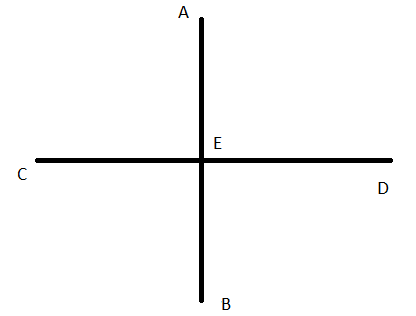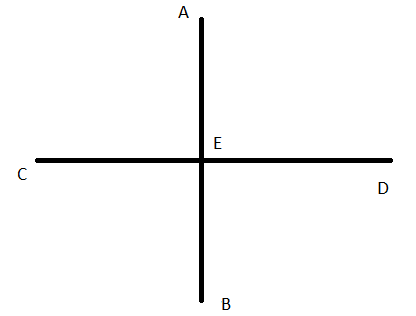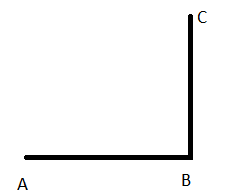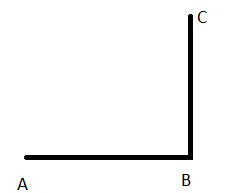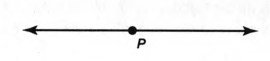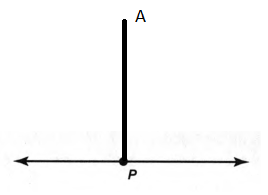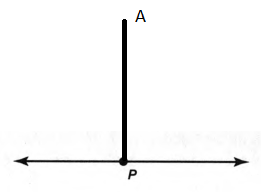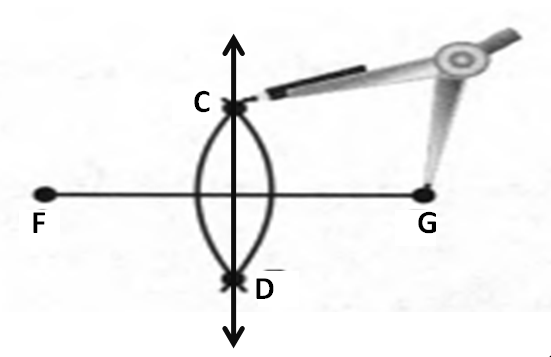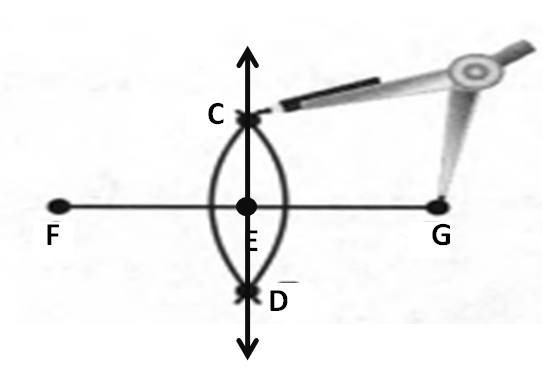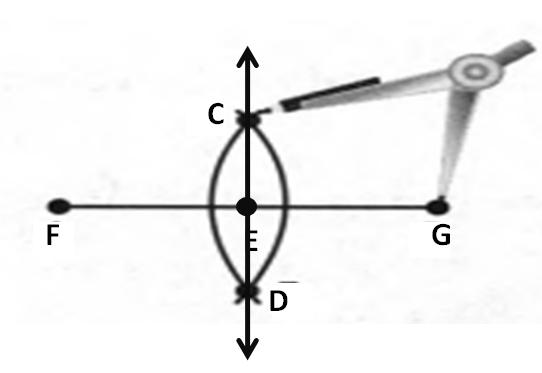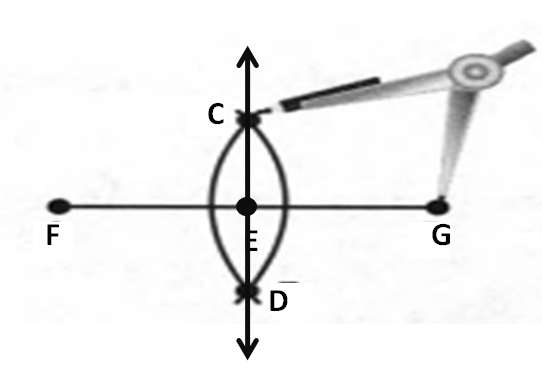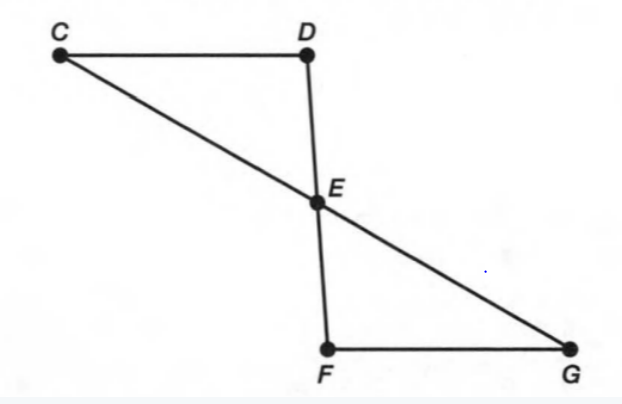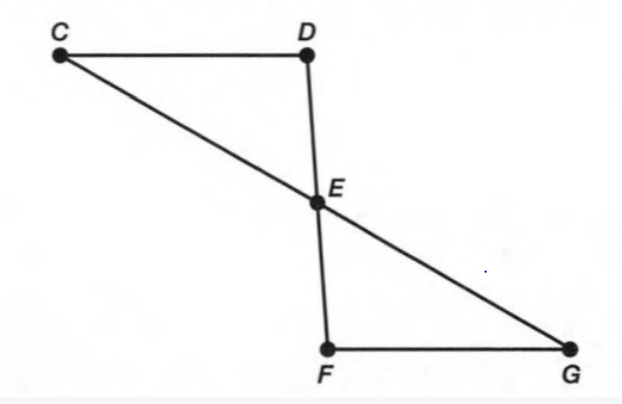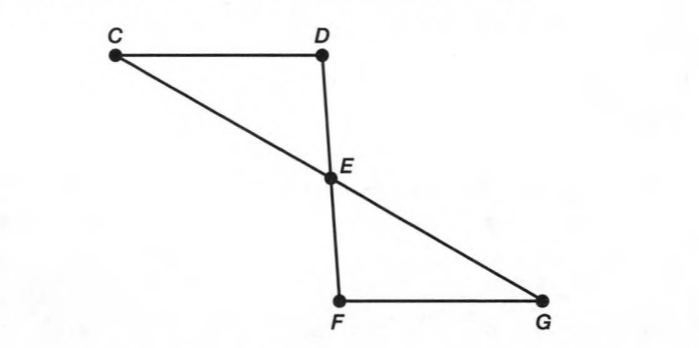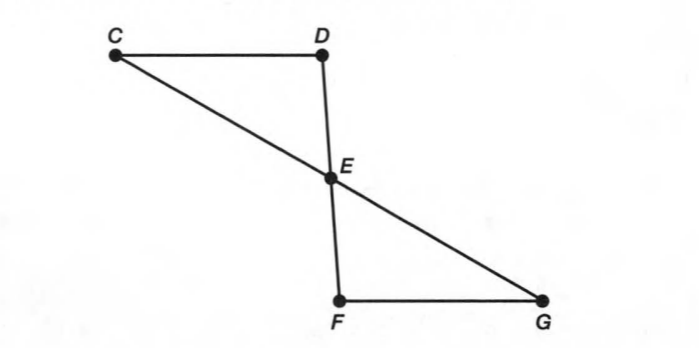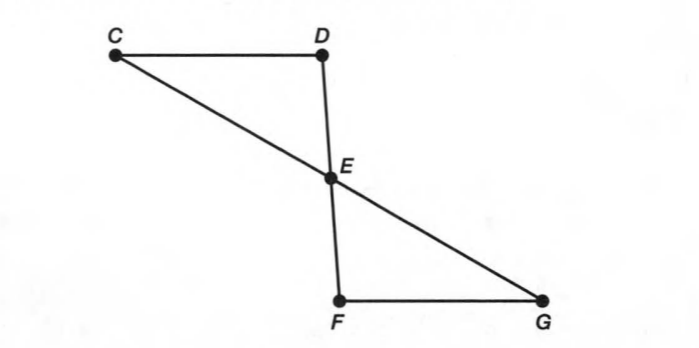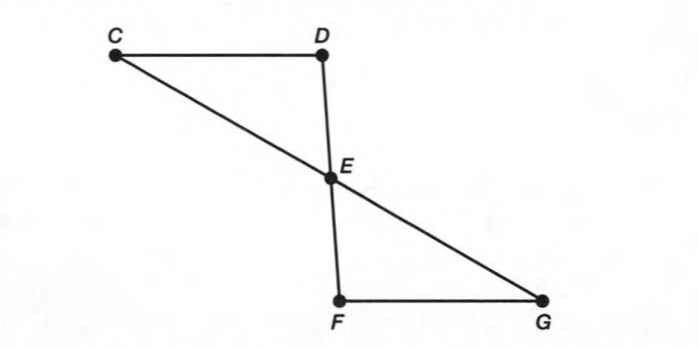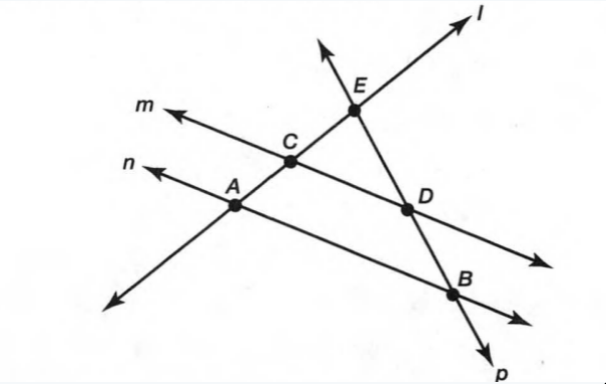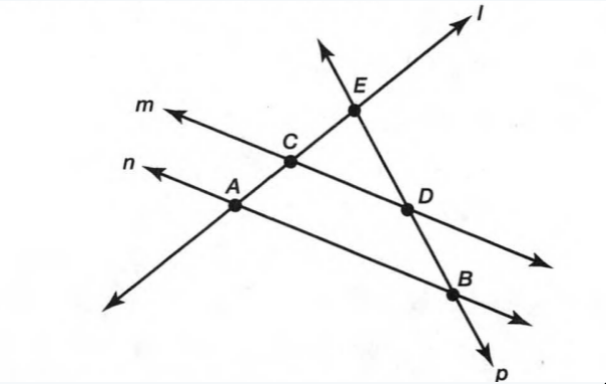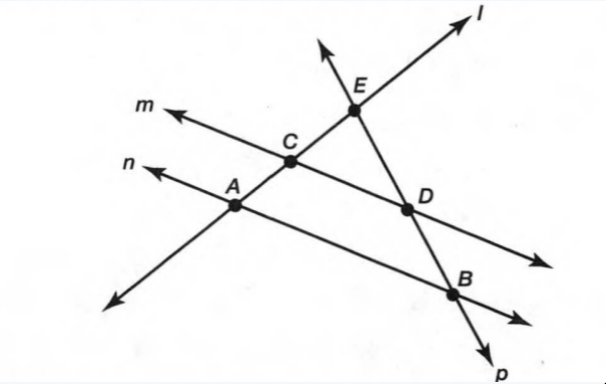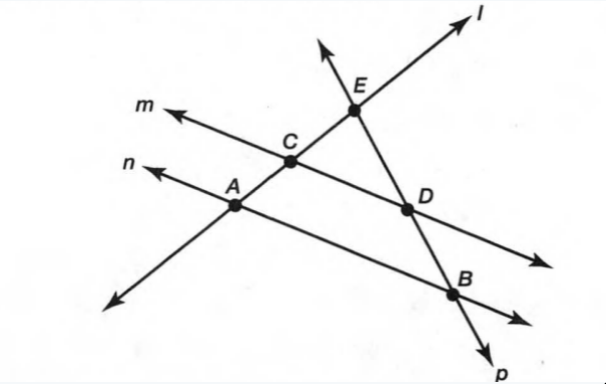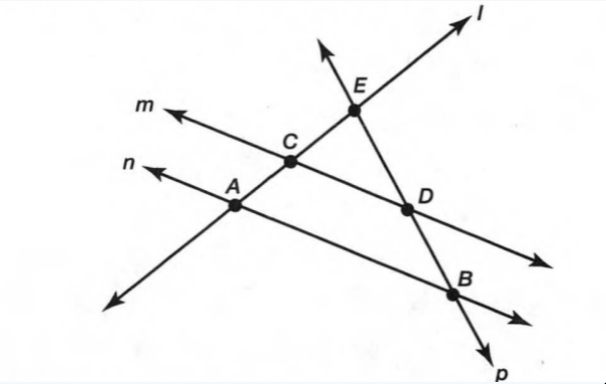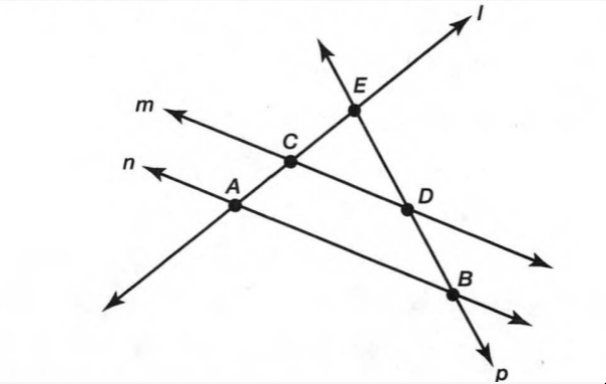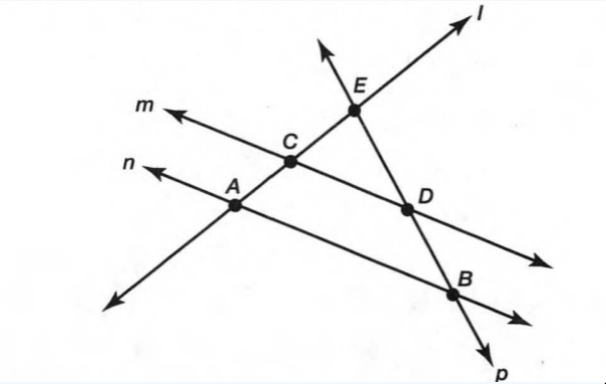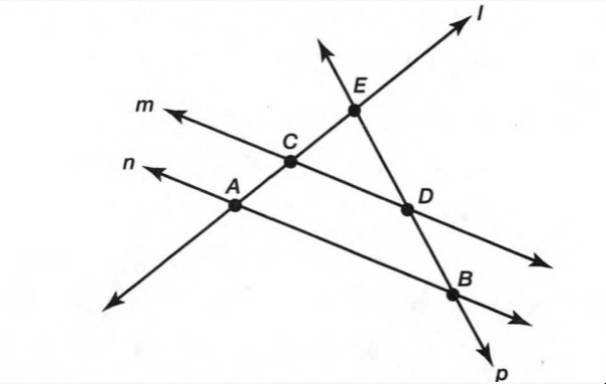
Carnegie Learning Geometry Student Text 2nd Edition Chapter 2 Exercise 2.1 Parallel and Perpendicular Lines

Geometry Student Text 2nd Edition Chapter 2 Parallel and Perpendicular Lines

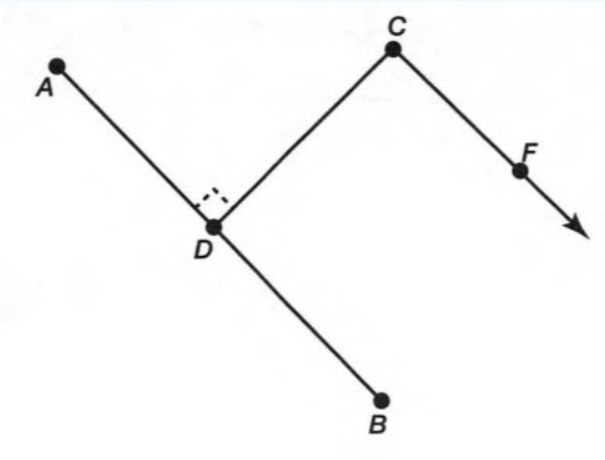
Carnegie Learning Geometry Student Text 2nd Edition Chapter 2 Exercise 2.1 Solution Page 78 Problem 1 Answer

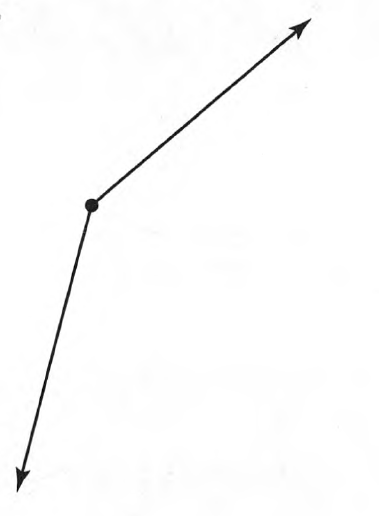
Given: You need to make a large letter “V” out of the poster board to complete a school project.

You are given two pieces of rectangular poster board, each measuring 1″ x 12″To Make your letter “V” similar to the one shown.

we will proceed step by step as per the question.

Take two pieces of poster board

Draw a rough sketch of V on the poster board

Then cut side GDLH and EFLD

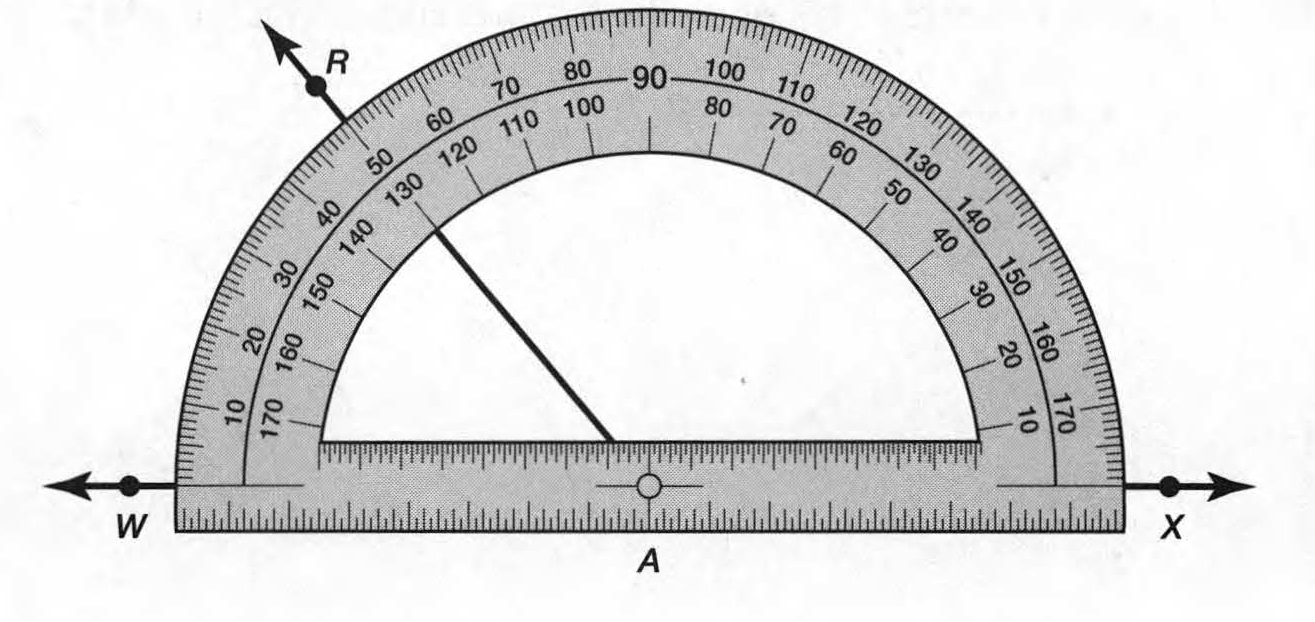
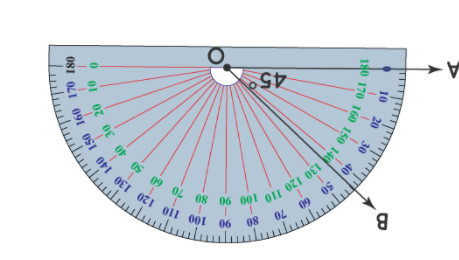
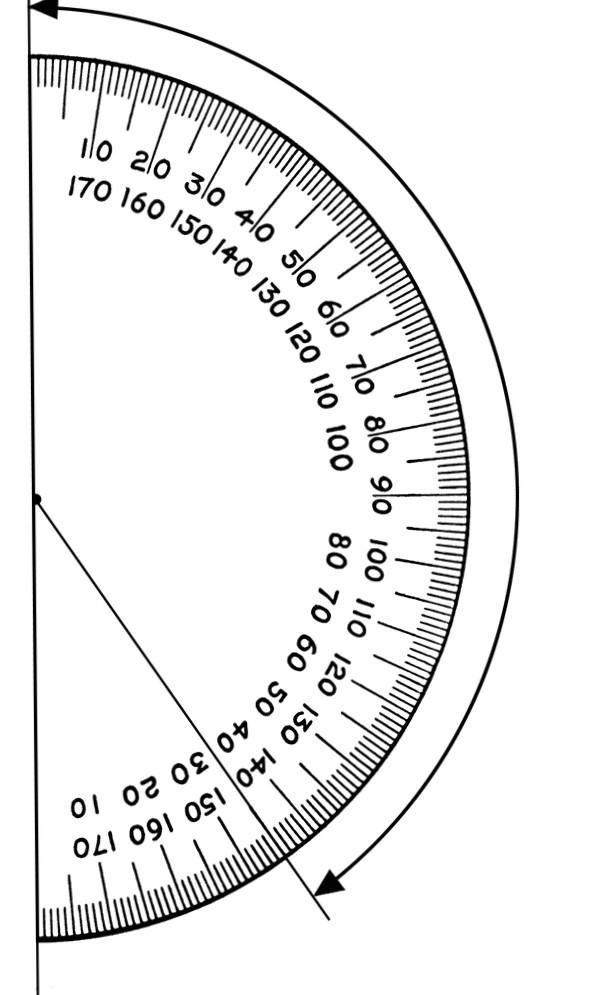
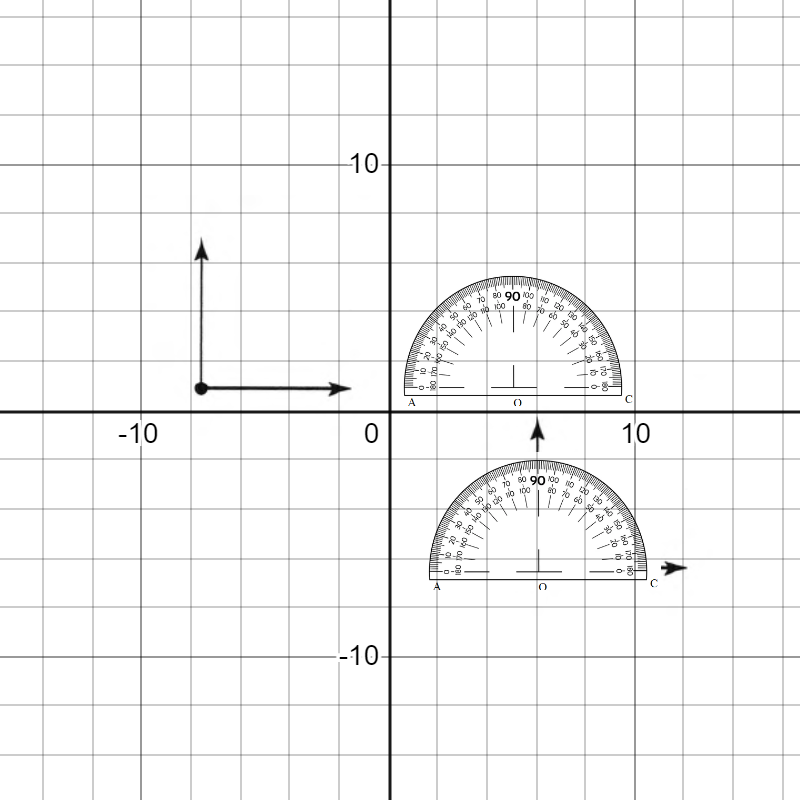
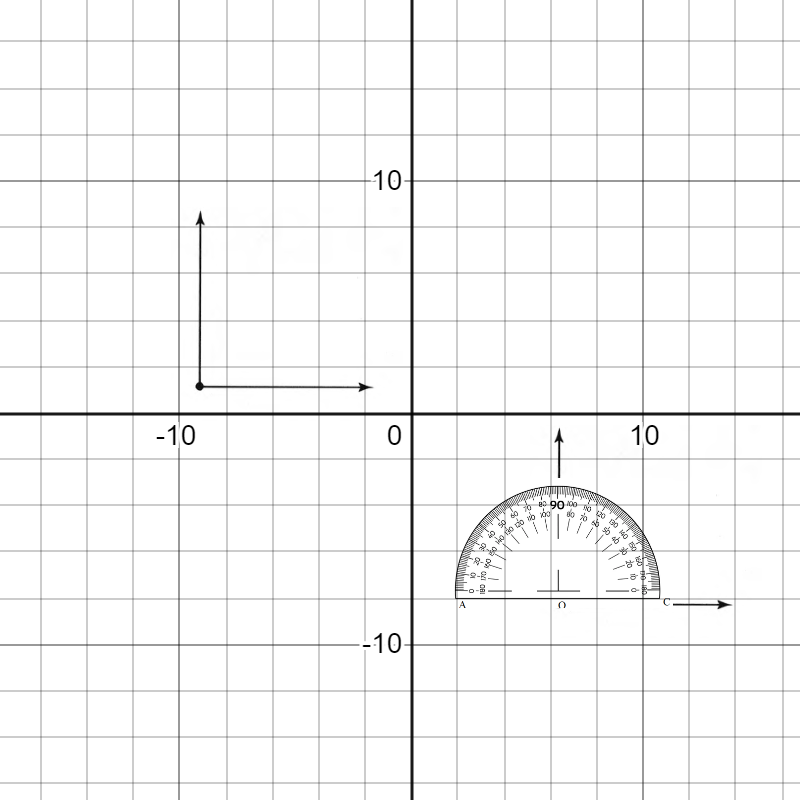
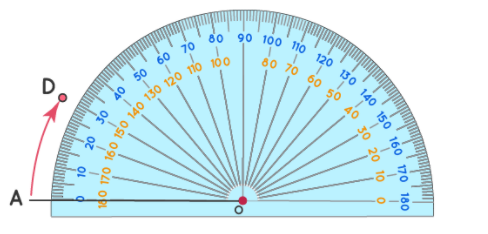
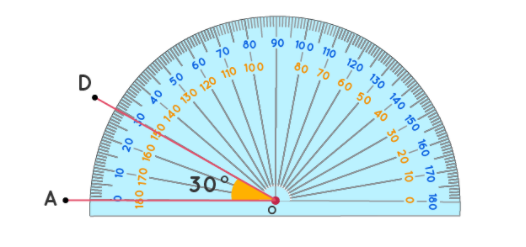
Now take the protractor and measure the ∠GDE=40o

Also with the help of scale measure the segment HL=FL=12 inches

Hence, by following the above steps we can make a large letter “V” out of poster board to complete a school project.

Read and learn More Carnegie Learning Geometry Student Text 2nd Edition Solutions

Page 78 Problem 2 Answer

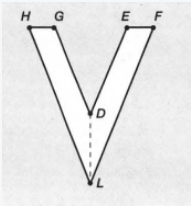
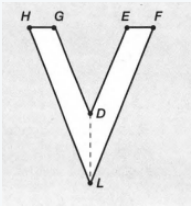
We have given the following diagram of letter V:-
Geometry Student Text 2nd Edition Chapter 2 Parallel and Perpendicular Lines 2

We have to find that how many interior angles are located in V.

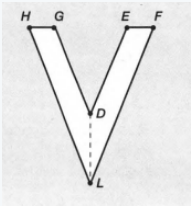
The given diagram is:-
Geometry Student Text 2nd Edition Chapter 2 Parallel and Perpendicular Lines 2 1

We know that when two lines are joined then there exists an angle between them.

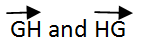
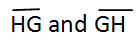
Here we can see that the line HG is joined with lines HL and GD.

So there are two angles ∠LHG and ∠HGD.

Also, the line EF joined with lines ED and FL.

So there are two angles ∠DEF and ∠EFL

Further, the line HL joined with FL, and line GD joined with ED.

So there are two more angles ∠GDE and ∠ELH

Hence there exist total of six angles interior the letter V.

The are total six interior angles in the following letter V.
Geometry Student Text 2nd Edition Chapter 2 Parallel and Perpendicular Lines 2 2

Carnegie Learning Geometry Student Text 2nd Edition Chapter 2 Exercise 2.1 Solution Page 78 Problem 3 Answer
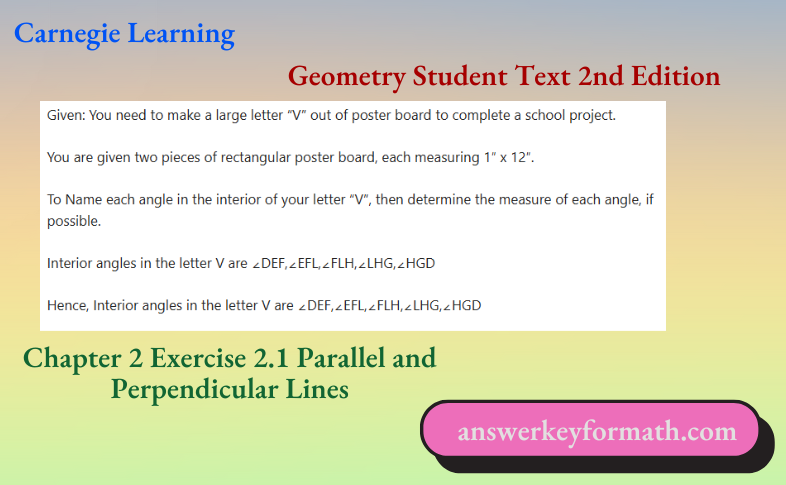
Carnegie Learning Geometry Student Text 2nd Edition Chapter 2 Exercise 2.1 Parallel and Perpendicular Lines

Page 79 Problem 4 Answer

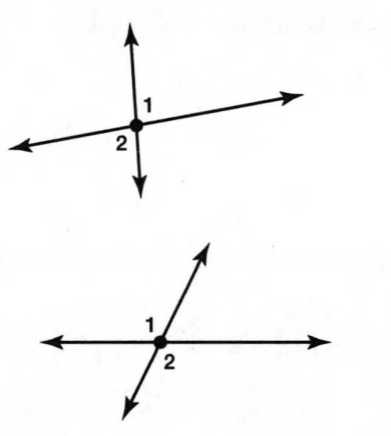
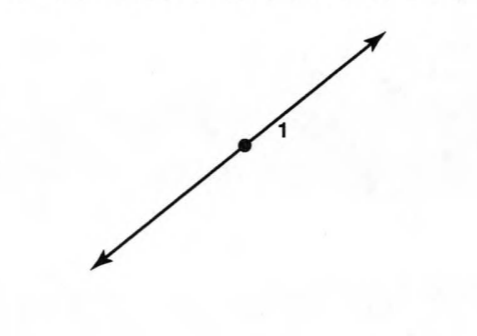
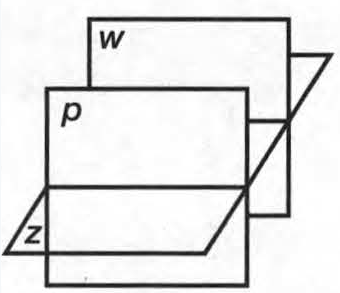
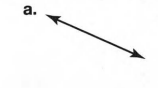
A figure is given,
Geometry Student Text 2nd Edition Chapter 2 Parallel and Perpendicular Lines 4

we have to identify which case is shown in figure.

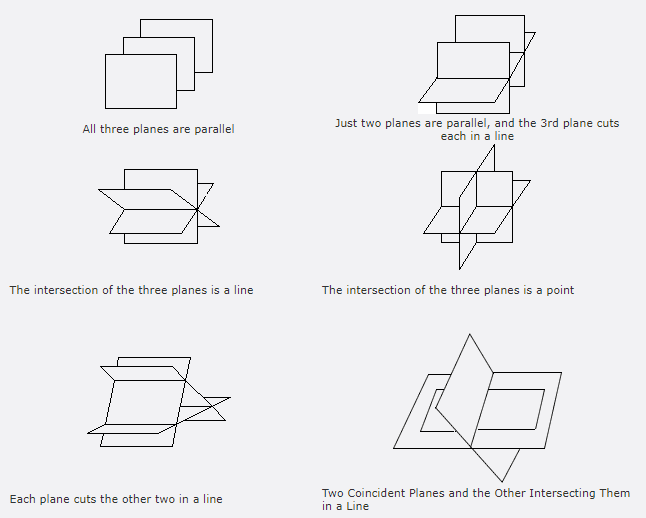
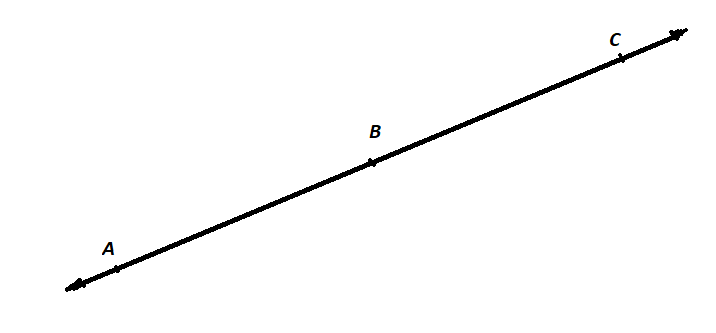
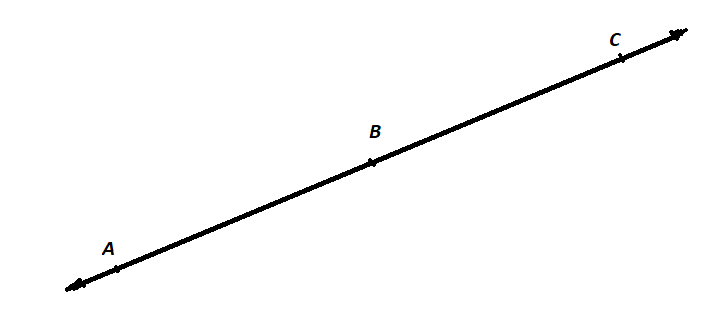
Here, two lines coincide with each other.

that means two lines intersect at an infinite number of points.

so, two intersecting lines will be coplanar on the same plane.

Hence, the given figure  identifies case 2: two coplanar lines intersect at an infinite number of points.

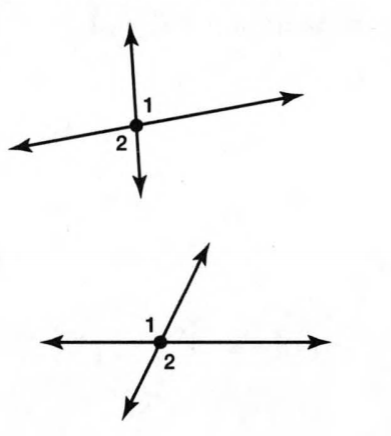
Page 79 Problem 5 Answer

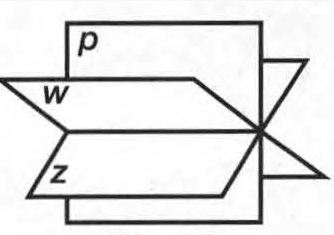
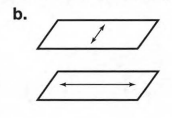
A figure is given.
Geometry Student Text 2nd Edition Chapter 2 Parallel and Perpendicular Lines 5

we have to identify which case is shown in figure.

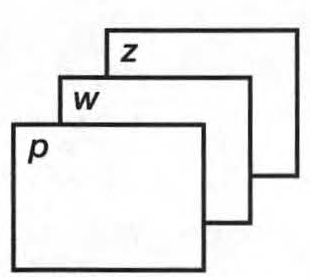
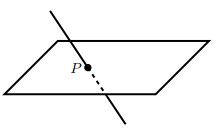
when two lines lie on the same plane, two lines are coplanar.

But, each line lies on own plane.

so, two lines will not coplanar.

Hence, the given figure identifies case 4: two lines are not coplanar.

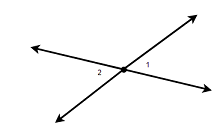
Page 79 Problem 6 Answer

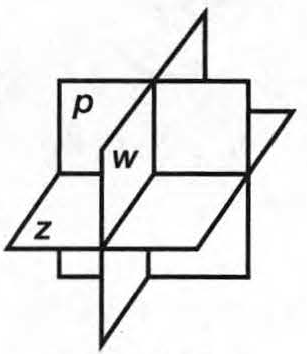
A figure is given,
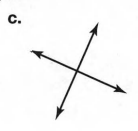
Geometry Student Text 2nd Edition Chapter 2 Parallel and Perpendicular Lines 6

we have to identify which case is shown in the figure.

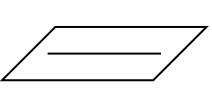
we know that two intersecting lines are always coplanar and these lines lie on the same plane.

so, here two lines are intersecting at a single point and they lie on the same plane.

that is the two intersecting lines are coplanar on the same plane.

Hence, the given figure identifies case 1: two coplanar lines intersect at a single point.

Page 79 Problem 7 Answer

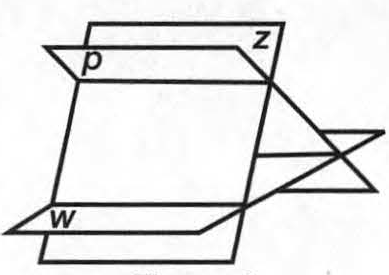
A figure is given,
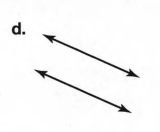
Geometry Student Text 2nd Edition Chapter 2 Parallel and Perpendicular Lines 7

we have to identify which case is shown in figure.

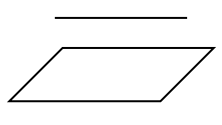
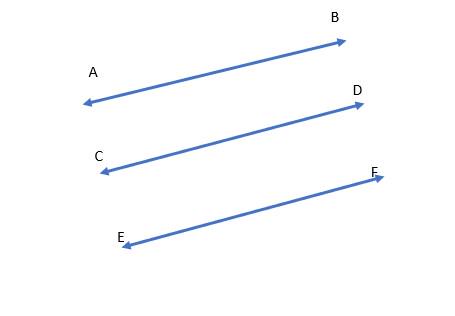
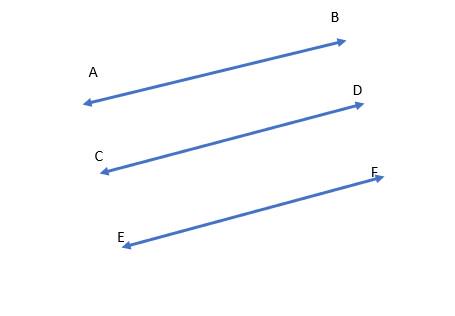
we know that two lines are parallel if they are coplanar on the same plane and do not intersect.

so, two coplanar lines do not intersect.

Hence, the given figure identifies case 3: two coplanar lines do not intersect.

Page 80 Problem 8 Answer

Given, two lines intersect at a single point.

Explain: Are the lines are always coplanar?

Two intersecting lines must be always coplanar,

because each line exists in many plane, but the two intersect means they share at least one plane.

so , the two lines will not always share all planes.

Though, they can be coplanar on the same plane

Hence, the two intersecting lines are always coplanar on the same plane.

Solutions for Parallel and Perpendicular Lines Exercise 2.1 in Carnegie Learning Geometry Page 80 Problem 9 Answer

Given, two lines intersect at an infinite number of points.

Explain: Are the lines always coplanar :
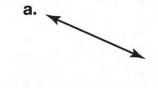
Geometry Student Text 2nd Edition Chapter 2 Parallel and Perpendicular Lines 9

since, two lines coincide with each other and intersect at an infinite number of points.

so, each line exists in many plane but two lines intersect means that means they share at least on plane.

so, the two lines will not share all planes.

though, they can be coplanar on the same plane.

Hence, two intersecting lines are always coplanar on the same plane.

Page 80 Problem 10 Answer

Given, Two lines are parallel.

Describe the distance between a point on one line and the other line.

A figure is drawn,
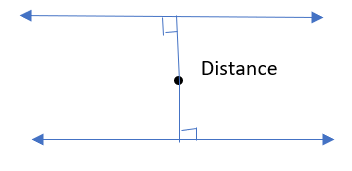
Geometry Student Text 2nd Edition Chapter 2 Parallel and Perpendicular Lines 10

since , two lines are parallel and do not intersect.

that means two lines are coplanar in the same plane.

and the length of segment is drawn from the point perpendicular to the line.

so , the distance between two parallel lines in the plane is the minimum distance between a point on one line and other line.

thus, it equals the perpendicular distance from any point on one line to other line.

Hence, it equals the perpendicular distance from any point on one line to the other line.

Page 80 Problem 11 Answer

To explain:  why the skew lines can not intersect.

Any two intersecting lines must lie in the same plane, are called as co planar lines.

we know that The skew lines are non-co planar lines.

By the definition of the skew lines, any two lines in the different planes, which are not parallel and do not intersect each other.

Therefore, The skew lines cannot intersect.

Hence, The skew lines cannot intersect.

Carnegie Learning Geometry 2nd Edition Exercise 2.1 solutions Page 81 Problem 12 Answer

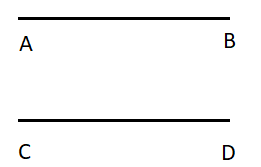
Given: Two parallel lines l1,l2 and the linely intersects the parallel lines.

To find: The lines that each transversal intersects.

A transversal is a line that intersects two or more lines at distinct points.

Given: Two parallel lines l1, and l2 intersected by the linely.

By the definition of the transversal line: A transversal is a line that intersects two or more lines at distinct points.

Since, The linely intersect the two parallel lines.

Therefore, The linely is the transversal line.

The line ly is the transversal line.
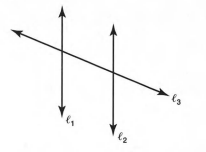
Geometry Student Text 2nd Edition Chapter 2 Parallel and Perpendicular Lines 12

Page 81 Problem 13 Answer

Given: Two non parallel lines l1,l2 and the line l3 intersects the non- parallel lines.

To find: The lines that each transversal intersects.

Given:Two non parallel lines l1,l2 and the line l3 intersects the non- parallel lines.
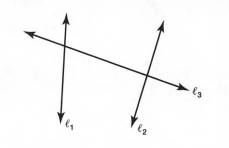
Geometry Student Text 2nd Edition Chapter 2 Parallel and Perpendicular Lines 13

By the definition of the transversal line:A transversal is a line that intersects two or more lines at distinct points.

Since, The linel3 intersect the two non- parallel lines.

Therefore, The linel3 is the non-transversal line.

The linel3 is the transversal line.

The lines l1,l2 are two non parallel lines.

Page 82 Problem 14 Answer

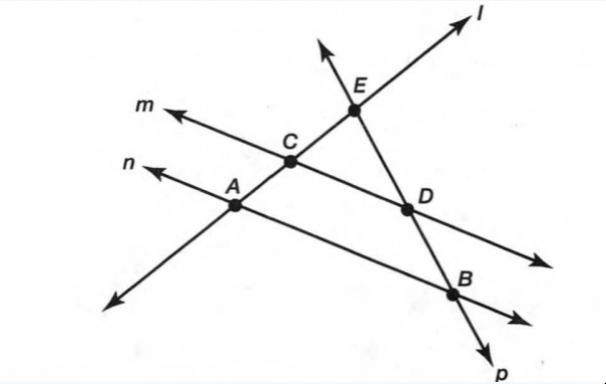
Given: Two non-parallel lines m,n cut by the transversal line p.

To find: all interior angles.

Given: Two non- parallel linesm,n cut by the transversal line p.

To find: all interior angles.

Interior angles are a pair of angles that forms a straight lines.
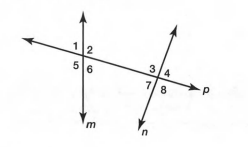
Geometry Student Text 2nd Edition Chapter 2 Parallel and Perpendicular Lines 14

In the above diagram

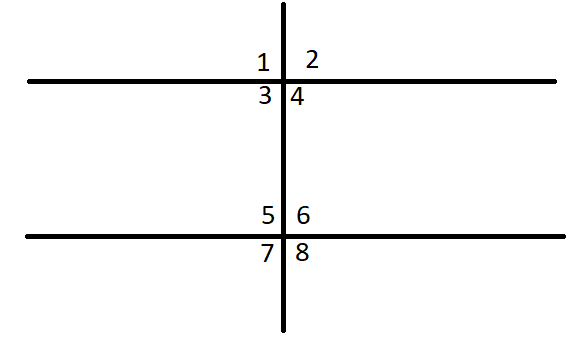
∠1,∠2 and ∠5,∠6 are the pair interior angles formed by the linem and p.

∠3,∠4 and ∠7,∠8 are the pair interior angles formed by the linen and p.

Hence,The interior angles formed by two lines are​∠1,∠2 and ∠5,∠6

∠3,∠4 and ∠7,∠8.​

Page 82 Problem 15 Answer

Given: Two non- parallel linesm,n

cut by the transversal line p.

To find: other interior and exterior angles.

Four of the eight angles are interior angles. The other four are exterior angles.

Angle 2 is an interior angle. Angle 1 is an exterior angle.

Interior angles are the angles that lie in the area enclosed between two parallel lines.

Exterior angles are the angles that lie in the area outside the parallel lines.
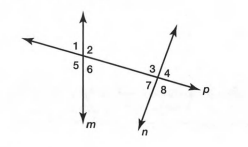
Geometry Student Text 2nd Edition Chapter 2 Parallel and Perpendicular Lines 15

In the above diagram ∠2,∠3,∠6,∠7 are interior angles.

∠1,∠5,∠4,∠8 are exterior angles.

Hence, The interior angles are∠2,∠3,∠6,∠7

The exterior angles are∠1,∠4,∠5,∠8

Page 82 Problem 16 Answer

Given: Two non- parallel lines m,n cut by the transversal line P.

To find: all other pairs of same-side interior angles.

Given: One pair of same-side interior angles is∠2 and ∠3.

To find: all other pairs of same-side interior angles.

Same side interior angles are two angles that are on the interior of (between) the two lines and on the same side of the transversal.
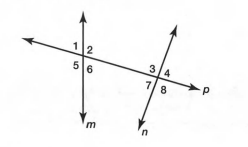
Geometry Student Text 2nd Edition Chapter 2 Parallel and Perpendicular Lines 16

In the above diagram, ∠2,∠3,∠6 and ∠7 are same side interior angles.

Hence,The same side interior angles formed by two lines are∠2,∠3 and ∠6,∠7.

Parallel And Perpendicular Lines Solutions Chapter 2 Exercise 2.1 Carnegie Learning Geometry Page 83 Problem 17 Answer

Given:Two non- parallel lines m,n cut by the transversal line  P.

To find: all other pairs of alternate exterior angles.

Given: One pair of alternate exterior angles is∠2 and ∠3.

To find: all other pairs of alternate exterior angles.

Alternate exterior angles are the angles formed on the opposite sides of the transversal.
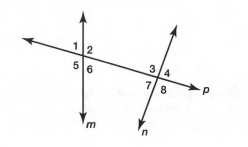
Geometry Student Text 2nd Edition Chapter 2 Parallel and Perpendicular Lines 17

In the above diagram, ∠2,∠3 and ∠6,∠7 are alternate exterior angles.

Hence,The alternate exterior angles formed by two lines are∠2,∠3 and ∠6,∠7.

Step-By-Step Solutions For Carnegie Learning Geometry Chapter 2 Exercise 2.1 Page 83 Problem 18 Answer

Given:Two non- parallel lines m,n cut by the transversal line P.

To find: All other pairs of same-side exterior angles.

Given: One pair of same-side exterior angles is∠1 and∠4.

To find: All other pairs of same-side exterior angles.

Same side exterior angles are two angles that are on the exterior of the two lines and on the same side of the transversal.
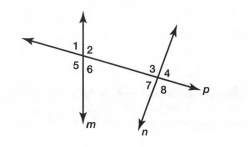
Geometry Student Text 2nd Edition Chapter 2 Parallel and Perpendicular Lines 18

In the above diagram, ∠1,∠4 and ∠5,∠8 are same side exterior angles.

Hence,The same side exterior angles formed by two lines are∠1,∠4 and ∠5,∠8.

Page 84 Problem 19 Answer

Given: Draw two non-parallel lines cut by a transversal, number each angle, and then use a protractor to measure each angle.

To Draw two non-parallel lines cut by a transversal and to measure each angle.

Two non-parallel lines can be drawn as
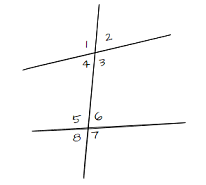
Geometry Student Text 2nd Edition Chapter 2 Parallel and Perpendicular Lines 19

Place the hole of the protractor at the vertex of ∠1 with the flat part of the protractor lined with the horizontal side of the angle and then read the measure of the angle among the lower numbers of the protractor.

∠1=98°

Similarly, measure all the angles

∠2=82°

∠3=98°

∠4=82°

∠5=92°

∠6=88°

∠7=92°

∠8=88°

Hence, by following the above steps we can draw two non-parallel lines cut by a transversal and then use a protractor to measure each angle.

Carnegie Learning Geometry Chapter 2 Exercise 2.1 Free Solutions Page 84 Problem 20 Answer

To draw: Two parallel lines and transversal and measure the angles by the protractor.
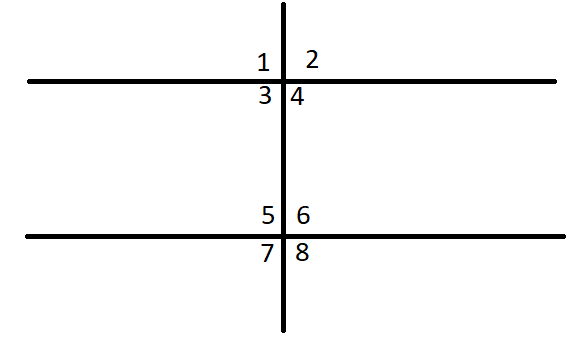
Geometry Student Text 2nd Edition Chapter 2 Parallel and Perpendicular Lines 20

All the angles are 90∘.

Geometry Student Text 2nd Edition Chapter 2 Parallel and Perpendicular Lines 20 1

All the angles are 90∘.

Page 84 Problem 21 Answer

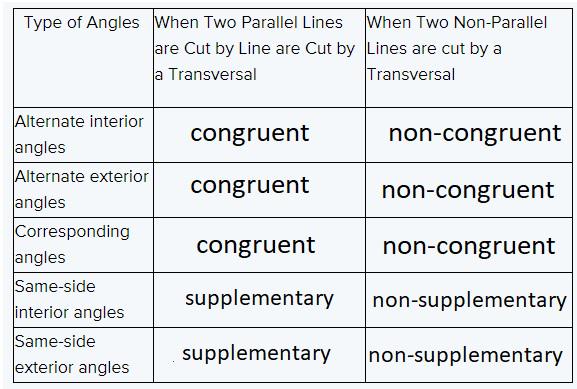
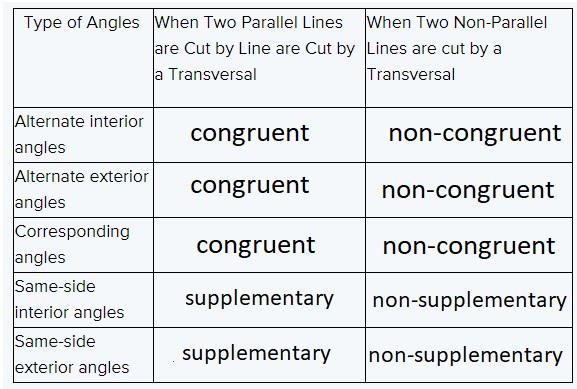
Given: The two parallel and non-parallel lines and their transversals.

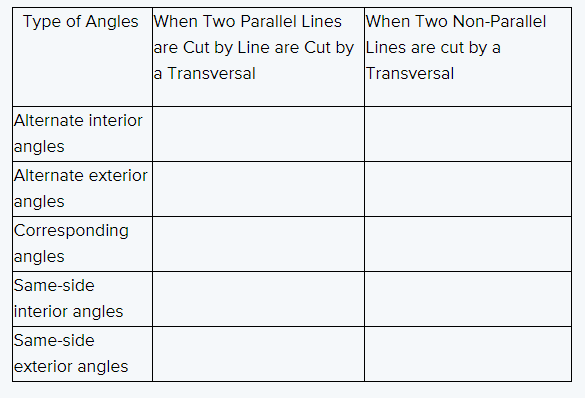
For parallel lines, the alternate interior angles are equal but not in the case of the non-parallel lines.

For parallel lines, the alternate interior angles are equal but not in the case of the non-parallel lines.

Page 84 Problem 22 Answer

Given: The two parallel and non-parallel lines and their transversals.

For parallel lines, the alternate exterior angles are equal but not in the case of the non-parallel lines.

For parallel lines, the alternate exterior angles are equal but not in the case of the non-parallel lines.

Carnegie Learning Geometry Exercise 2.1 Student Solutions Page 84 Problem 23 Answer

Given: The two parallel and non-parallel lines and their transversals.

For parallel lines, the corresponding angles are equal but not in the case of the non-parallel lines.

For parallel lines, the corresponding angles are equal but not in the case of the non-parallel lines.

Page 84 Problem 24 Answer

Given: The two parallel and non-parallel lines and their transversals.

The same side interior angles are supplementary for parallel lines but not in the case of the non-parallel lines.

The same side interior angles are supplementary for parallel lines but not in the case of the non-parallel lines.

Page 84 Problem 25 Answer

Given: The two parallel and non-parallel lines and their transversals.
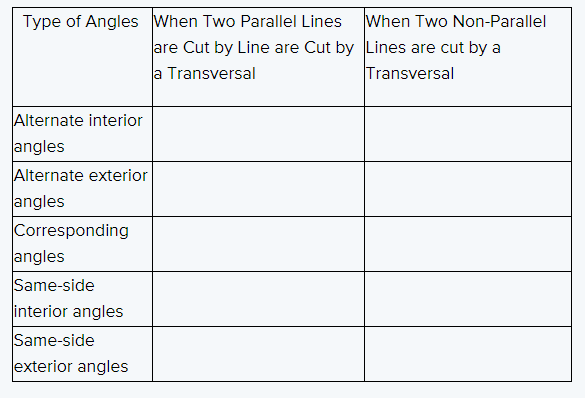
Geometry Student Text 2nd Edition Chapter 2 Parallel and Perpendicular Lines 25

The same side exterior angles are supplementary for the parallel lines but not for the non-parallel lines.
Geometry Student Text 2nd Edition Chapter 2 Parallel and Perpendicular Lines 25 1

The same side exterior angles are supplementary for the parallel lines but not for the non-parallel lines.
Geometry Student Text 2nd Edition Chapter 2 Parallel and Perpendicular Lines 25 2

Page 85 Problem 26 Answer

Given:

Geometry Student Text 2nd Edition Chapter 2 Parallel and Perpendicular Lines 26

To specify inductive or deductive reasoning to summarize the conclusion

As per the question we have used deductive reasoning to summarize the conclusion.

Hence, deductive reasoning was used to summarize the conclusion.

Page 85 Problem 27 Answer

Given:
Geometry Student Text 2nd Edition Chapter 2 Parallel and Perpendicular Lines 27

To specify  inductive or deductive reasoning to summarize the conclusion
Geometry Student Text 2nd Edition Chapter 2 Parallel and Perpendicular Lines 27 1

As per the question we have used deductive reasoning to summarize the conclusion.
Geometry Student Text 2nd Edition Chapter 2 Parallel and Perpendicular Lines 27 2

Hence, deductive reasoning was used to summarize the conclusion.

Parallel And Perpendicular Lines Exercise 2.1 Carnegie Learning 2nd Edition Answers Page 85 Problem 28 Answer

Given:
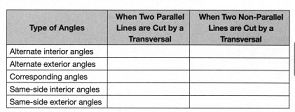
Geometry Student Text 2nd Edition Chapter 2 Parallel and Perpendicular Lines 28

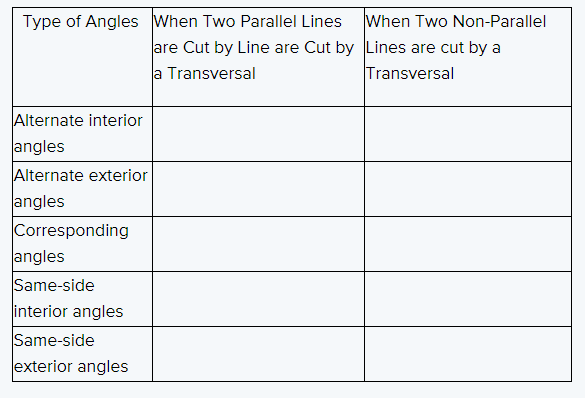
To Compare the measures of the angles everyone used and your chart to the charts of the rest of your class.

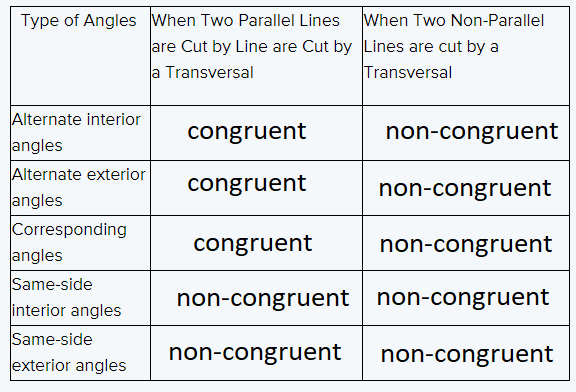
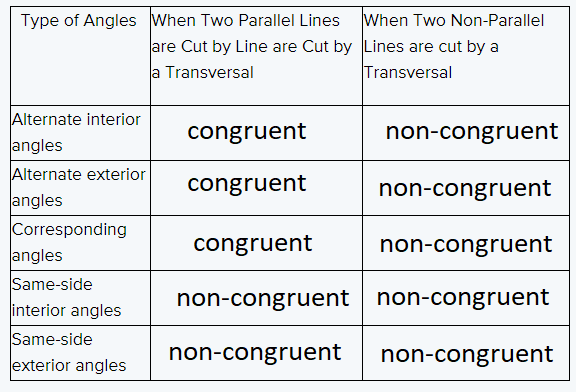
After comparing the measures of the angles everyone used and your chart to the charts of the rest of your class we conclude the following table
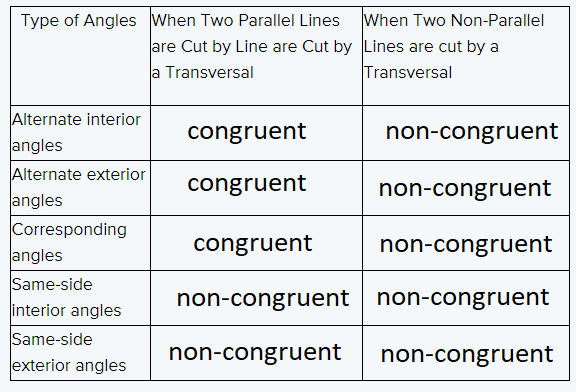
Geometry Student Text 2nd Edition Chapter 2 Parallel and Perpendicular Lines 28 1

Hence, After comparing the measures of the angles everyone used and your chart to the charts of the rest of your class we conclude the following table

Page 85 Problem 29 Answer

Given:

To  state the relationships in the chart as conjectures or theorems

The relationship in the char can be stated as conjectures and theorems as from the table

We can say that for alternate interior angles when two parallel lines are cut by a transverse

they are congruent, which can be specified by theorem.

Whereas when two non-parallel lines are cut by a transversal they are non-congruent, which can be specified by conjectures.

Similarly, all other angles can be stated as conjectures and theorems.

There are three instances that would be enough evidence to be considered proof of the relationship.
In the case of alternate interior angles when two parallel lines are cut by a transverse

they are congruent, which can be specified by theorem.

Whereas when two non-parallel lines are cut by a transversal they are non-congruent, which can be specified by conjectures.

Similar is the case for alternate interior angles and corresponding angles.

Hence, we can state the relationships in the chart as conjectures or theorems.

There are three instances that would be enough evidence to be considered proof of the relationship.
Carnegie Learning Geometry Student Text 2nd Edition Chapter 1 Exercise 1.6 Tools of Geometry

Geometry Student Text 2nd Edition Chapter 1 Tools of Geometry

Carnegie Learning Geometry Student Text 2nd Edition Chapter 1 Exercise 1.6 Solution Page 55 Problem 1 Answer

Question 1.

How can the addition property of equality be applied to angle measures?

Answer:

The addition property of equality

The addition property of equality can be applied to angle measures as follows:

If m∠1=m∠2, then m∠1+m∠3=m∠2+m∠3.

Therefore, the addition property of equality to angles is m∠1+m∠3=m∠2+m∠3.

Page 55 Problem 2 Answer

Question 2.

How can the addition property of equality be applied to segment measures?

Answer:

The addition property of equality can be applied to segment measures as follows:

If mABˉ=mCDˉ, then mABˉ+mEFˉ=mCDˉ+mEFˉ.

The addition property of equality to segments is mABˉ+mEFˉ=mCDˉ+mEFˉ.

Read and learn More Carnegie Learning Geometry Student Text 2nd Edition Solutions

Carnegie Learning Geometry Student Chapter 1 Page 56 Problem 3 Answer

Question 3.

How can the subtraction property of equality be applied to angle measures?

Answer:

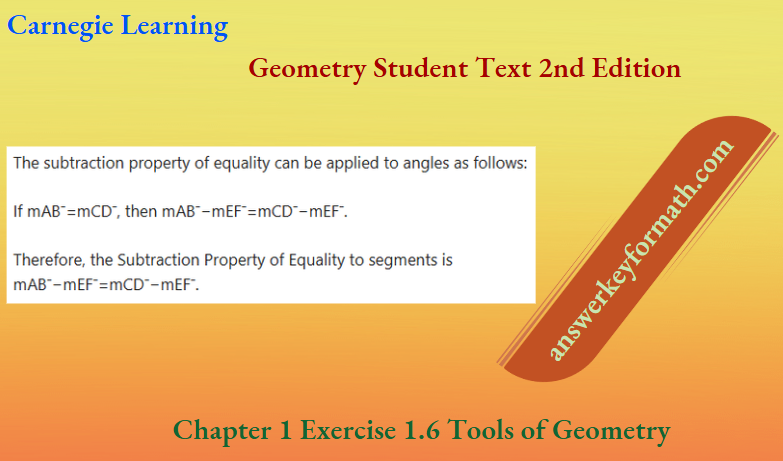
The subtraction property of equality can be applied to angles as follows:

If m∠1=m∠2, then m∠1−m∠3=m∠2−m∠3.

Therefore, the Subtraction Property of Equality to angles is m∠1−m∠3=m∠2−m∠3.

Page 56 Problem 4 Answer

Question 4.

How can the subtraction property of equality be applied to segment measures?

Answer:

Carnegie Learning Geometry Student Text 2nd Edition Chapter 1 Exercise 1.6 Tools of Geometry

Page 56 Problem 5 Answer

Question 5.

How can the reflexive property be applied to angle measures?

Answer:

The reflexive property can be applied to angle measures as m∠1=m∠1.

The reflexive property to angles is m∠1=m∠1.

Carnegie Learning Geometry Student Chapter 1 Page 56 Problem 6 Answer

Question 6.

How can the reflexive property be applied to segment measures?

Answer:

The reflexive property can be applied to segment measures as mABˉ=mABˉ.

Therefore, the reflexive property to segments is mABˉ=mABˉ.

Solutions for Tools of Geometry Exercise 1.6 in Carnegie Learning Geometry Page 57 Problem 7 Answer

Question 7.

How can the substitution property be applied to angle measures?

Answer:

The substitution property can be applied to angle measures as follows:

If m∠1=56∘,m∠2=56∘, then m∠1=m∠2.

Therefore, the substitution property to angles is m∠1=m∠2.

Carnegie Learning Geometry Student Chapter 1 Page 57 Problem 8 Answer

Question 8.

How can the substitution property be applied to segment measures?

Answer:

The substitution property can be applied to segment measures as follows:

If mABˉ=4 mm and mCDˉ

=4 mm then mABˉ=mCDˉ.

The substitution property to segments is mABˉ=mCDˉ.

Page 57 Problem 9 Answer

Question 9.

How can the transitive property be applied to angle measures?

Answer:

The transitive property can be applied to angle measures as follows:

If m∠1=m∠2 and m∠2=m∠3 then m∠1=m∠3.

Therefore, the transitive property to angle measures is, “If m∠1=m∠2 and m∠2=m∠3 then m∠1=m∠3”.

Carnegie Learning Geometry Student Chapter 1 Page 57 Problem 10 Answer

Question 10.

How can the transitive property be applied to congruent segment measures?

Answer:

The transitive property can be applied to congruent segment measures as follows:

If mABˉ=mCDˉ and mCDˉ=mEFˉ then mABˉ=mEFˉ.

The transitive property to congruent segment measures is, “If mABˉ=mCDˉ and mCDˉ=mEFˉ

then mABˉ=mEFˉ”.

Carnegie Learning Geometry 2nd Edition Exercise 1.6 Solutions Page 58 Problem 11 Answer

Question 11.

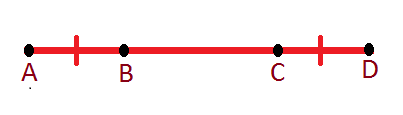
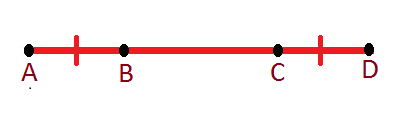
Given four collinear points A, B, C, and D such that B lies between A and C, C lies between B and D, and \(\overline{A B} \cong \overline{C D}\). Draw the line segment showing the collinear points and their relationships.

Answer:

Given

Given four collinear points A, B, C, and D such that B lies between A and C, C lies between B and D, and \(\overline{A B} \cong \overline{C D}\).

Draw four collinear points A,B,C,D such thatB is lies betweenA and C,C is lies betweenB and D,

And ABˉ≅CDˉ

Since pointsA,B,C,D is collinear and ABˉ≅CDˉ

⇒ mABˉ

=mCDˉ

So required line is

Geometry, Student Text, 2nd Edition, Chapter 1 Tools of Geometry 1

A line with four collinear points A,B,C,D, such that B is between A and C,C is lie between B and D,and ABˉ≅CD ˉ is

Geometry, Student Text, 2nd Edition, Chapter 1 Tools of Geometry 1 1

Carnegie Learning Geometry Student Chapter 1 Page 58 Problem 12 Answer

Question 12.

Line segment \(\overline{A B}\) is congruent to line segment \(\overline{B D}\)

To Prove: Line segment \(\overline{A C}\) is congruent to line segment \(\overline{B D}\)

Answer:

We haveABˉ≅CDˉ then  ACˉ≅BDˉ

So the hypothesis is LineABˉ is congruent to LineCDˉ and  the conclusion is Line AC is congruent to Line BDˉ.

Given: Line ABˉ is congruent to Line CDˉ.

Prove: Line ACˉ is congruent to Line BDˉ.

Carnegie Learning Geometry Student Chapter 1 Page 58 Problem 13 Answer

Question 13.

Given: Line segment \(\overline{A B}\) is congruent to line segment \(\overline{C D}\).

Prove: Line segment \(\overline{A C}\) is congruent to line segment \(\overline{B B}\).

Answer:

We have Given: Line ABˉ is congruent to Line CDˉ.

Prove: LineACˉ is congruent to Line BDˉ.

SinceABˉ≅CDˉ

We have LineABˉ is equal to CDˉ

In segment measure form we get

⇒mABˉ=mCDˉ −−−−−−−(1)

By Reflexive PropertyBCˉ≅BCˉ.

In segment measure form we get

⇒mBCˉ

=mBCˉ −−−−−−−(2)

By Addition Property of Equality add equation (1) and (2) we get

⇒mABˉ+mBCˉ=mCDˉ+mBCˉ

⇒mABˉ+mBCˉ=mBCˉ+mCDˉ −−−−−−−(3)

By Transitive Property ABˉ+BCˉ≅ACˉ and BCˉ+CDˉ≅BDˉ

In segment measure form we get

⇒m(ABˉ+BCˉ)=mACˉ and m(BCˉ+CDˉ)=mBDˉ

⇒mABˉ+mBCˉ=mACˉ and mBCˉ+mCDˉ=mBDˉ −−−−−−−(4)

By Substitution Property of Equality Using (4) in (3) we get

⇒mACˉ=mBDˉ

⇒ACˉ≅BDˉ

Hence the result is proved.

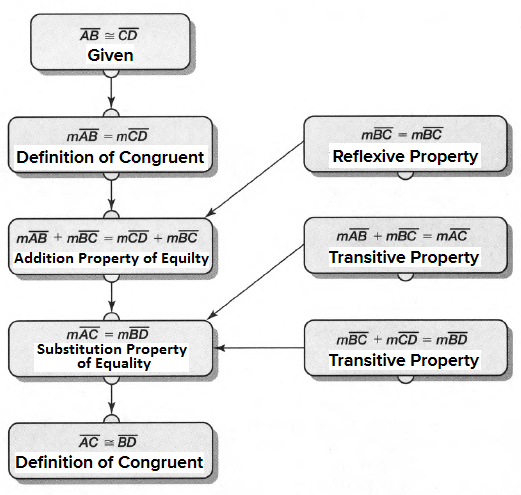
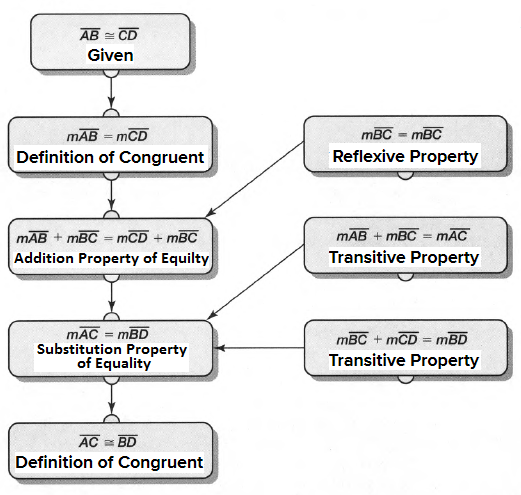
So flow chart becomes:

Geometry, Student Text, 2nd Edition, Chapter 1 Tools of Geometry 13

The flow chart for result IfABˉ≅CDˉ then ACˉ≅BDˉ is:

Geometry, Student Text, 2nd Edition, Chapter 1 Tools of Geometry 13 1

Tools Of Geometry Solutions Chapter 1 Exercise 1.6 Carnegie Learning Geometry Page 59 Problem 14 Answer

Question 14.

Given the conditional statement: If \(\overline{A B} \cong \overline{C D}\), then \(\overline{A C} \cong \overline{B D}\)

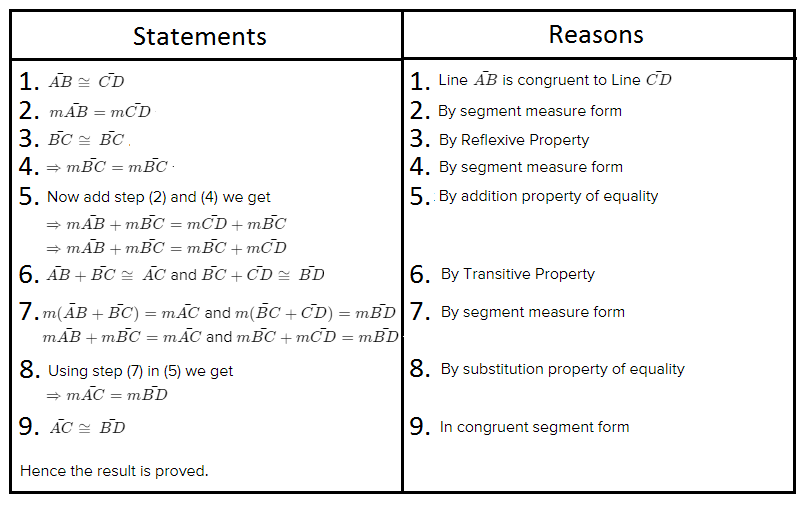
Write a two-column proof for the given conditional statement

Answer:

Given the conditional statement is IfABˉ≅CDˉ then ACˉ≅BDˉ

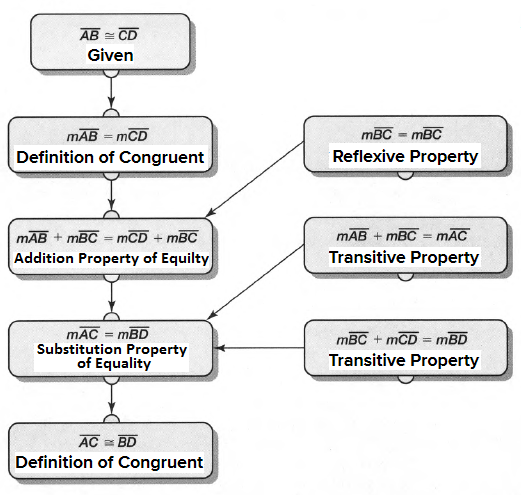
And flow chart is

Geometry, Student Text, 2nd Edition, Chapter 1 Tools of Geometry 14

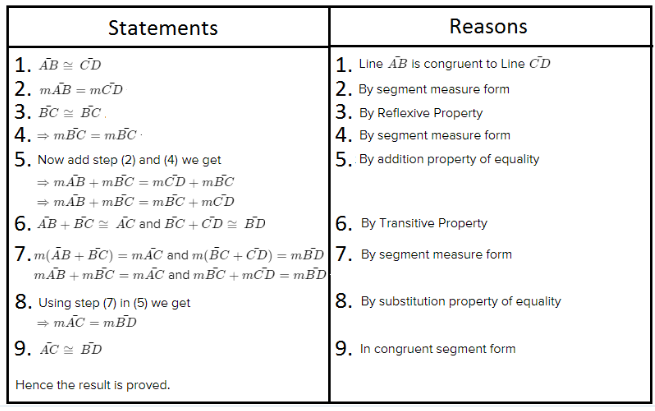
A two-column proof becomes

Geometry, Student Text, 2nd Edition, Chapter 1 Tools of Geometry 14 1

A two-column proof of the conditional statement: IfABˉ≅CDˉ then ACˉ≅BDˉis

Geometry, Student Text, 2nd Edition, Chapter 1 Tools of Geometry 14 2

Carnegie Learning Geometry Student Chapter 1 Page 59 Problem 15 Answer

Question 15.

Given the conditional statement: If \(\overline{A B} \cong \overline{C D}\) and \overline{A C} \cong \overline{B D}

Answer:

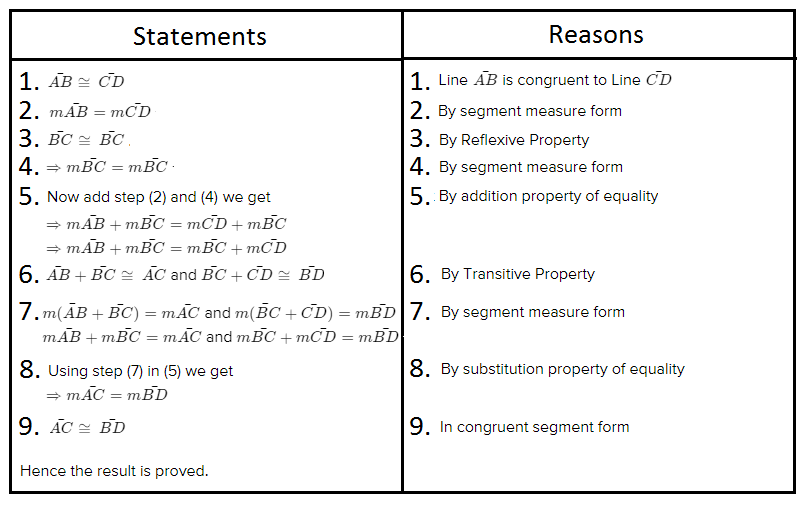
Given the conditional statement is IfABˉ≅CDˉ then ACˉ≅BDˉ and A two-column proof is

Geometry, Student Text, 2nd Edition, Chapter 1 Tools of Geometry 15

So A paragraph proof is

Given ABˉ≅CDˉ and we have to prove AC ≅BDˉ

IfABˉ≅CDˉ then by segment measure form we get

⇒mABˉ

=mCDˉ −−−−−−−(1)

We know that by reflexive property BCˉ≅BCˉ

⇒mBCˉ

=mBCˉ −−−−−−−(2)

Now by addition property of equality add equation (1) and (2) we get

⇒mABˉ+mBCˉ

=mCDˉ+mBCˉ

⇒mABˉ+mBCˉ

=mBCˉ+mCD −−−−−−−(3)

We know that by transitive property⇒ABˉ+BCˉ=ACˉ and BCˉ+CDˉ=BDˉ

⇒m(ABˉ+BCˉ)=mACˉ and m(BCˉ+CDˉ)=mBDˉ

⇒mABˉ+mBCˉ=mACˉ and mBCˉ+mCDˉ=mBDˉ −−−−−−−(4)

Now by substitution property of equality using (4) in (3) we get

⇒mACˉ

=mBDˉ

⇒ACˉ≅BDˉ​

Hence the result is proved.

A paragraph proof of the conditional statement If ABˉ≅CDˉ then ACˉ≅BDˉ is given in explanation part.

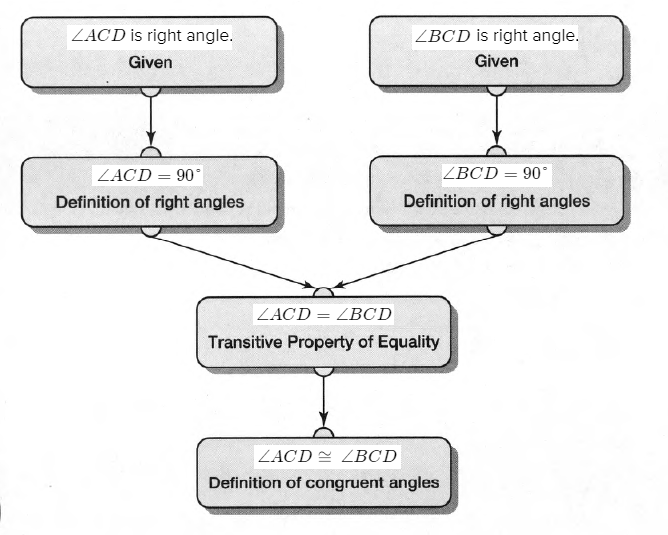
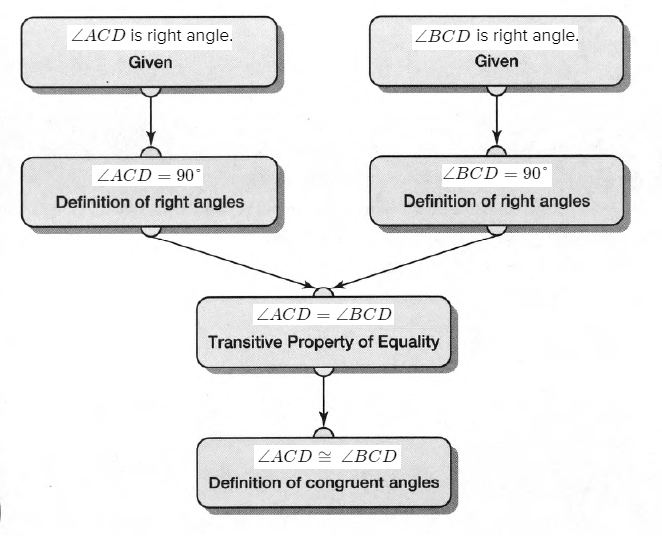
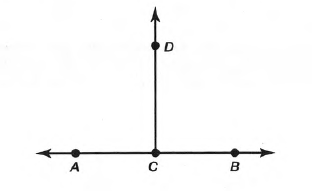
Step-By-Step Solutions For Carnegie Learning Geometry Chapter 1 Exercise 1.6 Page 60 Problem 16 Answer

Question 16.

Given : ACD and ∠BCD are right angles.

Prove: ∠ACD≅∠BCD

Here is the completed flow chart with the statements for each reason:

Answer:

We have to Complete the flow chart of the Right Angle Congruence Theorem by writing the statement for each reason in the boxes provided.

Geometry, Student Text, 2nd Edition, Chapter 1 Tools of Geometry 16 1

Given:∠ACD and ∠BCD are right angles.

Prove:∠ACD≅∠BCD

In first row write the statement of given.

Given:∠ACD is right angles, ∠BCD is right angles.

In second row write the results of right angles.

i.e.​If ∠ACD is right angles, ∠BCD is right angles.

⇒∠ACD=90°,∠BCD=90°

​In third row write the result of transitive property of equality

If ∠ACD=90°,∠BCD=90°

⇒∠ACD≅∠BCD

​So we have which is required flow chart of the Right Angle Congruence Theorem.

Geometry, Student Text, 2nd Edition, Chapter 1 Tools of Geometry 16 2

The flow chart of the Right Angle Congruence Theorem:

Geometry, Student Text, 2nd Edition, Chapter 1 Tools of Geometry 16

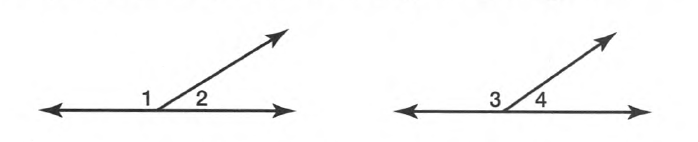
Carnegie Learning Geometry Student Chapter 1 Page 61 Problem 17 Answer

Question 17.

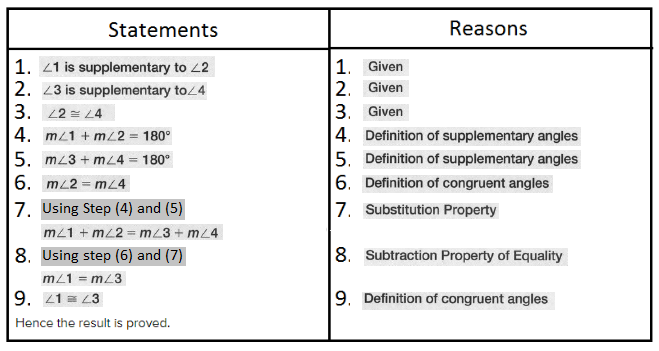
Prove that ∠1≅∠3.

Answer:

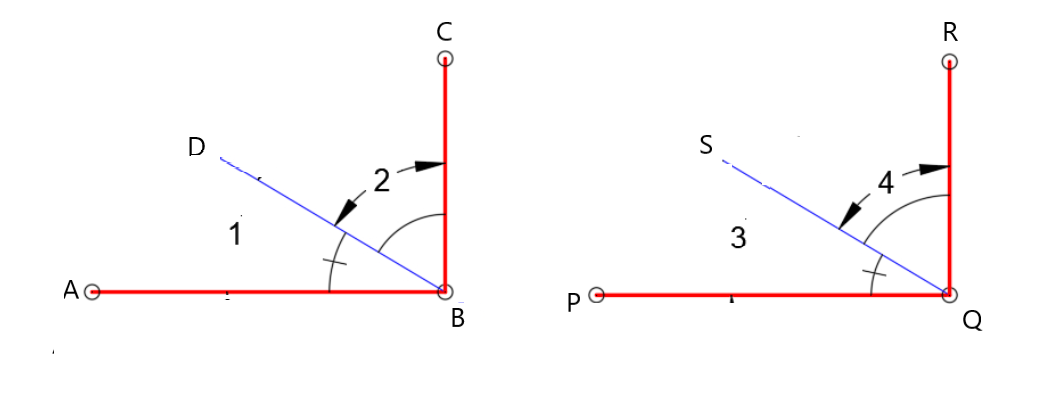
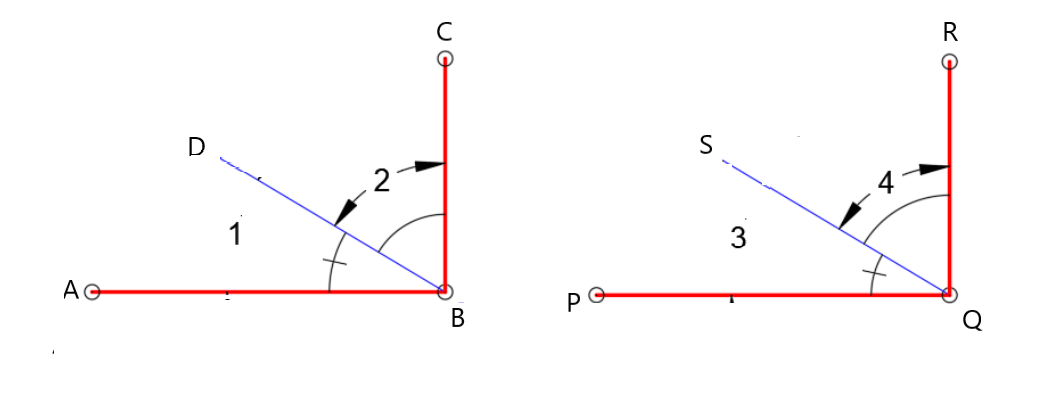
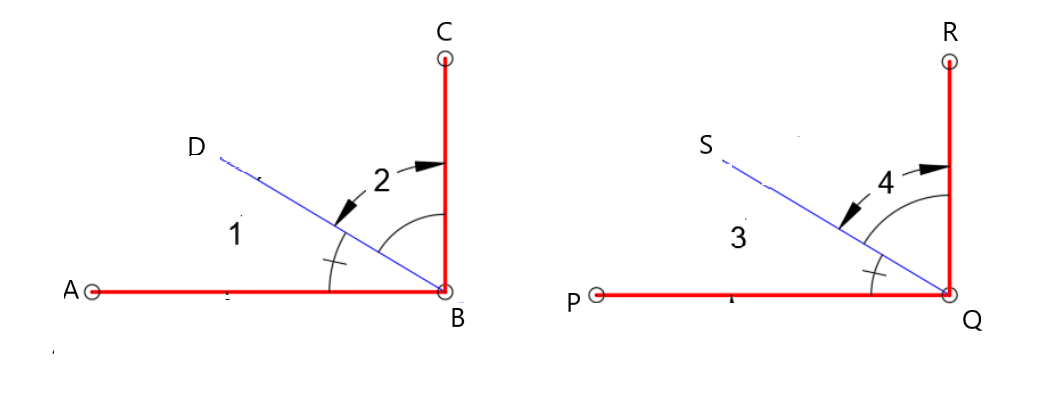
Consider the diagram:

Geometry, Student Text, 2nd Edition, Chapter 1 Tools of Geometry 17

We have to write the “Given” statement such that “Prove:∠1≅∠3”.

For this by The Congruent Supplement Theorem we get the “Given” Statements

∠1 and ∠2 are supplement angles i.e.∠1+∠2=180°

∠3 and ∠4 are supplement angles i.e.∠3+∠4=180°

∠2=∠4 which is required solution.

By The Congruent Supplement Theorem

Given: ∠1 and ∠2 are supplement angles i.e.∠1+∠2=180°

Given: ∠3 and ∠4 are supplement angles i.e.∠3+∠4=180°

Given: ∠2=∠4  is required “Given” for Prove:∠1≅∠3

Carnegie Learning Geometry Chapter 1 Exercise 1.6 Free Solutions Page 61 Problem 18 Answer

Question 18.

Proof of the Congruent Supplement Theorem:

  1. ∠1 + ∠2 = 180
  2. ∠3 + ∠4 = 180
  3. ∠2 = ∠4

Answer:

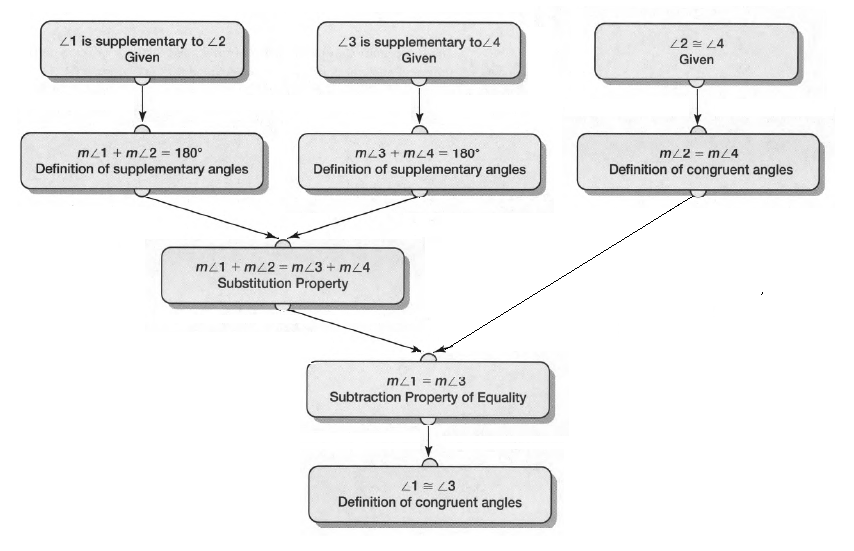
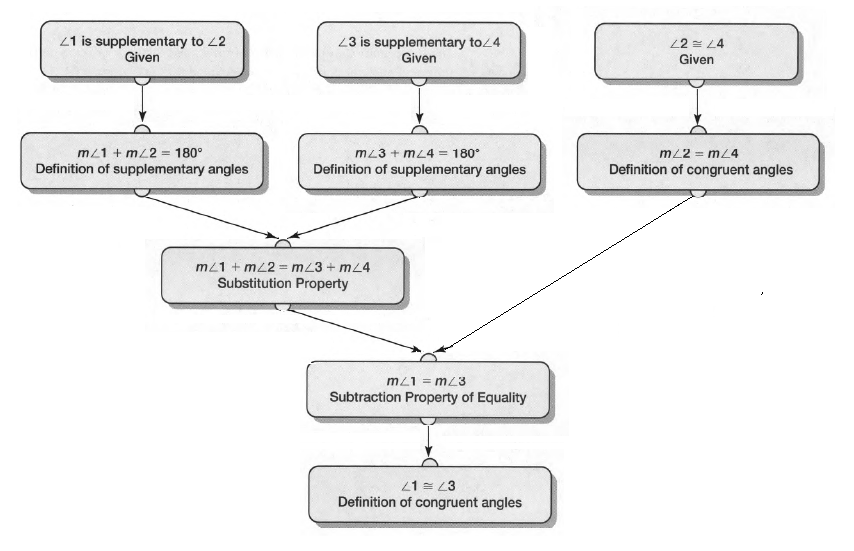
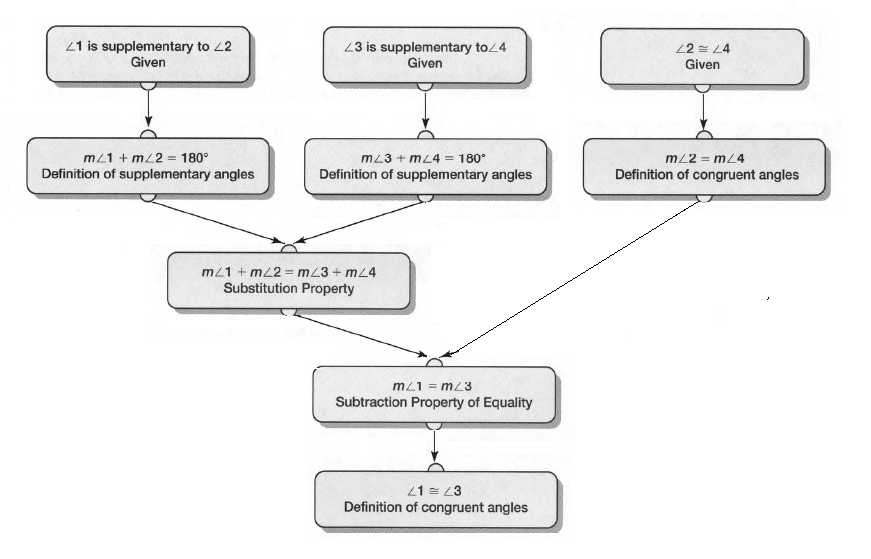
We have to complete a flow chart proof of the Congruent Supplement Theorem by drawing arrows to connect the steps in a logical sequence.

In first row write given parts portion.In second row write Definitions downwards to given parts.

In third row write substitution property downwards-center of definition of supplementary angles.

In forth row write subtraction property of equality downwards-center of supplementary angles and definition of congruent angles.

In fifth row write definition of congruent angles downwards to subtraction property of equality

So we have which is required flow chart.

Geometry, Student Text, 2nd Edition, Chapter 1 Tools of Geometry 18

A flow chart proof of the Congruent Supplement Theorem:

Geometry, Student Text, 2nd Edition, Chapter 1 Tools of Geometry 18 1

Carnegie Learning Geometry Student Chapter 1 Page 62 Problem 19 Answer

Question 19.

Congruent Supplement Theorem: If two angles are supplementary to the same angle (or to congruent angles), then those two angles are congruent.

To prove that ∠1≅∠3

Answer:

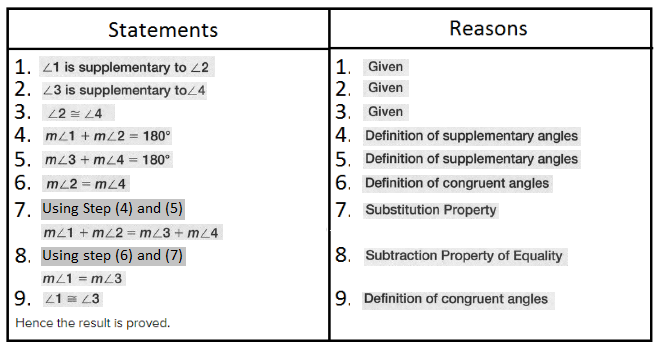
We have to create a two-column proof of the Congruent Supplement Theorem.

In first row write given parts portion.

In second row write Definitions downwards to given parts.

In third row write substitution property downwards-center of definition of supplementary angles.

In forth row write subtraction property of equality downwards-center of supplementary angles and definition of congruent angles.

In fifth row write definition of congruent angles downwards to subtraction property of equality

And flow chart is

Geometry, Student Text, 2nd Edition, Chapter 1 Tools of Geometry 19

A two-column proof becomes

Geometry, Student Text, 2nd Edition, Chapter 1 Tools of Geometry 19 1

A two-column proof of the Congruent Supplement Theorem is:

Geometry, Student Text, 2nd Edition, Chapter 1 Tools of Geometry 19 2

Carnegie Learning Geometry Student Chapter 1 Page 62 Problem 20 Answer

Question 20.

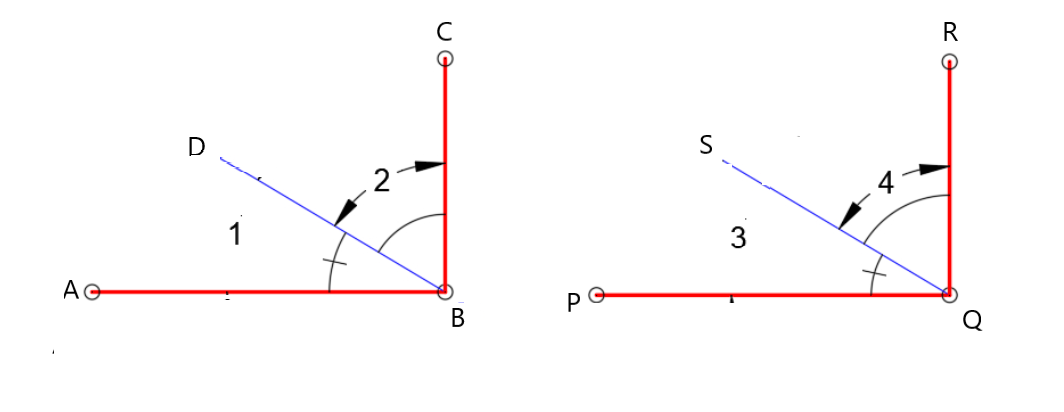
Given:

  • ∠1 and ∠2 are complementary angles.
  • ∠3 and ∠4 are complementary angles.
  • ∠2 ≅ ∠4

To Prove: ∠1 ≅ ∠3

Answer:

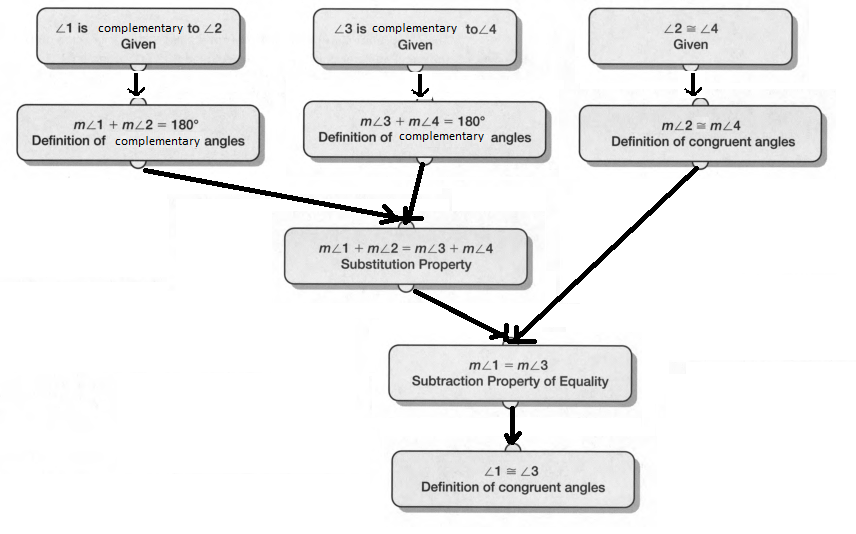
The angles ∠1 and ∠2 are complimentary. Also, the angles ∠3 and∠4 are complimentary angles.

Geometry, Student Text, 2nd Edition, Chapter 1 Tools of Geometry 20 1

It is also given that it conclude that ∠1 and ∠3 are congruent

Geometry, Student Text, 2nd Edition, Chapter 1 Tools of Geometry 20

Carnegie Learning Geometry Exercise 1.6 Student Solutions Page 62 Problem 21 Answer

Question 21.

  • ∠1 and ∠2 are complementary.
  • ∠3 and ∠4 are complementary.
  • ∠2 ≅ ∠4

To Prove: ∠1 ≅ ∠3

Answer:

To use : The diagram to write the “Given” and “Prove” statements for the Congruent Complement Theorem.

Diagram for the given Theorem is given below:

Geometry, Student Text, 2nd Edition, Chapter 1 Tools of Geometry 21

Now from the given Theorem the Given and concluding statement is as-

Given : ∠1 and∠2 are complimentary.

Given :∠3 and∠4 are complimentary.

Given :∠1+∠2=90° and∠3+∠4=90°

Prove :∠1≅∠3

Given :∠1 and∠2 are complimentary.

Given :∠3 and∠4 are complimentary

Given :∠1+∠2=90 and∠3+∠4=90

Prove :∠1≅∠3

Geometry, Student Text, 2nd Edition, Chapter 1 Tools of Geometry 21 1

Carnegie Learning Geometry Student Chapter 1 Page 63 Problem 22 Answer

Question 22.

To create a flow chart proof of the Congruent Complement Theorem:

Given:

  • ∠1 and ∠2 are complementary.
  • ∠3 and ∠4 are complementary.
  • ∠2 ≅ ∠4

To Prove: ∠1 ≅ ∠3

Answer:

To create: A flow chart proof of the Congruent Complement Theorem.

We have

Geometry, Student Text, 2nd Edition, Chapter 1 Tools of Geometry 22

The flowchart is

Geometry, Student Text, 2nd Edition, Chapter 1 Tools of Geometry 22 2

The flow chart is

Geometry, Student Text, 2nd Edition, Chapter 1 Tools of Geometry 22 1

Carnegie Learning Geometry Student Chapter 1 Page 64 Problem 23 Answer

Question 23.

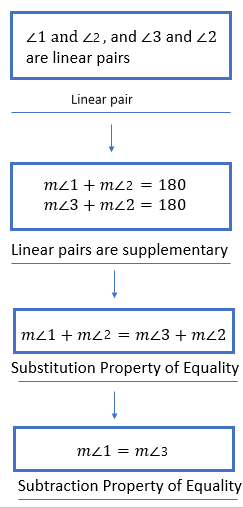
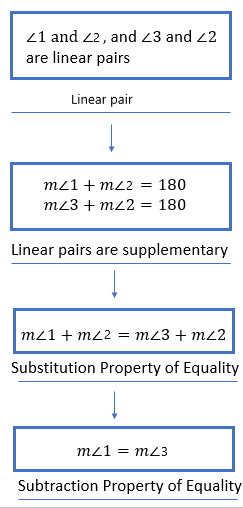
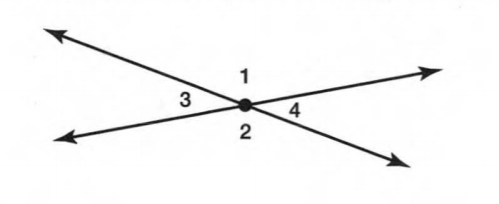
write a formal proof to demonstrate that vertical angles are congruent.

Answer:

We know that,

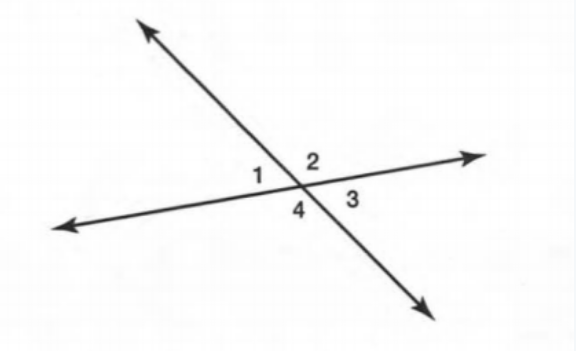
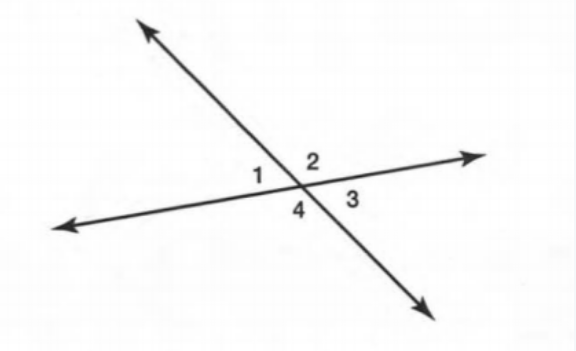
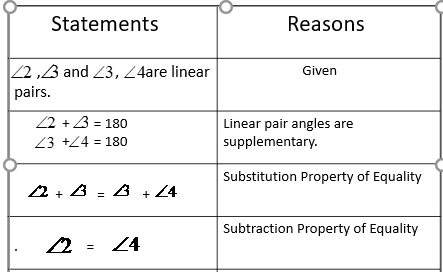
∠1+∠2=180 and∠2+∠3=180   ( Linear Pair )

Therefore, ​∠1+∠2=∠2+∠3 ⇒∠1=∠3​

Similarly, ∠2=∠4

These are vertical angles hence it is proved that vertical angles are congruent.

Therefore, vertical angles are congruent.

Geometry, Student Text, 2nd Edition, Chapter 1 Tools of Geometry 23

Tools Of Geometry Exercise 1.6 Carnegie Learning 2nd Edition Answers Page 64 Problem 24 Answer

Question 24.

Using the diagram and the given statements, write a proof to demonstrate that ∠1 and ∠3 are congruent and that ∠2 and ∠4 are congruent.

Answer:

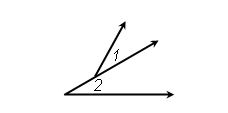
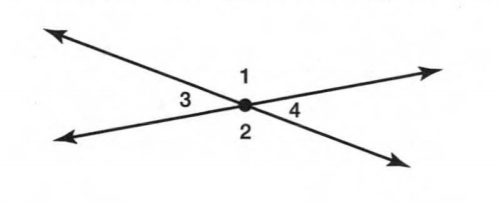
The diagram for the vertical angle theorem is given below-

Geometry, Student Text, 2nd Edition, Chapter 1 Tools of Geometry 24

From the given statements and the the definition of vertical angle theorem we can state the Prove statements as-

Prove :∠1and∠3 are congruent

Prove :∠2 and∠4 are congruent

Therefore, the Prove statements are as-

Prove :∠1 and∠3 are congruent

Prove :∠2 and∠4 are congruent

Carnegie Learning Geometry Student Chapter 1 Page 64 Problem 25 Answer

Question 25.

To Shows that ∠1 and ∠3 are congruent, in accordance with the vertical angle theorem.

Answer:

First Prove:∠1 and∠3 are congruent

Geometry, Student Text, 2nd Edition, Chapter 1 Tools of Geometry 25

Geometry, Student Text, 2nd Edition, Chapter 1 Tools of Geometry 25 1

Page 65 Problem 26 Answer

Question 26.

To Prove that ∠2 and ∠4 are congruent.

Answer:

For the vertical angle theorem

Given :∠2 and∠3 are linear pair

Given :∠3 and∠4 are linear pair

Prove :∠2 and∠4 are congruent

We have to Create a two-column proof of the “Prove” statement

Geometry, Student Text, 2nd Edition, Chapter 1 Tools of Geometry 26

Carnegie Learning Geometry Student Chapter 1 Page 67 Problem 27 Answer

Question 27.

To prove that ∠5 ≅ ∠7

Answer:

A two-column proof uses a table to present a logical argument and assigns each column to do one job to take a reader from premise to conclusion.

Paragraph proof is a logical argument written as a paragraph, giving evidence and details to arrive at a conclusion.

So, everything needs to fit in an appropriate place.

Two-Column proof is easiest to understand as it makes the reader see the statement and conclusion side by side.

While as Paragraph proof makes the proof wordier and harder to follow thus it is hardest to understand.

Therefore, Two column proof is easiest to understand while as Paragraph proof is hardest to understand.

Page 67 Problem 28 Answer

Question 28.

Given the forms of mathematical proofs, which type of proof is easiest to write and which is hardest to write? Explain your reasoning.

Answer:

Given: Which form of proof is easiest to write? Hardest to write

To explain Which form of proof is easiest to write? Hardest to write.

A two-column proof is a easiest proof in which the steps are written in the left column and the corresponding reasons in the right column.

Each step is numbered and the same number is used for the corresponding reason.

A flow chart proof is a hardest proof in which the steps and corresponding reasons are written in boxes.

Arrows connect the boxes and indicate how each step and reason is generated from one or more other steps and reasons.

Hence, A two-column proof is a easiest proof and a flow chart proof is a hardest proof to write.

Carnegie Learning Geometry Student Chapter 1 Page 67 Problem 29 Answer

Question 29.

Which form of proof generally has the fewest steps? Which form of proof has the most steps? Explain your reasoning.

Answer:

Given: Which form of proof has the fewest steps? The most stepsTo Explain Which form of proof has the fewest steps? The most steps

A two-column proof is a proof which has the fewest steps, as in this the steps are written in the left column and the corresponding reasons in the right column.

Each step is numbered and same number is used for the corresponding reason.

A flow chart proof is a proof which has the most steps and corresponding reasons are written in boxes.

Arrows connect the boxes and indicates how each step and reason is generated from one or more other steps and reasons.

Hence, A two-column proof is a proof which has the fewest steps and a flow chart proof is a proof which has the most steps.

Carnegie Learning Geometry Student Chapter 1 Page 67 Problem 30 Answer

Question 30.

Which form of proof do you prefer? Explain why you prefer this form of proof.

Answer:

Given:  Which form of proof do you prefer To explain  Which form of proof do you prefer

I use to prefer a two-column proof because in it steps are written in the left column and the corresponding reasons in the right column.

Hence, I use to prefer a two-column proof because in it steps are written in the left column and the corresponding reasons in the right column.

Carnegie Learning Geometry Student Text 2nd Edition Chapter 1 Exercise 1.5 Tools of Geometry

Geometry Student Text 2nd Edition Chapter 1 Tools of Geometry

Carnegie Learning Geometry Student Text 2nd Edition Chapter 1 Exercise 1.5 Solution Page 46 Problem 1 Answer

Question 1.

What is the hypothesis p in the given statement?

Answer:

Given : If the measure of an angle is 32∘, then the angle is acute.

To find : What is the hypothesis p

The form is if p then q

Hence p= The measure of an angle is 320

p is the measure of an angle is320

Page 46 Problem 2 Answer

Question 2.

What is the conclusion q in the given statement?

Answer:

Given : If the measure of an angle is 32∘, then the angle is acute.

Read and learn More Carnegie Learning Geometry Student Text 2nd Edition Solutions

To find : What is the conclusion q

The form is if p then q

Henceq= the angle is acute.

Q is the angle is acute.

Page 46 Problem 3 Answer

Question 3.

What does the phrase “If p is true” mean in terms of the conditional statement?

Answer:

“If p is true” mean in terms of the conditional statement as follows

Given : If the measure of an angle is 32∘, then the angle is acute.

To find : What does the phrase “If p is true” mean in terms of the conditional statement

pis measure of an angle is320

If p is true can be written as if measure of angle 320 is true

Measure of angle 320 is true

Page 46 Problem 4 Answer

Question 4.

What does the phrase “If q is true” mean in terms of the conditional statement?

Answer:

Given  phrase “If q is true”

Given : If the measure of an angle is 32∘, then the angle is acute.

To find : What does the phrase “If q is true” mean in terms of the conditional statement

Q is  the angle is acute.

If q is true is, the angle is acute is true

The angle is acute is true

Solutions For Tools Of Geometry Exercise 1.5 In Carnegie Learning Geometry Page 46 Problem 5 Answer

Question 5.

If the measure of an angle is 32°, then the angle is acute so the truth value of the conditional statement is true.

Answer:

Carnegie Learning Geometry Student Text 2nd Edition Chapter 1 Exercise 1.5 Tools of Geometry

Page 46 Problem 6 Answer

Question 6.

If p is true and q is false, then the truth value of a conditional statement is false. If the measure of an angle is 32°, then the angle is acute. What does the phrase “If p is true” mean in terms of the conditional statement?

Answer:

Given :  If p is true and q is false, then the truth value of a conditional statement is false.

If the measure of an angle is 32°, then the angle is acute.

To explain : What does the phrase “If p is true” mean in terms of the conditional statement

P is measure of an angle is320

If p is true can be written as if measure of angle 320 is true Measure of angle 320 is true

Page 46 Problem 7 Answer

Question 7.

If p is true and q is false, then the truth value of a conditional statement is false. If the measure of an angle is 32°, then the angle is acute. What does the phrase “If q is false” mean in terms of the conditional statement?

Answer:

Given :  If p is true and q is false, then the truth value of a conditional statement is false.

If the measure of an angle is 32°, then the angle is acute.

To explain : What does the phrase “If q is false” mean in terms of the conditional statement

Q is the angle is acute.

Q is false means

Angle is not acute

Angle is not acute

Page 46 Problem 8 Answer

Question 8.

If p is true and q is false, then the truth value of a conditional statement is false. If the measure of an angle is 32°, then the angle is acute. Why is the truth value of the conditional statement false?

Answer:

Given :  If p is true and q is false, then the truth value of a conditional statement is false.

If the measure of an angle is 32°, then the angle is acute.

To explain : Why the truth value of the conditional statement is false.

Given that if p is true and q is false, then the truth value of a conditional statement is false.

If the angle is not acute then the angle cannot be 320

Why the truth value of the conditional statement is false is explained

Page 47 Problem 9 Answer

Question 9.

What does the phrase “If q is true” mean in terms of the conditional statement?

Answer:

Given that “If p is false and q is true, then the truth value of a conditional statement is true.”

We need to explain what does the phrase “If p is false” mean in terms of the conditional statement.

Since p is the hypothesis of the conditional statement and given thatp

is false, therefore the hypothesis of the conditional statement is false.

For example,

If the measure of an angle is32∘, then the angle is acute.

Here the statement p is “The measure of an angle is 32∘.”

If p is false, then the measure of an angle cannot be 32∘.

The phrase “If p is false” means the hypothesis of the conditional statement is false.

Page 47 Problem 10 Answer

Question 10.

What is the truth value of the conditional statement if p is false and q is true? Explain why this is the case using an example.

Answer:

Given that “If p is false and q is true, then the truth value of a conditional statement is true.”

We need to explain what does the phrase “If q is true” mean in terms of the conditional statement.

Since q is the conclusion of the conditional statement and given that q is true , therefore the conclusion of the conditional statement is true.

For example,If the measure of an angle is32∘then the angle is acute.

Here the statement q is “The angle is acute.”

If q is true, then the angle is acute.

The phrase “If q is true” means the conclusion of the conditional statement is true.

Carnegie Learning Geometry 2nd Edition Exercise 1.5 Solutions Page 47 Problem 11 Answer

Question 11.

Explain why the truth value of the conditional statement is true if p is false and q is true.

Answer:

Given: a conditional statement

To find:  We have explain why the truth value of the conditional statement is true.

a conditional statement being true requires it to be true under all possible circumstances

We try to explain this through one example

Consider A number is even then it is an Integer

In the above statement

p= A number is even

q= then it is an integer

Consider an number 3 we know that 3 is not an even number

Hence the statement p is false  but we also know that 3 is an integer Hence the statement q

is true  then we just  have found a counterexample.

3 would be a counterexample proving that not all even numbers are integers. But that does not fit . since 3 not even but odd.

A true counterexample would have to be an even number which is not an integer, which is clearly impossible.

From this we conclude that A is necessary condition for B but not sufficient.

Hence If p is false and q is true, then p→q  is  true.

Hence if p is false and q is true then p→q is true because A is a necessary condition for B

but not sufficient condition.

Page 48 Problem 12 Answer

Question 12.

A conditional statement of the form “If p, then q”. What is the conclusion q in terms of the conditional statement?

Answer:

A conditional statement is of the form ”  If p, then q “, where p is hypothesis  and q is conclusion of the hypothesis.

Here,The statement of condition or hypothesis  is  p:m ABˉ

=6 inches and m BCˉ=6 inches.

In other words given line segments ABˉ  and BCˉ are of equal length.

For the given problem ,the hypothesis is  p:m ABˉ=6 inches and m BCˉ=6 inches.

Page 48 Problem 13 Answer

Question 13.

Given the conditional statement “If \(m \overline{A B}=6\) inches and \(m \overline{B C}=6\) inches, then \(\overline{A B} \cong \overline{B C}\),” identify the hypothesis p and explain why the conclusion q is valid.

Answer:

A conditional statement is of the form ”  If p, then q “, where p is hypothesis  and q is conclusion of the hypothesis.

Here, The conclusion is q: ABˉ ≅ BCˉ

In other words given line segments ABˉ and BCˉ are congruent.

For the given problem,the conclusion is q: ABˉ ≅ BCˉ

Page 48 Problem 14 Answer

Question 14.

The conditional statement “If \(m \overline{A B}=6\) inches and \(m \overline{B C}=6\) inches, then \(\overline{A B} \cong \overline{B C}\)” with p: \(m \overline{A B}=6\) inches and \(m \overline{B C}=6\) inches and q: \(\overline{A B} \cong \overline{B C}\);

  1. If p is true (i.e., \(m \overline{A B}=6\) inches and \(m \overline{B C}=6\) inches), why is q (i.e., \(\overline{A B} \cong \overline{B C}\)) Also true?
  2. Explain why the truth value of the conditional statement p→q is true when both p and q are true.

Answer:

Let   p:m ABˉ=6 inches and m BCˉ=6 inches  and q:ABˉ≅BCˉ.

Given that p is true. Hence m ABˉ=m BCˉ=6 inches.

Hence they are of equal length.

So the above line segments ABˉ andBC ˉ are said to be congruent lines.

Hence q:ABˉ≅BCˉ is true.

So the truth value of p→q is true.

The truth value of the conditional statement if both  p and q are true is true.

Page 48 Problem 15 Answer

Question 15.

p: \(m \overline{A B}=6\) inches and \(m \overline{B C}=6\) inches, and q: \(\overline{A B} \cong \overline{B C}\). What is the truth value of the conditional statement p → q when p is true and q is false?

Answer:

Let  p:m ABˉ=6 inches and m BCˉ=6 inches and q:ABˉ≅BCˉ.

Given that p is true.

Hence m ABˉ=mBCˉ=6 inches.

So the length of ABˉ andBCˉ are same.

So they are congruent lines.

But given that q:ABˉ≅BCˉ is false.

So the truth valuep→q of is false.

For the given problem, the truth value of the conditional statement if p is true and q is false is false.

Tools Of Geometry Solutions Chapter 1 Exercise 1.5 Carnegie Learning Geometry Page 48 Problem 16 Answer

Question 16.

p: \(m \overline{A B}=6\) inches and \(m \overline{B C}=6\) inches, and q: \(\overline{A B} \cong \overline{B C}\).

What is the truth value of the conditional statement p → q when p is false and q is true?

Answer:

Let p:m ABˉ=6 inches and m BCˉ=6 inchesand q:ABˉ≅BCˉ.

Give that p is false. Hence mABˉ≠6 inches and mBCˉ≠6 inches.

Let us assume mABˉ=7 inches. mBCˉ=7 inches.

Hence ABˉ and BCˉ are congruent lines.

Implies that q:ABˉ≅BCˉ is true.

So the truth value of p→q is true.

For the given problem, the truth value of the conditional statement if p is false and q is true is true.

Page 48 Problem 17 Answer

Question 17.

p: \(m \overline{A B}=6\) inches and \(m \overline{B C}=6\) inches, and q: \(\overline{A B} \cong \overline{B C}\).

What is the truth value of the conditional statement p q when p is false and q is true?

  1. Determine the true value of p.
  2. Determine the true value of q.
  3. Use the values of p and q to determine the true value of the conditional statement p → q.

Answer:

Let p:mABˉ=6 inches and mBCˉ=6 inchesand q:ABˉ≅BCˉ.

Given that p is false. mABˉ≠6 inches and mBCˉ≠6 inches.

Let us assume mABˉ=7 inches. mBCˉ=5 inches.

Hence ABˉ and BCˉ are not congruent lines.

So it implies that q is false, which is the correct conclusion.

Hence the truth value p→q of is true.

For the given problem, the truth value of the conditional statement, if both p and q are false, is true.

Page 49 Problem 18 Answer

Question 18.

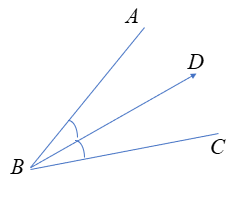
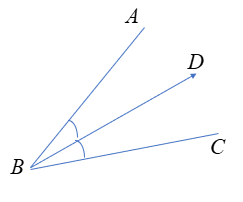
Given that BD bisects ∠ABC, prove that ∠ABD is congruent to ∠CBD using the properties of angle bisectors.

Answer:

Consider the given conditional statement –

If BD bisects ∠ABC then∠ABD≅∠CBD

We have to draw the diagram for the given conditional statement as well write the hypothesis as given and conclude as Prove statement

Diagram for the given conditional statement is given below:

Geometry, Student Text, 2nd Edition, Chapter 1 Tools of Geometry 18

Now from the given conditional statement the Given and concluding statement is as

Geometry, Student Text, 2nd Edition, Chapter 1 Tools of Geometry 18 1

Given : BD bisects∠ABC

Prove :∠ABD≅∠CBD

Given :BD bisects∠ABC

Prove :∠ABD≅∠CBD

Step-By-Step Solutions For Carnegie Learning Geometry Chapter 1 Exercise 1.5 Page 49 Problem 19 Answer

Question 19.

Consider the given conditional statement – AM ≅ MB, if M is the midpoint of AB.

  1. Draw the diagram for the given conditional statement.
  2. Using the properties of congruency, prove that AM is congruent to MB.

Answer:

Consider the given conditional statement -AM≅MB, ifM is the mid-point of AB.

We have to draw the diagram for the given conditional statement as well write the hypothesis as given and conclude as Prove statement by using the properties of congreuncy.

Diagram for the given conditional statement is given below:

Geometry, Student Text, 2nd Edition, Chapter 1 Tools of Geometry 19

Now from the given conditional statement the Given and concluding statement is as

Geometry, Student Text, 2nd Edition, Chapter 1 Tools of Geometry 19 1

Given : M is the mid-point of AB.

To prove : AM≅MB

Given : M is the mid-point of AB.

Prove : AM≅MB

Page 50 Problem 20 Answer

Question 20.

If AB ⊥ CD at point C, then ∠ACD is a right angle and ∠BCD is a right angle.

  1. Draw the diagram for the given conditional statement.
  2. Using the definition of perpendicular lines, prove that ∠ACD and ∠BCD are right angles.

Answer:

Consider the given conditional statement –

If AB⊥CD at pointC, then∠ACD is a right angle and∠BCD is a right angle.

We have to draw the diagram for the given conditional statement as well write the hypothesis as given and conclude as Prove statement

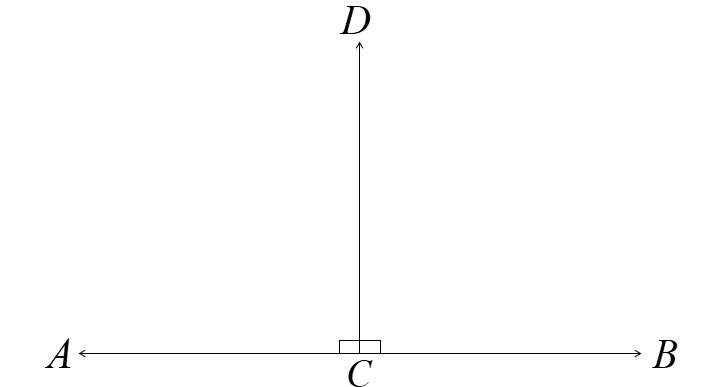
Diagram for the given conditional statement is given below:

Geometry, Student Text, 2nd Edition, Chapter 1 Tools of Geometry 20

Now from the given conditional statement the Given and Concluding are as-

Geometry, Student Text, 2nd Edition, Chapter 1 Tools of Geometry 20 1

Given : AB⊥CD

To prove : ∠ACD and∠BCD are right angles.

Given :AB⊥CD

Prove :∠ACD and∠BCD are right angles.

Carnegie Learning Geometry Chapter 1 Exercise 1.5 Free Solutions Page 50 Problem 21 Answer

Question 21.

m∠DEG + m∠GEF = 180°, if ∠DEG and ∠GEF are a linear pair.

  1. Draw the diagram for the given conditional statement.
  2. Using the definition of a linear pair, prove that m∠DEG + m∠GEF = 180°.

Answer:

Consider the given conditional statement -m∠DEG+m∠GEF=180°,if∠DEF and∠GEF are liner pair.

We have to draw the diagram for the given conditional statement as well write the hypothesis as given and conclude as Prove statement.

Diagram for the given conditional statement is given below:

Geometry, Student Text, 2nd Edition, Chapter 1 Tools of Geometry 21

Now from the given conditional statement the Given and concluding statement is as

Geometry, Student Text, 2nd Edition, Chapter 1 Tools of Geometry 21 1


Given : ∠DEG and∠GEF are linear pair.

To prove: m∠DEG+m∠GEF=180°

Given :∠DEG and∠GEF are linear pair.

Prove :m∠DEG+m∠GEF=180

Page 50 Problem 22 Answer

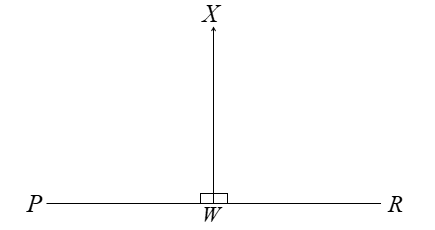
Question 22.

Consider the “W is the perpendicular bisector of PR if WX ⊥ PR and WX bisects PR.”

  1. Draw the diagram for the given conditional statement.
  2. Write the hypothesis as given and conclude as a proof statement.

Answer:

Consider the given conditional statement -W is the perpendicular bisector of PR, if WX⊥PR

And WX bisects  PR

We have to draw the diagram for the given conditional statement as well write the hypothesis as given and conclude as Prove statement

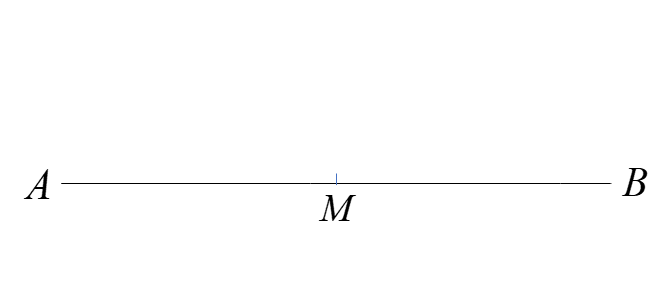
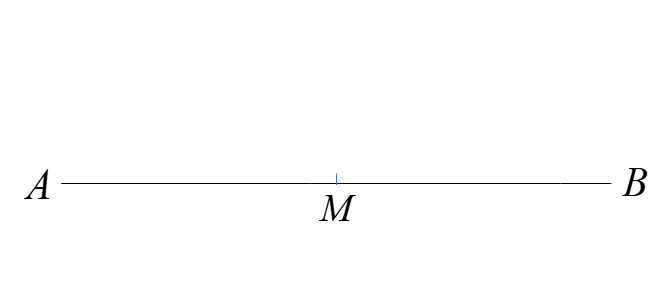
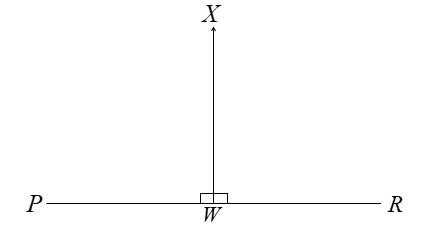
Diagram for the given conditional statement is given below:

Geometry, Student Text, 2nd Edition, Chapter 1 Tools of Geometry 22

Now from the given conditional statement the Given and concluding statement is

Geometry, Student Text, 2nd Edition, Chapter 1 Tools of Geometry 22 1

Given : WX⊥PR

Prove : WX bisects PR

Given : WX⊥PR

Prove : WX bisects PR

Carnegie Learning Geometry Exercise 1.5 Student Solutions Page 51 Problem 23 Answer

Question 23.

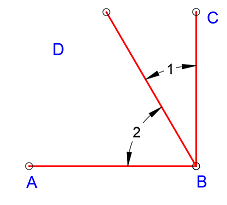
Consider the “If ∠ABD and ∠DBC are complementary, then BA ⊥ BC.”

  1. Draw the diagram for the given conditional statement.
  2. Write the hypothesis as given and conclude as a proof statement.
  3. Provide a proof to show that BA ⊥ BC.

Answer:

Given: If ∠ABD and ∠DBC are complementary then BA⊥BC.

To prove that BA⊥BC

From the given data ∠ABD and ∠DBC are complementary

So from the definition of the complimentary angle we cans say that, two angles are called complementary if their measures add to 90 degrees.

Therefore from the figure, we can say that BA⊥BC

Geometry, Student Text, 2nd Edition, Chapter 1 Tools of Geometry 23

Hence, from above we can say that BA⊥BC

Page 53 Problem 24 Answer

Question 24.

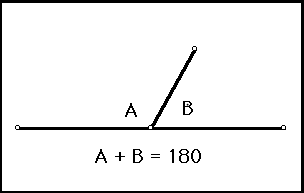
Given two angles ∠A and ∠B, which form a linear pair:

  1. Explain why ∠A and ∠B must add up to 180 degrees.
  2. Draw the diagram to illustrate the linear pair.
  3. Provide a mathematical proof to show that ∠A and ∠B add up to 180 degrees.

Answer:

Two angles are said to be linear if they are adjacent angles formed by two intersecting lines.

The measure of a straight angle is 180∘, Therefore, a linear pair of angles must add to180∘ .

The diagram of a linear pair is as follows;

Geometry, Student Text, 2nd Edition, Chapter 1 Tools of Geometry 24

From the sketch and linear pair postulate ∠A and ∠B are linear pairs.

Page 53 Problem 25 Answer

Question 25.

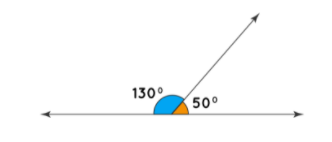
The two angles, 130°, and 50°:

  1. Explain why these two angles are considered supplementary.
  2. Draw the diagram to illustrate these supplementary angles.
  3. Provide a mathematical proof to show that these angles add up to 180 degrees.

Answer:

If two angles sum up to 180 degrees, they are considered to be supplementary angles.

When supplementary angles are added together, they produce a straight angle (180 degrees).

Here, 130∘and 50∘are supplementary angles as their sum gives 180∘.

Geometry, Student Text, 2nd Edition, Chapter 1 Tools of Geometry 25

Definition From the defination of supplementary angles 130∘+50∘=180∘.

Page 53 Problem 26 Answer

Question 26.

The collinear points D, E, and F with point E between points D and F, draw the situation and explain how DE + EF = DF.

Answer:

Given: collinear points D, E, and F with point E between points D and F.

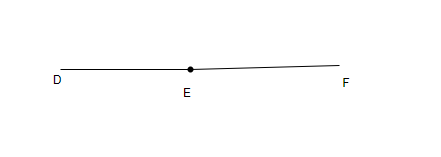
We have to draw the above situation.

Geometry, Student Text, 2nd Edition, Chapter 1 Tools of Geometry 26

Here, E is in between D and F.

In the figure above E is between D and F such that DE+EF =DF.

Page 53 Problem 27 Answer

Question 27.

Using the segment addition postulate, if B is a point on \(\overline{A C}\) such that AB + BC = AC, then A, B, and C are collinear points. Draw the diagram of the given situation and explain the segment addition postulate.

Answer:

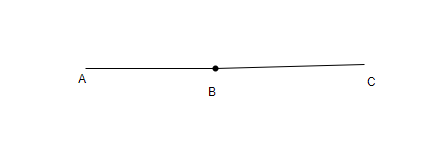
According to the segment addition postulate if B is a point ACˉ such that AB+BC = AC then, A,B, and C are collinear points.

The diagram of the situation above is;

Geometry, Student Text, 2nd Edition, Chapter 1 Tools of Geometry 27

From the sketch above and the segment postulate AB+BC=AC.

Page 53 Problem 28 Answer

Question 28.

Using the segment addition postulate, verify the lengths of segments when a point B is on line segment \(\overline{A C}\) such that AB + BC = AC. Given that AC = 8m and B is 3m from A, find the length of BC and explain the verification process.

Answer:

Given

AC = 8m and B is 3m from A

According to the segment addition postulate if B is a point on AC such that AB+BC = AC then, A, B, and C are collinear points.

Let AC = 8m and B be 3 m  from A. Such that AB = 3 m. Then BC = 5 m , because 3 m +5 m= 8 m .

Since, AB = 3 m, BC = 5m then by collinear postulate AC=8 m.

3 m +5 m= 8 m.

Tools of Geometry Exercise 1.5 Carnegie Learning 2nd Edition answers Page 53 Problem 29 Answer

Question 29.

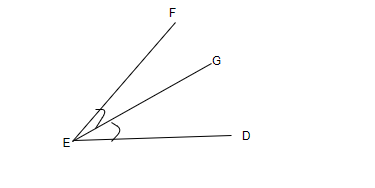
Given ∠DEF with EG in the interior, verify that ∠DEG + ∠GEF = ∠DEF.

Answer:

Let draw ∠DEF with EGin the interior, as shown below;

Geometry, Student Text, 2nd Edition, Chapter 1 Tools of Geometry 29

Clearly, line EG is drawn such that ∠DEG+∠GEF =∠DEF.

Page 53 Problem 30 Answer

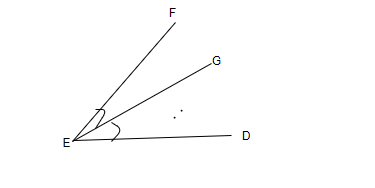
Question 30.

Given ∠DEF with line segment EG in the interior, show that ∠DEG + ∠GEF = ∠DEF.

Answer:

Let us draw the line EG in ∠DEF as shown below;

Geometry, Student Text, 2nd Edition, Chapter 1 Tools of Geometry 30

Clearly, line EG  is drawn such that ∠DEG+∠GEF=∠DEF.

Carnegie Learning Geometry Student Text 2nd Edition Chapter 1 Exercise 1.4 Tools of Geometry

Geometry Student Text 2nd Edition Chapter 1 Tools of Geometry

Carnegie Learning Geometry Student Text 2nd Edition Chapter 1 Exercise 1.4 Solution Page 39 Problem 1 Answer

Question 1.

How did Emma reach the conclusion that raising a number to a power is the same as multiplying the number by itself as many times as indicated by the power?

Answer:

Given: Emma is watching her big sister do homework. She notices the following:- nine cubed is equal to nine times nine times nine

10 to the fourth power is equal to four factors of 10 multiplied together

To specify How did Emma reach this conclusion

Emma notices

42=4×4

93=9×9×9

104=10×10×10×10

​So by raising a number to a power is the same as multiplying the number by itself as many times as indicated by the power.

Hence,  Emma reach this conclusion by raising a number to a power is the same as multiplying the number by itself as many times as indicated by the power.

Read and learn More Carnegie Learning Geometry Student Text 2nd Edition Solutions

Carnegie Learning Geometry Chapter 1 Page 39 Problem 2 Answer

Question 2.

How did Ricky reach the conclusion that seven to the fourth power means multiplying seven by itself four times?

Answer:

It is given that 7 to 4th power is to be calculated.

Seven to fourth power means that the number seven has to be multiplied to itself four times which is mathematically expressed as: 7×7×7×7.

Ricky reached the conclusion using the definition of nth power of a number x.

Ricky reached the conclusion using the definition of nth power of a number x.

Carnegie Learning Geometry Chapter 1 Page 40 Problem 3 Answer

Question 3.

How did Emma and Ricky reach their conclusions about raising numbers to a power, and are their observations correct according to the rule of exponents?

Answer:

Carnegie Learning Geometry Student Text 2nd Edition Chapter 1 Exercise 1.4 Tools of Geometry

Carnegie Learning Geometry Chapter 1 Page 40 Problem 4 Answer

Question 4.

How much total salary did Aaron receive if he worked for 4 hours at a rate of  8.25 dollars per hour?

Answer:

It is given that Salary per hour =8.25 dollars, Total number of hours worked =4 hours

Substitute Salary per hour =8.25 dollars, Total number of hours worked =4 hours into the formula:

Salary per hour=Total salary received

Total number of hours worked.

so that 8.25=Total salary received/4

Hence Total salary recived=8.25×4=33 dollars

If Aaron worked for four hours, the total salary received is 33 dollars

Carnegie Learning Geometry Chapter 1 Page 40 Problem 5 Answer

Question 5.

How can the formula Salary per hour = \(\frac{\text { Total salary received }}{\text { Total number of hours worked }}\) be used to determine Aaron’s total salary if he worked for 4 hours at an average rate of 8.25 dollars per hour?

Answer:

The average salary per hour and the number of hours worked are given to be 8.25 dollars and 4 hours respectively.

To answer the task 6(a), the formula Salary per hour=Total salary received

Total number of hours worked. is used to make a conclusion.

To answer task 6(a), the formula Salary per hour=Total salary received

Total number of hours worked. is used to make conclusions.

Solutions For Tools Of Geometry Exercise 1.4 In Carnegie Learning Geometry Page 40 Problem 6 Answer

Question 6.

What is the general term used for the process that starts with a broad, general idea and then verifies it for specific cases?

Answer:

“Thinking down from” starts with a very broad and general idea and then idea is verified for specific cases.

Generally “the act of thinking down” would mean that a general theory or idea is known and it has to be tested or verified to more specific cases with certain restrictions or conditions.

The general term for such a phrase should be “DEDUCTIVE REASONING”.

The general term for the phrase “the act of thinking down” should be “DEDUCTIVE REASONING”.

Carnegie Learning Geometry Chapter 1 Page 40 Problem 7 Answer

Question 7.

What is the general term used for the process that starts with specific statements and then tests the idea for general cases?

Answer:

“Thinking toward or up to” starts with a very specific statement and then idea is tested for general cases.

Generally “the act of thinking toward or up to” would mean that some idea holds true for some specific cases with certain restrictions and it has to be tested or verified for a

a general case with no restrictions.

The general term for such a phrase should be “INDUCTIVE REASONING”.

The general term for the phrase “the act of thinking toward or up to” should be “INDUCTIVE REASONING”.

Carnegie Learning Geometry 2nd Edition Exercise 1.4 solutions Page 41 Problem 8 Answer

Question 8.

What type of reasoning did Emma use when she observed that raising a number to a power is the same as multiplying the number by itself as many times as indicated by the power?

Answer:

In the first question, Emma observes the following:

42=4×4

– nine cubed is equal to nine times nine times nine.

– 10 to the fourth power is equal to four factors of 10 multiplied together.

In the first question, Emma observed three things and made an observation based on those three things.

The observation made was “raising a number to a power is the same as multiplying the number by itself as many times as indicated by the power”.

This is an example of Inductive reasoning.

Emma used INDUCTIVE REASONING.

Carnegie Learning Geometry Chapter 1 Page 41 Problem 9 Answer

Question 9.

What type of reasoning did Emma use when she concluded that raising a number to a power is the same as multiplying the number by itself as many times as indicated by the power?

Answer:

In the first problem, Emma make a conclusion that raising a number to  power is same as multiplying the number by itself as many times as indicated by power.

Thus, Emma used deductive reasioning.

Emma used deductive reasioning.

Page 41 Problem 10 Answer

Question 10.

What is the specific information provided in the given problem?

Answer:

Specific information in a given problem is that “his neighbor Matilda smokes”.

Specific information in a given problem is that “his neighbor Matilda smokes”.

Carnegie Learning Geometry Chapter 1 Page 41 Problem 11 Answer

Question 11.

What is the general information provided in the given problem?

Answer:

General information in this problem is that tobacco greatly increases the risk of cancer.

General information in this problem is that tobacco greatly increases the risk of cancer.

Page 41 Problem 12 Answer

Question 12.

What conclusion can be drawn from the given specific and general information?

Answer:

The conclusion of this problem is that Matilda has a high risk of cancer.

The conclusion of this problem is that Matilda has a high risk of cancer.

Tools of Geometry Solutions Chapter 1 Exercise 1.4 Carnegie Learning Geometry Page 41 Problem 13 Answer

Question 13.

How does your friend use reasoning to make the conclusion that Matilda has a high risk of cancer?

Answer:

Friend uses deductive reasoning to make the conclusion.

Reason: As the conclusion is based on general information.

Friend uses deductive reasoning to make the conclusion as he uses general information.

Carnegie Learning Geometry Chapter 1 Page 41 Problem 14 Answer

Question 14.

Is your friend’s conclusion that “Matilda has a high risk of cancer” correct? Explain your reasoning.

Answer:

Yes, my friend’s conclusion is correct.

As general information tells that tobacco greatly increases the risk of cancer and his neighbor Matlida smokes.

So, the conclusion based on general and specific information is “Matilda has a high risk of cancer”.

Yes, the conclusion is correct as it is based on general information.

Step-By-Step Solutions For Carnegie Learning Geometry Chapter 1 Exercise 1.4 Page 42 Problem 15 Answer

Question 15.

Is your friend’s conclusion correct, and what information supports this conclusion?

Answer:

Specific information in a given problem is that it rained each of the five days she was on a London trip.
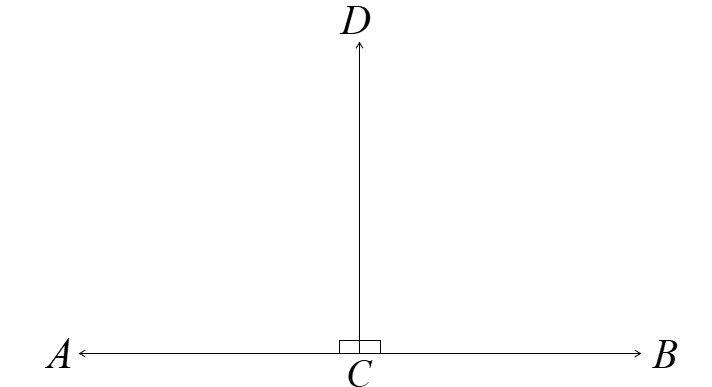
Specific information in a given problem is that it rained each of the five days she was on a London trip.
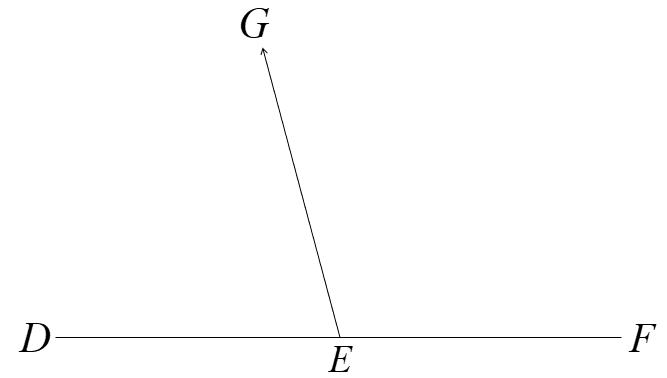
Carnegie Learning Geometry Chapter 1 Page 42 Problem 16 Answer

Question 16.
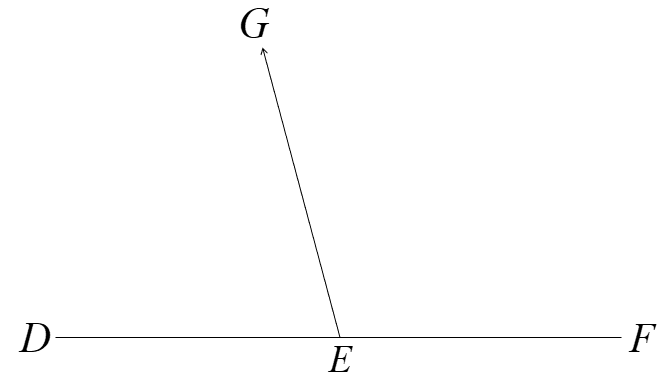
What is the general information provided in this problem?

Answer:

General information in this problem is that “It rains every day in England”.

General information in this problem is that “It rains every day in England”.

Page 42 Problem 17 Answer

Question 17.

What conclusion can be drawn from the general information that “It rains every day in England”?

Answer:

The conclusion of this problem is that “It rains every day in England!”.

The conclusion of this problem is that “It rains every day in England!”.

Carnegie Learning Geometry Chapter 1 Page 42 Problem 18 Answer

Question 18.

If Molly uses a specific example to make a conclusion, what type of reasoning is she using?

Answer:

Molly uses a specific example to make a conclusion. So, Molly uses inductive reasoning to make the conclusion.

Molly uses a specific example to conclude. So, Molly uses inductive reasoning to conclude.

Page 42 Problem 19 Answer

Question 19.

Molly returned from a trip to London and tells you, “It rains every day in England!” She explains that it rained each of the five days she was there.

To find out: Is Molly’s conclusion correct? Explain.

Answer:

Given: – Molly returns from a trip to London and tells you, “It rains every day in England!” She explains that it rained each of the five days she was there.

To find out: – Is Molly’s conclusion correct? Explain.

The process used: – The conclusion of Molly’s is that “It rains every day in England!”. It is based on Inductive reasoning

Inductive reasoning based on example, so maybe Molly’s is not correct.

Hence, Molly’s conclusion based on Inductive reasoning so may be conclusion is not correct.

Carnegie Learning Geometry Chapter 1 Page 42 Problem 20 Answer

Question 20.

Detailed notes in history class and math class.

To find out: What conclusion did your classmate make? Why?

Answer:

Given: -Detailed notes in history class and math class.

To find out: – What conclusion did your classmate make? Why?

Process used: – Classmate use Inductive reasoning by taking example of math and history notebook.

so my classmate think that i also completed my Biology notebook.

Hence, classmate make conclusion that i also have complete notebook of Biology by inductive reasoning because he take example of my history and math notebook.

Page 42 Problem 21 Answer

Question 21.

Detailed notes in history class and math class

To find out: What type of reasoning did your classmate use? Explain.

Answer:

Given: -Detailed notes in history class and math class

To find out: -What type of reasoning did your classmate use? Explain.

Process used: -Classmate use Inductive reasoning by taking example of math and history notebook.

so my classmate think that i also completed my Biology notebook.

Hence, classmate use inductive reasoning because he taking the example of my history and math notebook.

Carnegie Learning Geometry Chapter 1 Page 42 Problem 22 Answer

Question 22.

Detailed notes in history class and math class

To find out: What conclusion did the biology teacher make? Why?

Answer:

Given: -Detailed notes in history class and math class

To find out: –  What conclusion did the biology teacher make? Why?

Process used: – Because when biology teacher asks him(classmate) if he knows someone in class who always takes detailed notes.

He(classmate) gives my name to the teacher.

Then biology teacher suggests he borrow your biology notes because he concludes that they will be detailed on inductive reasoning.

Classmate give example of me that is the reason Biology teacher also think that i have detailed notebook of biology.

Hence, Biology teacher make conclusion that I also have detailed notebook of biology by inductive reasoning

Carnegie Learning Geometry Chapter 1 Exercise 1.4 Free Solutions Page 42 Problem 23 Answer

Question 23.

Detailed notes in history class and math class

To find out: What type of reasoning did the biology teacher use? Explain.

Answer:

Given: -Detailed notes in history class and math class

To find out: – What type of reasoning did the biology teacher use? Explain.

Process used: – Biology teacher use inductive reasoning by taking example that i have detailed notebook of biology because i have detailed notebook of math and history.

Because when he ask about detailed notebook of biology in the classroom then he gave my example.

Hence, Biology teacher use inductive reasoning because my classmate give my name as i have detailed notebook of biology.

Carnegie Learning Geometry Chapter 1 Page 42 Problem 24 Answer

Question 24.

Detailed notes in history class and math class.

To find out: Will your classmate’s conclusion always be true? Will the biology teacher’s conclusion always be true? Explain.

Answer:

Given: -Detailed notes in history class and math class.

To find out: – Will your classmate’s conclusion always be true? Will the biology teacher’s conclusion always be true? Explain.

Process used: – Inductive reasoning based on the example not on the rule.

My classmate take example of my detailed notebook of history and math, and my biology teacher believe on me because my classmate give my name as i have detailed notebook of biology.

Therefore, both my classmate and my teacher conclusion not always be true.

Hence, both my classmate and my teacher conclusion not always be true because they uses inductive reasoning.

Page 43 Problem 25 Answer

Question 25.

Sequence 4, 15, 26, 37

a1 = 4, a2 = 15, a3 = 26, a4 = 37

To find out: What is the next number in the sequence (a5)? How did you calculate the next number?

Answer:

Given: – 4, 15, 26, 37

a1=4, a2=15, a3=26, a4=37

To find out: – What is the next number in the sequence (a5)? How did you calculate the next number?

Formula used: -nth term,an=a+(n−1)d and d=a2−a1

a2−a1=15−4=11

a3−a2=26−15=11

Hence, the series in A.P.

d=a2−a1=15−4=11

If n=5

a5=4+(5−1)11

a5=4+44

a5=48

Hence, by using an =a+(n−1)d

we calculate the next number a5=48

Carnegie Learning Geometry Chapter 1 Page 43 Problem 26 Answer

Question 26.

Sequence -4, 15, 26, 37

To find out: What types of reasoning did you use and in what order to make the conclusion?

Answer:

Given: -4, 15, 26, 37

To find out: – What types of reasoning did you use and in what order to make the conclusion?

Process used: – By using d=a2−a1=a3−a2=a4−a3

we find Constant quantity in common difference,

d=15−4=26−15=37−26

d=11

Hence, the series is in Arithmetic progression

Carnegie Learning Geometry Exercise 1.4 Student Solutions Page 43 Problem 27 Answer

Question 27.

Explain the differences between inductive and deductive reasoning. Provide an example of each type of reasoning and outline the guidelines for ensuring logical and valid arguments in both cases.

Answer:

The differences between inductive and deductive reasoning:

Induction: A process of reasoning (arguing) which infers a general conclusion based on individual cases, examples, specific bits of evidence, and other specific types of premises.

Example: In Chicago last month, a nine-year-old boy died of an asthma attack while waiting for emergency aid.

After their ambulance was pelted by rocks in an earlier incident, city paramedics wouldn’t risk entering the Dearborn Homes Project (where the boy lived) without a police escort.

Thus, based on this example, one could inductively reason that the nine-year-old boy died as a result of having to wait for emergency treatment.

Guidelines for logical and valid induction:

  1. When a body of evidence is being evaluated, the conclusion about that evidence that is the simplest but still covers all the facts is the best conclusion.
  2. The evidence needs to be well-known and understood.
  3. The evidence needs to be sufficient. When generalizing from a sample to an entire population, make sure the sample is large enough to show a real pattern.
  4. The evidence needs to be representative. It should be typical of the entire population being generalized.

Deduction: A process of reasoning that starts with a general truth, applies that truth to a specific case (resulting in a second piece of evidence), and from those two pieces of evidence (premises), draws a specific conclusion about the specific case.

Example: Free access to public education is a key factor in the success of industrialized nations like the United States.

(major premise) India is working to become a successful, industrialized nation. (specific case)

Therefore, India should provide free access to public education for its citizens. (conclusion) Thus, deduction is an argument in which the conclusion is said to follow necessarily from the premise.

Guidelines for logical and valid deduction:

  1. All premises must be true.
  2. All expressions used in the premises must be clearly and consistently defined.
  3. The first idea of the major premise must reappear in some form as the second idea in the specific case.
  4. No valid deductive argument can have two negative premises.
  5. No new idea can be introduced in the conclusion.

Hence, the Induction and Deduction are explain with help of example.

Carnegie Learning Geometry Chapter 1 Page 44 Problem 28 Answer

Question 28.

What are the reasons why a conclusion may be false? Explain using an example.

Answer:

To find out: – Reasons why a conclusion may be false?

Process used: -Derek tells his little brother that it will not rain for the next thirty days because he “knows everything.”

It is an assumed information based on inductive reasoning.

Inductive reasoning based on examples, so may be it false.

Hence, Either the assumed information is false or the argument is not valid, conclusion may false of his little brother because it is based on example there is no rule for his little brother assumption.

Tools of Geometry Exercise 1.4 Carnegie Learning 2nd Edition answers Page 44 Problem 29 Answer

Question 29.

The given conclusion is: Two lines are not parallel so the lines must intersect. Justify whether this conclusion is true or false.

Answer:

The given conclusion is: Two lines are not parallel so the lines must intersect.

The main objective is to justify why the conclusion is false.

The conclusion is true  as if two lines are not parallel then, they can be coincident as well as intersecting.

So, the conclusion is true because if the two lines are not parallel it means at any point they are going to meet or intersect.

Hence, the conclusion true and valid .

Carnegie Learning Geometry Chapter 1 Page 44 Problem 30 Answer

Question 30.

Provide an example of a conclusion that is false because the assumed information is false.

Answer:

To write : An example of a conclusion that is false because the assumed information is false.

Example is

“I have a very strong feeling that my ticket is the winning lottery ticket, so I’m quite confident I will win a lot of money tonight.”

Here argument is strong

But the information is false

The statement is

“I have a very strong feeling that my ticket is the winning lottery ticket, so I’m quite confident I will win a lot of money tonight.”

Carnegie Learning Geometry Chapter 1 Page 44 Problem 31 Answer

Question 31.

Provide an example of a conclusion that is false because the argument is not valid.

Answer:

To write : An example of a conclusion that is false because the argument is not valid.

The statement is

” Two lines are perpendicular so the lines must intersect. ”

There are lines which are perpendicular without intersection.

Hence the conclusion is wrong.

The statement is ” Two lines are perpendicular so the lines must intersect. “

Carnegie Learning Geometry Student Text 2nd Edition Chapter 1 Exercise 1.3 Tools of Geometry

Geometry Student Text 2nd Edition Chapter 1 Tools of Geometry

Carnegie Learning Geometry Student Text 2nd Edition Chapter 1 Exercise 1.3 Solution Page 27 Problem 1 Answer

Question 1.

How can we use a protractor to draw a pair of supplementary angles that share a common side, and then measure each angle?

Answer:

We need to use a protractor to draw a pair of supplementary angles that share a common side, and then measure each angle.

We know that two angles are supplementary angles if the sum of their angle measures is equal to 1800.

Then we consider a=1500then

a+b=180

150+b=180

b=180−150

b=30

So angle b=300

Hence we can draw this.

Read and learn More Carnegie Learning Geometry Student Text 2nd Edition Solutions

Geometry Student Text 2nd Edition Chapter 1 Tools of Geometry 1 1

The answer is

Geometry Student Text 2nd Edition Chapter 1 Tools of Geometry 1

Carnegie Learning Geometry Chapter 1 Page 27 Problem 2 Answer

Question 2.

How can we use a protractor to draw a pair of supplementary angles that do not share a common side, and then measure each angle?

Answer:

We need to use a protractor to draw a pair of supplementary angles that do not share a common side, and then measure each angle.

We know that two angles are supplementary angles if the sum of their angle measures is equal to 1800.

We consider a=1100.

We have

a+b=180

110+b=180

b=180−110

b=70

So angleb=700.

Hence we can draw this.

Carnegie Learning Geometry Student Text 2nd Edition Chapter 1 Exercise 1.3 Tools of Geometry

Page 28 Problem 3 Answer

Question 3.

It is given that in the figure, we need to find the measure of an angle that is supplementary to ∠KJL.

We know that two angles are supplementary if the sum of their measures is equal to 180°.

Given ∠J=22°,

Calculate the measure of the angle A that is supplementary to ∠KJL.

Answer:

It is given that

We know that two angles are supplementary if the sum of their measures is equal to 180°.

Given ∠J=22°,

Geometry Student Text 2nd Edition Chapter 1 Tools of Geometry 3

Then we need to find to measure an angle that is supplementary to ∠KJL.

We know that two angles are supplementary angles if the sum of their angle measures is equal to 1800.

∠J=220

A+J=180

A+22=180

A=180−22

A=158

Hence 1580 is the angle that is supplementary to∠KJL.

1580 is the angle that is supplementary to ∠KJL.

Carnegie Learning Geometry Chapter 1 Page 28 Problem 4 Answer

Question 4.

We need to a protractor to draw a pair of complementary angles that share a common side, and then measure each triangle.

Answer:

We need to use a protractor to draw a pair of complementary angles that share a common side, and then measure each angle.

Two angles are complementary angles if the sum of their angle measures is equal to 900.

We consider a=600. Then

a+b=90

60+b=90

b=90−60

b=30​

So angleb=300.

Hence we can draw this.

Geometry Student Text 2nd Edition Chapter 1 Tools of Geometry 4 1

The answer is

Solutions for Tools of Geometry Exercise 1.3 in Carnegie Learning Geometry Page 28 Problem 5 Answer

Question 5.

Given the following figure:

We have to find the complementary angle of ∠J.

Answer:

Given figure:

Geometry Student Text 2nd Edition Chapter 1 Tools of Geometry 5

We have to find the complementary angle of angle ∠J.

To find the complementary angle of an angle we have to subtract the given angle from 90

because sum of complementary angles are 90˚.

So complementary angle of angle J is

∠J=90−62

∠J=28˚

The complementary angle of angle J is 28˚

Carnegie Learning Geometry Chapter 1 Page 29 Problem 6 Answer

Question 6.

Given that two angles are both congruent and supplementary, find the measure of each angle.

Answer:

Given statement: Two angles are both congruent and supplementary.

We have to find the measure of each angle.

Let two angles are ∠A and ∠B then

As they are congruent so ∠A=∠B−−−−−−1

Also as ∠A and ∠B are supplementary so there sum must be 180.

∠A+∠B=180−−−−−−−−−−−2

Now using equation 1 and 2 we get

∠A+∠A=180

2∠A=180

∠A=180/2

∠A=90

Thus measure of angle A  and angle B are ∠A=∠B=90˚.

So we conclude that if two angles are congruent and supplementary than they must be right angles i.e., 90˚

We can say that if two angles are congruent and supplementary than they must be right angles i.e., 90˚.

Page 29 Problem 7 Answer

Question 7.

Given that two angles are both congruent and complementary, find the measure of each angle.

Answer:

Given statement: Two angles are both congruent and complementary,

We have to find the measure of each angle.

Let two angles are ∠A and ∠B then

As they are congruent so∠A=∠B−−−−−−1

Also as ∠A and ∠B are complementary so there sum must be 90.

∠A+∠B=90−−−−−−−−−−−2

Now using equation 1 and 2  we get

∠A+∠A=90

2∠A=90

∠A=90/2

∠A=45

Thus measure of angle A  and angle B are 45 degrees.

So we conclude that if two angles are congruent and complementary than they must be 45˚.

We can say that if two angles are congruent and supplementary than they must 45˚.

Carnegie Learning Geometry Chapter 1 Page 29 Problem 8 Answer

Question 8.

The complement of an angle twice the measure of the angle. What are the measures of the angle angle and its complement?

Answer:

Given statement: The complement of an angle is twice the measure of the angle.

We have to find the measure of each angle.

Let measure of angle is x.

Then according to given statement its complement is 2x.

As we know sum of complementary angles must be equal to 90 degrees .

So

x+2x=90

3x=90

x=90/3 {dividing both sides by 3}

x=30

Thus measure of angle is 30˚ and measure of its complement is 2×30=60˚.

Thus measure of angle is 30˚and measure of its complement is 60˚.

Page 29 Problem 9 Answer

Question 9.

The supplement of an angle is half the measure of the angle. What are the measures of the angle and its supplement?

Answer:

Given statement: The supplement of an angle is half the measure of the angle.

We have to find the measure of each angle.

Let measure of angle is x. Then according to given statement its supplementary angle is x/2.

As we know sum of supplementary angles must be equal to 180˚.

Thus ​x+x/2=180

Multiply both sides by 2

2x+x=360

3x=360

dividing both sides by 3

x=360/3

x=120

Thus measure of angle is120˚and measure of its supplementary angle is 180−120=60˚.

Thus measure of angle is 120˚ and measure of its supplementary angle   is 60˚ .

Carnegie Learning Geometry Chapter 1 Page 30 Problem 10 Answer

Question 10.

Given the figure, identify all the right angles in the figure.

Answer:

Given figure :

Geometry Student Text 2nd Edition Chapter 1 Tools of Geometry 10

We have to name the right angles in the given figure.

From figure we observe that following angles are of right angle

∠ADC,∠BDC and ∠DCF.

From figure we observe that following angles are of right angle

∠ADC,∠BDC and ∠DCF

Carnegie Learning Geometry 2nd Edition Exercise 1.3 Solutions Page 30 Problem 11 Answer

Question 11.

Given that AB⊥CD at point E, how many right angles are formed? Describe and name these right angles.

Answer:

To draw : AB⊥CD at point E. How many right angles are formed

The drawing is

Geometry Student Text 2nd Edition Chapter 1 Tools of Geometry 11 1

Right angles are∠AED,∠BED,∠BEC,∠CEA

Number of right angles formed is 4

The drawing is

Geometry Student Text 2nd Edition Chapter 1 Tools of Geometry 11

Number of right angles formed is4

Carnegie Learning Geometry Chapter 1 Page 30 Problem 12 Answer

Question 12.

To draw: BC ⊥ AB at point E, how many right angles are formed? Describe and name these right angles.

Answer:

To draw: BC⊥AB at point B. How many right angles are formed

The drawing is

Geometry Student Text 2nd Edition Chapter 1 Tools of Geometry 12 1

Right angle is∠ABC

Number of right angles formed is 1

The drawing is

Geometry Student Text 2nd Edition Chapter 1 Tools of Geometry 12

Number of right angles formed is1

Page 31 Problem 13 Answer

Question 13.

Give a line and a point P not on the line, construct a line perpendicular to the given line through point P.

Answer:

To construct A line perpendicular to the given line through point P.

Given :

Geometry Student Text 2nd Edition Chapter 1 Tools of Geometry 13

The perpendicular line means angle is 900


The drawing is

Geometry Student Text 2nd Edition Chapter 1 Tools of Geometry 13 1

Here AP is the perpendicular line

The drawing is

Geometry Student Text 2nd Edition Chapter 1 Tools of Geometry 13 2

Carnegie Learning Geometry Chapter 1 Page 32 Problem 14 Answer

Question 14.

Given a line segment AG and a Point B on AG, Construct a line perpendicular to Ag through point B.

Answer:

To construct : A line perpendicular to AG through point B.

Given :

Geometry Student Text 2nd Edition Chapter 1 Tools of Geometry 14

The perpendicular line means angle is900

The drawing is

Geometry Student Text 2nd Edition Chapter 1 Tools of Geometry 14 2

Here CD is the perpendicular line through B

The drawing is

Geometry Student Text 2nd Edition Chapter 1 Tools of Geometry 14 1

Page 32 Problem 15 Answer

Question 15.

Describe the difference between constructing a perpendicular through a point on the line and constructing a perpendicular through a point not on the line.

Answer:

We have to find that the difference between the construction of perpendicular through a point on the line and construction of perpendicular through a point not on the line.

Geometry Student Text 2nd Edition Chapter 1 Tools of Geometry 15

Firstly we will write the steps to construct a perpendicular in both ways.

After we will analyze the steps to find the difference between them.

The process of construction of Perpendicular in both the ways is as following :-

Geometry Student Text 2nd Edition Chapter 1 Tools of Geometry 15 1

Construction of a perpendicular through a point on the line :-

Geometry Student Text 2nd Edition Chapter 1 Tools of Geometry 15 2

Use B as a center and label the intersection of points C and D.

With the same radius , draw the arcs by taking C and D as centers, above and below the line.

Draw straight line through points E and F. The line EF is perpendicular to CD​.

Construction of a perpendicular through a point not on the line :-

Geometry Student Text 2nd Edition Chapter 1 Tools of Geometry 15 3

Use B as a center and label the intersection of points C and D.

With the same radius , draw the arcs by taking C and D as centers, above and below the line.

Draw straight line through points E and F.

The line EF is perpendicular to line CD.

The construction of perpendicular in the both the ways is completely different.

It looks like same but there are difference between both the constructions.

In the construction of perpendicular through a point on the line; we can draw the arc of any radius in first step.
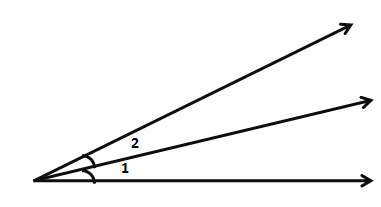
Conversely in the construction of perpendicular through a point not on the line; we cannot draw the arc that does not intersect the line.
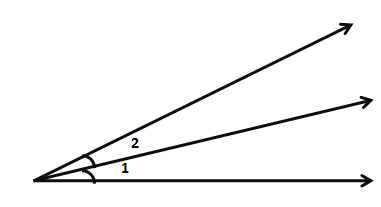
That is we have to take the radius as the distance between the line and point at least.

So the main difference between the construction of perpendicular in both ways is the choice of arc in first step.

After the process is quite similar.

Geometry Student Text 2nd Edition Chapter 1 Tools of Geometry 15 4

The difference between the construction of perpendicular through a point on line and not on line, is the choice of arc radius in first step.

After that process is quite similar.

Carnegie Learning Geometry Chapter 1 Page 34 Problem 16 Answer

Question 16.

How do you construct a perpendicular bisector of a given line segment FG and label it as a CD?

Answer:

The given line segment is FG.

We have to construct a perpendicular bisector of this line segment and label it as CD.

Let the given line is :-

Geometry Student Text 2nd Edition Chapter 1 Tools of Geometry 16

Firstly we will find mid point of line.

Then draw the perpendicular bisector.

The given line is :-

Geometry Student Text 2nd Edition Chapter 1 Tools of Geometry 16 1

Let the mid point of line is E.

Then we have the following line :-

Geometry Student Text 2nd Edition Chapter 1 Tools of Geometry 16 2

Now to draw perpendicular bisector :-

Geometry Student Text 2nd Edition Chapter 1 Tools of Geometry 16 3

Firstly open the compass with radius more the half of line FG and draw the arc taking F as center as shown following :-

Geometry Student Text 2nd Edition Chapter 1 Tools of Geometry 16 4

Now with the same radius draw an arc by taking G as center, then we have :-

Geometry Student Text 2nd Edition Chapter 1 Tools of Geometry 16 5

Now join the points C and D, then we have :-

The line segment CD is the required perpendicular bisector of the line FG.

The required perpendicular bisector CD of the given line FG is :-

Geometry Student Text 2nd Edition Chapter 1 Tools of Geometry 16 6

Carnegie Learning Geometry Chapter 1 Page 34 Problem 17 Answer

Question 17.

How do you label the point of intersection of the perpendicular bisector CD and the line segment FG as E?

Answer:

The given line segment is FG.

Geometry Student Text 2nd Edition Chapter 1 Tools of Geometry 17

We find in previous part that CD is the perpendicular Bisector of line FG.

We have to label the point of intersection CD and FG as E.

The lines FG and its perpendicular bisector CD are as following :-

Geometry Student Text 2nd Edition Chapter 1 Tools of Geometry 17 1

Now label the point of intersection of both lines as E, then we have :-

This is the required answer.

Geometry Student Text 2nd Edition Chapter 1 Tools of Geometry 17 2

The required intersection point E of lines CD and FG is as following :-

Geometry Student Text 2nd Edition Chapter 1 Tools of Geometry 17 3

Tools Of Geometry Solutions Chapter 1 Exercise 1.3 Carnegie Learning Geometry Page 34 Problem 18 Answer

Question 18.

Given that CD is perpendicular to FG, determine the measures of the angles formed by these lines. Provide the necessary conclusions about these angles.

Answer:

Given

CD is perpendicular to FG

In previous parts we find that the given lines CD and FG are as following :-

Geometry Student Text 2nd Edition Chapter 1 Tools of Geometry 18

If you find the conclusions about these lines if CD⊥FG.

The given lines are as following:-

Geometry Student Text 2nd Edition Chapter 1 Tools of Geometry 18 1

Here we have CD⊥FG.

We know that if two lines are perpendicular then the angle between them is 90∘.

Hence we can conclude that the angle ∠CEF,∠CEG,∠FED,GED

ARE OF 90∘.

If CD⊥FG, then we have :-

​∠CEF=90∘,

∠CEG=90∘,

∠FED=90∘ and

∠GED=90∘

Step-By-Step Solutions For Carnegie Learning Geometry Chapter 1 Exercise 1.3 Page 34 Problem 19 Answer

Question 19.

Given that line CD bisects line FG, what can we conclude about the segments FE and EG? Provide a detailed explanation and conclusion.

Answer:

Given

Line CD bisects line FG

The given lines CD and FG are as following :-

Geometry Student Text 2nd Edition Chapter 1 Tools of Geometry 19

We have to find that what we can conclude that if the line CD bisects the line FG.


The given lines are :-

Geometry Student Text 2nd Edition Chapter 1 Tools of Geometry 19 1

We know that if a line bisect the other then the point of intersect is a midpoint of the second line.

We have the line CD bisects the line FG.

So the point of intersection E is the midpoint of line FG.

Also as E is midpoint, we have :-

Measure of line segment FE=Measure of line segment EG.

If the line CD bisects the line FG as shown following :-

Geometry Student Text 2nd Edition Chapter 1 Tools of Geometry 19 2

Then we have :- E is a midpoint of line FG.Measure of line FE=Measure of line EG.

Page 34 Problem 20 Answer

Question 20.

Given that line CD is the perpendicular bisector of line FG, what conclusions can we draw about the angles formed and the segments of FG? Provide a detailed explanation and conclusion.

Answer:

Given

line CD is the perpendicular bisector of line FG

The given lines CD and FG are as following :-

Geometry Student Text 2nd Edition Chapter 1 Tools of Geometry 20

We have to find that what we can conclude if the line CD is the perpendicular bisector of the line FG.

The given lines are as following :-

Geometry Student Text 2nd Edition Chapter 1 Tools of Geometry 20 1

We have the line CD is the perpendicular bisector of line FG.

That is CD is perpendicular to line FG.

Then we have the angles between them are of 90∘. That is :-

∠CEF=90∘,

∠CEG=90∘,

∠FED=90∘and ∠GED=90∘

Also the line CD bisects the line FG.

So the intersection point is the midpoint of line FG.

That is the point E is the midpoint of line FG.

As E is the point of line FG, then we have :-

Measure of line FE=Measure of line EG.

If the line CD is the perpendicular bisector of line FG, then we have :-

∠CEF=90∘,∠CEG=90∘,∠FED=90∘ and∠GED=90∘

The point E is the midpoint of line FG.Measure of line FE=Measure of line EG.

Carnegie Learning Geometry Chapter 1 Page 34 Problem 21 Answer

Question 21.

Given a line segment PQ, how do we construct the midpoint of the line segment? Explain the steps and show the construction.

Answer:

The given line PQ  is as following :-

We have to construct the mid point of line PQ.

The given line is:-

Geometry Student Text 2nd Edition Chapter 1 Tools of Geometry 21

As we know the midpoint divides the line into two equal line segment.

The the midpoint of line PQ will divide the line into two equal parts.

Let the mid point of line is M. Then the M is constructed as following:-

Geometry Student Text 2nd Edition Chapter 1 Tools of Geometry 21 2

The required mid point M of line PQ is constructed as following :-

Geometry Student Text 2nd Edition Chapter 1 Tools of Geometry 21 1

Carnegie Learning Geometry Chapter 1 Exercise 1.3 Free Solutions Page 35 Problem 22 Answer

Question 22.

What are adjacent angles? Explain and illustrate with a diagram.

Answer:

We have to explain the adjacent angles.

Geometry Student Text 2nd Edition Chapter 1 Tools of Geometry 22

The adjacent angles are explained as following :- Adjacent angle :- Adjacent angles are two angles that have a common side and a common vertex (corner point) but do not overlap in any way.

Then two adjacent angles can be shown as following :-

Geometry Student Text 2nd Edition Chapter 1 Tools of Geometry 22 1

Here the angles A and B are adjacent as they have a common side and common vertex or corner.

Adjacent angles are two angles that have a common side and a common vertex (corner point) but do not overlap in any way.

Carnegie Learning Geometry Chapter 1 Page 35 Problem 23 Answer

Question 23.

What are adjacent angles? Explain and illustrate with a diagram.

Answer:

The given angle ∠1 is:-

Geometry Student Text 2nd Edition Chapter 1 Tools of Geometry 23

We have to draw ∠2 that is adjacent to angle ∠1.

The given angle ∠1 is as following:-

Geometry Student Text 2nd Edition Chapter 1 Tools of Geometry 23 1

We know that the angles that have a common line and vertex are know as adjacent angles.

So the adjacent angle ∠2 to ∠1 can be constructed as following :-

Geometry Student Text 2nd Edition Chapter 1 Tools of Geometry 23 2

The required angle ∠2 adjacent to angle ∠1 can be drawn as following :-

Geometry Student Text 2nd Edition Chapter 1 Tools of Geometry 23 3

Page 35 Problem 24 Answer

Question 24.

Is it possible to draw two angles that share a common vertex but do not share a common side? If so, draw an example and explain.

Answer:

We have to check that :-

Is it possible to draw two angles share a common vertex but do not share a common side.

If it is possible we have to draw an example and explain it.

Yes, we can draw two angles with common vertex but not common side.

Now suppose two angles ∠1 and ∠2. Let these angles have common vertex or corner say O

but not have common side.

Then these angles can be drawn as following :-

Geometry Student Text 2nd Edition Chapter 1 Tools of Geometry 24

Here the angles ∠1 and ∠2 have common vertex but no common side.

These angles are not adjacent as these have no common side.

Yes, we can draw two angles with common vertex but not common side and this type of angles can be drawn as following :-

Geometry Student Text 2nd Edition Chapter 1 Tools of Geometry 24 1

Carnegie Learning Geometry Chapter 1 Page 36 Problem 25 Answer

Question 25.

Is it possible to draw two angles that share a common side but do not share a common vertex? Draw an example.

Answer:

Given:  Is it possible to draw two angles that share a common side, but do not share a common vertexTo draw an example.

Two angles that  share a common side, but do not share a common vertex can be dawn as

Geometry Student Text 2nd Edition Chapter 1 Tools of Geometry 25

Here ∠1 and ∠2 are not adjacent since they do not share a common vertex.

Hence, Two angles that  share a common side, but do not share a common vertex can be dawn as

Geometry Student Text 2nd Edition Chapter 1 Tools of Geometry 25 1

Carnegie Learning Geometry Exercise 1.3 Student Solutions Page 36 Problem 26 Answer

Question 26.

What are linear pairs of angles? Describe them with an example.

Answer:

Given:

Geometry Student Text 2nd Edition Chapter 1 Tools of Geometry 26

To Describe a linear pair of angles.

Linear pair of angles are formed when two lines intersect each other at a single point.

The angles are said to be linear if they are adjacent to each other after the intersection of the two lines.

The sum of angles of a linear pair is always equal to 180°.

From the given figure we can say that ∠1 and ∠2 forms a linear pair of angle

Hence, from above we can say that Linear pair of angles are formed when two lines intersect each other at a single point.

The angles are said to be linear if they are adjacent to each other after the intersection of the two lines.

The sum of angles of a linear pair is always equal to 180°.

Carnegie Learning Geometry Chapter 1 Page 36 Problem 27 Answer

Question 27.

Identify and name all the linear pairs in the given figure.

Answer:

Given:

Geometry Student Text 2nd Edition Chapter 1 Tools of Geometry 27

To Name all linear pairs in the figure shown

Form the figure given

Geometry Student Text 2nd Edition Chapter 1 Tools of Geometry 27 1

The linear pairs are ∠1 and ∠4, ∠4 and ∠2, ∠2 and ∠3,∠3 and ∠1

Hence, the linear pairs are ∠1 and ∠4,∠4 and ∠2,∠2 and ∠3,∠3 and ∠1

Page 37 Problem 28 Answer

Question 28.

What can we conclude if the angles that form a linear pair are congruent?

Answer:

Given:  If the angles that form a linear pair are congruent,To specify what we can concludeBy following the definition

A linear pair consists of two adjacent angles that form a straight angle so they are supplementary, having a sum of 180∘.

If the two angles are congrent, then they have the same measure and thus both measure 90∘.

Hence, each angle is a right angle.

Hence, A linear pair consists of two adjacent angles that form a straight angle so they are supplementary, having a sum of 180∘.

If the two angles are congruent, then they have the same measure and thus both measure 90∘.

Hence, each angle is a right angle.

Carnegie Learning Geometry Chapter 1 Page 37 Problem 29 Answer

Question 29.

What are vertical angles, and how can they be identified in a given figure?

Answer:

Given:

Geometry Student Text 2nd Edition Chapter 1 Tools of Geometry 29

To describe vertical angle

The angles that are opposite to each other when two lines intersect each other are known as vertical angles.

In the given figure ∠1 and ∠2 are vertical angles to each other

Geometry Student Text 2nd Edition Chapter 1 Tools of Geometry 29 1

Hence, The angles that are opposite to each other when two lines intersect each other are known as vertical angles.

Tools Of Geometry Exercise 1.3 Carnegie Learning 2nd Edition Answers Page 37 Problem 30 Answer

Question 30.

Given the figure below, draw ∠2 so that it forms a vertical angle with ∠1.

Answer:

Given:

Geometry Student Text 2nd Edition Chapter 1 Tools of Geometry 30

To draw ∠2 so that it forms a vertical angle with ∠1

The angles that are opposite to each other when two lines intersect each other are known as vertical angles.

So a vertical angle can be drawn as

Geometry Student Text 2nd Edition Chapter 1 Tools of Geometry 30 1

Here ∠1 and ∠2 are vertical angle

Hence, vertical angle can be drawn as

Geometry Student Text 2nd Edition Chapter 1 Tools of Geometry 30 2

Carnegie Learning Geometry Chapter 1 Page 38 Problem 31 Answer

Question 31.

Given the diagram below, name all pairs of vertical angles.

Answer:

Given:

Geometry Student Text 2nd Edition Chapter 1 Tools of Geometry 31

To  Name all vertical angle pairs in the diagram shown.

From the given diagram we can show the vertical angle as

Geometry Student Text 2nd Edition Chapter 1 Tools of Geometry 31 1

Here ∠1 and ∠2. ∠3 and ∠4 are the vertical angle

Hence, in the given diagram the vertical angles are ∠1 and ∠2, ∠3 and ∠4

Page 38 Problem 32 Answer

Question 32.

Given the diagram below, measure each angle and determine their properties.

Answer:

Given:

Geometry Student Text 2nd Edition Chapter 1 Tools of Geometry 32


To  Measure each angle

In the given figure,∠1 and ∠2, ∠3 and ∠4 are vertical opposite angle, so they must be equal

Also ∠3 and ∠4 are acute angle, so it must be less than 90o

Also ∠1 and ∠2 are obtuse angle and it must be greater than 90o and less than 180o Hence, in the given figure ∠1and∠2,∠3and∠4 are vertical opposite angle, so they must be equal

Also ∠3and∠4 are acute angle, so it must be less then 90∘

Also ∠1and∠2 are obtuse angle and it must be greater than 90∘ and less than 180∘

Geometry Student Text 2nd Edition Chapter 1 Tools of Geometry 32 1

Carnegie Learning Geometry Student Text 2nd Edition Chapter 1 Exercise 1.2 Tools of Geometry

Geometry Student Text 2nd Edition Chapter 1 Tools of Geometry

Carnegie Learning Geometry Student Text 2nd Edition Chapter 1 Exercise 1.2 Solution Page 14 Problem 1 Answer

Question 1.

Tools of Geometry, it is stated that the vertex of an angle is a crucial part of defining the angle. Given the angle ∠ABC, identify the vertex of this angle and explain its significance in the context of geometric constructions.

Answer:

Given

The angle ∠ABC

The angle shown as :

Geometry Student Text 2nd Edition Chapter 1 Tools of Geometry 1

The vertex of an angle is :

Geometry Student Text 2nd Edition Chapter 1 Tools of Geometry 1 1

The vertex of an angle is

So, according to the given condition we get,

Read and learn More Carnegie Learning Geometry Student Text 2nd Edition Solutions

The vertex of an angle is ∡ABC.

The vertex of an angle is ∡ABC.

Carnegie Learning Geometry Chapter 1 Page 14 Problem 2 Answer

Question 2.

Tools of Geometry, it is explained that the sides of an angle refer to the two rays or line segments that form the angle. Given the angle ∠ABC, identify the sides of this angle and describe their role in the formation of the angle.

Answer:

Carnegie Learning Geometry Student Text 2nd Edition Chapter 1 Exercise 1.2 Tools of Geometry

The sides of an angle refer to the two rays or line segments that form the angle.

In the figure below, rays BA and BC are the sides of angle ABC.

So, according to given condition we get,

The sides of a triangle are BA,BC of ∡ABC.

The sides of an angle are BA,BC of ∡ABC.

Page 14 Problem 3 Answer

Question 3.

What is the relationship between the angles ∠ED and ∠EF in the given diagram, and why are they equal?

Answer:

Given

∠ED and ∠EF

The diagram shown as :

Geometry Student Text 2nd Edition Chapter 1 Tools of Geometry 3

The specific angle of ∠ED determines.

When two lines intersect each other, then the opposite angles, formed due to intersection are called vertical angles or vertically opposite angles.

A pair of vertically opposite angles are always equal to each other.

Also, a vertical angle and its adjacent angle are supplementary angles.

The specific angle of ∠ED, ∠EF are equal and are vertically opposite angles.

The specific angle of ∠ED,∠EF are vertically opposite angles and are equal.

Carnegie Learning Geometry Chapter 1 Page 14 Problem 4 Answer

Question 4.

What is the relationship between the angles ∠FEG and ∠DEC in the given diagram, and why are they equal?

Answer:

Given

The angles ∠FEG and ∠DEC

The diagram shown as :

Geometry Student Text 2nd Edition Chapter 1 Tools of Geometry 4

A specific angle in the diagram of ∠DEC.

When two lines intersect each other, then the opposite angles, formed due to intersection are called vertical angles or vertically opposite angles.

A pair of vertically opposite angles are always equal to each other.

Also, a vertical angle and its adjacent angle are supplementary angles.

The angles are equal and are vertically opposite angles.

∡FEG=∡DEC

The vertical opposite angles are equal.

∡FEG=∡DEC.

Page 15 Problem 5 Answer

Question 5.

In the given figure, under what condition can one capital letter, such as ∠D, be used to name an angle?

Answer:

Given – The figure

Geometry Student Text 2nd Edition Chapter 1 Tools of Geometry 5

To find – When can one capital letter be used to name an angle

The angles can be named in following ways:

By three capital letters, with the vertex letter in the middle like∠EDC or∠FEG

By one lower case letter or number written in the middle of the angle By one capital letter∠D.

This can only be used if∠D is the only angle it could be.

One capital letter like∠D can only be used if∠D is the only angle it could be.

Carnegie Learning Geometry Chapter 1 Page 15 Problem 6 Answer

Question 6.

In the given figure, under what condition can one capital letter, such as ∠D, be used to name an angle?

Answer:

Given – The figure

Geometry Student Text 2nd Edition Chapter 1 Tools of Geometry 6

To find – When can one capital letter be used to name an angle

The angles can be named in following ways:

By three capital letters, with the vertex letter in the middle like∠EDC or∠FEG

By one lower case letter or number written in the middle of the angle By one capital letter∠D.

This can only be used if∠D is the only angle it could be.

One capital letter like∠D can only be used if∠D is the only angle it could be.

Solutions For Tools Of Geometry Exercise 1.2 In Carnegie Learning Geometry Page 15 Problem 7 Answer

Question 7.

Given the figure, what is the difference between ∠FGE and ∠EGF? Explain your answer.

Answer:

Given – The figure

∠FGE and ∠EGF

Geometry Student Text 2nd Edition Chapter 1 Tools of Geometry 7

To find – What is the difference between∠FGE and∠EGF

The angle can be written by three capital letters like∠FGE

The main angle is the angle of middle letter and we can shuffle the first and third letter with each other

So,∠FGE is always equal to∠EGF

So there is no difference between∠FGE and∠EGF.

There is no difference between∠FGE and∠EGF.

Carnegie Learning Geometry Chapter 1 Page 15 Problem 8 Answer

Question 8.

Given the figure, explain the difference between ∠EFG and ∠EGF. What type of angles are they?

Answer:

Given – The figure

Geometry Student Text 2nd Edition Chapter 1 Tools of Geometry 8

To find – Difference between∠EFG and∠EGF

As we know right angle is an angle having corner looks like L or one angle is 900 and the angle less than 900 is called acute angle.

So,∠EFG is an right angle and∠EGF is an acute angle.

∠EFG is an right angle and∠EGF is an acute angle.

Page 15 Problem 9 Answer

Question 9.

Given the figure, provide the alternate names for ∠D. How can the angle ∠D be represented using different notations?

Answer:

Given – The figure

Geometry Student Text 2nd Edition Chapter 1 Tools of Geometry 9

To find – Alternate names of∠D

The angles can be named in following ways:

By three capital letters, with the vertex letter in the middle like∠EDC or∠FEG

By one lower case letter or number written in the middle of the angle By one capital letter∠D.,

This can only be used if∠D is the only angle it could be.

So,∠D can be written as∠CDE and∠ECD.

The alternate names of∠D are∠CDE and∠ECD.

Carnegie Learning Geometry Chapter 1 Page 15 Problem 10 Answer

Question 10.

How many letters are needed to name an angle, and in what situations can a single letter be used instead of three letters?

Answer:

Given – The figure

Geometry Student Text 2nd Edition Chapter 1 Tools of Geometry 10

To find – How many letters are needed to name an angle

The angles can be named in following ways:

By three capital letters, with the vertex letter in the middle like∠EDC or∠FEG

By one lower case letter or number written in the middle of the angle By one capital letter∠D.

This can only be used if∠D is the only angle it could be.

So the angles are written in either one letter if it is the only angle it could be or generally with three letters with the vertex letter in the middle.

The angles are written in either one letter if it is the only angle it could be or generally with three letters with the vertex letter in the middle.

Page 15 Problem 11 Answer

Question 11.

What is an alternate name for ∠1 in the given figure, and why is it named that way?

Answer:

Given – The figure

Geometry Student Text 2nd Edition Chapter 1 Tools of Geometry 11

To find – Alternate name of∠1

The angles can be named in following ways:

By three capital letters, with the vertex letter in the middle like∠DEG

By one lower case letter or number written in the middle of the angleBy one capital letter.

This can only be used if it is the only angle it could be.

So, the alternate name of∠1 is∠CEF.

The alternate name for∠1 is∠CEF.

Carnegie Learning Geometry Chapter 1 Page 15 Problem 12 Answer

Question 12.

What is an alternate name for ∠2 in the given figure, and why is it named that way?

Answer:

Given – The figure

Geometry Student Text 2nd Edition Chapter 1 Tools of Geometry 12

To find – Alternate name of∠2

The angles can be named in following ways:

By three capital letters, with the vertex letter in the middle like∠DEG

By one lower case letter or number written in the middle of the angleBy one capital letter. This can only be used if it is the only angle it could be.

So, the alternate name of∠2 is∠FEG.

The alternate name for∠2 is∠FEG.

Page 15 Problem 13 Answer

Question 13.

Do ∠3 and ∠4 share a common side in the given figure? If so, what is the common side?

Answer:

Given – The figure

Geometry Student Text 2nd Edition Chapter 1 Tools of Geometry 13

To find – Do∠3 and∠4 shares a common side

As we know the common side is one line, ray, or line segment used to create two angles sharing the same vertex.

Clearly∠3 and∠4 does not have the same vertex.

But,∠3 and∠4  shares a common side, AB ∠3 and∠4 shares a common side which is AB.

Carnegie Learning Geometry Chapter 1 Page 16 Problem 14 Answer

Question 14.

What is the measure of the angle shown in the figure.

Answer:

Given: A figure

Geometry Student Text 2nd Edition Chapter 1 Tools of Geometry 14

We have to measure the angle shown in the figure.

An angle is formed by the cross section of two rays. In the given figure we can see that the first ray is aligned with 0∘and second ray is aligned with 90∘, therefore the measure of the angle shown is 90∘.

The measure of the angle shown is 90∘.

Page 17 Problem 15 Answer

Question 15.

What is the measure of the angle shown in the figure

Answer:

Given: A figure

Geometry Student Text 2nd Edition Chapter 1 Tools of Geometry 15

In the protractor the top of the arc shows degrees from 0º to 180º from left to right, while the bottom of the arc shows degrees from 180º to 0º from left to right.

In the given figure one ray is aligned with 0∘ on the right side of protractor, therefore we will read the measure of the angle according to the bottom arc of the protractor.

We can easily see that the 2nd ray is aligned with 130∘on bottom arc of the protractor, hence the measure of angle shown is 130∘.

The measure of the angle shown is 130∘.

Carnegie Learning Geometry Chapter 1 Page 17 Problem 16 Answer

Question 16.

How do you determine which scale to use on a protractor to measure an angle?

Answer:

In a protractor, you will notice two sets of degrees along the edge: an inner and outer scale.

Both scales go from 0 to 180, but they run in opposite directions. If the angle opens to the right side of the protractor, use the inner scale. If the angle opens to the left of the protractor, use the outer scale.

If the angle opens to the right side of the protractor, use the inner scale.

If the angle opens to the left of the protractor, use the outer scale.

Tools Of Geometry Solutions Chapter 1 Exercise 1.2 Carnegie Learning Geometry Page 17 Problem 17 Answer

Question 17.

How do you determine the measure of ∠WAR using a protractor, and what is the measurement?

Answer:

Given: A figure

Geometry Student Text 2nd Edition Chapter 1 Tools of Geometry 17

Find: ∠WAR

In a protractor, you will notice two sets of degrees along the edge: an inner and outer scale. Both scales go from 0 to 180, but they run in opposite directions.

If the angle opens to the right side of the protractor, use the inner scale.

If the angle opens to the left of the protractor, use the outer scale.

In the given figure, ∠WAR opens left side of the protractor, therefore we will read the angle according to the outer scale.

Ray W is aligned with 0∘on the outer scale while ray R is aligned with 50∘on the outer scale, therefore the measure of angle ∠WAR is 50∘.

The measure of ∠WAR is 50∘.

Carnegie Learning Geometry Chapter 1 Page 17 Problem 18 Answer

Question 18.

How do you determine the measure of ∠RAX using a protractor, and what is the measurement?

Answer:

Given: A figure

Geometry Student Text 2nd Edition Chapter 1 Tools of Geometry 18

Find: ∠RAX

In a protractor, you will notice two sets of degrees along the edge: an inner and outer scale.

Both scales go from 0 to 180, but they run in opposite directions. If the angle opens to the right side of the protractor, use the inner scale.

If the angle opens to the left of the protractor, use the outer scale.

In the given figure, ∠RAX opens right side of the protractor, therefore we will read the angle according to the inner scale.

Ray X is aligned with0∘on the inner scale while ray R is aligned with130∘on inner scale, therefore the measure of∠RAX is 130∘.

The measure of∠RAX is 130∘.

Carnegie Learning Geometry Chapter 1 Page 17 Problem 19 Answer

Question 19.

How do you determine the measure of ∠WAX using a protractor, and what is the measurement?

Answer:

Given: A figure

Geometry Student Text 2nd Edition Chapter 1 Tools of Geometry 19

Find: ∠WAX

In the protractor the top of the arc shows degrees from 0º to 180º from left to right, while the bottom of the arc shows degrees from 180º to 0º from left to right.

In the given figure, ray W is aligned with 0∘on the left side of protractor, therefore we will read the measure of the angle according to the top arc of the protractor, we can easily see that the ray X is aligned with 180∘on the top arc of the protractor, therefore the measure of∠WAX is 180∘.

The measure of ∠WAX is 180∘.

Carnegie Learning Geometry Chapter 1 Page 18 Problem 20 Answer

Question 20.

What is the measure of angle ∠SET as determined from the diagram?

Answer:

Given: A diagram is given as shown below:

Geometry Student Text 2nd Edition Chapter 1 Tools of Geometry 20

To Determine: One has to use the given diagram and has to determine the measure of angle ∠SET.

Procedure Used:

The steps to measure an angle with a protractor are:

Place the midpoint of the protractor on the VERTEX of the angle.

Line up one side of the angle with the zero line of the protractor (where you see the number 0).

Read the degrees where the other side crosses the number scale.

Now we will follow certain steps as: As the midpoint of the protractor is already placed on the vertex E of the angle ∠SET.

One side ET of the angle is lined up with the zero line of the protractor (where you see the number 0).

Now we will read the degrees where the other side ES crosses the number scale at150.

Thus the measure of angle ∠SET=150

Hence the measure of angle ∠SET=150.

Carnegie Learning Geometry Chapter 1 Page 18 Problem 21 Answer

Question 21.

What is the measure of angle ∠QEP as determined from the diagram?

Answer:

Given: A diagram is given as shown below:

Geometry Student Text 2nd Edition Chapter 1 Tools of Geometry 21

To Determine: One has to use the given diagram and has to determine the measure of angle ∠QEP.

Procedure Used:

The steps to measure an angle with a protractor are:

Place the midpoint of the protractor on the VERTEX of the angle.

Line up one side of the angle with the zero line of the protractor (where you see the number 0).

Read the degrees where the other side crosses the number scale.

Now we will follow certain steps as:

As the midpoint of the protractor is already placed on the vertex E of the angle ∠QEP.

One side EP of the angle is lined up with the zero line of the protractor (where you see the number 0).

Now we will read the degrees where the other side EQ crosses the number scale at 400.

Thus the measure of angle ∠QEP=400.

Hence the measure of angle ∠QEP=400.

Carnegie Learning Geometry Chapter 1 Page 18 Problem 22 Answer

Question 22.

What is the measure of angle ∠REQ as determined from the diagram?

Answer:

Given: A diagram is given as shown below:

Geometry Student Text 2nd Edition Chapter 1 Tools of Geometry 22

To Determine: One has to use the given diagram and has to determine the measure of angle ∠REQ.

Procedure Used:

The steps to measure an angle with a protractor are:

Place the midpoint of the protractor on the VERTEX of the angle.

Line up one side of the angle with the zero line of the protractor (where you see the number 0).

Read the degrees where the other side crosses the number scale.

Now we will follow certain steps as: As the midpoint of the protractor is already placed on the vertex E of the angle ∠REQ.

The side EP is lined up with the zero line of the protractor (where you see the number 0).

Now we will read the degrees where the side EQ crosses the number scale with respect to side EP and it comes as 400.

The side ER crosses the number scale with respect to side EP and it comes as 650.

Now we will measure the angle ∠REQ using the measure of angles ∠REP=650 and ∠QEP=400.

Thus, the measure of the required angle is as:

∠REQ=∠REP−∠QEP

=650−400

=150

Thus the angle ∠REQ=150

Hence the measure of angle ∠REQ=150

Carnegie Learning Geometry Chapter 1 Page 18 Problem 23 Answer

Question 23.

What is the measure of angle ∠REP as determined from the diagram?

Answer:

Given: A diagram is given as shown below:

Geometry Student Text 2nd Edition Chapter 1 Tools of Geometry 23

To Determine: One has to use the given diagram and has to determine the measure of angle ∠REP.

Procedure Used:

The steps to measure an angle with a protractor are:

Place the midpoint of the protractor on the VERTEX of the angle.

Line up one side of the angle with the zero line of the protractor (where you see the number 0).

Read the degrees where the other side crosses the number scale.

Now we will follow certain steps as:

As the midpoint of the protractor is already placed on the vertex E of the angle ∠REP.

One side EP of the angle is lined up with the zero line of the protractor (where you see the number 0).

Now we will read the degrees where the other side EQ crosses the number scale with respect to side EP and it comes as 650.

Thus the measure of angle ∠REP=650.

Hence the measure of angle ∠REP=650.

Carnegie Learning Geometry Chapter 1 Page 18 Problem 24 Answer

Question 24.

What is the measure of angle ∠TEQ as determined from the diagram?

Answer:

Given: A diagram is given as shown below:

Geometry Student Text 2nd Edition Chapter 1 Tools of Geometry 24

To Determine: One has to use the given diagram and has to determine the measure of angle ∠TEQ.

Procedure Used:

The steps to measure an angle with a protractor are:

Place the midpoint of the protractor on the VERTEX of the angle.

Line up one side of the angle with the zero line of the protractor (where you see the number 0).

Read the degrees where the other side crosses the number scale.

Now we will follow certain steps as: As the midpoint of the protractor is already placed on the vertex E of the angle ∠TEQ.

One side ET of the angle is lined up with the zero line of the protractor (where you see the number 0).

Now we will read the degrees where the other side EQ crosses the number scale at 1400.

Thus the measure of angle ∠TEQ=1400.

Hence the measure of angle ∠TEQ=1400

Carnegie Learning Geometry Chapter 1 Page 18 Problem 25 Answer

Question 25.

What is the measure of angle ∠PES as determined from the diagram?

Answer:

Given: A diagram is given as shown below:

Geometry Student Text 2nd Edition Chapter 1 Tools of Geometry 25

To Determine: One has to use the given diagram and has to determine the measure of angle ∠PES

Procedure Used:

The steps to measure an angle with a protractor are:

Place the midpoint of the protractor on the VERTEX of the angle.

Line up one side of the angle with the zero line of the protractor (where you see the number 0).

Read the degrees where the other side crosses the number scale.

Now we will follow certain steps as:

As the midpoint of the protractor is already placed on the vertex E of the angle ∠PES.

One side PE of the angle is lined up with the zero line of the protractor (where you see the number 0).

Now we will read the degrees where the other side ES crosses the number scale at 1650.

Thus the measure of angle ∠PES=1650

Hence the measure of angle ∠PES=1650

Carnegie Learning Geometry Chapter 1 Page 18 Problem 26 Answer

Question 26.

What is the measure of angle ∠SER as determined from the diagram?

Answer:

Given: A diagram is given as shown below:

Geometry Student Text 2nd Edition Chapter 1 Tools of Geometry 26

To Determine: One has to use the given diagram and has to determine the measure of angle ∠SER.

Procedure Used:

The steps to measure an angle with a protractor are:

Place the midpoint of the protractor on the VERTEX of the angle.

Line up one side of the angle with the zero line of the protractor (where you see the number 0).

Read the degrees where the other side crosses the number scale.

Now we will follow certain steps as:

As the midpoint of the protractor is already placed on the vertex E of the angle ∠SER.

The side ET is lined up with the zero line of the protractor (where you see the number 0).

Now we will read the degrees where the side ER crosses the number scale with respect to side ET and it comes as 1150.

The side ES crosses the number scale with respect to side ET and it comes as 150

Now we will measure the angle ∠SER using the measure of angles ∠TER=1150 and ∠SET=150

Thus, the measure of the required angle is as:

∠SER=∠TER−∠SET

=1150−150

=1000

Thus the angle ∠SER=1000.

Hence the measure of angle ∠SER=1000

Step-By-Step Solutions For Carnegie Learning Geometry Chapter 1 Exercise 1.2 Page 18 Problem 27 Answer

Question 27.

What is the angle measured in the given figure using the protractor?

Answer:

Given: A diagram is given as shown below:

Geometry Student Text 2nd Edition Chapter 1 Tools of Geometry 27

To Determine: One has to use the given diagram and has to determine the measure of angle to the nearest degree using a protractor.

Procedure Used:

The steps to measure an angle with a protractor are:

Place the midpoint of the protractor on the VERTEX of the angle.

Line up one side of the angle with the zero line of the protractor (where you see the number 0).

Read the degrees where the other side crosses the number scale.

Now we will use a protractor for measuring the angle in given figure by keeping the midpoint of protractor on the vertex of the figure as shown below:

Geometry Student Text 2nd Edition Chapter 1 Tools of Geometry 27 1

Thus the measure of angle is 450.

Hence the measure of angle for given figure is 450

Carnegie Learning Geometry Chapter 1 Page 18 Problem 28 Answer

Question 28.

What is the angle measured in the given figure using the protractor?

Answer:

Given: A diagram is given as shown below:

Geometry Student Text 2nd Edition Chapter 1 Tools of Geometry 28

To Determine: One has to use the given diagram and has to determine the measure of angle to the nearest degree using a protractor.

Procedure Used:

The steps to measure an angle with a protractor are:

Place the midpoint of the protractor on the VERTEX of the angle.

Line up one side of the angle with the zero line of the protractor (where you see the number 0).

Read the degrees where the other side crosses the number scale.

Now we will use a protractor to measure the angle in the given figure by keeping the midpoint of the protractor on the vertex of the figure as shown below:

Geometry Student Text 2nd Edition Chapter 1 Tools of Geometry 28 1

Thus the measure of angle is 1450

Hence the measure of angle in given figure is 1450

Carnegie Learning Geometry Chapter 1 Page 19 Problem 29 Answer

Question 29.

Which angle is larger among the given two figures?

Answer:

Given: There are two diagrams given as shown below:

Geometry Student Text 2nd Edition Chapter 1 Tools of Geometry 29

To Determine: We have to determine which angle is larger among the given two figures.

Procedure Used:

The steps to measure an angle with a protractor are:

Place the midpoint of the protractor on the VERTEX of the angle.

Line up one side of the angle with the zero line of the protractor (where you see the number 0).

Read the degrees where the other side crosses the number scale.

Now when we will put the protractor and the first small figure coinciding with each other as shown below:

Geometry Student Text 2nd Edition Chapter 1 Tools of Geometry 29 1

As it is clear from the above diagram that the angle made by small figure is 900.

Now when we will put the large figure and the protractor coinciding with each other as shown below:

Geometry Student Text 2nd Edition Chapter 1 Tools of Geometry 29 2

As it is seen from the above diagram that the angle made by larger image is as 900.

Hence the angle made by both figures is the same as 900

so we can conclude that both angles are equal and no one is larger.

Carnegie Learning Geometry Chapter 1 Page 19 Problem 30 Answer

Question 30.

How can you draw an angle with a measure of 30° using a protractor?

Answer:

Given: An angle with measure of 300 is given.

To Draw: We have to draw an angle with the given measure.

Procedure Used:

The steps to measure an angle with a protractor are:

Place the midpoint of the protractor on the VERTEX of the angle.

Line up one side of the angle with the zero line of the protractor (where you see the number 0).

Read the degrees where the other side crosses the number scale.

Now we will follow certain steps to draw an angle with measure 300 as shown below:

Draw a line segment OA.Place the center tip of the protractor at point A such that the protractor perfectly aligns with line AO.

Start from ‘A’ on the protractor in the clockwise direction and stop at 30.

Mark it as point ‘D’. If point ‘A’ lies to the right of ‘O’, then start measuring anticlockwise and stop at 30 as shown below:

Geometry Student Text 2nd Edition Chapter 1 Tools of Geometry 30

Join point ‘D’ with ‘O’. ∠AOD=30° is the required 30-degree angle as shown below:

Geometry Student Text 2nd Edition Chapter 1 Tools of Geometry 30 1

The angle with measure 300 is drawn as below:

Geometry Student Text 2nd Edition Chapter 1 Tools of Geometry 30 2

Carnegie Learning Geometry Exercise 1.2 Student Solutions Page 19 Problem 31 Answer

Question 31.

How do you draw an angle with a measure of 130° using a protractor?

Answer:

Given: An angle with measure of 1300.

To Draw: We have to draw an angle with the given measure.

Procedure Used:

The steps to measure an angle with a protractor are:

Place the midpoint of the protractor on the VERTEX of the angle.

Line up one side of the angle with the zero line of the protractor (where you see the number 0).

Read the degrees where the other side crosses the number scale.

Now we will follow certain steps to draw an angle with measure 1300 as shown below:

Draw a line segment AB.Using protractor from the point A measure 130∘ and mark it as C.Join AC.

Thus ∠BAC=1300  is the required 30-degree angle as shown below:

Geometry Student Text 2nd Edition Chapter 1 Tools of Geometry 31

Hence the angle with measure 1300 is drawn below:

Geometry Student Text 2nd Edition Chapter 1 Tools of Geometry 31 1

Carnegie Learning Geometry Chapter 1 Page 19 Problem 32 Answer

Question 32.

How do you draw an acute angle of 30° using a protractor?

Answer:

Acute angle can be drawn as follows, here ∠ABC=30.

Geometry Student Text 2nd Edition Chapter 1 Tools of Geometry 32

Therefore, the diagram is as follows,

Geometry Student Text 2nd Edition Chapter 1 Tools of Geometry 32 1

Tools Of Geometry Exercise 1.2 Carnegie Learning 2nd Edition Answers Page 20 Problem 33 Answer

Question 33.

How do you draw a right angle using a protractor?

Answer:

Right angle can be drawn as like;

Geometry Student Text 2nd Edition Chapter 1 Tools of Geometry 33

Therefore, the figure below is a right angle diagram.

Geometry Student Text 2nd Edition Chapter 1 Tools of Geometry 33 1

Carnegie Learning Geometry Chapter 1 Page 20 Problem 34 Answer

Question 34.

How do you draw an obtuse angle using a protractor?

Answer:

Obtuse angle can be drawn as like;

Geometry Student Text 2nd Edition Chapter 1 Tools of Geometry 34

Therefore, the figure below is an obtuse angle diagram.

Geometry Student Text 2nd Edition Chapter 1 Tools of Geometry 34 1

Page 20 Problem 35 Answer

Question 35.

How do you draw a straight angle using a protractor?

Answer:

Straight angle that measures 180 can be drawn as follows;

Geometry Student Text 2nd Edition Chapter 1 Tools of Geometry 35

Therefore, the resultant diagram is

Geometry Student Text 2nd Edition Chapter 1 Tools of Geometry 35 1

Page 21 Problem 36 Answer

Question 36.

How do you measure an angle using a protractor and complete the statement for the measured angle?

Answer:

In question number 5 , ∠A and ∠B are drawn . ∠A≅∠B

Measure the angle A  and complete the statement

Use a protractor to measure ∠A we got from question 5 Note down the measure of angle A.

Suppose measure of angle A is 30 degree .

then write the statement as m∠A=30° is read as ‘ measure of angle A is equal to 30 degrees”

For example  m∠A=30° is read as ‘ measure of angle A is equal to 30 degrees”

Carnegie Learning Geometry Chapter 1 Page 21 Problem 37 Answer

Question 37.

Given that ∠A and ∠B are drawn such that ∠A≅∠B, use a protractor to measure ∠B and complete the statement.

Answer:

Given

In question number 5 ,  ∠A and ∠B are drawn  ∠A≅∠B

Measure the angle B and complete the statement

Use a protractor to measure ∠A we got from question 5° is read as ‘ measure of angle A is equal to 30 degrees”

Note down the measure of angle A.

Suppose measure of angle B is 30 degree . then write the statement as m∠B=30°

For example m∠B=30 ° is read as ‘ measure of angle A is equal to 30 degrees”

Page 21 Problem 38 Answer

Question 38.

How do you read the notation m∠DEF = 110°?

Answer:

Given : m∠DEF=110° here ‘m’ means the measure and less than symbol represents angle° symbol represents degree °

m∠DEF=110°, read as measure of angle DEF is 110 degrees

m∠DEF=110°,  read as “measure of angle DEF is 110 degrees”

Carnegie Learning Geometry Chapter 1 Page 23 Problem 39 Answer

Question 39.

What are the steps to duplicate angle ∠A and construct an angle twice its measure?

Answer:

The steps to duplicate angle ∠A

First duplicate the exact copy that is angle A by following steps

Draw a straight line and label point C on one end

Draw and arc with center A and use the same radius to draw and arc with center C

Label the points as B, D on A  and label E on C

Draw an arc with  E as center by taking  radius BD . Label the intersect as F

Geometry Student Text 2nd Edition Chapter 1 Tools of Geometry 39

Draw another  arc with F as center and same radius BD. Label the intersection as G

Now ∠GCE  is twice the measure of angle A∠GCE  is twice the measure of angle A

Carnegie Learning Geometry Student Text 2nd Edition Chapter 1 Exercise 1.1 Tools of Geometry

Geometry Student Text 2nd Edition Chapter 1 Tools of Geometry

Carnegie Learning Geometry Student Text 2nd Edition Chapter 1 Exercise 1.1 Solution Page 4 Problem 1 Answer

Question 1.

Given the graph where each point represents the age and height of different children:

  1. Identify which axis represents the age of the children.
  2. Determine the point that represents the oldest child based on the graph.
  3. Explain how you identified the point that represents the oldest child.

Read and learn More Carnegie Learning Geometry Student Text 2nd Edition Solutions

Answer:

The given graph is :-

Geometry Student Text 2nd Edition Chapter 1 Tools of Geometry 1 1

Each point in the graph represents the age and height of different children.

We have to find the point that represents the oldest child.

The given model is:-

Geometry Student Text 2nd Edition Chapter 1 Tools of Geometry 1

We can see that the x-axis represents the age of children.

So the maximum value of x, gives the maximum age.

We can see that The point E has the maximum value of x.

So the the point E represents the oldest children.

The point E  represents the oldest children.

Page 4 Problem 2 Answer

Question 2.

Given the graph where each point represents the age and height of different children:

  1. Identify which axis represents the age of the children.
  2. Determine the points that represent children of the same age based on the graph.
  3. Explain how you identified the points that represent children of the same age.

Answer:

The given graph is:-

Geometry Student Text 2nd Edition Chapter 1 Tools of Geometry 2 1

Each point in the graph represents the age and height of different children.

We have to find the point which represents the children of same age.

Carnegie Learning Geometry Chapter 1

Carnegie Learning Geometry Student Text 2nd Edition Chapter 1 Exercise 1.1 Tools of Geometry

Page 4 Problem 3 Answer

Question 3.

Given the graph where each point represents the age and height of different children:

  1. Identify which axis represents the height of the children.
  2. Determine the points that represent children of the same height based on the graph.
  3. Explain how you identified the points that represent children of the same height.

Answer:

The given graph is:-

Geometry Student Text 2nd Edition Chapter 1 Tools of Geometry 3

Each point in the graph represents the age and height of different children.

We have to find the points that represents the children of same height.

The given graph is :-

Geometry Student Text 2nd Edition Chapter 1 Tools of Geometry 3 1

We can see that the points C and A has the same value of y and y represents the height of children.

So that the We can see that the points C and A has the same value of y and y represents the height of children.

So that the points C and A represents the children of same height.

Similarly, the points B and D has the same value of y.

So the points B and D represents the children of same height.

The points A and C represents the children of same height.

The points B and D also represents the children of same height.

Carnegie Learning Geometry Chapter 1 Page 4 Problem 4 Answer

Question 4.

Given that a mathematical model of several points is shown, where each point represents the age and height of a different child:

  1. Which point represents the oldest child?
  2. Which points represent children of the same age?
  3. Which points represent children of the same height?

Based on the answers provided:

  • The point E represents the oldest child.
  • The points A and B represent children of the same age.
  • The points A and C represent children of the same height.
  • The points B and D represent children of the same height.

Explain how the (x,y) coordinate system is used to represent the age and height of different children.

Answer:

Given that, A mathematical model of several points is shown. Each point represents the age and  height of a different child.

From question 1to 3, we have,

  1. Which point represents the oldest child?
  2. Which points represent children of the same age?
  3. Which points represent children of the same height?

And their answers are,

  1. The point E represents the oldest children.
  2. The points A and B represents the children of same age.
  3. The pointsA andC represents the children of same height.

and also The points B and D represents the children of same height.

Geometry Student Text 2nd Edition Chapter 1 Tools of Geometry 4

From above solutions we can say that, each point represents the age on x−axis and  height on y−axis of a different child.

So, (x,y) coordinate system is used to represent height and age of different child.

(x,y) coordinate system is used to represent height and age of different child.

Page 4 Problem 5 Answer

Question 5.

Given a mathematical model of several lines:

  1. Determine whether point C represents a specific line in the model.
  2. Explain the characteristics of a line in geometry.
  3. Justify your conclusion about whether C represents a specific line using the properties of lines and points.

Answer:

The given mathematical model of several lines is :-

Geometry Student Text 2nd Edition Chapter 1 Tools of Geometry 5

We have to check that is C determine a specific line in the model.

The given mathematical model of several lines is :-

Geometry Student Text 2nd Edition Chapter 1 Tools of Geometry 5 1

We know that a line is a straight continuous arrangement of several points.

Also, it has infinite length but no width and  arrowheads are indicate that a line extends infinitely in opposite directions.

But C is not a arrangement of several points. It is just a single point.

So C is not a specific line in the given mathematical model.

No, C  is not a specific line in the given mathematical model.

Carnegie Learning Geometry Chapter 1 Page 5 Problem 6 Answer

Question 6.

Given a mathematical model of several lines:

  1. Determine whether CD represents a specific line in the model.
  2. Explain the characteristics of a line and a line segment in geometry.
  3. Justify your conclusion about whether CD determines a specific line using the properties of lines and line segments.

Answer:

The given mathematical model of several lines is :-

Geometry Student Text 2nd Edition Chapter 1 Tools of Geometry 6

We have to check that is CD determine a specific line in the model.

The given mathematical model of several lines is :-

Geometry Student Text 2nd Edition Chapter 1 Tools of Geometry 6 1

We can see that CD is a line segment of line m.

We know that a line is described as a straight continuous arrangement of an infinite number of points.

CD is also continuous arrangement of infinite points.

Also a line segment is also a line.

So CD determines a specific line in the model.

Yes, CD determines the specific line in the given model.

Solutions For Tools of Geometry Exercise 1.1 In Carnegie Learning Geometry Page 5 Problem 7 Answer

Question 7.

Given a mathematical model of several lines:

  1. Determine whether m represents a specific line in the model.
  2. Explain the characteristics of a line in geometry.
  3. Justify your conclusion about whether m determines a specific line using the properties of lines.

Answer:

The given mathematical model of several lines is :-

Geometry Student Text 2nd Edition Chapter 1 Tools of Geometry 7

We have to check that is m determines the specific line in the model.

The given mathematical model of several lines is :-

Geometry Student Text 2nd Edition Chapter 1 Tools of Geometry 7 1

We know that a line is a straight continuous arrangement of several points.

Also it has infinite length but no width and arrowheads are indicate that a line extends infinitely in opposite directions.

In the above model, m satisfies all of these conditions.

So m is a specific line in the model.

Yes, m is a specific line in the given mathematical model.

Carnegie Learning Geometry Chapter 1 Page 5 Problem 8 Answer

Question 8.

Given a mathematical model of several lines:

  1. How many points are needed to describe a specific line?
  2. Explain the characteristics of a line in geometry and why it requires a certain number of points to be described.

Answer:

The given mathematical model of several lines is:-

Geometry Student Text 2nd Edition Chapter 1 Tools of Geometry 8

We have find that how many points are needed to describe a specific line.

We know that:-

A line is described as a straight continues arrangement of infinite number of points.

So to describe a specific line we need a continuous infinite points that should be in straight arrangement.

To describe a specific line we need a continues infinite points that should be in straight arrangement.

Tools Of Geometry Solutions Chapter 1 Exercise 1.1 Carnegie Learning Geometry Page 5 Problem 9 Answer

Question 9.

Given a mathematical model of several lines:

  1. Identify the line represented by AB in the model.
  2. Determine an alternative name for the line AB.
  3. Explain how you identified the alternative name for line AB.

Answer:

The given mathematical model of several lines is :-

Geometry Student Text 2nd Edition Chapter 1 Tools of Geometry 9

We have to find alternative name for line AB.

The given mathematical model of several lines is :-

Geometry Student Text 2nd Edition Chapter 1 Tools of Geometry 9 1

We can see that AB represents a line in the model.

N is also represents the same line.

So we can say that the alternative name for line AB is n.

In the given mathematical model, alternative name for line AB is n .

Carnegie Learning Geometry Chapter 1 Page 5 Problem 10 Answer

Question 10.

Given a mathematical model of several lines:

  1. Identify three points that are collinear in the model.
  2. Explain the definition of collinear points.
  3. Choose a line from the model and list the three points on that line which are collinear.

Answer:

The given mathematical model of several lines is :

Geometry Student Text 2nd Edition Chapter 1 Tools of Geometry 10

We have to give name of three points that are collinear.

The given mathematical model of several lines is :-

Geometry Student Text 2nd Edition Chapter 1 Tools of Geometry 10 1

We know that the points that are located on same line are called collinear.

Choose the line l from the given model.

We can see that three points A,C,E are located on the same line l.

So that the points A,C,E are collinear.

The three points A,C,E are collinear.

Step-By-Step Solutions For Carnegie Learning Geometry Chapter 1 Exercise 1.1 Page 5 Problem 11 Answer

Question 11.

Given a mathematical model of several lines:

  1. Define what it means for points to be collinear.
  2. Identify three points in the model that are not collinear.
  3. Provide three sets of points from the model that are not collinear.

Answer:

Given that, Line AB can be read as “line AB. and

We have to Name three points that are not collinear in the model.

We know that, Collinear points are points that are located on the same line. So the points which are not on same line are not a colinear points.

From given model the following points are not colinear,

Geometry Student Text 2nd Edition Chapter 1 Tools of Geometry 11

  1. A,B,D
  2. A,C,D
  3.  C,E,D

The following points are not colinear,

  1. A,B,D
  1. A,C,D
  2. C,E,D

Carnegie Learning Geometry Chapter 1 Page 6 Problem 12 Answer

Question 12.

Given planes p, w, and z in the figure:

  1. Determine whether there is a single point that is common to all three planes.
  2. Explain what it means for planes to be parallel.
  3. Based on the figure, conclude whether the given planes are parallel or intersecting.
  4. Justify your conclusion about the relationship between the planes.

Answer:

Given planes p,w,and z are given in figure,

Geometry Student Text 2nd Edition Chapter 1 Tools of Geometry 12

From given figure we can conclude that, there is no single point which is common to given three planes.

So given plane are not intersecting each other.

Therefore, given planes are parallel.

Given three planes are parallel.

Carnegie Learning Geometry Chapter 1 Exercise 1.1 Free Solutions Page 6 Problem 13 Answer

Question 13.

Given planes p, w, and z in the figure:

  1. Determine the relationship between the planes p, w, and z.
  2. Explain how the planes intersect with each other.
  3. State the number of points where the planes intersect.
  4. Conclude the type of intersection that occurs among the planes.

Answer:

Given planes p, w and z are given figure below,

Geometry Student Text 2nd Edition Chapter 1 Tools of Geometry 13

From above figure of planes, we can say that all planes p, w and z intersect with each other at a single line.

So there are infinite number of points of intersection.

All planes p, w and z intersect with each other at a single line.

So there are infinite number of points of intersection.

i.e. Three Planes Intersecting in a Line

Carnegie Learning Geometry Chapter 1 Page 6 Problem 14 Answer

Question 14.

Given planes p, w, and z in the figure:

  1. Describe the relationship between planes p and w.
  2. Explain how planes p and w intersect with plane z.
  3. Determine if planes p and w intersect with each other.
  4. Conclude the type of intersection that occurs among the planes.

Answer:

Given planes p, w and z are given in figure below,

Geometry Student Text 2nd Edition Chapter 1 Tools of Geometry 14

From above figure we can say that, the planes p and w are intersects the plane z at two different lines but the planes p and w are not intersectes to each other so the planes p and w are parallel planes.


The planes p and w are intersects the plane z at two different lines but the planes p and w are not intersects to each other so the planes p and w are parallel planes.

i.e. Two Parallel Planes and the Other Cuts Each in a Line.

Page 6 Problem 15 Answer

Question 15.

Given planes p, w, and z in the figure:

  1. Describe how plane p intersects with plane w.
  2. Describe how plane p intersects with plane z.
  3. Describe how plane w intersects with plane z.
  4. Determine the type of intersection that occurs among the planes p, w, and z.
  5. Conclude how the planes p, w, and z intersect with each other in the figure.

Answer:

Given planes p, w and z are shown in figure below,

Geometry Student Text 2nd Edition Chapter 1 Tools of Geometry 15

From the above figure we can say that, Plane p and w intersect the plane z.

Plane p and z intersect the plane w.

Plane w and z intersect the plane p That means all planes p, w and z intersect each other but not in single line, they are intersects each other in two different lines.

The planes p, w and z intersects each other in two different lines.

i.e. Each Plane Cuts the Other Two in a Line.

Carnegie Learning Geometry Chapter 1 Page 6 Problem 16 Answer

Question 16.

Given planes p, w, and z in the figure:

  1. Describe the intersection of planes p and w.
  2. Describe the intersection of planes p and z.
  3. Describe the intersection of planes w and z.
  4. Determine the type of intersection that occurs among the planes p, w, and z.
  5. Conclude how the planes p, w, and z intersect with each other in the figure.

Answer:

Given planes p, w and z are shown in figure below,

Geometry Student Text 2nd Edition Chapter 1 Tools of Geometry 16

From above figure we can conclude that, all three planes p, w and z are intersects each other at single point.

The intersection of the three planes is a point.

Carnegie Learning Geometry Chapter 1 Page 6 Problem 17 Answer

Question 17.

List and describe all possible intersections of three planes.

Provide the following scenarios in your answer:

  1. Intersecting at a point.
  2. Each plane cutting the other two in a line.
  3. Two parallel planes with the third plane cutting each in a line.
  4. Three planes intersecting in a line.
  5. Two coincident planes with the third plane intersecting them in a line.
  6. Three parallel planes.

Answer:

We have to list all of the possible intersections of three planes.

Geometry Student Text 2nd Edition Chapter 1 Tools of Geometry 17

Following are the list all of the possible intersections of three planes.

Intersection of Planes.

Intersecting at a Point. Each Plane Cuts the Other Two in a Line.

Two Parallel Planes and the Other Cuts Each in a Line.

Three Planes Intersecting in a Line.

Two Coincident Planes and the Other Intersecting Them in a Line.

Three Parallel Planes.

Carnegie Learning Geometry Exercise 1.1 Student Solutions Page 6 Problem 18 Answer

Question 18.

List and describe all possible intersections of a line and a plane.

Provide the following scenarios in your answer:

  1. The line intersects the plane at a point.
  2. The line is parallel to the plane.
  3. The line is on the plane.

Answer:

Following are the all possible intersections of a line and a plane.

Line intersects the plane at a point

Geometry Student Text 2nd Edition Chapter 1 Tools of Geometry 18

line is parallel to the plane

Geometry Student Text 2nd Edition Chapter 1 Tools of Geometry 18 1

line is on the plane

Geometry Student Text 2nd Edition Chapter 1 Tools of Geometry 18 2

All possible intersections of a line and a plane,

  1.   Line intersects the plane at a point
  2.  line is parallel to the plane
  3. line is on the plane

Carnegie Learning Geometry Chapter 1 Page 7 Problem 19 Answer

Question 19.

Given collinear points A, B, and C such that point B is located halfway between points A and C:

  1. Sketch the figure with points A, B, and C.
  2. Ensure that B is exactly halfway between A and C.

Answer:

Given that, a geometric figure using collinear points A, B, and C such that point B is located halfway between points A and C.

We have to Sketch the figure.

Required sketch is

Geometry Student Text 2nd Edition Chapter 1 Tools of Geometry 19

Page 7 Problem 20 Answer

Question 20.

Given collinear points A, B, and C such that point B is located halfway between points A and C:

  1. Draw the figure with points A, B, and C ensuring that they are collinear.
  2. Place point B exactly halfway between points A and C.

Answer:

Given that, a geometric figure using collinear points A, B, and C such that point B is located halfway between points A and C.

We have to draw the figure.

Required sketch is

Geometry Student Text 2nd Edition Chapter 1 Tools of Geometry 20

Carnegie Learning Geometry Chapter 1 Page 7 Problem 21 Answer

Question 21.

Consider the following:

  1. Sketch a geometric figure using collinear points A, B, and C such that point B is located halfway between points A and C.
  2. Draw a geometric figure using collinear points A, B, and C such that point B is located halfway between points A and C.
  3. Explain the difference between sketching a figure and drawing a figure.
  4. For part 1(a), sketch the figure without the use of any tools.
  5. For part 1(b), draw the figure using a ruler and straightedge to ensure accuracy.

Answer:

In the question 1 (a), we sketch the figure, the figure is created without the use of tools and in the question 1 (b), we draw a geometric figure, the figure is created with the use of ruler and straightedge.

Therefore, in the question 1 (a), we sketch the figure and in the question 1 (b), we draw a figure.

Page 7 Problem 22 Answer

Question 22.

Draw and label three coplanar lines.

  1. Begin by drawing a line AB.
  2. Next, draw a line CD in the same plane as line AB.
  3. Finally, draw a line EF in the same plane as lines AB and CD.

Answer:

We have to draw and label three coplanar lines.

First we draw a line AB then draw a line CD and line EF in the same plane.

The required coplanar lines are

Geometry Student Text 2nd Edition Chapter 1 Tools of Geometry 22

The required three coplanar lines are

Geometry Student Text 2nd Edition Chapter 1 Tools of Geometry 22 1

Carnegie Learning Geometry Chapter 1 Page 8 Problem 23 Answer

Question 23.

Consider the following:

Your classroom is in the shape of a square.

  1. Define skew lines and explain their properties.
  2. Identify two lines in your classroom that are skew lines.
  3. Draw a figure to represent the square shape of your classroom and label the two skew lines L1 and L2.

Answer:

Skew lines are two or more lines that are located in the same plane.

My classroom is in square shape.

So the two skew line are L1 and L2 which represent the two lines of my classroom in figure given below.

Geometry Student Text 2nd Edition Chapter 1 Tools of Geometry 23

Therefore,  the two skew line areL1 and L2 which represent the two lines of my classroom.

Geometry Student Text 2nd Edition Chapter 1 Tools of Geometry 23 1

Page 8 Problem 24 Answer

Question 24.

  1. Draw a line segment and mark point A at one endpoint of the line segment.
  2. Mark point B anywhere on the line segment.
  3. Label the line segment \(\overrightarrow{A B}\).

Answer:

First we draw a line and mark A on the end point of the line and B is anywhere on the line.

The sketch of A⃗B is

Geometry Student Text 2nd Edition Chapter 1 Tools of Geometry 24

The sketch of A⃗B is

Geometry Student Text 2nd Edition Chapter 1 Tools of Geometry 24 1

Carnegie Learning Geometry Chapter 1 Page 8 Problem 25 Answer

Question 25.

  1. Draw a line and mark point B at one endpoint of the line.
  2. Mark point A anywhere on the line.
  3. Label the directed line segment \(\overrightarrow{B A}\)

Answer:

First we draw a line and mark B on the end point of the line and A is anywhere on the line.

The sketch of B⃗A is

Geometry Student Text 2nd Edition Chapter 1 Tools of Geometry 25

The sketch of B⃗A is

Geometry Student Text 2nd Edition Chapter 1 Tools of Geometry 25 1

Page 8 Problem 26 Answer

Question 26.

  1. Define a ray and explain its properties.
  2. Explain how to properly name a ray using two capital letters.
  3. Given points A and B:
  4. Draw ray \(\overrightarrow{A B}\)and explain how it is different from ray \(\overrightarrow{B A}\).
  5. Clarify why \(\overrightarrow{A B}\) and \(\overrightarrow{B A}\) are not the same ray.

Answer:

A ray is portion of a line that begins with a single point and extends infinitely in one direction. The endpoint of a tray is the single point where the ray begins.

A ray is named using two capital letters, the first representing the endpoint and second representing any other point on the ray.

Ray AB can be written using symbols A⃗B as and is read as “ray AB”.

So, the A⃗B and B⃗A are not the same ray , the are two different ray.

Therefore, the A⃗B and B⃗A are not the same ray.

Tools Of Geometry Exercise 1.1 Carnegie Learning 2nd Edition Answers Page 8 Problem 27 Answer

Question 27.

Given a figure where G is the endpoint of a ray and F is any point on the ray:

  1. Define what a ray is and describe its properties.
  2. Identify the endpoint of the ray in the given figure.
  3. Name the ray using the correct notation.
  4. Explain why the given figure represents the ray \(\overrightarrow{G F}\) and not \(\overrightarrow{F G}\).

Answer:

A ray is portion of a line that begins with a single point and extends infinitely in one direction.

The endpoint of a tray is the single point where the ray begins.

In the given figure G is the endpoint of the ray and the point F is the any point on the ray.

So, the given figure represent the ray GF or G⃗F.

Geometry Student Text 2nd Edition Chapter 1 Tools of Geometry 27

So, the given figure represent the ray GF or G⃗F.

Carnegie Learning Geometry Chapter 1 Page 9 Problem 28 Answer

Question 28.

  1. Draw a line segment and mark point A on one endpoint and point B on the other endpoint.
  2. Label the line segment as \(\overline{A B} \).

Answer:

First we draw a line and mark the point A on one endpoints and point B on the other endpoint of the line segment.

The line segment AB is

Geometry Student Text 2nd Edition Chapter 1 Tools of Geometry 28

Therefore, the line segment AB is

Geometry Student Text 2nd Edition Chapter 1 Tools of Geometry 28 1

Page 9 Problem 29 Answer

Question 29.

  1. Draw a line segment and mark point A on one endpoint and point B on the other endpoint.
  2. Label the line segment as \(\overline{B A} \).

Answer:

First we draw a line and mark the point A on one endpoints and point B on the other endpoint of the line segment.

The line segment BA is

Geometry Student Text 2nd Edition Chapter 1 Tools of Geometry 29

Therefore, the line segment BA is

Geometry Student Text 2nd Edition Chapter 1 Tools of Geometry 29 1

Carnegie Learning Geometry Chapter 1 Page 9 Problem 30 Answer

Question 30.

  1. Define a line segment and describe its properties.
  2. Explain what endpoints of a line segment are.
  3. Given points A and B, discuss whether \(\overline{A B} \) and \(\overline{B A} \) represent the same line segment.
  4. Justify why \(\overline{A B} \) are names for the same line segment.

Answer:

A line segment is portion of a line that includes two points and all the collinear points between the two points.

The endpoints of a line segment are the points where the line segment begins and ends.

So, line segment AB is the same as line segment BA. Both pass through the same two points A and B.

Therefore, ABˉ and BAˉ names for same line segment is true.

Page 9 Problem 31 Answer

Question 31.

How do you measure the length of a line segment using a ruler, and what is the length of the line segment AB if measured to be 5 inches?

Answer:

Given-A line segment AB is given.

To Find-Length of the line segment AB.

(1) Line segment AB can be measured by the ruler by placing the ruler over line segment AB.

(2) The length between the two ends of the ruler gives the measure of the line segment AB.

(3) The length is 5 inches.

The length of the line segment AB is 5 inches.

Page 9 Problem 32 Answer

Question 32.

Fill in the blanks for the following statement:

“AB= _______ inches” is read as “the distance from point A to point B is equal to ______ inches.”

Use the given measurement of 5 inches to complete the statement.

“AB = 5 inches” is read as “the distance from point A to point B is equal to 5 inches.”

Answer:

Given-

“AB=  _______inches” is read as “the distance from point A to point B is equal to ______inches.”

To Find-It is needed to fill in the blanks.

“AB=5 inches” is read as “the distance from point A to point B is equal to 5 inches.”

“AB=5 inches” is read as “the distance from point A to point B is equal to 5 inches.”

Carnegie Learning Geometry Chapter 1 Page 9 Problem 33 Answer

Question 33.

Fill in the blanks for the following statement:

“mAB = _______ inches” is read as “the measure of line segment AB is equal to ______ inches.”

Use the given measurement of 5 inches to complete the statement.

“mAB = 5 inches” is read as “the measure of line segment AB is equal to 5 inches.”.

Answer:

Given-

“mAB =_______ inches” is read as “the measure of line segment AB is equal to ____inches

To Find- It is needed to fill in the blanks.

“mAB = 5 inches” is read as “the measure of line segment AB is equal to 5 inches.

“mAB = 5 inches” is read as “the measure of line segment AB is equal to 5 inches.

Page 9 Problem 34 Answer

Question 34.

Given: “mCF = 3 inches”

To find: How to read this statement.

It is read as: “The measure of line segment CF is 3 inches.”

It is read as: “The measure of line segment CF is 3 inches.”

Answer:

Given-“mCF = 3 inches”

To Find- It is needed to find out how to read this?

It is read as-“measure of line segment CF is 3 inches.”

It is read as “measure of line segment CF is 3 inches.”

Page 9 Problem 35 Answer

Question 35.

Given “SP = 8 inches,” how should this be read?

It should be read as “the measure of line segment SP is 8 inches.

Answer:

Given- “SP =8 inches”

To Find- It is needed to find out how to read this?

It is read as-“measure of line segment SP is 8 inches.”

It is read as “measure of line segment SP is 8 inches.”

Carnegie Learning Geometry Chapter 1 Page 9 Problem 36 Answer

Question 36.

To Find: The name of the geometric figure using the symbols.

The given figure is a line segment. It can be named as FGˉ.

This represents the line segment FG.

What is the name of the geometric figure?

Answer:

Given-

Geometry Student Text 2nd Edition Chapter 1 Tools of Geometry 36

To Find- The name of the geometric figure using the symbols.

The given figure is a line segment. It can be named as-FGˉ

This represents the line segment FG.

The name of the geometric figure is FGˉ.

Page 4 Problem 37 Answer

Question 37.

To Find: The name of the geometric figure using the symbols.

The given figure is a line and it can be named as FGˉ.

This means that it is a line FG and it extends in both directions.

What is the name of the figure?

Answer:

Given-

Geometry Student Text 2nd Edition Chapter 1 Tools of Geometry 37

To Find- The name of the geometric figure using the symbols.

The given figure is a line and it can be named as-

Geometry Student Text 2nd Edition Chapter 1 Tools of Geometry 37 1

This means that it is a line FG and it extends in both directions.

The name of the figure is

Geometry Student Text 2nd Edition Chapter 1 Tools of Geometry 37 2

It is a line.

Carnegie Learning Geometry Chapter 1 Page 10 Problem 38 Answer

Question 38.

It is necessary to draw and label two congruent line segments.

Congruent line segments have equal lengths.

These are the two-line segments AB and CD.

Both have equal lengths and hence they are congruent line segments.

What are the two congruent line segments?

Answer:

It is needed to draw and label two congruent line segments.

The Congruent Line Segments have equal lengths.

These are the two-line segments AB and CD.

Geometry Student Text 2nd Edition Chapter 1 Tools of Geometry 38

Both have equal lengths and hence they are Congruent Line Segments.

The two congruent line segments are-

Geometry Student Text 2nd Edition Chapter 1 Tools of Geometry 38 1

Page 10 Problem 39 Answer

Question 39.

To Find: Using symbols, it is needed to write three valid conclusions based on the figure. Also, how is each conclusion read?

Three valid conclusions and their readings are:

  1. \(\overline{F G} \| \overline{H I}\) (FG and HI are line segments)
  2. \(m \overline{F G}=10 \mathrm{~cm} \text { and } m \overline{H I}=10 \mathrm{~cm}\) (The measures of line segments FG and HI are 10cm)
  3. \(m \overline{F G}=m \overline{H I}=10 \mathrm{~cm}\) (Line segments FG and HI are equal)

What are the three valid conclusions and their readings?

Answer:

Given-

Geometry Student Text 2nd Edition Chapter 1 Tools of Geometry 39

To Find- Using symbols, it is needed to write three valid conclusions based on the figure. Also, how each conclusion are read?

Three valid conclusions and their readings are-

(1) FGˉHIˉ (FG and HI are line segments)

(2) ​mFGˉ=10 cm mHIˉ=10 cm (measure of line segments FG and HI are 10 cm)

(3) mFGˉ=mHIˉ=10 cm

Line segment FG and HI are equal.

Three valid conclusions and their readings are-

(1) FGˉHIˉ  (FG and HI are line segments)

(2) mFGˉ=10cmmHI=10cm  (measure of the line segments FG and HI are 10 cm)

(3) mFGˉ=mHIˉ=10 cm (Line segments FG and HI are equal.)

Carnegie Learning Geometry Chapter 1 Page 10 Problem 40 Answer

Question 40.

To specify if there is a difference between GH and HG.

A ray is the portion of a line that begins with a single point and extends infinitely in one direction.

The endpoint of a ray is the single point where the ray begins.

A ray is named using two capital letters, the first representing the endpoint and the second representing any other point on the ray.

Ray GH can be written using symbols as \(\overrightarrow{G H}\) and is read as “ray GH”.

So GH and HG are not the same ray; they are two different rays.

Hence, GH and HG are not the same.

Is there a difference between GH and HG?

Answer:

Given : To specify is here is a difference between GH and HG

Geometry Student Text 2nd Edition Chapter 1 Tools of Geometry 40

A ray is the portion of a line that begins with a single point and extends infinitely in one direction.

The endpoint of a tray is the single point where the ray begins.

A ray is named using two capital letters, the first representing the endpoint and the second representing any other point on the ray.

Ray GH can be written using symbols as GH and is read as “ray GH”.

So GH and HG are not the same ray, they are two different rays.

Hence, GH and HG are not same.

Page 10 Problem 41 Answer

Question 41.

A line segment is named using two capital letters representing the two endpoints of the line segment.

HG is a line segment that starts at H and ends at G, while GH is a line segment that starts at G and ends at H.

HG and GH are two different line segments starting at H and G, and ending at G and H respectively.

What is the difference between the line segments HG and GH?

Answer:

Given :

Geometry Student Text 2nd Edition Chapter 1 Tools of Geometry 41

A line segment is named using two capital letters representing the two endpoints of the line segment.

HG is a line segment which starts at H and ends at G while GH is a line segment which starts at G and ends at H.

HG and GH are two different line segments starting at H and G , and ends at G and H respectively.

Carnegie Learning Geometry Chapter 1 Page 11 Problem 42 Answer

Question 42.

It is given that JK = MN and \(\overline{J K}=\overline{M N}\).

To explain the difference between the statements:

It is represented as: \(\overline{J K}=\overline{M N}\)

It shows that JK and MN have the same magnitude and direction.

Hence, the given statements are different.

How are the statements JK = MN and \(\overline{J K}=\overline{M N}\) different?

Answer:

It is given that JK=MN and JKˉ=MNˉ.

To explain the difference of the statements.

It is represented as,

∣JKˉ∣=∣MNˉ∣

It shows the JK and MN are same magnitude and same direction.

Hence, the given statements are different.

McGraw Hill Pre Calculus 11 Student Edition Chapter 3 Review Exercise Quadratic Functions

Pre-Calculus 11 Student Edition Chapter 3 Quadratic Functions

McGraw Hill Pre Calculus 11 Chapter 3 Review Solutions Page 198 Problem 1 Answer

We have in the standard vertex form,

f(x)=(x+6)2−14.

Then we need to find the vertex, the axis of symmetry, the direction of opening, the maximum or minimum value, and the domain and range without graphing.

Compare y=(x+6)2−14 with y=a(x−p)2+q.

a=1,p=−6,q=−14

We observe that vertex is at (−6,−14) and axis of symmetry at x=−6.

And we have a=1>0 so the graph opens upward . Minimum value is -14 since the parabola opens upward

Domain of given parabola is (−∞,∞)& range is {y∣y≥−14,y∈R}.

The quadratic function has Vertex : (−6,−14). Axis of symmetry: x=−6.

Graph opens upwardMinimum value is −14.

Domain is (−∞,∞).Range is {y∣y≥−14,y∈R}.

Precalculus Textbook Mcgraw Hill Answers

McGraw Hill Pre Calculus 11 Chapter 3 Review SolutionsPage 198 Problem 2 Answer

We have in the standard vertex form,f(x)=−2x2+19.

Then we need to find the vertex, the axis of symmetry, the direction of opening, the maximum or minimum value, and the domain and range without graphing.

Compare y=−2x2+19 with y=a(x−p)2+q.

a=−2, p=0, q=19

We observe that vertex is at (0,19) and axis of symmetry at x=0 .

And we have a=−2<0 so the graph opens downward.

Maximum value is 19 since the parabola opens downward.

Domain of given parabola is(−∞,∞) & range is {y∣y≤19,y∈R}.

The quadratic function has Vertex : (0,19). Axis of symmetry:x=0

Graph opens downward.

Maximum value is 19.

Domain is(−∞,∞).

Range is {y∣y≤19,y∈R}.

Read and Learn More Precalculus Textbook Mcgraw Hill Answers

Pre Calculus 11 Chapter 3 Review Quadratic Functions Solved Problems Page 198 Problem 3 Answer

McGraw Hill PreCalculus 11 Student Edition Chapter 3 Review Exercise Quadratic Functions

Page 198 Problem 4 Answer

We have in the standard vertex form, y2=−6(x−4)2+0

We observe that vertex is at (4,0) and axis of symmetry at x=4

And we have a=−6<0, we have maxima at the point (4,0).

Since,maxima exists at the vertex, the parabola is an open down parabola.

Domain of y is (−∞,−∞), range is (−∞,0)

It is an open down parabola with vertex at (4, 0), Has axis of symmetry at x = 4 and maxima at x = 0and the maximum value is y = 0.

Precalculus Textbook Mcgraw Hill Answers

Pre Calculus 11 Chapter 3 Review Quadratic Functions Solved Problems Page 198 Problem 5 Answer

We have the quadratic equation written in the standard vertex form:

f(x)=2(x+1)2−8

Therefore, we have a=2, p=−1, q=−8

We have the sketch of the graph:

Pre-Calculus 11 Student Edition Chapter 3 Quadratic Functions 5

We observe that the vertex exists at (−1,−8), with axis of symmetry on the line x=−1,

We see that the vertex is a point of minima. The domain of the graph is (−∞,∞) and range is [−8,∞)

Vertex is the minima, is at (−1,−8), we have domain as (−∞,∞) and range as [−8,∞)

Pre Calculus 11 Chapter 3 Review Quadratic Functions Solved Problems Page 198 Problem 6 Answer

We have the quadratic equation given in the vertex form:

f(x)=−0.5(x−2)2+2

a=−0.5, p=2, q=2

We have sketch of the graph:

Pre-Calculus 11 Student Edition Chapter 3 Quadratic Functions 6

We observe that the vertex exists at (2,2) and the line x=2 is the axis of symmetry

Maxima exists at (2,2), the domain of the graph is (−∞,∞) rang is (−∞,2]

Vertex exists at (2,2), it is the point of maxima. Axis of symmetry is the line x=2.

Domain of the graph is (−∞,∞) range is (−∞,0]

Precalculus Textbook Mcgraw Hill Answers

Pre Calculus 11 Chapter 3 Review Step-By-Step Quadratic Functions Solutions Page 198 Problem 7 Answer

We have the equation : y=−3(x−5)2+20

Therefore a=−3,p=5,q=20

For x-intercepts we need

y=0=−3(x−5)2+20

⟹(x−5)2

=20/3 (x−5)=±√20/3

⟹x=±√20/3+5

For y-intercept we need x=0, therefore we have y=−3(−5)2+20⟹y=−55

Number of x-intercepts are two and there exists one y-intercept.

Pre Calculus 11 Chapter 3 Review Step-By-Step Quadratic Functions Solutions Page 198 Problem 8 Answer

We are given a parabola with domain and range conditions as follows:

Domain: (−∞,∞)

Range: [0,∞)

We need a parabola of the form

y=a(x−p)2+q with a>0 and q≥0

There exists one-intercept each at y and x-axes when q=0

There exists no x-intercept one y-intercept at (0,q) for q>0.

There exists one x and one y-intercept for q=0 at the origin. When q>0, we have only y-intercept at (0,q)

Pre Calculus 11 Chapter 3 Review Step-By-Step Quadratic Functions Solutions Page 198 Problem 9 Answer

We have the equation y=3x2+9

Therefore we have a=3,q=0,p=9,

We know that for q>0, there exists only one y-intercept at (0,q).

We have q=9>0, therefore the y-intercept of the parabola is at (0,9).

There exists no x-intercept.

There exists a y-intercept at (0,9), there is no x-intercept.

Mcgraw Hill Precalculus Textbook Answers

Pre Calculus 11 Chapter 3 Review Step-By-Step Quadratic Functions Solutions Page 198 Problem 10 Answer

Given a parabola with a vertex at(−4,−6)

We can determine the quadratic function in vertex form if know the coordinates of the vertex and at-least one other point.

We can determine the number of x-intercepts of a graph of a quadratic function using the value of a to determine if the graph opens upward or downward and the value of q to determine if the vertex is above, below, or on the x-axis.

But we have only coordinate of vertex so we can’t determine the quadratic function in vertex form and Also we can’t determine the number of x-intercepts of a graph of a quadratic function.

Because we don’t know the graph opens upward or downward.

We can’t determine the number of x-intercepts in a parabola with a vertex at(−4,−6)

Solutions For Pre Calculus 11 Chapter 3 Review Quadratic Functions Page 198 Problem 11 Answer

There is given a graph of a parabola.

It is asked to determine a quadratic function in vertex form.

The quadratic function can be found by finding the vertex and applying the vertex form of the parabola formula.

Firstly, we can find the vertex from the graph

Pre-Calculus 11 Student Edition Chapter 3 Quadratic Functions 11

We know that vertex of any parabola is the point where the graph changes its shape.

The graph is changing shape at(−3,−6)

So, the vertex is(p,q)=(−3,−6)

Apply vertex form of the parabola formula:y=a(x−p)2+q

Plug vertex point into the formula

y=a(x+3)2−6 −−−−−(1)

Now, we can select anyone point and find a

The point is(1,−2)

Plug this point in equation (1) we get

−2=a(1+3)2−6

−2+6=a(4)2

4=16a

a=4/16

a=1/4

Plug this value into the formula (2) we get

y=1/4(x+3)2−6

which is required quadratic function.

The quadratic function in vertex form is y=1/4(x+3)2−6

Mcgraw Hill Precalculus Textbook Answers

Solutions For Pre Calculus 11 Chapter 3 Review Quadratic Functions Page 198 Problem 12 Answer

The given graph of the parabola is as following :-

Pre-Calculus 11 Student Edition Chapter 3 Quadratic Functions 12

We have to find the quadratic function of the graph in vertex form.

Firstly we will find the vertex of the parabola from the graph and then use the vertex form formula for parabola.

From the above graph, we can see that the parabola changes its shape at point (1,5).

So the vertex of the parabola (p,q)=(1,5)

Apply the vertex form of parabola y=a(x−p)2+q, then we have :-

y=a(x−1)2+5.

Now consider a point of parabola . Let the point is (0,3). By putting this point in the above equation then we have :-

3=a(0−1)2+5

⇒3=a(−1)2+5

⇒3=a+5

⇒a=3−5

⇒a=−2

Put the value of a=−2, then we have :-

y=−2(x−1)2+5.

This is the required quadratic function of given graph in the vertex form.

The required quadratic form for the given graph in vertex form is y=−2(x−1)2+5.

Mcgraw Hill Precalculus Textbook Answers

Solutions For Pre Calculus 11 Chapter 3 Review Quadratic Functions Page 199 Problem 13 Answer

The cable of the bridge is a shape of a parabola.

The length of the complete bridge is 274m, the lowest point of the cable is 30m above the water surface, and the highest point of the bridge is 52m above the water surface.

The bridge looks like:

Pre-Calculus 11 Student Edition Chapter 3 Quadratic Functions 13

We know that, equation of a parabola with it’s vertices (p,q) is y=a(x−p)2+q.

We put the co-ordinate values of p and q to the quadratic to find the equation of the parabola at different locations of the origin.

(1) When the origin is at the minimum point of the cable:

The minimum point of the cable is the vertex of the parabola.

So, the graph of the parabola representing the curved cable will look like:

Pre-Calculus 11 Student Edition Chapter 3 Quadratic Functions 13 1

Therefore, the value of (p,q)=(0,0). Hence the equation of the parabola in this case will be

​y=a(x−p)2+q

⇒y=a(x−0)2+0

⇒y=ax2

​(2) a point on the water’s surface directly below the minimum point of the cables

The distance from the water surface to the minimum point of the parabola is 30m. Hence the graph of the parabola is as follows:

Pre-Calculus 11 Student Edition Chapter 3 Quadratic Functions 13 2

Hence, the vertex of the parabola is (0,30). So, (p,q)=(0,30).

The equation of the parabola will be

y=a(x−p)2+q

⇒y=a(x−0)2+30

⇒y=ax2+30​

(3) When the origin is at the base of the tower on the left:

The horizontal distance of the vertex of the bridge from the base of the tower on the left is half the length of the bridge, i.e. 274/2=137m and the vertical distance is 30m.

So the graph will look like:

Pre-Calculus 11 Student Edition Chapter 3 Quadratic Functions 13 3

Hence, for this condition we have (p,q)=(137,30). So, the equation of the parabola will be

y=a(x−p)2+q

⇒y=a(x−137)2+30

⇒y=a(x2−2.x.137+18,769)+30

⇒y=ax2−274ax+18,769a+30

​The equation of the shape of the cable when the origin is at

(1)  When the origin is at the minimum point of the cable: y=ax2

(1) a point on the water’s surface directly below the minimum point of the cables: y=ax2+30

(3) When the origin is at the base of the tower on the left: y=ax2−274ax+18,769a+30

Mcgraw Hill Precalculus Textbook Answers

Pre Calculus 11 McGraw Hill Chapter 3 Review Solved Examples Page 199 Problem 14 Answer

Given: The distance between the towers is 274m.

Pre-Calculus 11 Student Edition Chapter 3 Quadratic Functions 14

Towers at a height of 52m above the surface of the water, and the lowest point of the cables is 30m above the water’s surface.

We have to explain Would the quadratic function change over the course of the year as the seasons change.

The shape is in Parabolic in nature, which is in the form of ax2+bx+c=0

So, The function will change as the seasons change with the heat or cold changing the length of the cable and therefore the function.

Hence, The function will change as the seasons change with the heat or cold changing the length of the cable and therefore the function respectively.

Pre Calculus 11 McGraw Hill Chapter 3 Review Solved Examples Page 199 Problem 15 Answer

We have given that :- The flea jumps 30cm high from the ground and 15cm away from his starting point.

The point from the flea is jumped is the origin.

We have to determine the quadratic function in vertex form to model the height of the flea compared to the horizontal distance traveled.

We will apply the formula of quadratic function in vertex form.

Here we have the the flea fly at the height 30cm and 15cm long horizontally from the starting point. The starting point is origin.

So the graph of his fly is as following :-

Pre-Calculus 11 Student Edition Chapter 3 Quadratic Functions 15

We can see that the vertex of the graph is (p,q)=(15/2,30)

Using the vertex form of parabola y=a(x−p)2+q, then we have :-

y=a(x−15/2)2+30

As (0,0) is the point of parabola. So it satisfies the above equation, then we have :-

0=a(0−15/2)2+30⇒0

=a(225/4)+30⇒225/4

a=−30

⇒a=−30⋅4/225

⇒a=−8/15

Put this value of a=−8/15, then we have :-

y=−8/15(x−15/2)2+30

⇒y=−0.534(x−7.5)2+30

This is the required quadratic function in vertex form.

The required quadratic function in the vertex form is :- y=−0.534(x−7.5)2+30

Mcgraw Hill Precalculus Textbook Answers

Pre Calculus 11 McGraw Hill Chapter 3 Review Solved Examples Page 199 Problem 16 Answer

The given graph of parabola is as following :-

Pre-Calculus 11 Student Edition Chapter 3 Quadratic Functions 16 1

We have to find the vertex, axis of symmetry, maximum or minimum value, direction of opening, domain and range and any intercepts.

The given graph is :-

Pre-Calculus 11 Student Edition Chapter 3 Quadratic Functions 16

We can see that the curve changes its shape at point (2,4).

So the vertex of the graph is (p,q)=(2,4).

The graph is symmetric about the line x=2.

So the axis of symmetry is x=2.

The maximum value of the function is y=4 at x=2.

Also the function has no minimum value.

As the graph of parabola is closed from top and open from bottom.

So the graph is opens downward.

There exists a value of y for all values of x.

So the domain of the function is {x∣x∈R}.

As the graph is exist for all y≤4.

So the range of the function is {y∣y≤4,y∈R}.

As the graph cuts the x-axis at points x=−2,6.

So the x-intercepts are (−2,0) and (6,0) .

Also the graph cuts the y-axis at point y=3.

So the y-intercept is (0,3).

The required observations for the given graph are :-

The vertex of the graph is (2,4).

The axis of symmetry is x=2.

The maximum value of the function is y=4.

The graph is opens downward.

The domain of the function is {x∣x∈R].

The range of the function is {y∣y≤4,y∈R}.

The x-intercepts are (−2,0) and (6,0).

The y-intercept is (0,3).

Pre Calculus 11 Chapter 3 Review Quadratic Functions Detailed Solutions Page 199 Problem 17 Answer

Given:

Pre-Calculus 11 Student Edition Chapter 3 Quadratic Functions 17 1

To identify the vertex, axis of symmetry, maximum or minimum value, direction of opening, domain and range, and any intercepts:

Use the definition of the upward parabola and find all the values based on this.

We have,

Pre-Calculus 11 Student Edition Chapter 3 Quadratic Functions 17

The vertex is lowest point on the graph which is(−4,2).

Axis of symmetry is the vertical line goes through the vertex and dividing the parabola into two equal parts.

So, we have x=−4.

For maximum and minimum value:

This is depend on the y−coordinate of the vertex.

If a>0 the vertex is the lowest point on the graph so the graph has a minimum value k.

Ifa<0, the vertex is the highest point on the graph so the graph has a maximum value k.

Here, 2>0

So, the graph has minimum value which is 2.

We knowa>0

So, the graphs open upwards.

Domain of the graph is(−∞,∞) and the range is[2,∞).

x−intercept: None

y−intercept:(0,10).

Hence, the values are Vertex: (−4,2)

Axis of symmter y:x=−4

Minimum value:y=2

Direction of opening: Upward

Domain:(−∞,∞)

Range:[2,∞)

x−intercept: None

y−intercept: (0,10)

Mcgraw Hill Precalculus Textbook Answers

Pre Calculus 11 Chapter 3 Review Quadratic Functions Detailed Solutions Page 199 Problem 18 Answer

Given: y=7(x+3)2−41​

To show why the given function fits the definition of a quadratic function:

Write the given function as ax2+bx+c.

Given:

y=7(x+3)2−41

Apply the formula(x+y)2=x2+y2+2ab

y=7(x2+32+2⋅x⋅3)−41

y=7(x2+9+6x)−41

y=7x2+63+42x−41

y=7x2+42x+22

Here, we can see that the equation is written in the form of y=ax2+bx+c.

Hence, it fits into the quadratic equation.

Hence, it has been showing that the given function fits the definition of a quadratic function.

Pre Calculus 11 Chapter 3 Review Quadratic Functions Detailed Solutions Page 199 Problem 19 Answer

Given: y=(2x+7)(10−3x)

To show why the given function fits the definition of a quadratic function:

Write the given function asax2+bx+c.

We have, y=(2x+7)(10−3x)

Apply FOIL method:(a+b)(c+d)=ac+ad+bc+bd

y=2x⋅10+2x⋅(−3x)+7⋅10+7⋅(−3x)

y=20x−6x2+70−21x

y=−6x2−x+70

Here, we can see that the equation is written in the form of y=ax2+bx+c.

Hence, it fits into the quadratic equation.

Hence, it has been showing that the given function fits the definition of a quadratic function.

Understanding Chapter 3 Review Quadratic Functions In Pre Calculus Page 199 Problem 20 Answer

Given: f(x)=−2x2+3x+5

To draw the graph of the function:

Use the graphing calculator to draw the graph of the function.

We have,

f(x)=−2x2+3x+5

Draw the graph:

Pre-Calculus 11 Student Edition Chapter 3 Quadratic Functions 20 1

Now, find the vertex

The parabola parameters are:

a=−2,​b=3,​c=5

xv=−b/2a

xv=−3/2(−2)

xv=3/4

Plug the value of xv in the given function:

yv=−2(3/4)2+3(3/4)+5

yv=49/8

Therefore the parabola vertex is (3/4,​49/8)

Ifa<0, then the vertex is the maximum value.

So, the maximum value is y=49/8.

The Axis of symmetry is the vertical line that goes through the vertex and divides the parabola into two equal parts.

So, we have x=3/4.

We knowa<0.

So, the graphs open downwards.

The domain of the graph is(−∞,∞)

and the range is(−∞​,​49/8].

x−intercepts:(−1,0),(2.5,0)

y−intercept:(0,5)

Hence, the graph of the parabola is

Pre-Calculus 11 Student Edition Chapter 3 Quadratic Functions 20

Vertex:(3/4,​49/8)

Axis of symmetry:x=3/4

Maximum value:y=49/8

Direction of opening: Downward

Domain:(−∞,∞)

Range:​(−∞​,​49/8]

x−intercepts:(−1,​0),​(5/2,​0)

y−intercept:(0,​5)

Mcgraw Hill Precalculus Textbook Answers

Understanding Chapter 3 Review Quadratic Functions In Pre Calculus Page 199 Problem 21 Answer

Given: f(x)=−2x2+3x+5

To explain the features of the graph:

First, draw the graph by graphing calculator then use the graph definition of the upward parabola to find the features.

We have, f(x)=−2x2+3x+5

Graph of the parabola:

Pre-Calculus 11 Student Edition Chapter 3 Quadratic Functions 21

Vertex: The vertex of an up-down facing parabola of the form y=ax2+bx+c is(xv,yv)

where xv=−b/2a

So, we will compare the given function y=ax2+bx+c to finda,b, and c. Plug these values in−b/2a.

The axis of symmetry is x=h is the equation of the vertical line through the vertex.

The direction of the opening depends on a.

If a>0 graph upward and a<0 graph downward.

For maximum and minimum value: This depends on they−coordinate of the vertex.

Ifa>0 the vertex is the lowest point on the graph so the graph has a minimum value k.

Ifa<0, the vertex is the highest point on the graph so the graph has a maximum valuek.

The domain of the parabola is always(−∞,∞). and the range depends on the y−coordinate,k,

of the vertex and the orientation of the parabola.

x−intercept is the point wherey=0.

y−intercept is the point wherex=0.

Hence, the vertex of an up-down facing parabola is(xv,yv).

The axis of symmetry is x=h is the equation of the vertical line through the vertex.

The direction of the opening depends on a.

For the maximum or minimum value, this depends on they−coordinate of the vertex.

The domain of the parabola is always(−∞,∞) and the range depends on they−coordinate of the vertex.

x−intercept is the point where y=0. y−intercept is the point where x=0.

McGraw Hill Pre Calculus 11 Student Edition Chapter 3 Exercise 3.3 Quadratic Functions

Pre-Calculus 11 Student Edition Chapter 3 Quadratic Functions

McGraw Hill Pre Calculus 11 Chapter 3 Exercise 3.3 Solutions Page 180 Problem 1 Answer

It is given that she sold mukluks for $400 per pair, and she sold 14 pairs.

She predicts that for every $40 increase in price, she will sell one fewer pair.

we have to complete the table by given information.

The completed table is shown as

Pre-Calculus 11, Student Edition, Chapter 3 Quadratic Functions 1

Revenue=16×320=5120

Revenue=15×360=5400

Revenue=14×400=5600

Revenue=13×440=5720

Revenue=12×480=5760

Revenue=11×520=5720

Pre-Calculus 11, Student Edition, Chapter 3 Quadratic Functions 1 1

​Therefore, we see that while increasing the price, we see that there is increase in the total revenue but at one point the total revenue is decrease when number of Mukluks sold is 11.

Pre-Calculus 11, Student Edition, Chapter 3 Quadratic Functions 1 2

McGraw Hill Pre Calculus 11 Chapter 3 Exercise 3.3 SolutionsPage 181 Problem 2 Answer

Given: We are given that x represents the number of $40 increase

To find: We have to determine an expression to represent the cost of the mukluks.

We are given that

Mcgraw Hill Precalculus Textbook Answers

RevenueR(x)= (number of Mukluk sold)(Cost per mukluk)

Hence Cost of mukluk=Revenue/no.of.mukulksold

hence Cost of mukluk=Revenue/no.of.mukluksold

Read and Learn More Precalculus Textbook Mcgraw Hill Answers

McGraw Hill Pre Calculus 11 Chapter 3 Exercise 3.3 Solutions Page 181 Problem 3 Answer

McGraw Hill PreCalculus 11 Student Edition Chapter 3 Exercise 3.3 Quadratic Functions

Page 181 Problem 4 Answer

Given: Last year, Adine sold mukluks for $400 per pair, and Adine sold 14 pairs.  She predicts that for every $40 increase in price, she will sell one fewer pair.

We know that,  revenue function is given by, R(x), where R(x) = (Number of Mukluks Sold)(Cost Per Mukluk).

Let x represents the number of increases to her price.

Adine sold mukluks for $400 per pair. So,Cost per Mukluk = $400+40x

Also, She predicts that for every $40 increase in price, she will sell one fewer pair. So,

Number of Mukluks Sold = 14−1x

Hence, the revenue function is given by,

R(x)=(14−1x)(400+40x)

Therefore, the required revenue function is R(x)=(14−x)(400+40x)

Mcgraw Hill Precalculus Textbook Answers

Pre Calculus 11 Chapter 3 Exercise 3.3 Quadratic Functions Solved Problems Page 181 Problem 5 Answer

From previous part of the problem, we already have the revenue function

R(x)=(14−1x)(400+40x)

We have to expand R(x) to give a quadratic function in standard form.

Given: R(x)=(14−1x)(400+40x)

Now we expand this expression.

R(x)=(14−1x)(400+40x)

R(x) =(−x+14)(40x+400)

R(x) =−x⋅​40x−x⋅​400+14⋅​40x+14⋅​400

R(x) =−40x2

R(x) = −400x+560x+5600

R(x) =−40x2+160x+5600

​Therefore, the required revenue function in standard quadratic function is R(x)=−40x2+160x+5600

Pre Calculus 11 Chapter 3 Exercise 3.3 Quadratic Functions Solved Problems Page 181 Problem 6 Answer

From previous part of the problem, we already have the revenue function R(x)=(14−1x)(400+40x)

We have to graph R(x).

The graph of the equation R(x)=(14−1x)(400+40x) is

Pre-Calculus 11, Student Edition, Chapter 3 Quadratic Functions 6 1

Therefore, the required graph of the revenue function R(x)=(14−1x)(400+40x) is

Pre-Calculus 11, Student Edition, Chapter 3 Quadratic Functions 6

Pre Calculus 11 Chapter 3 Exercise 3.3 Quadratic Functions Solved Problems Page 181 Problem 7 Answer

From previous part of the problem, we already have the revenue function

R(x)=(14−1x)(400+40x)

where x represents the number of increases to her price. and graph of this function:

Pre-Calculus 11, Student Edition, Chapter 3 Quadratic Functions 7

The graph of the given revenue function is a parabola which opens downwards.

Hence, the maximum value is corresponding to the x−coordinate of the vertex.

From graph, the vertex is (2,5760).

Hence, Maximum possible revenue is $5760.

Therefore, the maximum possible revenue can Adine expect is $5760.

Mcgraw Hill Precalculus Textbook Answers

Pre Calculus 11 Chapter 3 Exercise 3.3 Quadratic Functions Solved Problems Page 181 Problem 8 Answer

From previous part of the problem, we already have the revenue function

R(x)=(14−1x)(400+40x)

where x represents the number of increases to her price.

and graph of this function:

Pre-Calculus 11, Student Edition, Chapter 3 Quadratic Functions 8

The graph of the given revenue function is a parabola which opens downwards.

Hence, the maximum value is given by the y−coordinate of the vertex.

From graph, the vertex is (2,5760).

Hence, Maximum possible revenue is obtained by 2 times increase in her price.

That is, Cost per Mukluk

​=400+40x

=400+40(2)

=400+80

=480

​Therefore, selling at $480 price would give her the maximum possible revenue.

Mcgraw Hill Precalculus Textbook Answers

Pre Calculus 11 Exercise 3.3 Step-By-Step Quadratic Functions Solutions Page 181 Problem 9 Answer

Given Function:

R(x)=−40(x−2)2+5760

From the previous problem, we have Adine’s function,

R(x)=(14−1x)(400+40x)

Now we expand the given functionR(x)=−40(x−2)2+5760

R(x)

R(x)=−40(x−2)2+5760

R(x) =40(−(x−2)2+144)

R(x) =40(−x2+4x−4+144)

R(x) =40(−x2+4x+140)

R(x) =40(−(x+10)(x−14))

R(x) =−40(x+10)(x−14)

R(x) =40(x+10)(14−1x)

R(x) =(40x+400)(14−1x)

R(x) =(14−1x)(400+40x)

​On comparing this with Adine’s function, both are same.

Therefore, function given by Adine’s friend and function by Adine are both same.

Pre Calculus 11 Exercise 3.3 Step-By-Step Quadratic Functions Solutions Page 181 Problem 10 Answer

Given: – R(x)=−40(x−2)2+5760

To find out: –  Determine the best price and maximum revenue.

Process used: – Vertex model form

R(x)=−40(x−2)2+5760

For best price, x−2=0

x=2 Maximum revenue R(x)=5760

Hence, Best price is 2  and maximum revenue 5760

Pre Calculus 11 Exercise 3.3 Step-By-Step Quadratic Functions Solutions Page 193 Problem 11 Answer

Given: The equation of quadratic function is f(x)=−2x2+12x−10.To get the vertex form y=a(x−p)2+q, complete the square.

For completing square, first out the leading coefficient as a common factor from first two terms and, then add and subtract the square of half of the coefficient of x-term to make a perfect square trinomial.

Take the leading coefficient that is −2 common out from first two terms.

f(x)=−2(x2−6x)−10

Now, coefficient of x is −6, and half of −6 is −3.

So, add and subtract the square of −3 that is 9 inside the bracket.

f(x)=−2(x2−6x+9−9)−10

Group the perfect square trinomial and simplify to get the vertex form.

f(x)=−2[(x2−6x+9)−9]−10

⇒f(x)=−2[(x−3)2−9]−10

⇒f(x)=−2(x−3)2+18−10

⇒f(x)=−2(x−3)2+8

So, the obtained vertex form is f(x)=−2(x−3)2+8.

Therefore, the vertex form of the given quadratic function is f(x)=−2(x−3)2+8.

Mcgraw Hill Precalculus Textbook Answers

Solutions For Pre Calculus 11 Chapter 3 Exercise 3.3 Quadratic Functions  Page 193 Problem 12 Answer

Given that the quadratic equation f(x)=−2x2+12x−10.

To verify the answer to the graph of the equation.

Consider the equation f(x)=−2x2+12x−10.

Substitute f(x)=0 and simplify the equation as follows:

−2x2+12x−10=0

x2−6x−5=0

x2−5x−x−5=0

x(x−5)−1(x−5)=0

(x−1)(x−5)=0

x=1,5​

The graph of the equation is as follows:

Pre-Calculus 11, Student Edition, Chapter 3 Quadratic Functions 12

Since the values from the simplify the equation and the graph is x=1,5.

Thus the value of x=1,5.

Solutions For Pre Calculus 11 Chapter 3 Exercise 3.3 Quadratic Functions  Page 193 Problem 13 Answer

If a quadratic function is in the vertex form y=a(x−p)2+q , the vertex is (p,q).

Also at x=p,f(x) attain its maximum or minimum value.

Given quadratic function is y=−4x2+20x+37

=−4(x2+5x)+37

=−4(x2+5x+(5/2)2−(5/2)2)+37

=−4(x2+5x+(5/2)2)−(4)(5/2)2)+37

=−4(x+5/2)2+(4)(25/4)+37

=−4(x+5/2)2+62

Hence vertex is (p,q)=(−5/2,62). So the maximum value is attained at x=−5/2

The Maximum value for given quadratic function y=−4x2+20x+37 is 62.

The domain of y=−4x2+20x+37 is the possible values of x, which is −∞<x<∞,x∈R.

The range of y=−4x2+20x+37 is the possible y, which is −∞<x≤62,y∈R.

For the given y=−4x2 +20x+37, maximum value, domain and range of y are obtained.

Precalculus Textbook Mcgraw Hill Answers

Solutions For Pre Calculus 11 Chapter 3 Exercise 3.3 Quadratic Functions  Page 193 Problem 14 Answer

If the quadratic function is in vertex form y=a(x−p)2+q, then based on a, vertex (p,q) and the axis of symmetry x=p we can find maximum or minimum value , domain and range of f(x).

Given quadratic function is y=−4x2+20x+37 and its vertex form is y=−4(x+5/2)2+62, where a=−4, vertex is (p,q)=(−5/2,62).

Now since a<0 given quadratic function is open downwards, which attain maximum value only.

Also maximum value attain at axis of symmetry x=−5/2.

Domain is the possible value of x in f(x). Here no restriction for x in y=−4(x+5/2)2+62.So domain is −∞<x<∞,x∈R.

Range is the possible value of y . Here for any x value , maximum value of y is 62.

Hence the range of y is −∞<x≤62,y∈R

Strategies to find out maximum or minimum value, domain and range of y=−4x2+20x+37 are mentioned.

Pre Calculus 11 McGraw Hill Chapter 3.3 Solved Examples Page 193 Problem 15 Answer

If a quadratic function is in the vertex form y=a(x−p)2+q  , the vertex is (p,q).

Given quadratic function is y=12x2−78x+126

=12(x2−78/12x)+126

=12(x2−13/2x)+126

=12(x2−13/2x+(13/4)2−(13/4)2)+126

=12(x2−13/2x+(13/4)2)−(12)(13/4)2+126

=12(x−13/4)2−507/4+126

=12(x−13/4)2−3/4​

Hence vertex is (p,q)=(13/4,3/4)

For the given quadratic function y=12x2−78x+126 the vertex is (13/4,−3/4).

Precalculus Textbook Mcgraw Hill Answers

Pre Calculus 11 McGraw Hill Chapter 3.3 Solved Examples Page 194 Problem 16 Answer

If the coefficient of x2 is 1, no need to take that coefficient outside.

Make sure that symbols in between the terms are correct in  all the  steps.

Also we have to take the half of the coefficient of x carefully.

In the second line of given equations, 8x is wrongly write as 4x.

Also we have to add and subtract the square of half the coefficient of the x term.

Here 16 should be added not 4.

These are the mistakes.

Now correct vertex form is, V=x2+8x+30= (x2+8x+42−42)+30

V = (x2+8x+16)−16+30

V =(x+4)2+14

​In the given conversion of vertex form for V=x2+8x+30,errors are identified and finally correct vertex form V=(x+4)2+14 is obtained.

Pre Calculus 11 Chapter 3 Exercise 3.3 Quadratic Functions Detailed Solutions Page 194 Problem 17 Answer

If the coefficient of is a, take that coefficient outside.

Make sure that symbols in between the terms in each step.

Take the half of the coefficient  of x carefully.

We have add and subtract square of half of the coefficient x.

But in the second line of given equations, instead of (9/4)2=5.0625 they added 20.25.

Also in the last line coefficient of (x−4.5)2 is 2, which is disappeared.

These are the errors.

And the correct vertex form is f(x)=2x2−9x−55

f(x) =2(x2−9/2x)−55

f(x) =2[x2−9/2x+(9/4)2−(9/4)2]−55

f(x) =2[x2−9/2x+(9/4)2]−(2)(81/16)−55

f(x) =2[x−(9/4)]2−521/8

f(x) =2[x−2.25]2−65.125

​Conversion of vertex form of 2x2−9x−55, errors are identified and finally correct vertex form is obtained.

and the correct quadratic equation is f(x)= 2(x−2.25)2−65.125

Precalculus Textbook Mcgraw Hill Answers

Pre Calculus 11 Chapter 3 Exercise 3.3 Quadratic Functions Detailed Solutions Page 194 Problem 18 Answer

Given Equations:

Pre-Calculus 11, Student Edition, Chapter 3 Quadratic Functions 18

We have to Identify, explain, and correct the error(s) in the following examples of completing the square.

There is an error in the third line of the solution. You need to add and subtract the square of half the coefficient of the x−term.

The Correct solution is:

y=8x2+16x−13

y=8[x2+2x]−13

y=8[x2+2x+1−1]−13

y=8[(x2+2x+1)−1]−13

y=[(x+1)2−1}−13

y=8(x+1)2−8−13

y=8(x+1)2−21

​Hence, There is an error in the third line of the solution.

You need to add and subtract the square of half the coefficient of the x−term.

The correct quadratic equation is: y=8(x+1)2−21 respectively.

Pre Calculus 11 Chapter 3 Exercise 3.3 Quadratic Functions Detailed Solutions Page 194 Problem 19 Answer

Given Equations:

Pre-Calculus 11, Student Edition, Chapter 3 Quadratic Functions 19

We have to Identify, explain, and correct the error(s) in the following examples of completing the square.

There are two errors in the second line of the solution.

You need to factor the leading coefficient from the first two terms and add and subtract the square of half the coefficient of the x−term.

There is also an error in the last line.

The −3 factor was not distributed correctly.

The Correct solution is:

f(x)=−3x2−6x

f(x)=−3[x2+2x+1−1]

f(x)=−3[(x2+2x+1)−1]

f(x)=−3[(x+1)2−1]

f(x)=−3(x+1)2+3

Hence, There are two errors in the second line of the solution.

You need to factor the leading coefficient from the first two terms and add and subtract the square of half the coefficient of the x−term.

There is also an error in the last line.

The −3 factor was not distributed correctly.

The correct quadratic equation is: f(x)=−3(x+1)2+3 respectively.

Precalculus Textbook Mcgraw Hill Answers

Understanding Chapter 3 Exercise 3.3 Quadratic Functions In Pre Calculus Page 194 Problem 20 Answer

Given quadratic function is y=−6x2+72x−20.

We need to identify, explain and correct any errors in the solutions of Austin and Yuri.

Convert the given quadratic function into vertex form by completing the square.

Austin made a mistake in writing the remaining factors after taking−6 as common factor from first two terms of the given function.

He has written+12x, it should be−12x.

Also he forgotten to square the quantity(x+6) in the last step.

The correct answer should bey=−6(x−6)2+196.

Yuri has written−216 after multiplying−6 by−36. It should be 216 to get the correct answer.

The correct answer should bey=−6(x−6)2+196.

The correct way of getting vertex form of given quadratic function is,

y=−6×2+72x−20

⇒y=−6(x2−12x)−20

⇒y=−6(x2−12x+36−36)−20

⇒y=−6((x−6)2−36)−20

⇒y=−6(x−6)2+216−20

⇒y=−6(x−6)2+196

​The correct vertex form is y=−6(x−6)2+196.

Understanding Chapter 3 Exercise 3.3 Quadratic Functions In Pre Calculus Page 194 Problem 21 Answer

Given quadratic function is y=−6x2+72x−20.

Austin’s solution is y=−6(x+6)+196 and Yuri’s solution is y=−6(x−6)2+236.

We need to show several methods that they could have used to verify their solutions.

To verify the answers, either work backward from obtained vertex form to show the functions are equivalent or use graphing utility to show the graphs of both the functions are identical.

If their solution is incorrect, then working backward gives different function other than given function.

If their solution is incorrect, then the graphs of given function and obtained function in vertex form are not identical.

To verify the answers, either work backward from obtained vertex form to show the functions are equivalent or use graphing utility to show the graphs of both the functions are identical.

Understanding Chapter 3 Exercise 3.3 Quadratic Functions In Pre Calculus Page 195 Problem 22 Answer

Given that a particular parabolic microphone has a cross-sectional shape that can be described by the function d(x)=0.03125x2−1.5x, whered is the depth, in centimeters, of the microphone’s dish at a horizontal distance of x centimeters from one edge of the dish.

We need to use an algebraic method to determine the depth of the dish, in centimeters, at its center.

For this, find the vertex by completing the square and then substitute the x-coordinate of the vertex in the given equation.

Consider the given equation,

d(x)=0.03125x2−1.5x

⇒d(x)=0.03125(x2−48x)

⇒d(x)=0.03125(x2−48x+576−576)

⇒d(x)=0.03125((x−24)2−576)

⇒d(x)=0.03125(x−24)2−18

Now comparing with d(x)=a(x−p)2+q, we get a=0.03125,p=24 and q=−18.

Therefore vertex is(p,q)=(24,−18).

Now putx=24

in d(x)=0.03125x2−1.5x, we get

​d(24)=0.03125(24)2−1.5(24)

d(x)=18−36

d(x) =−18

But the distance cannot be negative. Therefore,

The depth of the dish is 18 centimeters at its center.

The depth of the dish is 18 centimeters at its center.

Precalculus Textbook Mcgraw Hill Answers

Page 195 Problem 23 Answer

Given that a concert promoter is planning the ticket price for an upcoming concert for a certain band.

At the last concert, she charged $70 per ticket and sold 2000 tickets.

After conducting a survey, the promoter has determined that for every $1 decrease in the ticket price, she might expect to sell 50 more tickets.

We need to the maximum revenue that the promoter can expect and the ticket price will give that revenue.

For this, first find revenue function and then convert it into vertex form.

Letx be the number of price decreases. Then the new price is70−x and the number of tickets sold is2000+50x.

Now the revenue is,

R=price×quantity

⇒R(x)=(70−x)(2000+50x)

⇒R(x)=140000+3500x−2000x−50x2

⇒R(x)=−50x2+1500x+140000

​Now by completing the square, we get

⇒R(x)=−50(x2−30x)+140000

⇒R(x)=−50(x2−30x+225−225)+140000

⇒R(x)=−50((x−15)2−225)+140000

⇒R(x)=−50(x−15)2+11250+140000

⇒R(x)=−50(x−15)+151250​

Now comparing with R(x)=a(x−p)2+q, we get

p=15 and q=151250

Hence maximum revenue is$151250 and the ticket price is$70−$15=$55.

Maximum revenue is $151250 when the ticket price is $55.

Page 195 Problem 24 Answer

Given that a concert promoter is planning the ticket price for an upcoming concert for a certain band.

At the last concert, she charged$70 per ticket and sold 2000 tickets.

After conducting a survey, the promoter has determined that for every $1 decrease in the ticket price, she might expect to sell 50 more tickets.

We need to find the number of tickets that the promoter expect to sell at the price of $55.

For this, substitute x=15 in the equation representing the number of tickets sold.

Let x be the number of price decreases. Then the new price is70−x and the number of tickets sold is 2000+50x.

Now putx=15 in2000+50x, we get

​2000+50(15)=2000+750=2750

​Hence the promoter can expect to sell 2750 tickets.

Page 195 Problem 25 Answer

Given that a concert promoter is planning the ticket price for an upcoming concert for a certain band.

At the last concert, she charged$70 per ticket and sold 2000 tickets.

After conducting a survey, the promoter has determined that for every $1 decrease in the ticket price, she might expect to sell 50 more tickets.

We need to Explain any assumptions the concert the promoter is making in using this quadratic function to predict revenues.

The promoter can assume that the decrease in ticket prices determines the same increase in ticket sales as indicated by the survey.

The revenue may increase as the ticket price decreases.

The decrease in ticket prices determines the same increase in ticket sales as indicated by the survey.

McGraw Hill Pre Calculus 11 Student Edition Chapter 3 Exercise 3.2 Quadratic Functions

Pre-Calculus 11 Student Edition Chapter 3 Quadratic Functions

McGraw Hill Pre Calculus 11 Chapter 3 Exercise 3.2 Solutions Page 164 Problem 1 Answer

The three possible paths for football will look like

Pre-Calculus 11, Student Edition, Chapter 3 Quadratic Functions 1 1

The three possible paths for football will look like

Pre-Calculus 11, Student Edition, Chapter 3 Quadratic Functions 1

McGraw Hill Pre Calculus 11 Chapter 3 Exercise 3.2 Solutions Page 164 Problem 2 Answer

The path of football goes up, creates an downward U shape and come back.

The distance and shape of path covered before and after the maximum height remains same for the football.

The shape of the path covered by football is known as a parabola.

The path of a projectile under the influence of gravity follows a curve of this shape.

The shape created by path of football is a parabola.

Read and Learn More Precalculus Textbook Mcgraw Hill Answers

McGraw Hill Pre Calculus 11 Chapter 3 Exercise 3.2 Solutions Page 164 Problem 3 Answer

The maximum and minimum height is the value on y-axis, where x=0

Hence, the height of graph is the constant term c in equation y=ax2+bx+c

The maximum or minimum height is the distance covered on y-axis where x=0

Hence, the height is the constant term c of equation y=ax2+bx+c

McGraw Hill Pre Calculus 11 Chapter 3 Exercise 3.2 Solutions Page 168 Problem 4 Answer

McGraw Hill PreCalculus 11 Student Edition Chapter 3 Exercise 3.2 Quadratic Functions

The minimum value is the y-coordinate of the vertex.

Therefore, the minimum value is -4.

The equation of the axis of symmetry is x=−b/2a.

Therefore, the axis of symmetry is x=−3.

Substitute x=0  in y=x2+6x+5 yields y=5.

Substitute y=0 in y=x2+6x+5.

x2+6x+5=0

x2+x+5x+5=0

(x+5)(x+1)=0

Therefore x-intercepts are x=−5,−1.

Domain: All real numbers.

Range: 7⩽y⩽∞.

The required properties of the quadratic functions are,

The parabola is open upward.

Therefore, the co-ordinate of the vertex is (3,32).

Therefore, the minimum value is -4.

Therefore, the axis of symmetry is x=−3.

Therefore x-intercepts are x=−5,−1.

Domain: All real numbers.

Range: 7⩽y⩽∞.

Mcgraw-Hill Textbook Answers

McGraw Hill Pre Calculus 11 Chapter 3 Exercise 3.2 Solutions Page 168 Problem 5 Answer

The given quadratic function is y=−x2+2x+3.

Let f(x)=−x2+2x+3

Here, the coefficient of x2 is negative.

So, the parabola is open downward.

From the given function, a=−1,b=2,c=3.

Therefore, the x-coordinate of the  vertex is −2/−2=1.

Substitute x=1 in f(x).

f(x)=−x2+2x+3

f(1)=−(1)2+2(1)+3

f(1)=−1+2+3

f(1)=4

Therefore, the co-ordinate of the vertex is (1,4)

The maximum value is the y-coordinate of the vertex.

Therefore, the maximum value is 4.

The equation of the axis of symmetry is x=−b/2a

Therefore, the axis of symmetry is x=1

Substitute x=0 in y=−x2+2x+3 yields y=3.

Substitute y=0  in y=−x2+2x+3.

−x2+2x+3=0

x2−2x−3=0

x2−3x+x−3=0

(x−3)(x+1)=0

x=3,−1.

Therefore x-intercepts are x=3,−1

Domain: All real numbers.

Range: −∞⩽y⩽4

Mcgraw-Hill Textbook Answers

The required properties of the quadratic functions are,

The parabola is open downward.

The co-ordinate of the vertex is (1,4).

The maximum value is 4.

The axis of symmetry is x=1.

Therefore x-intercepts are x=3,−1.

Domain: All real numbers.

Range: −∞⩽y⩽4

Pre Calculus 11 Chapter 3 Exercise 3.2 Quadratic Functions Solved Problems Page 172 Problem 6 Answer

Given: There is 160 m of rope available to create the perimeter.

To write a quadratic function in standard form to represent the area for the stroller parking.

Simply do some algebraic operations.

The perimeter is 160 m.

P=2(L+W)

160=2(L+W)

80=L+W

W=80−L

The required area is:

A=L⋅W

A=L(80−L)

A=80L−L2

Hence, the required quadratic equation is A=−L2+80L.

Mcgraw-Hill Textbook Answers

Pre Calculus 11 Chapter 3 Exercise 3.2 Quadratic Functions Solved Problems Page 172 Problem 7 Answer

Given: There is a 160 m of rope available to create the perimeter.

What are the coordinates of the vertex? What does the vertex represent in this?

Simply use a graphing utility to graph the function.

Pre-Calculus 11, Student Edition, Chapter 3 Quadratic Functions 7

The required quadratic function is A=−L2+80L.

The required vertex is (40,1600).

The vertex means the maximum area of 1600m2  occurs when the length is 40 m.

Hence, the required coordinate of the vertex is (40,1600) and the vertex means that the maximum area is 1600m2 occurs when the length is 40 m.

The required graph is:

Pre-Calculus 11, Student Edition, Chapter 3 Quadratic Functions 7 1

Pre Calculus 11 Chapter 3 Exercise 3.2 Quadratic Functions Solved Problems Page 172 Problem 8 Answer

To sketch the graph for the function in part (a).

The required quadratic equation is A=−L2+80L.

Simply use a graphing calculator to sketch the graph.

Pre-Calculus 11, Student Edition, Chapter 3 Quadratic Functions 8 1

The required graph of the quadratic equation A=−L2+80L is:

Hence, the required sketch is:

Pre-Calculus 11, Student Edition, Chapter 3 Quadratic Functions 8

Pre Calculus 11 Exercise 3.2 Step-By-Step Quadratic Functions Solutions Page 172 Problem 9 Answer

To determine the domain and range for this situation.

The quadratic equation is A=−L2+80L.

To sketch the graph of the quadratic equation.

The required sketch is:

Pre-Calculus 11, Student Edition, Chapter 3 Quadratic Functions 9

The required domain is 0<L<80 and the required range is 0<A≤1600.

Hence, the required domain is 0<L<80 and the required range is 0<A≤1600.

Pre Calculus 11 Exercise 3.2 Step-By-Step Quadratic Functions Solutions Page 172 Problem 10 Answer

The quadratic function written in part a) A=−L2+80L

The equation is written by assuming that  perimeter of rectangle is 160m that means the organizers will use all of the rope to make the stroller parking.

L+W=80

Mcgraw Hill Precalculus Textbook Answers

Length and width cannot be negative.

So, it also assumes that any width or length from 0 m to 80 m is possible.

In reality, there may be other limitations on the dimensions of the stroller parking, such as the available area and landscape of the location of children’s music festival.

The quadratic function written in part a) assumes that the organizers will use all of the rope to make the stroller parking.

It also assumes that any width or length from 0 m to 80 m is possible.

In reality, there may be other limitations on the dimensions of the stroller parking, such as the available area and landscape of the location of children’s music festival.

Solutions For Pre Calculus 11 Chapter 3 Exercise 3.2 Quadratic Functions Page 174 Problem 11 Answer

a)f(x)=2×2+3x

This is a polynomial with degree 2

So, function a)f(x)=2x2+3x is a quadratic function.

d)f(x)=(2x−5)(3x−2)

f(x)=6x2−15x−4x+10

f(x)=6x2−19x+10

This is a polynomial with degree 2

So, function d)f(x)=(2x−5)(3x−2) is a quadratic function.

b)f(x)=5−3x

This is a polynomial with degree1

So, function b)f(x)=5−3x is not a quadratic function.

c)f(x)=x(x+2)(4x−1)

f(x)=x(4x2+8x−x−2)

f(x)=x(4x2+7x−2)

f(x)=4x3+7x2−2x

This is a polynomial with degree 3

So, function c)f(x)=x(x+2)(4x−1) is a quadratic function.

The following functions are quadratic:

a)f(x)=2x2+3x

d)f(x)=(2x−5)(3x−2)

Solutions For Pre Calculus 11 Chapter 3 Exercise 3.2 Quadratic Functions Page 174 Problem 12 Answer

Given:

Pre-Calculus 11, Student Edition, Chapter 3 Quadratic Functions 12

To find:

the coordinates of the vertex

the equation of the axis of symmetry

the x-intercepts and y-intercept

the maximum or minimum value and how it is related to the direction of opening

the domain and range

Graph:

Pre-Calculus 11, Student Edition, Chapter 3 Quadratic Functions 12 1

The coordinates of the vertex:

(h,k)=(−2,2)

The equation of the axis of symmetry

x=h

x=−2

​The x-intercepts The graph intersects x−axis at (−3,0),(−1,0)

The y-intercepts The graph intersects y−axis at (0,−6) the maximum or minimum value and how it is related to the direction of opening

Opens downward: Maximum value at vertex

Maximum value of y=2 at x=−2

The domain : All real numbers, or {x∣x∈R}

The Range: All real numbers less than or equal to 2, or {y∣y≤2,y∈R}

The coordinates of the vertex: (−2,2)

The equation of the axis of symmetry: x=−2

The x-intercepts occur at (−3,0),(−1,0) and have values of −3 and −1

The y-intercept occurs at (0,−6) and has value of −6

The maximum value of y=2 at x=−2

The domain: All real numbers, or {x∣x∈R}

The Range: All real numbers less than or equal to 2, or {y∣y≤2,y∈R}

Mcgraw Hill Precalculus Textbook Answers

Solutions For Pre Calculus 11 Chapter 3 Exercise 3.2 Quadratic Functions Page 174 Problem 13 Answer

Given: graph

Pre-Calculus 11, Student Edition, Chapter 3 Quadratic Functions 13

To find:

the coordinates of the vertex

the equation of the axis of symmetry

the x-intercepts and y-intercept

the maximum or minimum value and how it is related to the direction of opening

the domain and range

Graph

Pre-Calculus 11, Student Edition, Chapter 3 Quadratic Functions 13 1

The coordinates of the vertex:(h,k)=(6,−4)

The equation of the axis of symmetry

x=h

x=6

The x-intercepts

The graph intersects x−axis at (2,0),(10,0)

The y-intercepts The graph intersects y−axis at (0,5)

the maximum or minimum value and how it is related to the direction of opening

Opens upward: Minimum value at vertex Minimum value of y=−4 at x=6

The domain : All real numbers, or {x∣x∈R}

The Range: All real numbers greater than or equal to −4, or {y∣y≥−4,y∈R}

The coordinates of the vertex: (6,−4)

The equation of the axis of symmetry:x=6

The x-intercepts occur at (2,0),(10,0) and have values of 2 and 10

The y-intercept occurs at (0,5) and has value of 5

The minimum value of y=−4 at x=6

The domain: All real numbers, or {x∣x∈R}

The Range: All real numbers greater than or equal to −4, or {y∣y≥−4,y∈R}

Mcgraw Hill Precalculus Textbook Answers

Solutions For Pre Calculus 11 Chapter 3 Exercise 3.2 Quadratic Functions Page 174 Problem 14 Answer

Given: graph

Pre-Calculus 11, Student Edition, Chapter 3 Quadratic Functions 14

To find:

the coordinates of the vertex

the equation of the axis of symmetry

the x-intercepts and y-intercept

the maximum or minimum value and how it is related to the direction of opening

the domain and range

Graph

Pre-Calculus 11, Student Edition, Chapter 3 Quadratic Functions 14 1

The coordinates of the vertex:(h,k)=(3,0)

The equation of the axis of symmetry​x=h x=3

​The x-intercepts The graph intersects x−axis at (3,0)

The y-intercepts The graph intersects y−axis at (0,8)

the maximum or minimum value and how it is related to the direction of opening

Opens upward: Minimum value at vertex

Minimum value of y=0 at x=3

The domain : All real numbers, or {x∣x∈R}

The Range: All real numbers greater than or equal to 0, or {y∣y≥0,y∈R}

The coordinates of the vertex:(3,0)

The equation of the axis of symmetry: x=3

The x-intercept occurs at(3,0)and has value of3

The y-intercept occurs at (0,8) and has value of 8

The minimum value ofy=0 at x=3

The domain: All real numbers, or {x∣x∈R}

The Range: All real numbers greater than or equal to 0, or {y∣y≥0,y∈R}

Pre Calculus 11 McGraw Hill Chapter 3.2 Solved Examples Page 174 Problem 15 Answer

Given: f(x)=5x(10−2x)

To show: Each function fits the definition of a quadratic function by writing it in standard form

f(x)=5x(10−2x)

f(x)=50x−10x2 : Distribute

f(x)=−10x2+50x+0 :  Rearrange

The equation is in standard quadratic form which is a polynomial with degree two.

As such, the function fits the definition of a quadratic function.

In standard form, f(x)=−10x2+50x

The function is given by a polynomial of degree two.

Hence, the function fits the definition of a quadratic function.

Mcgraw Hill Precalculus Textbook Answers

Pre Calculus 11 McGraw Hill Chapter 3.2 Solved Examples Page 174 Problem 16 Answer

Given: f(x)=(10−3x)(4−5x)

To write: the quadratic function in the standard form.

(10−3x)(4−5x)

(10−3x)(4−5x) =10⋅​4+10(−5x)−3x⋅​4−3x(−5x)

(10−3x)(4−5x) =40−50x−12x−15x2

(10−3x)(4−5x) =15x2−62x+40

Complete the square:

15(x2−62x/15+8/3)

15(x2−62x/15+8/3) =15(x2−62x/15+8/3+(−31/15)2−(−31/15)2)

15(x2−62x/15+8/3) =15((x−31/15)2+8/3−(−31/15)2)

15(x2−62x/15+8/3) =15(x−31/15)2−361/15

The standard quadratic form is 15(x−31/15)2−361/15

Pre Calculus 11 McGraw Hill Chapter 3.2 Solved Examples Page 174 Problem 17 Answer

Given: y=3x2+7x−6

To find: with the help of the graph the vertex, the axis of symmetry, the direction of opening, the maximum or minimum value, the domain and range, and any intercepts

Draw the graph:

Pre-Calculus 11, Student Edition, Chapter 3 Quadratic Functions 17

vertex-(−1.2,−10.1) the axis of symmetry-x=−1.2

the direction of opening-concave upwards the maximum- Not defined

The minimum value-−10.1 the domain-All real numbers

The range-[−10.1,∞)

x− intercept-−3,0.7

y−intercept-−6

vertex-(−1.2,−10.1)

the axis of symmetry-x=−1.2

the direction of opening-concave upwards the maximum- −10.1

The minimum value-not defined the domain-all real numbersThe range-[−10.1,∞)

Mcgraw Hill Precalculus Textbook Answers

Pre Calculus 11 McGraw Hill Chapter 3.2 Solved Examples Page 174 Problem 18 Answer

The given equation is y=−2x2+5x+3.

To graph the given equation using graphing utility and then find the vertex, the axis of symmetry, the direction of opening, the maximum or minimum value, the domain and range, and any intercepts.

By using the graphing utility, the graph of the given function is shown below:

Pre-Calculus 11, Student Edition, Chapter 3 Quadratic Functions 18 1

The parabola crosses the yaxis at point (0,3) and crosses the x axis at point (−0.5 , 0) and (3 , 0).

Compare the given quadratic equation general quadratic equation, we get

a=−2, b=5 and c=3

Here, a is negative, so the parabola has a maximum.

The maximum value of parabola is 6.125≈6.1

From the above graph, it is observed that the parabola open downwards.

The domain of the quadratic function is any real number.

The domain of the given function is (−∞, ∞).

The parabola has a maximum, so the range of the given function is (−∞,6.1].

The axis of symmetry is x=1.3.

The graph is shown below:

Pre-Calculus 11, Student Edition, Chapter 3 Quadratic Functions 18

The vertex of y=−2x2+5x+3 is (1.3,6.1), the axis of symmetry is x=1.3, the graph opens downward, maximum value is 6.1, domain is −∞<x<∞, range is −∞<y≤6.1,x intercepts are at (−0.5,0) and (3,0),y-intercept is at (0,3).

Pre Calculus 11 Chapter 3 Exercise 3.2 Quadratic Functions Detailed Solutions Page 174 Problem 19 Answer

The given equation is y=50x−4x2.

To graph the given equation using graphing utility and then find the vertex, the axis of symmetry, the direction of opening, the maximum or minimum value, the domain and range, and any intercepts.

By using the graphing utility, the graph of the given function is shown below:

Pre-Calculus 11, Student Edition, Chapter 3 Quadratic Functions 19 1

The parabola crosses the yaxis at point (0,0) and crosses the x axis at point (0 , 0) and (12.5 , 0).

Compare the given quadratic equation general quadratic equation, we get

a=−4, b=50 and c=0

Here, a is negative, so the parabola has a maximum.

The maximum value of parabola is ≈156.3

From the above graph, it is observed that the parabola open downwards.

The domain of the quadratic function is any real number.

Mcgraw Hill Precalculus Textbook Answers

The domain of the given function is (−∞, ∞).

The parabola has a maximum, so the range of the given function is (−∞,156.3].

The axis of symmetry is x≈6.3.

The graph is shown below:

Pre-Calculus 11, Student Edition, Chapter 3 Quadratic Functions 19

The vertex of y=50x−4x2 is (6.3,156.3), the axis of symmetry is x=6.3, the graph opens downward, maximum value is 156.3, domain is −∞<x<∞, range is −∞<y≤156.3,x intercepts are at (0,0) and (12.5,0),y-intercept is at (0,0).

Pre Calculus 11 Chapter 3 Exercise 3.2 Quadratic Functions Detailed Solutions Page 174 Problem 20 Answer

The given equation is y=1.2x2+7.7x+24.3.

To graph the given equation using graphing utility and then find the vertex, the axis of symmetry, the direction of opening, the maximum or minimum value, the domain and range, and any intercepts.

The parabola crosses the yaxis at point (0,24.3) and doesn’t cross the x axis.

Compare the given quadratic equation general quadratic equation, we get

a=1.2, b=7.7 and c=24.3

Here, a is positive, so the parabola has a minimum.

The minimum value of parabola is ≈12.0

Pre-Calculus 11, Student Edition, Chapter 3 Quadratic Functions 20

From the above graph, it is observed that the parabola opens upwards.

The domain of the quadratic function is any real number.

The domain of the given function is (−∞, ∞).

The parabola has a maximum, so the range of the given function is [12.0,∞).

The axis of symmetry is x≈−3.2.

By using the graphing utility, the graph of the given function is shown below:

The vertex of y=1.2x2+7.7x+24.3 is (−3.2,12), the axis of symmetry is x=−3.2, the graph opens upward, minimum value is 12, domain is −∞<x<∞, range is 12≤y≤∞, no x-intercepts and y-intercept is at (0,24.3).

The graph is shown below:

Pre-Calculus 11, Student Edition, Chapter 3 Quadratic Functions 20 1