Carnegie Learning Section 15.4: Understanding Trials in Geometry

Carnegie Learning Geometry Student Text 2nd Edition Chapter 15 Section 15.4 Trials


Chapter 15, Section 15.4, Exercise 1 Page 1,190

Step 1

A person has a chance of \(\frac{2}{3}\) shooting a ball.

P(shoot)= \(\frac{2}{3}\)

Chapter 15, Section 15.4, Exercise 2 Page 1,190

Step 1

The task is to find the probability that the basketball player made 1 out of 2 free throws if he is consistently making 2 out of 3 free throws. Also, in the exercise, we are given the solutions of Michael, Julie, and Erica and our task is to determine which is incorrect and which is correct.

Chapter 15, Section 15.4, Exercise 3 Page 1,192

Step 1

To get the probability of independent events, we multiply the probability of events A and B:

P(A and B)=P(A)⋅P(B)

A person shooting chance is \(\frac{2}{3}\) and not shooting the ball is \(\frac{1}{3}\)

P(shoot)=\(\frac{2}{3}\)

P(miss)=\(\frac{1}{3}\)

Chapter 15, Section 15.4, Exercise 4 Page 1,193

Step 1

The task is to find the probability that the basketball player will make 0,1,2, or 3 out of 3 free throws if he is consistently making 2 out of 3 free throws.

Chapter 15, Section 15.4, Exercise 5 Page 1,195

Step 1

The task is to calculate the probability that the player will make 0,1 and 2 out of 2 and 0,1 2, and out of free through using the combinations that determine in how many ways the required event can happen.

Chapter 15, Section 15.4, Exercise 6 Page 1,198

Step 1

The probability of independent events is equal to:

P(A and B)=P(A).P(B)

If there are multiply combinations of the events, we have:

⇒ \({ }_n C_r[P(A) \cdot P(B) \ldots]\)

A person has a shooting chance of \(\frac{2}{3}\) and missing chance of \(\frac{1}{3}\). Let us use the formulas above to solve the followin scenarios.

Chapter 15, Section 15.4, Exercise 7 Page 1,200

Step 1

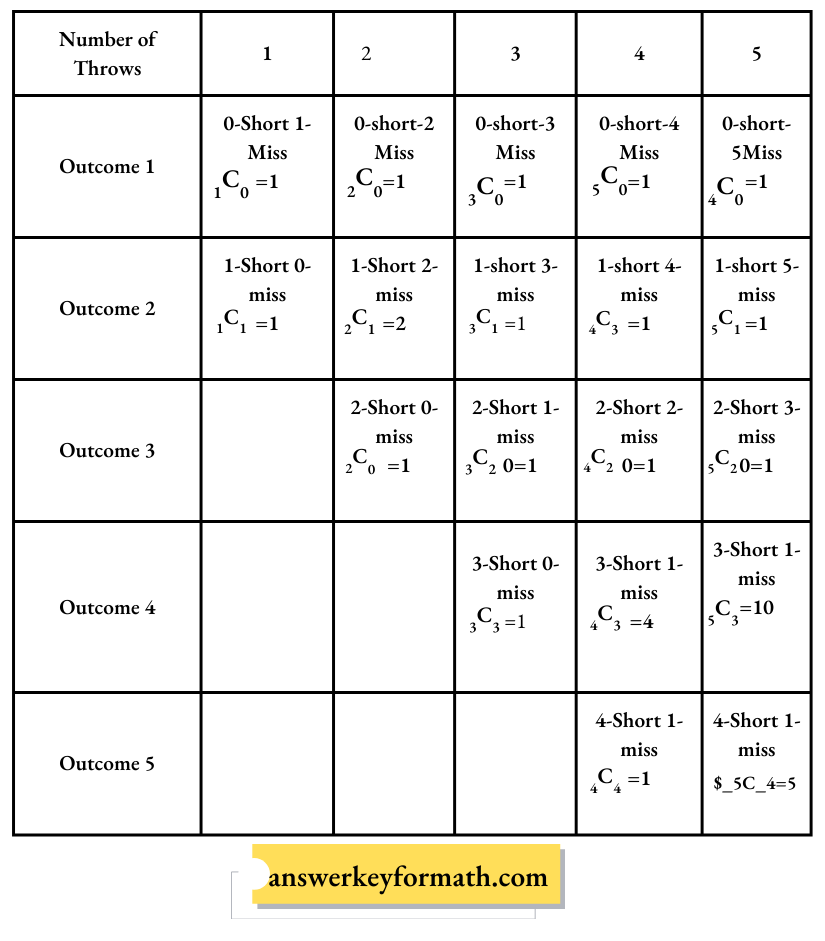
The task is to complete the given table with a corresponding number of combinations that represent the number of ways a certain event can happen.

Chapter 15, Section 15.4, Exercise 8 Page 1,200

Step 1

Carnegie learn geometry volume 2 Exercise 8 Chapter 15 Page 1200

Chapter 15, Section 15.4, Exercise 9 Page 1,201

Step 1

A person has a shooting chance of \(\frac{2}{3}\)
​, and the probability of missing is \(\frac{1}{3}\)

P(shoot)= \(\frac{2}{3}\)

P(miss)= \(\frac{2}{3}\)

Chapter 15, Section 15.4, Exercise 10 Page 1,202

Step 1

A person has a shooting of 2 out of 5 chance, and the probability of missing is \(\frac{3}{5}\)

P(shoot)= \(\frac{2}{5}\)

P(miss)= \(\frac{3}{5}\)

To get the probability of shooting r times in n shoots, we came up with the formula:

⇒ \({ }_n C_r \cdot[P(\text { shoot })]^r \cdot[P(\text { miss })]^{n-r}\)

Chapter 15, Section 15.4, Exercise 11 Page 1,202

Step 1

A person has a shooting of 9 out of 10 chance, and the probability of missing \(\frac{1}{10}\)

P(shoot)= \(\frac{9}{10}\)

P(miss)= \(\frac{1}{10}\)

To get the probability of shooting r times in n shoots, we came up with the formula:

⇒ \({ }_n C_r \cdot[P(\text { shoot })]^r \cdot[P(\text { miss })]^{n-r}\)

Chapter 15, Section 15.4, Exercise 1 Page 1,203

Step 1

Let

R be the event of getting a red face, and B be the event of getting a blue face. A fair cube has
4 red faces and 2 blue faces. We have the following probabilities:

P(R)= \(\frac{4}{6}=\frac{2}{3}\)

P(B)= \(\frac{2}{6}=\frac{1}{3}\)

When we roll the cube multiple times, we are doing multiple trials. To get the probabilities of multiple trials, we have:

⇒ \({ }_n C_r \cdot[P(A)]^r \cdot[P(B)]^{n-r}\)

Chapter 15, Section 15.4, Exercise 2 Page 1,204

Step 1

Let R be the event of getting a red face, and B be the event of getting a blue face. A fair cube has
4 red faces and 2 blue faces. We have the following probabilities:

P(R)= \(\frac{4}{6}=\frac{2}{3}\)

P(B)= \(\frac{2}{6}=\frac{1}{3}\)

When we roll the cube multiple times, we are doing multiple trials. To get the probabilities of multiple trials, we have:

⇒ \({ }_n C_r \cdot[P(A)]^r \cdot[P(B)]^{n-r}\)

Chapter 15, Section 15.4, Exercise 3 Page 1,205

Step 1

A tetrahedron has 3 blue faces and 1 red face. We have the following probabilities:

Chapter 15, Section 15.4, Exercise 4 Page 1,205

Step 1

Let R be the event of getting a red face, and B the event of getting a blue face.

A tetrahedron has 1 red face and 3 blue faces. We have the following probabilities:

P(R)= \(\frac{1}{4}\)

P(B)= \(\frac{3}{4}\)

When we roll the tetrahedron multiple times, we are doing multiple trials. To get the probabilities of multiple trials, we have:

⇒ \({ }_n C_r \cdot[P(A)]^r \cdot[P(B)]^{n-r}\)

Carnegie Learning Section 15.5: Advanced Geometry Concepts – To Spin or Not to Spin

Carnegie Learning Geometry Student Text 2nd Edition Chapter 15 Section 15.5 To Spin Or Not To Spin


Chapter 15, Section 15.5, Exercise 1 Page 1,208

Step 1

The task is to calculate which of the given dartboards will give the player the highest probability of hitting the shaded area.

Chapter 15, Section 15.5, Exercise 2 Page 1,208

Step 1

The task is to determine the possible and the desired outcomes when the player throws a dart at a dart board.

Chapter 15, Section 15.5, Exercise 3 Page 1,209

Step 1

The task is to determine whether the given reasoning is correct or incorrect.

Chapter 15, Section 15.5, Exercise 4 Page 1,209

Step 1

The task is to determine the probability of hitting the shaded region of each of three given dartboards.

Chapter 15, Section 15.5, Exercise 5 Page 1,211

Step 1

The task is to determine which of the given three dartboards will make the competition most difficult.

Chapter 15, Section 15.5, Exercise 6 Page 1,212

Step 1

We are to find the probability of hitting the shaded part of this board:

Carnegie learn geometry volume 2 Exercise 6 Chapter 15 Page 1212

Chapter 15, Section 15.5, Exercise 1 Page 1,213

Step 1

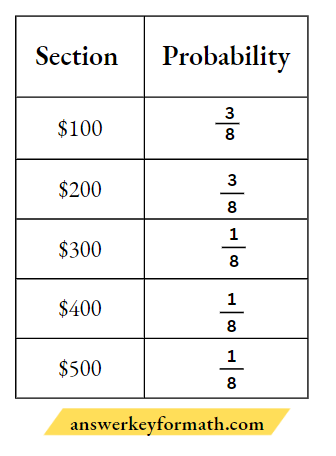
In a spinning wheel, there are 8 equal sections. Three sections will give you a chance of winning $100. Two sections will give you a chance of winning $200 and one section each for $300,$400, and $500

Chapter 15, Section 15.5, Exercise 2 Page 1,213

Step 1

In a spinning wheel, there are 8 equal sections. Three sections will give you a chance of winning $100 Two sections will give you a chance of winning $200 and one section each for $300, $400, and $500

Chapter 15, Section 15.5, Exercise 3 Page 1,213

Step 1

The task is to determine how often is expected to win a certain amount when the wheel is spun.

Chapter 15, Section 15.5, Exercise 4 Page 1,214

Step 1

In a spinning wheel, there are 8 equal sections. Three sections will give you a chance of winning $100. Two sections will give you a chance of winning $200, and one section each for $300, $400, and $500.

Carnegie learn geometry volume 2 Exercise 4 Chapter 15 Page 1214

Chapter 15, Section 15.5, Exercise 1 Page 1,215

Step 1

We are either to keep $300 or to spin a wheel.

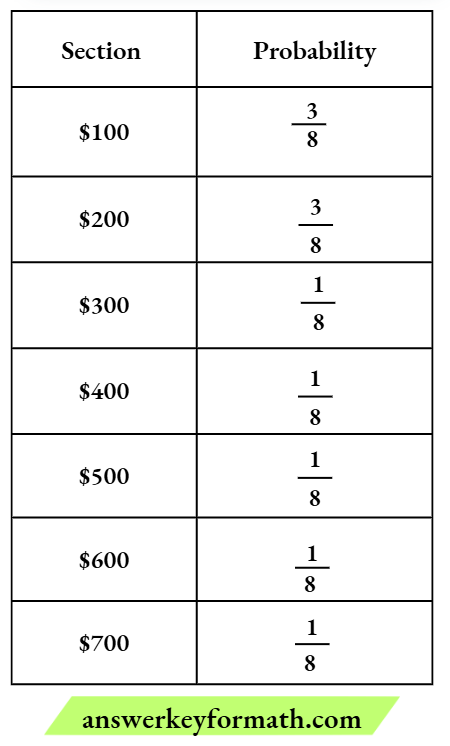
In a spinning wheel, there are 8 equal sections. Two sections will give you a chance of winning $100. The other 6 sections will give you $200, $300, $400, $500,$600 and $700

Chapter 15, Section 15.5, Exercise 2 Page 1,215

Step 1

We are either to keep $300 or to spin a wheel.

Carnegie learn geometry volume 2 Exercise 2 Chapter 15 Page 1215

Chapter 15, Section 15.5, Exercise 1 Page 1,216

Step 1

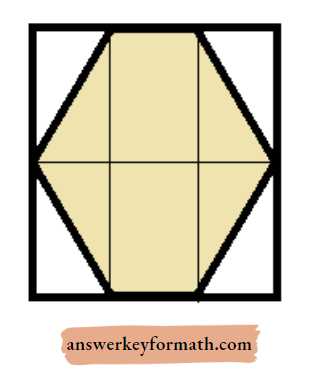
We have a dartboard that has dimensions on its parts. Let us try to get the probability of each part.

Chapter 15, Section 15.5, Exercise 2 Page 1,219

Step 1

The task is to calculate the expected value for a 1 dart throw for the given dart board.

Carnegie Learning Geometry Student Text 2nd Edition Solutions

Carnegie Learning Geometry Student Text 2nd Edition Solutions

Carnegie Learning Math Series Volume 1 4th Edition Chapter 2 Exercise 2.1 Linear Functions

Carnegie Learning Math Series Volume 14th Edition Chapter 2 Linear Functions

Carnegie Learning Math Series Volume 14th Edition Chapter 2 Exercise 2.1 Solution Page 41 Problem 1 Answer

Given: We have given that Animal trackers are experts at identifying animals by their footprints.

To find; here we have to guess that what animal made the tracks shown in the picture.

Animal Track Identification Guide. 1 Wolf Tracks.

They have four symmetrical toes on their front and back feet, and the front track will be a little bit longer and wider than the back. 2 Coyote Tracks. 3 Fox Tracks. 4 Dog Tracks. 5 Mountain Lion Tracks.

spotting animal tracks may pose a fun mystery to solve.

For others it may be a startling experience that rapidly turns frightening.

How you react can be a direct result of your ability to identify these paw prints.

A positive identification can put you at ease, or the unknown can bring on a sudden moment of terror.

Depending on the environment around your home, any number of animals may make a path through your back, front or side yard.

But how do you know if it’s a wild animal or just the neighbor’s cat? There are several factors you can look for to help identify the prints that are left behind.

Canine Tracks

Most of the time when you hear the word canine you immediately think of the family dog.

A coyote’s print measures between two and a half to three and a half inches long and it’s more narrow than that of a wolf.

We conclude that the coyote’s print measures between two and a half to three and a half inches long and it’s more narrow than that of a wolf.

Page 44 Problem 2 Answer

In Sequence B has figure which is closed and  bounded by the lines.

We require to find the third term in sequence  B.

The first term in the sequence B is closed and  bounded figure formed by three lines is triangle.

The Second term in the sequence B is closed and  bounded figure formed by four lines is square.

The third term in the sequence B is closed and  bounded figure formed by five lines is pentagon.

The third term in the sequence B is pentagon.

Page 44 Problem 3 Answer

Sequence C: A, B, C, D, E, F, G,…

This is the sequence of alphabetic order and the first term is A and the last term is Z ( i.e 26th term. ).

Require to find the twenty-fifth term in Sequence C.

The given sequence C is

Sequence C:A,B,C,D,E,F,G,…

From the above sequence, the first term is A.

The second term is B.

The third term is C.

Similarly, counting the alphabetic terms in the sequence, we will get the twenty-fifth term as Y.

The twenty-fifth term in sequence C is Y.

Page 44 Problem 4 Answer

Given:

Carnegie Learning Math Series, Volume 1, 4th Edition, Chapter 2 Linear Functions 4

sequence D consists of the following shapes

To find: The twelfth term in the given sequence D.

The given sequence D are

Carnegie Learning Math Series, Volume 1, 4th Edition, Chapter 2 Linear Functions 4 1

Since the above sequence is cyclic and members of the sequence are arrow symbols.

Also, it completed one cycle with every fourth term.

And, the fifth shape is the same as the shape of the first term. Here period of a cycle is 4.

Similarly, the twelfth shape is the second shape shown in the below figure.

Carnegie Learning Math Series, Volume 1, 4th Edition, Chapter 2 Linear Functions 4 2

Hence, the twelfth term in the sequence is the arrow facing up.

Twelfth shape in the sequence D is arrow facing up.

Carnegie Learning Math Series, Volume 1, 4th Edition, Chapter 2 Linear Functions 4 3

Solutions For Linear Functions Exercise 2.1 In Carnegie Learning Math Series Page 45 Problem 5 Answer

Make sure each term indicates the total number of beads on the necklace after Emily completes that step

Write the first six terms in the sequence that represents this situation.

She starts with one black bead and next, she places one green bead on each side of the black bead, then total beads in second step are 3

Then, she places two black beads on each side of the green beads,its means that four beads are add with three beads and total beads are 7

Then, she places three green beads on each side of the black beads, its means that, six beads add with seven and total beads are 13

She continues this pattern two more times, alternating between black and green sets of beads.

1

1 + 2 × 1 = 3

3 + 2 × 2 = 7

7 + 2 × 3 = 13

13 + 2 × 4 = 21

21 + 2 × 5 = 31

x0 = 1,

xn = 2n + xn−1. for n ≥ 1

Sequence {1, 3, 7, 13, 21, 31,…}

Page 46 Problem 6 Answer

He creates one house and then adds additional houses by adjoining them.

The first term should indicate the number of toothpicks used for one house.

The second term should indicate the total number of toothpicks needed for two houses, and so on.

construct a sequence of the first eight terms in the sequence that represents this situation.

Six toothpicks used for one house.

11 toothpicks used for two house, since one toothpick is common for both house. So only five more toothpicks is required to attached second house with first.

​He creates one house and then adds additional houses by adjoining them the he required five more  toothpicks for each additional houses.

The first term (indicate the number of toothpicks used for one house) =6

The second term (  indicate the total number of toothpicks needed for two houses) =6+5=11.

Similarly, we have

3rd  term =11+5=16

4th  term =16+5=21

5th  term=21+5=26

6th  term =25+5=31

7th  term =31+5=36

8th  term =36+5=41

The required sequence ={6,11,16,21,26,31,36,41,…}, this is an increasing sequence and common difference is 5.

Page 46 Problem 7 Answer

They ask us how is the number of toothpicks needed to build each house represented in the sequence.

Start with 6 add 5 more toothpicks for each additional houses.

Toothpicks= 5 × number of houses + 1 or, f(x) = 5x + 1 for all x ∈ N

Where f(x) is the Toothpicks and x is number of houses.

{f(1), f(2), f(3),…} or,{6, 11, 16,…}

Toothpicks= 5 × number of houses + 1

Carnegie Learning Math Series 4th Edition Exercise 2.1 Solutions Page 47 Problem 8 Answer

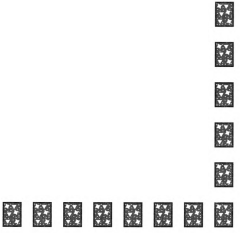
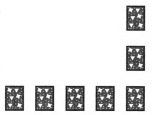
Given Picture, there are eight column and six row.

Total number of card on the table is 48.

Each turn, he collects all of the cards in the right-most column, and all the cards in the bottom row.

Construct the sequence to show the number of cards removed during each of the first five turns.

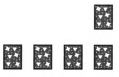
In the first turn, he collects all the cards from the first column from the right-most column and the first row from the bottom

We get,

Carnegie Learning Math Series, Volume 1, 4th Edition, Chapter 2 Linear Functions 8

The total number of cards removed in the first turn are 13.


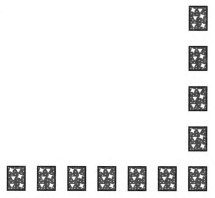
In the second turn, he collects all the cards from the second column from the right-most column and the second row from the bottom.

We get,

Carnegie Learning Math Series, Volume 1, 4th Edition, Chapter 2 Linear Functions 8 1

The total number of cards removed in the second turn are 11.

Since, in the second turn, the remaining rightmost column and the bottom row has 11 cards which are less than in the first turn by 2.

13−2=11

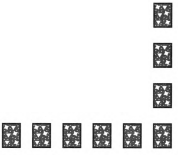
In the third turn, he collects all the cards from the third column from the right-most column and the third row from the bottom.

We get,

Carnegie Learning Math Series, Volume 1, 4th Edition, Chapter 2 Linear Functions 8 3

The total number of cards removed in the second turn are 9.

Since, in the third turn, the remaining rightmost column and the bottom row has 9 cards which are less than in the previous turn by 2.

So, we can write

11−2=9

In the fourth turn, he collects all the cards from the fourth column from the right-most column and the fourth row from the bottom.

We get,

Carnegie Learning Math Series, Volume 1, 4th Edition, Chapter 2 Linear Functions 8 2

The total number of cards removed in the second turn are 7.

Since, in the fourth turn, the remaining rightmost column and the bottom row has 7 cards which are less than in the previous turn by 2.

So, we can write

9−2=7

In the fifth turn, he collects all the cards from the fifth column from the right-most column and the fifth row from the bottom.

We get,

Carnegie Learning Math Series, Volume 1, 4th Edition, Chapter 2 Linear Functions 8 4

The total number of cards removed in the second turn are 5.

Since, in the fourth turn, the remaining rightmost column and the bottom row  has 5 cards which are less than in the previous turn by 2.

So, we can write

7−2=5

Hence, the sequence is {13,11,9,7,5}, decreasing each term in the sequence by 2.

Sequence to show the number of cards removed during each of the first five turns is {13,11,9,7,5}.

Linear Functions Solutions Chapter 2 Exercise 2.1 Carnegie Learning Math Series Page 47 Problem 9 Answer

Given Picture, there are eight column and six row . Total number of card on the table is 48.

Each turn, he collects all of the cards in the right-most column, and all the cards in the bottom row.

Now we have to write the sequence to show the number of cards remaining after each of the first five turns.

In first turn he collects the cards in the first column  and also in the bottom row, so there will be  13 cards collected.

So after first turn the remaining number of cards is

48−13=35

Now one column and one row  are removed from the table.

In second turn, he collects the cards in the remaining right most column and also in the remaining bottom row, so there will be 11 cards collected.

So after second turn the remaining number of cards is 35−11=24

Now one column and one row  are removed from the table.

In the similar way, in the third turn there will be 9 cards collected.

So after third turn the remaining number of cards is, 24−9=15

In the forth turn there will be 7 cards collected.

So after forth turn the remaining number of cards is, 15−7=8

In the fifth turn there will be 5 cards collected.

So after fifth turn the remaining number of cards is, 8−5=3

The sequence is : {35,24,15,8,3}.

The sequence to show the number of cards remaining after each of the first five turns is {35,24,15,8,3}.

Page 47 Problem 10 Answer

Here we have to describe the pattern shown in the each sequence.

First sequence:{13,11,9,7,5}.

Second sequence: {35,24,15,8,3}.

Now consider the first sequence,

{13,11,9,7,5}

In this sequence, the pattern is decreased by 2.

For example, 13−11=2

11−9=2

9−7=2 and so on.

Now consider the second sequence, {35,24,15,8,3}

In this sequence, each term is decreased by the values which starts in the first sequence.

For example, 48−35=13

35−24=11

24−15=9 and so on.

In he first sequence, {13,11,9,7,5} the pattern is decreased by 2.

In the second sequence, {35,24,15,8,3}

each term is decreased by the values which starts in the first sequence.

Step-By-Step Solutions For Carnegie Learning Math Series Chapter 2 Exercise 2.1 Page 48 Problem 11 Answer

Given that Lenny is making arrangements with pennies.

He has made three penny arrangements and now he wants to make five more arrangements.

Each time he adds another arrangement, he needs to add one more row to the base than the previous row in the previous arrangement.

Here we have to write the first eight terms in the sequence that represents the given situation.

Each term should indicate the total number of pennies in each arrangement.

The first arrangement will have only 1 penny.

So the first term is 1.

In the second arrangement, Lenny has to add a new row, and this new row requires an additional penny.

So the second term is,

1+2=3

In the third arrangement, Lenny has to add a new row, and this new row requires an additional penny.

So the third term is,

3+3=6

In the forth arrangement, Lenny has to add a new row, and this new row requires an additional penny.

So the forth term is,

6+4=10

In the fifth arrangement, Lenny has to add a new row, and this new row requires an additional penny.

So the fifth term is,

10+5=15

In the sixth arrangement, Lenny has to add a new row, and this new row requires an additional penny.

So the sixth term is,

15+6=21

In the seventh arrangement, Lenny has to add a new row, and this new row requires an additional penny.

So the seventh term is,

21+7=28

In the eight arrangement, Lenny has to add a new row, and this new row requires an additional penny.

So the eight term is,

28+8=36

Hence the sequence is : {1,3,6,10,15,21,28,36}.

The first eight terms in the sequence that indicates the total number of pennies in each arrangement is {1,3,6,10,15,21,28,36}.

Carnegie Learning Math Series Chapter 2 Exercise 2.1 Free Solutions Page 48 Problem 12 Answer

Since, it is given that each time Lenny adds another arrangement, he needs to add one more row to the base than the previous row in the previous arrangement.

Also, in the first arrangement, we have only one penny, and in the second arrangement we have three pennies, and in the third arrangement, we have six pennies.

This means every time when we add one row in the bottom, it will increase by 1

penny from the previous row.

The three given arrangements which indicate the total number of pennies in each arrangement is

0+1=1

1+2=3

3+3=6

Similarly, the next five sequences that indicate the total number of pennies in each arrangement can be written as

6+4=10

10+5=15

15+6=21

21+7=28

28+8=36

The pattern does not increase by the same amount each time because in order to add one more row to the base than the previous row, in the previous arrangement we need one additional penny.

Hence, the patterns do not increase by the same amount each time because each row requires an additional penny as compared to the previous one.

Carnegie Learning Math Series Exercise 2.1 Student Solutions Page 49 Problem 13 Answer

Given that, Dawson is stacking cubes in configurations that look like stairs.

Each new configuration has one additional step.

Here we have to write the first five terms in the sequence that represents this situation.

Each term should indicate the number of faces shown from the cubes shown.

The bottom faces are not shown. Given that the first cube has 5 shown faces.

Given that the first cube has 5 faces, therefore the first term is 5.

In the second configurations there will be 2 additional cube in the bottom, which include 7

additional faces.

So the total number of faces after second arrangement is,

5+7=12

In the third configurations there will be 3 additional cube in the bottom, which include 9 additional faces.

So the total number of faces after third arrangement is,

12+9=21

In the forth configurations there will be 4 additional cube in the bottom, which include 11 additional faces.

So the total number of faces after forth arrangement is,

21+11=32

In the fifth configurations there will be 5 additional cube in the bottom, which include 13 additional faces.

So the total number of faces after fifth arrangement is,

32+13=45

Hence the first five terms in the sequence is : {5,12,21,32,45}.

The first five terms in the sequence which shows the number of faces of cubes in each arrangement is : {5,12,21,32,45}.

Page 49 Problem 14 Answer

Here we have to predict the number of shown faces in a stair configuration that is 7 cubes high.

From problem (1) we concluded that the first five terms in the sequence which shows the number of faces of cubes in each arrangement is : {5,12,21,32,45}.

In the sixth configurations there will be 6 additional cube in the bottom, which include 15 additional faces.

So the total number of faces after sixth arrangement is,

45+15=60

In the sixth configurations there will be 7 additional cube in the bottom, which include 17 additional faces

So the total number of faces after seventh arrangement is,

60+17=77

Therefore, the number of shown faces in a stair configuration that is 7 cubes high is 77.

The number of shown faces in a stair configuration that is 7 cubes high is 77.

Page 50 Problem 15 Answer

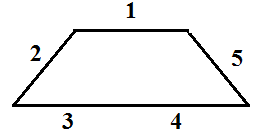
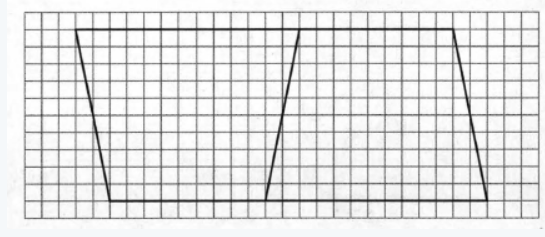
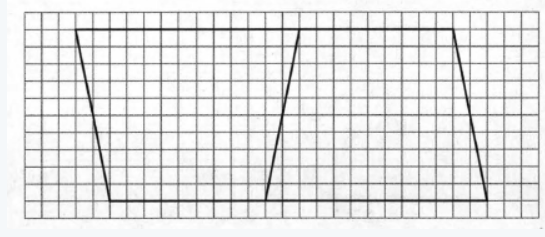
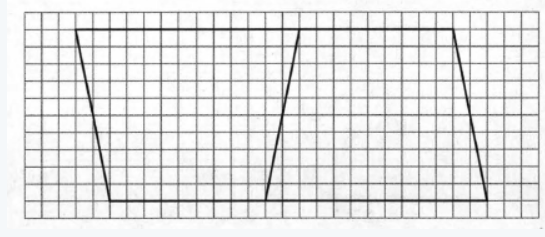
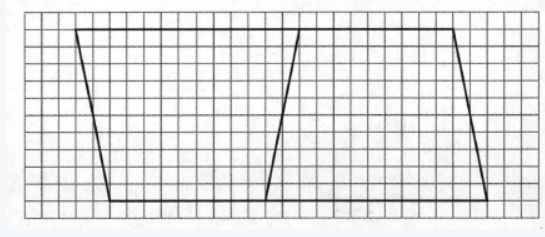
arrangements of the tables that have trapezoidal shape top.

The below diagram shows the total number of students who can fit around a table

Carnegie Learning Math Series, Volume 1, 4th Edition, Chapter 2 Linear Functions 15

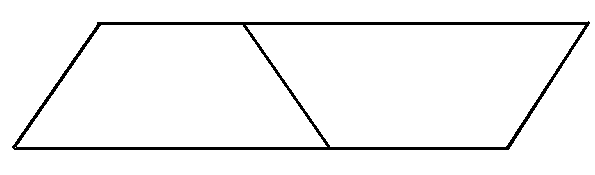
And, the second diagram shows the arrangement of tables to make a long table

Carnegie Learning Math Series, Volume 1, 4th Edition, Chapter 2 Linear Functions 15 1

Here we have to write the first five terms in the sequence representing the total number of students that can sit around one, two, three, four, and five tables.

In the first table, it is given that 5 students can sit together.

So the first term is 5.

In the second arrangement, 2 tables will be joined together.

Since the tables are connected 3 more students can sit.

So the second term is,5+3=8

In the third arrangement, 3 tables will be joined together.

Since the tables are connected 3 more students can sit.

So the third term is,

8+3=11

In the forth arrangement, 4 tables will be joined together.

Since the tables are connected 3 more students can sit.

So the forth term is,

11+3=14

In the fifth arrangement, 5 tables will be joined together.

Since the tables are connected 3 more students can sit.

So the fifth term is,

14+3=17

Hence, the sequence is : {5,8,11,14,17}.

The first 5 terms in the sequence that represents the total number of students that can sit around one, two, three, four, and five tables is {5,8,11,14,17}.

Linear Functions Exercise 2.1 Carnegie Learning 4th Edition Answers Page 51 Problem 16 Answer

We are given an initial picture of a flower at stage 0 with a pair of petals.

We are required to write first five terms of the sequence.

Given is that at stage 0, a flower has a pair of petals i.e., 2 petals.

So, at stage 1, there will be two pairs of petals i.e., 4 petals.

Similarly, at stage two, there will be three pairs i.e., 6 petals.

At stage three, there will be four pairs i.e., 8 petals.

At stage four, there will be five pairs i.e., 10 petals.

So, the first five terms of the sequence will be

2,4,6,8,10

The first five terms of the sequence which represents the number of petals of a flower and at stage 0 with a pair of petals are:

2,4,6,8,10

Page 52 Problem 17 Answer

Given that every Friday, Sarah earns $14 for babysitting.

And given every Saturday, Sarah spends $10 going out.

Now we have to write a sequence to show the amounts of money Sarah has every Friday after babysitting and every Saturday after going out with her friends for five consecutive weeks.

And the sequence should have 10 terms.

Given that every Friday, Sarah earns $14 for babysitting.

Therefore, the first term is 14.

And every Saturday, Sarah spends $ 10 going out.

Therefore the second term is,14−10=4

Again Friday, Sarah earns $14 for babysitting.

Therefore the third term is, 4+14=18

Again Saturday, Sarah spends $10 going out.

Therefore the forth term is, 18−10=8

Again Friday, Sarah earns $14 for babysitting.

Therefore the fifth term is, 8+14=22

Again Saturday, Sarah spends $10 going out.

Therefore the sixth term is, 22−10=12

Again Friday, Sarah earns $14 for babysitting.

Therefore the seventh term is, 12+14=26

Again Saturday, Sarah spends $10 going out.

Therefore the eight term is, 26−10=16

Again Friday, Sarah earns $14 for babysitting.

Therefore the ninth term is, 16+14=30

Again Saturday, Sarah spends $10 going out.

Therefore the forth term is, 30−10=20

Hence the sequence is: {14,4,18,8,22,12,26,16,30,20}.

The sequence to show the amounts of money Sarah has every Friday after babysitting and every Saturday after going out with her friends for five consecutive weeks is {14,4,18,8,22,12,26,16,30,20}.

Page 52 Problem 18 Answer

We are given that students start collecting cans in the second week of their school and they collected 120 cans per week.

We are required to determine the sequence to calculate the running total of cans collected through first nine weeks of school.

We can say, by definition of sequence, that there is an increase of 120 per week as they increase.

So, in the first week, they collected nothing i.e., the first term will be 0.

Now, for the next week, they collect 120 cans per week, so the next term will be 120.

In third week, they collect 120 more cans, i.e., the third term will be 240.

So, we can write the sequence for nine weeks as

0,120,240,360,480,600,720,840,960

The sequence for the running total of cans collected in first nine weeks if they collected 120cans per week will be:

0,120,360,480,600,720,840,960

Page 54 Problem 19 Answer

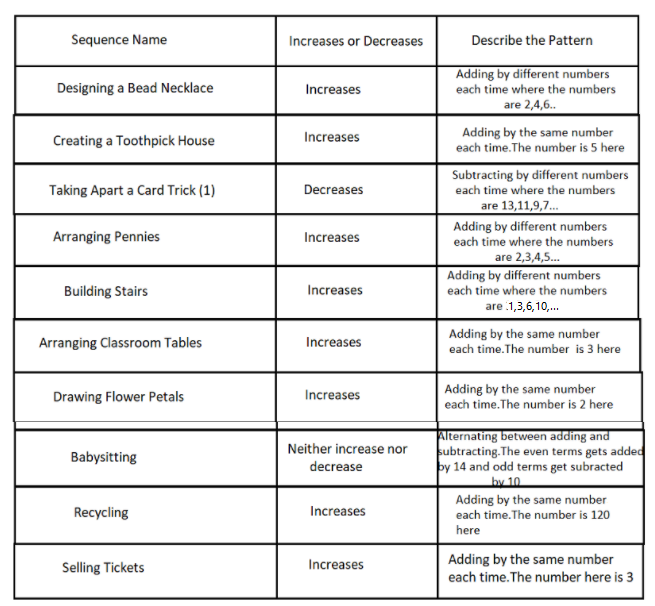
We have to describe the pattern of each sequence given in the table and determine which among the sequences are increasing and which are decreasing.

We have to tabulate our findings in the table given.

Carnegie Learning Math Series, Volume 1, 4th Edition, Chapter 2 Linear Functions 19

For designing a bead necklace, Emily started with one black color bead, and then she added one green color bead on both sides of the black beads and she continues the same alternating pattern of black and green beads by increasing the number of beads every time.

So, the beads of the necklace increase by following the pattern

0+1=1

[First black bead]

For, adding both sides one green bead, we can write

1+1=2

So, the total number of beads in the necklace are 1+2=3

Now, again we add two black beads on both sides of the green beads

2+2=4

So, the total number of beads in the necklace are 2+3+2=7.

So, it follows the pattern of adding different numbers of beads as 2,4,6,8,…

For crafting toothpick houses,

To make the first house we need 5 toothpicks.

For the second house, we need 4 toothpicks.

So, the sequence will be 5,5+4,5+4+4,5+4+4+4,…

=5,9,13,17,…

The followed term is 4 more than the previous one.

It is a increasing sequence.

or taking apart a card Trick(1)

First turn: we will remove 6 cards from the right side and 7 cards from the bottom side.

Total 13 cards removed.

Second turn: We will remove 5 cards from the right side and 6 cards from the bottom side.

Total 11 cards removed.

Third turn: We will remove 4 cards from the right side and 5 cards from the bottom side.

Total 9  cards revoved.

The sequence is 13,11,9,7,…

The followed term is 2  less from the previous term, so it is decreasing sequence.

Arranging pennies

The number of pennies for the first arrangement is 1.

The number of pennies for the second arrangement is 3.

The number of pennies for the third arrangement is 6.

The number of pennies for the third arrangement is 6+4=10

The sequence is 1,3,6,10,…

The followed term is greater than the previous term,

It is an increasing sequence.

Building strains

The number of blocks of the first strain is 1

The number of blocks of the second strain is 3

The number of blocks of the third strain is (3+3)=6

The number of blocks of the fourth strain is (6+4)=10

The sequence is 1,3,6,10…

The followed term is greater than the previous term. It is an increasing sequence.

Arranging classroom

The number of students on the first bench is 5.

The number of students on the second bench is 5+4=9.

The number of students on the third bench is 5+4+4=13

The sequence is 5,9,13,17,…

The followed term is greater than the previous term. It is an increasing sequence.

Drawing flower petals

The number of petals in zero stage is 2.

The number of petals in the first stage is (2+2)=4

The number of petals in the second stage is (4+2)=6

The sequence is 2,4,6,8,…

The followed term is greater than the previous term. It is an increasing sequence.

Babysitting

First week, Sarah spends ($14+$10)=$24

Second week, Sarah spends ($14+$10)=$24

Third week, Sarah spends ($14+$10)=$24

The sequence is 24,24,24,…

The sequence is neither increasing nor decreasing.

Recycling

The number of cans collected on the first week is 120.

The number of cans collected on the second week is (120+120)=240

The number of cans collected on the third week is (120+120+120)=360

The sequence is 120,240,360,480,…

The followed term is greater than the previous term. It is an increasing sequence.

Selling Tickets

The total amount in his cash box is 2×$10+5×$5+21×$1=$66

Each ticket cost $3

The total amount in his cash box after selling the first ticket is $66+3=$69

The total amount in his cash box after selling the second ticket  is $66+$3+$3=$72

The sequence is 66,69,72,75,…

The followed term is greater than the previous term. It is an increasing sequence.

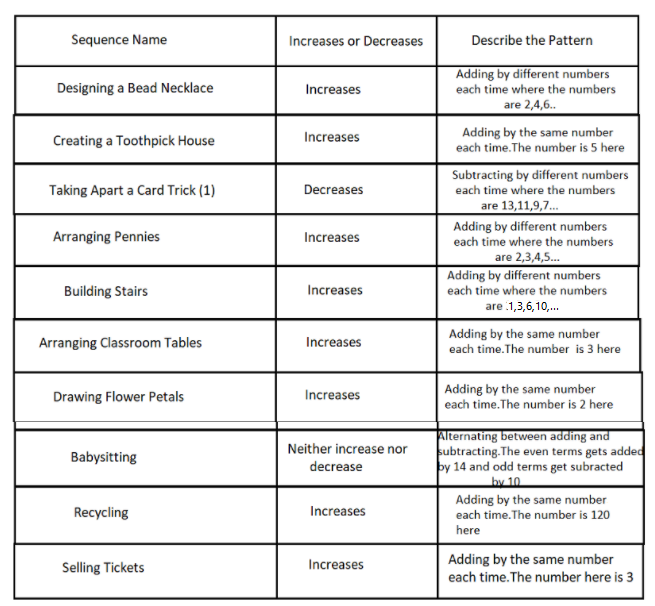
Using the conclusions from problem 1 to problem 9, we complete the given table

Carnegie Learning Math Series, Volume 1, 4th Edition, Chapter 2 Linear Functions 19 1

Hence we recorded our conclusions.

Page 54 Problem 20 Answer

Given:

Carnegie Learning Math Series, Volume 1, 4th Edition, Chapter 2 Linear Functions 20

From problem 2,

The necklace designed by Emily contains alternating beads of black and green colour beads.

She starts with one black bead, then she placed one green bead on both sides of the black beads and so on.

She follows the above steps six times.

To find:

Which sequences are similar and why in the given steps.

To check if two sequences are similar we just have to check if they have similar pattern.

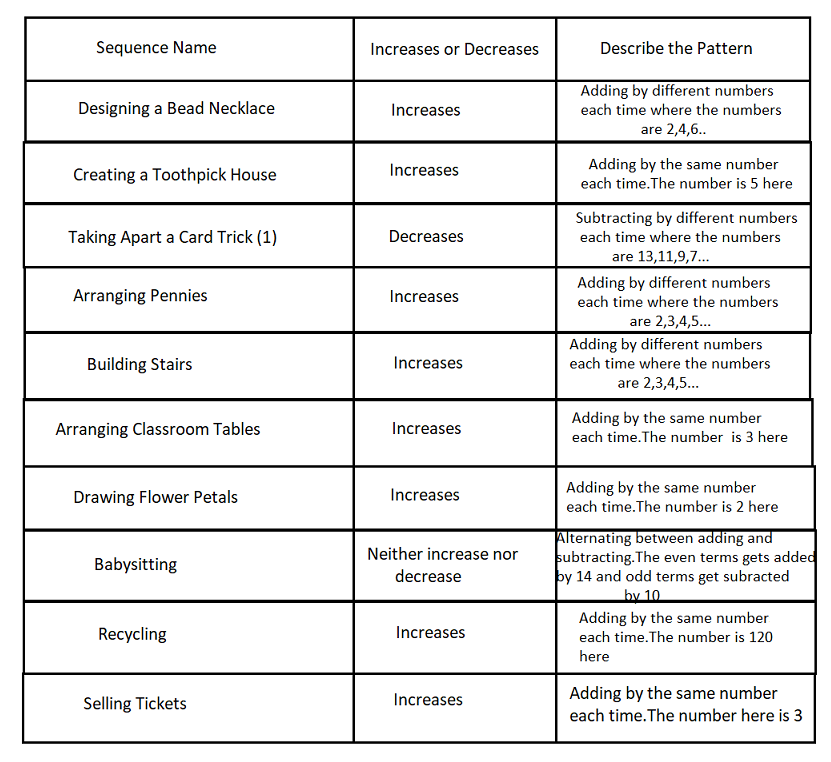
Consider the table which we found in the previous problem

Designing a bead necklace, taking apart a card trick, arranging pennies and Building stairs have a similar pattern which is “adding or subtracting by a different number each time, with the numbers being part of a pattern”.

Hence these sequences are similar.

Creating a Toothpick House, arranging classroom tables, drawing flower petals, recycling, and selling tickets follow a similar pattern which is “adding by the same number each time”.

Hence these sequences are similar.

Babysitting is not similar to any other sequence in the given collection as it has a completely different pattern.

Hence we found sequences that are similar from the given collection of sequences that are designing a bead necklace, taking apart a card trick, arranging pennies, and building stairs since it’s adding or subtracting by a different number each time, with the numbers being part of a pattern.

Carnegie Learning Math Series Volume 1 4th Edition Chapter 1 Exercise 1.4 Linear Equations

Carnegie Learning Math Series Volume 1 4th Edition Chapter 1 Linear Equations

Carnegie Learning Math Series Volume 14th Edition Chapter 1 Exercise 1.3 Solution Page 32 Problem 1 Answer

We have been given that Terry, Trudy, Tom, and Trevor have challenged their friends with this riddle.

Terry said: “If you add 150 to the number of MP3 downloads Tom has and then double that number and finally divide it by three, you have the number of MP3 downloads I have.”

Trudy said: “If you take the number of MP3 downloads Tom has, subtract 30, multiply that difference by 5, and finally, divide that product by 4, the result will be the number of MP3 downloads I have.”

Trevor said: “Well if you take twice the number of MP3 downloads Tom has, add 30, multiply the sum by 4, and finally, divide that product by 3, you will have the number of MP3 downloads I have.”

We have been asked what we need to know to determine the number of MP3 downloads each person has.

We need to know the number of MP3 downloads Tom has to find out the number of MP3 downloads each person has.

We have answered that we need to know the number of MP3 downloads Tom has to find out the number of MP3 downloads each person has.

Page 33 Problem 2 Answer

We have been given that Tom has 150 MP3 downloads.

We have to determine how many MP3 downloads Terry has.

We will find the result.

Given that, Terry has 150 MP3 downloads.

We know that,

The number of MP3 downloads Terry has is,

=2(150+x)/3

Here x=150,

=2(150+150)/3

=2(300)/3

=200

​We have found that if Tom has 150 MP3 downloads, Terry will have 200 MP3 downloads.

Page 33 Problem 3 Answer

We have been given that Tom has 150 MP3 downloads.

We have to determine how many MP3 downloads Trudy has.

We will find the result.

Given that, Tom has 150 MP3 downloads.

We know that,

The number of MP3 downloads Trudy has is,

=5(x−30)/4

Here x=150,

=5(150−30)/4

=5(120)/4

=150

We have found that if Tom has 150 MP3 downloads, Trudy will have 150 MP3 downloads.

Page 33 Problem 4 Answer

We have been given that Tom has 150 MP3 downloads.

We have to determine how many MP3 downloads Trudy has.

We will find the result.

Given that, Tom has 150 MP3 downloads.

We know that,

The number of MP3 downloads Trudy has is,

=4(30+x)/3

Here x=150,

=4(30+150)/3

=4(180)/3

=240​

We have found that if Tom has 150 MP3 downloads, Trevor will have 240 MP3 downloads.

Solutions For Linear Equations Exercise 1.3 In Carnegie Learning Math Series Page 33 Problem 5 Answer

Given: Statement 1: Terry said: “If you add 150 to the number of MP3 downloads Tom has and then double that number and finally divide it by three, you have the number of MP3 downloads I have.”

Statement 2: Trudy said: “If you take the number of MP3 downloads Tom has, subtract 30, multiply that difference by 5, and finally divide that product by 4, the result will be the number of MP3 downloads I have.”

Statement 3: Trevor said: “Well, if you take twice the number of MP3 downloads Tom has, add 30, multiply the sum by 4, and finally divide that product by 3, you will have the number of MP3 downloads I have.”

Let x-number of MP3 downloads Terry is having.

y-number of MP3 downloads Trudy is having.

z-number of MP3 downloads Tom is having.

w-number of MP3 downloads Trevor is having.

According to first statement equation is

150+2z/3=x

→ 2z+450/3=x

According to second statement equation is

5(z−30)/4=y

→5z−150/4=y

According to third statement equation is

4(2z+30)/3=w

→8z+120/3=w

Now if Terry and Trevor have the same number of MP3 downloads then

2z+450/3=8z+120/3

→6z=550

→z=55

Tom has 55 MP3 downloads

Page 33 Problem 6 Answer

It is given that Terry and Trevor have the same number of MP3 downloads

y-number of MP3 downloads Trudy is having.

According to second statement equation is

5(z−30)/4=y

→5z−150/4=y

Since z=55

y=5(55)−150/4

→y=31.25

→y=31

Trudy has 31 MP3 downloads.

Carnegie Learning Math Series 4th Edition Exercise 1.3 Solutions Page 33 Problem 7 Answer

Terry and Trevor have the same number of MP3 downloads

According to first statement equation is

150+2z/3=x

→ 2z+450/3=x

According to third statement equation is

4(2z+30)/3=w

→8z+120/3=w

Since z=55

1.x=2(55)+450/3

→x=186.67

→x=187

2.w=8(55)+120/3

→w=186.67

→w=187

​Answer:

Terry and Trevor has same number of  MP3 downloads=187

Page 34 Problem 8 Answer

Given: Statement 1: Terry said: “If you add 150 to the number of MP3 downloads Tom has and then double that number and finally divide it by three, you have the number of MP3 downloads I have.”

Statement 2: Trudy said: “If you take the number of MP3 downloads Tom has, subtract 30, multiply that difference by 5, and finally divide that product by 4, the result will be the number of MP3 downloads I have.”

Statement 3: Trevor said: “Well, if you take twice the number of MP3 downloads Tom has, add 30, multiply the sum by 4, and finally divide that product by 3, you will have the number of MP3 downloads I have.”

If the sum of Trudy’s and Trevor’s MP3 downloads is 39 more than Terry has then equation becomes:

5z−150/4+8z+120/3

=39+2z+450/3

→39z=1338

→z=57.384615

→z=57

​Answer:

Tom has 57 MP3 downloads

Linear Equations Solutions Chapter 1 Exercise 1.3 Carnegie Learning Math Series Page 34 Problem 9 Answer

Given: Sum of Trudy’s and Trevor’s MP3 downloads is 39 more than the number of download Terry has

Since z=57

y=5(57)−150/4

→y=33.75

→y=34

​Answer:

Trudy has 34 MP3 downloads

Page 34 Problem 10 Answer

 Given: Sum of Trudy’s and Trevor’s MP3 downloads is 39 more than the number of download Terry has

Since z=57

w=8(57)+120/3

→w=192

​Answer:

Trevor has 192 MP3 downloads

Page 34 Problem 11 Answer

Given: Sum of Trudy’s and Trevor’s MP3 downloads is 39 more than the number of download Terry has

Since z=57

x= 2(57)+450/3

→x=188

​Terry has 188 MP3 downloads

Step-By-Step Solutions For Carnegie Learning Math Series Chapter 1 Exercise 1.3 Page 35 Problem 12 Answer

Given equation is

−7(3x+6)/3=7

We have to find out the value of the variable x.

Given equation is

−7(3x+6)/3=7

Multiply  both sides by 3

−7(3x+6)/3×3=7×3

−7(3x+6)=7×3

Divide both sides by 7

−7(3x+6)/7

=7×3/7

−(3x+6)=3  [ Cancel out 7]

−3x−6=3

Add 6 both sides

−3x−6+6=3+6

−3x=9

Divide both sides by −3

−3x/−3

=9/−3

x=−3

To check solution plug x=−3 of the left sides of the given equation

L.HS=−7(3×(−3)+6)/3

=−7(−9+6)/3

=−7×(−3)/3

=7×3/3

=3

=RHS

The solution for the equation is x=−3

Carnegie Learning Math Series Chapter 1 Exercise 1.3 Free Solutions Page 36 Problem 13 Answer

Given equation:

−3(−2x−5)/4=−5(3x+5)+5/4

We have to find out the value of x and substitute the value of the variable in the equation to check whether the value x

satisfies the equation or not.

Given equation is −3(−2x−5)/4=5/4−20(3x+5)/4

Multiply both sides by 4

−3(−2x−5)/4×4=5/4×4−20(3x+5)/4×4

−3(−2x−5)=5−20(3x+5)

Simplify the above equation

6x+15=5−60x−100

Add both sides by 60x and −15

6x+60x+15−15=5−60x−100+60x−15

66x=−110

Divide both sides by 66

x=−5/3

Plug the value of x in the L.H.S  of the given equation

L.H.S=−3(−2×−5/3−5)/4

=−3(10/3−5)/4

=−3(10−15/3)/4

=−3(−5/3)/4

=5/4

Plug the value of x in the R.H.S  of the given equation

R.HS=5/4−20(3(−5/3)+5)/4

=5/4−20(−5+5)/4

=5/4−0/4

=5/4

Hence L.HS=RHS

The value of x is correct.

Solution for the equation is x=−5/3

Carnegie Learning Math Series Volume 1 4th Edition Chapter 1 Exercise 1.3 Linear Equations

Carnegie Learning Math Series Volume 1 4th Edition Chapter 1 Linear Equations

Carnegie Learning Math Series Volume  14th Edition Chapter 1 Exercise 1.3 Solution Page 26 Problem 1 Answer

We are given conditions about the number of DVDs five friends – Dan, Donna, Betty, Jerry, and Kenesha have.

Dan has the fewest.

Donna has 7 more than Dan.

Betty has twice as many as Donna.

Jerry has 3 times as many as Dan.

Kenesha has 6 less than Donna.

We have to define a variable for the number of DVDs that Dan has.

Let us find about the number of DVDs that Dan possesses.

We are given that Dan has the fewest number of DVDs.

Let the variable for the number of DVDs that Dan has be x.

Hence, we have assigned the variable x for the number of DVDs that Dan has.

Page 26 Problem 2 Answer

We are given conditions about the number of DVDs five friends – Dan, Donna, Betty, Jerry and Kenesha have.

Dan has the fewest.

Donna has 7 more than Dan.

Betty has twice as many as Donna.

Jerry has 3 times as many as Dan.

Kenesha has 6 less than Donna.

We have to write and solve algebraic equations to find out the number of DVDs that Donna has.

Let us find about the number of DVDs that Dan possesses.

We are given that Dan has the fewest number of DVDs.

Let the variable for the number of DVDs that Dan has be x.

Now, let us find about the number of DVDs that Donna possesses.

She has 7 more of them than Dan has.

We can say that the number of DVDs that Donna has = x + 7

Hence, if the number of DVDs that Dan has is x, then the number of DVDs that Donna will have is x + 7.

We can substitute any value against x and then we can find the number of DVDs that Dan and Donna own.

Page 26 Problem 3 Answer

We are given conditions about the number of DVDs five friends – Dan, Donna, Betty, Jerry and Kenesha have.

Dan has the fewest.

Donna has 7 more than Dan.

Betty has twice as many as Donna.

Jerry has 3 times as many as Dan.

Kenesha has 6 less than Donna.

We have to write and solve algebraic equations to find out the number of DVDs that Betty has.

Let us find about the number of DVDs that Dan possesses.

We are given that Dan has the fewest number of DVDs.

Let the variable for the number of DVDs that Dan has be x.

Let us find about the number of DVDs that Donna possesses.

She has 7 more of them than Dan has.

We can say that the number of DVDs that Donna has = x + 7

Now, let us find about the number of DVDs that Betty possesses.

She has twice as many as Donna.

So, we can say that the number of DVDs that Betty has= 2 × (x + 7)

= 2x + 14

​If the number of DVDs that Dan has is x, then the number of DVDs that Donna will have is x + 7.

Hence, the number of DVDs that Betty will have is 2x + 14.

We can substitute any value against x and then we can find the number of DVDs that Dan, Donna, and Betty own.

Solutions For Linear Equations Exercise 1.3 In Carnegie Learning Math Series Page 26 Problem 4 Answer

We are given conditions about the number of DVDs five friends – Dan, Donna, Betty, Jerry, and Kenesha have.

Dan has the fewest.

Donna has 7 more than Dan.

Betty has twice as many as Donna.

Jerry has 3 times as many as Dan.

Kenesha has 6 less than Donna.

We have to write and solve algebraic equations to find out the number of DVDs that Jerry has.

Let us find out about the number of DVDs that Dan possesses.

We are given that Dan has the fewest number of DVDs.

Let the variable for the number of DVDs that Dan has be x.

Now, let us find out about the number of DVDs that Jerry possesses.

Jerry has 3 times as many of them as Dan.

So, we can say that the number of DVDs that Jerry has = 3x

Hence, if the number of DVDs that Dan has is x, then the number of DVDs that Jerry will have is 3x.

We can substitute any value against x and then we can find the number of DVDs that Dan and Jerry own.

Page 26 Problem 5 Answer

We are given conditions about the number of DVDs five friends – Dan, Donna, Betty, Jerry and Kenesha have.

Dan has the fewest.

Donna has 7 more than Dan.

Betty has twice as many as Donna.

Jerry has 3 times as many as Dan.

Kenesha has 6 less than Donna.

We have to write and solve algebraic equations to find out the number of DVDs that Kenesha has.

Let us find about the number of DVDs that Dan possesses.

We are given that Dan has the fewest number of DVDs.

Let the variable for the number of DVDs that Dan has be x.

Let us find about the number of DVDs that Donna possesses.

She has 7 more of them than Dan has.

We can say that the number of DVDs that Donna has = x + 7

Now, let us find about the number of DVDs that Kenesha possesses.

She has 6 fewer of them than Donna.

So, we can say that the number of DVDs that Kenesha has ​= (x + 7) − 6

= x + 1​

If the number of DVDs that Dan has is x, then the number of DVDs that Donna will have is x + 7.

Hence, the number of DVDs that Kenesha will have is x + 1.

We can substitute any value against x and then we can find the number of DVDs that Dan, Donna, and Kenesha own.

Carnegie Learning Math Series 4th Edition Exercise 1.3 Solutions Page 26 Problem 6 Answer

We are given conditions about the number of DVDs five friends – Dan, Donna, Betty, Jerry and Kenesha have.

Dan has the fewest.

Donna has 7 more than Dan.

Betty has twice as many as Donna.

Jerry has 3 times as many as Dan.

Kenesha has 6 less than Donna.

We are given that the friends have a total of 182 DVDs altogether.

We have to write and solve algebraic equations to find out the number of DVDs that Dan has.

Let us find about the number of DVDs that Dan possesses.

We are given that Dan has the fewest number of DVDs.

Let the variable for the number of DVDs that Dan has be x.

Let us find about the number of DVDs that Donna possesses.

She has 7 more of them than Dan has.

We can say that the number of DVDs that Donna has = x + 7

Now, let us find about the number of DVDs that Betty possesses.

She has twice as many as Donna.

So, we can say that the number of DVDs that Betty has ​= 2 × (x + 7)

= 2x + 14​

Now, let us find about the number of DVDs that Jerry possesses.

Jerry has 3 times as many of them as Dan.

So, we can say that the number of DVDs that Jerry has = 3x

Now, let us find about the number of DVDs that Kenesha possesses.

She has 6 fewer of them than Donna.

So, we can say that the number of DVDs that Kenesha has ​= (x + 7) − 6

= x + 1​

We are given that the total number of DVDs that the friends own = 182

Then, the linear equation that will be made is,

⇒ x + (x + 7) + (2x + 14) + 3x + (x + 1) = 182

⇒ 8x + 22 = 182

Now, we will solve this linear equation.

⇒ 8x + 22 = 182

Transporting 22 on the right side,

⇒ 8x = 182 − 22

⇒ 8x = 160

Transporting 8 on the right side,

⇒ x = 160/8

⇒ x = 20

We assigned the variable x to the number of DVDs that Dan has and now we have found out its value.

Hence, the number of DVDs that Dan has is 20.

Page 26 Problem 7 Answer

We are given conditions about the number of DVDs five friends – Dan, Donna, Betty, Jerry, and Kenesha have.

Dan has the fewest.

Donna has 7 more than Dan.

Betty has twice as many as Donna.

Jerry has 3 times as many as Dan.

Kenesha has 6 less than Donna.

We are given that the friends have a total of 182 DVDs altogether.

We have to write and solve algebraic equations to find out the number of DVDs that Donna has.

Let us find about the number of DVDs that Dan possesses.

We are given that Dan has the fewest number of DVDs.

Let the variable for the number of DVDs that Dan has be x.

Let us find about the number of DVDs that Donna possesses.

She has 7 more of them than Dan has.

We can say that the number of DVDs that Donna has = x + 7

Now, let us find about the number of DVDs that Betty possesses.

She has twice as many as Donna.

So, we can say that the number of DVDs that Betty has ​= 2 × (x + 7)

= 2x + 14​

Now, let us find about the number of DVDs that Jerry possesses.

Jerry has 3 times as many of them as Dan.

So, we can say that the number of DVDs that Jerry has = 3x

Now, let us find about the number of DVDs that Kenesha possesses.

She has 6 fewer of them than Donna.

So, we can say that the number of DVDs that Kenesha has = (x + 7) − 6

= x + 1

​We are given that the total number of DVDs that the friends own = 182

Then, the linear equation that will be made is,

⇒ x + (x + 7) + (2x + 14) + 3x + (x + 1) = 182

⇒ 8x + 22 = 182

Now, we will solve this linear equation.

⇒ 8x + 22 = 182

Transporting 22 on the right side,

⇒ 8x = 182 − 22

⇒ 8x = 160

Transporting 8 on the right side,

⇒ x = 160/8

⇒ x = 20

So, Dan owns 20 DVDs.

We have to find out how many DVDs Donna owns.

The algebraic expression that shows the number of DVDs Donna has is x + 7.

Substituting the value of x,

= 20 + 7

= 27

The number of DVDs that Donna owns is 27.

Linear Equations Solutions Chapter 1 Exercise 1.3 Carnegie Learning Math Series Page 26 Problem 8 Answer

We are given conditions about the number of DVDs five friends – Dan, Donna, Betty, Jerry and Kenesha have.

Dan has the fewest.

Donna has 7 more than Dan.

Betty has twice as many as Donna.

Jerry has 3 times as many as Dan.

Kenesha has 6 less than Donna.

We are given that the friends have a total of 182 DVDs altogether.

We have to write and solve algebraic equations to find out the number of DVDs that Betty has.

Let us find about the number of DVDs that Dan possesses.

We are given that Dan has the fewest number of DVDs.

Let the variable for the number of DVDs that Dan has be x.

Let us find about the number of DVDs that Donna possesses.

She has 7 more of them than Dan has.

We can say that the number of DVDs that Donna has = x + 7

Now, let us find about the number of DVDs that Betty possesses.

She has twice as many as Donna.

So, we can say that the number of DVDs that Betty has = 2 × (x + 7)

= 2x + 14

​Now, let us find about the number of DVDs that Jerry possesses.

Jerry has 3 times as many of them as Dan.

So, we can say that the number of DVDs that Jerry has = 3x

Now, let us find about the number of DVDs that Kenesha possesses.

She has 6 fewer of them than Donna.

So, we can say that the number of DVDs that Kenesha has= (x + 7) − 6

= x + 1

​We are given that the total number of DVDs that the friends own = 182

Then, the linear equation that will be made is,

⇒ x + (x + 7) + (2x + 14) + 3x + (x + 1) = 182

⇒ 8x + 22 = 182

Now, we will solve this linear equation.

⇒ 8x + 22 = 182

Transporting 22 on the right side,

⇒ 8x = 182 − 22

⇒ 8x = 160

Transporting 8 on the right side,

⇒ x = 160/8

⇒ x = 20

So, Dan owns 20 DVDs.

We have to find out how many DVDs Betty owns.

The algebraic expression that shows the number of DVDs Betty has is 2x + 14.

Substituting the value of x,

= (2 × 20) + 14

= 40 + 14

= 54

The number of DVDs that Betty owns is 54.

Step-By-Step Solutions For Carnegie Learning Math Series Chapter 1 Exercise 1.3 Page 26 Problem 9 Answer

We are given conditions about the number of DVDs five friends – Dan, Donna, Betty, Jerry and Kenesha have.

Dan has the fewest.

Donna has 7 more than Dan.

Betty has twice as many as Donna.

Jerry has 3 times as many as Dan.

Kenesha has 6 less than Donna.

We are given that the friends have a total of 182 DVDs altogether.

We have to write and solve algebraic equations to find out the number of DVDs that Jerry has.

Let us find about the number of DVDs that Dan possesses.

We are given that Dan has the fewest number of DVDs.

Let the variable for the number of DVDs that Dan has be x.

Let us find about the number of DVDs that Donna possesses.

She has 7 more of them than Dan has.

We can say that the number of DVDs that Donna has = x + 7

Now, let us find about the number of DVDs that Betty possesses.

She has twice as many as Donna.

So, we can say that the number of DVDs that Betty has ​= 2 × (x + 7)

= 2x + 14

​Now, let us find about the number of DVDs that Jerry possesses.

Jerry has 3 times as many of them as Dan.

So, we can say that the number of DVDs that Jerry has = 3x

Now, let us find about the number of DVDs that Kenesha possesses.

She has 6 fewer of them than Donna.

So, we can say that the number of DVDs that Kenesha has ​= (x + 7) − 6

= x + 1​

We are given that the total number of DVDs that the friends own = 182

Then, the linear equation that will be made is,

⇒ x + (x + 7) + (2x + 14) + 3x + (x + 1) = 182

⇒ 8x + 22 = 182

Now, we will solve this linear equation.

⇒ 8x + 22 = 182

Transporting 22 on the right side,

⇒ 8x = 182 − 22

⇒ 8x = 160

Transporting 8 on the right side,

⇒ x = 160/8

⇒ x = 20

So, Dan owns 20 DVDs.

We have to find out how many DVDs Jerry owns.

The algebraic expression that shows the number of DVDs Jerry has is 3x.

Substituting the value of x,

= 3 × 20

= 60

The number of DVDs that Jerry owns is 60.

Page 26 Problem 10 Answer

We are given conditions about the number of DVDs five friends – Dan, Donna, Betty, Jerry and Kenesha have.

Dan has the fewest.

Donna has 7 more than Dan.

Betty has twice as many as Donna.

Jerry has 3 times as many as Dan.

Kenesha has 6 less than Donna.

We are given that the friends have a total of 182 DVDs altogether.

We have to write and solve algebraic equations to find out the number of DVDs that Kenesha

Let us find about the number of DVDs that Dan possesses.

We are given that Dan has the fewest number of DVDs.

Let the variable for the number of DVDs that Dan has be x.

Let us find about the number of DVDs that Donna possesses.

She has 7 more of them than Dan has.

We can say that the number of DVDs that Donna has = x + 7

Now, let us find about the number of DVDs that Betty possesses.

She has twice as many as Donna.

So, we can say that the number of DVDs that Betty has = 2 × (x + 7)= 2x + 14

​Now, let us find about the number of DVDs that Jerry possesses.

Jerry has 3 times as many of them as Dan.

So, we can say that the number of DVDs that Jerry has = 3x

Now, let us find about the number of DVDs that Kenesha possesses.

She has 6 fewer of them than Donna.

So, we can say that the number of DVDs that Kenesha has = (x + 7) − 6= x + 1

​We are given that the total number of DVDs that the friends own = 182

Then, the linear equation that will be made is,

⇒ x + (x + 7) + (2x + 14) + 3x + (x + 1) = 182

⇒ 8x + 22 = 182

Now, we will solve this linear equation.

⇒ 8x + 22 = 182

Transporting 22 on the right side,

⇒ 8x = 182 − 22

⇒ 8x = 160

Transporting 8 on the right side,

⇒ x = 160/8

⇒ x = 20

So, Dan owns 20 DVDs.

We have to find out how many DVDs Kenesha owns.

The algebraic expression that shows the number of DVDs Kenesha has is x + 1.

Substituting the value of x,

= 20 + 1

= 21

The number of DVDs that Kenesha owns is 21.

Page 27 Problem 11 Answer

Given: The number of DVDs owned by five friends.

Donna says the sum of DVDs with Donna and Kenesha is equal to DVDs with Betty.

To write and solve algebraic expressions to state that Donna’s claim is wrong.

Let the number of DVDs owned by Dan be x

Donna has 7 more than Dan, so the expression will be ⇒7+x

Betty has twice as many as Donna, so the expression will be

⇒2(7+x)

⇒2x+14

Herry has 3 times as many as Dan, so the expression will be ⇒3x

Kenesha has 6 less than Donna, so the expression will be

⇒(7+x)−6

⇒x+1

According to Donna,

DVDs with Donna+DVDs with Kanesha=DVDs with Betty

⇒DVDs with Donna+DVDs with Kanesha=(7+x)+(x+1)

⇒2x+8

⇒DVDs with Betty=2x+14

So Donna’s reasoning is incorrect.

Sum of DVDs with Donna and Kenesha≠

DVDs with Betty

So, Donna’s statement is wrong.

Carnegie Learning Math Series Exercise 1.3 Student Solutions Page 27 Problem 12 Answer

Given: The money raised by club members for a club trip

To define a variable for the amount raised by Harry

Since the amount raised by Harry is unknown,

Let it be defined as x

The amount raised by Harry is defined as x.

Page 28 Problem 13 Answer

Given: The money raised by club members for a club trip

Henry raised $7.50 less than Harry

To write an algebraic expression for the money raised by Henry.

The amount raised by Harry is x

Henry raised $7.50 less than Harry

⇒Amount raised by Henry=x−7.50

The expression for the amount raised by Henry is x−7.50

Page 28 Problem 14 Answer

Given: The money raised by club members for a club trip

Helen raised twice as much as Henry.

To write an algebraic expression for the money raised by Helen.

The expression for the amount raised by Henry is x−7.5

Helen had raised twice as much as Henry.

⇒ Amount raised by Helen=2(x−7.5)

⇒2x−15

The expression for the amount raised by Helen is 2x−15

Page 28 Problem 15 Answer

Given: The money raised by club members for a club trip

Heddy raised a third as much as Helen.

To write an algebraic expression for the money raised by Heddy.

The expression for the amount raised by Helen is 2x−15

Heddy had raised a third as much as Helen.

⇒ Amount raised by Heddy=1/3(2x−15)

⇒2/3x−5

The expression for the amount raised by Heddy is 2/3x−5

Page 28 Problem 16 Answer

Given: The money raised by club members for a club trip

Hailey raised $4 less than 3 times as much as Helen.

To write an algebraic expression for the money raised by Hailey.

The expression for the amount raised by Helen is 2x−15

Hailey raised $4 less than 3 times as much as Helen.

⇒ Amount raised by Hailey=3(2x−15)−4

⇒6x−45−4

⇒6x−49

The expression for the amount raised by Hailey is 6x−49

Page 28 Problem 17 Answer

Given: The money raised by club members for a club trip

Amount raised by Harry is $55

To find the amount raised by Henry

The amount raised by Harry,x=55

So Amount raised by Henry=x−7.5

⇒55−7.5=47.5

The amount raised by Henry is $47.5

Page 28 Problem 18 Answer

Given: The money raised by club members for a club trip

The amount raised by Harry is $55

To find the amount raised by Helen

Amount raised by Harry,x=55

⇒ Amount raised by Helen=2x−15

⇒(2×55)−15=95

The amount raised by Helen is $95

Page 28 Problem 19 Answer

Given: The money raised by club members for a club trip

Amount raised by Harry is $55

To find the amount raised by Heddy

Amount raised by Harry,x=55

⇒ Amount raised by Heddy=2/3x−5

⇒(2/3×55)−5=31.67

The amount raised by Heddy is $31.67

Page 28 Problem 20 Answer

Given: The money raised by club members for a club trip

Amount raised by Harry is $55

To find the amount raised by Hailey

Amount raised by Harry,x=55

⇒ Amount raised by Hailey=6x−49

⇒(6×55)−49=281

The amount raised by Hailey is $281

Linear Equations Exercise 1.3 Carnegie Learning 4th Edition Answers Page 28 Problem 21 Answer

Given: The money raised by club members for a club trip

Amount raised by Heddy is $40

To find the amount raised by Harry

Amount raised by Heddy= $40

The expression for the amount raised by Heddy is 2/3x−5

Equating both the expression to solve for x

⇒2/3x−5=40

Adding 5 on both sides

⇒2/3x−5+5=40+5

⇒2/3x=45

Multiplying 3 on both sides

⇒2/3x×3=45×3

⇒2x=135

Dividing 2 on both sides

⇒2x/2=135/2

⇒x=67.5

Since x is the amount raised by Harry, he earned $67.50

The amount raised by Harry is $67.50

Page 28 Problem 22 Answer

Here, we are given the amount raised by Heddy as $40

and we have to determine the amount of money raised by Henry. So, we will proceed as follows:

We had determined the expression for the amount of money raised by Heddy as 2/3(x−7.5).

We will set this expression equal to $40 as per the question and determine the value of the variablex.

Then, we will substitute the value of x in the expression for the amount of money raised by Henry, which we found as(x−7.5).

Thus, we will get the required amount.

So, as per the question, we the amount raised by Heddy as $40.

Now, setting the expression for the amount raised by Heddy equal to40,

we get

⇒2/3(x−7.5)=40

Multiplying by 3 each side as per the multiplication property of equality, we get

⇒3×2/3(x−7.5)=40×3

⇒2(x−7.5)=120

Dividing by 2 each side as per the division property of equality, we get

⇒2/2(x−7.5)=120/2

⇒x−7.5=60 (Simplifying)

Adding7.5 each side as per the addition property of equality, we get

⇒x−7.5+7.5=60+7.5

⇒x=67.5

So, the amount of money raised by Heddy is $67.5.

Now, we have the expression for the amount of money raised by Henry as follows:

⇒x−7.5

Substituting the value of x=67.5 as found in the previous step, we get

⇒67.5−7.5

⇒60

So, the amount of money raised by Henry is $60.

The amount of money raised by Henry is found as $60.

Page 28 Problem 23 Answer

Here, we have to find the amount of money raised by Helen.

We determined the value of the variable x in the previous part as 60.

Now, we will substitute this value in the expression for the amount of money raised by Helen which is given as2(x−7.5) and determine the required amount.

So, we write the expression for the amount raised by Helen as follows:

⇒2(x−7.5)

Substitutingx=60 as found in the previous part, we get

⇒2(67.5−7.5)

⇒2(60)

⇒120

So, the amount raised by Helen is $120.

The amount of money raised by Helen is $120.

Page 28 Problem 24 Answer

Here, we have to find the amount of money raised by Hailey.

We have determined the value of the variable x in the previous part as67.5.

We will substitute this value in the expression for the amount raised by Hailey given as2(x−7.5)−4.

So, we write the expression for the amount raised by Hailey as follows:

⇒2(x−7.5)−4

Substitutingx=67.5, we get

⇒2(67.5−7.5)−4

⇒2(60)−4

⇒120−4

⇒116

So, the required amount is $116.

The amount of money raised by Hailey is found as $116.

Page 29 Problem 25 Answer

Here, we are given the amount of money raised by Henry, Helen, and Hailey altogether as $828.50.

We have to find the amount of money raised by Harry. So, we will proceed as follows:

We had found the expressions for the amount of money raised by Henry, Helen and Hailey.

We will add these expressions and set them equal to 828.50  as per the question and solve for the value of x.

This value of x will be the amount of  money raised by Harry as we assumed in the previous parts.

So, we have the expressions for the amount of money raised as:

Amount raised by Harry=x

Amount raised by Henry=x−7.5

Amount raised by Helen=2(x−7.5)

Amount raised by Hailey=2(x−7.5)−4

As per the question, we have the condition as Henry, Helen, and Hailey raised $828.50 altogether.

So, we have the equation as follows:

⇒(x−7.5)+2(x−7.5)+2(x−7.5)−4=828.50

⇒x−7.5+2x−14+2x−14−4=828.50

⇒x+2x+2x−7.5−7.5−14−4=828.50

⇒5x−14−14−4=828.50

⇒5x−24=828.50

Adding24 each side, we get

⇒5x−24+24=828.50+24

⇒5x=852.5

Dividing by 5 each side, we get

⇒5x/5

=852.5/5

⇒x=170.5

So, the required amount is $170.5.

The amount of money raised by Harry is found as $170.5.

Page 29 Problem 26 Answer

Here, we have to find the amount of money raised by Henry.

We have the expression representing this as x−7.5.

We will substitute the value of x as found in the previous part and get the required amount.

So, we write the expression for the amount of money raised by Henry as follows:

⇒x−7.5

Substituting the value of x=170.5 as found in the previous part, we get

⇒170.5−7.5

⇒163

So, the amount of money raised by Henry is $163.

The amount of money raised by Henry is found as $163.

Page 29 Problem 27 Answer

Here, we have to find the amount of money raised by Helen.

We have the expression representing this as 2(x−7.5).

We will substitute the value of x as found in the previous part and get the required amount.

So, we write the expression for the amount of money raised by Helen as:

⇒2(x−7.5)

Substitutingx=170.5

as found in the part (a), we get

⇒2(170.5−7.5)

⇒2(163)

⇒326

So, the amount of money raised by Helen is $326.

The amount of money raised by Helen is found as $326.

Page 29 Problem 28 Answer

Here, we have to find the amount money raised by Heddy.

So, we will substitute the value of the variable in the expression for the amount as 2/3(x−7.5).then, we will simplify it and get the required amount.

So, we write the expression for the amount of money raised by Heddy as follows:

⇒2/3(x−7.5)

Substitutingx=170.5 as found in the part (a), we get

⇒2/3(170.5−7.5)

⇒2/3(163)

⇒326/3

⇒108.67

So, the amount of money raised by Heddy is $108.67.

The amount of money raised by Heddy is found as $108.67.

Page 29 Problem 29 Answer

Here, we have to find the amount of money raised by Hailey.

So, we have the expression for this amount as 2(x−7.5)−4.

We will substitute the value of x as determined in part (a) of this question and simplify.

So, we write the expression for the amount of money raised by Hailey as per the question as follows:

⇒2(x−7.5)−4

Substitutingx=170.5 in the above expression, we get

⇒2(170.5−7.5)−4

⇒2(163)−4

⇒326−4

⇒322

So, the amount of money raised by Hailey is $322.

The amount of money raised by Hailey is found as $322.

Page 30 Problem 30 Answer

Here, we have to explain if Harry and Henry together have raised the same amount of money as Helen.

So, we will add the amounts added by Harry and Henry and check if the sum is equal to amount raised by Helen.

So, we found the amounts found in the previous parts as follows:

Amount of money raised by Harry= $170.5

Amount of money raised by Henry= $163

Amount of money raised by Helen= $326

Now, adding the amounts raised by Harry and Henry, we get⇒170.5+163=333.5

So, we observe that the amount of money raised by Helen is less than the amount raised by Harry and Helen together.

Hence, we conclude that harry and Henry can never raise the same amount of money as Helen.

Harry and Henry together could never have raised the same amount of money as Helen.

Page 30 Problem 31 Answer

Here, we have to find the amount of money raised by Henry.

So, we will substitute the value of the variable as found in the part (a) and substitute it in the expression representing the amount raised by Henry.

So, we have the expression representing the amount of money raised by Henry as follows:

⇒x−7.5

Substituting x=54.375 in the above expression, we get

⇒54.375−7.5

⇒46.875

So, the amount of money raised by Henry is $46.875.

The amount of money raised by Henry is found as $46.875.

Page 30 Problem 32 Answer

Here, we have to find the amount of money raised by Helen.

So, we will substitute the value of the variable as found in the part (a) and substitute it in the expression representing the amount raised by Helen.

So, we have the expression raised by Helen as follows:

⇒2(x−7.5)

Substitutingx=54.375,

we get

⇒2(54.375−7.5)

⇒2(46.875)

⇒93.75

So, the amount of money raised by Helen is $93.75.

The amount of money raised by Helen is found as $93.75.

Page 30 Problem 33 Answer

We have been given that Heddy and Hailey raised $126.

We have to find the amount of money Heddy raised.

We will find the result by substitute the value of the variable as found in part (a) and substitute it in the expression representing the amount raised by Heddy.

So, we have the expression raised by Heddy as follows:

=6(x−7.5)

Substituting x=54.375,we get

=6(54.375−7.5)

=6(46.875)

=281.25​

We have found the amount of money raised by Heddy that is,$281.25.

Page 30 Problem 34 Answer

We have been given that Heddy and Hailey raised $126.We have to find the amount of money Hailey raised.

We will find the result by substitute the value of the variable as found in part (a) and substitute it in the expression representing the amount raised by Hailey.

So, we have the expression raised by Hailey as follows:

=6(x−7.5)−4

Substituting x=54.375, we get

=6(54.375−7.5)−4

=6(46.875)−4

=281.25−4

=277.25

​We have found the amount of money raised by Hailey that is,$277.25.

Carnegie Learning Math Series Volume 1 4th Edition Chapter 1 Exercise 1.2 Linear Equations

Carnegie Learning Math Series Volume 1 4th Edition Chapter 1 Linear Equations

Carnegie Learning Math Series Volume 14th Edition Chapter 1 Exercise 1.2 Solution Page 15 Problem 1 Answer

Given: Amy and Damon were solving similar equations from their math homework using different methods and got two different answers.

To find: How can you interpret the final equation in each solution and Is the final equation always true, sometimes true, or never true?

In the first solution, Amy used the inverse operation method to eliminate the variable x where whereas Damon has used elimination method to eliminate the constant values.

Both the solutions are correct and the final equation is always true.

The final equation in each solution is interpreted according to the method used and the final equation is always true.

Page 15 Problem 2 Answer

Given: we have given that Amy and Damon were solving an equation

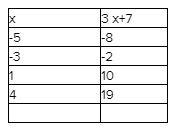
To find: Here we have to Complete the table by substituting the given values of x into the expressions from each side of the equation.

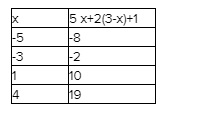
We have given equation 3x+7

Carnegie Learning Math Series, Volume 1, 4th Edition, Chapter 1 Linear Equations 2

We have given equation 5x+2(3−x)+1

Carnegie Learning Math Series, Volume 1, 4th Edition, Chapter 1 Linear Equations 2 1

We conclude that both the equation are colinear mean both having same value.

Page 18 Problem 3 Answer

Given expression:

3x+7=5x+2(3−x)+1

After simplifying each side we get,

3x+7=3x+7

If you take away 3x from both sides, you end up with 1=1, a true statement.

If you take away 1 from both sides, you end up with 3x=3x, a true statement.

You can replace x with any number and you will always get a true statement.

The pan will remain balanced. This equation has infinitely many solutions.

Therefore, Amy is correct the given equation has infinite solutions.

Page 20 Problem 4 Answer

Given expression:

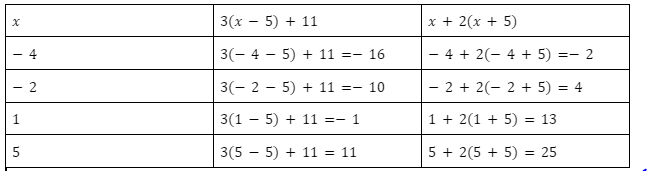
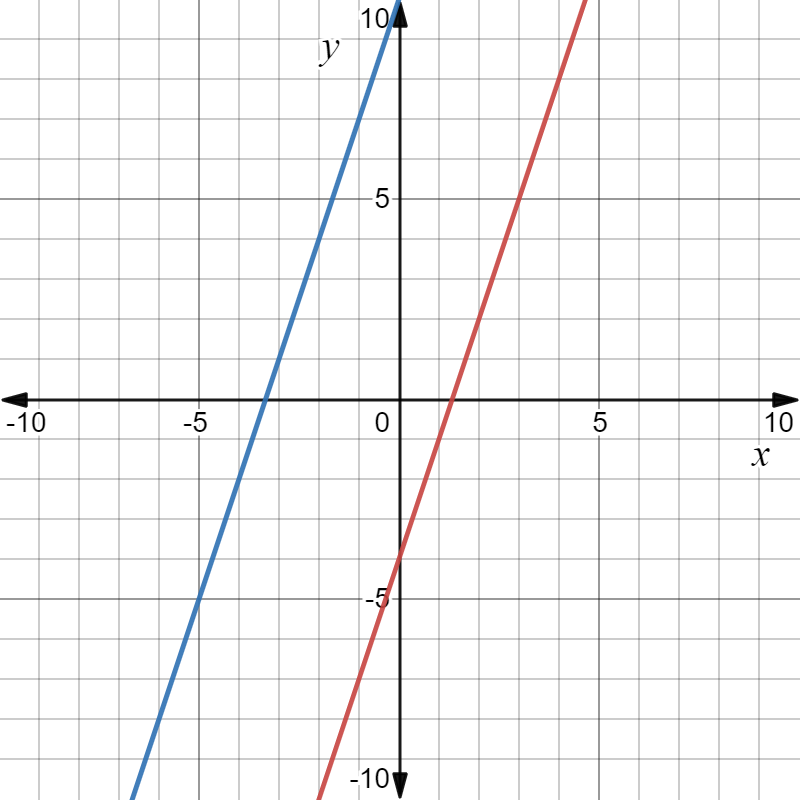
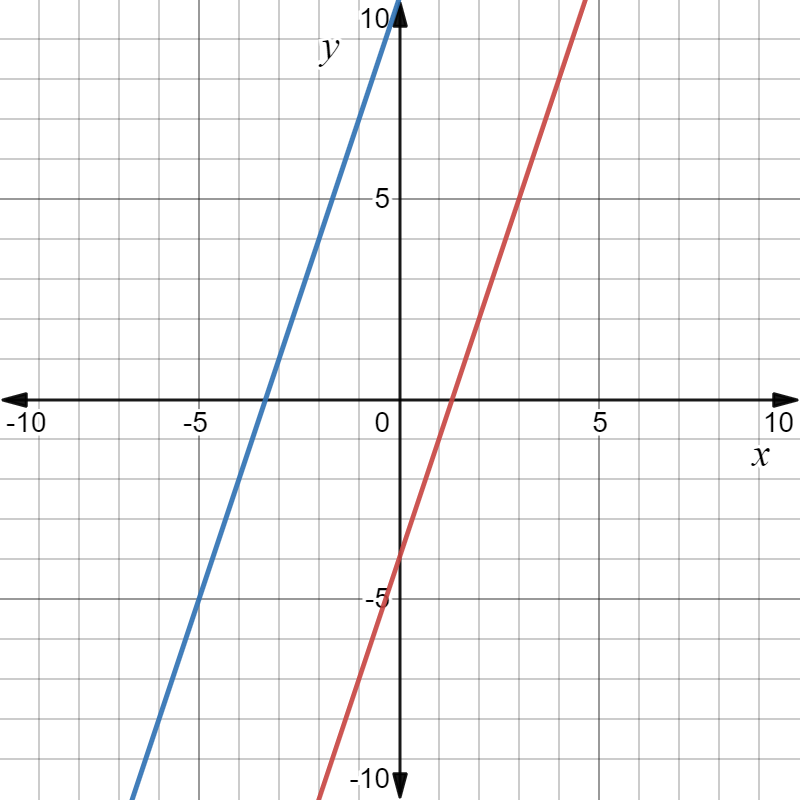
3(x−5)+11=x+2(x+5)

The find:

We need to interpret the final equation in each solution.

We also need to determine If the final equation is always true, sometimes true, or never true.

After simplifying the given expression we get,

3x−4=3x+10 or 3x=3x+14

In both the equations if we take any value of x the equations will not be satisfied as the equation no longer depends on the variable.

Thus, the equation will have no solution.

So, the final answer−4≠10 or 0≠14 will always be true.

Therefore, the final answer shows us that the equation has no solution.

The final answer is always true for any value of x.

Solutions For Linear Equations Exercise 1.2 In Carnegie Learning Math Series Page 20 Problem 5 Answer

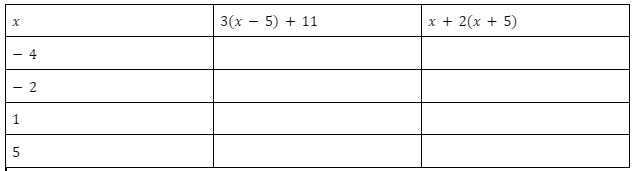
Given:

Carnegie Learning Math Series, Volume 1, 4th Edition, Chapter 1 Linear Equations 5

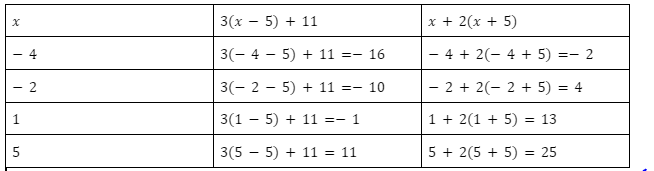
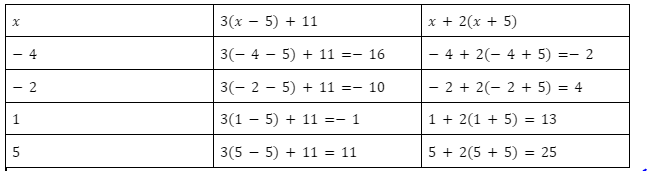
To find: We need to find the value of each expression for the given value of x.

The table for the value of the each expression for given values of x is shown below:

Table-1

Carnegie Learning Math Series, Volume 1, 4th Edition, Chapter 1 Linear Equations 5 1

Therefore, the solution of each expression for each value of x is-

Carnegie Learning Math Series, Volume 1, 4th Edition, Chapter 1 Linear Equations 5 2

Page 20 Problem 6 Answer

Given:

Carnegie Learning Math Series, Volume 1, 4th Edition, Chapter 1 Linear Equations 6

To find: We need to find if based on the results of evaluating each row if it appears that the expressions are equivalent based on the values in the table.

From the table above we can observe for each value of x the expressions have different values.

That means the value of x does not make the equation true.

So, the equation does not have any solution.

Therefore, from the table we can conclude the values of x does not make the expressions equivalent.

Page 21 Problem 7 Answer

Given expression: 3(x−5)+11=x+2(x+5)

To find: We need to graph the two expression on the coordinate planes.

The graph for the two expressions on the both side of the equation3(x−5)+11=x+2(x+5) is shown below:

Figure-1

Carnegie Learning Math Series, Volume 1, 4th Edition, Chapter 1 Linear Equations 7

Therefore, the graph for the given equation is-

Carnegie Learning Math Series, Volume 1, 4th Edition, Chapter 1 Linear Equations 7 1

Page 21 Problem 8 Answer

The graph for the each expression on the coordinate plane has two different lines that does not intersect each other at any point.

The lines are parallel to each other.

The values of x does not make the expressions equivalent to each other.

Therefore, from the graph we can see that the lines for each expression do not intersect each other so, the equation does not have any solution.

The value of x can not make the expressions equivalent to each other.

Carnegie Learning Math Series 4th Edition Exercise 1.2 Solutions Page 21 Problem 9 Answer

Given : The equation  3(x−5)+11=x+2(x+5)

To Find:   If the two graphs intersect or not

Solving 3(x−5)+11=x+2(x+5),

3(x−5)+11=x+2(x+5)

3x−15+11=x+2x+10

−4=10

There is no solution to this equation, therefore the graph doesn’t exist.

There is no solution to this equation, therefore the graph doesn’t exist.

Page 22 Problem 10 Answer

Given: An equation   2x−7+3x=4x+2

To Find: If there are no solutions, one solution, or an infinite number of solutions.

Also, to find the graph of equation with one solution

Carnegie Learning Math Series, Volume 1, 4th Edition, Chapter 1 Linear Equations 10

Given the equation,  2x−7+3x=4x+2

Solving,

5x−7=4x+2

x=9

Hence, this equation has one solution.

An equation has one solution when lines have different slopes.

The given  equation, 2x−7+3x=4x+2, has one solution.

The lines with one solution have different slopes and their graphs intersect at a point.

Page 22 Problem 11 Answer

Given :An equation   3(x−1)+x=4(x+2)

To Find : If there are no solutions, one solution, or an infinite number of solutions .

Also, to find the graph of equation with one solution

Carnegie Learning Math Series, Volume 1, 4th Edition, Chapter 1 Linear Equations 11

Given the equation ,  3(x−1)+x=4(x+2)

Solving,

3x−3+x=4x+8

4x−3=4x+8

−3=8, which is not valid.

Hence, there are no solutions to these equations.

An equation has one solution when lines have different slopes.

The given  equation , 3(x−1)+x=4(x+2),  has no solutions.

The lines with one solution have different slopes and their graphs intersect at a point.

Linear Equations Solutions Chapter 1 Exercise 1.2 Carnegie Learning Math Series Page 22 Problem 12 Answer

Given : An equation   5(2x−1)+x+17=5x+6(x+2)

To Find: If there are no solutions, one solution, or an infinite number of solutions .

Also, to find the graph of equation with one solution

Carnegie Learning Math Series, Volume 1, 4th Edition, Chapter 1 Linear Equations 12

Given the equation,

5(2x−1)+x+17=5x+6(x+2)

Solving,

10x−5+x+17=5x+6x+12

11x−12=11x+12

−12=12

Since, the values are equal , there are infinite number of solutions to these equations.

An equation has one solution when lines have different slopes.

The given  equation , 5(2x−1)+x+17=5x+6(x+2), has infinite solutions.

The lines with one solution have different slopes and their graphs intersect at a point.

Page 23 Problem 13 Answer

Given: Any equation to solve

To Find: How we’ll know there is one solution.

Let’s take an example

Consider the equation 9(x−1)−35=8x+37

On solving we have 9x−9−35=8x+37.

9x−8x=37+35+9=80 which gives x=80

The above linear equation is only true if x=80

Hence, the given linear equation has only one solution i.e. x=80.

The linear equation which has only one value of x is said to have one solution.

Page 23 Problem 14 Answer

Given: Any equation to solve

To Find:  How we’ll know there is no solution.

Let’s take an example,

5x−2+3x=3(x+4)+5x−10

8x−2=8x+2

0=4 which is not a true statement.

In this case, there is no x that will satisfy the equation given.

So the solution to this equation is: there is NO SOLUTION.

If there is no x that will satisfy the equation given.

So the solution to this equation is: there is NO SOLUTION.

Page 23 Problem 15 Answer

Given: Any equation to solve

To Find: How we’ll know there are infinitely many solutions.

An equation can have infinitely many solutions when it should satisfy some conditions.

The system of an equation has infinitely many solutions when the lines are coincident, and they have the same y-intercept.

If the two lines have the same y-intercept and the slope, they are actually in the same exact line.

As an example, consider the following two lines.

Line  1:y=x+3

Line    2:5y=5x+15

These two lines are exactly the same line. If you multiply line 1 by 5, you get the line 2.

Otherwise, if you divide the line 2 by 5, you get line 1.

It means that if the system of equations has an infinite number of solution, then the system is said to be consistent.

The system of an equation has infinitely many solutions when the lines are coincident, and they have the same y-intercept.

Step-By-step Solutions For Carnegie Learning Math Series Chapter 1 Exercise 1.2 Page 23 Problem 16 Answer

Given:   Two equations  y1 and y2

To Find: How will the graph look like if it has one solution

Let’s consider two equations

y1:−6x+8=y

y2:3x+y=−4

The slopes are different , therefore lines must intersect.

The graph is

Carnegie Learning Math Series, Volume 1, 4th Edition, Chapter 1 Linear Equations 16

The equations which have one solution intersect at a point.

Page 23 Problem 17 Answer

Given: Two equations  y1 and y2

To Find: How will the graph look like if it has no solution

Carnegie Learning Math Series, Volume 1, 4th Edition, Chapter 1 Linear Equations 17

Let’s take an example,

y1=2x+3 , y2=2x+7

2x+3=2x+7

3=7,  which is not true

Hence, There is no solution to this system of equations.

We can see that both y1 and y2  have same slope  2,

Therefore, they are parallel.

The equations which have no solution are parallel in nature.

Carnegie Learning Math Series Chapter 1 Exercise 1.2 free solutions Page 23 Problem 18 Answer

Given: Two equations  y1 and y2

To Find: How will the graph look like if it has one solution

Let y1

=−2(x+3) and y2

=−2x−6

If we carefully watch y1,

−2(x+3)=−2x−6 which is exactly same as y2

We get a statement that is always true and therefore we know there are infinite solutions.

The graph is

Carnegie Learning Math Series, Volume 1, 4th Edition, Chapter 1 Linear Equations 18

The equations which have infinite solutions overlap each other.

Carnegie Learning Math Series Volume 1 4th Edition Chapter 1 Exercise 1.1 Linear Equations

Carnegie Learning Math Series Volume 14th Edition Chapter 1 Linear Equations

Carnegie Learning Math Series Volume 1 4th Edition Chapter 1 Exercise 1.1 Solution Page 4 Problem 1 Answer

Given the height is 150 feet long and rate is 5 feet per hour.

The aim is to find total feet of walkway will there be after the park rangers work for 5 hours.

For 1 hour walk way can be built till 5 feet.

For 5 hours walkway built is 5+5+5+5+5=25 feet.

Therefore, the distance built for 5 hours is 25 feet.

Page 4 Problem 2 Answer

Given that walkway is 150 feet long and rate is 5 hours per feet.

The aim is to find the total feet of walkway will there be after the park rangers work for 7 hours.

For 1 hour walk way can be built till 5 feet.

For 7 hours walkway built is 7×5=35 feet.

Therefore, the feet built is 35 feet for 7 hours.

Page 4 Problem 3 Answer

Given that 150 feet and the rate is 5 hours per feet.

The aim is to find total number of feet of walkway built, given the amount of time that the rangers will work.

To find the walk way built is, 150=5t

Where t is the time taken to build the walkway.

Therefore, the expression is 150=5t.

Page 4 Problem 4 Answer

Given the distance is 500 feet.

The aim is to find the number of hours.

Using the formula for part (c),500=5t

t=100 hours

Therefore, the time taken to finish the 500 feet is 100 hours.

Page 4 Problem 5 Answer

Given that 150 feet and the rate is 5 hours per hour.

The aim is to find the reasoning for part(d).

Using the formula for part(c) is because the time taken for 5 feet is 1 hour.

So, the time taken for 1 feet is 1/5 hour.

Therefore, for 500 feet then 500/5=100 hours.

Therefore, the number of hours to built the halfway of 500 feet is 100 hours.

Page 4 Problem 6 Answer

Given that 150 feet and rate is 5 feet per hour.

The aim is to find the mathematical operation used in part (d).

The mathematical calculation used is division in part(d).

The mathematical calculation used is division.

Page 4 Problem 7 Answer

Given that 150 feet distance and rate is 5 feet per hour.

The aim is to find the equation and determine the value.

The formula is,

500=5t

t=500/5

t=100

Where t is time.

The formula is 500=5t and the value of t is 100 hours which is true.

Solutions For Linear Equations Exercise 1.1 In Carnegie Learning Math Series Page 4 Problem 8 Answer

Given that walkway is 150 feet and the rate is 5 feet per hour.

The aim is to Interpret your answer in terms of this problem situation.

The problem is when the distance is given and the rate is given.

Using division the number of hours can be found.

Therefore, the number of hours is the ratio of distance of walkway and the rate.

Page 5 Problem 9 Answer

Given that 270 feet.

The aim is to find the number of hours.

The mathematical formula is,

Speed=distance/time

time=270/speed

To determine time we require speed and mathematical operation is division.

Page 5 Problem 10 Answer

Given that 270 feet of walkway.

The aim is to find why using these mathematical operations gives you the correct answer.

The formula is, correct since speed=distance/time is well known result.

Therefore by using the formula the division gives the true value.

Page 5 Problem 11 Answer

Given: 270 feet of path is to be built and the rangers can build the path at a rate of 5 feet per hour.

To find: An equation that can be used to determine the amount of time it will take to complete the 270 feet of walkway

Procedure: We will divide the number of feet of path to be built by the rate of path built per hour.

Let the time taken to complete the work be x

Let the walkway to be built bey=270 feet

Let the rate per hour at which the walkway can be built bes=5 feet

The equation for the time taken will be x=y/s           (Using the formula Time taken=Path to be built

Path built per hour)

The equation that can be used to determine the amount of time taken to complete the work is x=y/s.

Page 5 Problem 12 Answer

Given: 270 feet of path is to be built and the rangers can build the path at a rate of 5 feet per hour.

To find: The value of the variable that will make the equation true

Procedure: We will put the values of the known variables to find the value of the unknown variable.

From part (c), the equation was x=y/s

To find the value of the variable, we will put the values of the known variables

Here the value of y=270 and s=5

⇒x=270/5

⇒x=54 hours

Therefore,x=54 will make the equation true.

The value of variable to make the equation true is x=54.

Page 5 Problem 13 Answer

Given:270 feet of path is to be built and the rangers can build the path at a rate of 5 feet per hour.

To find: The answer in terms of this problem situation

Procedure: We will interpret and write the answer using language.

From the part (d), we found that the value ofx=54

The answer to the problem situation is that the rangers will need a total of 54 hours to build 270 feet of walkway

The answer to the problem situation is the rangers will need 54 hours to build the 270 feet walkway at a rate of 5 feet per hour.

Carnegie Learning Math Series 4th Edition Exercise 1.1 Solutions Page 6 Problem 14 Answer

Given: 100 feet of the path is to be built and the rangers can build the path at a rate of 5 feet per hour.

To find: The mathematical operation used to determine the answer.

Procedure: We will use division as the mathematical operation.

Path to be built=100 feet

Path built per hour=5 feet

Time taken=100/5

=20 hours

The rangers will need to work for 20 hours to build the 100 feet walkway.

We have performed division as the mathematical operation to determine the answer using the formula:

Time taken=Path to be built/Path built per hour

The rangers will need to work for 20 hours to build the100 feet walkway.

The mathematical operation performed to determine the answer is division.

Page 6 Problem 15 Answer

Given: Given: 100 feet of path is to be built and the rangers can build the path at a rate of 5 feet per hour.

To find: An equation that can be used to determine the amount of time it will take to complete the 100 feet of  walkway.

Procedure: We will divide the number of feet of path to be built by the rate of path built per hour.

Let the time taken to complete the work be x

Let the walkway to be built bey=270 feet

Let the rate at which the walkway can be built be s=5 feet per hour

The equation for the time taken will be x=y/s  (Using the formula Time taken=Path to be built/ Path built per hour)

The equation that can be used to determine the amount of time taken to complete the work is x=y/s

Page 6 Problem 16 Answer

Given: Given: 100 feet of path is to be built and the rangers can build the path at a rate of 5 feet per hour.

To find:

An equation that can be used to determine the amount of time it will take to complete 100 feet of walkway.

If our answer makes sense.

Procedure: We will put the values of the known variables to find the value of the unknown variable.

From part (b). the equation was x=y/s

To find the value of the variable, we will put the values of the known variables

Here the value of y=100 and s=5

⇒x=100/5

⇒x=20 hours

Therefore,x=20 will make the equation true.

Yes, our answer makes sense as it is less than the number of feet of walkway to be built which proves the division.

The value of variable to make the equation true isx=20 hours.

Yes, our answer makes sense as it is less than the number of feet of walkway to be built which proves the division.

Page 6 Problem 17 Answer

Given: 100 feet of path is to be built and the rangers can build the path at a rate of 5 feet per hour.

To find: An equation that can be used to determine the amount of time it will take to complete the 100 feet of walkway.

Procedure: We will interpret and write the answer using language.

From part (c), we found that the value of x=20

The answer to the problem situation is that the rangers will need a total of 20 hours to build the100 feet of walkway.

The answer to the problem situation is the rangers will need 20 hours to build the 100 feet walkway at a rate of 5 feet per hour.

Linear Equations Solutions Chapter 1 Exercise 1.1 Carnegie Learning Math Series Page 7 Problem 18 Answer

Given: The cub is 77 feet below the ground level. The ranger is pulling the rope at the rate of 7 feet per minute.

To find: How many feet below the surface of the ground will the cub be in 6 minutes.

Procedure: We will calculate the distance pulled up by the ranger in 6 minutes and then subtract that distance from/the total distance.

Using the formula Speed=Distance/Time

⇒Distance=Speed×Time

Here the speed=7 feet per minute, and time=6 minutes

So, the distance pulled up by the ranger in 6 minutes:

Distance pulled up=7×6

=42 feet

Remaining distance below the surface of ground=Total distance−Distance pulled up

=77−42

=35 feet

The cub is 35 feet below the surface of ground.

The cub will be 35 feet below the surface of ground in 6 minutes.

Page 7 Problem 19 Answer

Given: The cub is 77 feet below the surface.

The ranger is pulling it up at a rate of 7 feet per minute.

To find: How many feet below the surface of the ground will the cub be in 11 minutes

Procedure: We will calculate the distance pulled up by the ranger in 11minutes and then subtract that distance from/the total distance.

Using the formula Speed=Distance/Time

⇒Distance=Speed×Time

Here, the speed=7 feet per minute, and time=11 minutes

So, the distance pulled up by the ranger in 11 minutes:

Distance pulled up=7×11

=77 feet

Remaining distance below the surface of ground=Total distance−Distance pulled up

=77−77

=0 feet

The cub is 0 feet below the surface of the ground.

That means the cub is pulled up and hence is rescued.

The cub will be 0 feet below the surface of the ground after 11 minutes i.e. it is pulled up.

Page 7 Problem 20 Answer

Given: The cub is 77 feet below the surface. The ranger is pulling it up at a rate of 7 feet per minute.

To find: A variable for the amount of time spent pulling the cub up the ravine.

Write an expression that represents the number of feet below the surface of the ground the cub is.

Procedure: First we will assume a variable for the time spent pulling up the cub up the ravine.

Then we will assume a variable for representing the number of feet below the surface of ground the cub is.

We will write the expression as equal to the total distance below the surface−

the distance by which the cub is pulled up by the ranger.

Let the variable for the amount of time spent pulling the cub up the ravine bet minutes

And the number of feet below the surface of the ground the cub is be h feet

Total distance below the ground surface=77 feet

The speed/rate at which the ranger can pull up the cub=7 feet per minute

Therefore, the distance by which the cub is pulled when the time is given=7t feet

Expression for a number of feet below the surface of the ground the cub is can be written as:

h=77−7t

Variable for the time in minutes spent pulling the cub up the ravine=t.

Expression for a number of feet below the surface of the ground the cub ish=77−7t.

Carnegie Learning Math Series Chapter 1 Exercise 1.1 Free Solutions Page 7 Problem 21 Answer

In the question, the speed at which the cub is being pulled is given and the distance for which we have to calculate the time is given.

use a variable for the time and frame an equation to get the answer.

Frame an equation using the information given.

Let the time taken be x.

It is given that the cub is being pulled at a rate of 7 feet per minute, so speed is 7 feet per minute.

We have to calculate the time taken to pull the cub 14 feet from the surface, so distance is 14.

Distance=speed×time

Therefore, 14=7×x or 7x=14.

Solve the equation to get the answer.

we have, 7x=14

⇒x=2

( Divide both the sides by 7)

We get the value of x=2, so the cub will be 14 feet from the surface in 2 minutes, when it is being pulled at a rate of 7 feet per minute.

The cub will be 14 feet from the surface in 2minutes.

Step-By-Step Solutions For Carnegie Learning Math Series Chapter 1 Exercise 1.1 Page 7 Problem 22 Answer

The speed at which the cub is being pulled is given, we have to find the time taken to pull the cub 14

feet from the surface, so here the distance is also given that is 14 feet, we use a variable x, for the time taken to pull the cub and then frame an equation using the formula of distance speed and time, that is, Distance=speed×time.

As we know the speed and the distance, we can easily calculate the time it will take by putting the speed and distance in the formula.

On solving we get the value of x as 2, we had used x for the time taken, so the time taken to pull the cub 14 feet from the surface is 2 minutes.

Therefore we used the formula of speed distance and time to get the answer.

We used a variable to denote the time taken and then framed an equation using the speed distance time formula to get the answer.

Page 7 Problem 23 Answer

In order to determine our answer in part (d), we used two mathematical operations, first, we framed an equation using the speed distance time formula and then solved the equation we framed.

To solve the equation, we divided both the sides by 7 to remove the multiplication with x.

On doing this, we get the value of x, which is the time taken.

First mathematical operation we used is we frame the equation.

let the time taken be x distance=speed×time

therefore, 14=7x

As given speed is 7 and distance is 14.

The equation is, 7x=14

The second mathematical operation we used is division to remove or undo the multiplication.

We have, 7x=14 therefore we divide both the sides by 7 to remove the multiplication 7 from x.

we get, x=2(on dividing both sides by 7)

The mathematical operations we used are, first we framed an equation and then used division to undo the multiplication.

Carnegie Learning Math Series Exercise 1.1 Student Solutions Page 7 Problem 24 Answer

In order to solve part (d), we framed an equation and then used the mathematical operation of division or inverse operation of Division to undo or remove the multiplication.

Here we first framed an equation using the given information, as we were given the speed and distance , so we used the formula Distance=speed×time, to get the time.

We get an equation of the form, 7x=14.

As we know an inverse operation of division is used to undo multiplication, and in the equation we have to remove 7 (which is multiplied to x), to get the value of x,Therefore we  used division to remove the multiplication.

So, using these mathematical operations gives us the correct answer, as we have used the operations according to the requirement of the question and as per the requirement of the question these mathematical operations are best suited.

The mathematical operations give us the correct answer because we used them according to the requirement of the question and these are the easiest and appropriate mathematical operations to be used for this type of question.

Page 7 Problem 25 Answer

Given that h=77−7t.

The aim is to find the number of minutes it takes for the cub to be 14 fee below the surface of the ground by setting the expression.

Given that t=14 then,

h=77−98=−21

Therefore, the time is 21 minutes.

Page 8 Problem 26 Answer

In the question, the speed at which the cub is being pulled is given and the distance for which we have to calculate the time is given. use a variable for the time and frame an equation to get the answer.

Frame an equation using the information given.

Let the time taken be x

It is given that the cub is being pulled at a rate of 7 feet per minute, so the speed here is 7.

The distance for which we have to calculate the time is 28 feet, therefore the distance is 28.

Distance=Speed×time

so, 28=7×x or, 7x=28

Solve the equation.

we have, 7x=28

Use inverse operation of division to undo multiplication.

we get ,x=4(divide both side by 7) therefore in 4 minutes the cub will be 28 feet from the surface.

In 4minutes the cub will be 28 feet from the surface.

Page 8 Problem 27 Answer

In order to determine our answer in part (d), we used two mathematical operations, first we framed an equation using the speed distance time formula and then solved the equation we framed.

To solve the equation by using the inverse operation, division to undo the multiplication.

First operation we use is framing the equation.

As the speed and the distance is given, we assume time taken as x.

therefore using the speed distance time formula the equation becomes,

7x=28, where the distance is 28 and the speed is 7.

After the first step we use inverse operation of division to undo the multiplication.

We have, 7x=28

Divide both side by 7 to remove it.

we get, x=4(divide both side by 7)

We first framed an equation and then used the mathematical operation division to undo the multiplication.

Page 8 Problem 28 Answer

In order to solve the question, we framed an equation and then used the mathematical operation of division or inverse operation of Division to undo or remove the multiplication.

Here we first framed an equation using the given information, as we were given the speed and distance, so we used the formula Distance=speed×time, to get the time.

So we get, 7x=28.

As we know an inverse operation of division is used to undo multiplication, and in the equation we have to remove 7 from x, to get the value of x.

So we used the inverse operation of division.

Therefore, using these mathematical operations gives us the correct answer, as we have used the operations according to the requirement of the question and as per the requirement of the question these mathematical operations are best suited.

The mathematical operations give us the correct answer because we used them according to the requirement of the question and these are the easiest and appropriate mathematical operations to be used for this type of question.

Linear Equations Exercise 1.1 Carnegie Learning 4th Edition Answers Page 8 Problem 29 Answer

The distance and speed are given, use a variable to denote the time taken, and frame an equation using the speed distance time formula. Solve the equation

Frame an equation.

The distance here is 28 feet.

It is given that the cub is pulled at a rate of 7 feet per minute, so speed is 7.

Let the time taken be x.

Distance=Speed×time

Therefore the equation is, 28=7×x or, 7x=28

Determine the value of the variable by solving the equation.

we have, 7x=28

On Dividing both sides by 7,

we get, x=4.

Therefore the value of the variable is 4 that makes the equation true.

The equation that can be used to determine in how many minutes the cub will be 28 feet from surface is, 7x=28.

The value of the variable that makes the equation true is 4.

Page 10 Problem 30 Answer

In the given method, inverse operations are used in each step.

In the first step, we add 6 on both the sides, to undo the subtraction.

In the second step ,we divide both the sides by 2 to undo the multiplication.

In the first step addition is used to undo the subtraction.

In the second step division is used to undo the multiplication.

Page 10 Problem 31 Answer

We are given 2m−6=22

We are required to find the difference between the two given strategies to solve the given equation.

In method 1, the concept of inverse operations is done on both sides i.e., the addition is done to undo the subtraction and then division to undo multiplication.

In method 2, the equation 2m−6=22 is added with another expression i.e., 6=6.

So, the approach is different for the first step and second step is the same to calculate the solution.

There aren’t many differences between both the methods to solve the equation but the approach to the first step is different.

Generally, the variable is isolated from all the constant terms to determine the solution of the equation.

Page 10 Problem 32 Answer

We are given 2m−6=22.

We are required to verify that m=14 is the solution of the equation.

We will put the value in the given equation to verify it.

Given: 2m−6=22

To verify that m=14 is a solution, we will substitute it in the equation.

Considering the left-hand side of the equation, we get

2(14)−6

=28−6

=22

which is equal to the right-hand side of the equation.

Hence, it is verified that m=14 is the solution of the equation

2m−6=22.

It is verified that m=14 is a solution of the equation

2m−6=22 because when we substitute the value of m in the equation, we get a valid equation.

Page 10 Problem 33 Answer

We are given 5v−34=26.

We are required to solve the equation.

We will isolate the variable from the constants to determine the solution of the given equation.

Given: 5v−34=26

We will isolate the variable.

Adding 34 on both sides, we get

5v=60

Dividing both sides by 5, we get

v=12

The solution of the equation 5v−34=26 is v=12.

The steps can be shown as:

5v−34=26

5v=60

v=12

The strategy to solve any two-step equation is to isolate the variable by undoing the operations or using inverse operations.

Page 10 Problem 34 Answer

We are given 3x+7=37

We are required to solve the equation.

We will isolate the variable from the constants to determine the solution of the given equation.

Given is 3x+7=37

Isolating the variable by using inverse operations, we get

Subtracting both sides by 7, we get

3x=30

Dividing both sides by 3, we get x=10

The solution of the equation 3x+7=37 is x=10.

The steps can be shown as:

3x+7=37

3x=30

x=10

The strategy to solve any two-step equation is to isolate the variable by undoing the operations or using inverse operations.

Page 10 Problem 35 Answer

We are given 23+4x=83

We are required to solve the equation.

We will isolate the variable from the constants to determine the solution of the given equation.

Given equation is 23+4x=83

Isolating the variable by using inverse operations, we get

Subtracting 23 on both sides, we get

4x=60

Dividing both sides by 4, we get x=15

The solution of 23+4x=83 is x=15.
The steps can be shown as

23+4x=83

4x=60

x=15

The strategy to solve any two-step equation is to isolate the variable by undoing the operations or using inverse operations.
Page 10 Problem 36 Answer

We are given 2.5c−12=13

We are required to solve the equation.

We will isolate the variable from the constants to determine the solution of the given equation.

Given equation is 2.5c−12=13

Isolating the variable using inverse operations, we get

Adding 12 on both sides, we get

2.5c=25

Dividing both sides by 2.5, we get

c=10

The solution of 2.5c−12=13 is c=10

The steps can be shown as

2.5c−12=13

2.5c=25

c=10​

The strategy to solve any two-step equation is to isolate the variable by undoing the operations or using inverse operations.

Page 10 Problem 37 Answer

We are given 3/4x+2=42/3

We are required to solve the equation.

We will isolate the variable from the constants to determine the solution of the given equation.

Given equation is 3/4x+2=42/3

We can write it as: 3/4x+2=14/3

Isolating the variable using inverse operations, we get

Subtracting 2 on both sides, we get

3/4x=8/3

Multiplying both sides by 4/3, we get

x=32/9

=35/9

The solution of the equation 3/4x+2=42/3 is x=35/9.

The steps can be shown as:

3/4x+2=14/3

3/4x=8/3

x=35/9​

The strategy to solve any two-step equation is to isolate the variable by undoing the operations or using inverse operations.

Page 10 Problem 38 Answer

We are given −2/3b+2/5

=64/5

We are required to solve the equation.

We will isolate the variable from the constants to determine the solution of the given equation.

Given equation is −2/3b+2/5=64/5

Rewriting the equation, we get

−2/3b+2/5=34/5

Isolating the variable using inverse operations, we get

Subtracting 2/5 on both sides, we get

−2/3b=32/5

Multiplying both sides by −3/2, we get

b=−96/10

The solution of equation −2/3b+2/5=64/5 is

b=−96/10

The step can be shown as

−2/3b+2/5=64/5

−2/3b=32/5

b=−96/10​

The strategy to solve any two-step equation is to isolate the variable by undoing the operations or using inverse operations.

Page 10 Problem 39 Answer

We are given −t/5−9=21

We are required to solve the equation.

We will isolate the variable from the constants to determine the solution of the given equation.

Given equation is −t/5−9=21

Isolating the variable using inverse operations, we get

Adding 9 on both sides, we get

−t/5=30

Multiplying both sides by −5, we get

t=−150

The solution of the equation −t/5−9=21 is t=−150

The steps can be shown as

−t/5

−9=21

−t/5=30

t=−150

The strategy to solve any two-step equation is to isolate the variable by undoing the operations or using inverse operations.

Page 10 Problem 40 Answer

We are given 2=2.27−s/4

We are required to solve the equation.

We will isolate the variable from the constants to determine the solution of the given equation.

Give equation is 2=2.27−s/4

To isolate the variable using inverse operations, we get

Subtracting 2.27 from both sides, we get −0.27=−s/4

Multiplying both sides by −4, we get 1.08=s

The solution of the equation 2=2.27−s/4 is s=1.08

The steps can be shown as

2=2.27−s/4

−0.27=−s/4

1.08=s

The strategy to solve any two-step equation is to isolate the variable by undoing the operations or using inverse operations.

Page 10 Problem 41 Answer

To solve: The given two step equation 12m−7=139

The given two step equation 12m−7=139

Adding 7 both sides

⇒12m−7+7=139+7

⇒12m=146

Dividing both sides by 12

⇒12m/12

=146/12

⇒m=12.16

General strategies to solve the equation are the inverse operation method and elimination method.

The value of m is obtained from the equation by using addition method of equality and then using division property of equality.

Page 10 Problem 42 Answer

To solve: The given two step equation 121.1=−19.3−4d

The given equation121.1=−19.3−4d

Adding 19.3 both sides

⇒121.1+19.3=−19.3+19.3−4d

⇒140.4=−4d

Dividing both sides by −4

⇒140.4/−4

=−4d/−4

⇒d=−35.1

General strategies to solve the equation are the inverse operation method and elimination method.

The value of d is obtained from the equation by using addition method of equality and then using division property of equality.

Page 10 Problem 43 Answer

To solve: The given two step equation−23z+234=970

The given two step equation −23z+234=970

Subtracting 234 from both sides

⇒−23z+234−234=970−234

⇒−23z=736

Dividing both sides by −23

⇒−23z/−23

=736/−23

⇒z=−32

General strategies to solve the equation are the inverse operation method and elimination method.

The value of z is obtained from the equation by using subtraction method of equality and then using division property of equality.

Page 10 Problem 44 Answer

To solve: The given two step equation7865=345−5d

⇒7865−345-5d

Subtracting 345 from both sides

⇒7865−345=345−345−5d

⇒7520=−5d

Dividing both sides by −5

⇒7520/−5

=−5d/−5

⇒d=−1504

General strategies to solve the equation are inverse operation method and elimination method .

The value of d is obtained from the equation by using subtraction method of equality and then using division property of equality.

Page 12 Problem 45 Answer

Given: An equation 2x−6=22

To find: The solution to the given equation.

Given : 2x−6=22

Adding 6 to both sides

⇒2x−6+6=22+6

⇒2x=28

Dividing by 2 both sides

⇒2x/2

=28/2

⇒x=14

The final solution to the equation is obtained by using addition property of equality in the first step and then using division property of equality in the second step.

Carnegie Learning Geometry Student Text 2nd Edition Chapter 3 Exercise 3.3 Perimeter and Area

Geometry Student Text 2nd Edition Chapter 3 Perimeter and Area

Carnegie Learning Geometry Student Text 2nd Edition Chapter 3 Exercise 3.3 Solution Page 161 Problem 1 Answer

We have to Describe how the normal image has been distorted.

The keystone effect is the apparent distortion of an image caused by projecting it onto an angled surface.

It is the distortion of the image dimensions, such as making a square look like a trapezoid, the shape of an architectural keystone, hence the name of the feature. In the typical case of a projector sitting on a table, and looking upwards to the screen, the image is larger at the top than on the bottom.

Some areas of the screen may not be focused correctly as the projector lens is focused at the average distance only.

The effect is usually corrected for by either using special lenses in Tilt–shift photography or in post-processing using modern image editing software.

Hence, The keystone effect is the apparent distortion of an image caused by projecting it onto an angled surface.

Read and learn More Carnegie Learning Geometry Student Text 2nd Edition Solutions

Solutions For Perimeter And Area Exercise 3.3 In Carnegie Learning Geometry Page 161 Problem 2 Answer

Given: The normal image and distorted image are shown.

To find: Describe the shapes formed by the normal image and the distorted image.

The shape of the normal image is square and the shape of the distorted image is trapezoidal.

Hence the shape of the normal image is square and the shape of the distorted image is trapezoidal.

Page 162 Problem 3 Answer

Given:

Geometry, Student Text, 2nd Edition, Chapter 3 Perimeter and Area 3

Normal and distorted image.

We have to tell which image has a larger area.

The shape of a normal image is a rectangle while the shape of a distorted image is a trapezoid.

We can see the normal and distorted image has the same big base and height.

A rectangle is divided into a trapezoid and two triangles as shown.

So, the rectangle has a larger area than the trapezoid, or we can say the normal image has a larger area.

Hence, the normal image has a larger area as it can be divided into trapezoid and two triangles.

Carnegie Learning Geometry Chapter 3 Page 162 Problem 4 Answer

Given:

Carnegie Learning Geometry Student Text 2nd Edition Chapter 3 Exercise 3.3 Perimeter And Area

Given Normal image is a rectangle, its area is;

Base is 13×4=52 as it extends across 13 squares on grid.

Height is 10×4=40 as it extends across 10 squares on grid.

Area =40×52=2080 in2

Area of distorted image:

Given distorted image is a trapezoid.

The trapezoid is divided into two triangles and a rectangle.

Base of triangle is 2×4=8 inches

Height of a triangle is 10×4=40 inches

Area of rectangle =l×w

=4(9)×4(10)

=36×40

=1440in2

Area of each triangle=1/2b×h

=1/2[8+40]

=1/2[48]

=24in2

Area of trapezoid =1440+2(24)=1488in2

The area of the normal image is 2080 in2 and area of the distorted image is 1488 in2.

Carnegie Learning Geometry 2nd Edition Exercise 3.3 Solutions Page 162 Problem 5 Answer

Given: From the previous part we have,

Area of the normal image is 2080.in2

Area of distorted image is 1328 in2.

We have to compare the area of images.

The shape of a normal image is a rectangle while the shape of a distorted image is a trapezoid.

A rectangle is divided into a trapezoid and two triangles as shown.

So, the rectangle has a larger area than the trapezoid, or we can say the normal image has a larger area.

Also, it is proved in the previous part as the area of the normal image is 2080 in2 and the area of the distorted image is 1328in2.

Hence, the area of the distorted image is lesser than the area of a normal image.

Hence, We can compare the area of images by comparing the shapes of images.

Carnegie Learning Geometry Chapter 3 Page 162 Problem 6 Answer

Given: Distorted image

We have to find the area of the distorted image.

Base b1 extends to 13 squares on grid and each square is four inches long and four inches wide.

So, b1

=13×4=52 and b²

=9×4=36

as it extends across 9 squares on grid.

Height is 10×4=40 as it extends across 10 squares on grid.

Area of distorted image(Trapezoid):

A=1/2(52+36)×40

=1/2(88)×40

=44×40

=1760in2

The exact area of the distorted image using formula is 1760in2.

Perimeter And Area Solutions Chapter 3 Exercise 3.3 Carnegie Learning Geometry Page 163 Problem 7 Answer

Given: Distorted image

We have to find the area of the distorted image.

Base b1 extends to 13 squares on grid and each square is four inches long and four inches wide.

So, b1

=13×4

=52 and b2

=9×4

=36 as it extends across 9 squares on grid.

Height is10×4=40 as it extends across 10 squares on grid.

Area of distorted image(Trapezoid):

A=1/2(52+36)×40

=1/2(88)×40

=44×40

=1760in2

The exact area of the distorted image using formula is 1760 in2.

Carnegie Learning Geometry Chapter 3 Page 163 Problem 8 Answer

Given:

Geometry, Student Text, 2nd Edition, Chapter 3 Perimeter and Area 8

We need to write how does the area of the distorted image compares to the area of the normal image.

Here the normal image is a rectangle and the distorted image is a trapezoid.

Therefore, we can calculate the area of the trapezoid by using the formula and compare it with the area of the rectangle.

Therefore, we can calculate the area by using the formula of the area of the trapezoid and rectangle and compare it.

Page 163 Problem 9 Answer

The given image is

Geometry, Student Text, 2nd Edition, Chapter 3 Perimeter and Area 9

We need to flip it vertically and move it. next to the image as shown.

We need to write the geometric figure that is formed from this image.

The given image is

Geometry, Student Text, 2nd Edition, Chapter 3 Perimeter and Area 9 1

When we fit the image it vertically and move it to the next to the image we found that a quadrilateral with no sides parallel.

Therefore, the new figure is a trapezoid.

Hence, the new figure is Trapezoid.

Step-By-Step Solutions For Carnegie Learning Geometry Chapter 3 Exercise 3.3 Page 163 Problem 10 Answer

The given image is.

Geometry, Student Text, 2nd Edition, Chapter 3 Perimeter and Area 10

We need to calculate the area of a geometric figure in question 1.

Also, we need to calculate the area of the distorted image.

The given image is

Geometry, Student Text, 2nd Edition, Chapter 3 Perimeter and Area 10 1

The geometric area in question 1 is a trapezoid.

and the area of a trapezoid is a+b/2h units.

Here a is the base b is the base and h is the height.

The distorted image is a parallelogram and the area of a parallelogram is bh units.

Here b is the base and h is the height.

The area of the geometric figure is a+b/2h units. and the area of the distorted image is b⋅h units.

Carnegie Learning Geometry Chapter 3 Exercise 3.3 Free Solutions Page 164 Problem 11 Answer

the given image is

Geometry, Student Text, 2nd Edition, Chapter 3 Perimeter and Area 11

It is given that the distorted image is a trapezoid. parallel sides of the trapezoid are called the bases of the trapezoid.

non-parallel sides are the legs of the trapezoids.

on the arcade of the trapezoid is a line segment drawn from the vertex perpendicular to a line containing the opposite sides.

We need to calculate the area of a trapezoid.

The given image is

Geometry, Student Text, 2nd Edition, Chapter 3 Perimeter and Area 11 1

Let b1 is the length of one base,b2 is the length of another base and  h is the length of the altitude.

We know that, area of the trapezoid can be evaluated by multiplying the sum of the bases (parallel sides) by the altitude and then divided by 2.

Hence, the area of the distorted image is 1/2(b1+b2)h units.

Hence, the area of the distorted image is 1/2(b1+b2)h units.

Carnegie Learning Geometry Chapter 3 Page 165 Problem 12 Answer

From the given image

Geometry, Student Text, 2nd Edition, Chapter 3 Perimeter and Area 12

We need to write the formula of the entire figure.

The area of a parallelogram is base on height.

The above figure is a simple quadrilateral with two pairs of parallel sides.

and the opposite or facing sides are equal hence the given figure is a parallelogram.

and we know that area of a parallelogram is base multiplied by the height.

Hence the area of the entire figure is (b1+b2)h units.

Geometry, Student Text, 2nd Edition, Chapter 3 Perimeter and Area 12 1

Hence, the area of the entire figure is (b1+b2)h.

Carnegie Learning Geometry Exercise 3.3 Student Solutions Page 165 Problem 13 Answer

The given image is

Geometry, Student Text, 2nd Edition, Chapter 3 Perimeter and Area 13

We need to suppose that we make an exact copy of this trapezoid, flip it vertically and move it next to the trapezoid.

We need to write the formula for the area of one of the trapezoid and explain it.

The given image is

Geometry, Student Text, 2nd Edition, Chapter 3 Perimeter and Area 13 1

when we flip it vertically, then we make it a trapezoid.

To find the area of the trapezoid, multiply the sum of the bases (the parallel sides) by the height (the perpendicular distance between the bases) and then double by 2. i.e 1/2(b1+b2)h unit square meter.

Hence, the area of the trapezoid is 1/2(b1+b2)h.

Carnegie Learning Geometry Chapter 3 Page 166 Problem 14 Answer

The given trapezoid is

Geometry, Student Text, 2nd Edition, Chapter 3 Perimeter and Area 14

Here either the height, the length of one base, or the area of the trapezoid is unknown.

We need to determine the value of the unknown measure.

The given trapezoid is

Geometry, Student Text, 2nd Edition, Chapter 3 Perimeter and Area 14 1

Here the height h is 8 millimeter.

The length of one base is b1 is 6 millimeter.

The length of another base b2 is  22 millimeter.

Hence we need to determine the area of the trapezoid.

We know that=1/2(b1+b2)h

=1/2(6+22)×8

=1/2(28)×8

=28×4

=112 square milimeter

Hence, the area of the trapezoid is 112 square milimeter.

Page 166 Problem 15 Answer

The given figure is

Geometry, Student Text, 2nd Edition, Chapter 3 Perimeter and Area 15

We need to find the value of the unknown measure.

In the given figure height is unknown And the given are is 25 square feet,  b1 and b2 are the length of the bases i.e 7 feet and 3 feet respectively.

We need to determine the length of the given figure

Geometry, Student Text, 2nd Edition, Chapter 3 Perimeter and Area 15 1

The area of the given figure is,

25=1/2(b1+b2)h

25=1/2(7+3)h

25×2=(10)h

50=(10)h

h=5

Hence, the height of the trapezoid is 5 feet.

Carnegie Learning Geometry Chapter 3 Page 166 Problem 16 Answer

Here the length of one base is unknown.

We need to determine the unknown measure.

From the given image,

Geometry, Student Text, 2nd Edition, Chapter 3 Perimeter and Area 16

The height, length of one base b1 and area of the trapezoid is 6 meter,9 meters and 45 square meter.

We need to determine the length of another base(b2).

We know that,

Area=1/2(b1+b2)h

⇒45=1/2(b1+b2)h

⇒45=1/2(9+b2)6

⇒90=(9+b2)6

⇒15−9=b2

⇒b2

=6

Hence, the length of another base is 6 meter.

Perimeter And Area Exercise 3.3 Carnegie Learning 2nd Edition Answers Page 167 Problem 17 Answer

Here, the projection in problem 1 was tilted differently to create the distorted image shown.

each square on the grid represents a square that is 4 inches long and 4 inches wide.

We need to determine the area of the distorted image.

from the given image

Geometry, Student Text, 2nd Edition, Chapter 3 Perimeter and Area 17

The distorted image of the figure is a trapezoid.

The area of the trapezoid is 1/2(b1+b2)h square unit.

here, b1 and b2 are the length of the bases and h is the length of the height of the trapezoid.

Hence, the length of the trapezoid is 1/2(b1+b2)h square units.

Carnegie Learning Geometry Chapter 3 Page 167 Problem 18 Answer

From the given image

Geometry, Student Text, 2nd Edition, Chapter 3 Perimeter and Area 18

The projection in problem 1 is tilted differently to create a distorted image.

We need to write how does the area of the distorted image compares to the area of the normal image.

The given image is

Geometry, Student Text, 2nd Edition, Chapter 3 Perimeter and Area 18 1

Here the normal image is a rectangle and the distorted image is a trapezoid.

We know that a trapezoid is composed of two triangles and one rectangle.

therefore, we can calculate the area of the trapezoid by taking the sum of the areas of two triangles and one rectangle.

Therefore, we can calculate the area of the trapezoid by taking the sum of the areas of two triangles and one rectangle.

Page 168 Problem 19 Answer

Given AB is the perimeter of the trapezoid. Hence, fold this line to form a quadrilateral with at least a pair of two opposite sides parallel.

To draw the trapezoid,

Draw two parallel lines of different lengths.Join the corresponding starting points and the finishing points of the parallel lines to obtain the required figure.

The drawn trapezoid is

Geometry, Student Text, 2nd Edition, Chapter 3 Perimeter and Area 19

The drawn trapezoid is

Geometry, Student Text, 2nd Edition, Chapter 3 Perimeter and Area 19 1

Carnegie Learning Geometry Chapter 3 Page 168 Problem 20 Answer

I drew a trapezoid previously with the given perimeter AB.

All classmates drew different trapezoid. Because, as the perimeter is given, it is same for everyone.

The length of the sides differ but are adjusted when the final perimeter that is the sum of the lengths of the sides is constant for individual students.

As a result the trapezoids are different.


All classmates drew different trapezoid. Because, as the perimeter is given, it is same for everyone.

The length of the sides differ but are adjusted when the final perimeter that is the sum of the lengths of the sides is constant for individual students.

As a result the trapezoids are different.

Carnegie Learning Geometry Student Text 2nd Edition Chapter 3 Exercise 3.2 Perimeter and Area

Geometry Student Text 2nd Edition Chapter 3 Perimeter and Area

Carnegie Learning Geometry Student Text 2nd Edition Chapter 3 Exercise 3.2 Solution Page 148 Problem 1 Answer

Area of parallelogram=Base×Height

Area of rectangle=length×width

We have to explain how we can create a rectangle from the parallelogram shown so that the rectangle and the parallelogram have the same area.

Geometry, Student Text, 2nd Edition, Chapter 3 Perimeter and Area 1

We can decompose and rearrange a parallelogram to form a rectangle.

Here are three ways:

Geometry, Student Text, 2nd Edition, Chapter 3 Perimeter and Area 1 1

We can enclose the parallelogram and then subtract the area of the two triangles in the corner.

Area of parallelogram=4×3=12​

Area of rectangle=6×2=12​

Hence, we see that a rectangle can create from the parallelogram and area is equal.

Read and learn More Carnegie Learning Geometry Student Text 2nd Edition Solutions

Carnegie Learning Geometry Chapter 3 Page 148 Problem 2 Answer

We have to find the area of the rectangle.

length of the rectangle=6 unit

width of the rectangle=3 unit

Area of the rectangle=6×3=18

Hence, area of rectangle is 18 sq. unit.

Page 148 Problem 3 Answer

We have to find the area of the rug.

Count the number of square and then add all the square to get the total area of the rug.

Base of the parallelogram=4 square

Height of the parallelogram=3 square

Area of the rug=4×3=12

​Hence, area of the rug=12 sq. unit

Carnegie Learning Geometry Chapter 3 Page 150 Problem 4 Answer

Carnegie Learning Geometry Student Text 2nd Edition Chapter 3 Exercise 3.2 Perimeter And Area

Page 151 Problem 5 Answer

We have to write a formula for the area of a parallelogram.

Use b for the base of the parallelogram,h for the height, and A for the area.

Area of parallelogram=Base×Height

A=b×h

Carnegie Learning Geometry Chapter 3 Page 151 Problem 6 Answer

The objective of the problem is to find the area for the given parallelogram.

Given:

Geometry, Student Text, 2nd Edition, Chapter 3 Perimeter and Area 6

By observing the given figure,

b=10 feet

h=9.5 feet

So, the required area of a parallelogram is,

​A=bh

=9.5×10

=95 feet2

Hence, the required area of a parallelogram is 95 feet2.

Solutions For Perimeter And Area Exercise 3.2 In Carnegie Learning Geometry Page 151 Problem 7 Answer

The objective of the problem is to find the height for the given parallelogram.

Given:

Geometry, Student Text, 2nd Edition, Chapter 3 Perimeter and Area 7

By observing the figure,

A=60m2

b=15 m

Therefore, the required width of height is,

A=bh

60=15⋅h

h=60/15

h=4 m

Hence, the required width of the parallelogram is 4 m.

Carnegie Learning Geometry Chapter 3 Page 151 Problem 8 Answer

The objective of the problem is to find the base length of a parallelogram,

Geometry, Student Text, 2nd Edition, Chapter 3 Perimeter and Area 8

By observing the figure,

A=28in2

h=3.5 in.

Therefore, the required base length is,

​A=bh

b=A/h

b=28/3.5

b=8 in.

​Hence, the required base length is 8 in.

Carnegie Learning Geometry Chapter 3 Page 151 Problem 9 Answer

The objective of the problem is to find the total cost for the rugs.

Given: For rectangular-shaped rug:

l=6 ft

w=4 ft

For parallelogram-shaped rug:

b=8 ft

h=3 ft

​Area of rectangular shaped rug:

A=lw

A=6⋅4

A=24 ft2

Now, per square foot, the charge is $20, for 24 ft2

rectangular rug, the charge is:

$20⋅24

=$480

​Area of parallelogram-shaped rug:

​A=bh

A=8⋅3

A=24 ft2

So, the charge for 24 ft2 of parallelogram-shaped rug:

$20⋅24

=$480

​Therefore, the total charge is a sum of each cost:

$480+$480=$960

​Hence, the total cost for the rugs is $960.

Carnegie Learning Geometry Chapter 3 Page 152 Problem 10 Answer

Given diagram:

Geometry, Student Text, 2nd Edition, Chapter 3 Perimeter and Area 10

Given, each grid square is one-tenth kilometer wide and one-tenth kilometer long.

We have to find the number of grid squares in a row that creates an area that is one kilometer long and one-tenth of a kilometer wide.

As the length and width of each square on the grid is one-tenth kilometer.i.e 0.1 kilometer.

Since the length of 10 squares in a row=10×0.1=1 kilometer

So 10 squares in a row make the area which is one kilometer long and one-tenth of a kilometer wide.

10 squares in a row make the area which is one kilometer long and one-tenth of a kilometer wide.      

Carnegie Learning Geometry Chapter 3 Page 152 Problem 11 Answer

Given diagram:

Geometry, Student Text, 2nd Edition, Chapter 3 Perimeter and Area 11

Given, each grid square is one-tenth kilometer wide and one-tenth kilometer long.

We have to find the number of grid squares in a row that creates an area that is one kilometer long and one kilometer wide.

As the length and width of each square on the grid is one-tenth kilometer.i.e 0.1 kilometer.

Since the length of 10 squares is 10×0.1=1kilometer

Similarly, the width of 10 squares is 10×0.1=1kilometers

Hence the total number of squares creates an area that is one kilometer long and one kilometer wide=10×10=100

100 squares create an area that is one kilometer long and one kilometer wide.

Carnegie Learning Geometry 2nd Edition Exercise 3.2 Solutions Page 153 Problem 12 Answer

Given diagram:

Geometry, Student Text, 2nd Edition, Chapter 3 Perimeter and Area 12

Given, each grid square is one-tenth kilometer wide and one-tenth kilometer long.

we have to estimate the area enclosed by the course

As the length and width of each square on the grid is one-tenth kilometer.i.e 0.1 kilometer. and course is triangular shaped

Hence we need base and height for this triangle.

Count the squares on the grid and find the base and height to the base by multiplying the number of squares with 0.1

The base of the triangle is from point 2 to point 3 and total of 16 squares between these points

so the length of base  is 16×0.1=1.6 kilometers

Similarly, there are 14 squares lies the perpendicular height to the base from vertex 3

So the height of the triangle is 14×0.1=1.4 kilometers.

Use the formula of the triangle and calculate the required area of the course.

base:b=1.6 kilometers

height: h=1.4 kilometers

Now the area:​A=1/2×1.6×1.4

=1.12

The area of the course is 1.12 square kilometers

The area of the course is 1.12 square kilometers

Carnegie Learning Geometry Chapter 3 Page 153 Problem 13 Answer

Refer to answer of problem 3

Yes, the calculated area in problem 3 is exact, because we have counted the grids very carefully.

Yes, the calculated area in problem 3 is exact.

Page 153 Problem 14 Answer

Given diagram:

Geometry, Student Text, 2nd Edition, Chapter 3 Perimeter and Area 14

We have to draw a parallelogram by using two sides of the triangle.

Take any two sides of the shown triangle in the diagram and draw the parallel lines having the same length to make a parallelogram.

Geometry, Student Text, 2nd Edition, Chapter 3 Perimeter and Area 14 1

We take one side from vertex 1 to vertex 2 and another side from vertex 1 to vertex 3.

Draw parallel lines opposite to these considered lines and make a parallelogram.

The parallelogram :

Geometry, Student Text, 2nd Edition, Chapter 3 Perimeter and Area 14 2

Carnegie Learning Geometry Chapter 3 Page 153 Problem 15 Answer

Refer to answer to problem 5

The diagram of parallelogram:

Geometry, Student Text, 2nd Edition, Chapter 3 Perimeter and Area 15

We have to find the area of this parallelogram.

As the length and width of each square on the grid is one-tenth kilometer.i.e 0.1 kilometer.

Take base from vertex 3 to 4, there are 16 squares between this vertex

The length of the base is 16×0.1=1.6 kilometers

There are 14 squares between the base and its opposite vertex.

So the height is 14×0.1=1.4 kilometers

Use the formula of the area of the parallelogram and evaluate the area.

The base of parallelogram=1.6 km

Height to the base=1.4 km

Hence, the area of parallelogram is 1.6×1.4=2.24 square kilometers

The area of the parallelogram is 2.24 square kilometers.

Carnegie Learning Geometry Chapter 3 Page 153 Problem 16 Answer

Refer to problem (5)

Given diagram of traingle and parallelogram is :

Geometry, Student Text, 2nd Edition, Chapter 3 Perimeter and Area 16

in this diagram we can see that the parallelogram is made up of two inverted given traingle.

So the area of the parallelogram is twice the are of the triangle.

Hence we can calculate the exact area of triangle if the area of the parallelogram is known to us.

Yes,  we can calculate the exact area of the triangle by using the area of the parallelogram, because parallelogram is made up of two inverted given traingle.

Perimeter And Area Solutions Chapter 3 Exercise 3.2 Carnegie Learning Geometry Page 148 Problem 17 Answer

Refer to problem 5 and 6

The given diagram:

Geometry, Student Text, 2nd Edition, Chapter 3 Perimeter and Area 17

The calculated area of parallelogram in problem 6 is 2.24 square kilometers

The area of the traingle is half of the area of the parallelogram calculated in problem 6

The exact area of the triangle=1/2 (area of parallelogram)

=1/2×2.24

=1.12

The exact area of the triangle is 1.12 square kilometers

The exact area of the triangle is 1.12 square kilometers

Step-By-Step Solutions For Carnegie Learning Geometry Chapter 3 Exercise 3.2 Page 154 Problem 18 Answer

The given triangle is

Geometry, Student Text, 2nd Edition, Chapter 3 Perimeter and Area 18

The base of this triangle is 16 blocks and length of one block is 0.1 kilometers

Hence the base will be 16×0.1=1.6 kilometers

Similarly, the perpendicular height to this base is 14 blocks

hence the height is 14×0.1=1.4 kilometers

Use the formula of the area of the triangle and calculate it.

Given b=1.6

h=1.4

hence the area of the triangle is A=1/2×1.6×1.4

=1.12

​The area of the triangle is 1.12 square kilometers

The exact area is same as the estimated area of the triangle.

The area of the triangle is 1.12 square kilometers

The exact area is the same as the estimated area of the triangle.

Carnegie Learning Geometry Chapter 3 Page 154 Problem 19 Answer

Given diagram:

Geometry, Student Text, 2nd Edition, Chapter 3 Perimeter and Area 19

Given,  Each square on the grid represents a square that is one-tenth of a kilometer long and one tenth of kilometer wide.i.e. 0.1 kilometer length and width of each grid

We have to find the area of this triangle.

Cout the grid and find the base and perpendicular height to the base of the given triangle.

Choose a base of the triangle from vertex 1 to vertex 2 So the length of the base is 18 grid :18×0.1

=1.8 kilometers

So the perpendicular height to this base from vertex 3 is :11×0.1=1.1 kilometers

Calculate area of the triangle by using formula.

b=1.8

h=1.1

The area of this triangle is

A=1/2×1.8×1.1

=0.99

The area enclosed by the course is 0.99 square kilometers.

The area enclosed by the course is 0.99 square kilometers.

Carnegie Learning Geometry Chapter 3 Exercise 3.2 Free Solutions Page 155 Problem 20 Answer

Refer to exercise 11

What information about the triangle did you need to calculate the area in Question 11

In exercise 11 we have seen that we need a base and perpendicular to this base from the opposite vertex of the triangle.to calculate the area of the triangle.

In exercise 11 we have seen that we need a base and perpendicular to this base from the opposite vertex of the triangle.to calculate the area of the triangle.

Carnegie Learning Geometry Chapter 3 Page 155 Problem 21 Answer

Given the base of the triangle is b

height of the triangle is h

The area of the triangle is A

so the formula for the area of this triangle is

A=1/2bh

The formula of area of triangle is A=1/2bh

Page 156 Problem 22 Answer

Given triangles:

Geometry, Student Text, 2nd Edition, Chapter 3 Perimeter and Area 22

Given,  Each square on the grid represents a square that is one-tenth of a kilometer long and one tenth of kilometer wide.i.e. 0.1 kilometer length and width of each grid

We have to determine the base and height of triangles KYM, MYK, KMY and then have to calculate the area of each triangle.

count the grid for each triangle and find the base and perpendicular height to the base.

calculate area of the triangles using the formula.

For the first triangle KYM

The base is YM:6×0.1=0.6

kilometers

Height is :5×0.1=0.5

kilometers

The area of triangle KYM is

1/2×0.6×0.5

=0.15

For the 2nd triangle MYK

The base is MK:8×0.1=0.8 kilometers

The height is 5×0.1 kilometers area is 1/2×0.8×0.5=0.2

For the 3rd triangle KYM

The base is KY:6×0.1=0.6 kilometers

the height is 5×0.1=0.5 kilometers

area is:1/2×0.6×0.5=0.15

For the first triangle KYM: base is 0.6 kilometers, height is 0.5 kilometers and the area is 0.15 square kilometers.

For the second triangle YMK: base is 0.8 kilometers, height is 0.5 kilometers and the area is 0.2 square kilometers.For the third triangle MKY: base is 0.6 kilometers, height is 0.5 kilometers and the area is 0.15 square kilometers

Carnegie Learning Geometry Chapter 3 Page 156 Problem 23 Answer

We have to check the effect of changing the length of the base on the height of the triangle when the area remains the same.

Let the base and height of the first triangle are b1 and h1 respectively

Similarly, the base and the height of the second triangle are b2 and h2 respectively.

According to the formula of the area of a triangle,

The area of the first triangle is 1/2b1h1

The area of the second triangle is 1/2b2h2

Since it has given that the area of both triangles is the same

Hence, ​1/2b1h1=1/2b2h2

b1h1=b2h2

Here the product of base and height of both triangles is constant hence increase in base results decrease in height of the triangle and vice-versa.

If the area of two triangles is the same then increases in the base of a triangle will result to decrease in the height and vice-versa

Carnegie Learning Geometry Exercise 3.2 Student Solutions Page 156 Problem 24 Answer

Given:

Geometry, Student Text, 2nd Edition, Chapter 3 Perimeter and Area 24

In the given triangle

The base is 24 meters

The area is 60 square meters

We have to calculate the height for this triangle

Use the formula of the area of the triangle and calculate the height.

Let the height of the triangle is hmeters

Area of triangle =60 square meters

1/2×24×h=60

h=60/12

h=5

The height i of the triangle is 5 meters

The height of the triangle is 5 meters

Carnegie Learning Geometry Chapter 3 Page 156 Problem 25 Answer

Given diagram:

Geometry, Student Text, 2nd Edition, Chapter 3 Perimeter and Area 25

In the given triangle

The base is 8 yards

The height is 6 yards

We have to calculate the area of this triangle

Use the formula of the area of the triangle and calculate the area.

Area:​1/2×8×6

=24​

The area of this triangle is 24 square yards

The area of this triangle is 24 square yards

Page 156 Problem 26 Answer

Given triangle is:

Geometry, Student Text, 2nd Edition, Chapter 3 Perimeter and Area 26

In the given triangle

The height is 6 inches

The area of the triangle is 42 square inches.

We have to calculate the base of this triangle

Use the formula of the area of the triangle and calculate the base.

Let the base is b inches

Since, the area of the triangle =42

Hence, ​1/2×b×6=42

b=42/3

b=14

The base of the triangle is 14 inches.

The base of the triangle is 14 inches.

Carnegie Learning Geometry Chapter 3 Page 157 Problem 27 Answer

Refer to problem 17

The geometrical name given to the measurement of the distance to travel in the race is the perimeter.

The geometrical name given to the measurement of the distance to travel in the race is the perimeter.

Page 158 Problem 28 Answer

The original race course is shown as:

Geometry, Student Text, 2nd Edition, Chapter 3 Perimeter and Area 28

Given, it is common for a boat to have to go around a course more than once or revisit a leg of the course more than once and to

complete the race, a boat must sail to the marks in the following order: 1, 2, 3, 1, 3, 1, 2, 3, 1, 3.

We have to calculate the distance traveled in this race.

Look at the leg between each node and add the length of the legs of the race.

When boat sail from 1 to 2, length=1.6 kilometers

When boat sail from 2 to 3, length=1.6 kilometers

When boat sail from 3 to 1, length=1.6 kilometers

When boat sail from 1 to 3, length=1.6 kilometers

When boat sail from 3 to 1, length=1.6 kilometers

When boat sail from 1 to 2, length=1.6 kilometers

When boat sail from 2 to 3, length=1.6 kilometers

When boat sail from 3 to 1, length=1.6 kilometers

When boat sail from 1 to 3, length=1.6 kilometers

So total distance traveled by boat in this race is

1.6+1.6+1.6+1.6+1.6+1.6+1.6+1.6+1.6+1.6=16

​Total distance traveled by boat in this race is 16 kilometers

Total distance traveled by boat in this race is 16 kilometers

Carnegie Learning Geometry Chapter 3 Page 158 Problem 29 Answer

Refer to problems 17 and 19

The race length in problem 17 is 4.8 kilometers

The race length in problem 19 is 16 kilometers

We have to compare the race length in both problems

Since 4.8<16

Hence If a boat is competing in a race, then the boat will travel less than the race length calculated in Question 19.

If a boat is competing in a race, then the boat will travel less than the race length calculated in Question 19.

Perimeter And Area Exercise 3.2 Carnegie Learning 2nd Edition Answers Page 158 Problem 30 Answer

Given diagram :

Geometry, Student Text, 2nd Edition, Chapter 3 Perimeter and Area 30

We have to find the area of triangle KPR in the given diagram

Let the distance between two points in the grid is 1 unit.

Find the base  PR  and perpendicular height to the base opposite of K by counting the grid.

Then use the formula of the area of the triangle to evaluate the area.

The base of the triangle KPR is PR=6 units

height =4 units

The area of triangle KPR =​1/2×6×4=12​

The area of triangle KPR is 12 square units.

The area of triangle KPR is 12 square units.

Carnegie Learning Geometry Chapter 3 Page 158 Problem 31 Answer

Consider the below updated figure for triangle MPR:

Geometry, Student Text, 2nd Edition, Chapter 3 Perimeter and Area 31

For triangle MPR,

MQ=4

PR=6

Therefore, the required required area is,

A=1/2bh

A=1/2⋅6⋅4

A=12 unit

​Hence, the required solution is 12 unit.

Page 158 Problem 32 Answer

The objective of the problem is to find out the area of NPR.

Consider the given figure in book as reference of solution.

To find the required area let first take perpendicular from the point N:

Geometry, Student Text, 2nd Edition, Chapter 3 Perimeter and Area 32

So, the required area is,

area of △NPX−△NRX

Therefore,

1/2⋅7⋅4−1/2⋅1⋅4

=14−2

=12 unit

​Hence, the required solution is 12 unit.

Carnegie Learning Geometry Chapter 3 Page 158 Problem 33 Answer

Area of MPR:

A=1/2bh

A=1/2⋅6⋅4

A=12 unit​

Area of KPR:

1/2⋅6⋅4

=12 unit​

The area of NPR:

1/2⋅6⋅4

=12 unit

​As it is seen that all three areas are same.

Hence, it is seen that all three area values are same in measure.

Perimeter And Area Exercise 3.2 Carnegie Learning 2nd Edition Answers Page 158 Problem 34 Answer

The objective of the problem is to compare the base of given three triangle.

Given:

Geometry, Student Text, 2nd Edition, Chapter 3 Perimeter and Area 34

By analyzing the figure given as reference, base for three triangle is PR.  As for all three triangle, base is same.

Therefore, these three triangles is sharing same base.

Hence, it is concluded that all three triangles are sharing same base.

Carnegie Learning Geometry Chapter 3 Page 158 Problem 35 Answer

The objective of the problem is to compare the height of all three triangle.

Consider the given figure:

Geometry, Student Text, 2nd Edition, Chapter 3 Perimeter and Area 35

By analyzing the figure given, one can see that height is distance of triangle is distance between the two parallel lines.

As distance between two parallel lines is 4 units for all three triangle.

Therefore, it is concluded that height of all three triangles is same.

Hence, it is concluded that height of all three triangle is same.

Page 158 Problem 36 Answer

The objective of the problem is to compare the base of given three triangle.

Given:

Geometry, Student Text, 2nd Edition, Chapter 3 Perimeter and Area 36

By analyzing the figure given as reference, base for three triangle is PR. as for all three triangle, base is same.

Therefore, these three triangles is sharing same base.

Hence, it is concluded that all three triangles are sharing same base.

Carnegie Learning Geometry Chapter 3 Page 160 Problem 37 Answer

Given :

Geometry, Student Text, 2nd Edition, Chapter 3 Perimeter and Area 37

We have to construct an isosceles triangle whose perimeter is of the given length of AB

Measure the length of Line AB with help of measuring scale and divide that length into 3 parts such that 2 parts have the same length and the third has a different.

Draw a triangle using the divided length which is an isosceles triangle.

The length of line AB is 10 inch

Hence, the length of sides of isosceles will be 3 inches, 3 inches, and 4 inches

Now the isosceles triangle can be drawn a

Geometry, Student Text, 2nd Edition, Chapter 3 Perimeter and Area 37 1

The isosceles triangle can be drawn as

Geometry, Student Text, 2nd Edition, Chapter 3 Perimeter and Area 37 2

Perimeter And Area Exercise 3.2 Carnegie Learning 2nd Edition Answers Page 160 Problem 38 Answer

Refer to  problem 1

No, all my classmates do not construct the same isosceles triangle like me.

No, all my classmates do not construct the same isosceles triangle like me.