Core Connections Course 1 Student 1st Edition Solutions

Core Connections Course 1 Student 1st Edition Solutions

Core Connections Course 1 Student 1st Edition Chapter 5 Exercise 5.2 Multiplying Fractions and Area

Core Connections Course 1 Student 1st Edition Chapter 5 Multiplying Fractions and Area

Core Connections Course 1 Student 1st Edition Chapter 5 Exercise 5.2 solutions Page 225 Problem 1 Answer

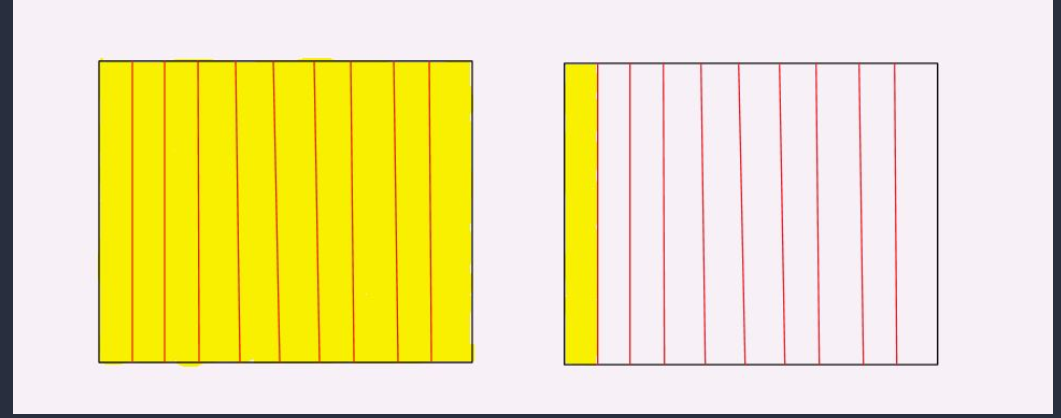
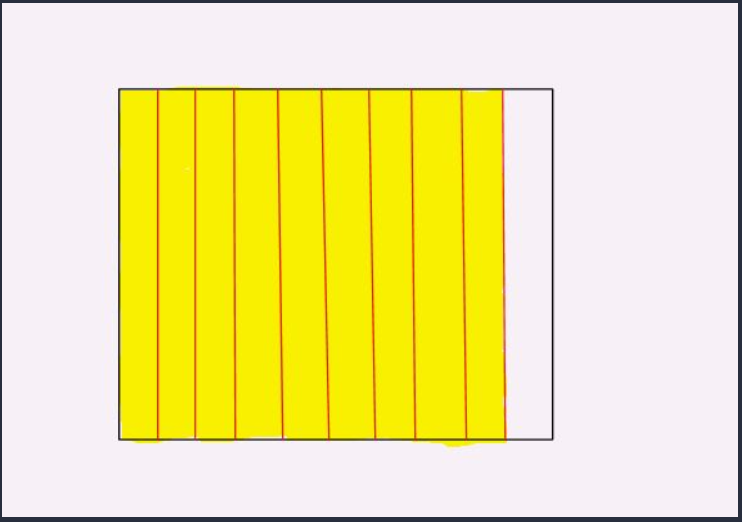
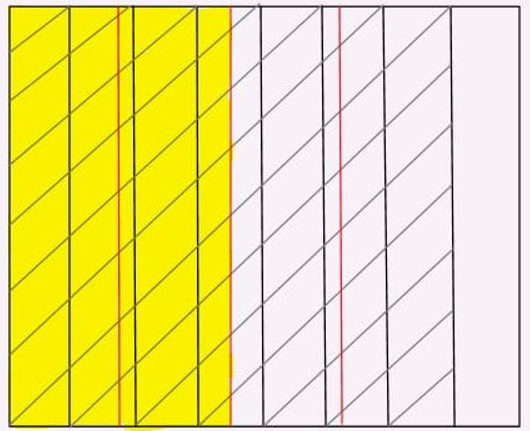
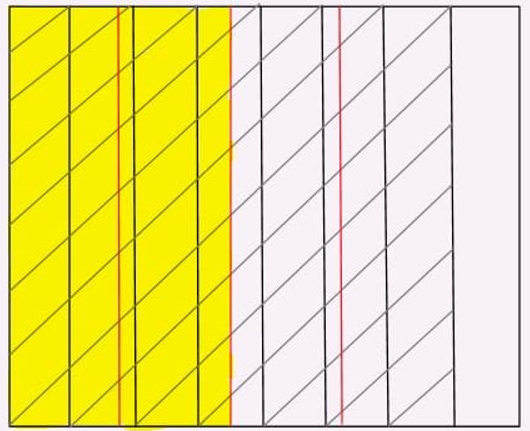
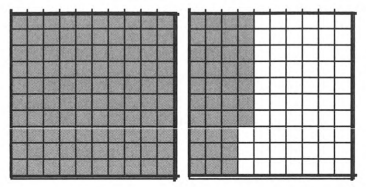
Given a situation, Mandy has a coupon of 40% and there is 70% sale on sunglasses that means she pays 110%.

Another situation is if there is 70% than means, she has to pay 30% and she has a coupon of 40% which means she has to pay 60% so 30% and 60% means 90% so she would pay 90% .

Core Connections, Course 1, Student 1st Edition, Chapter 5 Multiplying Fractions and Area 1

Find at least two ways to represent this situation using diagrams or numbers.

Use our representations to make sense of the situation and figure out if the sunglasses really are free.

Representation of Lorna’s explanation i.e.110% or in fractions,110/100=11/10.

Read and Learn More Core Connections Course 1 Student 1st Edition Solutions

Representation of Mandy’s explanation i.e.90% or in fractions,90/100=9/10 From 2 diagram we conclude that Mandy has to play less than price of sunglasses and Lorna has to pay 10%

more than the price of sunglasses.

Core Connections, Course 1, Student 1st Edition, Chapter 5 Multiplying Fractions and Area 1 1

 Core Connections Course Chapter 5 Page 226 Problem 2 Answer

Core Connections Course 1 Student 1st Edition Chapter 5 Exercise 5.2 Multiplying Fractions and Area

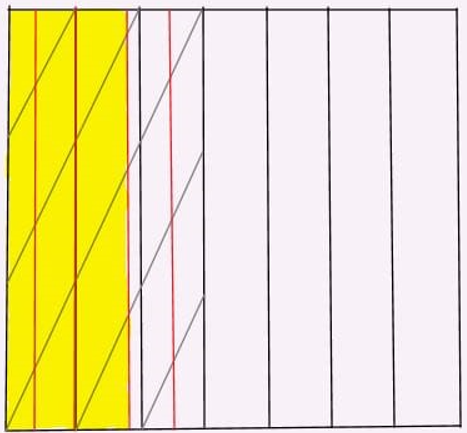
Now the price to be paid is 30%.

The discount coupon of 40%  is applied then on the price after the sale discount i.e. on 30%.

So, 60% of 30% of original price is to be paid.

Tony first calculated discount from sale i.e. 70%.

Now the price to be paid is 30%.

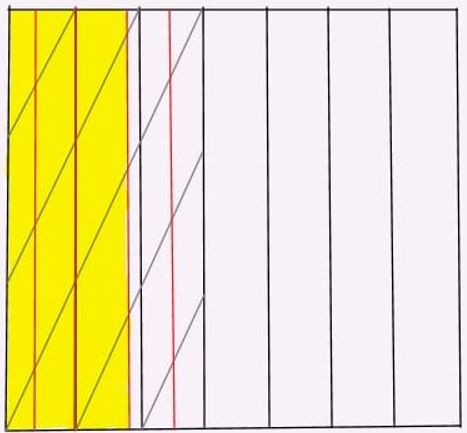
The discount coupon of 40%  is applied then on the price after the sale discount i.e. on 30%.

So, 60% of 30%  of original price is to be paid.

Core Connections Course Chapter 5 Page 226 Problem 3 Answer

Given 40% of 20%.We have to find the value of 40% of 20%.

We will use decimal multiplication.

the Given 40% of 20%, Chika used decimal multiplication as 0.4(0.2)=0.8

The result is wrong because since the number is divided by 100, the decimal will come before hundredth place.

Chika used wrong way to multiply decimal. The correct answer of 40% of 20% is 0.08.

Core Connections Course 1 Exercise 5.2 step-by-step solutions Page 226 Problem 4 Answer

We have to find what happens  when we multiply one-tenth by one-tenth.

We will use fraction-multiplication to find it out.

We will also represent the problem solution in decimal.

One-tenth is 1/10. So, one-tenth of one-tenth is

1/10⋅1/10=1/100

In decimal terms, 1/10=0.1 because decimal will be put before tenth place.

So, 0.1⋅0.1=0.01

One-tenth of one-tenth is 1/100 and in decimal is 0.01.

Core Connections Course Chapter 5 Page 226 Problem 5 Answer

Given 1/10.4/100.

We will use fraction multiplication to find it out.

We will also represent the problem solution in decimal.

The fraction-multiplication

1/10⋅4/100=4/1000

1/10 =0.1 and 4/100

=0.04 in decimal terms. So,0.1×0.04=0.004

Hence, the multiplication of given expression 1/10.4/100=4/1000 and in decimal form is 0.004.

answers for Core Connections Course 1 Chapter 5 Exercise 5.2 Page 226 Problem 6 Answer

Given 40% of 20%.We have to calculate the correct answer.

We will use fraction multiplication to find it out.

40% of 20%,Chika used decimal multiplication as 0.4(0.2)=0.8

The correct calculation is0.4⋅0.2=4/10⋅2/10

=8/100

=0.08

Hence,40% of 20% the correct calculation is 0.08.

Core Connections Course Chapter 5 Page 226 Problem 7 Answer

From the part (a) to (f), we multiplied parts by parts.

We have to compare the products to the numbers that were multiplied.

There is no case such that the product of the multiplication is greater than any of the number.

There is no case such that the product of the multiplication is greater than any of the number.

Page 226 Problem 8 Answer

Given 20% Justify why ben write 2/10

We will use fraction-multiplication.

20% infraction is

20%=20/100

Reducing into the lowest term, 20% reducing to the lowest term is 2/10.

Core Connections Course Chapter 5 Page 226 Problem 9 Answer

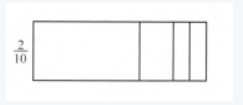
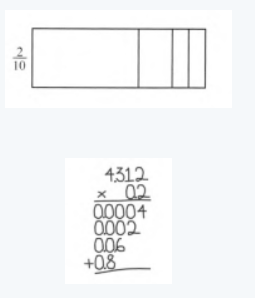
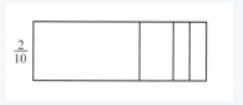
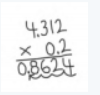
Given a figure and 20% of 4.312.

Core Connections, Course 1, Student 1st Edition, Chapter 5 Multiplying Fractions and Area 9

We have to label the missing dimensions and areas with fractions and find the product and then express it as a decimal.

We will use fraction multiplication.

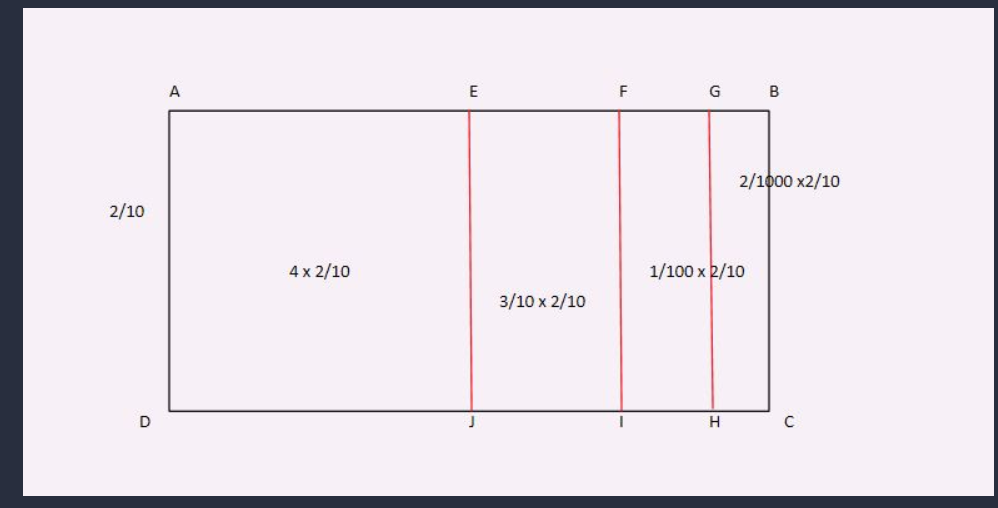
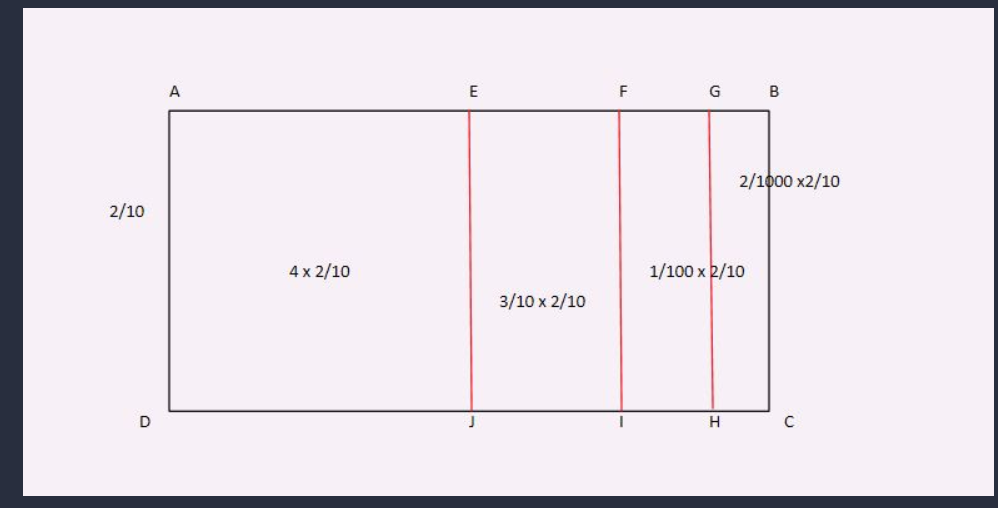
The rectangle is ABCD.4.312 is written as 4+0.3+0.01+0.002 which infraction term is

4+3/10+1/100+2/1000

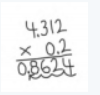
20%⋅4.312=2/10⋅4312/1000

=8624/10000

​=0.8624

The labeled figure is here

Core Connections, Course 1, Student 1st Edition, Chapter 5 Multiplying Fractions and Area 9 1

The value of 20% of 4.312=0.8624 and the labeled figure is

Core Connections, Course 1, Student 1st Edition, Chapter 5 Multiplying Fractions and Area 9 2

Core Connections Course Chapter 5 Page 226 Problem 10 Answer

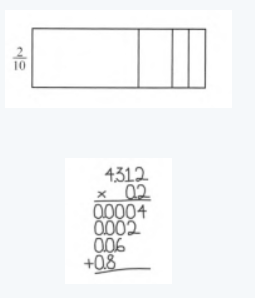
Given a rough work by Ben We have to explain his work.

We will use fraction-multiplication.

Core Connections, Course 1, Student 1st Edition, Chapter 5 Multiplying Fractions and Area 10 1

4.312 can be written as 4.000+0.300+0.010+0.002.

Now 20% is 2/10 or 0.2 as written in part (a). So, 20% of 4.312 is 0.2×4.312

=0.2×(4.000+0.300+0.010+0.002)

=0.8+0.06+0.002+0.0004

​Hence, the rough work done by Ben is 0.8+0.06+0.002+0.0004.

Core Connections, Course 1, Student 1st Edition, Chapter 5 Multiplying Fractions and Area 10

Page 226 Problem 11 Answer

Given 20% of 4.312

We have to help Ben complete his work by writing the answer to his multiplication problem.

We will use fraction-multiplication.

4.312 can be written as 4.000+0.300+0.010+0.002.

Now 20% is 2/10 or 0.2 as written in part (a). So, 20% of 4.312  is 0.2×4.312

=0.2×(4.000+0.300+0.010+0.002)

=0.8+0.06+0.002+0.0004……(1)

Now, solving (1) 0.8+0.06+0.002+0.0004=0.8624

Ben complete his work by writing the answer to his multiplication problem which is 0.8624

Core Connections Course Chapter 5 Page 226 Problem 12 Answer

Given20% of 4.312 Explain why did Ben line up the decimals points in his method as shown in figure

Core Connections, Course 1, Student 1st Edition, Chapter 5 Multiplying Fractions and Area 12 1

In the figure Ben lined up the decimals points in his method since addition will be easier as in digits at the ones place will be added, then digits at the tenth place will be added and so on.

Core Connections, Course 1, Student 1st Edition, Chapter 5 Multiplying Fractions and Area 12

Ben lined up the decimals points in his method since addition will be easier as in digits at the ones place will be added easily.

Page 227 Problem 13 Answer

Given0.2(4.312)

We have to use a generic rectangle, to sum up the product.

We will use a fraction of addition.

Given 0.2(4.312)

Solving them,

Core Connections, Course 1, Student 1st Edition, Chapter 5 Multiplying Fractions and Area 13

0.2(4.312)

=4⋅2/10+3/10⋅2/10+1/100⋅2/10+2/1000⋅2/10

=8/10+6/100+2/1000+4/10000

=0.8624

​Hence, the product of 0.2(4.312) is 0.8624.

Core Connections Course Chapter 5 Page 227 Problem 14 Answer

Given 0.2(4.312) Conn or has shown his figure through the figure.

Core Connections, Course 1, Student 1st Edition, Chapter 5 Multiplying Fractions and Area 14 1

We have to explain where he has decided to place the decimal point in his answer.

Given 0.2(4.312)=0.8624

Core Connections, Course 1, Student 1st Edition, Chapter 5 Multiplying Fractions and Area 14

From the figure, we notice the first fraction 8/10. Since there is 10 in the denominator it will belong to tenths in the final result.

The decimal point is placed on the left side of tenths.

Connor has placed decimal point is placed on the left side of tenths.

step-by-step breakdown of Core Connections Course 1 Exercise 5.2 Chapter 5 Page 227 Problem 15 Answer

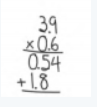
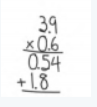
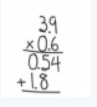
Given 3.9(0.6) Mohammed has calculated the answer as shown in figure.

Core Connections, Course 1, Student 1st Edition, Chapter 5 Multiplying Fractions and Area 15 1

We have to explain the answer be more than 2 or less than 2.

Core Connections, Course 1, Student 1st Edition, Chapter 5 Multiplying Fractions and Area 15

From the figure, we see the answer is 1.8 which will be added to 0.54 which makes it more than 2.

The answer is greater than 2 since in the solution part 1.8 is added to 0.53 which makes it greater than 2.

Core Connections Course Chapter 5 Page 227 Problem 16 Answer

Given the figure where Mohammed has multiplied the number.

Core Connections, Course 1, Student 1st Edition, Chapter 5 Multiplying Fractions and Area 16

We have to check whether the multiplication is correct or not.

We will use decimal-multiplication.

The calculation is 3.9×0.6

=(3+0.9)×0.6

=(3+9/10)×6/10

=3×6/10+9/10×6/10

=18/10+54/100

=1.8+0.54

​The calculation done my Mohammed is correct as result is same in both case.

Page 227 Problem 17 Answer

Given the calculation of Mohammed’s work.

He noticed that he will need to add 5 tenths and 8 tenths.

calculate the sum for him.

Core Connections, Course 1, Student 1st Edition, Chapter 5 Multiplying Fractions and Area 17 1

From the calculation of Mohammed’s work

Five tenths and eighth tenths will be added in a usual way e.g. 0.5+0.8=1.3 and then 1 will be added to the number after the decimal of 1.8.

Core Connections, Course 1, Student 1st Edition, Chapter 5 Multiplying Fractions and Area 17

Mohammed  will add Five tenths and eighth tenths will be added in a usual way e.g. 0.5+0.8=1.3 and then 1 will be added to number after the decimal of 1.8.

Core Connections Course Chapter 5 Page 227 Problem 18 Answer

Given the calculation of Mohammed’s work

Core Connections, Course 1, Student 1st Edition, Chapter 5 Multiplying Fractions and Area 18

We have to find the product 3.9(0.6).

We will use decimal multiplication.

Mohammed’s work to find the product of 3.9(0.6) can be completed as follows:

3.9×0.6 / 0.54+1.8 / 2.34

​Hence, the product of 3.9(0.6) is 2.34.

Page 227 Problem 19 Answer

Given 0.3(0.0001).We have to find the product without using a calculator.

We will use fractions to solve.

Given0.3(0.0001)/0.3×0.0001

=3/ 10×1/10000

=3/100000

=0.00003

​Therefore the product of 0.3(0.0001)=0.00003 we have calculated without calculator.

Core Connections Course Chapter 5 Page 227 Problem 20 Answer

Given1486(0.25).

We have to find the product without using the calculator.

We will use fractions to solve.

Given1486(0.25)

0.25×1.486

=25/100×(1.000+0.400+0.080+0.006)

=25/100×1+25/100×4/10+25/100×8/100+25/100×6/1000

=25/100+100/1000+200/10000+150/100000

=0.25+0.1+0.02+0.0015

=0.3715

​Therefore the product of 1486(0.25) without using calculator is 0.3715.

Page 227 Problem 21 Answer

Given2.8(0.902).

We have to find the product without using the calculator.

We will use fractions to solve.

Given2.8(0.902)

0.28×0.902

=28/100×(0.900+0.000+0.002)

=28/100×9/10+28/100×0+28/100×2/1000

=252/1000+0+56/100000

=0.252+0.00056

=0.25256

​Therefore the product of 2.8(0.902) without using calculator is 0.25256.

Core Connections Course Chapter 5 Page 227 Problem 22 Answer

Given Jack designed a bridge that is 0.2 miles and 3/5 of bridge has been built.

We have to find how much section of bridge is finished.

We will use fraction- multiplication.

Jack designed a bridge that will be 0.2 miles long, and 3/5 the bridge has been built.

Section of the bridge that is finished is

0.2×3/5

=2/10×3/5

=6/50

=6×2/50×2

=12/100

=0.12

​Therefore Jack build 0.12 section of the bridge.

Page 227 Problem 23 Answer

Given Brianna thinks that3%⋅4%=12%.

But Caitlyn is not sure.We have to explain who is correct.

We will use fraction-multiplication.

Brianna thinks that3%⋅4%=12%.

It can also be written as 3%⋅4%

=3/100×4/100

=12/10000

=0.12%≠12%

Caitlyn is right.

Therefore, Caitlyn is right as 3%⋅4%≠12%.

Core Connections Course Chapter 5 Page 228 Problem 24 Answer

We have to create an entry with “Multiplication of Decimals” and label it with today’s date.

We will include at least two examples and we will explain the steps.

Multiplication of decimals Suppose we need to multiply 0.2 with 3.524.

Firstly, open 3.524as3.000+0.500+0.020+0.004. After writing these into fractions, multiply each term with0.2

0.2×3.524

=0.2×(3.000+0.500+0.020+0.004)

=2/10×(3+5/10+2/100+4/1000)

=6/10+10/100+4/1000+8/10000

Convert the above terms into decimals and then add up to get the final solution.

6/10+10/100+4/1000+8/10000

=0.6+0.1+0.004+0.0008

=0.7048

​Multiplication of decimals Suppose we need to multiply 0.5 with 0.425.

Firstly, open 0.425 as 0.400+0.020+0.005. After writing these into fractions, multiply each term with0.5.

0.5×0.425

=0.5×(0.400+0.020+0.005)

=5/10×(4/10+2/100+5/1000)

=20/100+10/1000+25/10000

Convert the above terms into decimals and then add up to get the final solution.

20/100+10/1000+25/10000

=0.2+0.01+0.0025

=0.2125

​Therefore, two examples of “decimal of multiplication” are 0.2×3.54=0.7048 and 0.5×0.425=0.2125.

Page 228 Problem 25 Answer

Given Ethan gave 10% of his income to charity.

This month, he wrote the calculation as shown in the figure.

Core Connections, Course 1, Student 1st Edition, Chapter 5 Multiplying Fractions and Area 25

We have to explain why this calculation is appropriate and finish the calculation for him.

Calculate how much he gave this month.

Ethan decided to give his monthly income to charity. His monthly income is $1526. So, the money given to charity is

1526×10/100

=1526×10/10×10

=1526×1/10

=152.6

The fraction multiplied is one-tenth. So, the decimal point is added before tenth place after multiplication.

Ethan gave $152.6 for the charity every month.

Core Connections Course 1 Student 1st Edition Chapter 5 Exercise 5.1 Multiplying Fractions and Area

Core Connections Course 1 Student 1st Edition Chapter 5 Multiplying Fractions and Area

Core Connections Course 1 Student 1st Edition Chapter 5 Exercise 5.1 Solutions Page 211 Problem 1 Answer

Given; Riley total area=1/2,Morgan total area=1/3,

Reggie total area=1/6.

Riley completed 1/3 of his part.

Morgan had completed 5/6 of her part.

Reggie had completed 2/3 of his part.

We need to determine who completed least or most work & what fraction of work each completed & how many piece of total work each completed.

For this we find the fraction of the work completed by each of them & then in order to determine least or most work done we make their denominator equal so we can compare numerator easily.

Read and Learn More Core Connections Course 1 Student 1st Edition Solutions

Let us assume mural area be 1.

Riley total area=1/2.

Morgan total area=1/3.

Reggie total area=1/6.

Given; Riley completed 1/3 of her total work.

So, actual work done by Riley=1/3×1/2=1/6​

Morgan completed 5/6 of her part.

So, actual work done by Morgan =5/6×1/3=5/18

Reggie completed 2/3 work.

So, actual work done by Reggie =2/3×1/6=1/9

In order to know who has done the least or the most work we make denominator of each fraction same & then compare.

We have;1/6,5/18,1/9.

LCM=18.

So,1/6×3/3,5/18,1/9×2/2

⇒3/18,5/18,2/18

By the fraction above we can see that Reggie has completed least of the total mural area & Morgan completed most of the total mural area.

Riley completed 3 pieces of the total mural area.

Morgan completed 5 pieces of the total mural area.

Reggie completed 2 pieces of the total mural area.

So, Reggie has completed least of the total mural area & Morgan completed most of the total mural area.

Riley completed 3 pieces of the total mural area.

Morgan completed 5 pieces of the total mural area.

Reggie completed 2 pieces of the total mural area.

Fraction of work prepared by Riley, Morgan & Reggie are 3/18,5/18,2/18 respectively.

Core Connections Course Chapter 5 Page 212 Problem 2 Answer

Core Connections Course 1 Student 1st Edition Chapter 5 Exercise 5.1 Multiplying Fractions and Area

Chapter 5 Exercise 5.1 Multiplying Fractions And Area Solutions Core Connections Course 1 Page 212 Problem 3 Answer

Given; Juanne drew a square with side lengths of 1 unit.

Core Connections, Course 1, Student 1st Edition, Chapter 5 Multiplying Fractions and Area 3

We need to find the area of the total figure & what shaded part represents.

For this we use the area of square formula.

We have; Side of square=1 unit.

So, area of square=side×side

=1×1 square unit.

The shaded shaded part represents the area.

So, the total area of the figure=1 sq. unit.

The shaded part represents area of the shaded region.

Core Connections Course Page 212 Problem 4 Answer

Given; Juanne drew a square with side lengths of 1 unit.

Core Connections, Course 1, Student 1st Edition, Chapter 5 Multiplying Fractions and Area 4 1

We need to determine what does dark shaded portion represents & its area.

To find area we first divide width into 3 equal parts & length in two equal parts & then using area of rectangle=l⋅b find area.

We have;

Core Connections, Course 1, Student 1st Edition, Chapter 5 Multiplying Fractions and Area 4

Since length of each side is 1 unit.

From previous part we have area of square is 1 sq. unit.

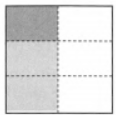
Since the square is divided into 6 equal parts so the area of darkly shaded region must be one-sixth of the total area.

i,e; area of darkly shaded region=1/6 sq. unit.

Therefore the dark shaded region represents the area of the region shaded region & its area is 1/6 sq. unit.

Core Connections Course 1 Chapter 5 Exercise 5.1 Step-By-Step Solutions Page 212 Problem 5 Answer

Given; Juanne drew a square with side lengths of 1 unit.

Core Connections, Course 1, Student 1st Edition, Chapter 5 Multiplying Fractions and Area 5 1

We need to determine the area of the darkly shaded rectangle.

To find area we first divide width into 3 equal parts & length in two equal parts & then using area of rectangle=l⋅b find area.

To calculate the length of side of shaded part.

We have;

Core Connections, Course 1, Student 1st Edition, Chapter 5 Multiplying Fractions and Area 5

Since length of each side is 1 unit.

So, for shaded part length=1/2.

Breadth=1/3.

So, area of the dark shaded region =1/2×1/3=1/6 sq.unit

​Therefore, the area of the darkly shaded region=1/6 sq. unit.

Core Connections Course Chapter 5 Page 212 Problem 6 Answer

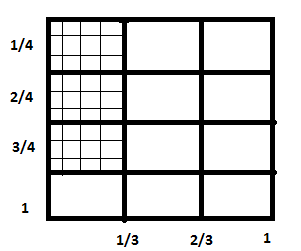
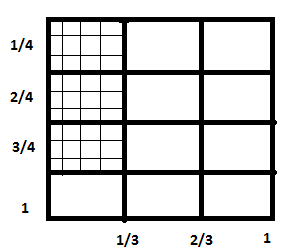
We have been given 3/4⋅1/3.

We have been asked to solve this and represent on graph.

Core Connections, Course 1, Student 1st Edition, Chapter 5 Multiplying Fractions and Area 6 1

We will do it by multiplying numerator with numerator and denominator with denominator.

To solve 3/4⋅1/3

we will multiply it.

Core Connections, Course 1, Student 1st Edition, Chapter 5 Multiplying Fractions and Area 6

Multiplying 3/4⋅1/3

=3⋅1/4⋅3

=1/4

Hence, the product will be 3/4⋅1/3 = 1/4.

Solutions For Core Connections Course 1 Chapter 5 Exercise 5.1 Multiplying Fractions And Area Page 212 Problem 7 Answer

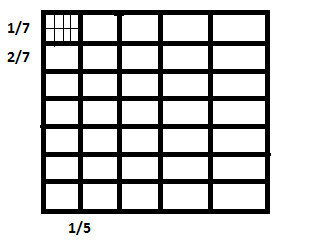
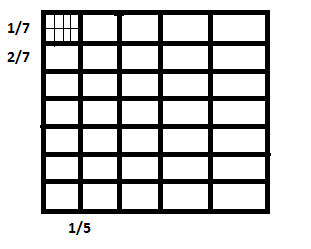
We have been given 1/5⋅1/7.

We have been asked to solve this and represent on graph.

Core Connections, Course 1, Student 1st Edition, Chapter 5 Multiplying Fractions and Area 7 1

We will do it by multiplying numerator with numerator and denominator with denominator.

To solve 1/5⋅1/7

we will multiply it.

Multiplying​1/5⋅1/7

=1/5⋅7

=1/35

Core Connections, Course 1, Student 1st Edition, Chapter 5 Multiplying Fractions and Area 7

Hence, the product will be 1/5⋅1/7=1/35.

Core Connections Course Chapter 5 Page 212 Problem 8 Answer

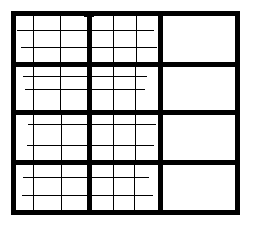
We have been given 1/3⋅3/10.

We have been asked to solve this and represent on graph.

Core Connections, Course 1, Student 1st Edition, Chapter 5 Multiplying Fractions and Area 8 1

We will do it by multiplying numerator with numerator and denominator with denominator.

To solve 1/3⋅3/10

we will multiply it.

Multiplying​1/3⋅3/10

=1×3/3×10

=1/10

Core Connections, Course 1, Student 1st Edition, Chapter 5 Multiplying Fractions and Area 8

Hence, the product will be 1/3⋅3/10 = 1/10.

Core Connections Course 1 Student 1st Edition Chapter 5 Exercise 5.1 Guide Page 212 Problem 9 Answer

We have been given 4/4⋅2/3.

We have been asked to solve this and represent it on a graph.

Core Connections, Course 1, Student 1st Edition, Chapter 5 Multiplying Fractions and Area 9 1

We will do it by multiplying numerator with numerator and denominator with denominator.

To solve 4/4⋅2/3

we will multiply it.

Multiplying​4/4⋅2/3 = 2/3

Core Connections, Course 1, Student 1st Edition, Chapter 5 Multiplying Fractions and Area 9

Hence, by using the graph paper the product is 4/4⋅2/3=2/3.

Core Connections Course Chapter 5 Page 212 Problem 10 Answer

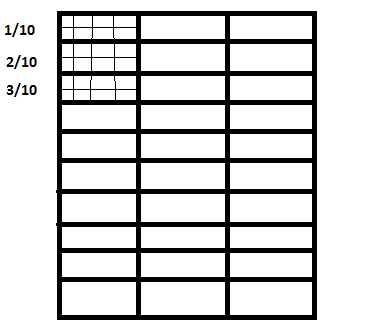
We have been given 1/10⋅1/10.

We have been asked to solve this and represent on graph.

Core Connections, Course 1, Student 1st Edition, Chapter 5 Multiplying Fractions and Area 10 1

We will do it by multiplying numerator with numerator and denominator with denominator.

To solve 1/10⋅1/10

we will multiply it.

Multiplying​1/10⋅1/10=1/10⋅10

=1/100

Core Connections, Course 1, Student 1st Edition, Chapter 5 Multiplying Fractions and Area 10

Hence, the product will be 1/10⋅1/10=1/100.

Chapter 5 Exercise 5.1 Multiplying Fractions And Area Explained Core Connections Course 1 Page 213 Problem 11 Answer

Given: Two points(13,14),(−3,14).

To Find: The distance between the two given points.

The distance between any two point with same abscissa or ordinate is the absolute value of the difference of the uncommon abscissa or ordinate.

For the given set of points(13,14),(−3,14), the distance would be given by the distance between its abscissa value which is given as:

∣13−(−3)∣

=∣13+3∣

=∣16∣

=16

​The distance between (13,14),(−3,14) is 16 units.

Core Connections Course Chapter 5 Page 213 Problem 12 Answer

Given: Two points(−9,1),(−9,11).

To Find: The distance between the two given points.

The distance between any two point with same abscissa or ordinate is the absolute value of the difference of the uncommon abscissa or ordinate.

For the given set of points(−9,1),(−9,11),

the distance would be given by the distance between its ordinate value which is given as:

∣1−11∣

=∣−10∣

=10

​The distance between (−9,1),(−9,11) is 10 units.

Worked Examples For Core Connections Course 1 Chapter 5 Exercise 5.1 Multiplying Fractions And Area Page 213 Problem 13 Answer

Given: The mixed fraction 44/5.

To Find: Convert the mixed fraction to improper fraction.

To convert a mixed number to an improper fraction multiply the denominator of the fractional part by the whole number, and add the result to the numerator.

Use this result as your numerator, and place it over the existing.

The mixed fraction is converted to the improper fraction as 44/5=4×5+4/5

= 20+4/5

= 24/5

The improper form of the fraction 44/5 is 24/5.

Core Connections Course Chapter 5 Page 213 Problem 14 Answer

Given: The improper fraction 17/7.

To Find: The conversion of improper fraction to mixed fraction.

To obtain a mixed fraction, divide the numerator by the denominator.

Write down the whole number part of the quotient.

Take the remainder and write it over the original denominator.

For the given fraction 17/7, the quotient is 2 and the remainder is 3 that is 17=7⋅2+3

Hence, the improper fraction is converted to the mixed fraction as 17/7=23/7.

The improper form of the fraction 17/7 is 23/7.

Core Connections Course 1 Chapter 5 Exercise 5.1 Detailed Answers Page 213 Problem 15 Answer

Given: The mixed fraction 413/15.

To Find: Convert the mixed fraction to an improper fraction.

To convert a mixed number to an improper fraction multiply the denominator of the fractional part by the whole number, and add the result to the numerator.

Use this result as your numerator, and place it over the existing.

The mixed fraction is converted to the improper fraction as 413/15 = 15×4+13/15

=60+13/15

=73/15

The improper form of the fraction 413/15 is 73/15.

Core Connections Course Chapter 5 Page 213 Problem 16 Answer

Given: The improper fraction 68/3.

To Find: The conversion of improper fraction to mixed fraction.

To obtain a mixed fraction, divide the numerator by the denominator.

Write down the whole number part of the quotient.

Take the remainder and write it over the original denominator.

For the given fraction 68/3, the quotient is 22 and the remainder is 2 that is 68=22⋅3+2

Hence, the improper fraction is converted to the mixed fraction as 68/3 =22×2/3.

The mixed fraction form of the number 68/3 is 22×2/3.

Core Connections Course 1 Chapter 5 Exercise 5.1 Detailed Answers Page 213 Problem 17 Answer

Given: The expression 3/5+1/4.

To Find: The simplification of the given expression and final answer expressed as a mixed fraction.

After simplification of the expression, in order to obtain a mixed fraction, divide the numerator by the denominator.

Write down the whole number part of the quotient.

Take the remainder and write it over the original denominator.

The simplification is done as: 3 /5+1/4=3×4+1×5/5×4

=12+5/20

=17/20

The expression 3/5+1/4 is simplified to 17/20.

Core Connections Course Chapter 5 Page 213 Problem 18 Answer

Given: The expression 3/4−2/3.

To Find: The simplification of the given expression and final answer expressed as a mixed fraction.

After simplification of the expression, in order to obtain a mixed fraction, divide the numerator by the denominator.

Write down the whole number part of the quotient.

Take the remainder and write it over the original denominator.

The simplification is done as: 3/4−2/3=3×3−2×4/4×3

=9−8/12

=1/12

The expression 3/4−2/3 is simplified to 1/12.

Core Connections Course 1 Chapter 5 Exercise 5.1 Detailed Answers Page 213 Problem 19 Answer

Given: The expression 51/2+41/3.

To Find: The simplification of the given expression and final answer expressed as a mixed fraction.

After simplification of the expression, in order to obtain a mixed fraction, divide the numerator by the denominator.

Write down the whole number part of the quotient.

Take the remainder and write it over the original denominator.

The simplification is done as: 5×1/2+4×1/3=11/2+13/3

=11×3+13×2/3×2

=33+26/6

=59/6

=9×5/6

The expression 51/2+41/3 is simplified to 95/6.

Core Connections Course Chapter 5 Page 213 Problem 20 Answer

Given: The expression 7/8⋅5/6.

To Find: The simplification of the given expression and final answer expressed as a mixed fraction.

After simplification of the expression, in order to obtain a mixed fraction, divide the numerator by the denominator.

Write down the whole number part of the quotient.

Take the remainder and write it over the original denominator.

The simplification is done as:

7/8⋅5/6=7/8×5/6=35/48

The expression 7/8⋅5/6 is simplified to 35/48.

Core Connections Course 1 Student 1st Edition Chapter 5 Exercise 5.1 Area Answers Page 214 Problem 21 Answer

We have given that Jenny’s house is 4/7 of a mile from the bus stop.

If Jenny had to run 2/3 of the way from the house to the bus stop.

It is asked that did Jenny run more or less than half a mile.

We will use the given fraction to get the answer.

Given that Jenny’s house is 4/7 of a mile from the bus stop.

Here, half of a mile ​=7/2

=3.5​

But as per given fraction, Jenny has covered 4 out of 7 which is more than 3.5.

So, Jenny has covered distance more than half of a mile.

Yes, Jenny has covered distance more than half of a mile.

Core Connections Course Chapter 5 Page 214 Problem 22 Answer

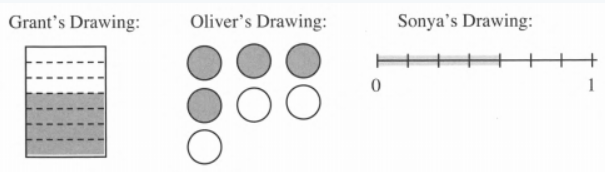
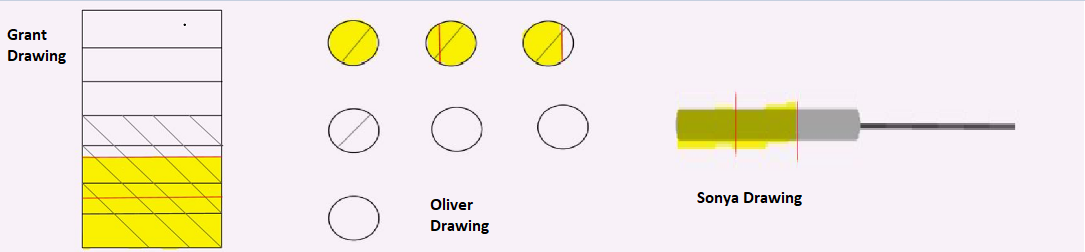
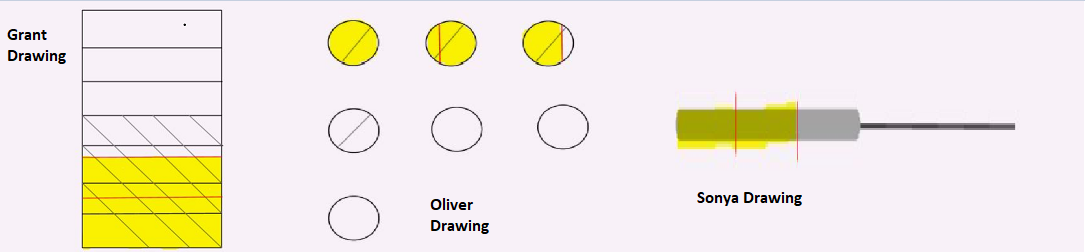
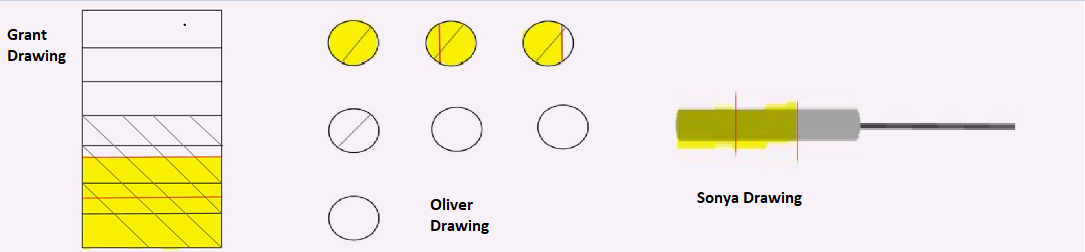
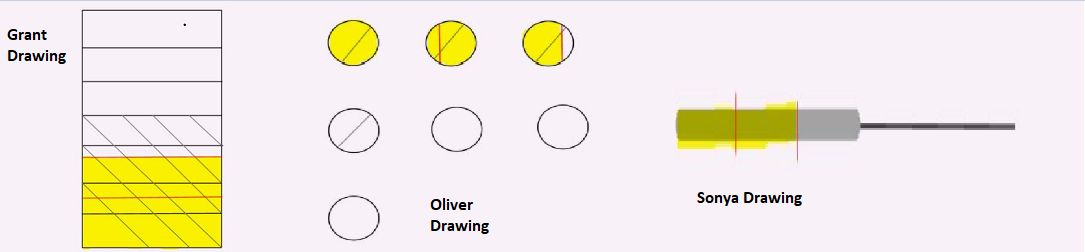
We have given three figures,

Core Connections, Course 1, Student 1st Edition, Chapter 5 Multiplying Fractions and Area 22 1

It is asked to use these given figures to show 2/3 of 4/7.

We will use given figures and then divide each figure in three equal parts and shade two parts.

Given figures are

Core Connections, Course 1, Student 1st Edition, Chapter 5 Multiplying Fractions and Area 22

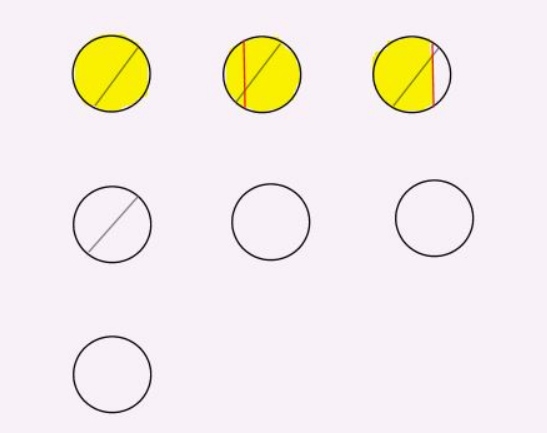
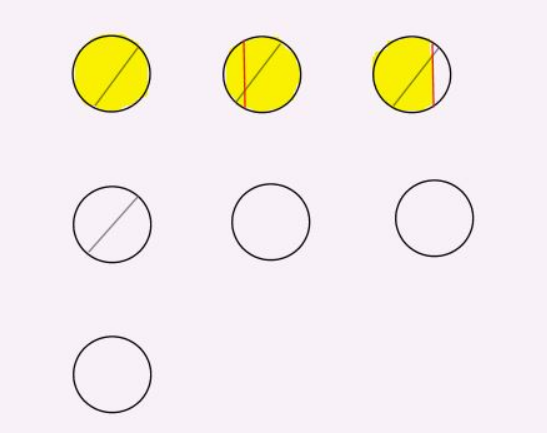
Here, In Grant’s drawing, area that represents 4 out of 7 that is 4 parts are divided into 3 parts(represented by red lines) and 2 parts out of those 3 parts are shaded by yellow color.

Core Connections, Course 1, Student 1st Edition, Chapter 5 Multiplying Fractions and Area 22 2

In Oliver’s Drawing, area that represents 4 parts out of 7 i.e. 4 circles are divided into 3 parts (represented by red lines) and the 2 parts out of those 3 parts are shaded by yellow color.

Core Connections, Course 1, Student 1st Edition, Chapter 5 Multiplying Fractions and Area 22 3

In Sonya’s Drawing, area that represents 4 parts out of 7i.e. 4 circles are divided into 3 parts (represented by red lines) and the 2 parts out of those 3 parts are shaded by yellow color.

Core Connections, Course 1, Student 1st Edition, Chapter 5 Multiplying Fractions and Area 22 4

The Drawings of Grant, Oliver and Sonya are shown below respectively.

Core Connections, Course 1, Student 1st Edition, Chapter 5 Multiplying Fractions and Area 22 5

Core Connections, Course 1, Student 1st Edition, Chapter 5 Multiplying Fractions and Area 22 6 Core Connections, Course 1, Student 1st Edition, Chapter 5 Multiplying Fractions and Area 22 7

Core Connections Course Chapter 5 Page 214 Problem 23 Answer

We have given three drawings

Core Connections, Course 1, Student 1st Edition, Chapter 5 Multiplying Fractions and Area 23 1

It is asked to find which drawing would team prefer.

We will observe each drawing and see which is easy to understand.

Given figures are

Core Connections, Course 1, Student 1st Edition, Chapter 5 Multiplying Fractions and Area 23

In each of the above drawings 2/3 of 4/7 is shown.

All the given drawings are easy to understand so the team will refer any of the given drawings.

The team will prefer any of the given drawings because each drawing showing 2/3 of 4/7.

Core Connections Course Chapter 5 Page 214 Problem 24 Answer

We have given drawings,

Core Connections, Course 1, Student 1st Edition, Chapter 5 Multiplying Fractions and Area 24 1

It is asked to find fraction of whole is 2/3 of 4/7.

We will multiply given fractions to get required fraction.

Given figure is

Core Connections, Course 1, Student 1st Edition, Chapter 5 Multiplying Fractions and Area 24

Here, using multiplication

2/3⋅4/7⇒8/21

So, 8/21 is fraction of whole is 2/3 of 4/7.

Hence,8/21 is fraction of whole is 2/3 of 4/7.

Core Connections Course 1 Student 1st Edition Chapter 5 Exercise 5.1 Area Answers Page 215 Problem 25 Answer

We have given fraction 3/5 of 2/7.

It is asked to find out what part of whole is 3/5 of 2/7 and also make diagram of it.

We will use multiplication of fractions.

Given fraction 3/5 of 2/7.

It is shown as below

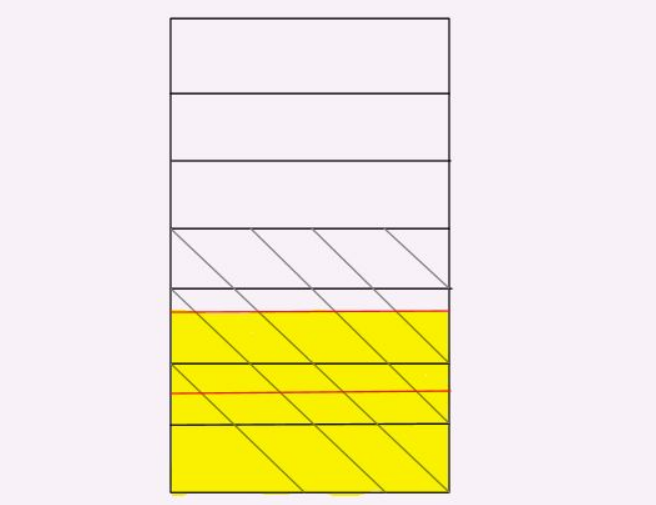
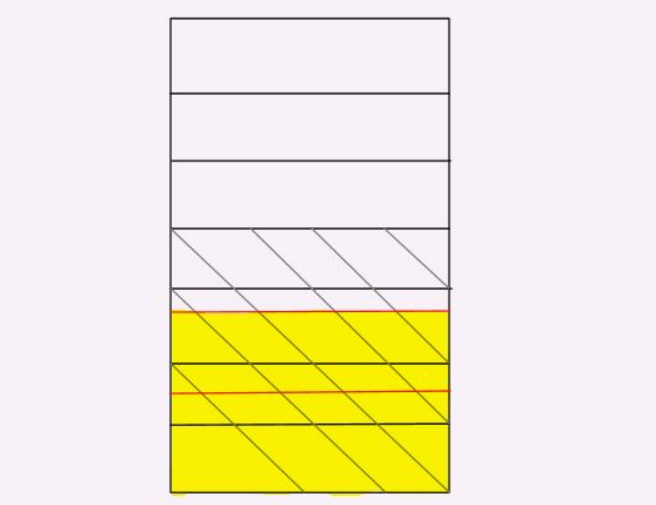
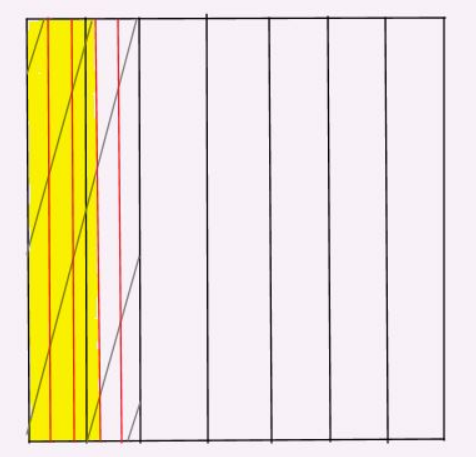
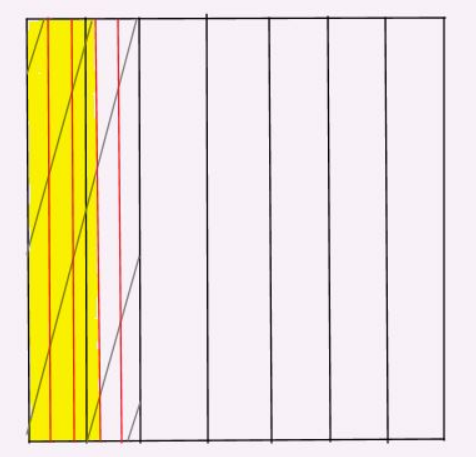
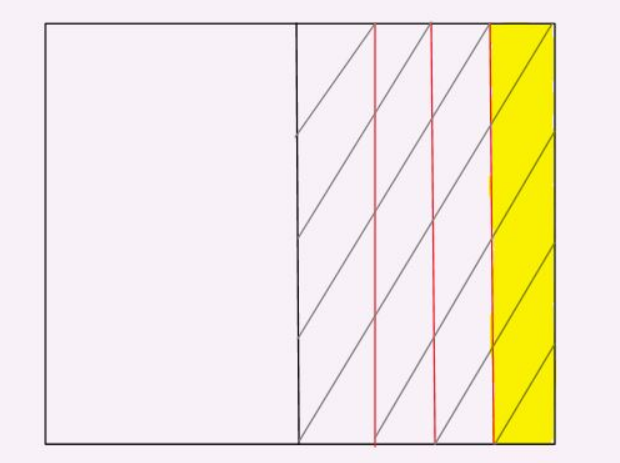
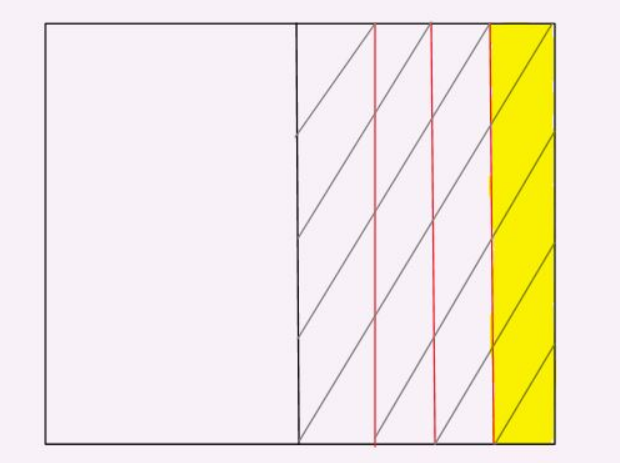
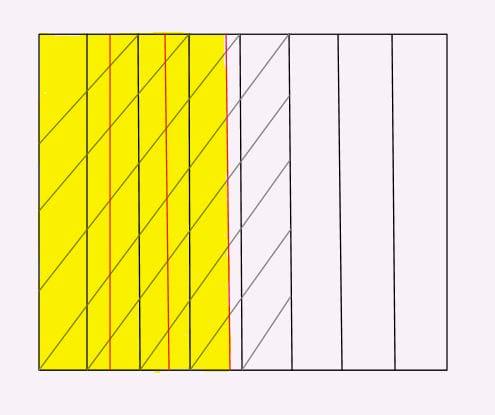
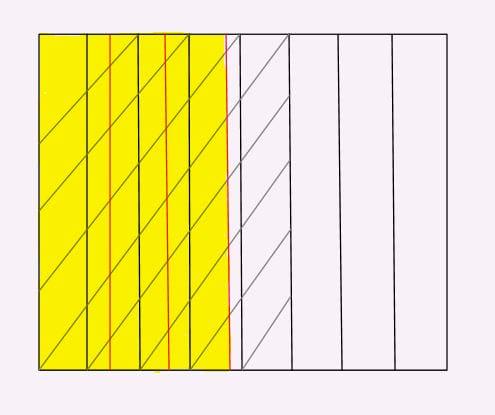
Core Connections, Course 1, Student 1st Edition, Chapter 5 Multiplying Fractions and Area 25 1

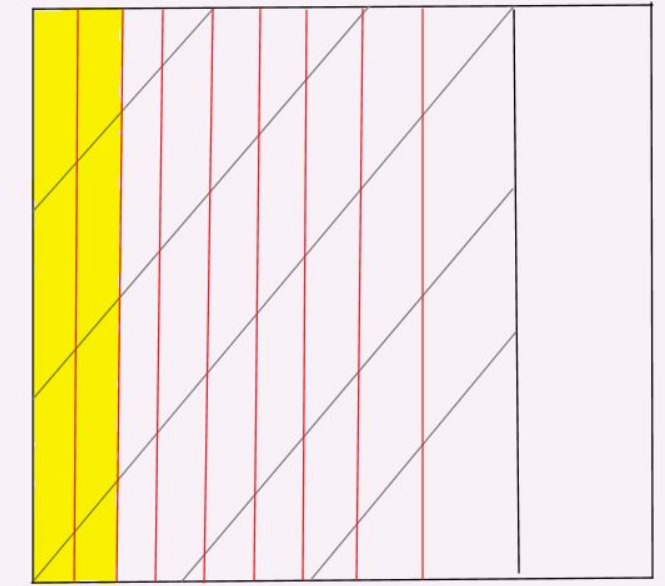
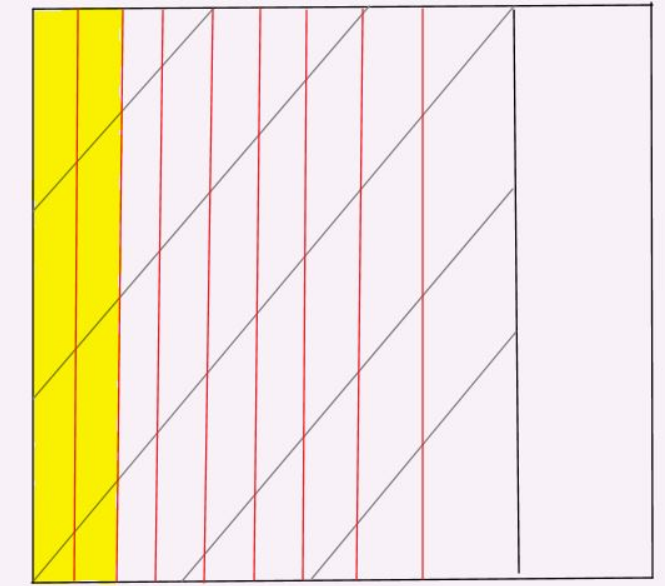
Grey lines represent the shaded part 2 out of 7.

Red lines represent division of 2 parts of 7 into 5 parts.

Yellow area represents 3 parts out of 5 of 2/7.

Using multiplication,

3/5⋅2/7⇒6/35

So, 6/35 is part of whole is 3/5⋅2/7.

Hence,6/35 is part of the whole is 3/5⋅2/7 which is shown below

Core Connections, Course 1, Student 1st Edition, Chapter 5 Multiplying Fractions and Area 25

Core Connections Course Chapter 5 Page 215 Problem 26 Answer

We have given fraction 1/2 of 1/10.

It is asked to find out what part of whole is 1/2 of 1/10 and also make diagram of it.

We will use multiplication of fractions.

Given fraction is 1/2 of1/10.

It is shown as below

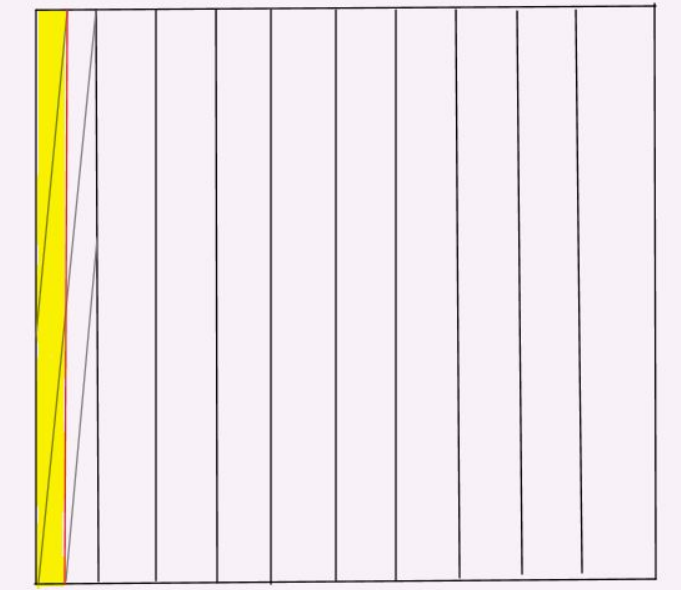
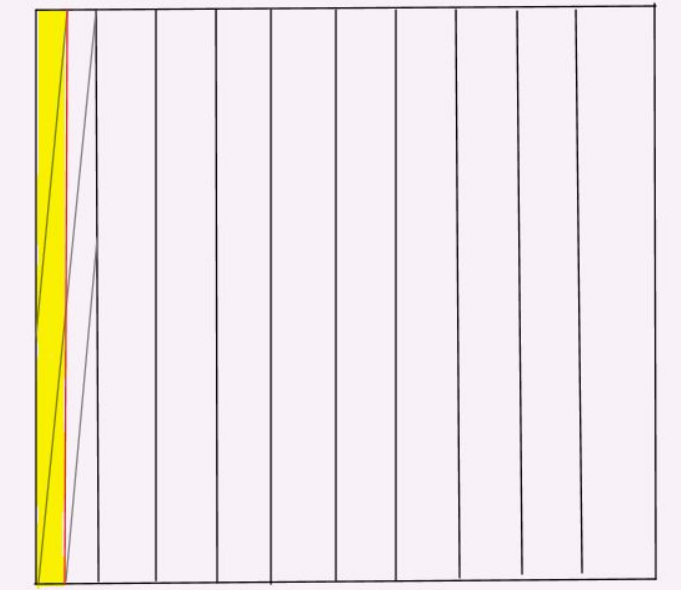
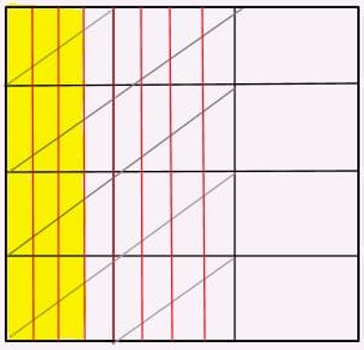
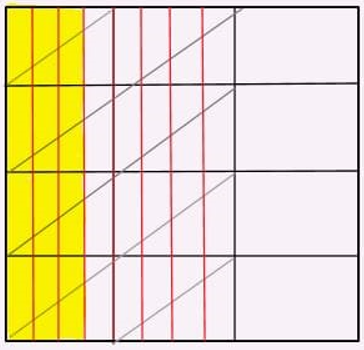
Core Connections, Course 1, Student 1st Edition, Chapter 5 Multiplying Fractions and Area 26 1

Grey lines represent the shaded part 1 out if 10 . Red lines represent division of 1 part of 10 into 2

parts. Yellow area represents 1 part out of 2 of 1/10.

Using multiplication,

1/2⋅1/10=1/20

So,1/20 is part of whole 1/2 of 1/10.

Hence,1/20 is part of the whole 1/2 of 1/10 and is shown below

Core Connections, Course 1, Student 1st Edition, Chapter 5 Multiplying Fractions and Area 26

Core Connections Course Chapter 5 Page 215 Problem 27 Answer

We have given that one half of a quarter would be the same as one quarter of a half.

It is asked to draw a picture that shows one half of one fourth.

We will first make picture of one fourth and then make one half on it.

Given that one half of a quarter would be the same as one quarter of a half.

Now drawing a picture of half of one fourth,

Core Connections, Course 1, Student 1st Edition, Chapter 5 Multiplying Fractions and Area 27 1

Grey lines represent the shaded area 1 part out of 4. Red lines represent the division of 1 part into 2 parts.

Yellow shaded area represents the half of one fourth.

The picture of half of one fourth is as follows

Core Connections, Course 1, Student 1st Edition, Chapter 5 Multiplying Fractions and Area 27

Core Connections Course Chapter 5 Page 215 Problem 28 Answer

We have given that one half of a quarter would be the same as one quarter of a half.

It is asked to draw a picture that shows one fourth of one half.

We will first make picture of one half and then make one fourth on it.

Given that one half of a quarter would be the same as one quarter of a half.

Now drawing a picture of one fourth of one half,

Core Connections, Course 1, Student 1st Edition, Chapter 5 Multiplying Fractions and Area 28 1

Grey lines represent the shaded area 1 part out of 2 . Red lines represent the division of 1 part into 4

parts. Yellow shaded area represents the one fourth of half.

The picture of one fourth of half is as follows

Core Connections, Course 1, Student 1st Edition, Chapter 5 Multiplying Fractions and Area 28

Core Connections Course 1 Student 1st Edition Chapter 5 Exercise 5.1 Area Answers Page 215 Problem 29 Answer

We have given that Grace and William were wondering if one half of a quarter would be the same as one quarter of a half.

It is asked to find out why Grace and William explain how these two values compare and why the result makes sense.

We will use the multiplication of fractions.

Given that one-half of one-fourth is equal to one-fourth of the half.

Using multiplication,

One half of one fourth is

1/2⋅1/4=1/8 and one-fourth of one half is 1/4⋅1/2=1/8

So, these both are equal that’s why one-half of one-fourth is equal to one-fourth of the half.

The value of one-half of one-fourth is equal to one-fourth of the half. So, the statement is correct.

Core Connections Course Chapter 5 Page 215 Problem 30 Answer

We have given fraction 2/9 of 80%.It is asked to show the diagram of above fraction.

We will first use multiplication to get the value of fraction and we will make its diagram.

Given fraction  is 2/9 of 80%.

Using multiplication,

2/9⋅80/100=2⋅80/9⋅100

⇒160/900

=8/45

So, the diagram of this fraction is as follows,

Core Connections, Course 1, Student 1st Edition, Chapter 5 Multiplying Fractions and Area 30 1

The diagram of given fraction is as follows.

Core Connections, Course 1, Student 1st Edition, Chapter 5 Multiplying Fractions and Area 30

Core Connections Course Chapter 5 Page 215 Problem 31 Answer

We have given fraction 2/3⋅27/8.It is asked to show the diagram of above fraction.

We will first use multiplication to get the value of fraction and we will make its diagram.

Given fraction is 2/3⋅27/8.

27/8 can be written in the form of improper fraction 2⋅8+7/8=23/8

Using multiplication,

2/3⋅27/8

=2/3⋅23/8

⇒23/12

So, the diagram of this fraction is as follows,

Core Connections, Course 1, Student 1st Edition, Chapter 5 Multiplying Fractions and Area 31 1

The diagram of the given fraction is as follows

Core Connections, Course 1, Student 1st Edition, Chapter 5 Multiplying Fractions and Area 31

Core Connections Course Chapter 5 Page 216 Problem 32 Answer

We are given 3/4 of  5/8.It is asked to find the parts of parts and also to create a diagram that demonstrates our thinking.

So we will find the parts of parts 3/4 of 5/8 and demonstrates it with a diagram.

Core Connections, Course 1, Student 1st Edition, Chapter 5 Multiplying Fractions and Area 32 1

3/4 of 5/8 (given)

Grey lines represent the shaded parts of 5 out of 8 parts.

Red lines represent the division of 5 parts of 8 into 4 parts.

Yellow shaded area represents 3 parts of 4 parts of 5/8.

3/4×5/8=15/24

Thus, the parts of parts of 3/4 of 5/8 is 15/24 and is demonstrated by the diagram shown below

Core Connections, Course 1, Student 1st Edition, Chapter 5 Multiplying Fractions and Area 32

Core Connections Course Chapter 5 Page 216 Problem 33 Answer

We are given 3/8⋅2/3.

It is asked to find the parts of parts and also to create a diagram that demonstrates our thinking.

So we will find the parts of parts 3/8⋅2/3 and demonstrate it with a diagram.

Core Connections, Course 1, Student 1st Edition, Chapter 5 Multiplying Fractions and Area 33 1

Grey lines represent the shaded parts of 2 out of 3 parts.

Red lines represent the division of 2 parts of 3 into 8 parts.

Yellow shaded area represents 3 parts of 8 parts of 2/3.

3/8×2/3

=6/24

=1/4

Thus, the parts of parts 3/8⋅2/3 is 1/4 and is demonstrated by the diagram shown below

Core Connections, Course 1, Student 1st Edition, Chapter 5 Multiplying Fractions and Area 33

Core Connections Course 1 Student 1st Edition Chapter 5 Exercise 5.1 Solutions Page 216 Problem 34 Answer

We are given 2/3 of 7/8.

It is asked to find the parts of parts and also to create a diagram that demonstrates our thinking.

So we will find the parts of parts 2/3 of 7/8 and demonstrates it with a diagram.

Core Connections, Course 1, Student 1st Edition, Chapter 5 Multiplying Fractions and Area 34 1

Grey lines represents the shaded parts of 7 out of 8 parts.

Red lines represent the division of 7 parts of 8 into 3 parts.

Yellow shaded area represents 2 parts of 3 parts of 7/8.

2/3×7/8

=14/24

=7/12

Thus, the parts of parts 2/3 of 7/8 is 7/12 and is demonstrated by the diagram shown below

Core Connections, Course 1, Student 1st Edition, Chapter 5 Multiplying Fractions and Area 34

Core Connections Course Chapter 5 Page 216 Problem 35 Answer

We are given 4/5⋅3/7.

It is asked to find the parts of parts and also to create a diagram that demonstrates our thinking.

So we will find the parts of parts 4/5⋅3/7 and demonstrate it with a diagram.

Core Connections, Course 1, Student 1st Edition, Chapter 5 Multiplying Fractions and Area 35 1

Grey lines represent the shaded parts of 3 out of 7 parts.

Red lines represent the division of 3 parts of 7 into 5 parts.

The yellow shaded area represents 4 parts of 5 parts of 3/7.

4/5×3/7=12/35

Thus, the parts of parts 4/5⋅3/7 is 12/35 and is demonstrated by the diagram shown below

Core Connections, Course 1, Student 1st Edition, Chapter 5 Multiplying Fractions and Area 35

Core Connections Course 1 Student 1st Edition Chapter 5 Exercise 5.1 Solutions Page 216 Problem 36 Answer

We are given∣−5+(−1)∣.

It is asked to simplify the given expression.

So we will simplify the given expression∣−5+(−1)∣by using the property∣−x∣=x.

∣−5+(−1)∣=∣−5−1∣

=∣−6∣

=6 (because∣−x∣=x)

Thus, by simplifying the given expression∣−5+(−1)∣we get 6.

Core Connections Course Chapter 5 Page 216 Problem 37 Answer

We are given an expression that is−∣2⋅4∣.

It is asked to simplify the given expression.

So we will simplify the given expression−∣2⋅4∣

by using the property−∣x∣=−x.

−∣2⋅4∣=−∣8∣

=−8 (because−∣x∣=−x)

Thus, by simplifying the given expression−∣2⋅4∣we get−8.

Multiplying Fractions And Area Solutions Core Connections Course 1 Page 216 Problem 38 Answer

We are given an expression that is 3.5∣−8∣.

It is asked to simplify the given expression.

So we will simplify the given expression 3.5∣−8∣by using the property∣−x∣=x.

3.5∣−8∣=3.5⋅8

=28

Thus, by simplifying the given expression 3.5∣−8∣we get 28.

Core Connections Course Chapter 5 Page 216 Problem 39 Answer

We are given an expression that is 3⋅∣8∣.

It is asked to simplify the expression.

So we will simplify the given expression 3⋅∣8∣by using the property−∣x∣=−x

3⋅∣8∣=3⋅8

=24

Thus, by simplifying the given expression 3⋅∣8∣ we get 24.

Core Connections Course 1 Chapter 5 Exercise 5.1 Step-By-Step Solutions Page 216 Problem 40 Answer

We are given an expression5.6−∣−5.6+11.2∣.

It is asked to simplify the given expression.

So we will simplify the given expression 5.6−∣−5.6+11.2∣by using the property−∣x∣=−x.

5.6−∣−5.6+11.2∣=5.6−∣5.6∣

=5.6−5.6

=0

Thus, by simplifying the given expression 5.6−∣−5.6+11.2∣we get 0.

Core Connections Course Chapter 5 Page 216 Problem 41 Answer

We are given an expression that is ∣6−10∣.

It is asked to simplify the given expression.

So we will simplify the given expression ∣6−10∣ by using the property ∣−x∣=x.

∣6−10∣=∣−4∣

=4

Thus, by simplifying the given expression ∣6−10∣ we get 4.

Core Connections Course 1 Student 1st Edition Chapter 4 Closure Exercise Variables and Ratios

Core Connections Course 1 Student 1st Edition Chapter 4 Variables and Ratios

Core Connections Course 1 Student 1st Edition Chapter 4 Closure Exercise Solutions Page 204 Problem 1 Answer

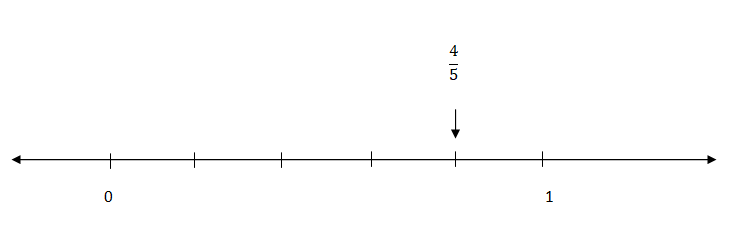
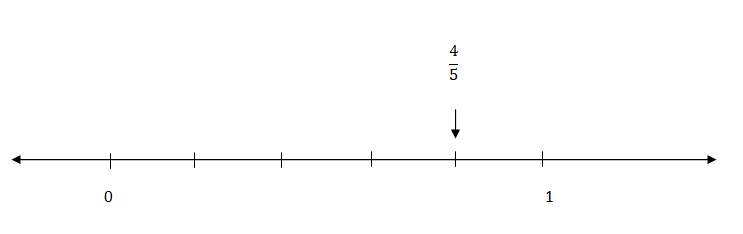
Given the fraction 4/5. It is asked to plot the same on the number line.

Core Connections, Course 1, Student 1st Edition, Chapter 4 Variables and Ratios 1 1

We divide the number line into segments and then mark appropriately.

Given fraction 4/5, we divide the number line into 5 equal segments and then find the fractional number

Thus the given fraction 4/5 can be marked on the number line as below

Read and learn More Core Connections Course 1 Student 1st Edition Solutions

Core Connections, Course 1, Student 1st Edition, Chapter 4 Variables and Ratios 1

Core Connections Course 1 Student 1st Edition Chapter 4 Closure Exercise Solutions Page 204 Problem 2 Answer

Core Connections Course 1 Student 1st Edition Chapter 4 Closure Exercise Variables and Ratios

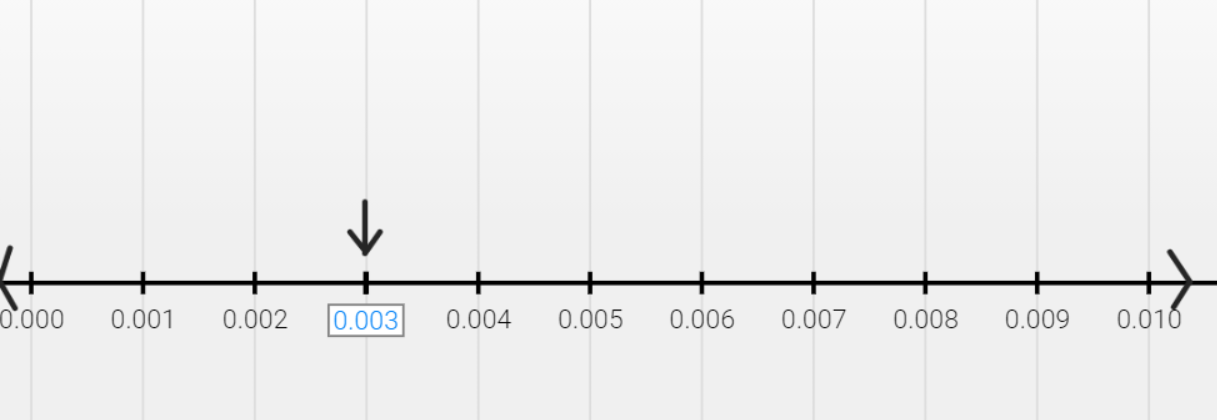
Thus the point 0.003 can be plotted on the number line as below

Core Connections, Course 1, Student 1st Edition, Chapter 4 Variables and Ratios 2

Core Connections Course 1 Student 1st Edition Chapter 4 Closure Exercise Solutions Page 204 Problem 3 Answer

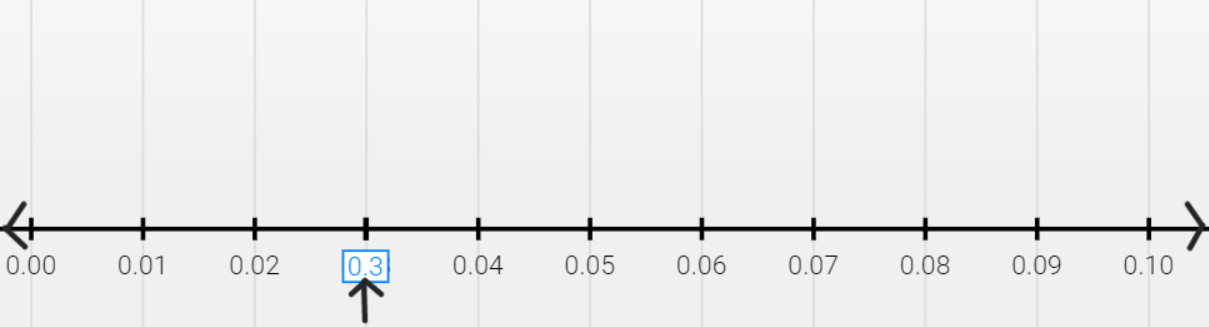
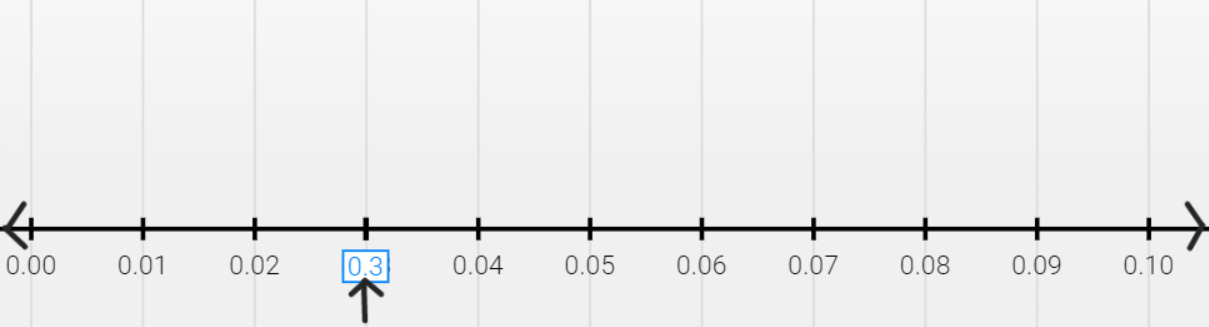
Given point 30%.It is asked to plot the same on the number line.

We divide the number line into segments and then mark appropriately.

Core Connections, Course 1, Student 1st Edition, Chapter 4 Variables and Ratios 3 1

Given point 30% can be written as 30/100=0.3.

We divide the space between 0 and 1 into 10 equal segments.

Thus the point 30% can be marked on the number line as below

Core Connections, Course 1, Student 1st Edition, Chapter 4 Variables and Ratios 3

Core Connections Course Chapter 4 Page 204 Problem 4 Answer

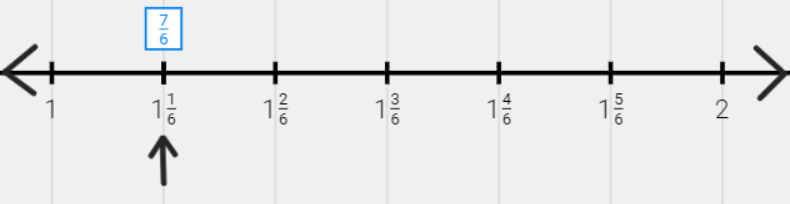
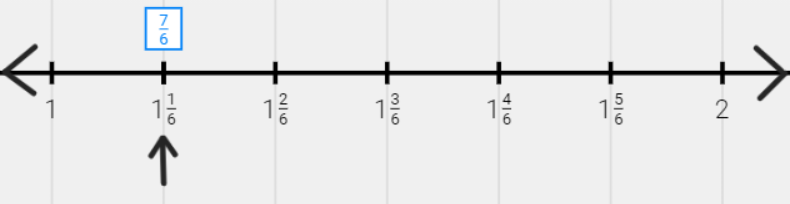
Given point 7/6.It is asked to plot the same on the number line.

We divide the number line into segments and then mark appropriately.

Core Connections, Course 1, Student 1st Edition, Chapter 4 Variables and Ratios 4 1

Given point 7/6 which can be written as 11/6.

Thus we divide the space between 1 and 2 on a number line into 6 equal segments and then mark the point

Thus the point 7/6 can be marked on number-line as below

Core Connections, Course 1, Student 1st Edition, Chapter 4 Variables and Ratios 4

Chapter 4 Closure Exercise Variables And Ratios Solutions Core Connections Course 1 Page 204 Problem 5 Answer

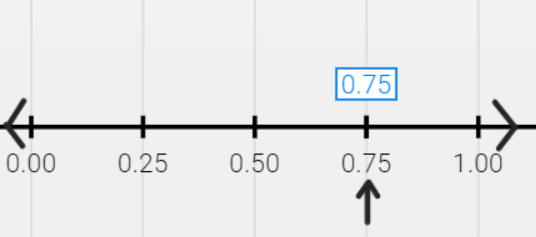
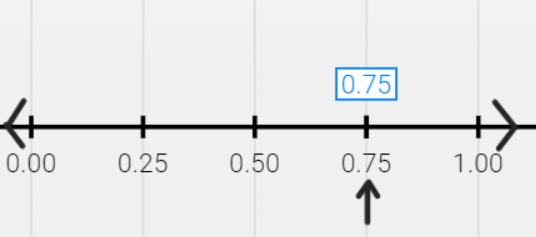
Given point 0.75.

It is asked to plot the same on the number line.

Core Connections, Course 1, Student 1st Edition, Chapter 4 Variables and Ratios 5

We divide the number line into segments and then mark appropriately.

Given point 0.75=75/100

=3/4

Thus we divide the space between 0 and 1 into 4 equal segments.

Thus the point 0.75 on number line can be marked as

Core Connections, Course 1, Student 1st Edition, Chapter 4 Variables and Ratios 5 1

Core Connections Course Chapter 4 Page 204 Problem 6 Answer

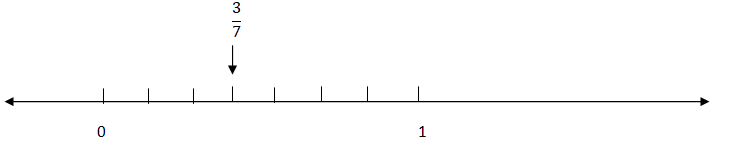
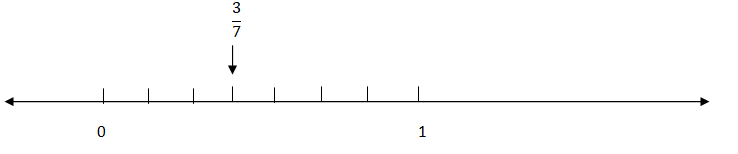
Given point 3/7.

It is asked to plot the same on the number line.

Core Connections, Course 1, Student 1st Edition, Chapter 4 Variables and Ratios 6

We divide the number line into segments and then mark appropriately.

Given the point 3/7 can be plotted on the number line by dividing the space between 0 and 1 into 7 equal segments.

Thus the point 3/7 can be marked on the number line as below

Core Connections, Course 1, Student 1st Edition, Chapter 4 Variables and Ratios 6 1

Chapter 4 Closure Exercise Variables And Ratios Solutions Core Connections Course 1 Page 204 Problem 7 Answer

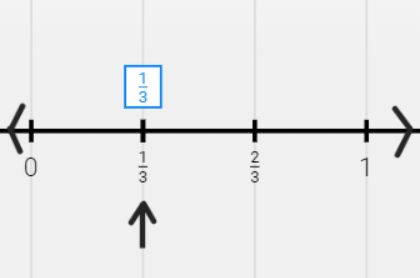
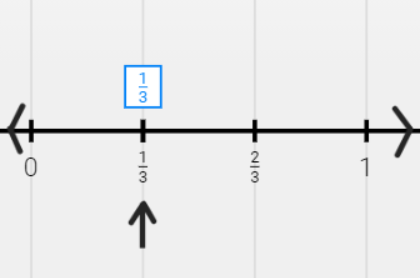
Given point 1/3.

It is asked to plot the same on the number line.

Core Connections, Course 1, Student 1st Edition, Chapter 4 Variables and Ratios 7

We divide the number line into segments and then mark appropriately.

Given the point 1/3, in order to mark the same we divide the space between 0 and 1 into 3 equal parts.

Thus the point 1/3 can be marked on the number line as below

Core Connections, Course 1, Student 1st Edition, Chapter 4 Variables and Ratios 7 1

Core Connections Course Chapter 4 Page 204 Problem 8 Answer

Given point 112/112.

It is asked to plot the same on the number line.

We divide the number line into segments and then mark appropriately.

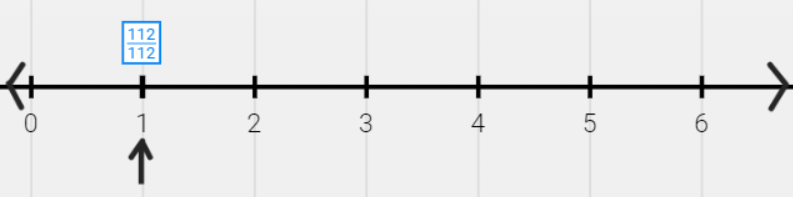
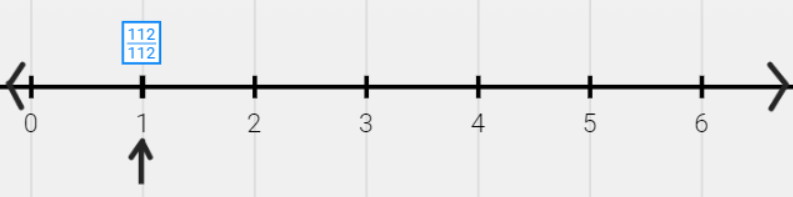
Given point 112/112 can be rewritten as

112/112=1

Thus the above point can be marked on the number line as below

Core Connections, Course 1, Student 1st Edition, Chapter 4 Variables and Ratios 8

Thus the point 112/112 ca be marked on the number line as below

Core Connections, Course 1, Student 1st Edition, Chapter 4 Variables and Ratios 8 1

Chapter 4 Closure Exercise Variables And Ratios Solutions Core Connections Course 1 Page 204 Problem 9 Answer

We are given an algebraic expression 7m+9.

We have to find the value of the expression for m=2.

We can solve this by substitution.

Substituting the value of m as 2 in the given expression, we get –

7m+9=7(2)+9​

⇒14+9=23

​Therefore, the value of the given expression is 23,m=2.

Core Connections Course Chapter 4 Page 204 Problem 10 Answer

We are given an algebraic expression a⋅b.

We have to find the value of the expression for a=10,b=4.

We can do this using substitution.

Substituting the values of a,b in the given expression, we get –

a⋅b=10⋅4

⇒40

​Therefore, the value of the given expression is 40.

Core Connections Course 1 Chapter 4 Closure Exercise Step-By-Step Solutions Page 204 Problem 11 Answer

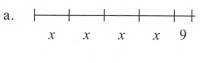
We are given a figure indicating the length of a rope.

We have to find the length of the rope for x=20.

We can do this using substitution.

From the figure, we can see that the length of the rope will be – x+x+x+x+9=4x+9

It is given that x=20

Substituting the value in the expression , we get –

Core Connections, Course 1, Student 1st Edition, Chapter 4 Variables and Ratios 11

4x+9=4(20)+9

⇒80+9=89

​Therefore, the length of the rope is 89 units.

Core Connections Course Chapter 4 Page 204 Problem 12 Answer

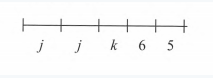
We are given a figure indicating the length of a rope.

We have to find the length of the rope for j=10,k=7.

We can do this using substitution.

From the figure, the length of the rope is -j+j+k+6+5=2j+k+11.

Substituting the values of j,k in the above expression, we get –

Core Connections, Course 1, Student 1st Edition, Chapter 4 Variables and Ratios 12

2j+k+11=2(10)+7+11

⇒20+7+11=38

​Therefore, the length of the rope is 38 units.

Core Connections Course 1 Chapter 4 Closure Exercise Step-By-Step Solutions Page 205 Problem 13 Answer

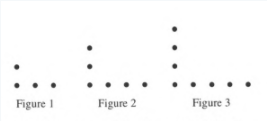
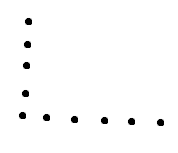
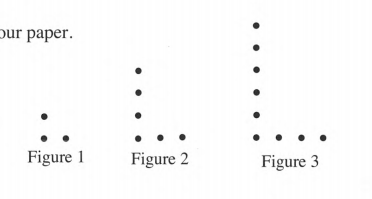
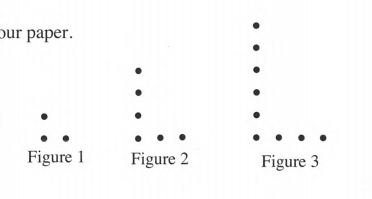
We are given a figure indicating a pattern.

Core Connections, Course 1, Student 1st Edition, Chapter 4 Variables and Ratios 13

We have to find an expression for this pattern.

We can do this by analyzing the given pattern and using appropriate variables.

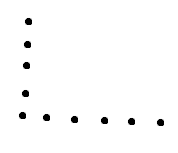
Let the number of dots on the horizontal line be x and the number of dots on the vertical line be y and the figure number be k.

We can observe that the number of dots are increasing by 1 on both the lines as the figure number id increasing.

Hence, by observation the expression will be

x=k+2

y=k+1

Using the expressions, figures 0,4,7 will be –

Core Connections, Course 1, Student 1st Edition, Chapter 4 Variables and Ratios 13 3

Core Connections, Course 1, Student 1st Edition, Chapter 4 Variables and Ratios 13 2

Core Connections, Course 1, Student 1st Edition, Chapter 4 Variables and Ratios 13 1

Therefore, the expressions are –

x=k+2

y=k+1

​Core Connections Course Chapter 4 Page 205 Problem 14 Answer

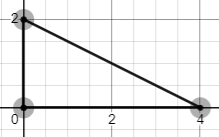
We are given the measures of the base and height of a triangle.

Core Connections, Course 1, Student 1st Edition, Chapter 4 Variables and Ratios 14

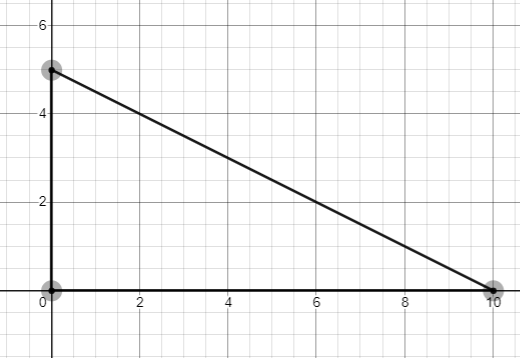
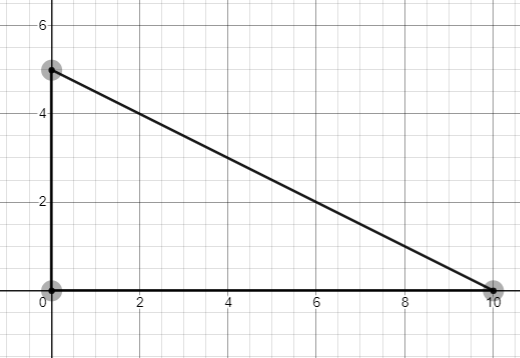
We have to draw the given triangle and enlarge it by 2.5 later.

We can do this by drawing a right angle and then using the given dimensions.

The height and base of the triangle should be 2 and 4 units respectively.

After enlarging the given measures by 2.5 times, we get –

Core Connections, Course 1, Student 1st Edition, Chapter 4 Variables and Ratios 14 1

Therefore, the obtained triangle is –

Core Connections, Course 1, Student 1st Edition, Chapter 4 Variables and Ratios 14 2


Solutions For Core Connections Course 1 Chapter 4 Closure Exercise Variables And Ratios Page 205 Problem 15 Answer

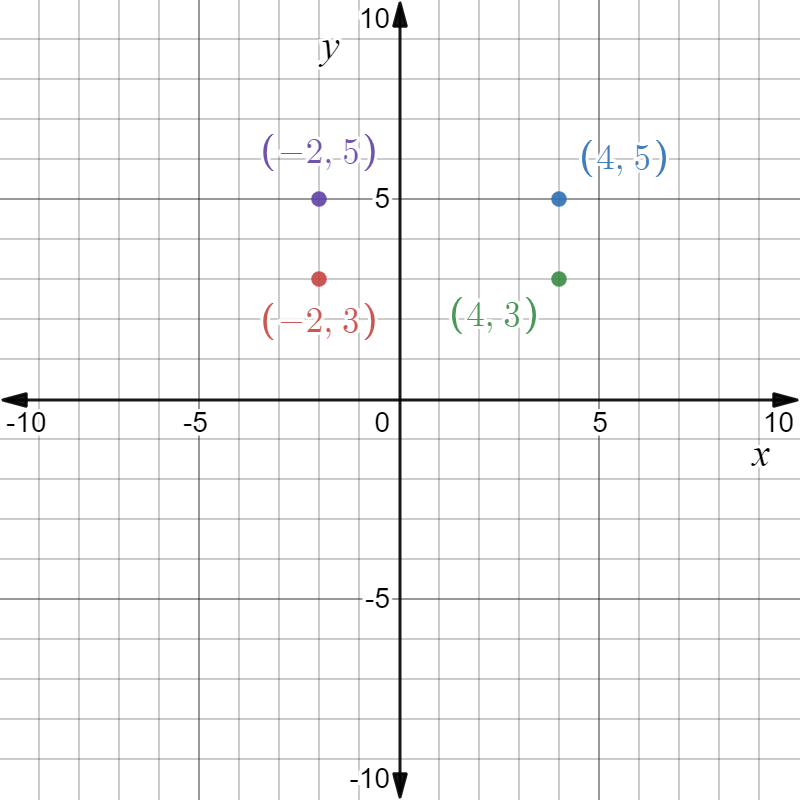
Given; points(−2,3)​&​(4,5).

We need to plot two more points such that these four points form rectangle &  then find length of each side also write absolute value expression for each side.

To find the length of each side we use the distance formula given two points(x1,y1)​&​(x2,y2) using distance√(x2−x1)2+(y2−y1)2.

We have; points(−2,3)​&​(4,5).

In order to have rectangle we plot two more points such that the length of parallel sides are equal.

Let’s plot(−2,5)​&​(4,3).

We can find the length of each side using the distance between two points formula.

I,e; for(x1,y1)​&​(x2,y2) distance=√(x2−x1)2+(y2−y1)2.

So, distance between(−2,5)​&​(4,5) is:-

Core Connections, Course 1, Student 1st Edition, Chapter 4 Variables and Ratios 15

Distance=√(4−(−2))2+(5−5)2  =6 unit

Distance between(−2,3)​&​(4,3) is=√(4−(−2))2+(3−3)2=6unit.

Distance between(−2,3)​&​(−2,5) is=√(−2+2)2+(5−3)2=2unit.

Distance between(4,3),(4,5) is=√(4−4)2+(5−3)2=2unit.

In absolute value form we can have:-

Length​=∣−2∣+∣4∣=6​

Breadth​=∣5∣−∣3∣=2​

So, the coordinate grid is:

Core Connections, Course 1, Student 1st Edition, Chapter 4 Variables and Ratios 15 1

Length absolute expression=∣−2∣+∣4∣.

Breadth absolute expression=∣5∣−∣3∣.

Core Connections Course Chapter 4 Page 205 Problem 16 Answer

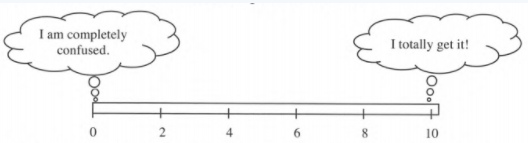
We are given an example of the number line:

Core Connections, Course 1, Student 1st Edition, Chapter 4 Variables and Ratios 16

We are required to draw a number line that represents 0 to 10 and then shade the number line and complete one of the tasks.

We will draw a number line and then we will shade the number less than 4 to complete the task.

We drew a number line with shaded on all the numbers less than 4.

Now, according to the task, we will write two questions that we would like to ask about that problem:

What is the inequality of the shaded portion?

What other problems can we explain from the same number line?

Hence, the number line with the shaded portion is shown below, the two questions we would like to ask about the problem are:

What is the inequality of the shaded portion?

Core Connections, Course 1, Student 1st Edition, Chapter 4 Variables and Ratios 16 1

What other problems can we explain from the same number line?

Core Connections, Course 1, Student 1st Edition, Chapter 4 Variables and Ratios 16 2

Core Connections Course 1 Student 1st Edition Chapter 4 Exercise 4.2 Variables and Ratios

Core Connections Course 1 Student 1st Edition Chapter 4 Variables and Ratios

Core Connections Course 1 Student 1st Edition Chapter 4 Exercise 4.2 Solutions Page 185 Problem 1 Answer

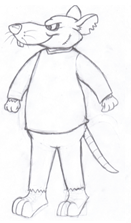
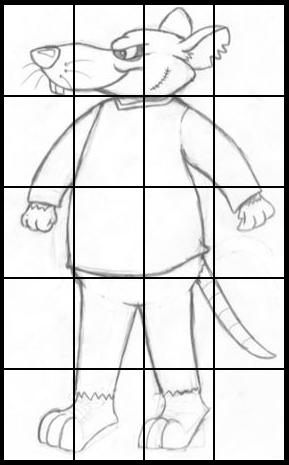
The given original picture of the mascot is as below :

Core Connections, Course 1, Student 1st Edition, Chapter 4 Variables and Ratios 1

It is required to fills the large grid using original picture of the mascot Fill the large grid given from the teacher using the original mascot.

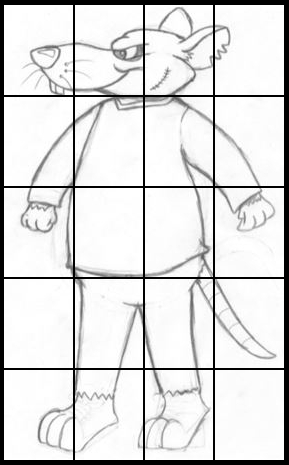
The enlargement grid has been filled as below :

Core Connections, Course 1, Student 1st Edition, Chapter 4 Variables and Ratios 1 1

Hence, the filled grid using original picture of the mascot is as below :

Read and learn More Core Connections Course 1 Student 1st Edition Solutions

Core Connections, Course 1, Student 1st Edition, Chapter 4 Variables and Ratios 1 2

Core Connections Course Chapter 4 Page 186 Problem 2 Answer

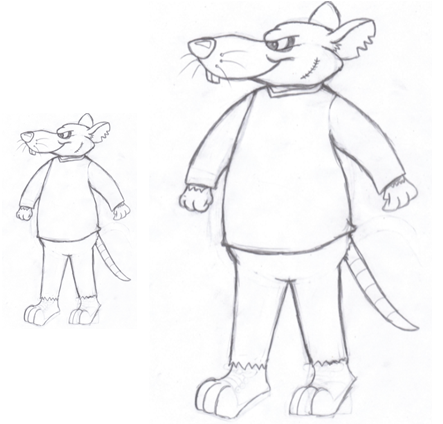
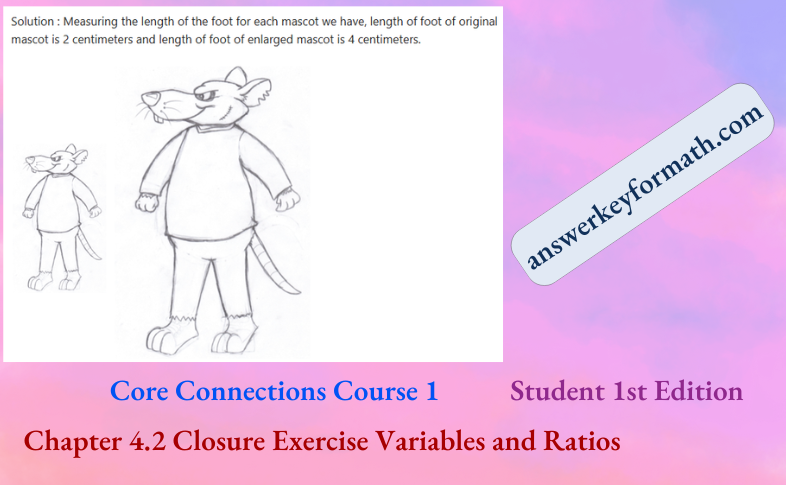
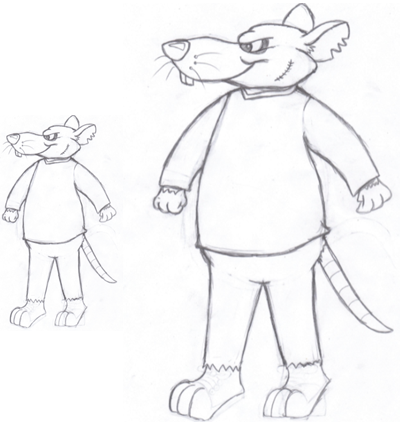
The assigned part of the mascot is foot.

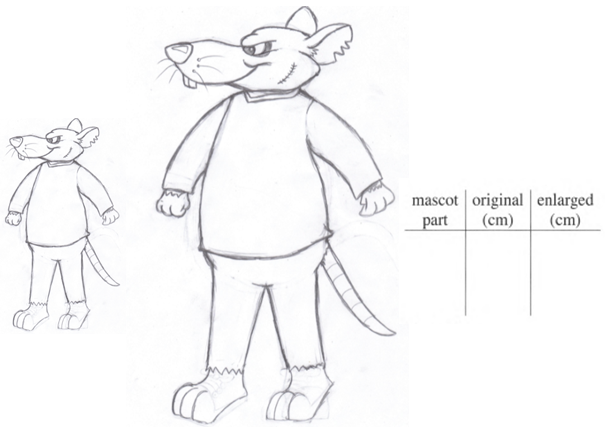
Also, the original and enlarged mascot are as below :

Core Connections, Course 1, Student 1st Edition, Chapter 4 Variables and Ratios 2 1

It is required to assigned part on the original mascot in centimeters and the corresponding part of the enlarged mascot.

Core Connections Course 1 Student 1st Edition Chapter 4 Exercise 4.2 Variables and Ratios

Hence, length of foot of original mascot is 2 centimeters and length of foot of enlarged mascot is 4 centimeters.

Core Connections Course Chapter 4 Page 186 Problem 3 Answer

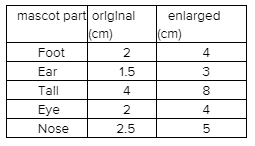
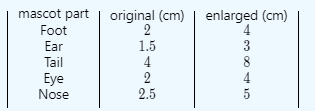
The table, original and enlarged mascot are as below :

Core Connections, Course 1, Student 1st Edition, Chapter 4 Variables and Ratios 3 1

It is required to measure different parts of the original and enlarged mascot and complete the given table.

Measure the length of different parts of mascot and fill the measurement in the table.

Data collected from different groups measuring different parts of mascot is as below :

For original mascot,

Length of the foot=2cm

Length of the ear=1.5cm

Length of the tail=4cm

Length of the eye=2cm

Length of the nose=2.5cm

For enlarged mascot,

Length of the foot=4cm

Length of the ear=3cm

Length of the tail=8cm

Length of the eye=4cm

Length of the nose=5cm

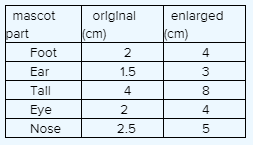
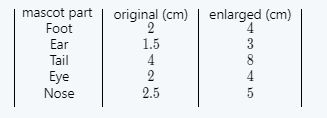
Use the measured values in step 1 to complete the table as below :

Core Connections, Course 1, Student 1st Edition, Chapter 4 Variables and Ratios 3

Hence, the given table is completed as below :

Core Connections, Course 1, Student 1st Edition, Chapter 4 Variables and Ratios 3 2

Page 186 Problem 4 Answer

We have completed table from part-b as below :

Core Connections, Course 1, Student 1st Edition, Chapter 4 Variables and Ratios 4

It is required to examine the data collected and describe the relationship between parts of the original mascot picture and the enlarged model of the mascot.

Solution : Notice the completed table, all the parts in enlarged mascot became double than the parts in the original mascot.

Thus, each part of the original mascot has increased by same ratio to form the enlarged mascot.

Hence, all the parts in enlarged mascot became double than the parts in the original mascot i.e. each part of the original mascot has increased by same ratio to form the enlarged mascot.

Core Connections, Course 1, Student 1st Edition, Chapter 4 Variables and Ratios 4 1

Core Connections Course Chapter 4 Page 186 Problem 5 Answer

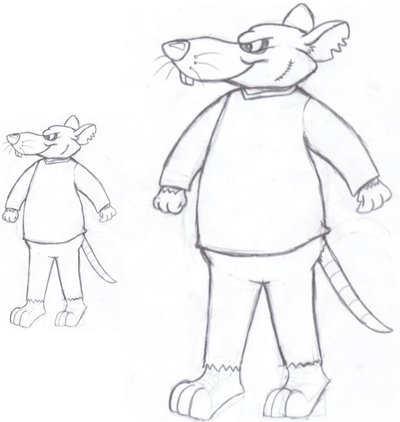
The original and enlarged mascot are as below :

Core Connections, Course 1, Student 1st Edition, Chapter 4 Variables and Ratios 5 1

It is required to tell if any part of the enlarged picture that seems to be the wrong size.

Solution : Notice the original and enlarged mascot, no any part of the enlarged picture that seems to be the wrong size. If it happens then parts nearby this wrong sized part will be also in wrong size and eventually shape of the whole enlarged mascot will be changed.

Hence, no any part of the enlarged picture that seems to be the wrong size. If it happens then parts nearby this wrong sized part will be also in wrong size and eventually shape of the whole enlarged mascot will be changed.

Core Connections, Course 1, Student 1st Edition, Chapter 4 Variables and Ratios 5

Chapter 4 Exercise 4.2 Variables And Ratios Solutions Core Connections Course 1 Page 186 Problem 6 Answer

It is given that the nose got two times bigger and the eyes got five times bigger.

It is required to explain why is it necessary that all parts of the original picture grow in the same way.

Solution : All parts of the original picture should grow in the same way so that the ratio between the length and width of the picture stays the same.

If the nose got two times bigger, it should have gotten two times bigger in both length and width. It is necessary to preserve the ratio so the shape of the objects stays the same.

Hence, it is important that all parts of the original picture grow in the same way so that the ratio between the length and width of the picture stays the same.

It is necessary to preserve the ratio so the shape of the objects stays the same.

Core Connections Course Chapter 4 Page 188 Problem 7 Answer

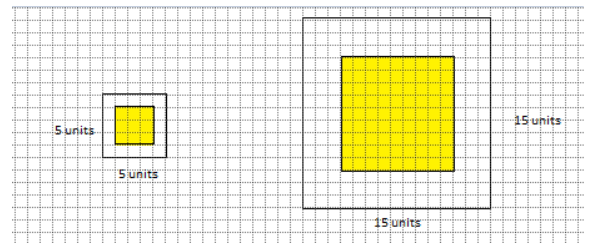
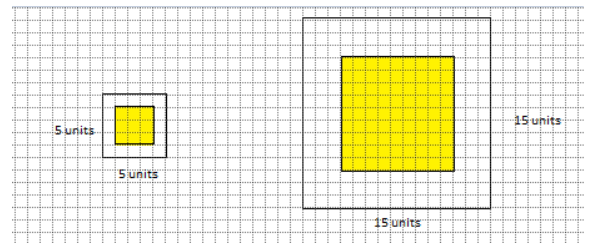
The given initial dimension of square is 5×5.It is required to draw a design inside 5×5square and then enlarge the image to 15×15.

Draw 5×5 square on graph paper and draw a design inside it. Now, draw the same image enlarged such that dimension of the square is 15×15.

A square having 5 units on each side is drawn below. A figure of yellow square of side 3 units is drawn inside it.

Core Connections, Course 1, Student 1st Edition, Chapter 4 Variables and Ratios 7 1

Another square of side 15 units is drawn on the right, to inscribe the same figure inside new square we had to increase the side of yellow square 3 times because side of square is increased 3 time.

New picture inside the square is 9 unit wide and 9 unit long.

Hence, following the given steps we have picture as shown below :

Core Connections, Course 1, Student 1st Edition, Chapter 4 Variables and Ratios 7

Also, new picture inside the square is 9 unit wide and 9 unit long.

Core Connections Course 1 Chapter 4 Exercise 4.2 Step-By-Step solutions Page 188 Problem 8 Answer

Total amount is given $43.00.It is required to divide $43.00 evenly.

To distribute the earned $43.00 evenly among the 4 friends divide the total amount $43 by 4.

Dividing the total amount $43.00 by 4 we have, $43/4=$10.75

Therefore each friend will receive$10.75.

Hence, dividing the earnings$43.00 evenly each friend earns $10.75.

Core Connections Course Chapter 4 Page 188 Problem 9 Answer

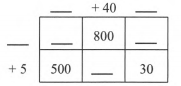
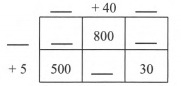
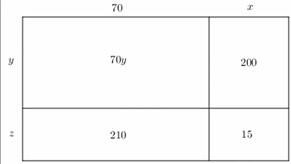
The given generic rectangle is as below :

Core Connections, Course 1, Student 1st Edition, Chapter 4 Variables and Ratios 9

It is required to complete the given generic rectangle.

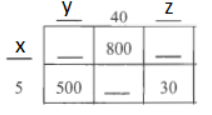
Assign the blank values outside the rectangle as x,y and z.

Now, make the equation using given generic rectangle for x,y and z and solve it to get the values of x,y and z.

Let’s assume x,y,z as the numbers on side of the rectangle as shown below.

Core Connections, Course 1, Student 1st Edition, Chapter 4 Variables and Ratios 9 1

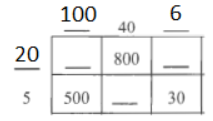
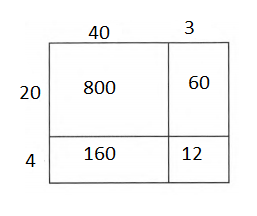
We know that 800 is the product of 40 and x and 500 is the product of 5 and y and 30 is the product of 5 and z.

So, 800=40x

⇒x=800/40

⇒x=20

500=5y

⇒y=500/5

⇒y=100

30=5z

⇒z=30/5

⇒z=6

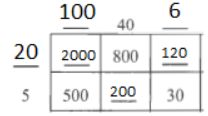
Now, put the values of x,y,z in generic rectangle as below :

Core Connections, Course 1, Student 1st Edition, Chapter 4 Variables and Ratios 9 2

Using the generic rectangle with known values of x,y,z remaining rectangle can be filled as :

Core Connections, Course 1, Student 1st Edition, Chapter 4 Variables and Ratios 9 3

Total Product=2000+800+120+500+200+30

Total Product=3650

Total Product=25×146

It represents the product between 25 and 146.

Hence, the given generic rectangle can be completed as below :

Core Connections, Course 1, Student 1st Edition, Chapter 4 Variables and Ratios 9 4

Also, it represents the product between 25 and 146.

Core Connections Course Chapter 4 Page 190 Problem 10 Answer

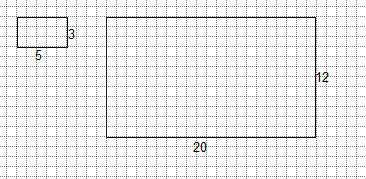
We are given a rectangle that measures 5 units by 3 units We need to enlarge it such that each side becomes 4 times the original side

Core Connections, Course 1, Student 1st Edition, Chapter 4 Variables and Ratios 10

New sides: 20×12

The sides of the rectangle are 20×12.

Solutions For Core Connections Course 1 Chapter 4 Exercise 4.2 Variables And Ratios Page 190 Problem 11 Answer

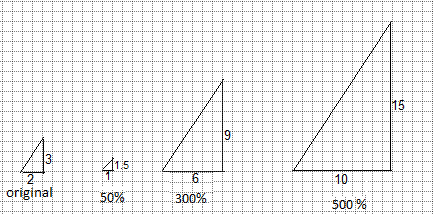
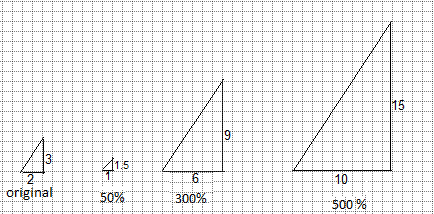
We need to make a right triangle with a base of 2 units and a height of 3 units.

Then we need to draw three more triangles so that the lengths of the new sides are 50%, 300% and 500% of the original.

The three triangles are:

Core Connections, Course 1, Student 1st Edition, Chapter 4 Variables and Ratios 11

The three triangles are drawn.

Core Connections, Course 1, Student 1st Edition, Chapter 4 Variables and Ratios 11 1

Core Connections Course Chapter 4 Page 190 Problem 12 Answer

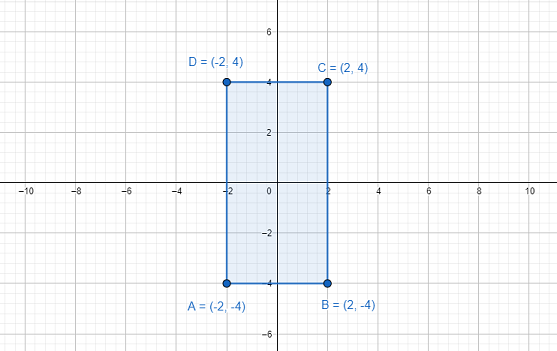
We need to plot the given ordered pairs on the graph.

Then we need to connect the points obtained and tell what shape it makes.

By joining the ordered pairs, rectangle is obtained.

graph:

Core Connections, Course 1, Student 1st Edition, Chapter 4 Variables and Ratios 12

By plotting the ordered pairs, rectangle is obtained.

Core Connections, Course 1, Student 1st Edition, Chapter 4 Variables and Ratios 12 1

Core Connections Course 1 Student 1st Edition Chapter 4 Exercise 4.2 Guide Page 190 Problem 13 Answer

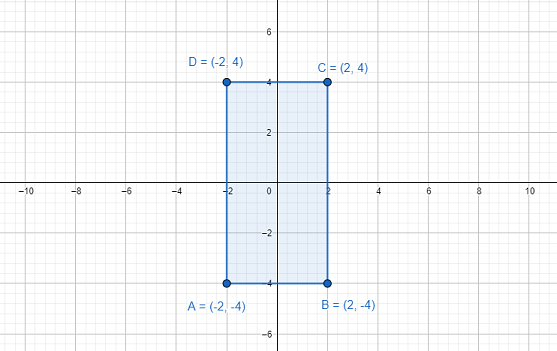
We are given the rectangle with coordinates:(−2,4),(2,4),(−2,−4) and (2,−4)

We need to find the length of each of the sides of the shape we made.

We will do this by using x and y coordinate

The length of two vertical sides can be find out by using y coordinate:

Length: =∣4−(−4)∣=8units

The length of two horizontal sides can be find out by using x coordinate:

Length:  ∣2−(−2)∣=4 units

The dimensions of rectangle are : 4×8 square units.

Core Connections Course Chapter 4 Page 190 Problem 14 Answer

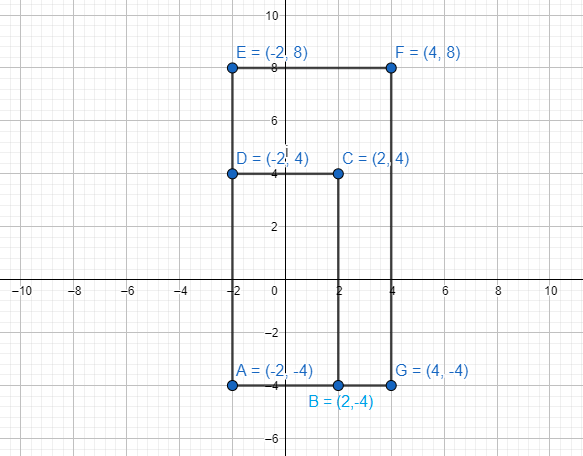
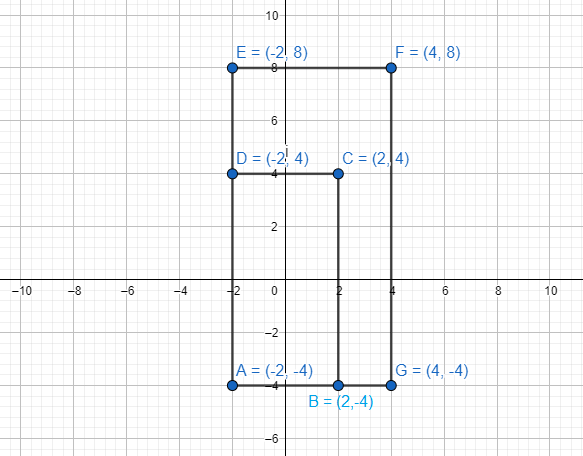
We need to make a figure that is enlarged by a factor of 1.5 and still has one corner (or vertex) at (−2,−4).

We also need to find the coordinates of the corners (or vertices) for the new shape.

Also, we need to calculate the lengths of the sides now.

We will do this by using the coordinates of the old and the new rectangle.

The coordinates of the new rectangle are:

(−2,8), (4,8), (4,−4),(−2,−4)

The length of the new rectangle will be 1.5 times than the original rectangle.

length: =8×1.5=12 units  width: =4×1.5=6 units

The figure is obtained as:

Core Connections, Course 1, Student 1st Edition, Chapter 4 Variables and Ratios 14

The dimension of the new figure is: Length =12 units and width =6units

Core Connections, Course 1, Student 1st Edition, Chapter 4 Variables and Ratios 14 1

Core Connections Course Chapter 4 Page 190 Problem 15 Answer

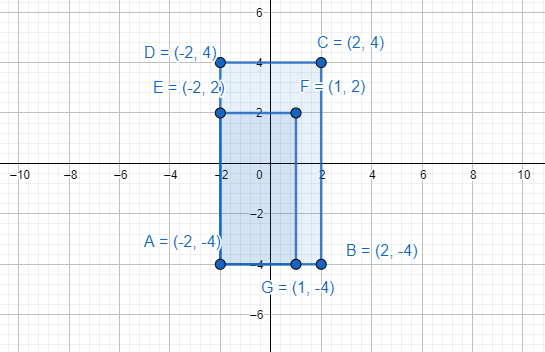
We need to make a figure that is reduced by a factor of 3/4 and still has one corner (or vertex) at (−2,−4)

We also need to find the coordinates of the corners (or vertices) for the new shape.

Also, we need to calculate the lengths of the sides now.

We will do this by using the coordinates of the old and the new rectangle.

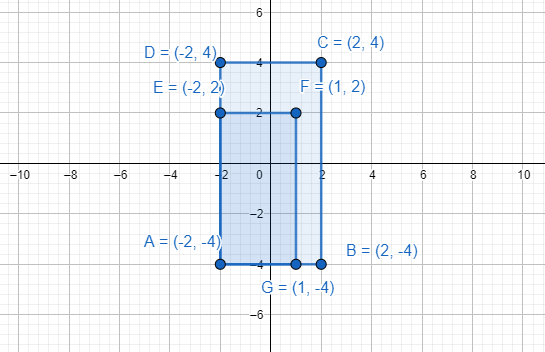
The coordinates of the new rectangle are:

(−2,2),(1,2),(2,−4) ,(−2,−4)

The length of the new rectangle will be 3/4  times than the original rectangle.

Length: =8×3/4=6units

Width: =4×3/4=3units

Graph:

Core Connections, Course 1, Student 1st Edition, Chapter 4 Variables and Ratios 15

The length of the new figure is 6units and width of the new figure is 3 units.

Core Connections, Course 1, Student 1st Edition, Chapter 4 Variables and Ratios 15 1

Core Connections Course Chapter 4 Page 191 Problem 16 Answer

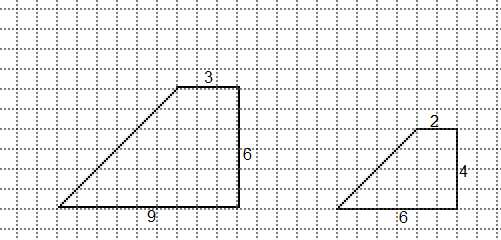
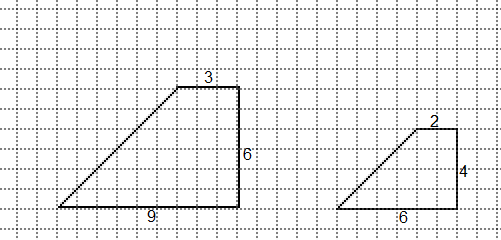
We first need to copy the diagram at right onto graph paper.

Then, we need to draw a smaller copy with sides that are 2/3 the lengths of the original.

We will do this by calculating the new base, height and length of the figure.

Since, the smaller copy is 2/3 the size of the original, the dimensions are:

New sides:

New base:2/3×9=6units

New height:2/3×6=4units

Top length:2/3×3=2units

Graph:

Core Connections, Course 1, Student 1st Edition, Chapter 4 Variables and Ratios 16

The smaller copy of 2/3 the size of original is being made.

Core Connections, Course 1, Student 1st Edition, Chapter 4 Variables and Ratios 16 1

Core Connections Course Chapter 4 Page 191 Problem 17 Answer

We need to tell if an image is enlarged correctly or not.

19/10/2021   Enlarging figures:

We know that to enlarge a figure, we need to increase all dimensions in same proportion.

Ratio of the limbs of the original figure must be equal to that of the new figure.

The enlarged figure must be similar to the original figure, the two figures should match all the slopes correctly and must be identical in shape and form.

If the enlarged figure is similar to the original figure in all the respects, the we can say that the figure has been enlarged correctly.

The enlarged figure must be similar to the original figure.

Core Connections Course 1 Student 1st Edition Chapter 4 Exercise 4.1 Variables and Ratios

Core Connections Course 1 Student 1st Edition Chapter 4 Variables and Ratios

Core Connections Course 1 Student 1st Edition Chapter 4 Exercise 4.1 Solutions Page 168 Problem 1 Answer

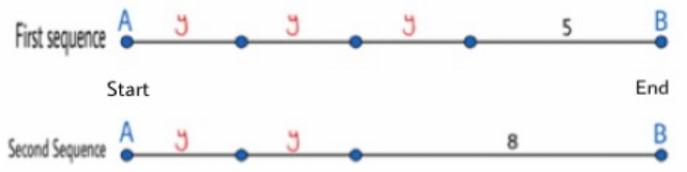
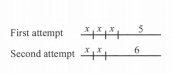
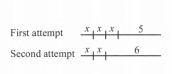
It is given that Croakie has a new special jump length. The distance between two fixed point is given by two sequences.

His trainer drew a diagram to represent his two sequences.

He used y to represent the length of Croakie’s new special jump.

Explain each of the sequence.

This can be done by counting the number of special jumps and the the length of hop for each sequence.

Let us assume Croakie moved between two points A and B. It is given that the length of Croakie’s new special jump is y.

Core Connections Course 1 Student 1st Edition Chapter 4 Exercise 4.1 Variables and Ratios

Read and learn More Core Connections Course 1 Student 1st Edition Solutions

Second sequence

In the second sequence Croakie starts at point A.

He makes two special jumps to the right, towards point B.

Then he makes a 8-foot hop still travelling to the right ending at point B.

First sequence: In this Croakie makes his three special jumps and a 5-foot hop in between the starting and ending point.

Second sequence: In this Croakie makes his two special jumps and a 8-foot hop in between the starting and ending point.

Core Connections, Course 1, Student 1st Edition, Chapter 4 Variables and Ratios 1 1

Core Connections Course Chapter 4 Page 168 Problem 2 Answer

It is given that Croakie has a new special jump length.

The distance between two fixed point is given by two sequences.

His trainer drew a diagram to represent his two sequences.

He used y to represent the length of Croakie’s new special jump.

Determine the length of each special jump.

Equate both the sequence to determine the length of special jump.

Since the two points are fixed the distance between the start and the end of his first and second sequence of jump is same.

Distance travelled in the first sequence=Distance travelled in second sequence

Three special jump +One 5-foot jump=Two special jump+one 8-foot jump

y+y+y+5=y+y+8

Solve the above relationship and find the value of the unknown y.

3y+5=2y+8

3y−2y=8−5

y=3​

Therefore we have determined that Croakie travels 3 feet in each special jump.

Thus, Croakie travels 3-feet in each special jump.

Core Connections Course 1 Student 1st Edition Chapter 4 Exercise 4.1 Solutions Page 168 Problem 3 Answer

It is given that Croakie has a new special jump length.

The distance between two fixed point is given by two sequences.

His trainer drew a diagram to represent his two sequences.

He used y to represent the length of Croakie’s new special jump.

Determine length between starting and end point of sequence.

Substitute the value of each special jump in the expression of sequence.

To find the distance between starting and ending point of Croakie’s both sequence.

Substitute the value of the distance travelled by Croakie in each special jump in any of the equation to the total distance between the start and end of his sequence of jumps.

Distance travelled in the first sequence=Three special jump+One 5-foot jump

=y+y+y+5

Substitute y=3 feet in the above equation.

=3+3+3+5

=14​

Therefore the distance between the start and end of his sequence of jumps is 14 feet.

The distance travelled between the start and end can be verified by using a diagram as shown below.

Core Connections, Course 1, Student 1st Edition, Chapter 4 Variables and Ratios 3

Thus, the distance between start and end of given sequence is 14 feet and the distance travelled between the start and end can be verified by using a diagram as shown below.

Core Connections, Course 1, Student 1st Edition, Chapter 4 Variables and Ratios 3 1

Core Connections Course Chapter 4 Page 168 Problem 4 Answer

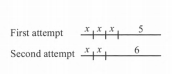
Given the Croakie’s sequence having three special high hops is represented by an expression x+x+x+5 where x  represents the distance he moves with each high hops.

Explain about the Croakie’s new sequence.

This can be done by counting the number of special high hops from the given expression of his sequence.

It is given that x represents the length of Croakie’s each high hop.

His new sequence can be described by understanding the expression of the whole sequence.

Let us assume that he moves to the right from the starting point to reach the end point.

Croakie starts at the starting point. He makes three special high hops to the right. Then he makes a 5-foot jump still travelling to reach the end point.

Thus, the Croakie’s new sequence is he makes three special high hops to the right. Then he makes a 5-foot jump still travelling to reach the end point.

Chapter 4 Exercise 4.1 Variables And Ratios Solutions Core Connections Course 1 Page 168 Problem 5 Answer

Given the Croakie’s sequence having three special high hops is represented by an expression x+x+x+5 where x represents the distance he moves with each high hops.

Draw a diagram to represent Croakie’s new sequence.

To do so assume a straight path as per the given data of Croakie’s high hop and one foot jump.

As Croakie’s new sequence is a total of 11 feet. The sum of all the jumps in the sequence or the total distance travelled is equal to 11 feet.

We can see in the following figure.

Core Connections, Course 1, Student 1st Edition, Chapter 4 Variables and Ratios 5

Thus, Croakie’s new sequence of total distance 11 feet is given by the figure shown below.

Core Connections, Course 1, Student 1st Edition, Chapter 4 Variables and Ratios 5 1

Core Connections Course Chapter 4 Page 168 Problem 6 Answer

Given the Croakie’s sequence having three special high hops is represented by an expression x+x+x+5 where x represents the distance he moves with each high hops.

Determine the length of each high hop.T

o do so solve the given expression of sequence as the given total length of sequence is 11 feet.

We can find the distance travelled by Croakie in each high hop by using the expression that represents the whole sequence.

Total distance travelled in the new sequence=Three high hops+One 5-foot jump.

=x+x+x+5

From part b that Croakie’s new sequence is a total of 11 feet.

Therefore,

x+x+x+5=11feet

3x+5=11

3x=11−5

x=6/3

x=2

​It means he jumps of 2 feet with each high hop.

Core Connections, Course 1, Student 1st Edition, Chapter 4 Variables and Ratios 6

Thus, Croakie jumps a distance of 2 feet with each high hop.

Chapter 4 Exercise 4.1 Variables And Ratios Solutions Core Connections Course 1 Page 168 Problem 7 Answer

Given that Lanaya is a gymnast and is working on a new routine.

In her new routine she starts by walking 4 feet to the right.

Then she does one handspring, then a cartwheel, followed by a somersault, and then two more handsprings.

She travels the same distance for each handspring.

Draw the diagram of Lanaya’s routine and deterni the expression to represent how far Lanaya travels during her routine.

Add all the moves she made in her routine .

The diagram of Lanaya’s new routine is drawn by using the details given in the description.

For writing an expression to represent the total distance travelled by layana during her routine let us assume that she moved x feet during a handspring, y feet during a cartwheel, and z feet during the somersault.

Since, Lanaya is moving toward right we can add the length of all her movements together to know how far she travelled during her routine. Total distance traveled in the routine =

= Distance walked+ Distance moved during handspring + Distance moved during cartwheel + Distance moved during somersault +(2× Distance moved during handspring )

4ft+x+y+2+2x​

We can combine like terms because it is given that Lanaya is very consistent and travels the same for each handspring.

=4+3x+y+z

Therefore an expression to represent how far Lanaya travels during her routine is given by4+3x+y+z.

Thus, the diagram of Lanaya’s routine is given by

Core Connections, Course 1, Student 1st Edition, Chapter 4 Variables and Ratios 7 1

And the expression representing how far she travels during her routine is given by 4+3x+y+z.

Core Connections, Course 1, Student 1st Edition, Chapter 4 Variables and Ratios 7

Core Connections Course Chapter 4 Page 168 Problem 8 Answer

Given that Lanaya is a gymnast and is working on a new routine.

In her new routine she starts by walking 4 feet to the right.

Then she does one handspring, then a cartwheel, followed by a somersault, and then two more handsprings.

She travels the same distance for each handspring.

Determine the distance she covers if she moves 6 feet during a handspring, 3 feet during a cartwheel, and 2 feet during a somersault.

Substitute the value of each move in the expression of distance traveled during her routine.

It is given that she moved 6 feet during a handspring, 3feet during a cartwheel, and 2feet during a somersault.

To find the total distance covered by Lanaya during her routine we need to substitute the value of the distance covered in each of her moves in the expression obtained in part a.

Total distance travelled in the routine

= Distance walked + Distance moved during handspring + Distance moved during cartwheel + Distance moved during somersault +(2× Distance moved during handspring )

=4ft+(3×6ft)+3ft+2ft

=4+18+5=27

Thus, Lanaya covers 27 feet during her routine.

Core Connections Course Chapter 4 Page 169 Problem 9 Answer

Given that  Croakie reaches from point A to B by sliding 2ft towards right and then taking 2 flips.

And again go from point B to A by turning around, taking 1 flip and sliding 8ft.

It is asked to find distance travelled by Croakie in one somersault or flip.

We can find the length of each somersault by equating the total distance travelled to the right from point A to point B and the total distance travelled to the left from point B to point A.

Let the distance travelled in one flip be x ft.

The distance travelled from A to B=2+2x.

The distance travelled from B to A=x+8.

The distance between A and B is constant.

Therefore,2+2x=x+8

⇒2x−x=8−2

⇒x=6

​So, the distance travelled by Croakie in one flip is 6ft.

Core Connections Course 1 Chapter 4 Exercise 4.1 Step-By-Step Solutions Page 169 Problem 10 Answer

Given: Croakie reaches from point A to B with 2ft slide and 2 flips.

And from B to A with 1 flip and 8ft slide.

To Find: The distance between points A and B.

Since distance from A to B is same as the distance from B to A,both the relations can be equated.

As found in part (a) that the distance AB was represented as 2+2x and x is the length of on flip and is equal to 6ft.

Hence, the distance is given as:AB=2+(2×6)

=2+12

=14ft

​The distance between points A and B is 14ft.

Core Connections Course Chapter 4 Page 169 Problem 11 Answer

Given: Croakie is a frog, who can perform different tricks by moving through flips, slides, etc.

It is asked to make up a new trick and design two or more different sequences for Croakie that he can do with his new trick while performing routines that are the same length and also write the clues whatever is necessary for designing the routines of the frog.

For designing the different sequences, we must understand that Croakie has recently added a new trick to his routines, he wears a helmet and slides on his head which he calls ”brainy strainy”.

Croakie has designed following two new routines to mesmerize the audience:

Sequence 1:

  1. Croakie starts at point A. He hops 10 feet to the right, toward point B.
  2. Then he does two “brainy strainy” slides in a row, still traveling to the right.
  3. He turns and makes two hip hop jumps hop to the left.
  4. He stops to wave to the audience, still traveling to the left, repeats his 3 -foot hop three times.
  5. He turns and makes 11 spinning hops that are 1 foot each to the right, ending exactly at point B.

Sequence 2 :

  1. This time, he starts at point A, makes 2 somersaults to the right.
  2. Then he completes two flips in a row, landing at point B.
  3. From point B, he turns around and goes back by doing one flip and sliding 8 feet to the left.
  4. Then he performs three “brainy strainy” and finishes with a somersault in the same direction.

Therefore, the clues in designing the sequences lie in the fact that the length of the routine is the same in all sequences that is the total distance from point A to Point B is 14 feet which finally help in designing two different sequences of Croakie.

Sequence 1 is Croakie starts at point A and hops 10 feet towards the point Bto the right then does two “brainy strainy” slides in a row.

He turns and makes two hip hops jumps to the left.

He repeats 3-foot hop three times while waving towards the audience.

He turns to the right and makes 11 spinning hops that of 1 foot each and exactly ends at the point B.

Sequence 2 is Croakie starts at point A and to the right, makes two somersaults.

Then he lands at point B after completing the two flips in a row.

Then he turns around and goes back by flipping once and sliding 8 feet to the left.

In the same direction performs three “brainy strainy” and finishes with the somersault.

Core Connections Course 1 Chapter 4 Exercise 4.1 Step-By-Step Solutions Page 170 Problem 12 Answer

Given that Croakie’s one flip covers a distance of 6ft.

His new routine is 59ft long in which he makes 7 super jumps and then he hops 3ft to finish the routine.

It is asked to find the length of each super jump.

The distance covered in various steps is equated to the total distance covered.

Since, the distance of 59ft is covered in 7 super jumps and hopping of 3ft,

7 super jumps+3ft hops=59 ft

Therefore,7 super jumps=59−3 =56ft

​Since 7 super jumps=56ft

A super jump=56/7 = 8ft

​So, each super jump taken by Crockie is 8ft in distance.

Core Connections Course Chapter 4 Page 170 Problem 13 Answer

Given: Croakie’s one flip covers a distance of 6ft.

His new routine is 59ft long in which he makes 7 super jumps and then he hops 3ft to finish the routine.

To Find: The expression to represent Croakie’s routine.

The distance covered in various steps is equated to the total distance covered.

Let the length of each super jump be x.

Since, in 7 super jumps and hop of3ft, he covers a distance of59ft;

Hence,7x+3=59

The expression representing Croakie’s routine is given as:7x+3=59.

Solutions For Core Connections Course 1 Chapter 4 Exercise 4.1 Variables And Ratios Page 171 Problem 14 Answer

Given: Croakie’s one flip covers a distance of 6ft, and his one super jump covers a distance of 8ft.

He took two attempts for his new routine as shown in the figure with x as the super-high jump, while covering the same distance in each attempt.

To Find: Length of each super-high jump.

The distance covered in various steps is in both the attempts equated, as the distance covered in both the cases is same.

Let, the super-high jump length be xft.

The two distances are represented as:

Core Connections, Course 1, Student 1st Edition, Chapter 4 Variables and Ratios 14

First attempt⇒x+x+x+5

⇒3x+5​

Second attempt⇒x+x+6

⇒2x+6

​Both these distances are equal.

Hence,3x+5=2x+6

⇒3x−2x=6−5

⇒x=1

​The length of Crockie’s each super-high jump is1ft.

Core Connections, Course 1, Student 1st Edition, Chapter 4 Variables and Ratios 14 1

Core Connections Course Chapter 4 Page 171 Problem 15 Answer

Given: Croakie’s flip covers a distance of 6ft, his one super jump covers a distance of8ft, and his super-high jump coveres a distance of 1ft.

He took two attempts for his new routine as shown in the figure with x as the super-high jump, while covering the same distance in each attempt.

The distance covered in various steps is in both the attempts equated, as the distance covered in both the cases is same.

From part (a), the length of a super-high jump is 1ft and the whole super-high-jump routine was found to have a length described as3x+5.

Therefore, the length of the routine is calculated as 3(1)+5

=3+5

=8ft

​The length of his whole super-high-jump routine is 8ft.

Core Connections, Course 1, Student 1st Edition, Chapter 4 Variables and Ratios 15

Core Connections Course 1 Student 1st Edition Chapter 4 Exercise 4.1 Guide Page 171 Problem 16 Answer

Given: The expression5+(−4)+12.65

To Find: The simplifies value for the given expression.

BODMAS rule is an acronym that is used to remember the order of operations to be followed while solving expressions in mathematics.

It stands for B – Brackets, O – Order of powers or roots, D – Division, M – Multiplication A – Addition, and S – Subtraction.

The simplification steps of the given expression using BODMAS are:5+(−4)+12.65

=5−4+12.65

=5+12.65−4

=17.65−4

=13.65

​The expression5+(−4)+12.65=13.65

Core Connections Course Chapter 4 Page 171 Problem 17 Answer

Given: The expression6.5+(−2)+10.5

To Find: The simplifies value for the given expression.

BODMAS rule is an acronym that is used to remember the order of operations to be followed while solving expressions in mathematics.

It stands for B – Brackets, O – Order of powers or roots, D – Division, M – Multiplication A – Addition, and S – Subtraction.

The simplification steps of the given expression using BODMAS are:​6.5+(−2)+10.5

=6.5−2+10.5

=6.5+10.5−2

=17−2

=15

​The expression6.5+(−2)+10.5=15.

Chapter 4 Exercise 4.1 Variables And Ratios Explained Core Connections Course 1 Page 171 Problem 18 Answer

Given: The expression4(−5+100)

To Find: The simplifies value for the given expression.

BODMAS rule is an acronym that is used to remember the order of operations to be followed while solving expressions in mathematics.

It stands for B – Brackets, O – Order of powers or roots, D – Division, M – Multiplication A – Addition, and S – Subtraction.

The simplification steps of the given expression using BODMAS are:​4(−5+100)

=4(−5)+4(100)

=−20+400

=380

​The expression4(−5+100)=380.

Core Connections Course Chapter 4 Page 171 Problem 19 Answer

Given: The expression−212+(−102)

To Find: The simplifies value for the given expression.

BODMAS rule is an acronym that is used to remember the order of operations to be followed while solving expressions in mathematics.

It stands for B – Brackets, O – Order of powers or roots, D – Division, M – Multiplication A – Addition, and S – Subtraction.

The simplification steps of the given expression using BODMAS are:

−212+(−102)

=−212−102

=−314

​Thus using BODMAS we get the answer of the expression−212+(−102)=−314.

Chapter 4 Exercise 4.1 Variables And Ratios Explained Core Connections Course 1 Page 171 Problem 20 Answer

Given: The expression4+6(3)+2(51/2−1)

To Find: The simplifies value for the given expression.

BODMAS rule is an acronym that is used to remember the order of operations to be followed while solving expressions in mathematics.

It stands for B – Brackets, O – Order of powers or roots, D – Division, M – Multiplication A – Addition, and S – Subtraction.

The simplification steps of the given expression using BODMAS are:​4+6(3)+2(51/2−1)

=4+6×3+2(11/2−1)

=4+18+2×11/2−2×1

=22+11−2

=31​

The expression4+6(3)+2(51/2−1)=31.

Core Connections Course Chapter 4 Page 171 Problem 21 Answer

Given: The expression5+3(5)−(4)(5)

To Find: The simplifies value for the given expression.

BODMAS rule is an acronym that is used to remember the order of operations to be followed while solving expressions in mathematics.

It stands for B – Brackets, O – Order of powers or roots, D – Division, M – Multiplication A – Addition, and S – Subtraction.

The simplification steps of the given expression using BODMAS are:5+3(5)−(4)(5)

=5+3×5−4×5

=5+15−20

=20−20

=0

​The expression5+3(5)−(4)(5)=0.

Worked Examples For Core Connections Course 1 Chapter 4 Exercise 4.1 Variables And Ratios Page 171 Problem 22 Answer

Given: The expression 683÷4

To Find: The simplifies value for the given expression.

BODMAS rule is an acronym that is used to remember the order of operations to be followed while solving expressions in mathematics.

It stands for B – Brackets, O – Order of powers or roots, D – Division, M – Multiplication A – Addition, and S – Subtraction.

The simplification steps of the given expression are:

683÷4

Core Connections, Course 1, Student 1st Edition, Chapter 4 Variables and Ratios 22

On further division, the expression equals170.75

The expression 683÷4=170.75

Core Connections Course Chapter 4 Page 171 Problem 23 Answer

Given: The expression 212÷9

To Find: The simplifies value for the given expression.

BODMAS rule is an acronym that is used to remember the order of operations to be followed while solving expressions in mathematics.

It stands for B – Brackets, O – Order of powers or roots, D – Division, M – Multiplication A – Addition, and S – Subtraction.

The simplification steps of the given expression are:

212÷9

Core Connections, Course 1, Student 1st Edition, Chapter 4 Variables and Ratios 23

On further division, the expression equals23.556

The expression 212÷9=23.556

Worked Examples For Core Connections Course 1 Chapter 4 Exercise 4.1 Variables And Ratios Page 171 Problem 24 Answer

Given: A decimal number0.007

To Find: The given decimal number as a fraction.

On removal of decimal, the fraction would have denominator as 1 with as many zeros as the number of figures after the decimal in the number.

The given number can be expressed as: 0.007=7/1000

The fraction form of the number 0.007 is 7/1000.

Core Connections Course Chapter 4 Page 171 Problem 25 Answer

Given: A decimal number 0.103

To Find: The given decimal number as a fraction.

On removal of decimal, the fraction would have denominator as 1 with as many zeros as the number of figures after the decimal in the number.

The given number can be expressed as:0.103=103/1000

The fraction form of the number 0.103 is 103/1000.

Core Connections Course 1 Chapter 4 Exercise 4.1 Detailed Answers Page 171 Problem 26 Answer

Given: A decimal number1.21

To Find: The given decimal number as a fraction.

On removal of decimal, the fraction would have denominator as 1 with as many zeros as the number of figures after the decimal in the number.

The given number can be expressed as: 1.21=121/100

The fraction form of the number1.21 is 121/100.

Core Connections Course Chapter 4 Page 171 Problem 27 Answer

Given: A fraction 505/1000

To Find: The value of the given fraction in decimal form.

With denominator as power of 10 the fraction will have as many number after the decimal as what the power of 10

  1. In case of numbers lesser than the power, extra place is filled with zero after the decimal.

The fraction can be expressed as:505/1000=505/103

=0.505​

The decimal form of the number505

1000 is 0.505.

Core Connections Course 1 Chapter 4 Exercise 4.1 Detailed Answers Page 171 Problem 28 Answer

Given: A fraction 505/100

To Find: The value of the given fraction in decimal form.With denominator as power of10

the fraction will have as many number after the decimal as what the power of10

  1. In case of numbers lesser than the power, extra place is filled with zero after the decimal.
  2. Given: A fraction505/100

To Find: The value of the given fraction in decimal form.With denominator as power of10

the fraction will have as many number after the decimal as what the power of10

  1. In case of numbers lesser than the power, extra place is filled with zero after the decimal.

The fraction can be expressed as:505

100=505/102

=5.05

​The decimal form of the number 505/100 is 5.05.

Core Connections Course Chapter 4 Page 171 Problem 29 Answer

Given: A fraction of 2/100000

To Find: The value of the given fraction in decimal form.With denominator as power of10

the fraction will have as many number after the decimal as what the power of10

  1. In case of numbers lesser than the power, extra place is filled with zero after the decimal.

The fraction can be expressed as:2/100000=2/105

=0.00002

​The decimal form of the number 2/100000 is 0.00002.

Core Connections Course 1 Student 1st Edition Chapter 3 Closure Exercise Portions and Integers

Core Connections Course 1 Student 1st Edition Chapter 3 Portions and Integers

Core Connections Course 1 Student 1st Edition Chapter 3 Closure Exercise Solutions Page 157 Problem 1 Answer

We are given a fraction: 6/24.

We are required to write three equivalent fractions.

We will simplify and multiply the fraction with the same number to find the equivalent fractions.

Expression: 6/24.

We can write24=6×4,

So,​6/24=6

6×4=1/4​

We can write6=2×3,24=8×3,

So,​6/24=2×3/8×3 =2/8​

Multiply 6/24 by 2/2,

=6/24×2/2

=12/48

Hence, the equivalent fractions of 6/24 is 1/4,2/8, and 12/48.

Read and learn More Core Connections Course 1 Student 1st Edition Solutions

Core Connections Course 1 Student 1st Edition Chapter 3 Closure Exercise Solutions Page 157 Problem 2 Answer

We are given a portion web:

Core Connections, Course 1, Student 1st Edition, Chapter 3 Portions and Integers 2

We are required to complete the portion web.

We will convert the given portions into other required forms.

Expression: 40%.

We will divide it by 100 to convert it into the decimal,

40/100=0.4

We will divide it by 100 and factor out the common factor to convert it into fraction,

40/100 =2×20/5×20 =2/5

In other words, we can write the 2 out of 5.

Hence, the expression 40% can be expressed as decimal, fraction and words as 0.4,2/5, and 2 out of 5 respectively.

Core Connections Course 1 Student 1st Edition Chapter 3 Closure Exercise Solutions Page 157 Problem 3 Answer

Core Connections Course 1 Student 1st Edition Chapter 3 Closure Exercise Portions and Integers

In words, we can write this as 1 out of 6.

Hence, the expression 1/6 can be expressed as a decimal, percentage, and words as 0.167,16.7% and 1 out of 6 respectively.

Chapter 3 Closure Exercise Portions And Integers Solutions Core Connections Course 1 Page 157 problem 4 Answer

We are given a portion web:

Core Connections, Course 1, Student 1st Edition, Chapter 3 Portions and Integers 4

We are required to complete the portion web.

We will convert the given portions into other required forms.

Expression: 0.375.

We can write this as a percentage by multiplying it by 100,

0.375×100=37.5%

We will convert it into fraction by diving the percentage by 100,

37.5/100=3/8

In words, we can write this as 3 out of 8.

Hence, the expression 0.375 can be represented as decimal, percentage, and words as 37.5%,3/8 and 3 out of 8 respectively.

Core Connections Course Chapter 3 Page 157 problem 5 Answer

We are given a portion web:

Core Connections, Course 1, Student 1st Edition, Chapter 3 Portions and Integers 5

We are required to complete the portion web.

We will convert the given portions into other required forms.

Expression: one and three-fourths.

We can write this as a fraction:

1⋅3/4=4+3/4 =7/4

​We can convert this as a decimal by simplifying,

7/4=1.75

We can convert it in percentage by multiplying the decimal by100,

1.75×100=175%

Hence, the expression one and three-fourths can be represented as decimal, percentage and fraction as 1.75,175% and 7/4 respectively.

Chapter 3 Closure Exercise Portions And Integers Solutions Core Connections Course 1 Page 157 Problem 6 Answer

We are given that Laura wants to estimate the sum0.26+0.9.

We are required to determine should her estimate be more or less than 1.

We will use the concept of inequality and addition to determine

Expression:0.26+0.9.

The sum of numbers 0.9 and any number greater than 0.1 will be more than 1.

We can observe that 0.1<0.26 which means the sum will be more than 1.

Hence, Laura should estimate the sum of 0.26+0.9 as more than 1 because 0.26>0.1 and any number greater than 0.1 added to 0.9 gives a number greater than 1.

Core Connections Course Chapter 3 Page 158 problem 7 Answer

We are given a picture of the number of blocks:

Core Connections, Course 1, Student 1st Edition, Chapter 3 Portions and Integers 7

We are required to illustrate the number as a fraction, as a decimal, and as a percent.

We will observe the figure and then we will convert the numbers.

From the given figure, we can observe that 137 blocks are shaded from 200 blocks.

This can be represented in fraction as:

137/200

We will simplify it to convert it into decimal.

137/200=0.685

We will multiply it by 100 to convert it into percentage,

0.685×100=68.5%

Hence, the number illustrated can be represented as a fraction, as a decimal, and as a percent as 137/200,0.685 and 68.5%.

Core Connections Course Chapter 3 Page 158 problem 8 Answer

We are given hours of sleep they get on school nights: 6,8,71/2,9,8,8,8,9,9,10,6,81/2,9,7,8.

We are required to sketch the histogram for the data.

We will use the graphing calculator to draw the histogram.

The histogram of 6,8,71/2,9,8,8,8,9,9,10,6,81/2,9,7,8 using the graphing calculator is

Core Connections, Course 1, Student 1st Edition, Chapter 3 Portions and Integers 8 1

Hence, the histogram of hours of sleep they get on school nights 6,8,71/2,9,8,8,8,9,9,10,6,81/2,9,7,8 as:

Core Connections, Course 1, Student 1st Edition, Chapter 3 Portions and Integers 8

Core Connections Course 1 Chapter 3 Closure Exercise Step-By-Step Solutions Page 159 Problem 9 Answer

The given generic rectangle is shown below.

Core Connections, Course 1, Student 1st Edition, Chapter 3 Portions and Integers 9

Label the dimensions of given generic rectangle and write the multiplication sentence of factors and the product.

Use the formula of area of rectangle, and then write its multiplication sentence.

Using the property of rectangle the given generic rectangle can be labeled as follows.

Core Connections, Course 1, Student 1st Edition, Chapter 3 Portions and Integers 9 1

We know the area of rectangle=l⋅b where l is length and b is width of respective rectangle.

The multiplication sentence for factor and product can be given as following:

100⋅40=4000

100⋅7=700

30⋅40=1200

30⋅7=210

5⋅40=200

5⋅7=35

​Thus, the label of dimension and area for the given generic rectangle is given by figure shown below.

Core Connections, Course 1, Student 1st Edition, Chapter 3 Portions and Integers 9 2

And the multiplication sentence showing the factors and product is following.

100⋅40=4000

100⋅7=700

30⋅40=1200

30⋅7=210

5⋅40=200

5⋅7=35

Core Connections Course 1 Chapter 3 Closure Exercise Step-By-Step Solutions Page 159 Problem 10 Answer

The given generic rectangle is shown below.

Core Connections, Course 1, Student 1st Edition, Chapter 3 Portions and Integers 10

Label the dimensions of given generic rectangle and write the multiplication sentence of factors and the product.

Use the formula of area of rectangle, and then write its multiplication sentence.

Using the property of rectangle the given generic rectangle can be labeled as follows.

Core Connections, Course 1, Student 1st Edition, Chapter 3 Portions and Integers 10 1

We know the area of rectangle=l⋅b where l is length and b is width of respective rectangle.

The multiplication sentence for factor and product can be given as following:

70⋅y=70y

x⋅y=200

70⋅z=210

x⋅z=15

​Thus, the label of dimension and area for the given generic rectangle is given by figure shown below.

Core Connections, Course 1, Student 1st Edition, Chapter 3 Portions and Integers 10 2

And the multiplication sentence showing the factors and product is following.

70⋅y=70y

x⋅y=200

70⋅z=210

x⋅z=15

Solutions For Core Connections Course 1 Chapter 3 Closure Exercise Portions And Integers Page 159 problem 11 Answer

The Given Venn diagram shows the prime factor of 21 and 35.

Determine how Marcus use the Venn diagram to find the least common multiple of 21 and 35.

Least factor of both numbers is the smallest common factors of both numbers.

Given the prime factor of 21 and 35 in figure. The figure shows the common prime factor is 7 and remaining factors are 3 and 5.

So, to calculate the least common multiple we multiply the common factor with the remaining factor,

Which is, least common multiple =7⋅3⋅5=10.

Thus, the least common multiple of 21 and 35 is 105.

Core Connections Course Chapter 3 Page 159 problem 12 Answer

The Given Venn diagram shows the prime factor of 21 and 35.

Determine how Marcus Uses to find the greatest common factor by using the given Venn diagram

.Check for the highest factor which is common for both the numbers.

We know, the greatest common factor of two number is the largest number or factor of the given numbers.

Therefore, form the given Venn diagram it has only one common factor 7.

So, 7 will be greatest common factor.

Thus, Marcus finds the 7 is the greatest common factor of 21 and 35 from the given Venn diagram.

Core Connections Course 1 Student 1st Edition Chapter 3 Closure Guide Page 160 problem 13 Answer

We are given an example of the number line:

Core Connections, Course 1, Student 1st Edition, Chapter 3 Portions and Integers 13

We are required to draw a number line that represents 0 to 10 and then shade the number line and complete one of the tasks.

We will draw a number line and then we will shade the number less than 4 to complete the task.

We drew a number line with shaded on all the numbers less than 4.

Now, according to the task, we will write two questions that we would like to ask about that problem:

Core Connections, Course 1, Student 1st Edition, Chapter 3 Portions and Integers 13 1

What is the inequality of the shaded portion?

What other problems can we explain from the same number line?

Hence, the number line with the shaded portion is shown below, the two questions we would like to ask about the problem are:

What is the inequality of the shaded portion?

What other problems can we explain from the same number line?

Core Connections, Course 1, Student 1st Edition, Chapter 3 Portions and Integers 13 2

Core Connections Course 1 Student 1st Edition Chapter 3 Exercise 3.2 Portions and Integers

Core Connections Course 1 Student 1st Edition Chapter 3 Portions and Integers

Core Connections Course 1 Student 1st Edition Chapter 3 Exercise 3.2 Solutions Page 136 Problem 1 Answer

The given figure is

Core Connections, Course 1, Student 1st Edition, Chapter 3 Portions and Integers 1

It is required to find where the frog will end up.

We will find the frog’s ending point according to the additional and subtraction rules of the integers.

We can move (or leap) spaces from our beginning number using a number line; left for subtraction, sign(−), right for addition, sign(+).

Frog starts at 3, hops to the right 4 units which are added, to the left 7 units which are subtraction, and then to the right 6 units which is an addition.

Read and learn More Core Connections Course 1 Student 1st Edition Solutions

3+4−7+6=6.

Diagram
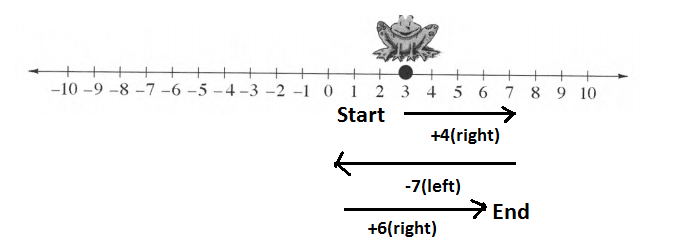
Core Connections, Course 1, Student 1st Edition, Chapter 3 Portions and Integers 1 1

Thus, the frog ends up at number 6.

Core Connections, Course 1, Student 1st Edition, Chapter 3 Portions and Integers 1 2

Core Connections Course Chapter 3 Page 136 Problem 2 Answer

The given figure is

Core Connections, Course 1, Student 1st Edition, Chapter 3 Portions and Integers 2

It is required to list the lengths of two possible combinations of hops.

We will list the lengths according to the additional and subtraction rules of the integers.

We can move (or leap) spaces from our beginning number using a number line; left for subtraction, right for addition.

The two possibilities that the frog hopes 3 times from 3 to 10 are:

Hop 1: right 1 unit, right 3 units, right 3 units.

Hop 2: right 3 units, right 2 units, right 2units.
Core Connections Course 1 Student 1st Edition Chapter 3 Exercise 3.2 Portions and Integers

Thus,  the lengths of two possible combinations of hops that will get it from 3 to 1.
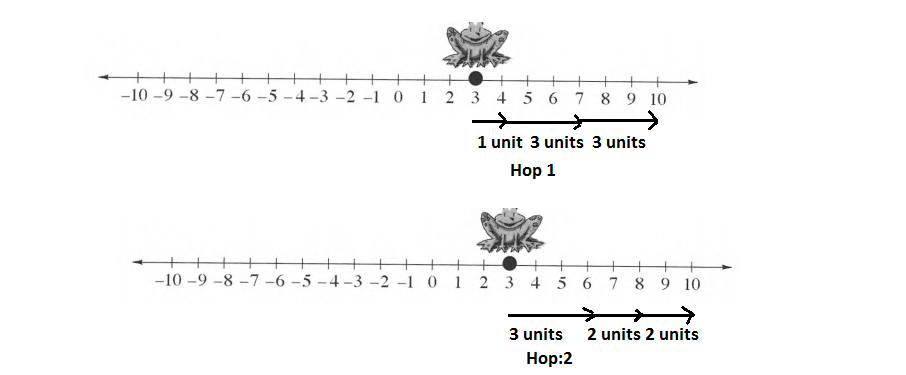
Core Connections, Course 1, Student 1st Edition, Chapter 3 Portions and Integers 2 3

Hop 1: right 1 unit, right 3 units, right 3 units,

Hop 2: right 3 units, right 2 units, right 2 units.

Core Connections Course 1 Student 1st Edition Chapter 3 Exercise 3.2 Solutions Page 136 Problem 3 Answer

The given figure is

Core Connections, Course 1, Student 1st Edition, Chapter 3 Portions and Integers 3

It is required to explain that the frog could land on a positive number if it makes three hops to the left.

We will explain according to the additional and subtraction rules of the integers.

We can move (or leap) spaces from our beginning number using a number line; left for subtraction, right for addition.

Yes, it can land on the positive number when at least one or two hops are less than one.

Let us take an example the 3 hops of the frog have left 0.5 unit, left 1 unit left 0.5 unit.

Which will end up at 1 which is a positive number.

Thus, the frog could land on a positive number if it makes three hops to the left.

Core Connections Course Chapter 3 Page 136 Problem 4 Answer

The given figure is

Core Connections, Course 1, Student 1st Edition, Chapter 3 Portions and Integers 4

It is required to find how long the first two hops are.

We will find the distance of the first two hops according to the additional and subtraction rules of the integers.

We can move (or leap) spaces from our beginning number using a number line; left for subtraction, right for addition.

If each hop is right 7 units then the sum of two hops is right 14 units.

As the starting point is 3, after two hops it reaches to 17, now the hop left 6 units will end at 11 in the number line.

Thus, 14 units were long of the first two hops.

Core Connections Course 1 Student 1st Edition Chapter 3 Exercise 3.2 Solutions Page 137 Problem 5 Answer

The given figure is

Core Connections, Course 1, Student 1st Edition, Chapter 3 Portions and Integers 5

It is required to find a possible set of hop directions, lengths, and ending points.

We will find the possible set of hop directions according to the additional and subtraction rules of the integers.

We can move (or leap) spaces from our beginning number using a number line; left for subtraction, sign(−), right for addition, sign(+).

The starting position of the frog is 3 in the number line.

Now in the first game, it hops 3 units to the right which leads the Frog to the ending point 6 in the number line.

Now in the second game, it hops 9 units to the left which leads the Frog to the ending point−6 in the number line, which is the opposite of the first game.

Thus, the possible set of hop directions, lengths, and ending points is hop 3 units to the right, hop 9 units to the left.

Core Connections Course Chapter 3 Page 137 Problem 6 Answer

The given figure is

Core Connections, Course 1, Student 1st Edition, Chapter 3 Portions and Integers 6

It is required to find how the frog would hop to meet the given requirements.

We will determine the frog’s hop according to the additional and subtraction rules of the integers.

We can move (or leap) spaces from our beginning number using a number line; left for subtraction, sign(−), right for addition, sign(+).

Multiplying an integer by−1 is the opposite of multiplying it.

Any negative number has a corresponding positive number.

And any positive number is also a negative number.

From 3 to land on 6 the frog has to make a hop 3 units to the right.

From 6 to land on−6 the frog has to make a hop 12 units to the left.

From −6 to land on−(−6)=6 the frog has to make a hop 2 units to the right.

Thus, the frog would hop 3 units to the right, 12 units to the left,12 units to the right.

Core Connections Course 1 Student 1st Edition Chapter 3 Exercise 3.2 Solutions Page 137 Problem 7 Answer

The given figure is

Core Connections, Course 1, Student 1st Edition, Chapter 3 Portions and Integers 7

It is required how you could write “the opposite of the opposite of 6”.

We will write according to the rules of the opposite of a number.

Multiplying an integer by−1 is the opposite of multiplying it.

Any negative number has a corresponding positive number.

And any positive number is also a negative number.

The opposite of opposite of 6 can be represented as−(−6)=6.

The position of it is 6 in the number line.

Thus,  this would be the position 6 on the number line.

Core Connections Course Chapter 3 Page 137 Problem 8 Answer

The given Elliott’s expression is3+4−7+6.

It is required how Elliott’s expression represents in the words.

We will represent Elliott’s expression according to the additional and subtraction rules of the integers.

Subtract the two numbers and indicate the sign of the larger number if the two numbers have different signs, such as positive and negative.

If both numbers have the same sign, either positive or negative, add them together to get the common sign.

We can move (or leap) spaces from our beginning number using a number line; left for subtraction sign(−), right for addition sign(+).

Given Elliot’s expression: 3+4−7+6.

The frog’s movement in words is its starting is at 3 then it hops 4 units to the right next 7 units to left and finally 6 units to the right.

We use the minus sign when the frog hops to the left.

The movement of the frog is shown below:
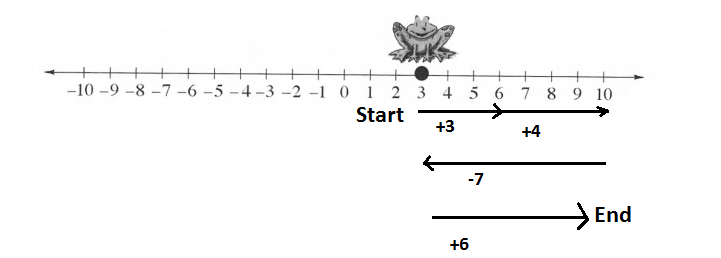
Core Connections, Course 1, Student 1st Edition, Chapter 3 Portions and Integers 8 1

Thus, the movement of the frog is shown:
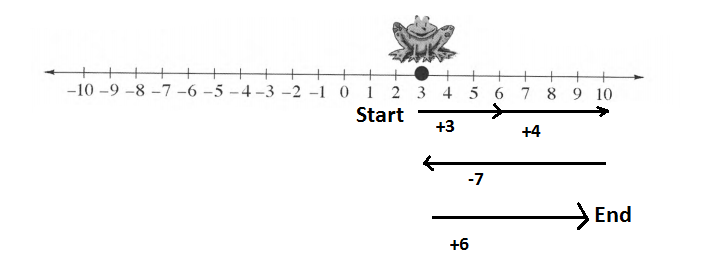
Core Connections, Course 1, Student 1st Edition, Chapter 3 Portions and Integers 8

The frog’s movement in words is its starting is at 3 then it hops 4 units to the right next 7 units to left and finally 6 units to the right.

We use the minus sign when the frog hops to the left.

Chapter 3 Exercise 3.2 Portions And Integers Solutions Core Connections Course 1 Page 137 Problem 9 Answer

The given expression is 5−10+2+1.

It is required to determine where the frog started and where it ended up.

We will determine according to the additional and subtraction rules of the integers.

Subtract the two numbers and indicate the sign of the larger number if the two numbers have different signs, such as positive and negative.

If both numbers have the same sign, either positive or negative, add them together to get the common sign.

Given expression:

5−10+2+1=−2

The frog’s movement in words is its starting is at 5 then it hops 10 units to the left next 2 units to right and finally 1 units to the right.

The frog starts at 5 and ends at −2.

Thus, the frog starts at 5 and ends at −2.

Core Connections Course Chapter 3 Page 137 Problem 10 Answer

The given expression is−5+10.

It is required to determine the special about the ending point.

We will find according to the additional and subtraction rules of the integers.

Subtract the two numbers and indicate the sign of the larger number if the two numbers have different signs, such as positive and negative.

If both numbers have the same sign, either positive or negative, add them together to get the common sign.

Given expression:−5+10=5.

The frog’s movement in words is its starting is at −5 then it hops 10 units to the right.

The frog starts at −5 and ends at 5 which is the opposite of the starting point.

Thus, the special about the ending point is that it is opposite of the starting position.

Chapter 3 Exercise 3.2 Portions and Integers solutions Core Connections Course 1Page 137 Problem 11 Answer

Given:  Another game of a frog’s movement.It is required to write an expression to represent the frog’s motion on the number line.

We will write the expression according to the additional and subtraction rules of the integers.

We can move (or leap) spaces from our beginning number using a number line; left for subtraction, right for addition.

Subtract the two numbers and indicate the sign of the larger number if the two numbers have different signs, such as positive and negative.

If both numbers have the same sign, either positive or negative, add them together to get the common sign.

Multiplying an integer by−1 is the opposite of multiplying it.

Any negative number has a corresponding positive number. And any positive number is also a negative number.

The expression of the new game is given by,

−(−3)−5+9−22=−11.

The frog ended up on−11 on the number line.

Thus, the frog ended up on−11 on the number line.

Core Connections Course Chapter 3 Page 137 Problem 12 Answer

The given expression is−(−2)+6.

It is required to simplify the expression so that we can determine where it lands.

We will simplify according to the rules of integers for addition and subtraction.

Subtract the two numbers and indicate the sign of the larger number if the two numbers have different signs, such as positive and negative.

Multiplying an integer by−1 is the opposite of multiplying it.

Given the expression of frogs movement

−(−2)+6.

=8.​

The starting position of the frog is the opposite of −2 and the ending position is 8 on the number line.

Thus, it lands 8 on the number line.

“Core Connections Course 1 Chapter 3 Exercise 3.2 Step-By-Step Solutions Page 138 Problem 13 Answer

The given figure is
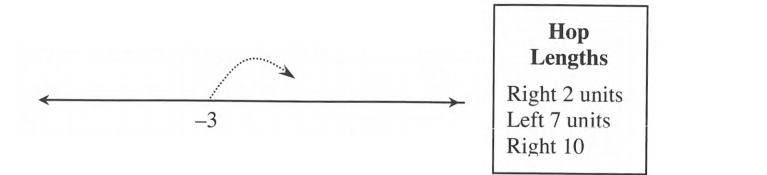
Core Connections, Course 1, Student 1st Edition, Chapter 3 Portions and Integers 13

It is required to determine where the frog ends up.

We will find according to the rules of integers for addition and subtraction.

Subtract the two numbers and indicate the sign of the larger number if the two numbers have different signs, such as positive and negative.

If both numbers have the same sign, either positive or negative, add them together to get the common sign.

The expression for frogs movement as it starts from−3 is,−3+2−7+10−3=−1.

Thus, the frog ends up−1 on the number line.

Core Connections Course Chapter 3 Page 138 Problem 14 Answer

The given figure is
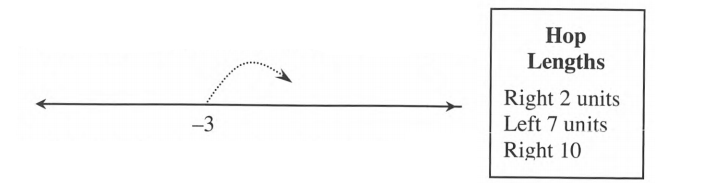
Core Connections, Course 1, Student 1st Edition, Chapter 3 Portions and Integers 14

It is required to find that it is possible or not to finish at 2 on the number line.

We will find according to the rules of integers for addition and subtraction.

Subtract the two numbers and indicate the sign of the larger number if the two numbers have different signs, such as positive and negative.

If both numbers have the same sign, either positive or negative, add them together to get the common sign.

No, it won’t be possible to finish 2 in the number line by changing the order of hops.

The expression shows that.

−3+2−7+10−3=−1.

Because in that case, the ending point is−1, so it is impossible to finish 2on the number line.

Thus, it is impossible to finish 2 on the number line.

“Core Connections Course 1 Chapter 3 Exercise 3.2 Step-By-Step Solutions Page 138 Problem 15 Answer

The given figure is
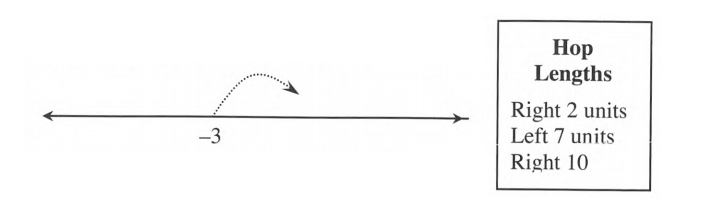
Core Connections, Course 1, Student 1st Edition, Chapter 3 Portions and Integers 15

It is required to determine that it is possible to land the frog in the same place no matter which hops the frog takes first, second, etc.

We will find according to the checking the number of points in the expression and the result you get from that expression.

We can move (or leap) spaces from our beginning number using a number line; left for subtraction, right for addition.

Yes, frog land in the same place no matter the order of hops it takes.

Thus, yes frog land in the same place no matter the order of hops it takes.

Core Connections Course Chapter 3 Page 138 Problem 16 Answer

The given figure is
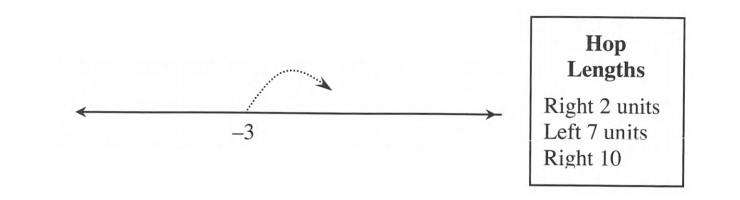
Core Connections, Course 1, Student 1st Edition, Chapter 3 Portions and Integers 16

It is required to find that Kamille’s statement is right or wrong.

We will find according to the rules of integers for addition and subtraction.

Subtract the two numbers and indicate the sign of the larger number if the two numbers have different signs, such as positive and negative.

If both numbers have the same sign, either positive or negative, add them together to get the common sign.

We can move (or leap) spaces from our beginning number using a number line; left for subtraction(sign−), right for addition(lsign+).

Kamille is correct as the starting position is−3 when the frog hops 2 units to the right, so the frog is moving right, then the new position will be,−3+2=−1.

Thus, she is correct because the starting position is−3:

The expression is:−3+2=−1.

“Core Connections Course 1 Chapter 3 Exercise 3.2 Step-By-Step SolutionsPage 138 Problem 17 Answer

The given figure is
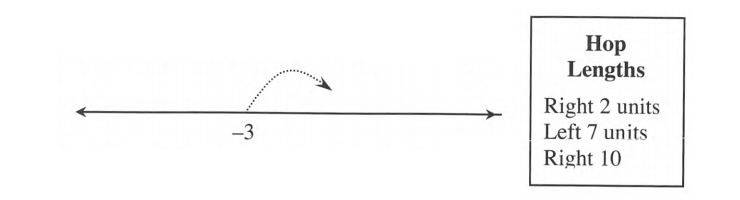
Core Connections, Course 1, Student 1st Edition, Chapter 3 Portions and Integers 17

It is required to give another set of four hops that would have the frog end up.

We will give another set of four hops according to the rules of integers for addition and subtraction.

Subtract the two numbers and indicate the sign of the larger number if the two numbers have different signs, such as positive and negative.

If both numbers have the same sign, either positive or negative, add them together to get the common sign.

We can move (or leap) spaces from our beginning number using a number line; left for subtraction sign(−), right for addition(sign+).

Let us consider the four hops to be right 3 units, left 4 units, right 6 units, and left 5 units then the resultant position will be the same as where it started in the number line which is −3.

The sum of frogs hops movement should be equal to 0.

The expression is:3−4+6−5=0

​Thus, it is true that the sum of frogs hops movement will be equal to0.

Core Connections Course Chapter 3 Page 139 Problem 18 Answer

Given: Lucas’ frog is sitting at−2 on the number line.It is required to write an expression (sum) to represent his frog’s movement.

We will write according to the rules of integers for addition and subtraction.

Subtract the two numbers and indicate the sign of the larger number if the two numbers have different signs, such as positive and negative. If both numbers have the same sign, either positive or negative, add them together to get the common sign.

We can move (or leap) spaces from our beginning number using a number line; left for subtraction, sign(−), right for addition, sign(+).

Lucas’ frog is sitting at−2 on the number, line. First, it hops 4 units to the right,6 units to the left, and then 8 more units to the right.

The expression for the frog’s movement is−2+4−6+8.

Thus, we write the expression (sum) to represent his frog’s movement, that is −2+4−6+8.

Solutions For Core Connections Course 1 Chapter 3 Exercise 3.2 Portions And Integers Page 139 Problem 19 Answer

Given: Lucas’ frog is sitting at−2 on the number line.It is required to find where the frog lands.

We will determine according to the rules of integers for addition and subtraction.

Subtract the two numbers and indicate the sign of the larger number if the two numbers have different signs, such as positive and negative.

If both numbers have the same sign, either positive or negative, add them together to get the common sign.

We can move (or leap) spaces from our beginning number using a number line; left for subtraction, sign(−), right for addition, sign(+).

The landing of the frog on the number line after all movements is−2+4−6+8=4.

Thus, the frog lands 4 on the number line.

Core Connections Course Chapter 3 Page 139 Problem 20 Answer

Given: Lucas’ frog is sitting at−2 on the number line.

It is required what number is the opposite of where Lucas’ frog landed.

We will find the number according to the rules of the opposite of a number.

Multiplying an integer by−1 is the opposite of multiplying it.

Any negative number has a corresponding positive number.

And any positive number is also a negative number.

When we multiply an integer value by−1, the result will be an opposite sign and the same value of the given integer.

The opposite number of where frog landed is(−1)×(−2)=2(from part(b)).

Where 2 is an integer value and after multiplication with−1, the result will be the same integer value but the sign is opposite to the given integer value’s sign.

Thus,2 is the number that is the opposite of where Lucas’ frog landed when sitting at−2.

Solutions For Core Connections Course 1 Chapter 3 Exercise 3.2 Portions And Integers Page 139 Problem 21 Answer

The given four points are(1,3),(4,2),(0,5),and(5,1).

It is required to draw and label a set of axes on your graph paper and plot and label the given poits.

We will draw using the graphing calculator.

We draw and label a set of axes on our graph paper and plot and label the following points:
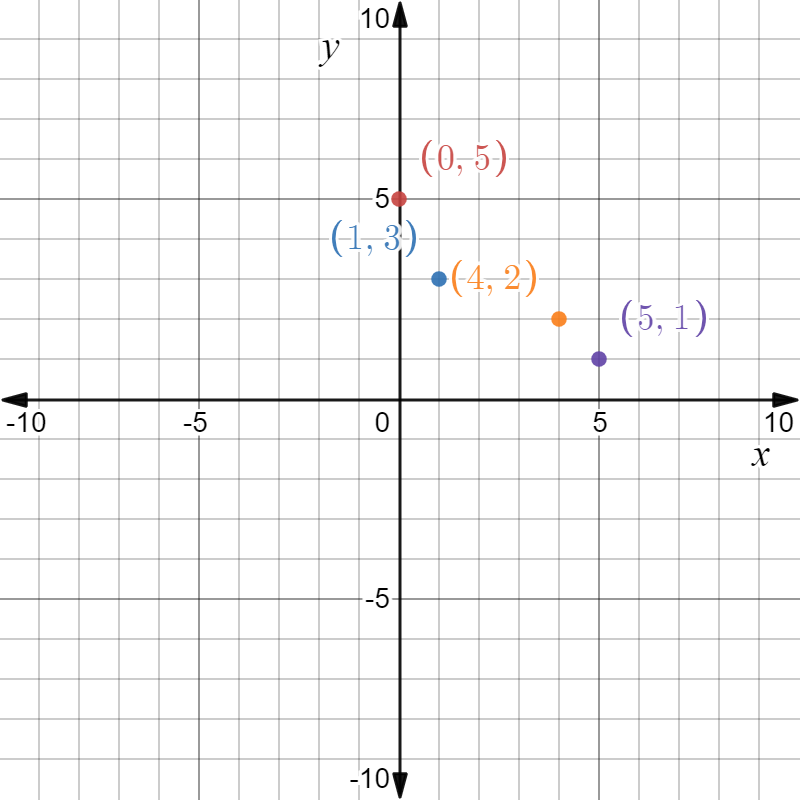
Core Connections, Course 1, Student 1st Edition, Chapter 3 Portions and Integers 21 1

Thus, the plot of the following points(1,3),(4,2),(0,5),and(5,1) is shown below.
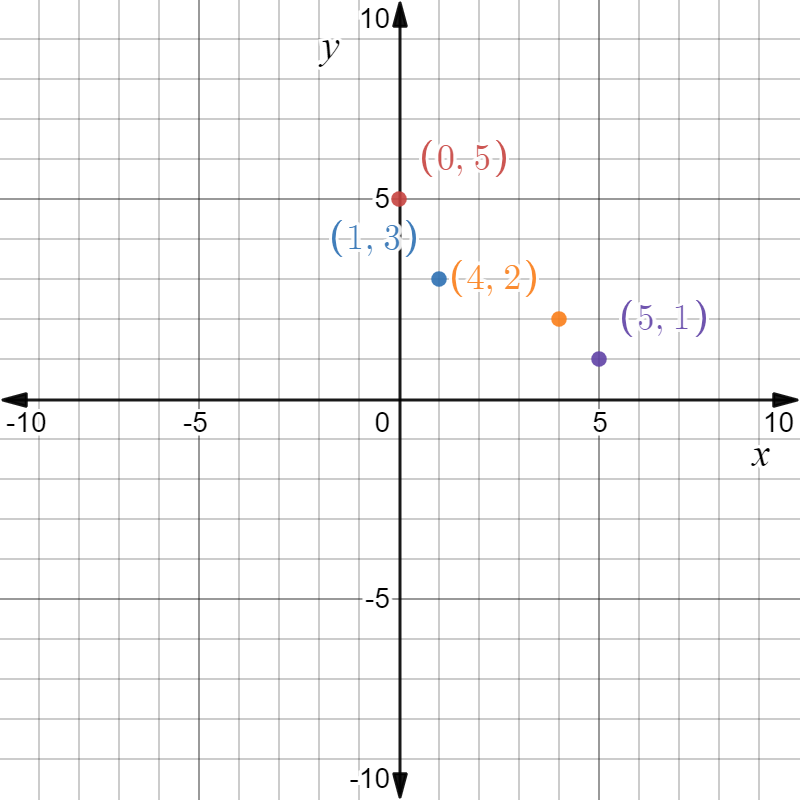
Core Connections, Course 1, Student 1st Edition, Chapter 3 Portions and Integers 21

Core Connections Course Chapter 3 Page 139 Problem 22 Answer

The given expression is18(26).

It is required to simplify the given expression.

We will simplify the given expression according to the rules of the distributive property.

At first, we need to distribute (20+6) To 8.

Then simplify it. After that, use the calculator.

18⋅26

Using distributive property:

18⋅26

=18⋅(20+6)                        Distribute(20+6) to 18.

=18⋅20+18⋅6                  Distributive property

=360+108                          Simplify

=468.                                    Use the calculator

Thus, using the distributive property we simplify the given product 18(26) and we get 468.

Core Connections Course 1 Student 1st Edition Chapter 3 Exercise 3.2 Guide Page 139 Problem 23 Answer

The given expression is 6(3405).

It is required to simplify the given expression.

We will simplify the given expression according to the rules of the distributive property.

At first, we need to distribute(3400+5)

To 6.

Then simplify it. After that, use the calculator.

Given 6⋅3405

Using distributive property:

6⋅3405

=6⋅(3400+5)          Distribute(3400+5) to 6.

=6⋅3400+6⋅5         Distributive property

=20400+30              Simplify

=20430                     Use the calculator.

Thus, using the distributive property we simplify the given product 6(3405) and we get 20430.

Core Connections Course Chapter 3 Page 139 Problem 24 Answer

The given expression is 21(35).

It is required to simplify the given expression.

We will simplify the given expression according to the rules of the distributive property.

At first, we need to distribute (30+5) to 21.

Then simplify it. After that, use the calculator.

Given 21⋅35

Using distributive property:

21⋅35

=21⋅(30+5)         Distribute(30+5) to 21

=21⋅30+21⋅5     Distributive property

=630+105             Simplify

=735                       Use the calculator.

Thus, using the distributive property we simplify the given product 21⋅35 and we get 735.

Chapter 3 Exercise 3.2 Portions And Integers Explained Core Connections Course 1 Page 139 Problem 25 Answer

Given the addition of fraction 9/10+7/9.

We need to compute the sum of given fractions.

Firstly, find the lowest common multiple of both denominators then write both original fractions as equivalent fractions with the least common denominator.

Then add the numerators.

At first, we will find the lowest common multiple of the denominators to make them equal.

Here, the lowest common multiple of 10,and,9 is 90.

Now, by using the lowest common multiple to make denominators equal and continue with the given operation i.e. to add the given fractions, we get

9/10+7/9=9/10⋅9/9+7

9⋅10/10=81/90+70/90

=151/90

Therefore, the sum of 9/10+7/9=151/90.

Core Connections Course Chapter 3 Page 139 Problem 26 Answer

Given -1/2−3/11

To find – It is asked to compute the difference of given fractions.

Firstly, Check if the denominators of the given fractions are the same to conduct the operation i.e Add or subtract. If the denominators are not equal then make them equal with the help of LCM.

Then write both original fractions as equivalent fractions with the least common denominator.

Then add or subtract the numerators of the given fraction.

Here, the denominators the given fractions are not equal.

Therefore, we will find the LCM of the denominators to make them equal.

The lowest common denominator of 2 and 11 is 22.

Now, we will make the denominators equal to 22.

1/2−3/11=1/2⋅11/11−3/11⋅2/2

=11/22−6/22

=5/22

Therefore, 1/2−3/11

=5/22.

Chapter 3 Exercise 3.2 Portions And Integers Explained Core Connections Course 1 Page 139 Problem 27 Answer

Given – 2/5−1/15

To find – It is asked to compute the difference of given fractions.

Firstly, Check if the denominators of the given fractions are the same to conduct the operation i.e Add or subtract.

If the denominators are not equal then make them equal with the help of LCM.

Then write both original fractions as equivalent fractions with the least common denominator.

Then add or subtract the numerators of the given fraction.

Here, the denominators of the given fractions are not equal. Therefore, we will find the LCM of the denominators to make them equal.

The Lowest common denominator of 5 and 15 is 15.

Now, we will make the denominators equal to 15.

2/5−1/15

=2/5⋅3/3−1/15

=6/15−1/15

=5/15

=1/3​

Therefore, 2/5−1/15=1/3.

Core Connections Course Chapter 3 Page 139 Problem 28 Answer

Given – It is given that 40 percent of the mixture is ryegrass.

To find -It asked to find the ratio of ryegrass to bluegrass.

At first, we will subtract the given percent out of 100 percent to find the quantity of bluegrass and then find the ratio of ryegrass to bluegrass.

At first, We will find the quantity of bluegrass in the mixture

As we already know that the 40%

of the mixture is reygrass.

Now, 100%=40%+ bluegrass

⇒ bluegrass =100%−40%

⇒ bluegrass =60%

​Now, by using the quantity of both ryegrass and bluegrass,

The ratio of ryegrass to the bluegrass will be 40/60=2/3

Therefore, the ratio of ryegrass to bluegrass will be 2/3

Worked Examples For Core Connections Course 1 Chapter 3 Exercise 3.2 Portions And Integers Page 140 Problem 29 Answer

Given –
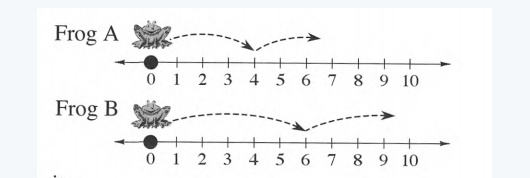
Core Connections, Course 1, Student 1st Edition, Chapter 3 Portions and Integers 29


To find – It is asked if the frogs will ever land on the same number or not.

Construct the number line and find whether they will land on the same number or not.

Part (i) When Frog A hops to the right 4 units at a time and Frog B hops to the right 6 units at a time

At first, we will construct the number line for both the frogs.

Through the number lines of both the frog, we can say that both of them will land on the same number that is 12 Part (ii) When Frog A hops 15 units at a time and Frog B hops 9 units at a time

At first, we will construct the number line for both the frogs.

Through the number lines of both the frog, we can say that both of them will land on the same number that is 45.

Consequently,

When Frog A hops to the right 4 units at a time and Frog B hops to the right 6 units at a time, both of them will land on the same number that is 12.
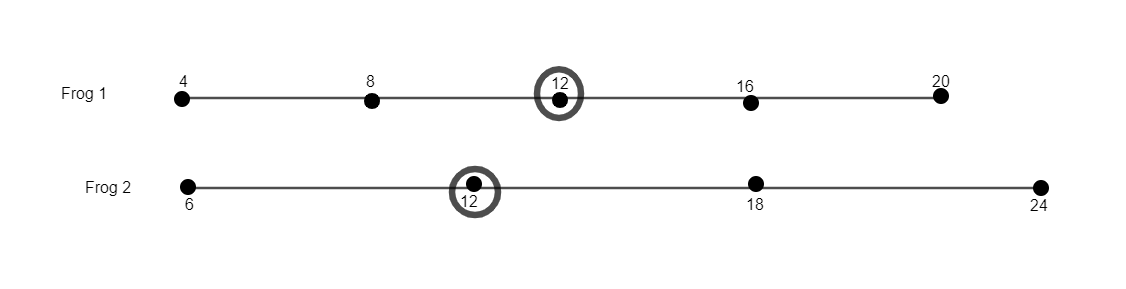
Core Connections, Course 1, Student 1st Edition, Chapter 3 Portions and Integers 29 1

When Frog A hops to the right 15 units at a time and Frog B hops to the right 9 units at a time, both of them will land on the same number that is 45.
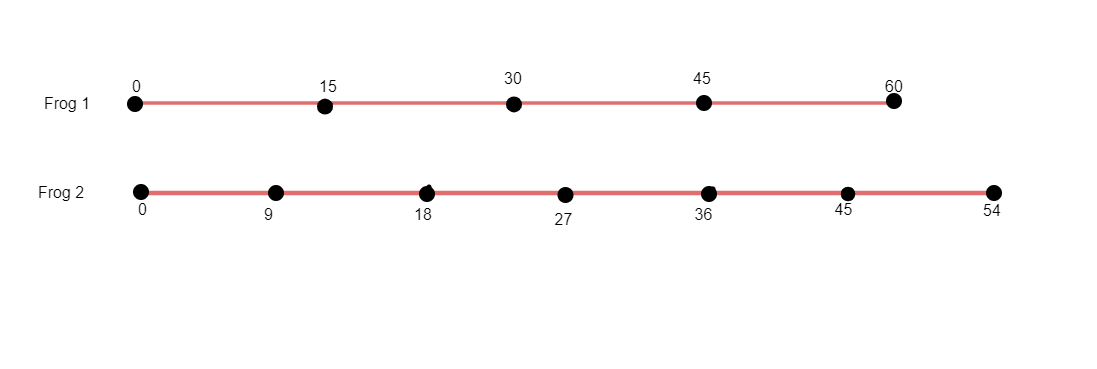
Core Connections, Course 1, Student 1st Edition, Chapter 3 Portions and Integers 29 2

Core Connections Course Chapter 3 Page 140 Problem 30 Answer

Given – It is given that each frog starts at 0 and each hop is same distance i.e equal distance.

To find – It is required to find the method for determining all of the numbers that both frogs will land on and how the length of the frog’s jump was used?

We will explain the method used to determine the number that both frogs will land on.

Referring to the part (a) In part (a), the length of the frog’s jump was used to decide the points on which they will land.

As we already know that the common point on which both the frogs will land is 12.

Therefore, the numbers that both frogs will land on will be the multiples of 12−12,24,36,48…

because the numbers frog will land on will be the multiple of the common point/number.

Therefore, the frogs will land on the multiples of 12 because it is the common number on which both the frogs will land.

Worked Examples For Core Connections Course 1 Chapter 3 Exercise 3.2 Portions And Integers Page 140 Problem 31 Answer

Given – We are given two numbers 8 and 12.

To find – It is required to find the least common multiple of 8 and 12.

We will find the multiples of both the number and then find the lowest common multiple out of them.

At first, we will write multiples for both numbers.

Therefore,

Multiples of 8 are 8,16,24,32,40,48…

Multiples of 12 are12,24,36,48,60…

Here, the lowest common multiple is 24.

Therefore, the least common multiple of 8 and 12 is 24.

Core Connections Course Chapter 3 Page 141 Problem 32 Answer

Given -−2−9

To find – It is asked to represent the given expression on a number line.

When we add two negative numbers, the result will always be a negative number.

Hence, on adding negative numbers direction of movement will always be to the left side.

When we add two negative numbers, the result will always be a negative number.

Hence, on adding negative numbers direction of movement will always be to the left side.

Here, the first number is −2 and the second number is −9and both are negative.

First, we will locate the first number on the number line.

Then move 9 places to the left will give −11.

Therefore,
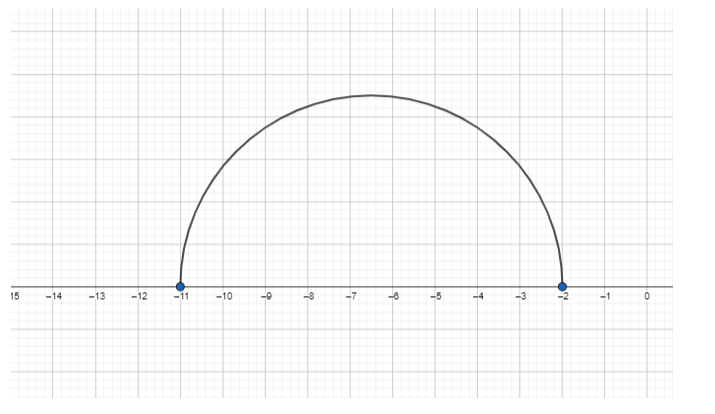
Core Connections, Course 1, Student 1st Edition, Chapter 3 Portions and Integers 32

Therefore, −2−9=−11.

Core Connections Course Chapter 3 Page 141 Problem 33 Answer

Given -5−5

To find – It is asked to represent the given expression on a number line.

When we subtract two positive numbers, move to the left as far as the value of the second number.

When we subtract two positive numbers, move to the left as far as the value of the second number.

Therefore, we will move to the left on the number line.
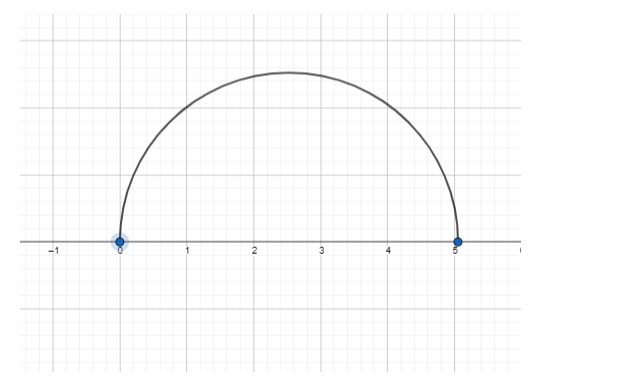
Core Connections, Course 1, Student 1st Edition, Chapter 3 Portions and Integers 33

Here, the first number is 5 and the second number is 5.

First, we will locate the first number on the number line and then move 5 places to the left  to get 0.

Therefore, 5−5=0.

Core Connections Course 1 Student 1st Edition Chapter 3 Exercise 3.2 Portions Answers Page 141 Problem 34 Answer

Given – −(−4)+7=4+7

To find – It is asked to represent the given expression on a number line.

When we add two positive numbers, the result will always be a positive number.

Hence, on adding positive numbers direction of movement will always be to the right side.

When we add two negative numbers, the result will always be a negative number.
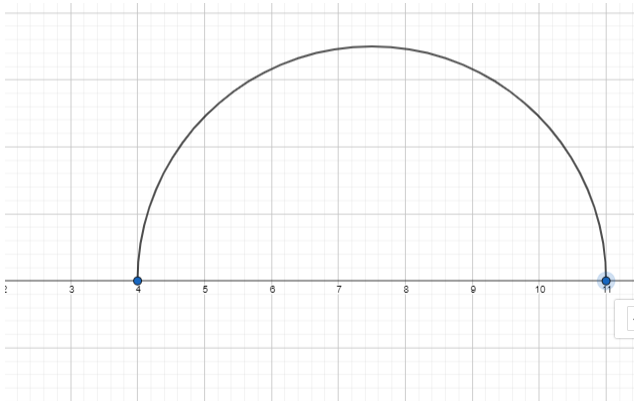
Core Connections, Course 1, Student 1st Edition, Chapter 3 Portions and Integers 34

Hence, on adding negative numbers direction of movement will always be to the left side.

Here, the first number is 4 and the second number is 7 and both are positive.

At first, we will locate the first number then move 7 places to the right to obtain 11.

Therefore,−(−4)+7=11

Core Connections Course Chapter 3 Page 141 Problem 35 Answer

Given -−6+2

To find – It is asked to represent the given expression on a number line.

Adding a negative is like Subtracting a positive number and then moving to the left on the number line.
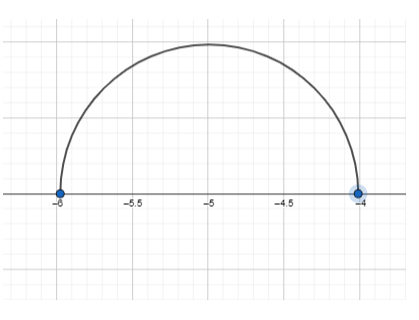
Core Connections, Course 1, Student 1st Edition, Chapter 3 Portions and Integers 35

As we already know that Adding a negative is like Subtracting a positive number and then moving to the left on the number line.

Here, the first number is−6 and the second number is 2. At first, locate the first number and them move 2 places to the left on the number line to obtain−4.

Therefore, −6+2=−4

Core Connections Course 1 Student 1st Edition Chapter 3 Exercise 3.2 Portions Answers Page 141 Problem 36 Answer

Given −(−1)−8=1−8

To find – It is asked to represent the given expression on a number line.

Subtracting a positive number is like adding a negative and then moving to the left on the number line.
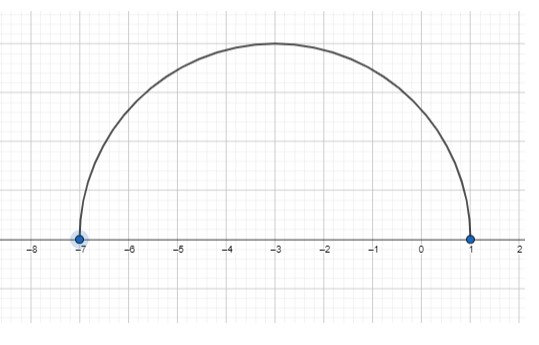
Core Connections, Course 1, Student 1st Edition, Chapter 3 Portions and Integers 36

Subtracting a positive number is like adding a negative and then moving to the left on the number line.

Here, the first number is 1 and the second number is 8.

At first, locate first number and then move 8 places to the left of the number to obtain −7.

Therefore, the given expression is −(−1)−8=−7
Core Connections Course 1 Student 1st Edition Chapter 3 Exercise 3.1 Portions and Integers

Core Connections Course 1 Student 1st Edition Chapter 3 Portions and Integers

Core Connections Course 1 Student 1st Edition Chapter 3 Exercise 3.1 Solutions Page 99 Problem 1 Answer

Given that the joke:  The clerk asked Ron, “Do you want your pizza cut into eight slices or twelve,”  Ron replied “I’m not hungry enough to eat twelve.”

It is asked what is the fraction that makes the joke work.

The joke was funny because the quantity of pizza doesn’t change when you cut the same pizza into 8 pieces or 12 pieces.

So, he eats the whole pizza in 8 pieces.

Thus, Pizza’s quantity remains same that makes the joke work.

Core Connections Course 1 Student 1st Edition Chapter 3 Exercise 3.1 Solutions Page 100 Problem 2 Answer

Given that a Giant one:

Core Connections, Course 1, Student 1st Edition, Chapter 3 Portions and Integers 2

It is asked to find whether 3/5 is equivalent to 6/10 or not.

Now we will use the definition of equivalent fraction to solve given problem.

Yes, 3/5 is equivalent to 6/10.

We can check by factoring out the common factors.

6/10=3⋅2/5⋅2 =3/5.

Hence, it is correct.

Read and learn More Core Connections Course 1 Student 1st Edition Solutions

Thus, 3/5  is equivalent to 6/10 is correct.

Chapter 3 Exercise 3.1 Portions And Integers Solutions Core Connections Course 1 Page 100 Problem 3 Answer

Given that a Giant one:

Core Connections, Course 1, Student 1st Edition, Chapter 3 Portions and Integers 3

It is asked to find at least two other fractions or ratios that are equivalent to 3/5.

Now we will use the definition of equivalent fraction to solve given problem.

The two other fractions that are equivalent to 3/5 can be found by Giant one

3/5⋅3/3=9/15.

3/5⋅4/4=12/20.

Thus, 9/15,12/20  are two equivalent fraction of 3/5.

Chapter 3 Exercise 3.1 Portions And Integers Solutions Core Connections Course 1 Page 100 Problem 4 Answer

Core Connections Course 1 Student 1st Edition Chapter 3 Exercise 3.1 Portions and Integers

Core Connections Course 1 Chapter 3 Exercise 3.1 Step-By-Step Solutions Page 100 Problem 5 Answer

Given fraction is 9/8.

It is asked to find four equivalent fraction by using Giant One.

Now we will use the definition of Giant One to solve given problem.

We can choose any number for the Giant one.

The four fractions that are equivalent to 9/8 is:

9/8⋅2/2=18/16

9/8⋅3/3=27/24

9/8⋅4/4=36/32

9/8⋅5/5=45/40.

​Thus, the four equivalent fractions of 9/8 are 18/16,27/24,36/32,45/40.

Core Connections Course 1 Chapter 3 Exercise 3.1 Step-By-Step Solutions Page 100 Problem 6 Answer

Given giant one are:

Core Connections, Course 1, Student 1st Edition, Chapter 3 Portions and Integers 6


It is asked to find the missing numbers in the fractions of given giant One.

Now we will use the definition of giant one to solve given problem.

Given: 3/4⋅□/□=44.

Here we know the result’s denominator as 44.

Let the number in the giant one be n.

Now let us only solve the denominator.

4⋅n=44

n=44/4

n=11.

​Now we got the giant number then the result will be

3/4⋅11/11=33/44.

Given:  7/12⋅□/□=−60.

Here we know the result’s denominator as 60.

Let the number in the giant one be n.

Now let us only solve the denominator

12⋅n=60

n=60/12

n=5.

Now we got the giant number then the result will be

7/12⋅5/5=35/60.

Given: 18/72=□/□⋅3−.

Here we know the result’s numerator as 18.

Let the number in the giant one be n.

Now let us only solve the numerator.

3⋅n=18

n=18/3

n=6.

​Now we got the giant number then the result will be

18/72=6/6⋅3/12.

Thus, the complete giant one are: 3/4⋅11/11=33/44,

7/12⋅5/5=35/60,

18/72   =6/6⋅3/12.

Solutions For Core Connections Course 1 Chapter 3 Exercise 3.1 Portions And Integers Page 100 Problem 7 Answer
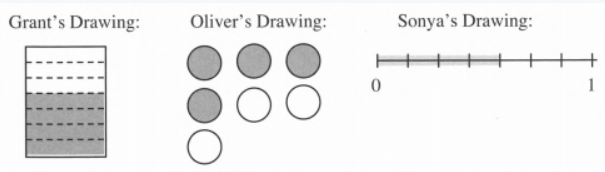
Given Giant One are:

Core Connections, Course 1, Student 1st Edition, Chapter 3 Portions and Integers 7

It is asked what computation could help that find the numbers to use in the Giant Ones.

From the part(a),we can say that multiplication will help to find the numbers to use in the Giant Ones.

Thus, multiplication will help to find the numbers to use  in the Giant Ones.

Solutions For Core Connections Course 1 Chapter 3 Exercise 3.1 Portions And Integers Page 101 Problem 8 Answer

Given giant one is:

Core Connections, Course 1, Student 1st Edition, Chapter 3 Portions and Integers 8

It is asked How is the giant one that you used here different from the ones that you found in problem 3−5.

Now we will find complete giant and compare it with the previous problem.

Given: 35/50⋅□/□=10.

Here we know the result’s denominator as10.

Let the number in the giant one be n.

Now let us only solve the denominator,

60⋅n=10

n=10/50

n=1/5.

​Now we got the giant number then the result will be

35/50⋅1/5

1/5=7/10.

In the previous Problem, giant ones are: 3/4⋅11/11=33/44,

7/12⋅5/5=35/60,

18/72=6/6⋅3/12.

Now comparing both problem giant ones, we can say that the giant ones we got in the previous problems are whole numbers but here we got the fractions.

Thus, the giant ones we got in the previous problems are whole numbers but in this problem, we got the fractions.

Core Connections Course 1 Student 1st Edition Chapter 3 Exercise 3.1 Guide Page 101 Problem 9 Answer

Given Giant One is:

Core Connections, Course 1, Student 1st Edition, Chapter 3 Portions and Integers 9

It is asked whether you can think of a different way to make sense of this problem or not.

Complete equivalent fraction with Giant One is: 35/50⋅1/5

1/5=7/10.

From above result, we can say that fractions will be confusing so let us make them to decimals which will be helpful.

Thus, we can use decimals in place of fractions to make it easy.

Chapter 3 Exercise 3.1 Portions And Integers Explained Core Connections Course 1 Page 101 Problem 10 Answer

Given: 55/500

=5⋅11/5⋅100

=11/100.

It is asked to find giant one and two equivalent fraction in given problem.

Solution: Giant one is a fraction that is equal to 1.

Multiplying any fraction by a giant one will create a new fraction equivalent to the original fraction.

Here, the giant one is 5/5 and two equivalent fractions are 55/500 and 11/100.

Thus, in 55/500

=5⋅11/5⋅100

=11/100 the giant one is 5/5 and two equivalent fractions are 55/500 and 11/100.

Chapter 3 Exercise 3.1 Portions And Integers Explained Core Connections Course 1 Page 101 Problem 11 Answer

Given that Tessa’s work is:  55/500=5⋅11/5⋅100=11/100.

It is asked whether Tessa’s work make sense or not and it is possible to expressed 11/100 in lowest terms, if it is, then how can you tell.

Yes, Tessa’s work make sense because it is in lowest term.

11/100 is the lowest terms.

As we can see, there are no common factors to cancel out the numerators and denominators.

Thus, Tessa’s work 55/500 =5⋅11/5⋅100=11/100 make sense and 11/100 is expressed in lowest term.

Chapter 3 Exercise 3.1 Portions And Integers Explained Core Connections Course 1 Page 101 Problem 12 Answer

Given that Tessa’s another work: 28/60=2⋅14/2⋅30=14/30.

It is asked whether Tessa’s work is correct or not and also tell that her fraction expressed in lowest terms or not, if not then figure out the lowest terms for this fraction.

Simplifying a fraction is the process of rewriting it in lowest terms.

Now we will use this definition of lowest term of fraction to solve given problem.

Tessa’s work was wrong this time. As the results were not the lowest terms they still have the common factors to cancel out.

It can be further done.

14/30=2⋅7/2⋅15

=7/15.

Thus, Tessa’s work was wrong and the lowest term of fraction 28/30 is 7/15.

Worked Examples For Core Connections Course 1 Chapter 3 Exercise 3.1 Portions And Integers Page 101 Problem 13 Answer

Given fractions are: 24/36,30/48,56/98.

It is asked to simplify given fractions and write them in lowest terms.

If we write a fraction in lowest terms, we use the smallest whole numbers possible to express the fraction.

Now we will use this rule to solve given problem.

Given: 24/36,30/48,56/98.

24/36=12⋅2/12⋅3  =2/3.

30/48=6⋅5/6⋅8  =5/8.

56/98=14⋅4/14⋅7 =4/7.

Thus, the given fraction’s  simplified fraction in lowest term are: 24/36=2/3,30/48=5/8,56/98=4/7.

Worked Examples For Core Connections Course 1 Chapter 3 Exercise 3.1 Portions And Integers Page 102 Problem 14 Answer

Given that Tessa’s work: 60/72=2⋅2⋅3⋅5/2⋅2⋅2⋅3⋅3 =12⋅5/12⋅6.

It is asked how did Tessa figure out that 12 is the greatest common factor of 60 and 72.

Solution: from the given Tessa’s work, we can say that first, she factored the number to the prime numbers then she calculated the common factors from two numbers which is the greatest common factor.

Thus, in 60/72=2⋅2⋅3⋅5/2⋅2⋅2⋅3⋅3

=12⋅5/12⋅6

Tessa figure out that 12 is the greatest common factor of 60 and 72 by factoring the numbers into the prime factor.

Worked Examples For Core Connections Course 1 Chapter 3 Exercise 3.1 Portions And Integers Page 102 Problem 15 Answer

Given that Tessa’s work: 60/72 =2⋅2⋅3⋅5/2⋅2⋅2⋅3⋅3 =12⋅5/12⋅6.

It is asked how can factoring into prime factors help to find the greatest common factor of any two numbers.

While factoring a number into prime factors we can find the common factors between two numbers then we can multiply those common factors which will be the greatest common factor.

Thus, factoring a number into prime factors helps to find the greatest common factor of any two numbers by finding the common factors between two numbers.

Core Connections Course 1 Chapter 3 Exercise 3.1 Detailed Answers Page 102 Problem 16 Answer

Given fraction are: 24/30,18/45,30/63.

It is asked to find to simplify given fractions in one step and state the greatest common factor.

Now we will simplifies these fraction by using factoring and find greatest common factor.

Given:  24/30,18/45,30/63.

24/30=6⋅4/6⋅5

Greatest common factor is 6.

=4/5.

18/45=9⋅2/9⋅5

Greatest common factor is 9.

=2/5.

30/63=3⋅10/3⋅21

Greatest common factor is 3.

=10/21.

Thus, simplified form of given fractions are:  24/30=4/5,

18/45=2/5,

30/63=10/21.

Core Connections Course 1 Chapter 3 Exercise 3.1 Detailed Answers Page 102 Problem 17 Answer

Given that Andy and Bill found a quick way to figure out that 1/3⋅3/8=1/8.

it is asked to show how the Giant One can help to explain their shortcut, then use the Giant One to calculate 2/5⋅5/7 quickly.

Now we will use the definition of Giant One to solve given problem.

Andy and Bill found a quick way to figure out that 1/3⋅3/8=1/8.

Let us try to explain the shortcut.

LHS=1/3⋅3/8=1⋅3/3⋅8

=1⋅3/β⋅8

=1/8

=RHS

​This shortcut mainly tells to cancel the greatest common factor when dividing two number.

2/5⋅5/7=2⋅5/5⋅7

=2/7.

​Thus, the solution is: 2/5⋅5/7=2/7.

Core Connections Course 1 Chapter 3 Exercise 3.1 Detailed Answers Page 102 Problem 18 Answer

Given product is: 1/2⋅3/5⋅2/3.

It is asked to use the Giant One to calculate given product quickly.

Now we will use the definition of Giant One to solve given problem.

Given: 1/2⋅3/5⋅2/3.

Now we will cancel out the common factor in denominator and numerator.

1/2⋅3/5⋅2/3

​=1⋅3⋅2/2⋅5⋅3

=1/5.

​Thus, the solution is: 1/2⋅3/5⋅2/3 = 1/5.

Core Connections Course 1 Chapter 3 Exercise 3.1 Detailed Answers Page 102 Problem 19 Answer

Given that the product of two fraction is 1/7.

It is asked to find two fractions between 0 and 1 that have a product of 1/7.

Now we will take any arbitrary fraction then multiply them and check its result matched to 1/7 or not.

Let us consider two fractions between 0 and 1 as 1/5 and 5/7.

Now multiplying the two fractions will results in 1/7.

1/5⋅5/7

​=1⋅5/5⋅7

=5⋅1/5⋅7

Using Giant One =1/7.

​Hence,  fractions are 1/5,5/7.

Thus,  two fractions between 0 and 1 that have a product of 1/7 are: 1/5,5/7.

Core Connections Course 1 Chapter 3 Exercise 3.1 Detailed Answers Page 102 Problem 20 Answer

Given that the product of two fraction is 3/4.

It is asked to find  two fractions between 1/2 and 1 that have a product of 3/4.

Now we will take any arbitrary fraction then multiply them and check its result matched to 3/4 or not.

Let us consider two fractions between 1/2 and 1 as 9/10 and 10/12

Now multiplying the two fractions will results in 3/4.

9/10⋅10/12

​=9⋅10/10⋅12

=3⋅3⋅10/10⋅3⋅4

=30⋅3/30⋅4

Using Giant One =3/4.

​Hence, fractions are 9/10,10/12.

Thus, two fractions between 1/2 and 1 that have a product of 3/4 are: 9/10,10/12.

Core Connections Course 1 Student 1st Edition Chapter 3 Exercise 3.1 Portions Answers Page 102 Problem 21 Answer

Given products are: 1/2⋅2/3,1/2⋅2/3⋅3/4,1/2⋅2/3⋅3/4⋅4/5.

It is asked to find the products for given fractions, then predict the next two problems in the sequence and find the products them.

Now we will multiply given fraction and using sequence of given fraction, we will find next two sequence of problem.

Given: 1/2⋅2/3,1/2⋅2/3⋅3/4,1/2⋅2/3⋅3/4⋅4/5.

1/2⋅2/3=2⋅1/2⋅3 =1/3.

1/2⋅2/3⋅3/4=6⋅1/6⋅4 =1/4.

1/2⋅2/3⋅3/4⋅4/5=24⋅1/24⋅5 =1/5.

The next two problems in the sequence are

1/2⋅2/3⋅3/4⋅4/5⋅5/6=120⋅1/120⋅6  =1/6.

1/2⋅2/3⋅3/4⋅4/5⋅5/6⋅6/7=720⋅1/720⋅7 1/7.

Thus, the solution is: 1/2⋅2/3=1/3,1/2⋅2/3⋅3/4=1/4,1/2⋅2/3⋅3/4⋅4/5=1/5,1/2⋅2/3⋅3/4⋅4/5⋅5/6

=1/6,1/2⋅2/3⋅3/4⋅4/5⋅5/6⋅6/7=1/7.

Core Connections Course 1 Student 1st Edition Chapter 3 Exercise 3.1 Portions Answers Page 103 Problem 22 Answer

It is asked to explain about the giant one and its uses by taking example.

Now we will take a title “The Giant One and Equivalent Fractions”  and explain about it by taking an arbitrary example.

Title: “The Giant One and Equivalent Fractions”

Giant one is used to minimize the fractions by factoring out the common factors and it also helps to make numerator or denominator equivalent to some number.

Let us consider an example:

15/20=5⋅3/5⋅4 =3/4.

Here, we got the simplest fraction

Thus, Giant one is used to minimize the fractions by factoring out the common factors and it also helps to make numerator or denominator equivalent to some number.

Core Connections Course 1 Student 1st Edition Chapter 3 Exercise 3.1 Portions Answers Page 103 Problem 23 Answer

Given:

Core Connections, Course 1, Student 1st Edition, Chapter 3 Portions and Integers 23

It is asked  to complete the given Giant One.

Now we will use the definition of Giant One to solve given problem.

Given: 5/3⋅ GiantOne. = 18.

We should choose Giant one so that the denominator will be equal to 18.

So the Giant one is 1=6/6

Now​5/3⋅6/6

​=5⋅6/3⋅6

=30/18.

​Thus, the solution is: 5/3⋅6/6=30/18.

Core Connections Course 1 Student 1st Edition Chapter 3 Exercise 3.1 Portions Answers Page 103 Problem 24 Answer

Given giant one expression is:

Core Connections, Course 1, Student 1st Edition, Chapter 3 Portions and Integers 24

It is asked  to complete the given giant one.

Now we will use the definition of giant one to solve given problem.

Given: 28/63=GiantOne⋅4−.

We should choose Giant one so that the numerator will be equal to 28.

So the Giant one is 1=7/7.

Now,28/63=7/7⋅4/9.

Thus, the solution is:  28/63=7/7⋅4/9.

Core Connections Course 1 Student 1st Edition Chapter 3 Exercise 3.1 Solutions Page 103 Problem 25 Answer

Given:

Core Connections, Course 1, Student 1st Edition, Chapter 3 Portions and Integers 25

It is asked  to complete the given Giant One.

Now we will use the definition of Giant One to solve given problem.

Given: 9/20⋅G.O=100.

We should choose Giant one so that the denominator will be equal to 100. So the Giant one is 1=5/5.

Now, ​9/20⋅5/5

​=9⋅5/20⋅5

=45/100.

​Thus, the solution is: 45/100=9/20⋅5/5.

Core Connections Course 1 Student 1st Edition Chapter 3 Exercise 3.1 Solutions Page 103 Problem 26 Answer

Given that Rachel says that she ran 115 yards and she went farther than Beth, who only ran 327 feet.

It is asked to explain whether Rachel is correct or not.

Now we will use unit conversion yard into feet (1yard=3feet) to solve given problem.

First let us convert the units of distance Rachel ran from yards to feet by multiplying 3 to it.

115⋅3=345 feet.

As the Beth ran 327 feet, Rachel was correct she ran farther than Beth.

Thus, Rachel was correct , she ran farther than Beth.

Core Connections Course 1 Student 1st Edition Chapter 3 Exercise 3.1 Solutions Page 104 Problem 27 Answer

Given that the histogram which shows the heights of players on two basketball teams, the Tigers and the Panthers:

Core Connections, Course 1, Student 1st Edition, Chapter 3 Portions and Integers 27

It is asked to explain which team has taller players and which has shorter players.

Now we will use the given histogram to solve given problem.

Let us consider the taller players as the heights from 72 to 81.

The number of players taller in Tigers is 5+3+1=9 player.

The number of players taller in Panthers is 2+3+2=7 player.

So, Tigers have taller players than Panthers.

Let us consider the shorter players as the heights from 63 to 72.

The number of players shorter in Tigers is 2+0+1=3 player.

The number of players shorter in Panthers is 1+3+1=5 player.

So, Panthers have Shorter players than Tigers.

Thus, Tigers have taller players than Panthers and Panthers have Shorter players than Tigers.

Core Connections Course 1 Student 1st Edition Chapter 3 Exercise 3.1 Solutions Page 104 Problem 28 Answer

Given that the histogram which shows the heights of players on two basketball teams, the Tigers and the Panthers:

Core Connections, Course 1, Student 1st Edition, Chapter 3 Portions and Integers 28 1

It is asked to explain which team has heights that vary more.Now we will use above histogram to solve given problem.

Given histogram is:

Core Connections, Course 1, Student 1st Edition, Chapter 3 Portions and Integers 28

From the above histogram, the heights of Panther players are between 63−66,66−69,69−72,72−75,75−78,78,81.

It means, we can say that the height of Panther players is 6 different type.

The height of Tigers players are between 63−66,69−72,72−75,75−78,78−81.

It means the height of Tigers players is 5 different type.

So, the players of tigers height varies is less than that of Panthers.

Thus, Panther team has heights that vary more.

Core Connections Course 1 Student 1st Edition Chapter 3 Exercise 3.1 Solutions Page 104 Problem 29 Answer

Given that the histogram which shows the heights of players on two basketball teams, the Tigers and the Panthers:

Core Connections, Course 1, Student 1st Edition, Chapter 3 Portions and Integers 29

It is asked to explain which team has more players that are about the same height.

From the histogram graph, panthers have maximum players at 75 to 78 or 66 to 69 height are 3.

But Tiger have players at 72 to 75 height are 5.

So, Tigers have maximum players at same height.

Thus, Tigers have more players at same height.

Core Connections Course 1 Chapter 3 Exercise 3.1 Step-By-Step Solutions Page 104 Problem 30 Answer

A triangle is given-

Core Connections, Course 1, Student 1st Edition, Chapter 3 Portions and Integers 30

We have to find the perimeter of the given triangle.

Perimeter-  The sum of the sides of the triangle is the perimeter of the triangle.

Perimeter  =8+7.25+7.2

Perimeter=22.45cm

The perimeter of the given triangle is 22.45cm.

Core Connections Course 1 Chapter 3 Exercise 3.1 Step-By-Step Solutions Page 104 Problem 31 Answer

Following diagram is given-

Core Connections, Course 1, Student 1st Edition, Chapter 3 Portions and Integers 31

The length of the side of small square is of 1 unit.

We have to find the area of the given rectangle.

Area of the rectangle=l×b

Where l=length,   b=breadth

The length of the large rectangle is l=4units

The breadth of the large rectangle is b=7units.

Area of the given rectangle=l×b=4×7 =28unit2

The area of the large rectangle is 28unit2.

Core Connections Course 1 Chapter 3 Exercise 3.1 Step-By-Step Solutions Page 104 Problem 32 Answer

A rectangle is given-

Core Connections, Course 1, Student 1st Edition, Chapter 3 Portions and Integers 32

Length of the rectangle l=8inches

Width of the rectangle b=2inches

We have to find the area and perimeter of the given rectangle.

Area of the rectangle=l×b

Perimeter of the rectangle=2×(l+b)

Area of the given rectangle=8×2=16inch2

Perimeter of the given rectangle=2×(8+2)=2×10=20inch​

Area of the given rectangle is 16inch2

Perimeter of the given rectangle is 20 inch.

Core Connections Course 1 Student 1st Edition Chapter 2 Closure Exercise Arithmetic Strategies and Area

Core Connections Course 1 Student 1st Edition Chapter 2 Arithmetic Strategies and Area

Core Connections Course 1 Student 1st Edition Chapter 2 Closure Exercise solutions Page 91 Problem 1 Answer

The given figure is

Core Connections, Course 1, Student 1st Edition, Chapter 2 Arithmetic Strategies and Area 1'

It is required to fill up the blanks.

We will fill-up the blanks according to the property of the multiplication table puzzle.

You might be able to notice (and remember) the multiples by looking for patterns in the numbers that make up the times table in question.

Read and learn More Core Connections Course 1 Student 1st Edition Solutions

Aruni found an incomplete multiplication table puzzle as shown below.

Core Connections, Course 1, Student 1st Edition, Chapter 2 Arithmetic Strategies and Area 1 1

We start by third row with numbers 7 and 35.

Since five times 7 is 35, we can find out the remaining numbers in that row

7×6=42,7×7=49 and 7×8=56

Now using fourth column with numbers 42 and 49 whose common factor is only 7 which will come on the top.

Similarly, we can find out the remaining pieces of the puzzle as shown below.

Core Connections, Course 1, Student 1st Edition, Chapter 2 Arithmetic Strategies and Area 1 2

Now using fourth column with numbers 42 and 49 whose common factor is only 7 which will come on the top.

Similarly, we can find out the remaining pieces of the puzzle as shown below.

Core Connections Course 1 Student 1st Edition Chapter 2 Closure Exercise Arithmetic Strategies and Area

Core Connections Course 1 Student 1st Edition Chapter 2 Closure Exercise solutions Page 91 Problem 2 Answer

The given figure is

Core Connections, Course 1, Student 1st Edition, Chapter 2 Arithmetic Strategies and Area 2

It is required to draw the 4th and 5th figures.

We will draw the 4th and 5th figure according to the property of the dot pattern.

The dots on the horizontal line=1+ number of figures and the dots on the vertical line=2×number of figures.

Dots on the vertical line and horizontal line follow the following pattern

For figure 4

The dots on the horizontal line are

=1+4

=5,

And the dots on the vertical line are

=2×4

=8

Similarly,

for figure 5 the dots on the horizontal line are

=1+5

=6

And the dots on the vertical line are

=2×5

=10

Figure 4 and 5 are shown as below.

Core Connections, Course 1, Student 1st Edition, Chapter 2 Arithmetic Strategies and Area 2 1

Thus, we draw the 4th and 5th figures

Core Connections, Course 1, Student 1st Edition, Chapter 2 Arithmetic Strategies and Area 2 2

Chapter 2 Closure Exercise Arithmetic Strategies and Area solutions Core Connections Course 1 Page 91 Problem 3 Answer

The given figure is

Core Connections, Course 1, Student 1st Edition, Chapter 2 Arithmetic Strategies and Area 3

It is required to determine the number of dots in 30thfigure.

We will determine the number of dots according to the property of the dot pattern.

The dots on the horizontal line = number of figures and The dots on the vertical line =2×number of figures.

Dots on the vertical line and Horizontal line follow the following pattern

The dots on the horizontal line = number of figures

So, the dots of the horizontal line=30 and

The dots on vertical line=2×number of figures.

So, there will be total of 60 dots in vertical line in 30th  Figure.

Thus,  there will be 60 dots in the vertical line and 30 dots in the horizontal line in 30th figure.

Core Connections Course 1 Chapter 2 Page 91 Problem 4 Answer

The given figure is

Core Connections, Course 1, Student 1st Edition, Chapter 2 Arithmetic Strategies and Area 4 1

It is required to determine the oldest president at the time of inauguration.

We will determine the oldest president according to the property of the stem-and-leaf plot.

The initial digit or digits of a value are the stem; the last digit of a value is the leaf.

The stem and leaf plot is given below.

Core Connections, Course 1, Student 1st Edition, Chapter 2 Arithmetic Strategies and Area 4

To find the oldest president, we have to look for the last leaf of the last stem.

A stem and leaf table is a data display table.

The initial digit or digits are displayed in the ‘stem’ on the left The ‘leaf,’ which is on the right, shows the last digit.

In this problem, we need to go to the last stem which is the initial digit of the number that is the age of the oldest president, and secondly, we have to check the last leaf which is displayed the last digit of the number which is the age of the oldest president.

Finally, we get:

The last stem is 6 and the last leaf is 9. The oldest president is 69 years old.

Thus, the age of the oldest president at the time of the inauguration was 69 years.

Chapter 2 Closure Exercise Arithmetic Strategies and Area solutions Core Connections Course 1 Page 91 Problem 5 Answer

The given figure is

Core Connections, Course 1, Student 1st Edition, Chapter 2 Arithmetic Strategies and Area 5 1

It is required to determine the youngest president at the time of inauguration.

We will determine the youngest president according to the property of the stem-and-leaf plot.

The initial digit or digits of a value are the stem; the last digit of a value is the leaf.

The stem and leaf plot is given below.

Core Connections, Course 1, Student 1st Edition, Chapter 2 Arithmetic Strategies and Area 5

To find the youngest president we have to look for the first leaf of the first stem.

The youngest president is 42 years old.

Thus, the age of the youngest president at the time of the inauguration was 42 years.

Core Connections Course 1 Chapter 2 Page 92 Problem 6 Answer

The given figure is

Core Connections, Course 1, Student 1st Edition, Chapter 2 Arithmetic Strategies and Area 6 1

It is necessary to complete the missing bar.

We will fill up the missing bar according to the property of the histogram.

At first, we have to find a bin that represents a given range of values (class interval).

The range refers to the specific values of the minimum and maximum values.

You want to see the form of the data distribution when deciding if the output of a process is distributed almost normally.

Examining if a technique can suit a customer’s needs.

A histogram’s shape might lead to important inferences regarding the data’s trend(s).

Core Connections, Course 1, Student 1st Edition, Chapter 2 Arithmetic Strategies and Area 6

On the horizontal axis, place the range of the empty space.

Core Connections, Course 1, Student 1st Edition, Chapter 2 Arithmetic Strategies and Area 6 2

From the diagram, it is cleared that the range is the number of presidents between the age 60−64.

On the vertical axis, place frequencies, by calculating the last stem and last leaf and we get the number of presidents(height) 7.

Their ages are 60,61,61,61,62,64, and 64 years

The number of presidents between the age of 60 to 64 , when inaugurated, are 7

So the missing graph is between 60−65

The height of the bar will be 7 as that is the number of presidents of that age.

Thus, the height of the bar will be 7 as that is the number of presidents of that age.

Core Connections Course 1 Chapter 2 Page 92 Problem 7 Answer

The given figure is

Core Connections, Course 1, Student 1st Edition, Chapter 2 Arithmetic Strategies and Area 7 1

It is required to determine the number of  U.S. presidents who were younger than 50 years old at the time of their inauguration.

We will determine the number of U.S presidents according to the property of the histogram.

At first, we have to find a bin that represents a given range of values (class interval).

The range refers to the specific values of the minimum and maximum values.

You want to see the form of the data distribution when deciding if the output of a process is distributed almost normally.

Examining if a technique can suit a customer’s needs.

A histogram’s shape might lead to important inferences regarding the data’s trend(s).

Given histogram is

Core Connections, Course 1, Student 1st Edition, Chapter 2 Arithmetic Strategies and Area 7

The range of age less than 50 are 40−45 and 45−50.

So we measure the height of the bars, height for age 40-45=2,height for age 45-50=7.

So, the number of presidents younger than 50 years old at the time of inauguration2+7=9.

Thus, the number of presidents younger than 50 years old at the time of inauguration is 9.

Core Connections Course 1 Chapter 2 Closure Exercise step-by-step solutions Page 92 Problem 8 Answer

The given figure is

Core Connections, Course 1, Student 1st Edition, Chapter 2 Arithmetic Strategies and Area 8 1

It is required to determine the number of U.S. presidents that are represented by this data.

We will determine the number of U.S presidents according to the property of the histogram.

At first, we have to find a bin that represents a given range of values (class interval).

The range refers to the specific values of the minimum and maximum values.

You want to see the form of the data distribution when deciding if the output of a process is distributed almost normally.

Examining if a technique can suit a customer’s needs.

Core Connections, Course 1, Student 1st Edition, Chapter 2 Arithmetic Strategies and Area 8

A histogram’s shape might lead to important inferences regarding the data’s trend(s).

The height of all the bars represents the number of presidents represented by this data.

The height is 2 in range between 40−45, the height is 7 in the range between 45−50, the height is 13 in the range between 50−55, the height is 12 in the range between 55−60 and the height is 3 in the range between 65−70.

Total height =2+7+13+12+3=37.

Thus, the height of all the bars represents the number of presidents represented by this data and the total height is 37.

Core Connections Course 1 Chapter 2 Page 92 Problem 9 Answer

Given: The factorization of 16.

It is required to list all of the factors of 16.

We will list all the factors according to the property of the factorizations.

The factorization approach employs the basic factorization formula to simplify any algebraic or quadratic problem by representing the equations as the product of factors rather than expanding the brackets.

A number, a variable, or an algebraic expression can all be factored in an equation.

All the factors of 16 are :

Factors of 16 are 2,4,8.

2,4 and 8 are  factors of 16 because 16÷2=8 exactly, 16÷4=4 exactly and, 16÷8=2 exactly.

Thus, we list all the factors of 16 and they are 2,4,8

Core Connections Course 1 Chapter 2 Closure Exercise step-by-step solutions Page 92 Problem 10 Answer

Given: The factorization of 18.It is required to list all of the factors of 18.

We will list all the factors according to the property of the factorizations.

The factorization approach employs the basic factorization formula to simplify any algebraic or quadratic problem by representing the equations as the product of factors rather than expanding the brackets.

A number, a variable, or an algebraic expression can all be factored in an equation.

All the factors of 18 are :Factors of18=2,3,6,9.

Because 18÷2=9 exactly,

18÷3=6 exactly,

18÷6=3 exactly and,

18÷9=2 exactly.

Thus,  we list all the factors of 18 and they are 2,3,6,9.

Core Connections Course 1 Chapter 2 Page 92 Problem 11 Answer

The given digits 4,7,5,6, and 8 and the given figure is

Core Connections, Course 1, Student 1st Edition, Chapter 2 Arithmetic Strategies and Area 11

It is required to make the largest and smallest sums.

We will make sums according to the property of the sums.

We arrange the digits in descending order.

The result or answer we get when we add two or more numbers is known as sums then we arrange the digits in ascending order.

The result or answer we get when we add two or more numbers is known as sums.

Core Connections, Course 1, Student 1st Edition, Chapter 2 Arithmetic Strategies and Area 11 1

To find the maximum sum from digits 4,7,5,6 and 8. we have to find two biggest numbers from the given numbers.

We can arrange the numbers in descending order :8,7,6,5,4

The maximum sum will be 876+54=930

To find the minimum sum from digits 4,7,5,6 and 8. we have to find two smallest numbers from the given numbers.

We can arrange the numbers in ascending order : 4,5,6,7,8

The minimum sum will be 456+78=534

Core Connections, Course 1, Student 1st Edition, Chapter 2 Arithmetic Strategies and Area 11 2

Thus, we place the digits4,7,5,6,  and 8  in the boxes to make the largest and smallest sums possible and we get the maximum sum is 930 and the minimum sum is 534.

the boxes are shown below

Core Connections, Course 1, Student 1st Edition, Chapter 2 Arithmetic Strategies and Area 11 3

Core Connections Course 1 Chapter 2 Page 92 Problem 12 Answer

Given: Out of 50 students, 15 are taking English and 30 are taking chemistry.

Of those students taking English and chemistry, 6 are in both classes.

It is required to determine the number of students who are taking chemistry and not English.

We will determine the number of students, according to the property of the Venn diagram.

Draw three circles that overlap to make an intersecting Venn diagram.

You’ll be able to demonstrate which qualities are unique to each circle, which overlap between two circles, and which are shared by all three groups.

To read a Venn diagram, look at all of the circles that make up the whole thing.

Each circle represents a separate item or data set.

There are total 50 students, 15 students are taking English, 30 students are taking chemistry, and 6 are taking both courses.

The Venn diagram is drawn below:

Core Connections, Course 1, Student 1st Edition, Chapter 2 Arithmetic Strategies and Area 12 1

The number of students taking chemistry and not English =Students taking chemistry −Students taking both.

30−6=24

24 students are taking chemistry and not English.

Thus, the Venn diagram is and 24 students are taking chemistry and not English.

Core Connections, Course 1, Student 1st Edition, Chapter 2 Arithmetic Strategies and Area 12

Core Connections Course 1 Chapter 2 Page 92 Problem 13 Answer

Given: Out of 50 students,15 are taking English and 30 are taking chemistry.

Of those students taking English and chemistry,6 are in both classes.

It is required to determine the number of students who are taking English and not chemistry.

We will determine the number of students according to the property of the Venn diagram.

Draw three circles that overlap to make an intersecting Venn diagram.

You’ll be able to demonstrate which qualities are unique to each circle, which overlap between two circles, and which are shared by all three groups.

To read a Venn diagram, look at all of the circles that make up the whole thing.

Each circle represents a separate item or data set.

There are total 50 students, 15 students are taking English, 30 students are taking chemistry, and 6 are taking both courses.

The Venn diagram is drawn below:

Core Connections, Course 1, Student 1st Edition, Chapter 2 Arithmetic Strategies and Area 13 1

The number of students taking English and not chemistry= students taking English−students taking both.

15−6=9

Thus,  the Venn diagram is

Core Connections, Course 1, Student 1st Edition, Chapter 2 Arithmetic Strategies and Area 13

And 9 students are taking English and not chemistry.

Chapter 2 Closure Arithmetic Strategies and Area explained Core Connections Course 1 Page 92 Problem 14 Answer

Given: Out of 50 students,15 are taking English and 30 are taking chemistry.

Of those students taking English and chemistry, 6 are in both classes.

It is required to determine the number of students who are taking neither of the classes we will determine the number of students, according to the property of the Venn diagram.

Draw three circles that overlap to make an intersecting Venn diagram.

You’ll be able to demonstrate which qualities are unique to each circle, which overlap between two circles, and which are shared by all three groups.

To read a Venn diagram, look at all of the circles that make up the whole thing.

Each circle represents a separate item or data set.

There are total 50 students, 15 students are taking English, 30 students are taking chemistry, and 6 are taking both courses.

The Venn diagram is drawn below:

Core Connections, Course 1, Student 1st Edition, Chapter 2 Arithmetic Strategies and Area 14 1

The number of students taking neither of the classes= Total students−Students taking English−

Students taking chemistry +Students taking both.

50−30−15+6=11

Thus, the Venn diagram is

Core Connections, Course 1, Student 1st Edition, Chapter 2 Arithmetic Strategies and Area 14

And 11 students are taking neither of the classes.

Chapter 2 Closure Arithmetic Strategies and Area explained Core Connections Course 1 Page 92 Problem 15 Answer

The given figure is

Core Connections, Course 1, Student 1st Edition, Chapter 2 Arithmetic Strategies and Area 15

It is required to determine the area of the rectangle.

We will determine the area according to the formula of the area of a rectangle.

The basic formula of the area of the rectangle is length × width.

In this question, the length is 3 yards and width is 2 yards.

We need to put the values of length and width in the formula of the area of the rectangle and we get the result.

The given rectangle has length 3 yard and width 2 yard. Since area of the rectangle is Area = length × width

The area of the given rectangle is Area

=3×2

=6 square yards ​

=(3×3)×(2×3)

Multiplying 3 by 3, we know that​1 yards=3 feet

∴3 yard=9 feet

​=54 square feet

Thus,  the area of the rectangle is 6 square yards and 54 square feet in square yards and square feet, respectively.

Core Connections, Course 1, Student 1st Edition, Chapter 2 Arithmetic Strategies and Area 15 1

worked examples for Core Connections Course 1 Chapter 2 Closure Exercise Arithmetic Strategies and Area Page 92 Problem 16 Answer

The given figure is

Core Connections, Course 1, Student 1st Edition, Chapter 2 Arithmetic Strategies and Area 16 1

It is required to determine the perimeter of the rectangle.

We will determine the perimeter according to the formula of the perimeter of the rectangle.

The basic formula of the perimeter is2(length+width).

In this question, the length is 3 yards and the width is 2 yards We need to put the values of length and width in the formula of the perimeter of the rectangle and we get the result.

The given rectangle has length 3 yard and width 2 yard. Since the perimeter of the rectangle is

Perimeter =2×( length + width )

The perimeter of the given rectangle is Perimeter

=2×(3+2)

​=10 yards

=2×(3×3+2×3)

Multiplying by 3 and  3, we know that 1 yard =3 feet

∴3 yards=9 feet

=2×15

=30 feet

Thus, the perimeter of the rectangle is 10 yards and 30 feet in yards and feet, respectively.

Core Connections, Course 1, Student 1st Edition, Chapter 2 Arithmetic Strategies and Area 16

Core Connections Course 1 Chapter 2 Page 93 Problem 17 Answer

The given figure is

Core Connections, Course 1, Student 1st Edition, Chapter 2 Arithmetic Strategies and Area 17

It is required to complete these generic rectangles.

We will complete these generic rectangles according to the property of the generic rectangles.

Multiplication with generic rectangles is based on the principle of breaking down a product into parts.

Because the measurements are not to scale, we use the term “generic.”

The multiplication algorithm is reinforced when rectangular models are used.

Multiply the outside term by the inner terms, or distribute the outer term to the inner terms.

Combine phrases that are similar.

Arrange the phrases such that the variables and constants are on different sides of the equals sign.

Solve the problem and, if necessary, simplify it.

The Distributive Property states that the multiplier of a sum or difference can be “distributed” to multiply each term.

To multiply,30×40,30×5,4×40, and 4×5, written as 30⋅(40+5), and 4⋅(40+5), you can use the generic rectangle model.

34×45

(30+4)⋅(40+5)

=30⋅(40+5)+4⋅(40+5)

=30×40+30×5+4×40+4×5

=1200+150+160+20

=1350+180

=1530

​The completed generic rectangles are:

Core Connections, Course 1, Student 1st Edition, Chapter 2 Arithmetic Strategies and Area 17 1

Thus, we complete these generic rectangles.

Core Connections, Course 1, Student 1st Edition, Chapter 2 Arithmetic Strategies and Area 17 2

Core Connections Course 1 Chapter 2 Page 93 Problem 18 Answer

The given figure is

Core Connections, Course 1, Student 1st Edition, Chapter 2 Arithmetic Strategies and Area 18

It is required to complete these generic rectangles.

We will complete these generic rectangles according to the property of the generic rectangles.

Multiplication with generic rectangles is based on the principle of breaking down a product into parts.

Because the measurements are not to scale, we use the term “generic.”

The multiplication algorithm is reinforced when rectangular models are used.

Multiply the outside term by the inner terms, or distribute the outer term to the inner terms.

Combine phrases that are similar.

rrange the phrases such that the variables and constants are on different sides of the equals sign.

Solve the problem and, if necessary, simplify it.

The Distributive Property states that the multiplier of a sum or difference can be “distributed” to multiply each term.

To multiply, 40×100,40×20,40×2,3×100,3×20, and 3×2, written as 40⋅(100+20+2) and 3⋅(100+20+2), you can use the generic rectangle model.

43×122

(40+3)⋅(100+20+2)

=40⋅(100+20+2)+3⋅(100+20+2)

=40×100+40×20+40×2+3×100+3×20+3×2

=4000+800+80+300+60+6

=4880+366

=5246

​Complete these generic rectangles

Core Connections, Course 1, Student 1st Edition, Chapter 2 Arithmetic Strategies and Area 18 1

Thus, we complete these generic rectangles

Core Connections, Course 1, Student 1st Edition, Chapter 2 Arithmetic Strategies and Area 18 2

worked examples for Core Connections Course 1 Chapter 2 Closure Exercise Arithmetic Strategies and Area Page 93 Problem 19 Answer

Given:  A bar or number line.

Core Connections, Course 1, Student 1st Edition, Chapter 2 Arithmetic Strategies and Area 19 2

It is asked that we use the bar or number line to convey my comprehension.

We convey my comprehension according to the theory of the given book.

We will use the theories.

They are the generic rectangle, dot plot, the stem, and leaf, histogram, factors, a Venn diagram, the formula of the area and perimeter of the rectangle, etc.

The bars will be

Core Connections, Course 1, Student 1st Edition, Chapter 2 Arithmetic Strategies and Area 19 1

The yellow color of the bar represents my level of understanding and comfort with completing all problems on my own.

For each of the problems above, all of the bars are a 10.

For example, we choose a problem CL2−91.

We would like to ask about that problem

Can I solve the given problem using the method of the generic rectangle?Which multiplication table do I need to use?

A  new problem is: Ben found an incomplete multiplication table puzzle. Help him fill in the empty boxes.

A grocery store owner ordered 43 boxes of donuts to sell in her bakery section. There are 24 donuts in each box. How many donuts will she receive in total?

The Distributive Property states that the multiplier of a sum or difference can be “distributed” to multiply each term.

To multiply, 20×40,20×3,4×40 and 4×3 written as 20.(40+3) and 4⋅(40+3), you can use the generic rectangle model.

Complete these generic rectangles

Thus, she will receive 1032 donuts.

Thus, the number line is as follows:

Core Connections, Course 1, Student 1st Edition, Chapter 2 Arithmetic Strategies and Area 19