Core Connections Course 1 Student 1st Edition Chapter 1 Introduction And Representation
Core Connections Course 1 Student 1st Edition Chapter 1 Exercise 1.1 solutions Page 3 Problem 1 Answer
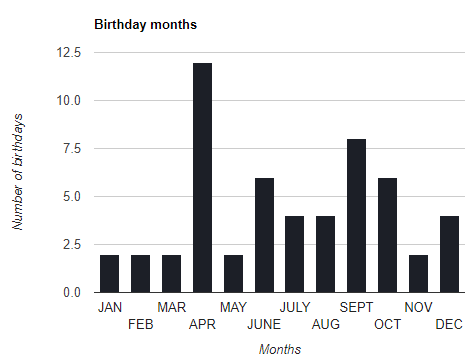
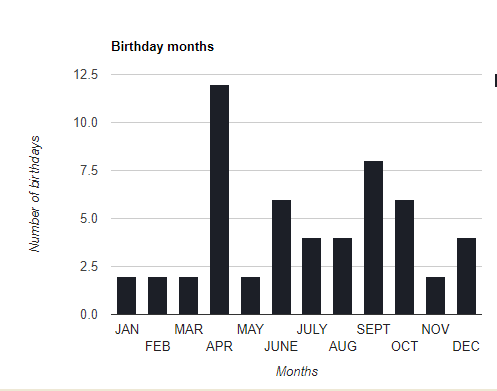
A histogram is made after collecting the birthdays of all the students in a class.
We have to find which months have the highest and the fewest birthdays.
We can do this by observing the histogram obtained.
- a) From the histogram we can see that –
The month April has the highest number of birthday as it has the longest bar in the histogram.

The months January, February, March, May, November all have the fewest birthdays as the length of those bars is the smallest.
Read and learn More Core Connections Course 1 Student 1st Edition Solutions
Therefore, April has the highest number of birthdays and January, February, March, May and November have the fewest birthdays.
Core Connections Course 1 Student 1st Edition Chapter 1 Exercise 1.1 solutions Page 3 Problem 2 Answer
Chapter 1 Exercise 1.1 Introduction and Representation solutions Core Connections Course 1 Page 3 Problem 3 Answer
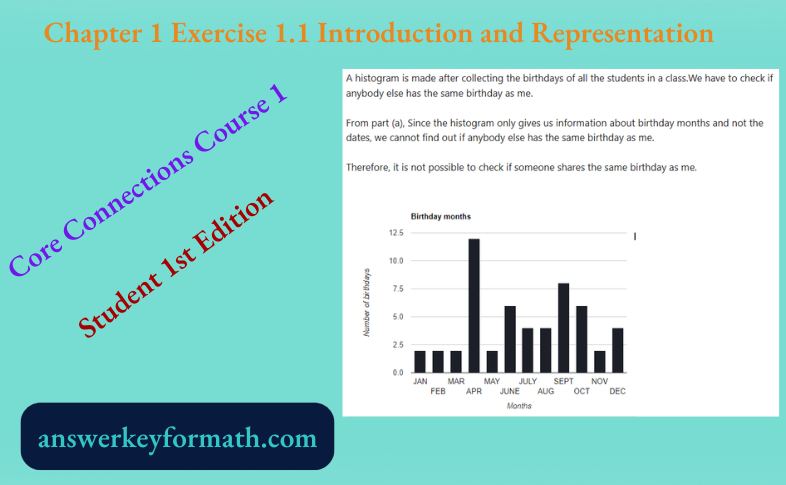
A histogram is made after collecting the birthdays of all the students in a class.
We have to discuss how to find the other students who were born in the same month as me.
We can do this by analyzing the histogram and observing the sticky notes.
From part a, If the length of the bar of a particular month is more than one unit, it means that there are at least 2 students who have their birthdays in that month.
Hence, to find the other students in your class who were born in the same month that you were we can check the length of the bar.
Another approach could be to remove one sticky note from that month and check the remaining sticky notes.
Therefore, it is possible to find other students who have the same birthday month as me.
Core Connections Course Chapter 1 Page 3 Problem 4 Answer
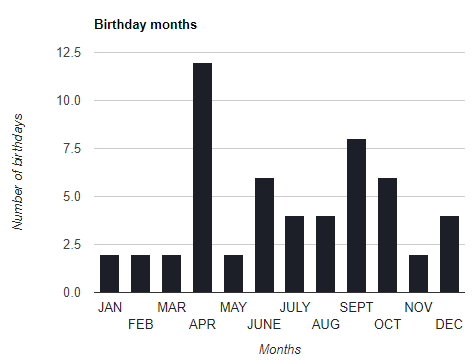
A histogram is made after collecting the birthdays of all the students in a class.
After finding all the students who share the same birthday month, we have to see if there are birthday twins.
We can do this with the help of the histogram.
A student will be my birthday twin if he/she has the same birthday date, month and year as me.
After finding all the students with the same birthday month as me using the histogram, we can ask each of them their birthday date and year to verify if they are a birthday twin.
Using the data, I have asked others who have their birthdays in February since my birthday month is February.
After speaking to them, I have found out that I dont have a birthday twin in my class.
Therefore, after verifying with each student who shares the same birthday month about their day date and year, we can verify if they are a birthday twin.
Core Connections Course 1 Chapter 1 Exercise 1.1 step-by-step solutions Page 6 Problem 5 Answer
During my freshman year of high school, I started a business designing and making custom prom dresses.
It started with just four or five girls, but by the time I was a senior, everyone wanted to wear one of my gowns.
I had two other girls helping me with the sewing, but I did the design work myself.
I’ve known for a long time that I wanted to go into fashion design, but I also know there’s a lot I still want to learn about the artistic and business sides of the field.
That’s why I really want to attend the Fashion Institute of Technology.
During my freshman year of high school, I started a business designing and making custom prom dresses.
It started with just four or five girls, but by the time I was a senior, everyone wanted to wear one of my gowns.
I had two other girls helping me with the sewing, but I did the design work myself.
I’ve known for a long time that I wanted to go into fashion design, but I also know there’s a lot I still want to learn about the artistic and business sides of the field.
That’s why I really want to attend the Fashion Institute of Technology.
Core Connections Course Chapter 1 Page 6 Problem 6 Answer
In the question, we are asked to describe our kindergarten experience.
An example of it could be –
My kindergarten experience was a time that was very exciting for me.
When my mom told me I was going to kindergarten, I was very excited.
I was excited to learn about numbers, shapes, math, words and anything else I could learn.
My first teacher was named Mrs. Chaney.
In my eyes she was one of the smartest people in the world, besides my mom of course.
She taught me everything I ever dreamed of learning in kindergarten and more! I was always successful in her class.
While everyone else could only count to ten; I learned how to count to twenty.
My teacher was always very fond of me, and that made want to learn even more so I could impress her. I also wanted to impress her because every time I did, I would be happily awarded with either a beautiful sticker, or a mouthwatering piece of candy.
For me, this was the beauty of kindergarten, and it couldn’t get any better.
My kindergarten experience was a time that was very exciting for me.
When my mom told me I was going to kindergarten, I was very excited.
I was excited to learn about numbers, shapes, math, words and anything else I could learn.
My first teacher was named Mrs. Chaney. In my eyes she was one of the smartest people in the world, besides my mom of course.
She taught me everything I ever dreamed of learning in kindergarten and more! I was always successful in her class.
While everyone else could only count to ten; I learned how to count to twenty.
My teacher was always very fond of me, and that made want to learn even more so I could impress her. I also wanted to impress her because every time I did, I would be happily awarded with either a beautiful sticker, or a mouthwatering piece of candy.
For me, this was the beauty of kindergarten, and it couldn’t get any better.
solutions for Core Connections Course 1 Chapter 1 Exercise 1.1 Introduction and Representation Page 6 Problem 7 Answer
Parent is asked to write about the strengths of their kids.
They can list some of the following –
Is honest and trustworthy caring, kind, and empatheticHelps others shows loyalty works hard Shares, takes turns, and can compromisePuts effort into making friends and keeping themIs a good listenerAccepts differences in others asks for help when needed
The described qualities are-
Is honest and trustworthy caring, kind, and empatheticHelps others shows loyalty works hardShares, takes turns, and can compromisePuts effort into making friends and keeping themIs a good listenerAccepts differences in others asks for help when needed
Core Connections Course Chapter 1 Page 6 Problem 8 Answer
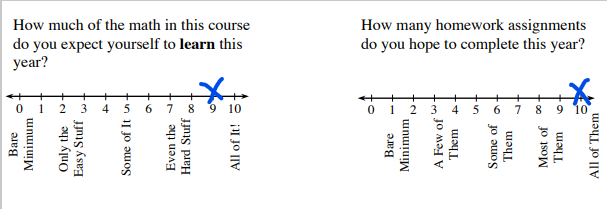
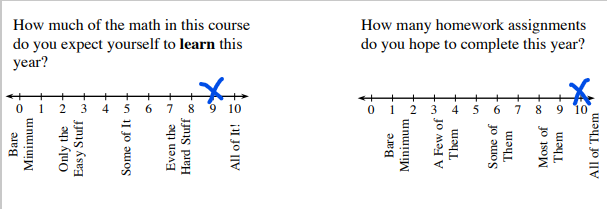
We are given a resource page from the teacher.
We have to fill out our learning goals in it and mark our progress in given number lines.
Some of the goals can be –
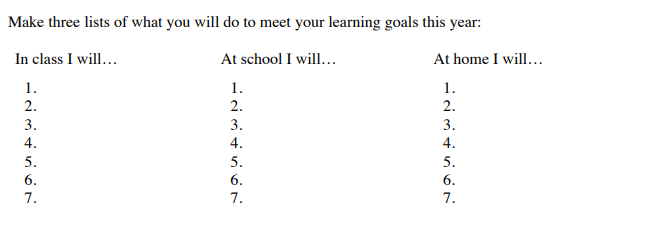
Maintaining neat not staying up to date with classes and homework.Waking up early to do revisionPlaying sports with friendsRespecting teachers
Core Connections Course Chapter 1 Page 7 Problem 9 Answer
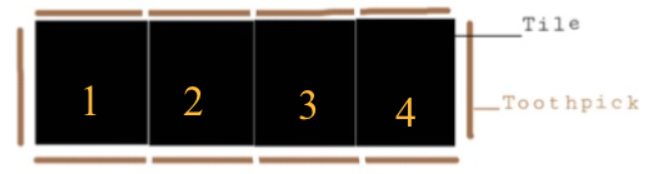
We have been given that Cruz, Sophia, and Savanna are using toothpicks and tiles to describe the attributes of the shapes below.
Cruz made a pattern and told the girls the number of tiles he used.
Then Sophia and Savanna each tried to be the first to see who could call out how many toothpicks, or units of length, were on the outside.
In this question, we were required to copy the tile pattern on paper and show where Savanna counted the 10 toothpicks.
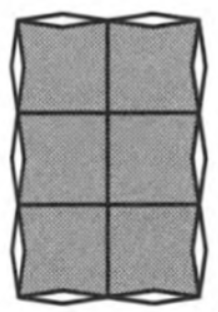
It can be observed in above the diagram that Savanna’s answer is correct.
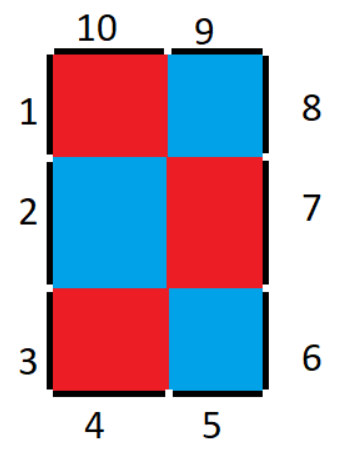
Given that tiles are square and have a length equal to the length of the toothpick.
Hence, the diagram shows that Savanna’s answer is correct.
Core Connections Course 1 Student 1st Edition Chapter 1 Exercise 1.1 guide Page 7 Problem 10 Answer
In this question, we are required to find that how would we describe this shape using toothpicks and tiles.
We are given that Cruz, Sophia, and Savanna are using toothpicks and tiles to describe the attributes of the shapes below.
Cruz made a pattern and told the girls the number of tiles he used.
Then Sophia and Savanna each tried to be the first to see who could call out how many toothpicks, or units of length, were on the outside.
Now the number of toothpicks required is twice the number of tiles plus 2 as each tile will have 2 toothpicks above and below it and after that two more are needed.
One on the left side of the left-most tile and another on the right of the rightmost tile.

Hence, the number of toothpicks required are twice the number of tile plus 2 (c) Yes, more than one answers are possible.
Core Connections Course Chapter 1 Page 8 Problem 11 Answer
We need to make few figures and write some random facts about them.
Draw some random figures and some facts about it and then pairing them.
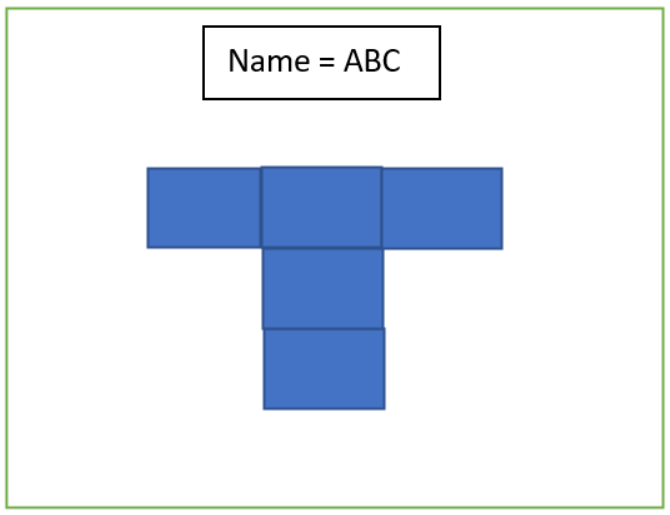
Random figures created by some students of class
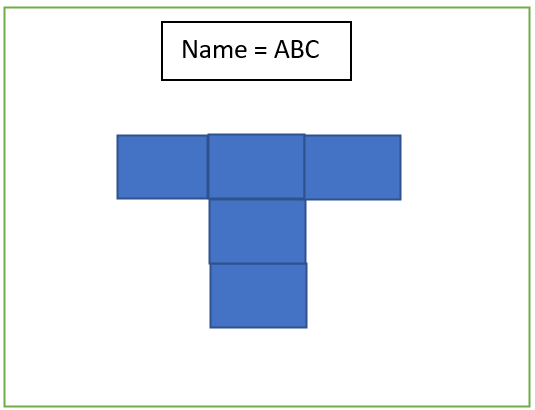
Figure one
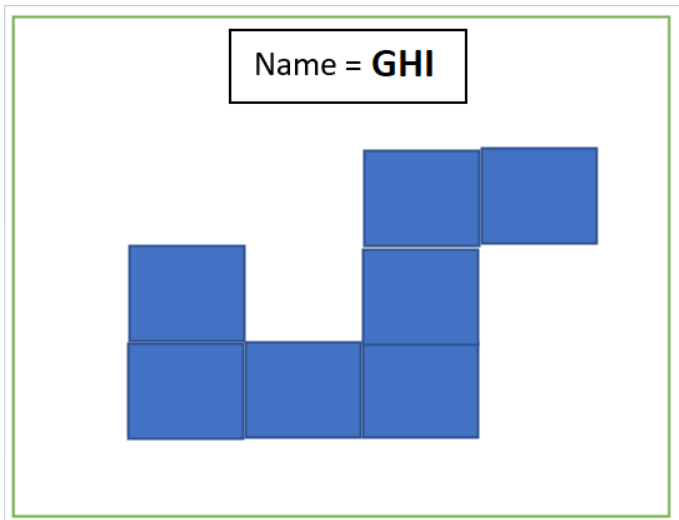
Figure
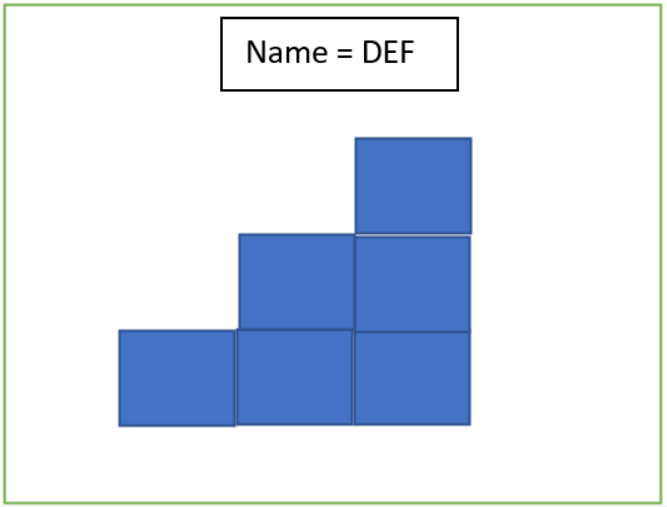
First three
Random facts about these given figures are as follows
Fact one
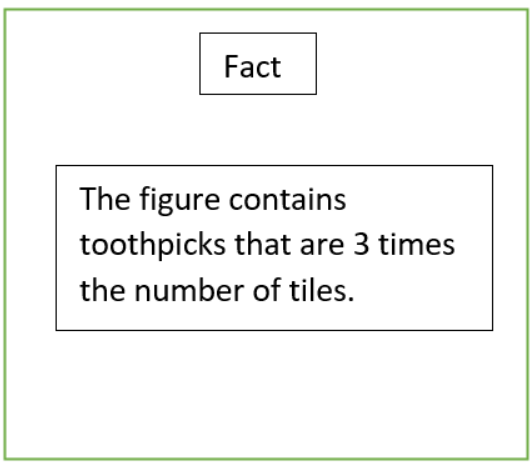
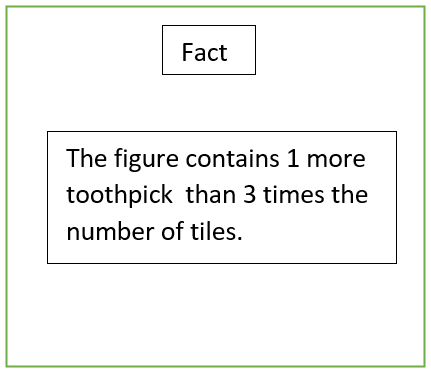
Fact two
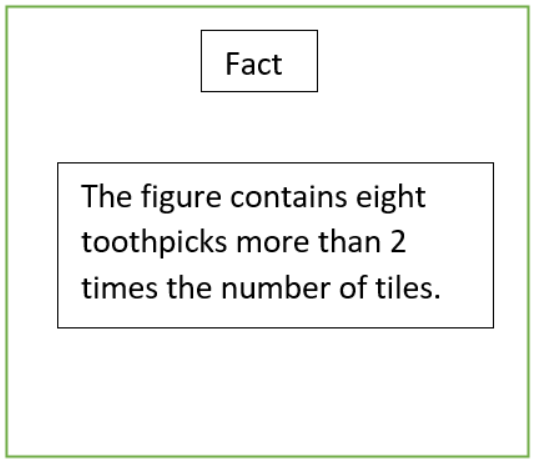
Fact three
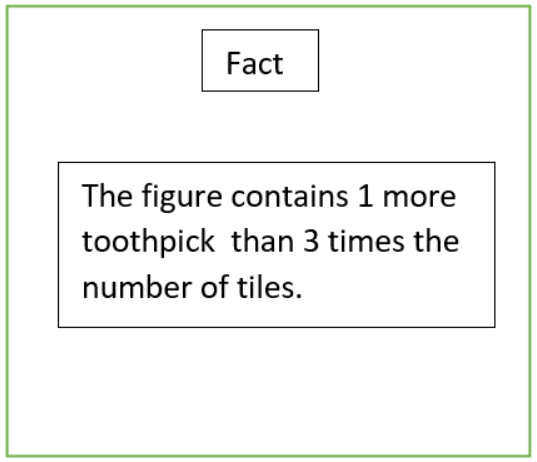
Solving Facts we get to know that (x=number of tiles)
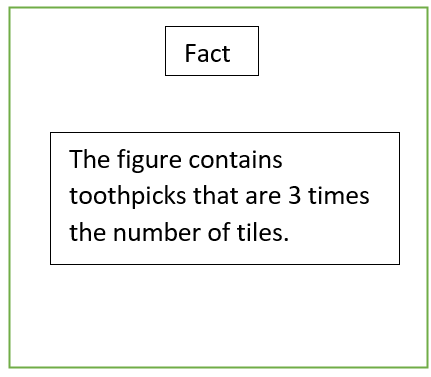
In Fact one number of toothpicks are=3x,
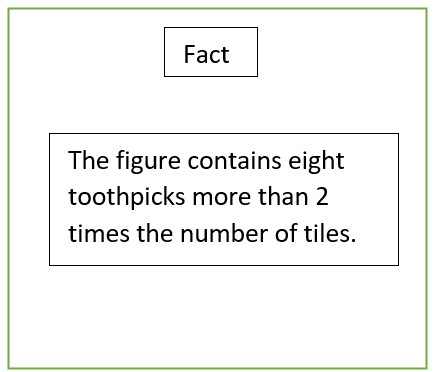
In Fact two number of toothpicks are=8+2x
In Fact three number of toothpicks are=3x+1
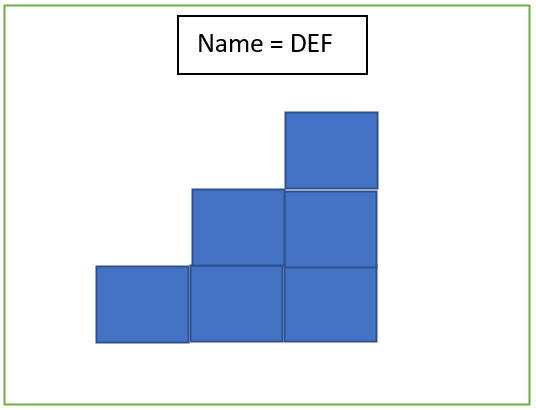
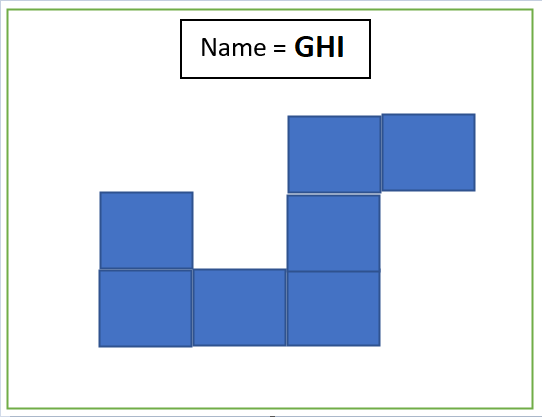
And In figure one number of toothpicks =16,x=5
In figure one number of toothpicks =18,x=6
In figure one number of toothpicks=22 ,x=7
Therefore , Figure one matches with fact two,
Figure two matches with fact three,
Figure three matches with fact one.
Pairs are
a)
Core Connections Course Chapter 1 Page 9 Problem 12 Answer
We are given that does change the number of toothpicks always changes the number of tiles. Does changing the number of tiles always change the number of toothpicks?
Think about these two questions as you look at the following tile shape.
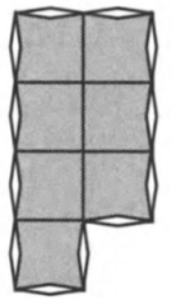
In this question, we are required to write a fact statement that includes information about the number of tiles and toothpicks that would describe the tile shape at right.
Therefore, the shape has 7 tiles and 12 toothpicks.
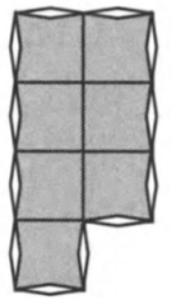
Hence, the shape has 7 tiles and 12 toothpicks.
Chapter 1 Exercise 1.1 Introduction and Representation explained Core Connections Course 1 Page 9 Problem 13 Answer
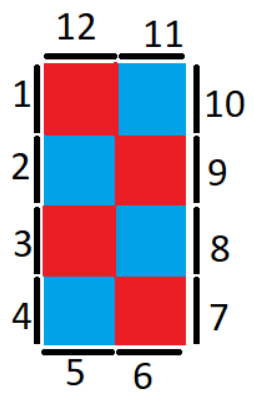
In this question, we are required to describe how can we add a tile to the shape in part (a) but not change the number of toothpicks.
We are given that does change the number of toothpicks always changes the number of tiles.
Does changing the number of tiles always change the number of toothpicks?
Think about these two questions as you look at the following tile shape.
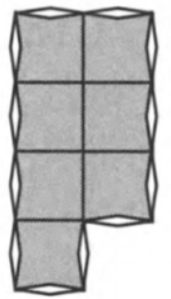
Yes, it is possible to add a tile and not change the number of toothpicks as shown below:
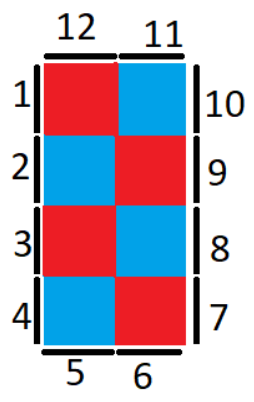
Hence, it is possible to add a tile and not change the number of toothpicks as shown.
Core Connections Course Chapter 1 Page 9 Problem 14 Answer
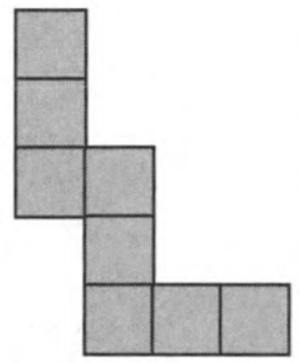
We are given a tile pattern.In this question, we are required to write a fact statement describing the perimeter and area of the tile pattern.
Now perimeter is the length of boundary around the shape whereas area is the region covered by the shape.
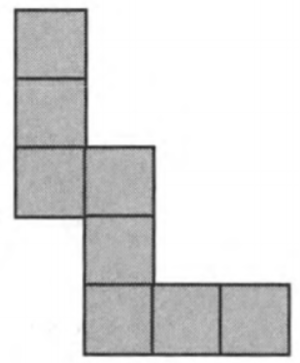
Hence, a fact statement describing the perimeter and area of the tile pattern is that perimeter is the length of boundary around the shape whereas area is the region covered by the shape.
how to solve Core Connections Course 1 Chapter 1 Exercise 1.1 problems Page 9 Problem 15 Answer
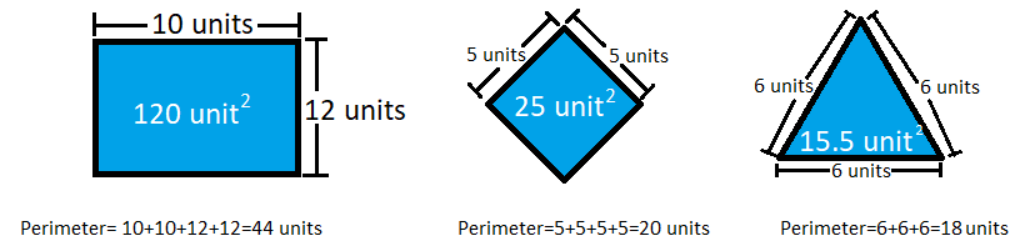
In this question, we were required to build and draw a different shape that could also be described by the fact, for fact statement in pat (a).
Now the different shapes with perimeter and area are,
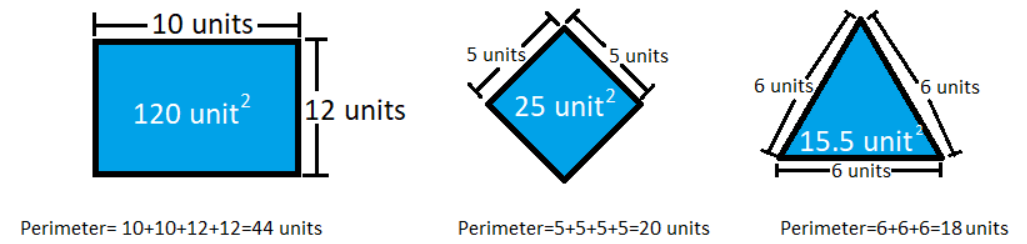
Hence, the different shapes with perimeter and area are,
Core Connections Course Chapter 1 Page 10 Problem 16 Answer
We are given that Janelle wants to challenge you to a “Toothpick and Tiles” game.
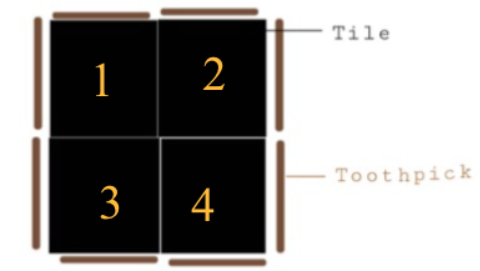
We are required to create a tile pattern where the number of toothpicks is exactly double the number of tiles.
Now the tile pattern is,
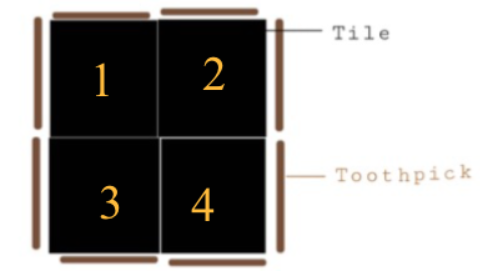
Now the number of tiles is 4.
So the number of toothpicks is twice the number of tiles.
Number of toothpicks=2×number of tiles
=2×4
=8
Therefore, there are 8 toothpicks.
Hence, when Janelle wants to challenge you to a “Toothpick and Tiles” game, then tile pattern where the number of toothpicks is exactly double the number of tiles is,
worked examples for Core Connections Course 1 Chapter 1 Exercise 1.1 Introduction and Representation Page 10 Problem 17 Answer
We are given that Janelle wants to challenge you to a “Toothpick and Tiles” game.
We are required to create a tile pattern where the number of toothpicks is more than double the number of tiles.
Now the tile pattern is,
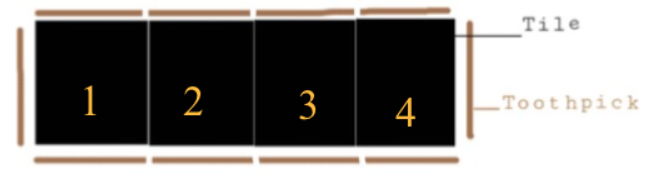
Now the number of tiles is 4.
Required number of toothpicks = More than double the number of tiles.
> 8
So the number of toothpicks required for the pattern created is 10.
Hence, when Janelle wants to challenge you to a “Toothpick and Tiles” game then, a tile pattern where the number of toothpicks is more than double the number of tiles is,
Core Connections Course Chapter 1 Page 11 Problem 18 Answer
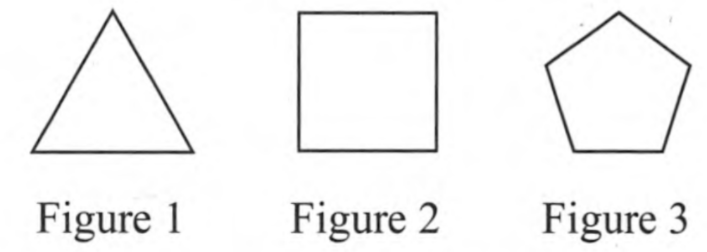
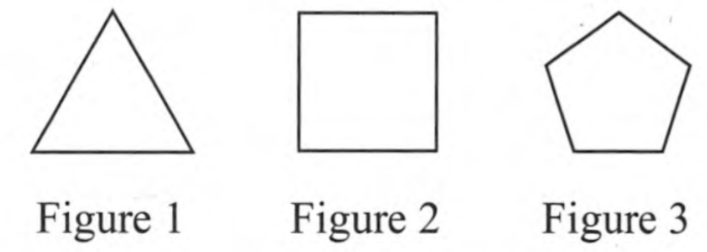
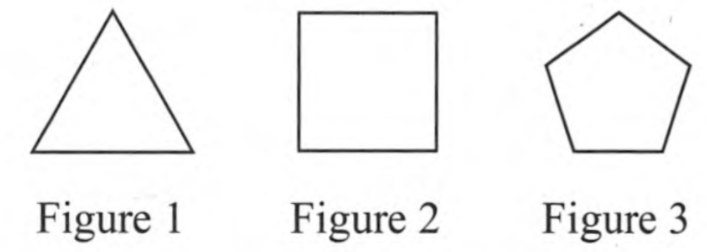
We are given 3 figures of the pattern.
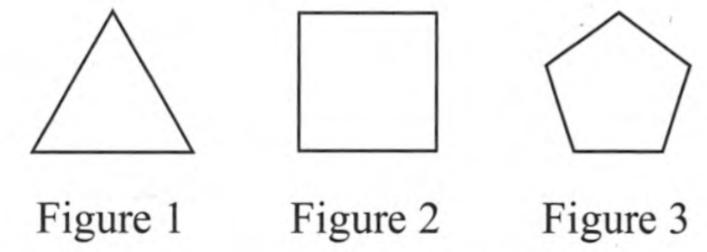
We are required to draw figure 4 of this pattern.
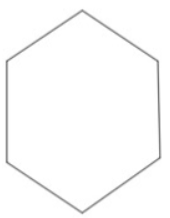
Now, figure 1 has 3 edges, figure 2 has 4 edges and figure 3 has 5 edges.
So following this pattern, figure 4 will have 6 edges.Since the figure with 6 edges is,
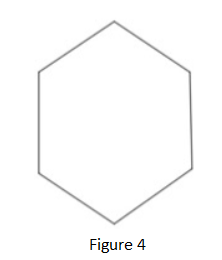
Hence, figure 4 in the pattern will have 6 edges.
Core Connections Course Chapter 1 Page 11 Problem 19 Answer
We are given 3 figures of the pattern.
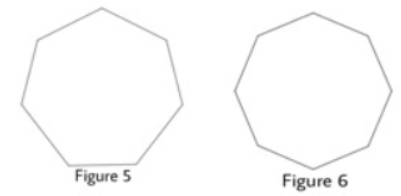
We are required to find figure 5 and figure 6 of this pattern.
Now, figure 1 has 3 edges, figure 2 has 4 edges and figure 3 has 5 edges.
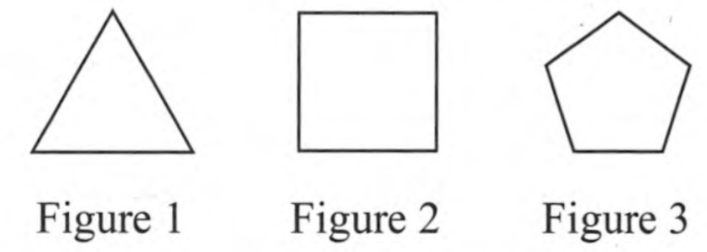
So the next figure has 1 edge more than the previous figure.
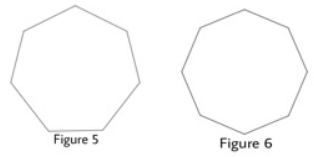
Then figure 5 will have 7 edges and figure 6 will have 8 edges.
Therefore, figure 5 and 6 is,
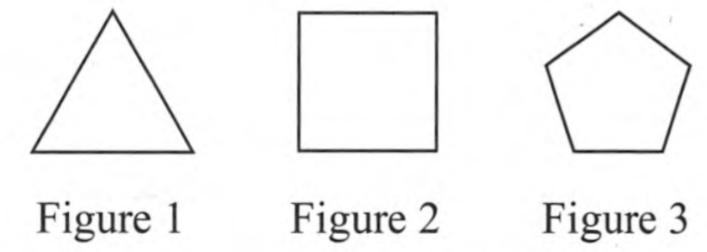
Hence, Figures 5 and 6 in the pattern will have 7 and 8 edges.
Core Connections Course Chapter 1 Page 11 Problem 20 Answer
We are given three figures of the pattern.
We are required to use words to describe the pattern is changing.
Now when we count the number of sides or edges on each figure of the pattern we can see that the number of edges is increasing by 1 in each figure than the figure before it.
We are given three figures of the pattern.
We are required to use words to describe the pattern is changing.
Now when we count the number of sides or edges on each figure of the pattern we can see that the number of edges is increasing by 1 in each figure than the figure before it.