Glencoe Math Course 3 Volume 2 Student 1st Edition Chapter 5 Triangles And The Pythagorean Theorem
Glencoe Math Course 3 Volume 2 Chapter 5 Triangles And Pythagorean Theorem Exercise Solutions Page 365 Exercise 1, Problem1
We have been given some algebraic concepts. We have been told to apply the algebraic concepts to geometry. This can be done by focusing on 2-D coordinate geometry and their equations.
One way that algebra and geometry can be related is through the use of equations in graphs.
We can plot a set of points(x,y) according to an equation (for example, the line graph on the left!) to form a graph.
That’s one way that algebra is related to geometry.
A set of points can satisfy any equation which can produce any type of graph, not just straight lines.
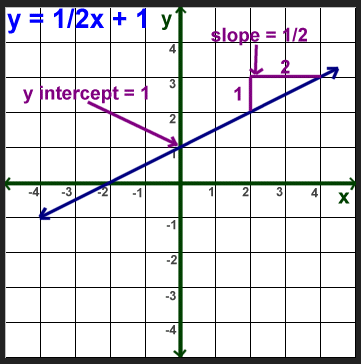
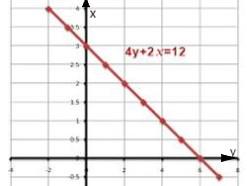
Finally, we can see that an equation, which is an algebraic notion, maybe graphed, transforming it into a geometric concept. We can see that the variables in the equation (both algebraic ideas) may be utilised to relate to geometric concepts of the line (slope and y-intercept).
We learned that Algebra is a branch of mathematics in which formulae and equations use variables in the form of letters and symbols instead of quantities or numbers. Geometry is a branch of mathematics that analyses points, lines, multi-dimensional objects and shapes, as well as surfaces and solids.
Read and Learn More Glencoe Math Course 2 Volume 1 Common Core Student Edition Solutions
Glencoe Math Course 3 Volume 2 Student 1st Edition Chapter 5 Page 368 Exercise 2, Problem2
We have been given an equation.We need to find the value of b from the equation.This can be found by keeping only the unknown variable on the left-hand side of the ‘equal to’ symbol.
Given equation is,
49+b+45=180
⇒ b=180−49−45
⇒ b=180−94
⇒ b=86
Finally, we can determine that the value of b is 86.
Chapter 5 Triangles And Pythagorean Theorem Answers Glencoe Math Course 3 Volume 2 Page 368 Exercise 3, Problem3
We have been given an equation.We need to find the value of t from the equation.This can be found by keeping only the unknown variable on the left-hand side of the ‘equal to’ symbol.
Given equation is,
t+98+55=180
⇒ t=180−98−55
⇒ t=180−153
⇒ t=27
Finally, we can determine that the value of t is 27.
Glencoe Math Course 3 Volume 2 Student 1st Edition Chapter 5 Page 368 Exercise 4, Problem4
We have been given an equation.We need to find the value of k from the equation.This can be found by keeping only the unknown variable on the left-hand side of the ‘equal to’ symbol.
Given equation is,
15+67+k=180
⇒ k=180−15−67
⇒ k=180−82
⇒ k=98
Finally, we can determine that the value of k is 98.
Glencoe Math Course 3 Volume 2 Student 1st Edition Chapter 5 Page 368 Exercise 5, Problem5
We have been given a point and the coordinate plane.We need to plot the given point on the plane.This can be done by locating the x and y coordinates and the move that distance horizontally and vertically from both the axes to find the required point.
The required point A is as follows
The x-axis denotes the value of the x coordinate.
The y-axis denotes the value of the y coordinate.
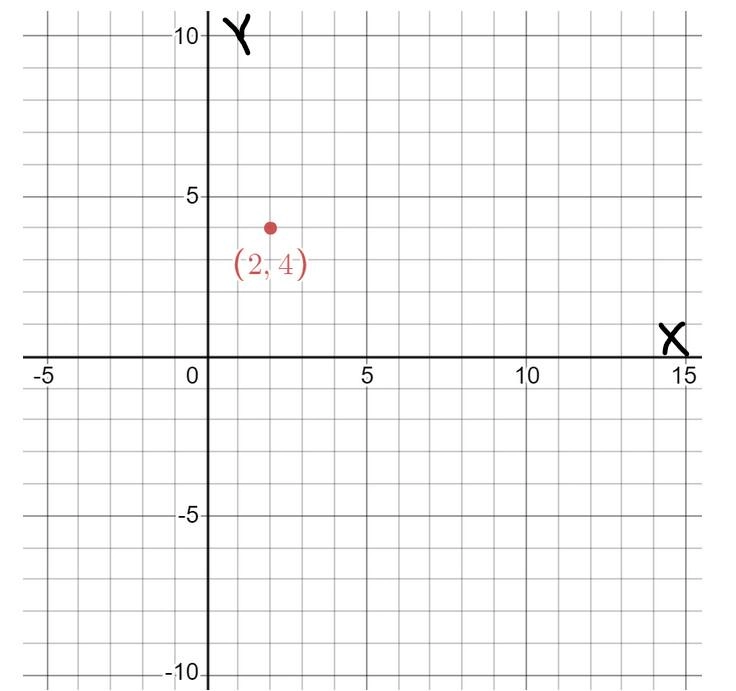
The red colored point on the coordinate plane denotes the point A.
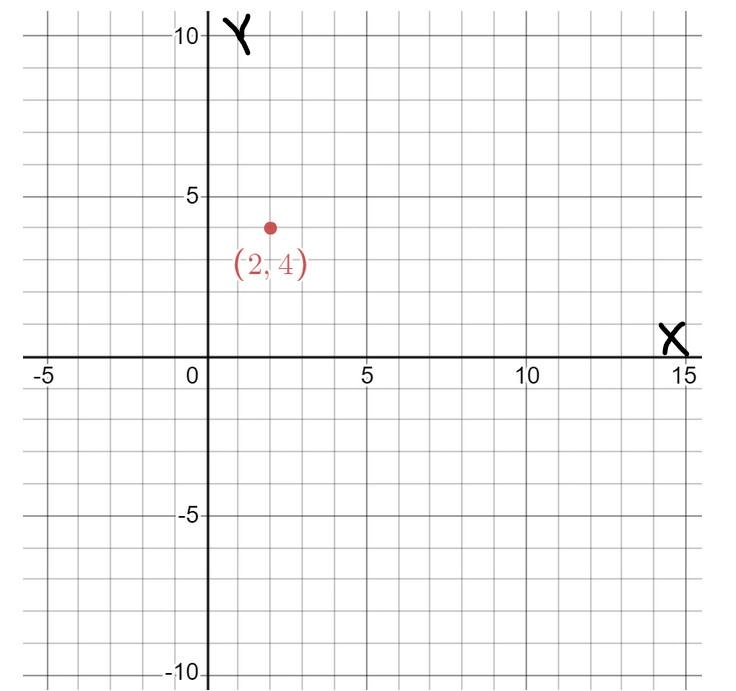
The given point has been plotted on the coordinate plane and is as follows,
Glencoe Math Course 3 Volume 2 Student 1st Edition Chapter 5 Page 365 Exercise 6, Problem6
We have been given a point and the coordinate plane. We need to plot the given point on the plane. This can be done by locating the x and y coordinates and the move that distance horizontally and vertically from both the axes to find the required point.
The required point B is as follows:
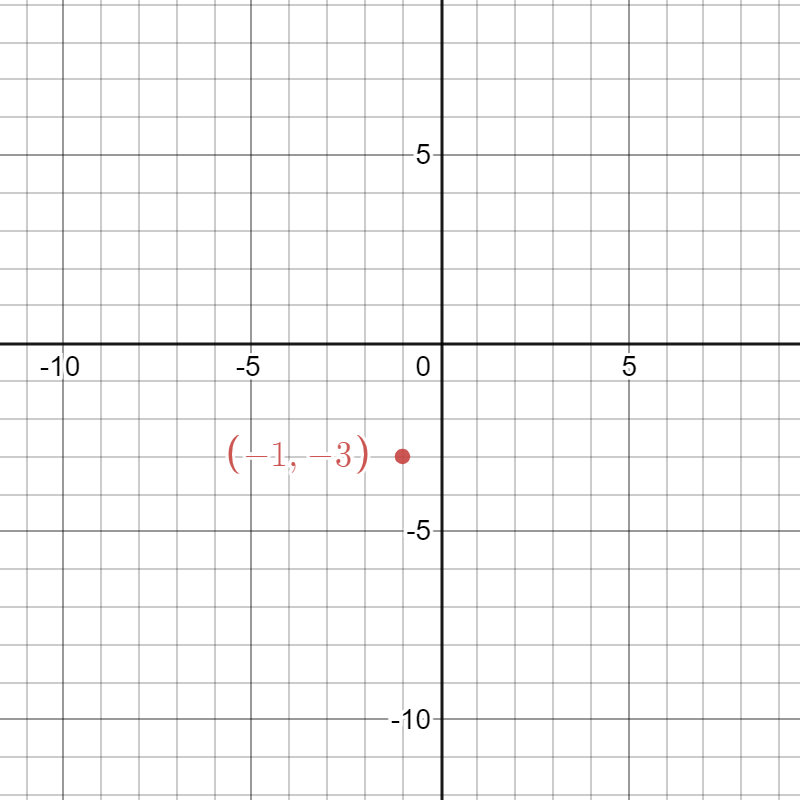
The x-axis denotes the value of the x-coordinate.
The y=axis denotes the value of the y coordinate.
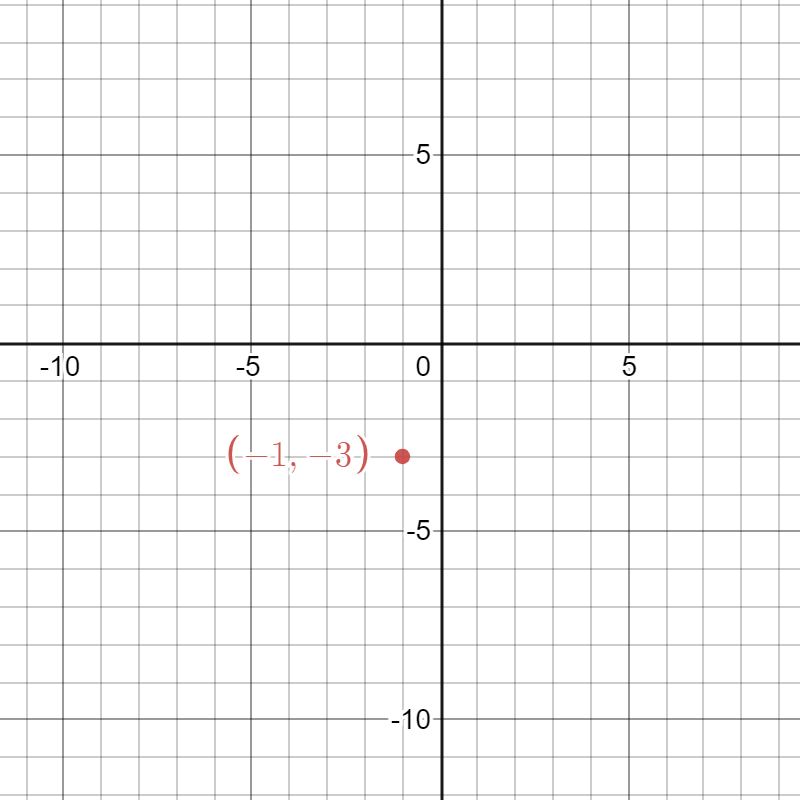
The red colored point on the coordinate plane denotes the point B.
The given point has been plotted on the coordinate plane and is as follows,
Glencoe Math Course 3 Volume 2 Student 1st Edition Chapter 5 Page 365 Exercise 7, Problem7
We have been given a point and the coordinate plane. We need to plot the given point on the plane. This can be done by locating the x and y coordinates and the move that distance horizontally and vertically from both axes to find the required point.
The required point C is as follows:
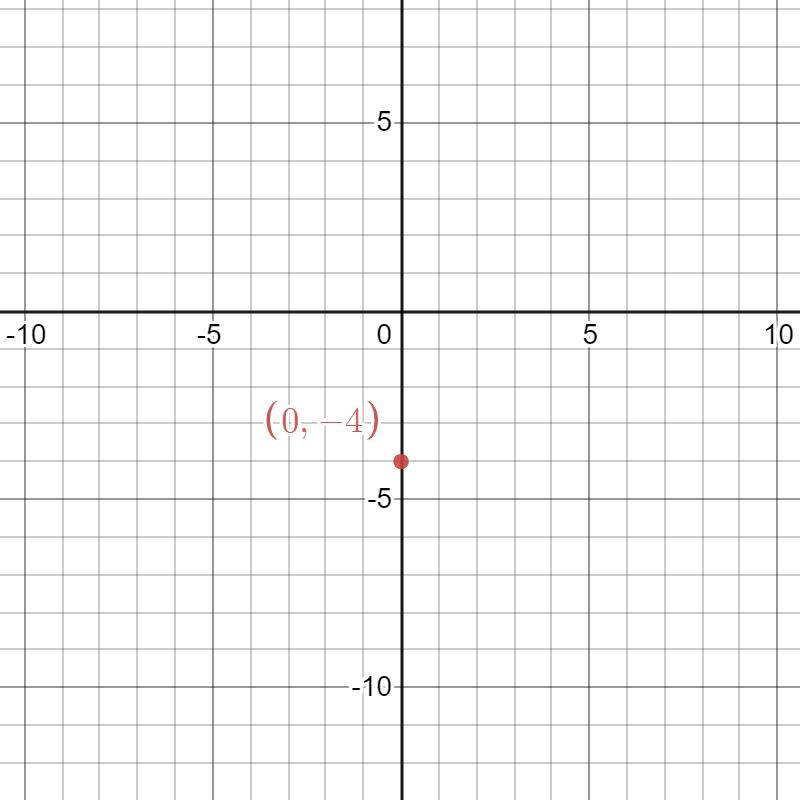
The x-axis denotes the value of the x-coordinate.
The y=axis denotes the value of the y coordinate.
The red colored point on the coordinate plane denotes point C.
The given point has been plotted on the coordinate plane and is as follows:
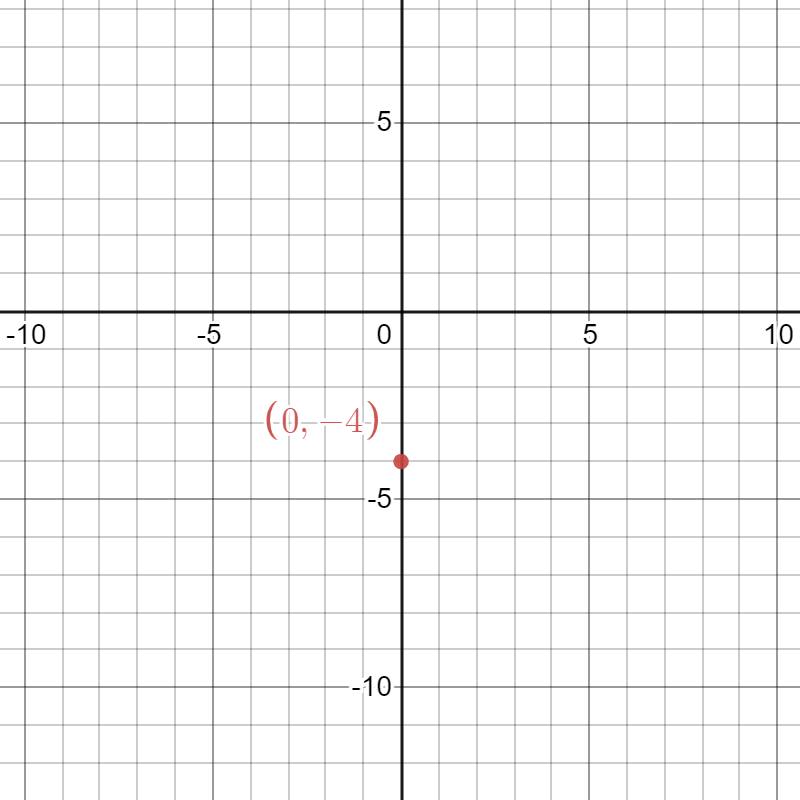
Glencoe Math Course 3 Volume 2 Student 1st Edition Chapter 5 Page 365 Exercise 8, Problem8
We have been given a point and the coordinate plane. We need to plot the given point on the plane. This can be done by locating the x and y coordinates and the move that distance horizontally and vertically from both axes to find the required point.
The required point D is as follows:
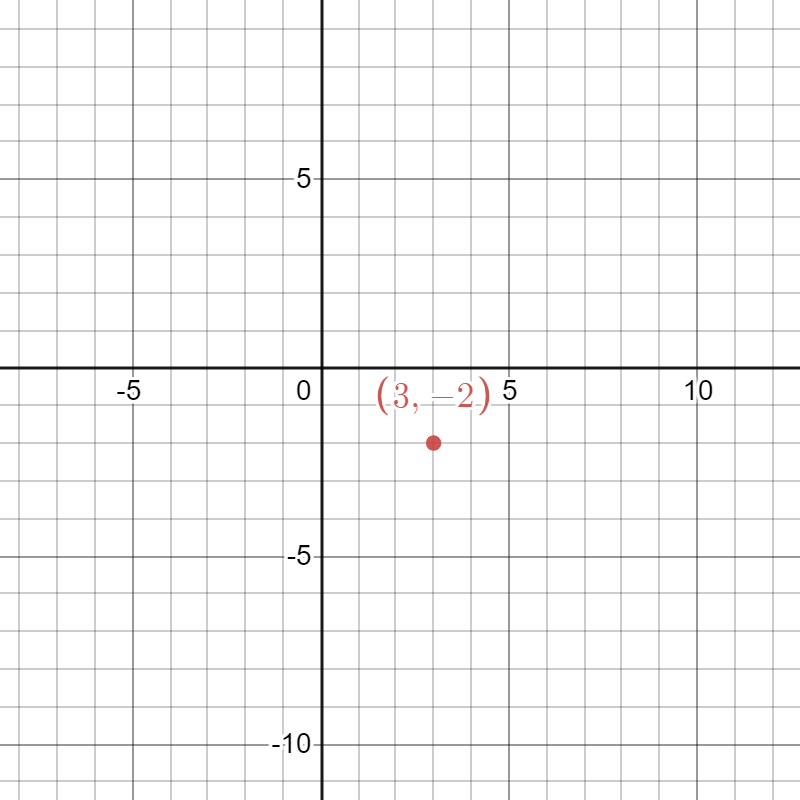
The x-axis denotes the value of the x-coordinate .
The y=axis denotes the value of the y coordinate.
The red colored point on the coordinate plane denotes the point D.
The given point has been plotted on the coordinate plane and is as follows:
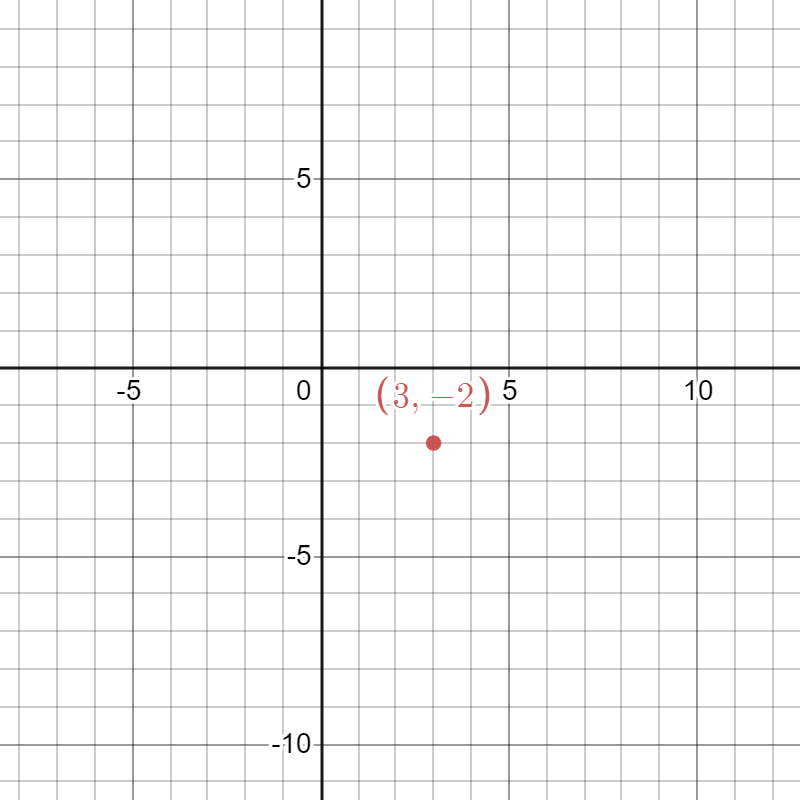
Glencoe Math Course 3 Volume 2 Student 1st Edition Chapter 5 Page 365 Exercise 9, Problem9
We have been given a point and the coordinate plane. We need to plot the given point on the plane. This can be done by locating the x and y coordinates and the move that distance horizontally and vertically from both the axes to find the required point.
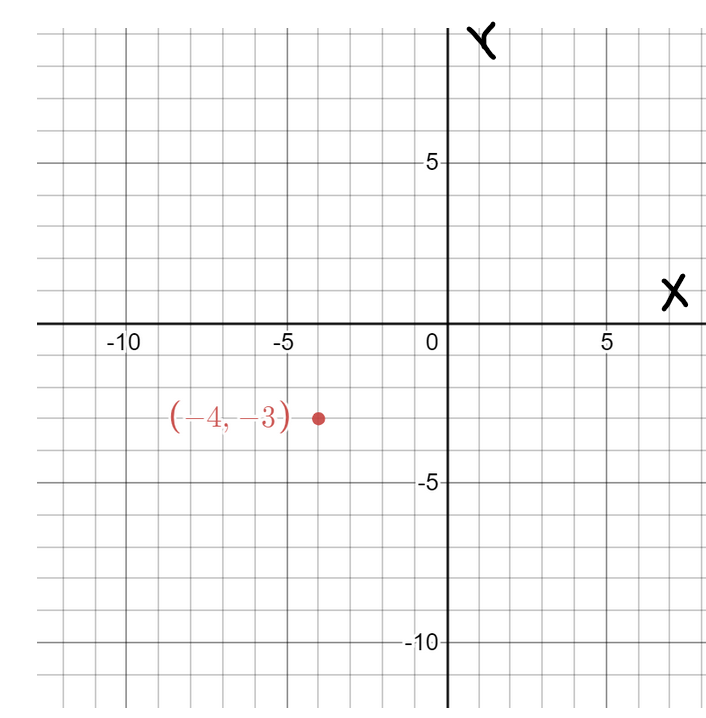
The required point E is as follows:
The x-axis denotes the value of the x-coordinate.
The y-axis denotes the value of the y-coordinate.
The red colored point on the coordinate plane denotes the point E.
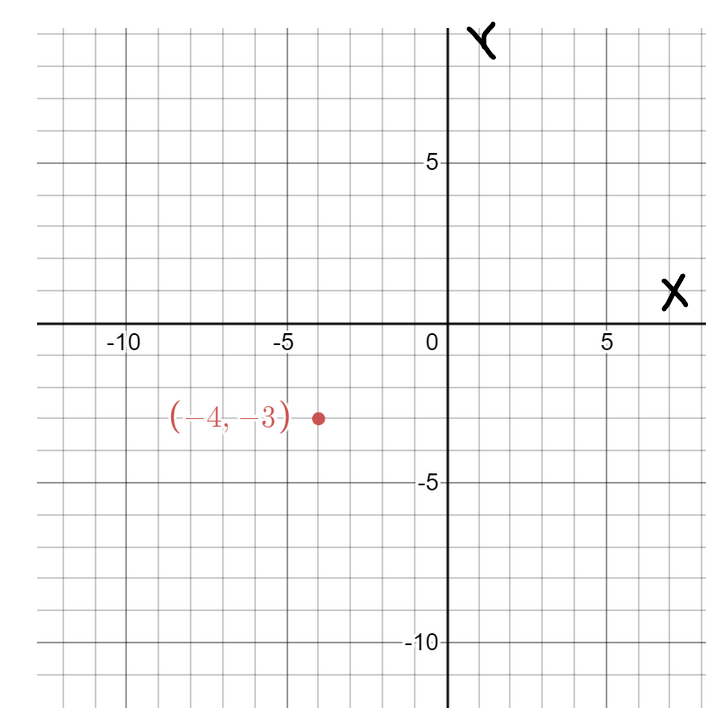
The given point has been plotted on the coordinate plane and is as follows,
Glencoe Math Course 3 Volume 2 Student 1st Edition Chapter 5 Page 365 Exercise 10, Problem10
We have been given a point and the coordinate plane. We need to plot the given point on the plane. This can be done by locating the x and y coordinates and the move that distance horizontally and vertically from both axes to find the required point.
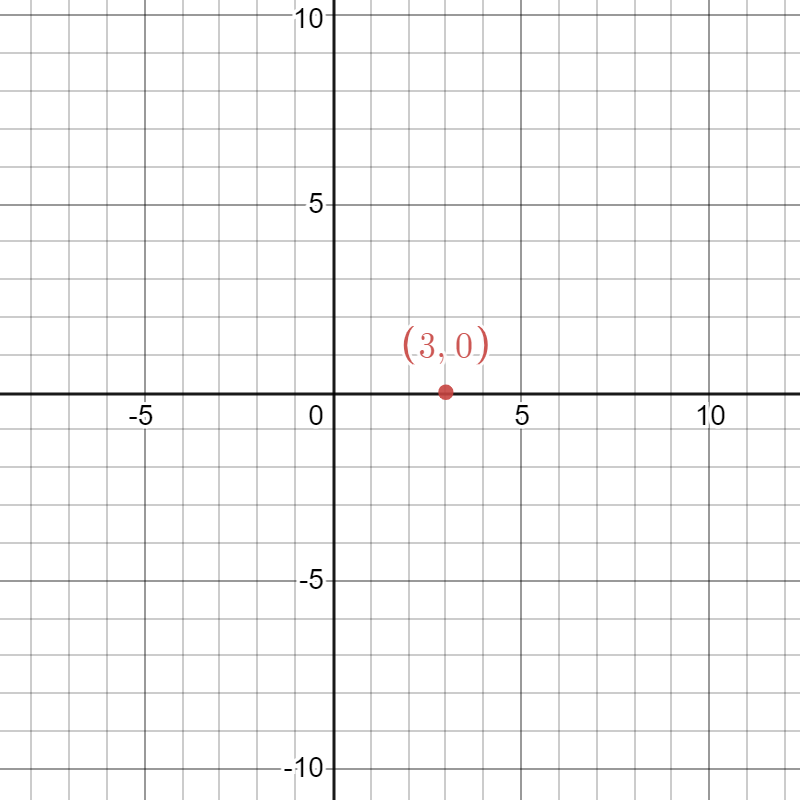
The required point F is as follows:
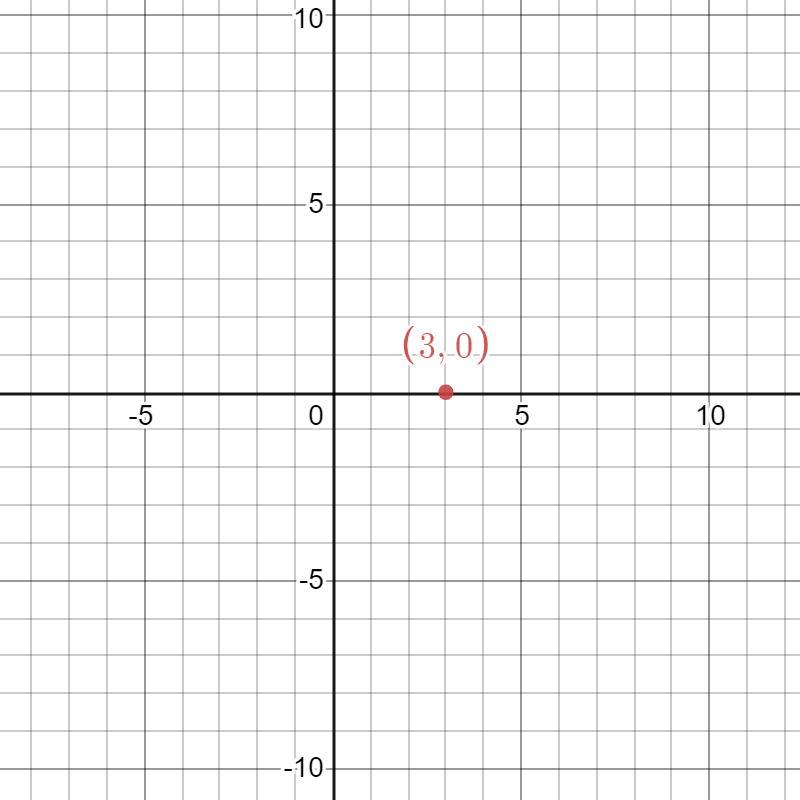
The x-axis denotes the value of the x-coordinate.
The y=axis denotes the value of the y coordinate.
The red colored point on the coordinate plane denotes point F.
The given point has been plotted on the coordinate plane and is as follows,
Glencoe Math Course 3 Volume 2 Student 1st Edition Chapter 5 Page 365 Exercise 11, Problem11
It is given that a third Iine intersects two parallel lines. We need to find the angle relationships formed. This can be found by considering a transversal which is a line that intersects two or more other (often parallel ) lines.
A transversal is any line that intersects two or more lines in the same plane but at distinct points.
The transversal is said to cut the two lines that it crosses.
If we draw two parallel lines and then draw a line transversal through them, we will get eight different angles. The eight angles will together form four pairs of corresponding angles.
One of the pairs in the diagram above is formed by angles F and B. If the two lines are parallel, the corresponding angles are congruent. Corresponding pairs are all angles that have the same location in relation to the parallel and transversal lines.
Interior angles are those that are in the area between the parallel lines, such as angles H and C above, whereas Exterior angles are those that are on the outside of the two parallel lines, such as D and G.
Alternate angles are those on the opposite sides of the transversal, such as H and B.
Adjacent angles are those that have the same vertex and a common ray, such as angles G and F or C and B in the diagram above.
We get two pairs of supplementary adjacent angles (G+F and H+E) in this example because the adjacent angles are created by two lines intersecting. Vertical angles are two angles that are opposite each other, such as D and B in the diagram above. Angles in the vertical plane are always congruent.
The angle relationships that are formed when a third Ind Iine intersects two parallel lines have been stated.
Glencoe Math Course 3 Volume 2 Student 1st Edition Chapter 5 Page 365 Exercise 12, Problem12
Given
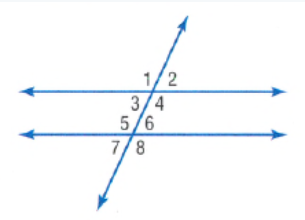
When two parallel lines are intersected by a third line then the resultant angles are in such a way that there are four angles that are equal to each other and the rest four are equal to each other. The two different measures are shown in the red and green colors, in the figure attached below.
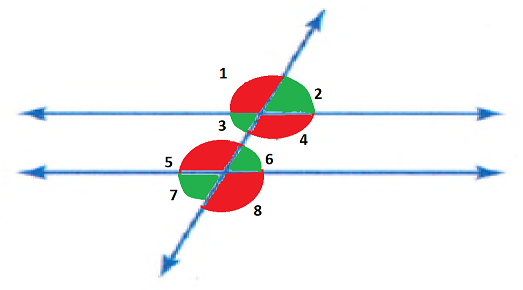
When all the eight angles are being measured with protractor we have found that we have four equal angles of measure equal to 60∘
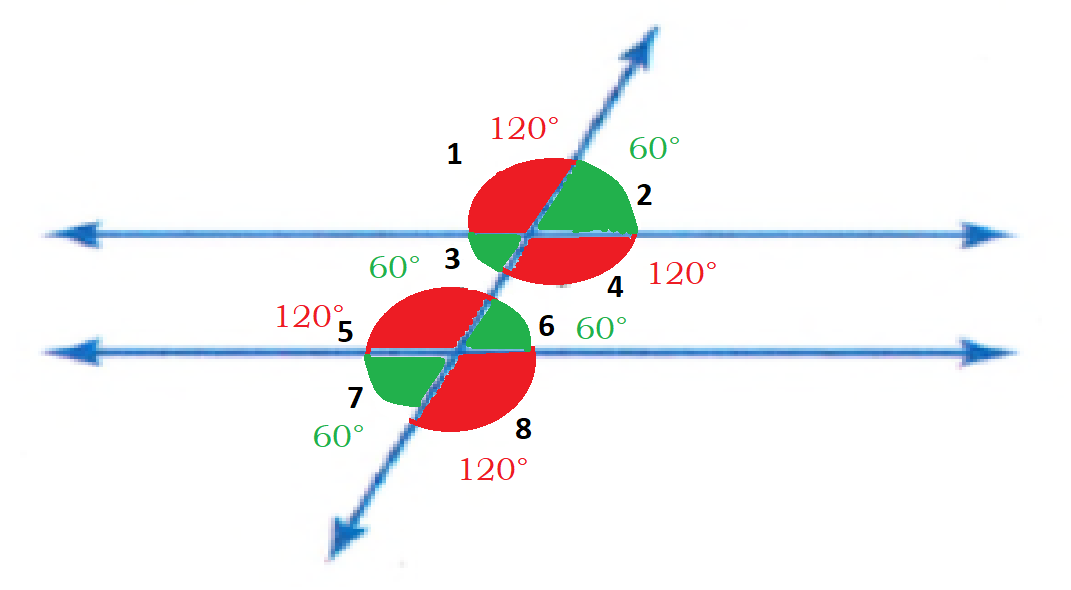
which were marked in green color. The angles which were marked in red color are also of the same measure, equal to120∘and the figure will be as Measuring each of numbered angle and recording it in the table we get the table as
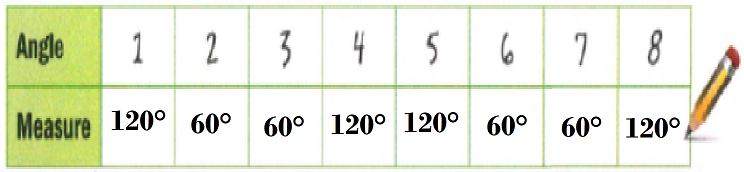
Finally, it has been stated that when two parallel lines are intersected by a third line then the resultant angles are in such a way that there are four angles that are equal to each other and the rest four are equal to each other. The equality of these angles can be explained with the help of opposite angle pairs, corresponding angle pairs, and alternate angle pairs.
Glencoe Math Course 3 Volume 2 Student 1st Edition Chapter 5 Page 365 Exercise 13, Problem13
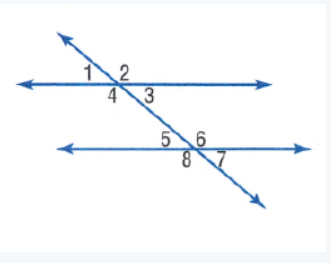
It is given that the measure of angle∠1in the figure at the right is 40°.
We need to determine the measure of each given angle without using a protractor, and then check the answers by measuring with a protractor. This can be found by recalling the special angle relationships that parallel lines possess, for example, congruent angles, corresponding angles, adjacent angles, vertical angles, etc., and find the angle measurements of all the required angles from these relationships.
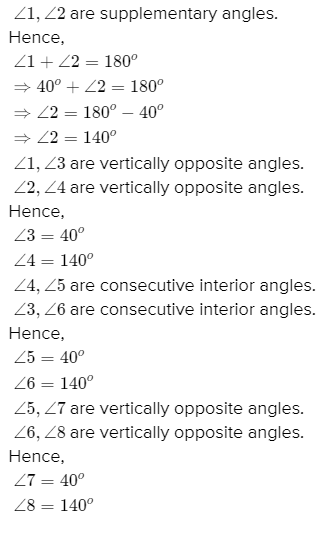
The measure of each given angle has been determined without using a protractor, and then the answers have been checked by measuring with a protractor.
Glencoe Math Course 3 Volume 2 Student 1st Edition Chapter 5 Page 365 Exercise 14, Problem14
Given
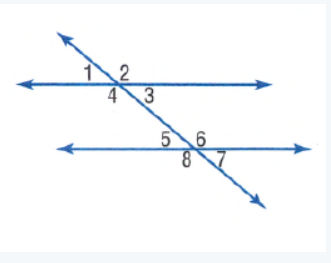
From the given figure we have to calculate the value of∠3.
And here given the value of∠1 that is 40∘.
First, we have to find the relation between∠1 and ∠3.
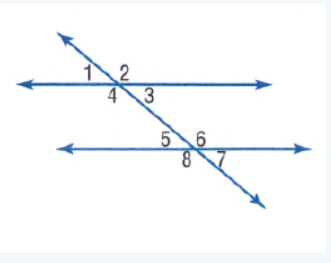
As we know that vertical angles are a pair of opposite angles which is formed by intersecting lines.
And here also∠1 and ∠3 are a pair of opposite angles which is formed by intersecting lines.
So they are vertical angles and the angle of vertical angles are same
Therefore the value of∠3is also40∘as it is the vertical angle of∠1.
Finally, we can determine that the angle value of∠3 is 40∘.
Glencoe Math Course 3 Volume 2 Student 1st Edition Chapter 5 Page 365 Exercise 15, Problem15
Given
From the given figure we have to calculate the value of∠4
And here given the value of∠1is40∘
First, we have to find the relation between∠1 and ∠4.
Given that,
Here we can say from the given figure∠1 and ∠4 are supplementary angles and therefore their sum should be equal to 180∘.
So∠1+∠4=180∘.
Now given that∠1=40∘
so we can solve for ∠4 from the above equation, as shown below
∠1+∠4=180∘
or,40∘+∠4=180∘
or,∠4=180∘
−40∘
or,∠4=140∘
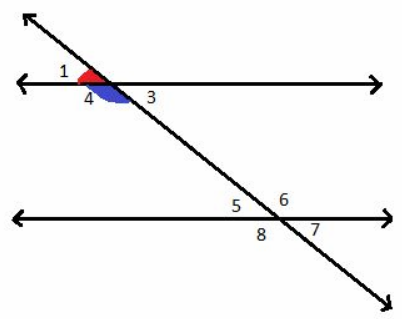
Finally, we can determine that the angle value of ∠4 is 140∘.
Glencoe Math Course 3 Volume 2 Student 1st Edition Chapter 5 Page 370 Exercise 16, Problem16
Given that
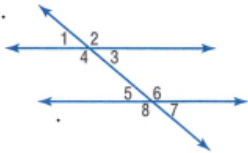
From the given figure we have to calculate the value of ∠5.
And here given the value of ∠1 is 40∘.
First, we have to find the relation between ∠1 and ∠5
Given that
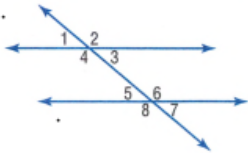
Here,∠1 and ∠5 are the pair of corresponding angles, therefore these should be equal.
So, ∠1 = ∠5
We are given ∠1 = 40∘ therefore using the above equation, we have ∠5 = 40∘.
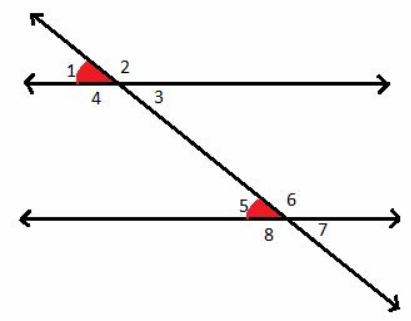
Finally, we can determine that the angle value of ∠5 is 40∘.
Glencoe Math Course 3 Volume 2 Student 1st Edition Chapter 5 Page 370 Exercise 17, Problem17
Given that
From the given figure we have to calculate the value of ∠6.
And here given the value of ∠1 = ∠5 is 40∘.
First, we have to find the relation between ∠5 and ∠6.
Given that
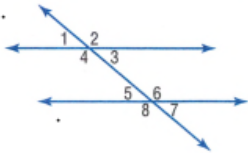
Here we can say from the given figure∠5and∠6are supplementary angles and therefore their sum should be equal to 180∘.
So ∠5 + ∠6 = 180∘
Now given that ∠1 = ∠5 is 40∘
so we can solve for∠6from the above equation, as shown below∠5+∠6=180∘
Or,40∘
+∠6=180∘
Or,∠6=180∘
−40∘
Or,∠6=140∘
Finally, we can determine that the angle value of∠6 is 140∘.
Glencoe Math Course 3 Volume 2 Student 1st Edition Chapter 5 Page 370 Exercise 18, Problem18
Given that
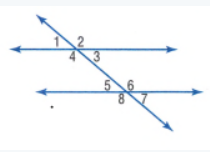
From the given figure we have to calculate the value of∠7
And here given the value of∠1=∠5that is40∘
First, we have to find the relation between∠5 and ∠7.
Given that
As we know that vertical angles are a pair of opposite angles which is formed by intersecting lines.
And here also∠5and∠7are a pair of opposite angles which is formed by intersecting lines So they are vertical angles and the angle of vertical angles are same
Therefore the value of∠7is also40∘as it is the vertical angle of∠5.
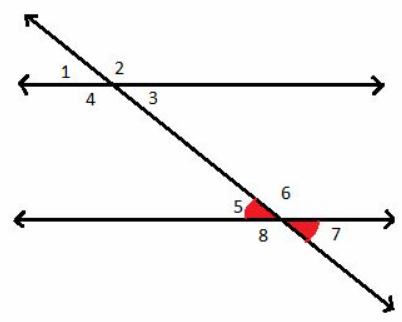
Finally, we can determine that the angle value of∠7 is40∘.
Glencoe Math Course 3 Volume 2 Student 1st Edition Chapter 5 Page 370 Exercise 19, Problem19
Given that
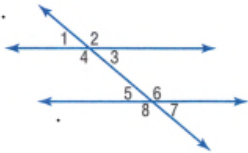
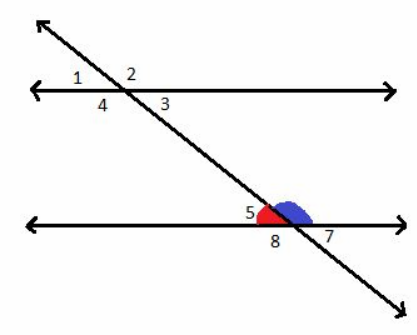
From the given figure we have to calculate the value of∠8
And here given the value of∠1=∠5 is 40∘
First, we have to find the relation between∠5 and ∠8.
Given that
Here we can say from the given figure∠5and∠8are supplementary angles and therefore their sum should be equal to180∘.
So∠5+∠8=180∘
Now given that ∠1 =∠5 is 40∘
so we can solve for∠8 from the above equation, as shown below
∠5+∠8=180∘
or,40∘+∠8=180∘
or,∠8=180∘−40∘
or,∠8=140∘
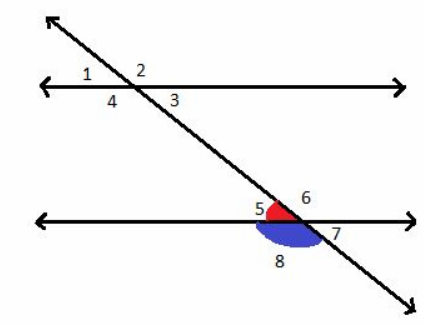
Finally, we can determine that the angle value of∠8 is 140∘.
Glencoe Math Course 3 Volume 2 Student 1st Edition Chapter 5 Page 370 Exercise 20, Problem20
Given that
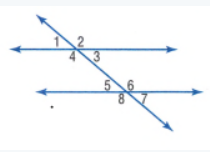
The angles that are side by side are adds up to180.
These make a straight line together when added. Such a pair is called supplementary pair of angles.
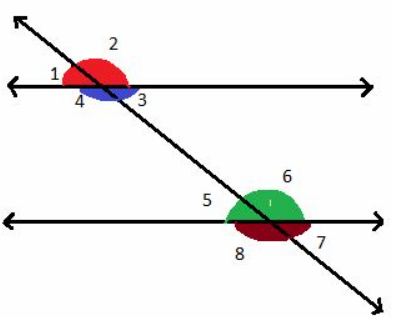
Finally, we can determine that the angles that are side by side are adds up to180°, and such a pair is called supplementary pair of angles.
Glencoe Math Course 3 Volume 2 Student 1st Edition Chapter 5 Page 370 Exercise 21, Problem21
Given
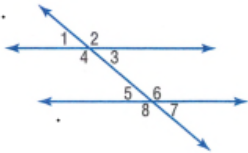
The angles with the same measure are indicated in the figure using two different colors – red and blue.The red-colored angles are equal in measure and hence congruent angles. Similarly. The blue-colored angles are also equal to each other and hence congruent angles.The marked figure is
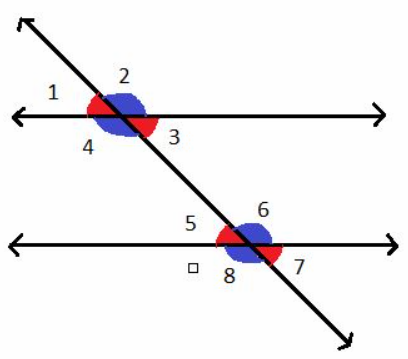
The reason for the equality is either due to the opposite pair or due to corresponding angle pairs which are explained in the previous point.Now the pair of congruent angles would be1≅3≅5≅7 and2≅4≅6≅8.
Finally, we can determine that the position of the pair of the congruent angles are1≅3≅5≅7and2≅4≅6≅8.
Glencoe Math Course 3 Volume 2 Student 1st Edition Chapter 5 Page 370 Exercise 22, Problem22
Let’s draw a set of parallel lines cut by another line and we’ll get the figure as
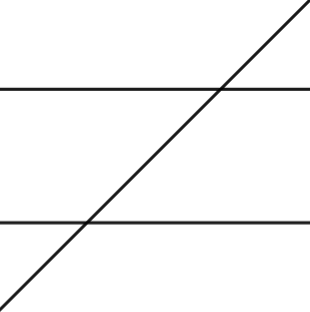
When two parallel lines are intersected by a third line then the resultant angles are in such a way that there are four angles that are equal to each other and the rest four are equal to each other. The two different measures are shown in the red and green colors, in the figure attached below
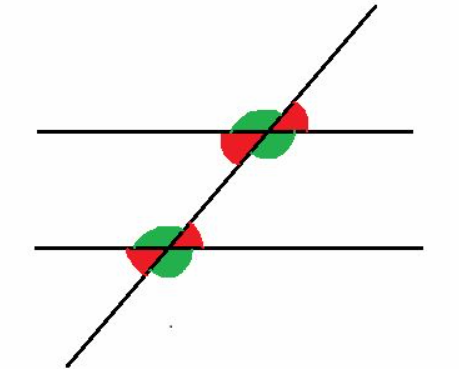
When all the eight angles are being measured with protractor we have found that we have four equal angles of measure equal to45∘
which were marked in red color. The angles which were marked in green color are also of the same measure, equal to135∘and the figure will be as
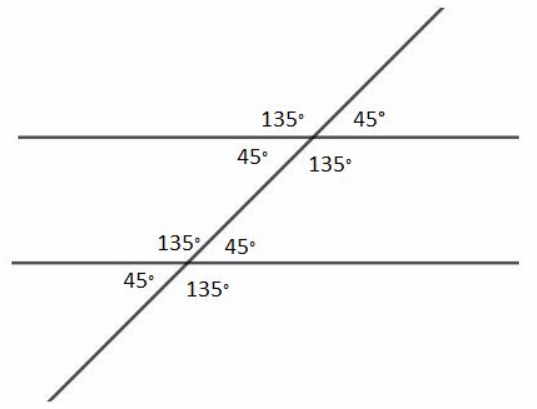
So, when two parallel lines are intersected by a third line then the resultant angles are in such a way that there are four angles that are equal to each other and the rest four are equal to each other. The equality of these angles can be explained with the help of opposite angle pairs, corresponding angle pairs, and alternate angle pairs.
Glencoe Math Course 3 Volume 2 Student 1st Edition Chapter 5 Page 370 Exercise 23, Problem23
Let’s draw a set of parallel lines cut by another line and we’ll get the figure as
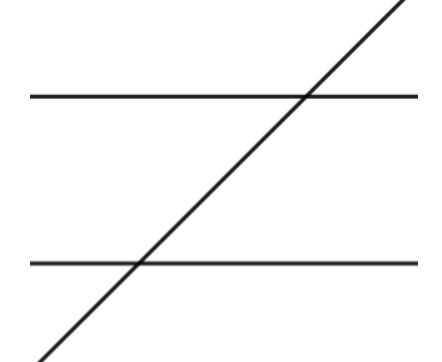
Now the various types of relationships that can be found here between the angles will be as
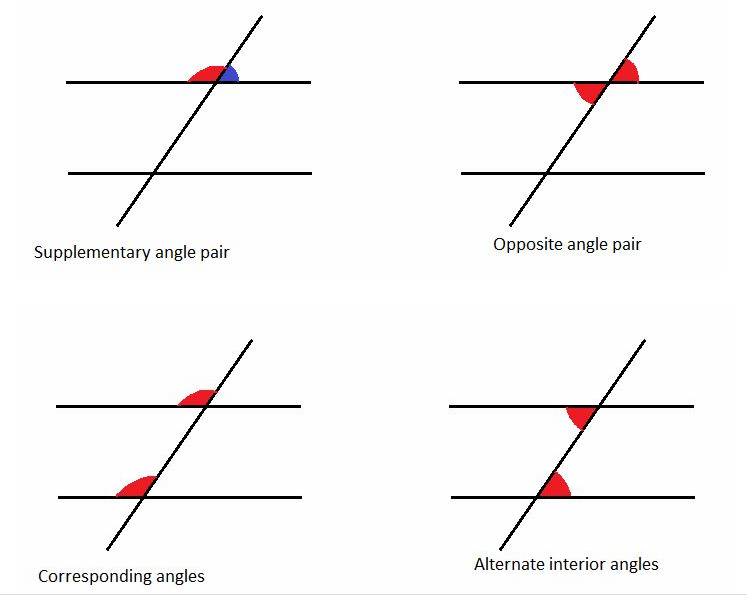
Supplementary angle pairOpposite angle pairCorresponding angle pairAlternate interior anglesAlternate exterior angles
The above-mentioned angles are shown in the figures below
Glencoe Math Course 3 Volume 2 Student 1st Edition Chapter 5 Triangles And The Pythagorean Theorem
Supplementary angle pair
Opposite angle pair
Corresponding angle pair
Alternate interior angles
Alternate exterior angles
The above-mentioned angles are shown in the figures below
Supplementary angle pair:
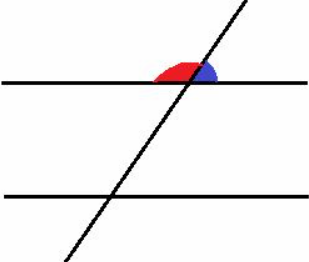
Opposite angle pair
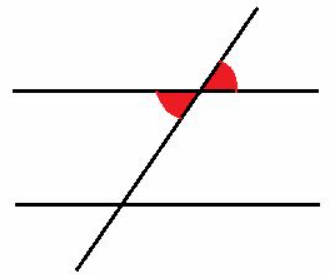
Glencoe Math Course 3 Volume 2 Student 1st Edition Chapter 5 Triangles And The Pythagorean Theorem Corresponding angle pair
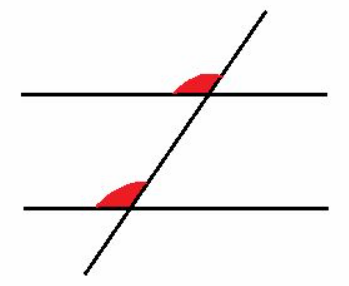
Alternate interior angles
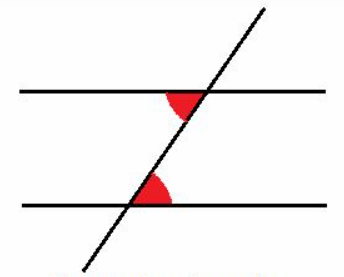
Alternate exterior angles
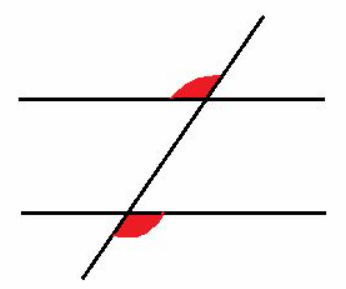
So, the angle relationships formed are as follows Supplementary angles, Opposite angles, Corresponding angles, Alternate interior angles, Alternate exterior angles.