
Glencoe Math Course 3 Volume 2 Student Chapter Chapter 6 Transformations Page 445 Exercise 1 Problem1
We have been given a figure. We need to show or describe the change in position of the figure. This can be found by the phenomena of motion
Motion is the phenomenon in which an object changes its position over time. Motion is mathematically described in terms of displacement, distance, velocity, acceleration, speed, and time.
The best way to show or describe the change in position of a figure is through its motion.
Glencoe Math Course 3 Volume 2 Chapter 6 Transformations Exercise Solutions Page 446 Exercise 1, Problem1
We have been given a quadrilateral ABCD with vertices A(1,1), B(3,5), C(4,7), and D(2,6).
We need to find that in what quadrant is ABCD located.
This can be found by the fact that if both xx and yy are positive, then the point lies in the first quadrant. If xx is negative and yy is positive, then the point lies in the second quadrant.
If both xx and yy are negative, then the point lies in the third quadrant. If xx is positive and yy is negative, then the point lies in the fourth quadrant.
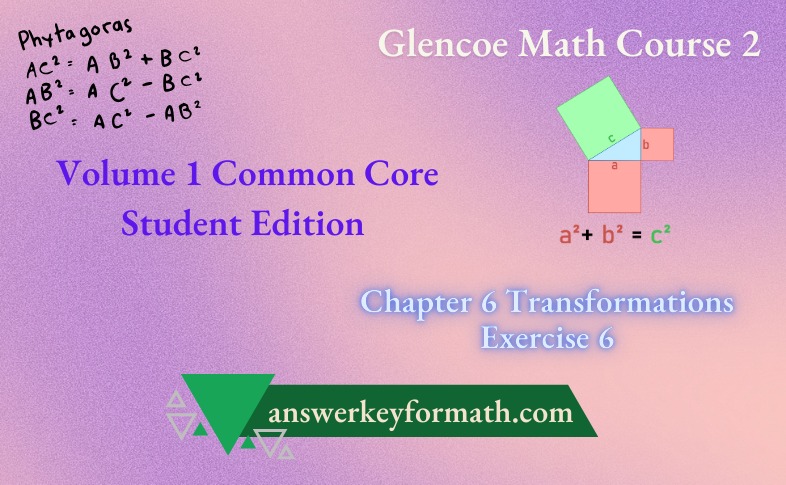
The given points A,B,C,D are plotted as follows,
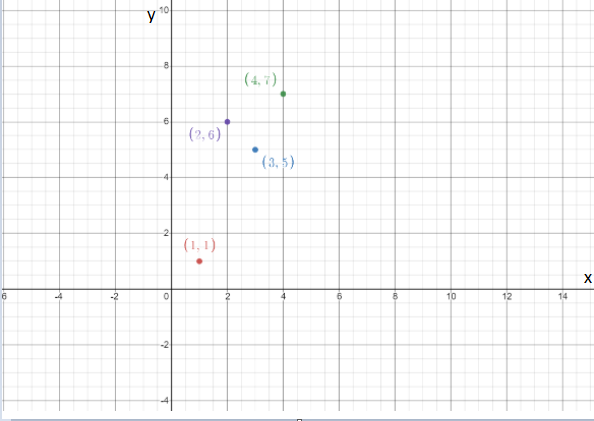
We see that all the points lie on the first quadrant.
Hence, the quadrilateral ABCD lies on the first quadrant.
The quadrilateral ABCD is located in the first quadrant.
Read and Learn More Glencoe Math Course 2 Volume 1 Common Core Student Edition Solutions
Glencoe Math Course 3 Volume 2 Student Chapter Chapter 6 Page 446 Exercise 2 Problem1
We have been given a quadrilateral with vertices A(1,1), B(3,5), C(4,7), and D(2,6).We need to find that if the coordinates of ABCD are multiplied by3/4, then in what quadrant would the new figure be located. This can be found by the fact that when a coordinate (x,y) is multiplied with a scalar a, the new coordinate is (ax,ay).
The coordinates A,B,C,D are as follows,
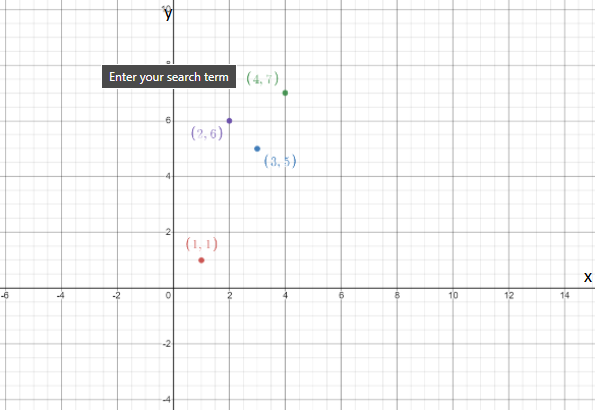
When the coordinates of A, B, C, D are multiplied by 3/4 = 0.75 , the new coordinates are as follows,
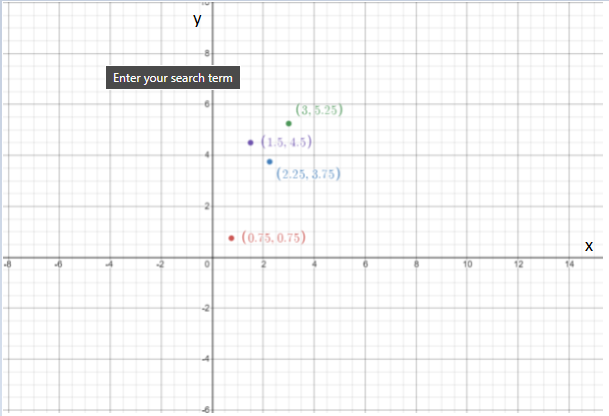
We see that all the points lie on the first quadrant.
Hence, the new quadrilateral ABCD lies on the first quadrant
When the coordinates of ABCD are multiplied by3/4,then the new figure lies in the first quadrant.
Glencoe Math Course 3 Volume 2 Student Chapter Chapter 6 Page 446 Exercise 3 Problem1
We have been given a quadrilateral with vertices A(1,1), B(3,5), C(4,7), and D(2,6).We need to find that when the x-coordinates in ABCD are multiplied by -1 , then in what quadrant would the new figure be located.
This can be found by the fact that when a coordinate (x,y) is multiplied with a scalar a, the new coordinate is (ax,ay).
The coordinates A, B, C, D are as follows,
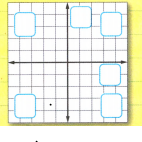
When the x-coordinates in ABCD are multiplied by -1, then the new coordinates are plotted as follows,
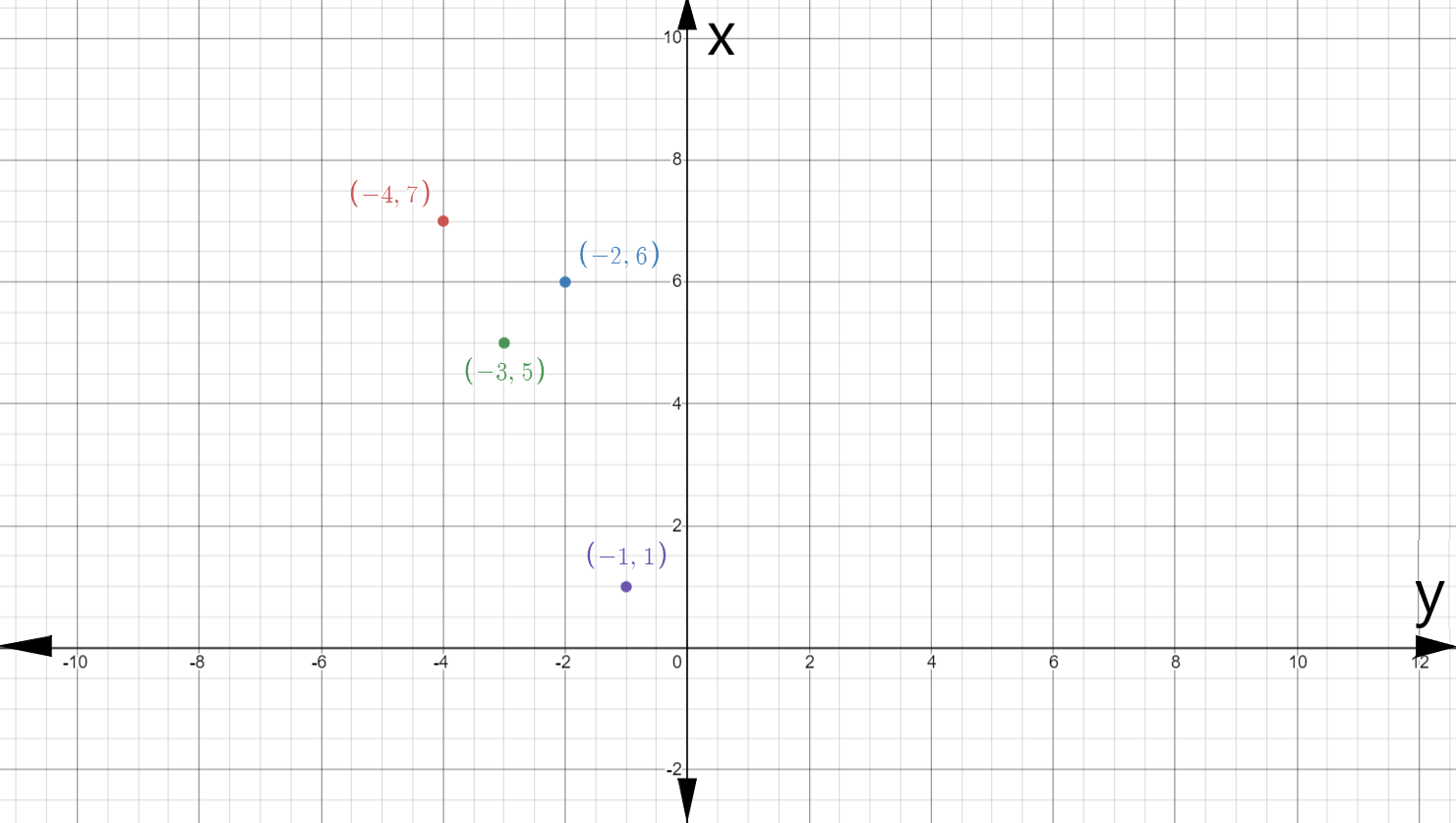
We see that all the points lie in the second quadrant.
Hence, the new quadrilateral ABCD lies on the second quadrant.
When the x-coordinates in ABCD are multiplied by -1, then the new figure lies in second quadrant.
Glencoe Math Course 3 Volume 2 Student Chapter Chapter 6 Page 446 Exercise 4 Problem1
We have been given a quadrilateral ABCD with vertices A(1,1), B(3,5), C(4,7), and D(2,6).We need to find that if we switch the x-and y-coordinates from Exercise 3, then in what quadrant would the new figure be located.
This can be found by the fact that hen a coordinate (x,y) is said to be switched, then the new point is (y,x).
The coordinates A, B, C, D are as follows, When we switch the x-and y-coordinates from Exercise 3, then the new coordinates are as follows,
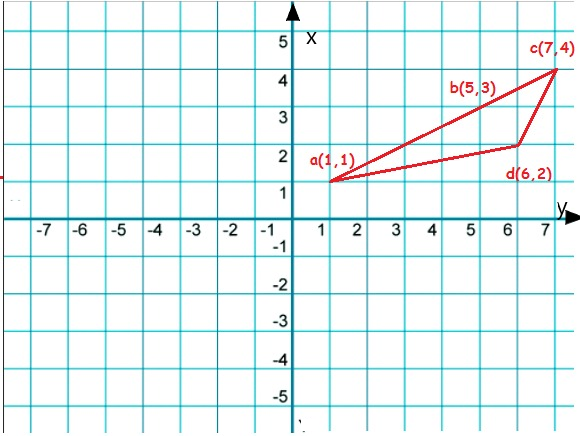
We see that all the points lie in the fourth quadrant.
Hence, the new quadrilateral ABCD lies on the fourth quadrant
When we switch the x-and y-coordinates from Exercise 3, then the new figure lies in the fourth quadrant.
Glencoe Math Course 3 Volume 2 Student Chapter Chapter 6 Page 448 Exercise 1 Problem1
Given, a rectangle with vertices: B(−3,3) and C(−3,0) and side length 6 units. We need to graph figures and label the missing vertices.
Let, ABCD be the rectangle with vertices B(−3,3) and C(−3,0)and side length 6units.
For finding the other two vertices graphically, first, we need to put B(−3,3) and C(−3,0) on graph.
Now, the slope of a line that passes through a pair of points (x1,y1)and(x2,y2)is given by =y2−y1 x2−x1
We are given the endpoints, B(−3,3) and C(−3,0).
Therefore the slope of the line passing through these points is =0−3−3−(−3) =−30=infinite.
Here, we can see the slope of line BC is infinite, which means it is parallel to the y-axis. So the corresponding y – coordinate will remain the same.
Also, alternate sides of the rectangle are perpendicular therefore we will move 6 units along x-axis and thus x-coordinate will be shifted by 6 units.
Moving towards the positive x-axis.
X-coordinate of point A=−3+6=3
X-coordinate of point B=−3+6=3
So, the missing vertices of the rectangle ABCD are A(3,3)and D(3,0).
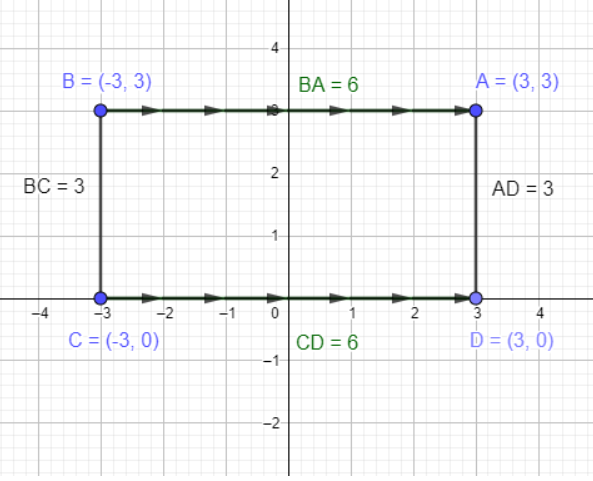
Moving towards the negative X-axis.
X-coordinate of point A= −3−6=−9
X-coordinate of point B=−3−6=−9
So, in this case, missing vertices of the rectangle ABCD are A(−9,3) and D(−9,0).
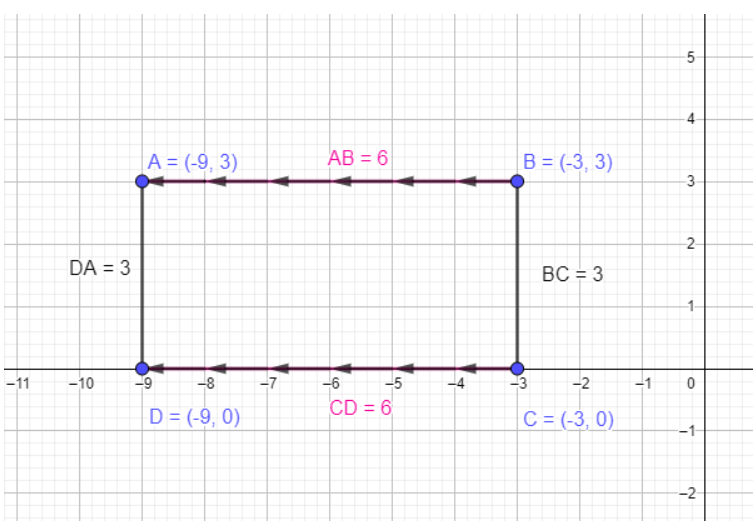
The missing vertices of the rectangle ABCD are either A(3,3) and D(3,0).
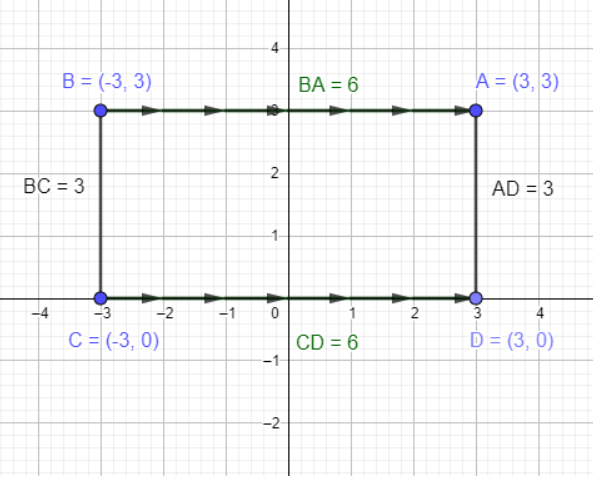
OrA(−9,3) and D(−9,0).
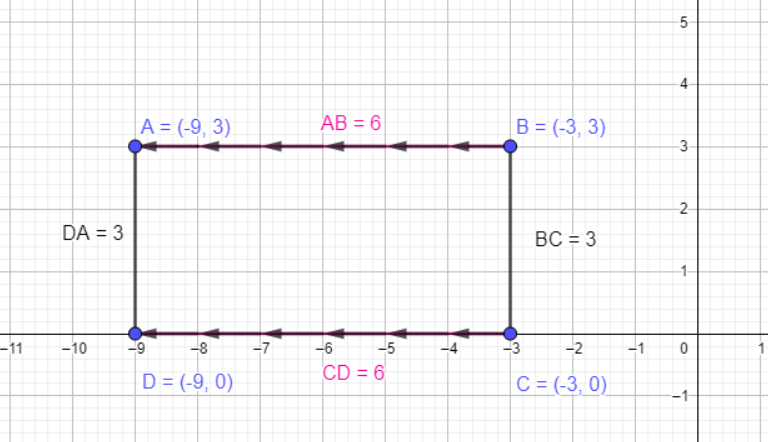
Glencoe Math Course 3 Volume 2 Student Chapter Chapter 6 Page 448 Exercise 2 Problem1
Given, square with vertices: G(5,0), H(0,5), and side length 5 units.
We need to find the missing vertices of the given square.
Let HEGF be the square with vertices G(5,0),H(0,5) and side length 5 units.
First, We need to do is calculate the distance between the given points, so that we can be sure that if the given points are adjacent or diagonally opposite. The distance between any two coordinate (x1,y2)and(x2,y2)is given by √(x2−x1)2+(y2−y1)2.
The distance between G(5,0),H(0,5)is √(5−0)2+(0−5)2.=5√2
We can see that the distance between the G(5,0),H(0,5) is not equal to the given side length and therefore these points should be at diagonally opposite ends.
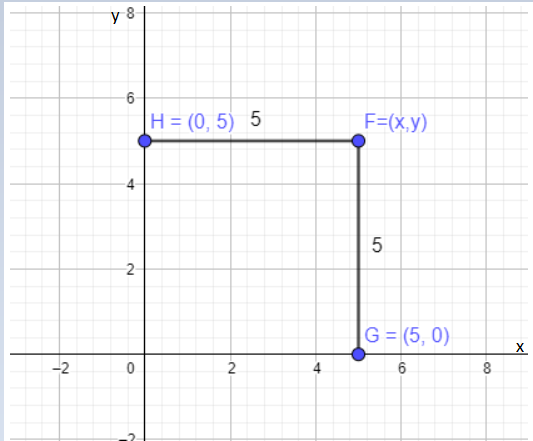
Let the coordinates of point F be (x.y). Then, GF=HF (As HEGF is a square).
The length of the side GF with given endpoints G(5,0)and F(x,y) is given as 5.
Therefore,GF=√(x2−x1)²+(y2−y1)².
⇒5=√(x−5)²+(y−0)².
⇒5=√(x−5)²+(y)².
⇒25=(x−5)²+y²
Also, the length of the side HF with given endpoints H(0,5) and F(x,y)is given as 5.
length HF=√(x2−x1)²+(y2−y1)².
⇒5=√(x−0)²+(y−5)².
⇒5=√x²+(y−5)².
⇒25=x²+(y−5)²
So, we have two unknown variables in two equations-
25=(x−5)²+y² …….(1)
25=x²+(y−5)² …….(2)
To solve the equation, first, subtract equation two from equation one, which will result in,
x²+y²−10y+25−x²+10x−25−y²
= 25−25
⇒ −10y+10x=0
⇒ −10y=−10x
⇒ y=x
Now, we can put y=x in any of the equation one to solve for x, x²+(y−5)²=25
⇒ x²+(x−5)²=25
⇒x²+x²−10x+25=25
⇒2x²−10x=0
⇒2x(x−5)=0
∴x=0 or x=5.
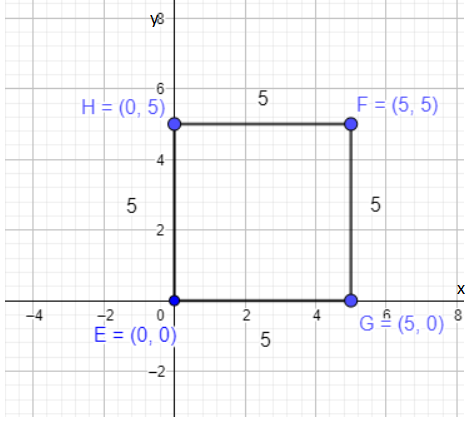
Since, y=x, therefore the possible value of (x, y) is either (0,0)and(5,5),Thus we can say that the missing points of the square are E(0,0)and F(5,5).
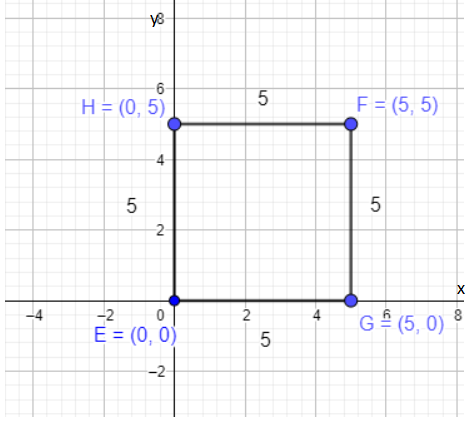
The missing points of the square are E(0,0)and F(5,5).
The graph of the square is –
Glencoe Math Course 3 Volume 2 Student Chapter Chapter 6 Page 448 Exercise 3 Problem1
Given, −5+3.
We need to find the addition
Given addition,
=−5+3
=−2
After the addition =−5+3=−2
Page 448 Exercise 4, Problem1
Given, 7+(−9)
We need to find the addition.
Given addition,
=7+(−9)
=−2
7+(−9) =−2
The result of addition is -2
Common Core Chapter 6 Transformations exercise answers Glencoe Math Course 3 Page 448 Exercise 5, Problem1
Given, −4+(−9)
We will find the addition.
Given addition,
=−4+(−9)
=−4−9
=−13
−4+(−9) =−13
The result of the addition is −13.
Glencoe Math Course 3 Volume 2 Student Chapter Chapter 6 Page 448 Exercise 6 Problem1
Given, −2+8.
We need to find the addition.
Given addition,
=−2+8
=8−2
=6
−2+8 =6
The result of the addition is 6.
Step-By-Step Solutions For Chapter 6 Transformations Exercises In Glencoe Math Course 3 Page 448 Exercise 7, Problem1
Given, −8+(−6)
We will find the addition.
Given addition,
=−8+(−6)
=−8−6
=−14
−8+(−6) =−14
The result of the addition is −14.
Page 448 Exercise 8, Problem1
Given, 0+(−6).
We will find the addition.
Given addition,
=0+(−6)
=0−6
=−6
0+(−6) =−6
The result of the addition is −6.
Glencoe Math Course 3 Volume 2 Student Chapter Chapter 6 Page 448 Exercise 9 Problem1
Given, −8+2.
We need to find the addition.
Given addition,
=−8+2
=2−8
=−6
−8+2 =−6
The result of the addition is −6.
Exercise Solutions For Chapter 6 Transformations Glencoe Math Course 3 Volume 2 Page 448 Exercise 10, Problem1
Here we have to add two integers. The given problem is3+(−1) and we have to calculate the value.
Here given problem is 3 + (−1)
Two integers have different signs so for adding integers with different signs, we have to keep the sign of the number with the largest absolute value and subtract the smallest absolute value from the largest.
So,3+(−1)=2
The calculated value of the two Integers is3+(−1)=2.
Examples Of Problems From Chapter 6 Transformations Exercises In Glencoe Math Course 3 Page 449 Exercise 1, Problem1
Here the rigid motion is a map of the plane to itself which preserves distances between points. So the information of rigid body we can say there are four types of rigid motions that are translation, rotation, reflection, and glide reflection.
Some rigid motions of the plane translation, rotation, reflection, and glide reflection. These four are basic rigid motions of the plane.
Glencoe Math Course 3 Volume 2 Student Chapter Chapter 6 Page 449 Exercise 1 Problem1
As per the given instruction here we have to arrange 10 index cards in a pile. And then on the top card, we have to draw a circle at the top right-hand corner. After drawing the figure of the card will be
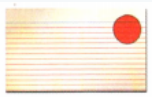
There are 10 cards under this topmost card.
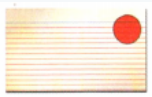
In the ten index cards in a pile. the top card with a circle at the top right-hand corner will be like the below figure
Student Edition Chapter 6 Transformations Solutions Guide Glencoe Math Course 3 Volume 2 Page 449 Exercise 1, Problem2
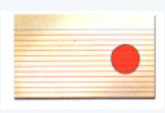
As per the given instruction here we have to arrange10 index cards in a pile. And then on the second card, we have to draw the red circle slightly down and to the left from the first card position. After drawing the figure of the card will be
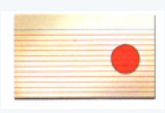
Finally, the second card with the same circle will be the below figure and the circle will slightly down and to the left from the first card.
Glencoe Math Course 3 Volume 2 Student Chapter Chapter 6 Page 449 Exercise 1 Problem3
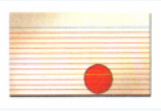
As per the given instruction, we’ll repeat the red circle for three or four more cards until the circle is at the bottom of the card. We’ll use the remainder of the cards to draw the circle up and to the left. The most bottom card will be
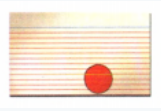
Finally, we draw the circle is at the bottom of the card and the figure will
Step-By-Step Answers For Chapter 6 Transformations In Glencoe Math Course 3 Volume 2 Page 449 Exercise 1, Problem4
As per the given instruction, we have to place a rubber band around the stack, hold the stack at the rubber band, and flip the cards from the front to back.
when we flip the cards from the front to back the circle seemed to move, as the cards were flipped from front to back Then if we look at the circles on the first and second cards and then the second and third cards we’ll observe that at first, the circle seemed to move down and shifted to the left unit it touched the bottom of the card.
After that, the circle moved again upward and keep shifting to the left. When you moved it the shape and the size did not change. Only the position changed.
when we flip the cards from front to back the circle seemed to move, as the cards were flipped from front to back.
Then if we look at the circles on the first and second cards and then the second and third cards we’ll observe that at first, the circle seemed to move down and shifted to the left unit it touched the bottom of the card.
After that, the circle moved again upward and keep shifting to the left.
When you moved it the shape and the size did not change. Only the position changed.
Glencoe Math Course 3 Volume 2 Student Chapter Chapter 6 Page 450 Exercise 1 Problem1
Here as per the given instruction, we have to draw a right triangle ∠XYZ on a piece of tracing paper. Then Place a dashed line on the paper in the middle of the paper. So now the figure will be
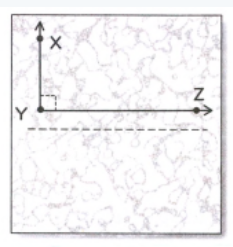
Finally, the figure of a right angle ∠XYZ and a dashed line on a piece of tracing paper will be
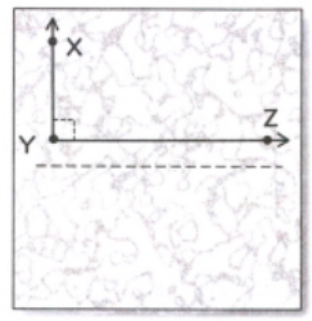
Page 450 Exercise 2, Problem1
Given
First, we have to fold the paper along the dashed line and trace the angle onto the folded portion of the paper. Then we have to Unfold and label the angle ∠ABC so that A matches up with X ,B matches up with Y, and C matches up with Z.
By using a protractor to find the measure of ∠ABC and ∠XYZ and by using a centimeter ruler we have to measure the shortest distance from X and A to the dashed line and this will be repeated for Y and B and for Z and C.
If we placed a mirror on the folded line ∠ABC And ∠XYZ will be a mirror image of each other
Given
In this figure, if we draw an angle equal and mirror image with ∠XYZ the figure will be
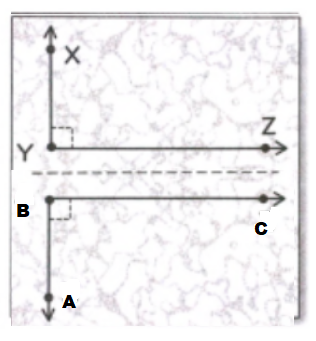
Now by Use a protractor to find the measure of ∠XYZ and ∠ABC the angles are equal that is90∘
No the measure of the angle did not change after the flip.
Now by using a centimeter ruler if we measure the shortest distance from X and A to the dashed line we will notice the distance from X to the dashed line is the same with the distance from A to the dashed line.
And similarly, by using a centimeter ruler if we measure the shortest distance from Y and B to the dashed line we will notice the distance from Y to the dashed line is the same with the distance from B to the dashed line.
And by using a centimeter ruler if we measure the shortest distance from Z and C to the dashed line we will notice the distance from Z to the dashed line is the same with the distance from C to the dashed line.
So by using a protractor to find the measure of and ∠XYZ and ∠ABC the angles are equal.
No the measure of the angle did not change after the flip.
And The distance from X to the dashed line is the same with the distance from A to the dashed line.
The distance from Y to the dashed line is the same with the distance from B to the dashed line.
The distance from Z to the dashed line is the same with the distance from C to the dashed line.
Glencoe Math Course 3 Volume 2 Student Chapter Chapter 6 Page 450 Exercise 3 Problem1
Given that
As per the given instruction, we have to place a piece of tracing paper over the trapezoid and have to copy the trapezoid. Then we’ll draw points A,B,C and AB. Now the copied figure will be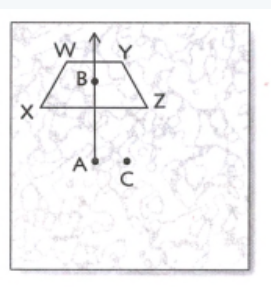
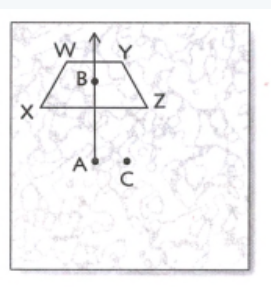
Finally the figure of the trapezoid on the tracing paper with points A, B, C and AB will be
Page 450 Exercise 3, Problem2
Given that
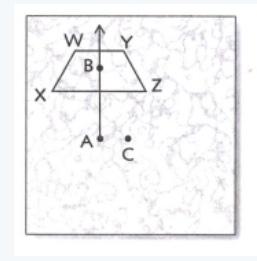
Here If we moved the trapezium that will look like the below figure
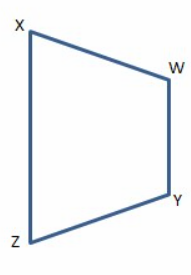
But the size and the shape never change for this moved it.
No, the shape of the trapezoid change when we moved it.
No, the size of the trapezoid change when we moved it.
Glencoe Math Course 3 Volume 2 Student Chapter Chapter 6 Page 451 Exercise 1 Problem1
Given that a pattern
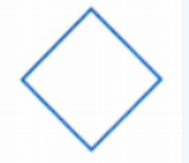
We have to draw the image by using a ruler when this figure is moved 12 inches.
down and1 inch to the left.
First, we’ll convert the inch length into centimeters and then draw the changed pattern.
Given here
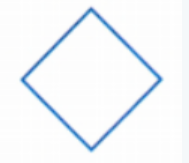
Now we have to move this pattern 1/2 inch. down and 1 inch to the left. If we convert these inches’ length in centimeters then 1/2 inch≈1.27centimeter and1inch≈2.54centimeter.
Using a ruler we’ll draw the figure and the figure is shown below
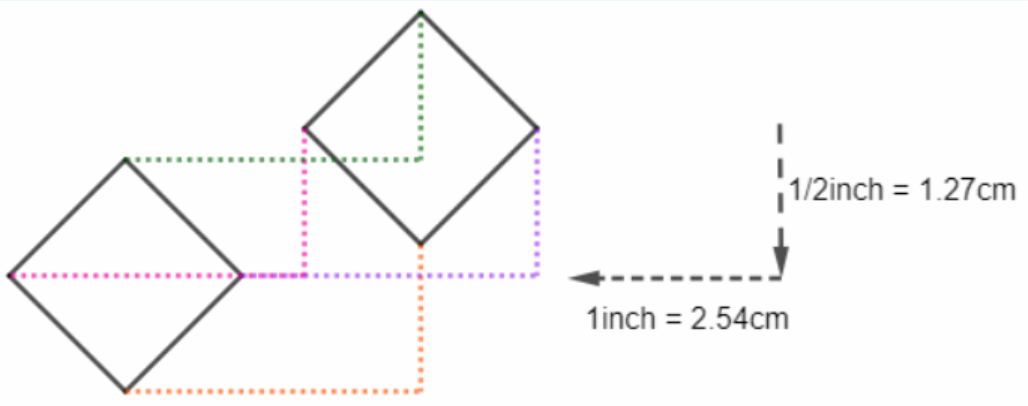
The pattern will be
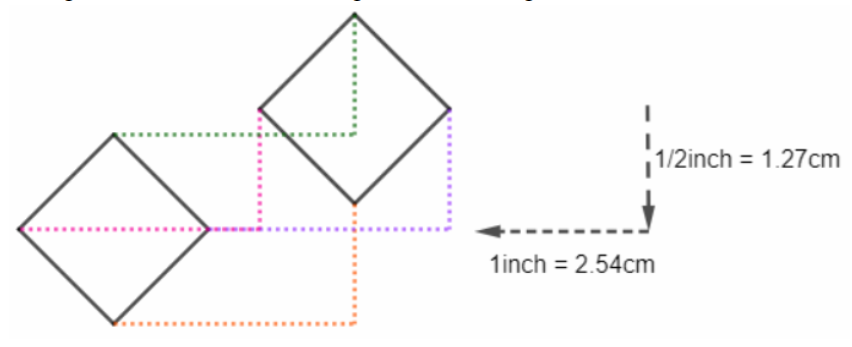
if we moved the main given pattern1/2inch. down and 1inch. to the left.
Page 451 Exercise 2, Problem1
Given that a pattern
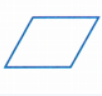
We have to draw the image by using a ruler when this figure is moved 1 inch up and 1 inch to the right. First, we’ll convert the inch length into centimeters and then draw the changed pattern.
Given here
Now we have to move this pattern 1 inch up and 1 inch to the right.
If we convert these inches’ length in centimeters then1inch≈2.54centimeter.
Using a ruler we’ll draw the figure and the figure is shown below
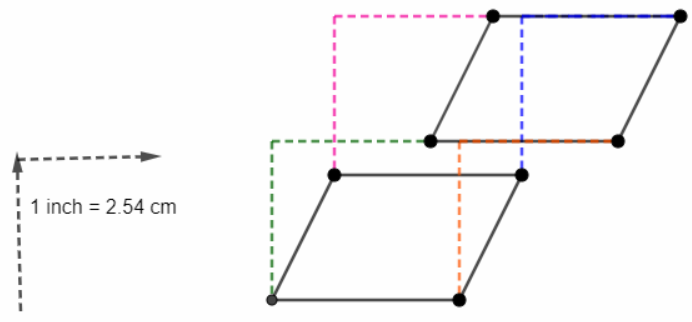
The pattern will be
if we moved the main given pattern 1 inch up and 1 inch to the right.
Glencoe Math Course 3 Volume 2 Student Chapter Chapter 6 Page 451 Exercise 3 Problem1
Given pattern is
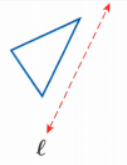
We have to draw the image when this figure is flipped over the line l.
To find the image of the figure after flipping it over the line l, we need to find the distance of each corner point of the given figure from the line l and plot new points with the same distance from I but in opposite direction to l.
Given the pattern is
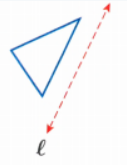
It is like a mirror image of a figure over the line l, therefore, the distance of each point from I will remain the same.
As we know that to find the image of the figure after flipping it over the line l , we need to find the distance of each corner point of the given figure from the line land plot new points with the same distance from I but in opposite direction to l.
Now the flipped figure will be
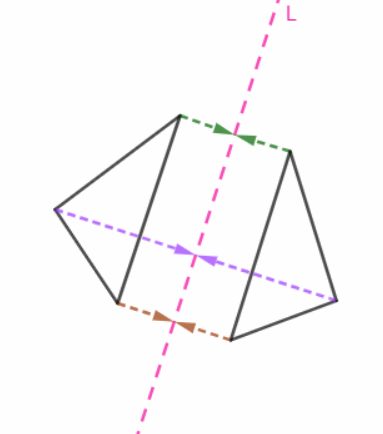
The flipped figure will be
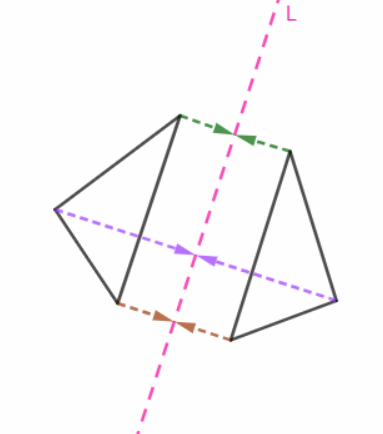
when the figure is flipped over the line l.
Page 448 Exercise 4, Problem1
Given pattern is
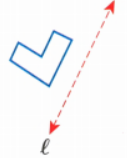
We have to draw the image when this figure is flipped over the line l .
To find the image of the figure after flipping it over the line l , we need to find the distance of each corner point of the given figure from the line l
and plot new points with the same distance from I but in opposite direction to l.
Given the pattern is
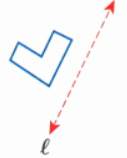
It is like a mirror image of a figure over the line l, therefore, the distance of each point from I will remain the same.
As we know that to find the image of the figure after flipping it over the line l
we need to find the distance of each corner point of the given figure from the line l and plot new points with the same distance from I but in opposite direction to l.
Now the flipped figure will be
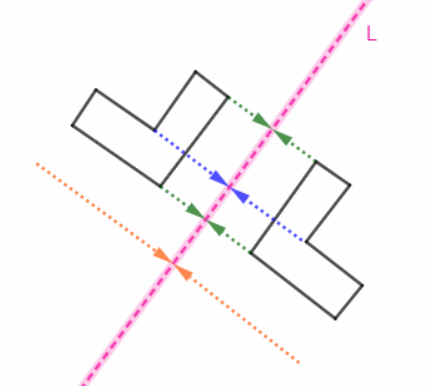
The flipped figure will be
when the figure is flipped over the line l.
Glencoe Math Course 3 Volume 2 Student Chapter Chapter 6 Page 451 Exercise 5 Problem1
When the new Pentagon turned along the line AB, a new Pentagon of the same dimensions will be formed, but the face of the Pentagon changes to the opposite direction. The Pentagon must go through 3 rotations to reach the point C
(First rotation along the lineL1, second rotation along the lineL3and the final rotation along the lineL5.) as shown below.
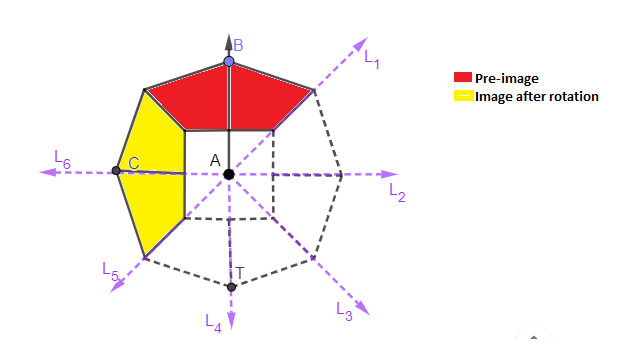
The required image is attached below.
Page 452 Exercise 6, Problem1
Blue heart above the green heart can be obtained in two ways. The blue heart can be rotated clockwise or anticlockwise until it overlaps the green heart. To get the blue heart over the green heart, we can flip it twice, first along the lineL1 and then along the lineL2,as illustrated in the diagram below.
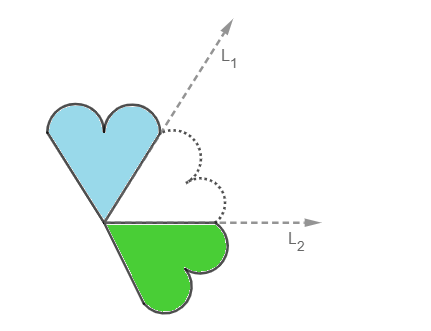
To get the blue heart over the green heart either turn the blue heart in clockwise or anticlockwise direction or flip the blue heart twice.
Glencoe Math Course 3 Volume 2 Student Chapter Chapter 6 Page 452 Exercise 7 Problem1
There are two ways that will place the blue figure on top of the green figure. Slide the blue figure to the right, then down, until it encroaches on the green figure. Slide the blue figure down, then right, until it overlaps with the green figure.
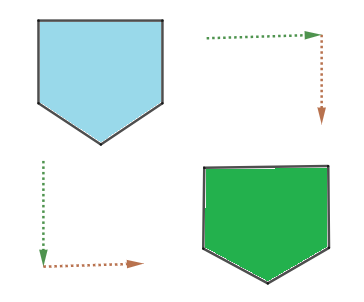
To place the blue figure on top of the green figure either slide the blue figure down first and then to the right or slide it right first and then to the down.
Page 452 Exercise 8, Problem1
At first, let us recap the two given exercises
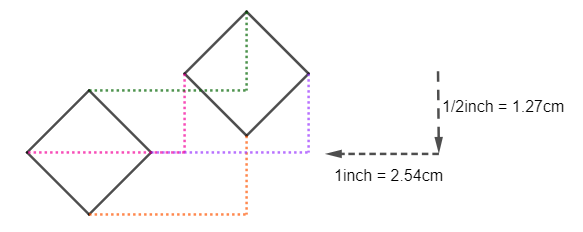
With referring to investigation 1 and exercise 1 and 2, the word that best describes the movement of the figures is the slide.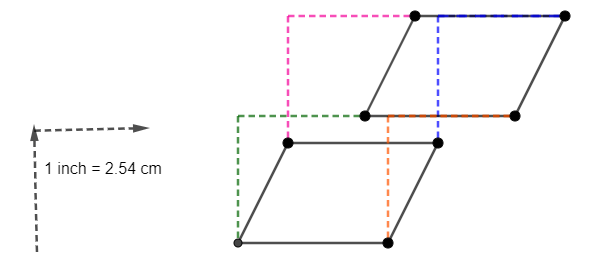
The word that best describes the movement of the figures is slide.
Page 452 Exercise 9, Problem1
At first, let us recap the two given exercises.
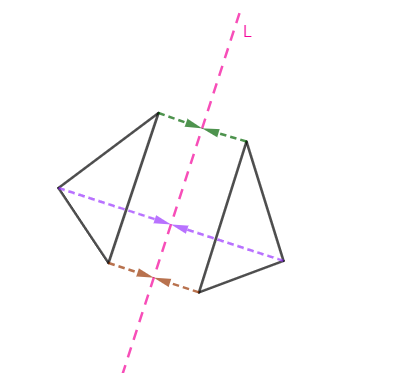
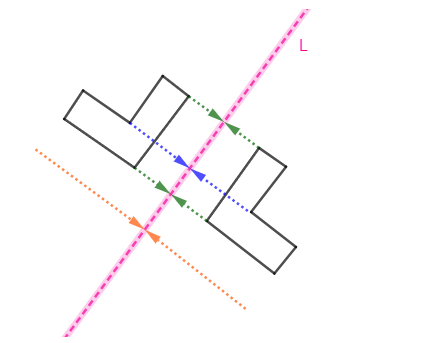
With referring to investigation 2 and exercises 3 and 4, the word that best describes the movement of the figures is the flip.
The word that best describes the movement of the figures is flip.
Glencoe Math Course 3 Volume 2 Student Chapter Chapter 6 Page 452 Exercise 10 Problem1
Based on the investigations we can describe the following characteristics regarding the rigid motion of the plane. When a point or object is moved but its size and shape remain the same, this is known as rigid motion.
This is in contrast to non-rigid motion, such as dilatation, in which the object’s size can rise or shrink. In order for the movement to be rigid, the pre-image and image must be congruent. See the following rigid motion of a triangle.
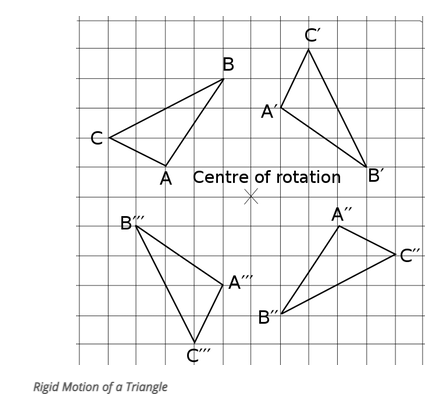
Characteristics of the rigid motion of the plane are given above.
Page 452 Exercise 11, Problem1
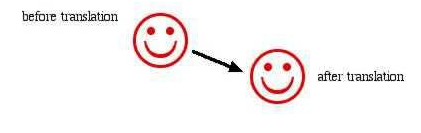
There are four types of rigid motions: translation, rotation, reflection, and glide reflection. Translation: In a translation, everything moves by the same quantity and in the same direction. Each translation has a distance and a direction.
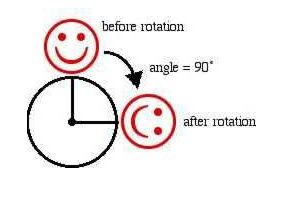
Rotation: A rotation fixes one point (the ro to center), and everything revolves around it by the same amount. There is a roto center and an angle for every rotation.
Reflection: A reflection aligns a mirror line in the plane and exchanges points on one side of the line with points on the other side of the mirror at the same distance. There is a mirror line in every reflection.
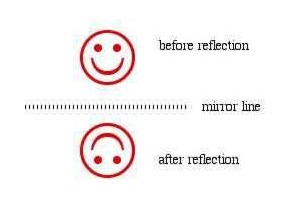
Glide reflection: A glide reflection is a mirror reflection that is followed by a parallel translation. There is a mirror line and a translation distance for every glide reflection.
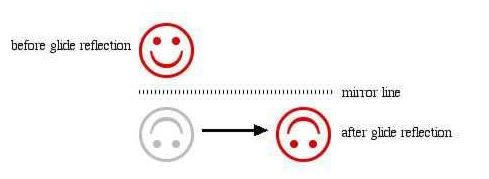
All the types of rigid motions of the plane are explained above.